The Houseboats of Yellowknife Bay
About 50 houseboats float off Old Town Yellowknife, off-grid on a lake that freezes solid. How the bay community lives, commutes, and how to see it respectfully.
 By Thomas Beaulieu, Yellowknife tour guide & northern lights specialist
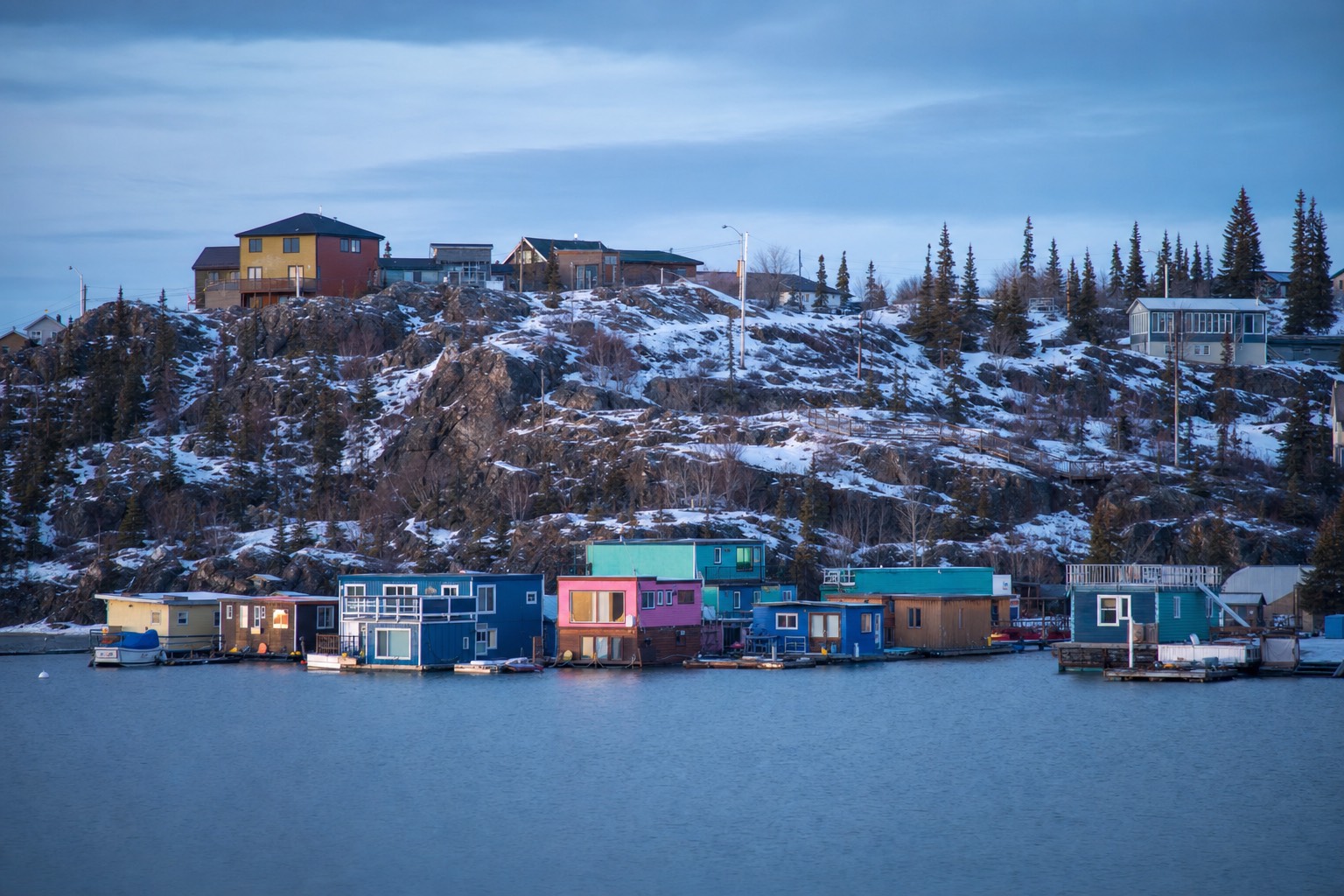
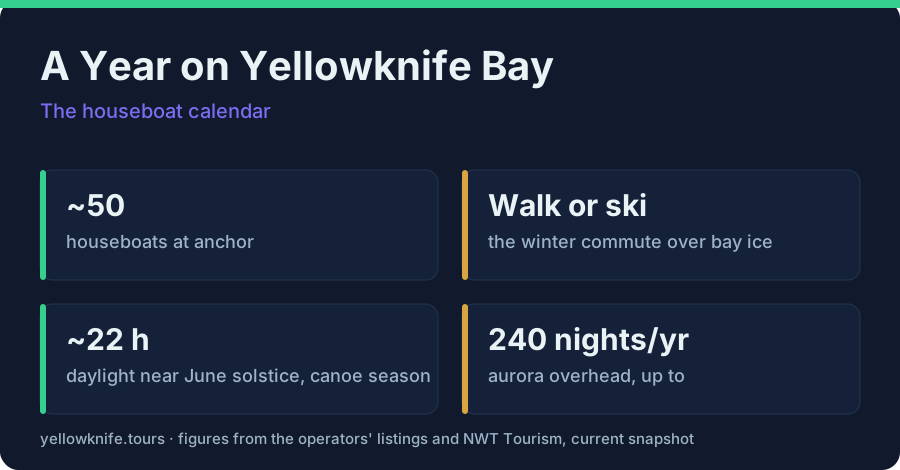
From the rocks above Old Town, guests always try to count them, and they always lose track around thirty. Out on the bay sits a floating village: bright-painted hulls, woodsmoke curling from stovepipes, a canoe tied to a deck rail here, a snowmobile parked on the ice there, depending on the month. Roughly 50 houseboats ride at anchor off the Yellowknife shore. Every one of them is somebody's home, on a lake that freezes solid enough to drive on and stays that way for months. Guiding here since 2022, I have answered more questions about these boats than about anything except the aurora.
Why are there houseboats on Yellowknife Bay?
Because a certain kind of northerner wanted the view without the paperwork. Around 50 houseboats float off Old Town, and the commonly told story is that a home anchored on the water sits outside the city's property-tax rolls. Cheap independence started the village; stubborn love of the bay sustains it.
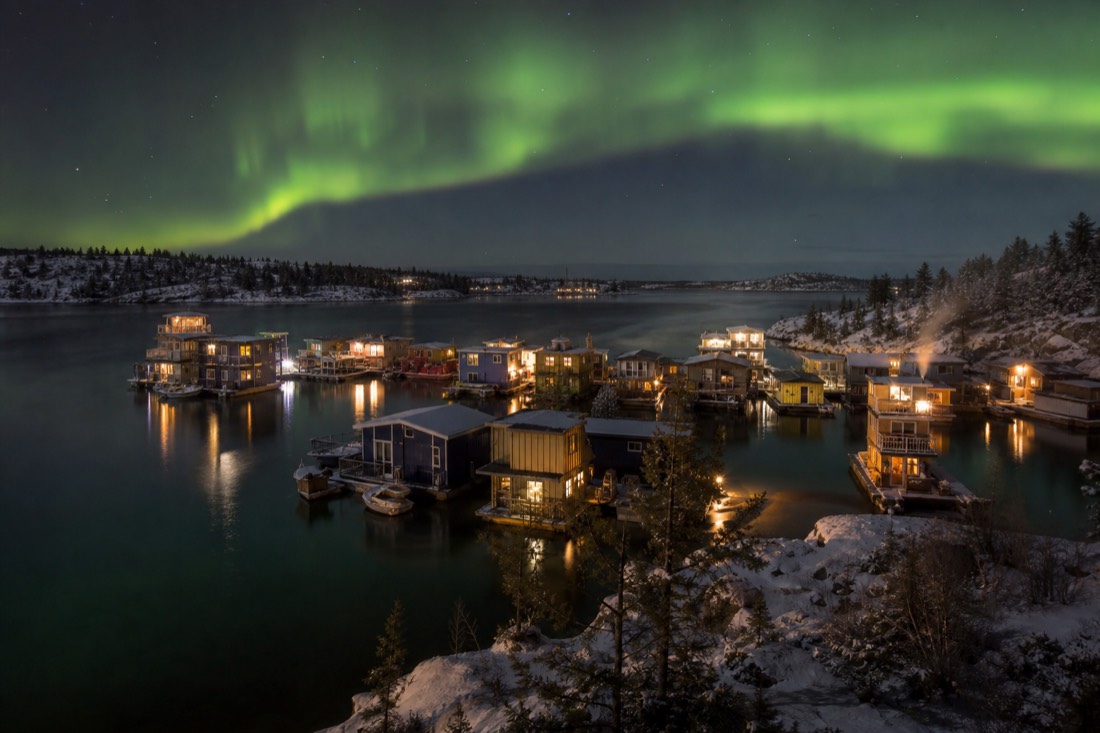
Let me be straight about the tax story, because I tell it on the shoreline most weeks. It is local lore, repeated in every version of the bay's history you will hear in town, and I pass it on as exactly that: the story people tell, not legal advice, not a loophole I am vouching for. What is beyond dispute is the spirit of the thing. Yellowknife grew from a 1930s gold-rush camp where people built where they landed, and the houseboats are the last neighbourhood in town that still works that way. No lot, no street address in the usual sense, just an anchor, a hull and a strong opinion about how to live.
That independence has a price tag the postcard hides. Every one of those homes handles its own heat, power and water, on a subarctic lake, year round. Which brings us to the practical questions everyone asks next.
How do you live off-grid on a lake that freezes solid?
By working for it. Houseboats run on their own systems: wood or oil heat, their own power, water hauled or drawn and treated. Winter locks the hulls into the bay ice for months, so the boats are built and provisioned for a January whose daily mean sits near minus 25.5 C.
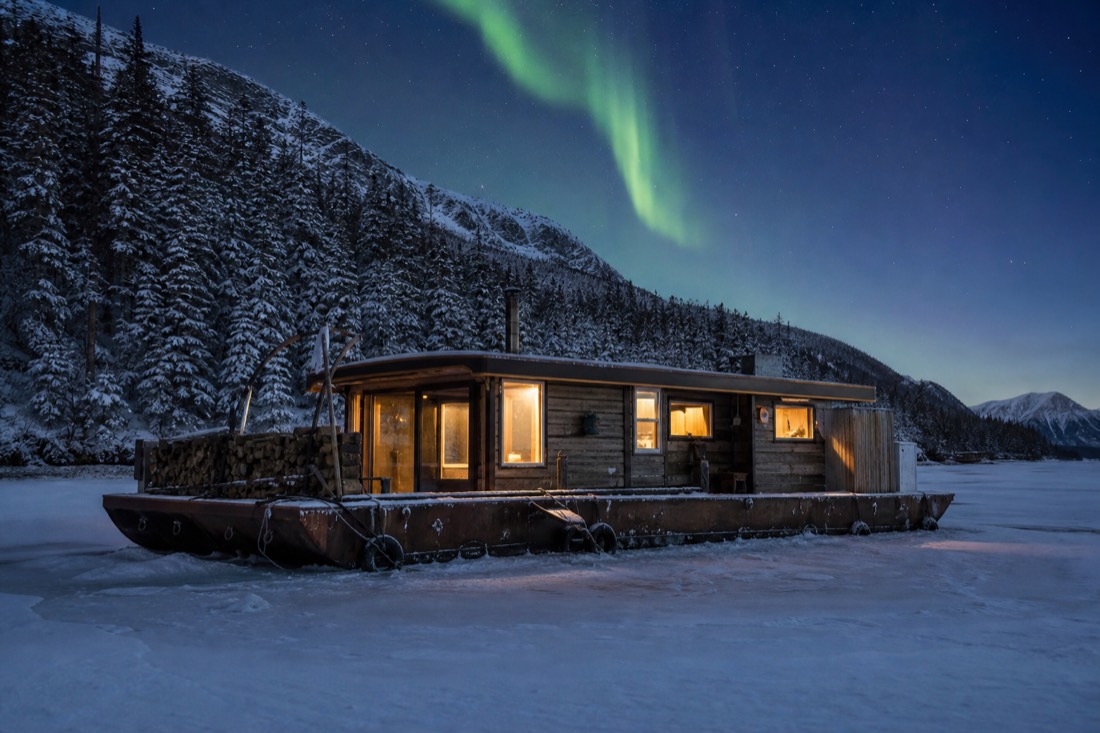
The bay does not do half measures. In January, the coldest month, afternoon highs average around minus 21.6 C and nights sink toward minus 29. A frozen-in houseboat is not going anywhere from freeze-up until spring, so autumn is provisioning season: firewood stacked on decks, tanks topped, everything staged for the months when the boat becomes a cabin in an ice field. The reward arrives on clear nights, when the aurora comes out over the bay. This town sees the lights on up to 240 nights a year by NWT Tourism's own numbers, and the houseboaters get the show from their own windows.
| The bay, by the numbers | Figure |
|---|---|
| Houseboats at anchor off Old Town | About 50 |
| Great Slave Lake's deepest point | 614 m, deepest lake in North America |
| January temperatures | High about -21.6 C, daily mean near -25.5 C |
| Aurora frequency overhead | Up to 240 nights a year |
| Public ice road across the same bay | About 6.5 km, late Dec to mid-Apr |
Summer flips the whole equation: open water, about 20 hours of daylight around the June solstice, and a village that suddenly floats again.
How do houseboaters get to shore in each season?
In winter they simply walk, ski or snowmobile across the ice to Old Town; the bay freezes hard enough to carry a public road. In summer the commute is a canoe or small boat. The hard weeks are freeze-up and breakup, when the ice is forming or rotting and crossings get careful.
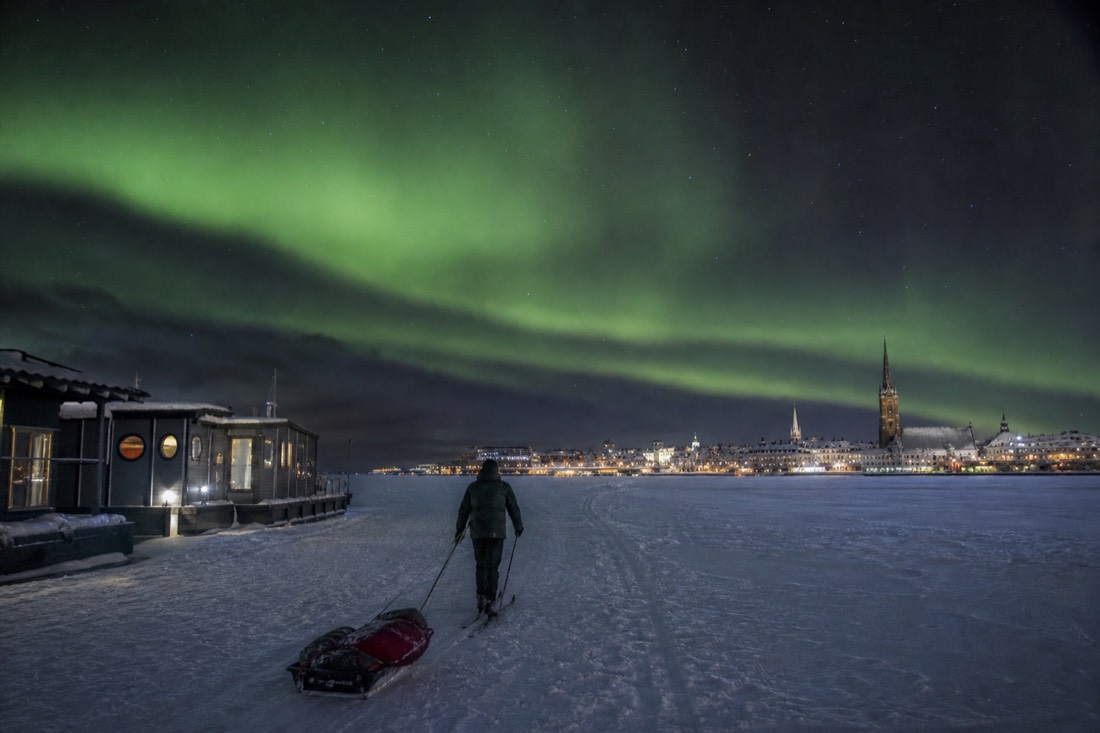
My favourite bay fact for guests: for about a third of the year, the neighbourhood's sidewalk is the lake itself. Once the ice sets up, a walk to the grocery store crosses the frozen bay on foot, and the proof of how solid it gets runs right past the boats: the same ice carries the public road to Dettah, driven daily by ordinary cars from roughly late December to mid-April. I covered that crossing in driving the Dettah ice road. Come March the frozen commute even gains a landmark, when the SnowKing crew raises a snow castle on the bay with dates posted each season.
| Season | The commute | The mood |
|---|---|---|
| Deep winter (ice solid) | Walk, ski or snowmobile across the bay | A frozen village with sidewalk lights of aurora |
| Freeze-up (late autumn) | Careful, patient, ice forming | The tense weeks, timing is everything |
| Breakup (spring) | Careful again as ice rots | Everyone watches the melt |
| Open water (summer) | Canoe or small boat to the docks | Floatplanes and paddles, near-endless light |
Autumn deserves a special mention for visitors: from mid-August to early October the aurora returns while the bay is still open, and the lights double themselves in the water. I wrote about that trick of the season in September's aurora over open water.
Can you visit the houseboats, or photograph them?
Photograph, yes; visit, no. These are private homes, not an attraction, and there are no tours onto the boats. The respectful move is to enjoy the view from the Old Town shore and the rocks above it, keep long lenses off windows and decks, and leave the ice around the hulls alone.
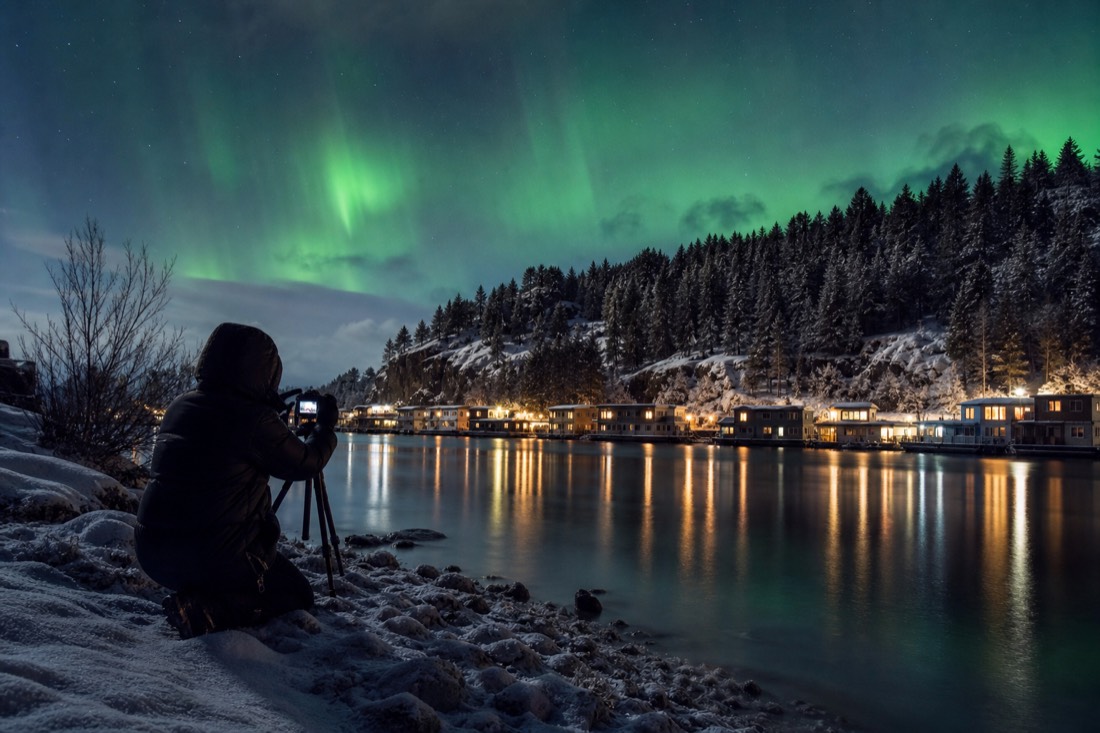
I put this bluntly on every walk, because the bay's charm makes people forget themselves. Imagine fifty strangers a day photographing your kitchen window and you have the houseboater's summer. The community is used to being admired and is generally good-humoured about it, and the way to keep it that way is simple.
| Do | Don't |
|---|---|
| Shoot the village from shore and the rocks above | Walk out to the hulls or onto docks and decks |
| Keep wide, scenic framings | Aim long lenses at windows |
| Wave if waved at | Knock, call out, or peer in |
| Learn the story from a guide or from shore | Treat homes as photo props |
| Give ice near the boats a wide berth in winter | Assume ice near hulls is safe or public |
That last row matters: even in the solid months, conditions immediately around the hulls are the residents' concern, not a visitor path. The wide bay has room enough for everyone's boots.
What is the best way to see the bay and hear its stories?
Climb to the Bush Pilots Monument for the full panorama, walk the Old Town shoreline for the close view, and take the city tour if you want the stories told properly. The 5.0-rated loop looks over the bay and threads the houseboats into the town's whole gold-rush history.
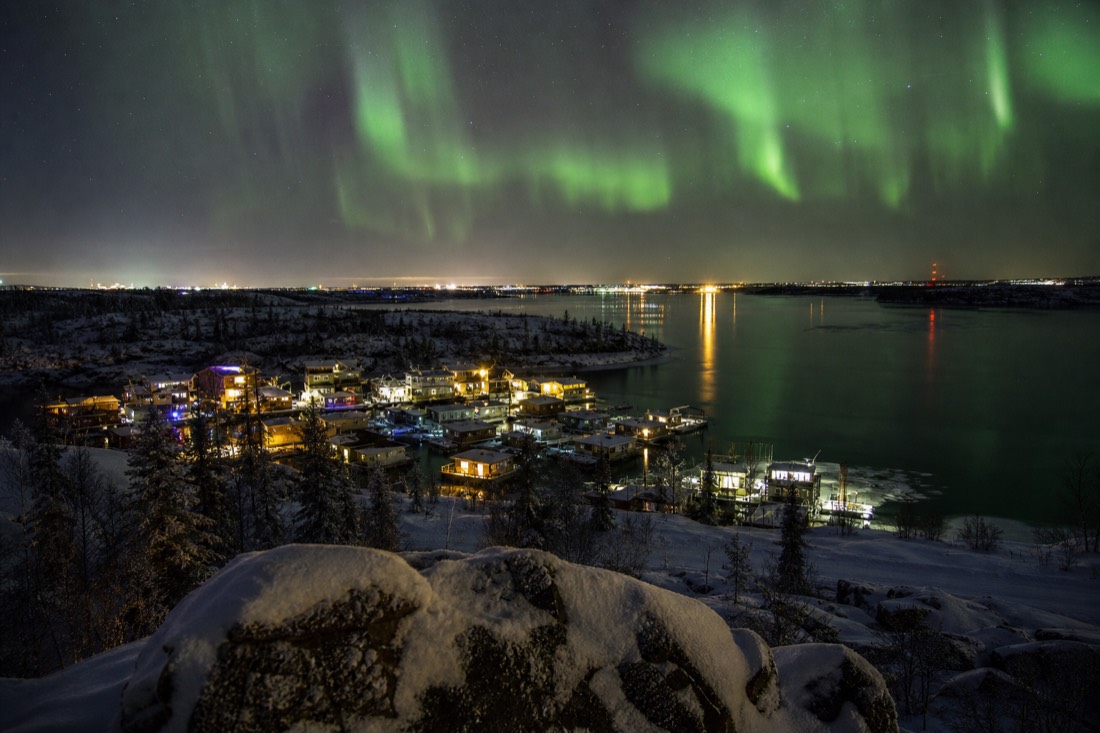
The monument is the spot; the whole village sits below you, with Great Slave Lake running to the horizon beyond it, 614 metres deep at its deepest point. I walked that viewpoint and the lanes beneath it in Old Town and the bush pilots. For the telling, a guide genuinely earns it here, since the bay's story is all people and none of it is on plaques. The city tour covers Old Town, the monument and the wildlife gallery in one loop, holds a 5.0 rating across 27 reviews, and you can check live availability and prices on Viator for your dates. It runs 1 to 4 hours with room for 23, though note it is non-refundable when you book.
And if all this floating self-sufficiency has you rethinking your own accommodation: visitors sleep on shore. The guide to where to stay in Yellowknife covers the practical side of basing yourself near Old Town.
The houseboats are the part of Yellowknife that photographs like a whim and lives like a commitment. Admire them from the rocks, let a local tell you their stories, and leave the village to its lake.