Northern Lights in Yellowknife in August and September (Autumn Season)
The lights come back to Yellowknife in mid-August, months before the snow. Autumn is the season almost nobody plans for, and it might be the most comfortable aurora trip on the continent.
 Written with Thomas Beaulieu, Yellowknife tour guide & northern lights specialist
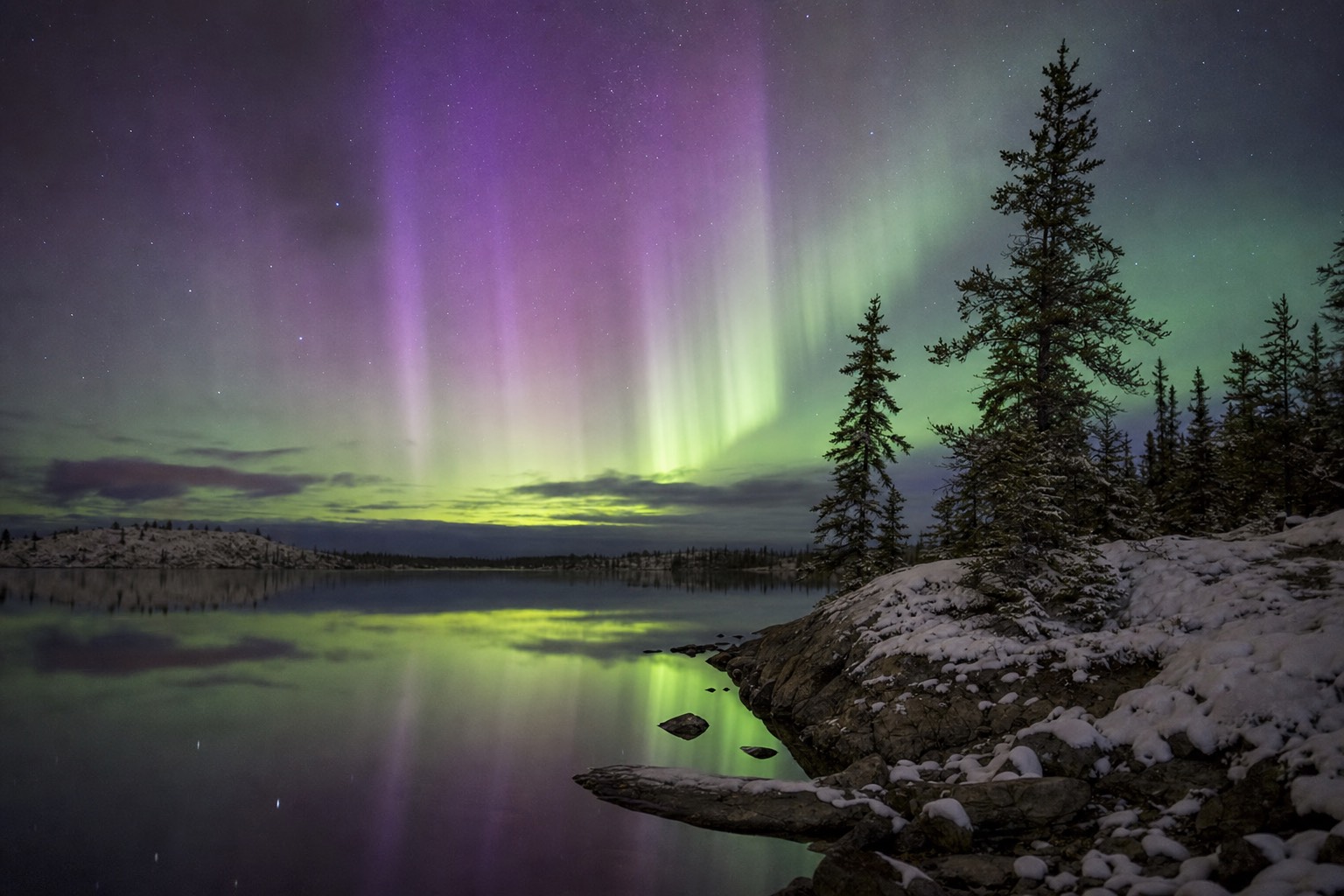
Short answer
Yellowknife's autumn aurora season runs mid-August to early October. Nights are mild, the lakes are still open water and double the show by reflection, and no arctic gear is needed. Aurora hunts, the lodge, cabin stays, and city tours all run; only the on-ice activities wait for winter.
Every September I stand on a lakeshore around midnight in a fleece, no parka, no frozen eyelashes, watching the aurora burn twice: once in the sky and once upside down in the water. Then I read another article telling people the northern lights are a winter thing, and I wonder how this season is still a secret. It should not be. If your picture of an aurora trip involves suffering, autumn in Yellowknife quietly deletes that requirement.
Where can you see the northern lights in September?
Yellowknife is one of the most reliable places on Earth to see the aurora in September. It sits directly under the auroral oval, the season is already running by mid-August, and NWT Tourism counts up to 240 aurora-visible nights a year here. September nights are dark, mild, and frequently clear.
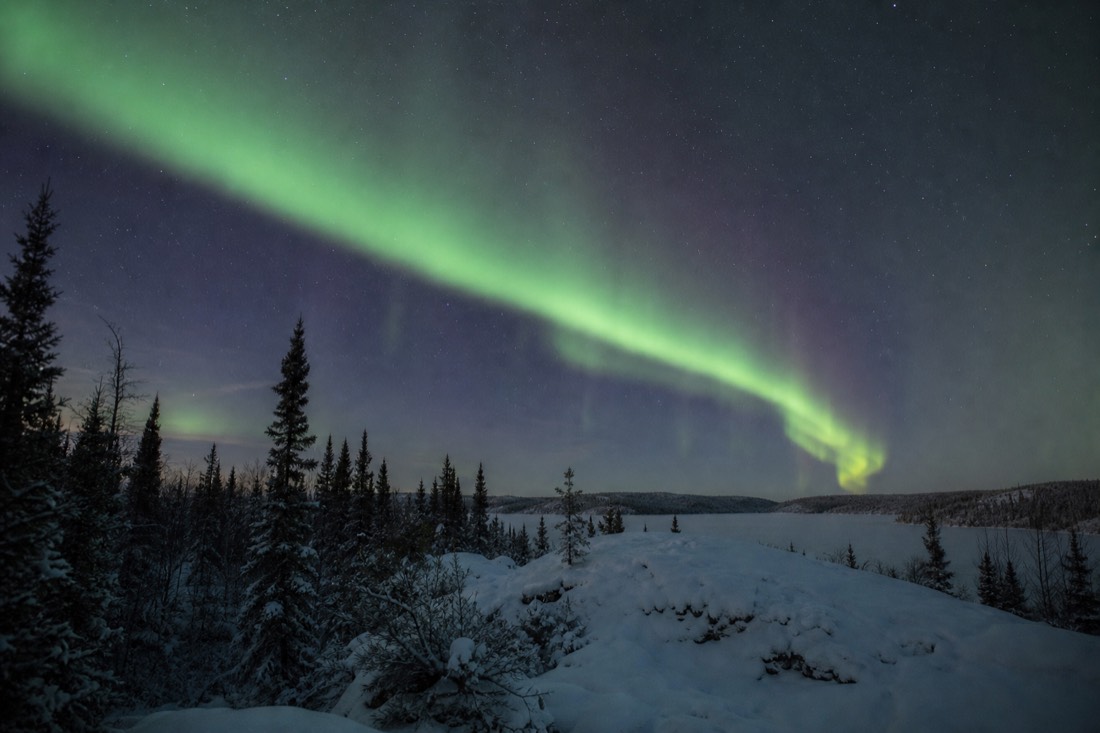
September trips up a lot of aurora planning because the famous destinations lean on deep winter. Yellowknife does not need the snow. What it needs is darkness, and by September the nights here are properly black again for hours around midnight. Add the region's flat horizon, low light pollution outside the small city, and relatively dry skies, and September becomes a fully legitimate aurora month rather than a compromise, a point Travel + Leisure made when it covered the 240-nights figure.
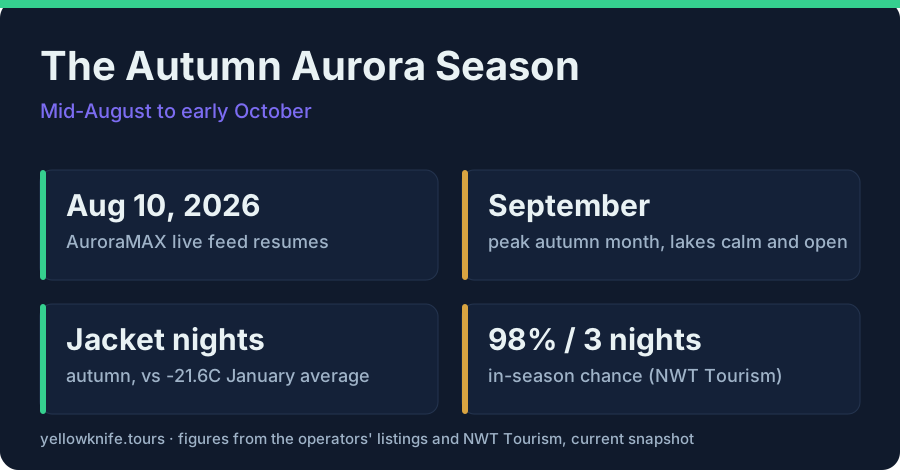
The 98% chance of catching the lights at least once over a three-night stay applies in this season too, so the same rule holds as in winter: give the sky three or four nights. How to structure them is the subject of the aurora itinerary guide.
When exactly does the autumn aurora season run?
Mid-August to early October. Viewing resumes once true darkness returns in mid-August and continues until freeze-up weather closes the window in early October. Astronomy North's AuroraMAX live feed marks the start of the new season when it comes back online on August 10, 2026.
The boundaries are set by light and weather, not by the aurora itself. Midnight sun blanks out viewing from roughly mid-April to late July, with about 20 hours of daylight around the June solstice. By August 10, when the AuroraMAX feed resumes, the midnight hours are dark enough to work with, and the official season descriptions from NWT Tourism run the autumn window from there into early October. After that comes freeze-up, the awkward few weeks when lakes are turning to ice and the season pauses until the winter window opens in mid-November. The full year, month by month, is mapped in the best time to see the northern lights guide.
Inside the window, September is the sweet spot: fully dark nights, still-mild evenings, and lakes at their calmest before the autumn winds pick up.
Why is autumn aurora in Yellowknife underrated?
Three reasons: comfort, reflections, and simplicity. Nights are jacket-mild instead of parka-brutal. Open lakes mirror the aurora, doubling every display. And you can pack for the trip in a carry-on, with no arctic clothing rental, no boot sizing, and no cold-management plan for standing outside at midnight.
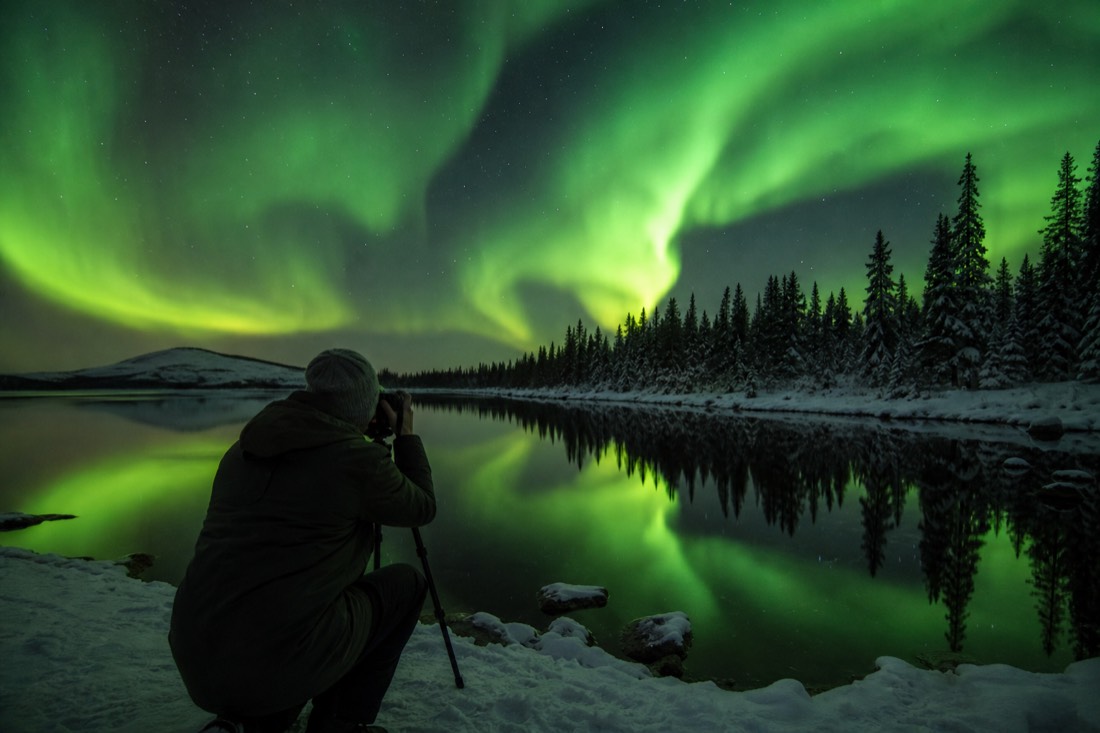
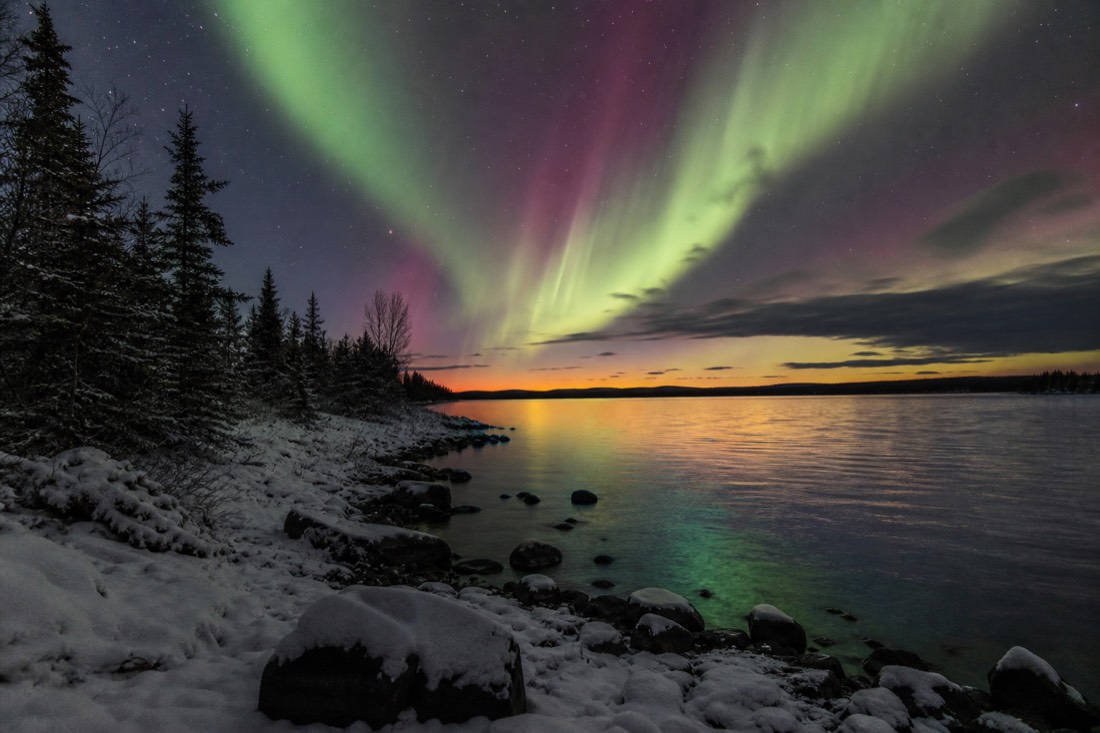
The reflection point deserves more attention than it gets. In winter the lakes are white plains, beautiful in their own way. In September they are black mirrors, and on a calm night a strong display fills your whole field of vision, above and below. Photographers chase this deliberately. I wrote about one of those nights in September aurora over open water, and the houseboats moored in the bay, about 50 of them, make foregrounds you simply cannot get in February; they have their own story in the houseboats of Yellowknife Bay.
Comfort changes behavior, too. Guests who would tap out after twenty winter minutes stay outside for entire displays in September. More time under the sky means more of the show, and the show peaks near local midnight regardless of season.
Is autumn or winter better for the northern lights in Yellowknife?
Neither wins outright. Autumn wins on comfort, reflections, and packing weight. Winter wins on the classic snowscape, the longest dark hours, and the full menu of on-ice daytime activities. The aurora itself performs in both. Choose by the trip you want around the lights, not by the lights.
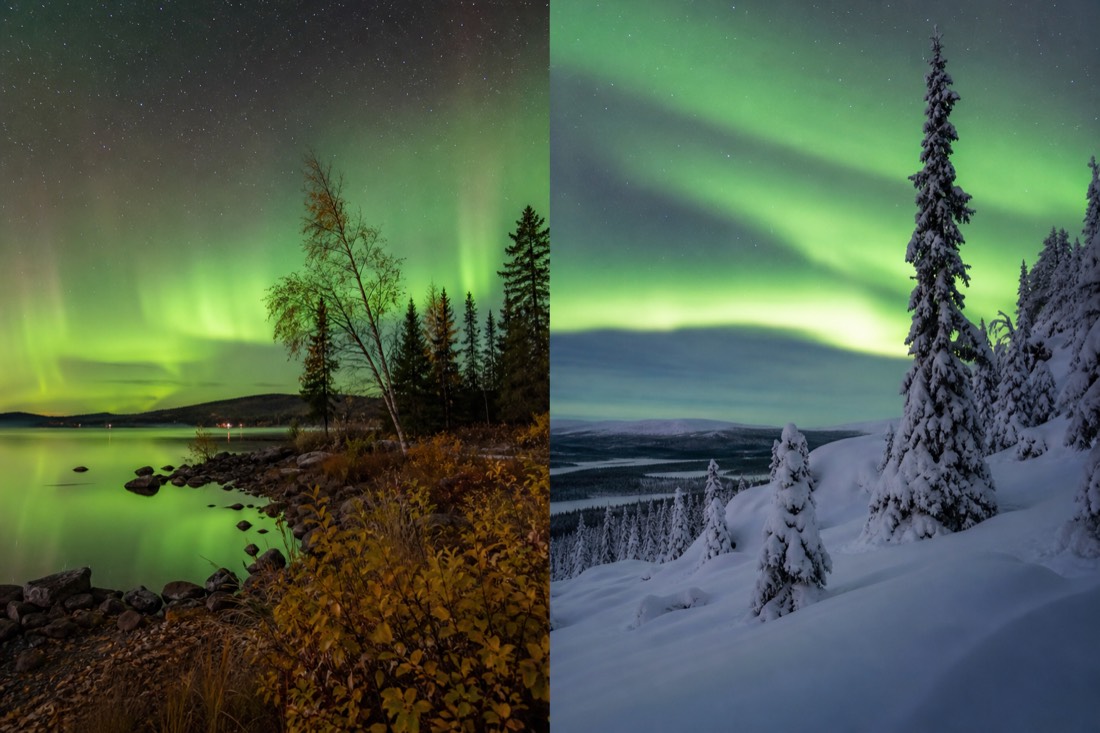
| Factor | Autumn (mid-Aug to early Oct) | Winter (mid-Nov to early Apr) |
|---|---|---|
| Night temperatures | Mild to crisp, jacket weather | Deep cold, routinely below -20 at night |
| The scene | Aurora reflected in open lakes | Aurora over snow and frozen bays |
| Gear needed | Layers you already own | Arctic clothing, often rented in town |
| Daytime activities | City tours, Old Town, Cameron Falls hike | Dog sledding, ice fishing, snowmobiling, ice road |
| Darkness budget | Dark hours around midnight | Long darkness, earlier starts possible |
| Packing | Carry-on friendly | Bulky, or rent on arrival |
That daytime row is the real decision point for most people. If dog sledding on a frozen lake is a bucket-list item, you need winter, and you need the wardrobe that goes with it, covered in what to wear in Yellowknife winter. If the aurora is the singular goal and you want everything else easy, autumn is hard to argue against.
Which tours actually run in August and September?
The night program runs in full: the flagship aurora hunt, the heated lodge, and the 2-night cabin package all operate through autumn, alongside daytime city and culture tours. What does not run is anything standing on ice. Dog sledding, ice fishing, and snowmobile rides wait for the lakes to freeze.
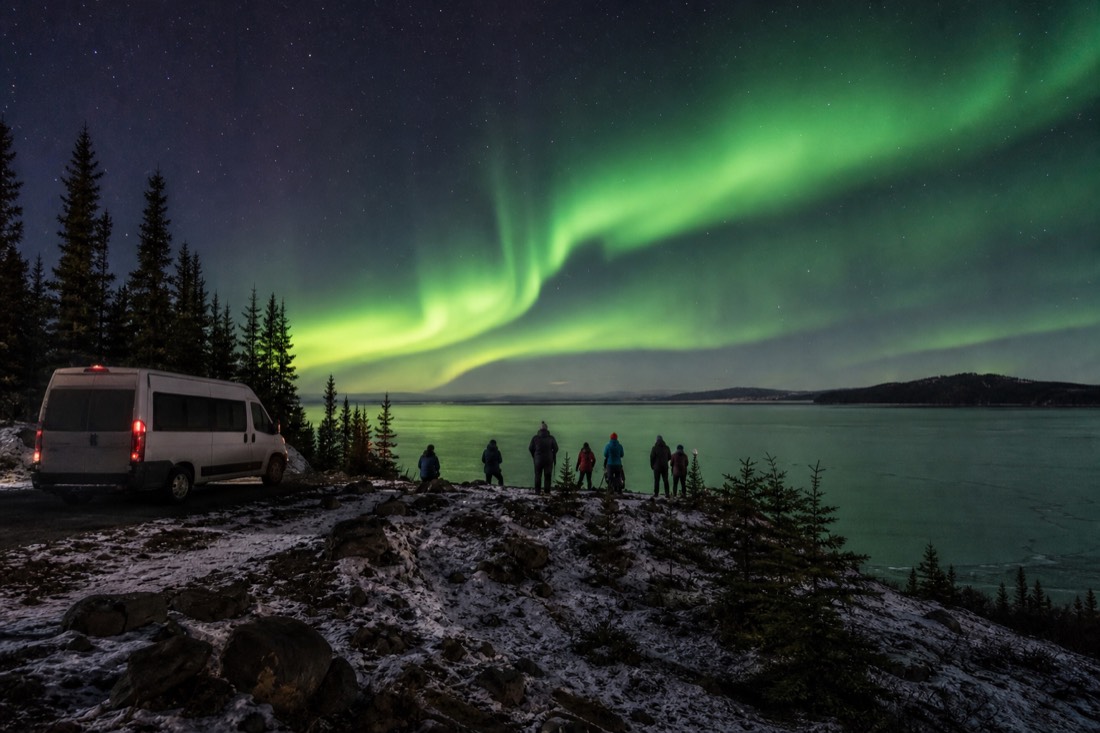
The dividing line is simple physics. Great Slave Lake and the smaller lakes need weeks of hard cold before they carry people, sleds, and huts; even the Dettah ice road across the bay typically opens only around mid to late December. So the autumn menu looks like this:
| Tour | Runs in autumn? | Why |
|---|---|---|
| Aurora hunting by van | Yes | Roads, not ice; chases clear sky nightly |
| Aurora lodge near Madeline Lake | Yes | Heated building, lakeside viewing, chase option |
| 2-night cabin or glass tipi package | Yes | Cabin stays run across both seasons |
| City and culture tours | Yes | Old Town, Heritage Centre, Legislative Assembly |
| Dog sledding | No | Needs frozen lakes and snow cover |
| Ice fishing in heated huts | No | Needs thick lake ice |
| Snowmobile rides | No | Needs winter snowpack |
Nights on the hunt keep the same rhythm as winter: pickup between 9:30 and 10:30pm, viewpoints chosen by cloud, back in town between 1:30 and 2:30am. September dates on the small-group hunt go early, so compare the northern lights tours and check live availability and prices on Viator once your flights are set. The hunt caps at 16 guests with hotel pickup, three viewpoints a night, and a photographer whose shots you keep.
Daylight hours leave room for the town itself, and for the short trip out to Cameron Falls, about 45 minutes and 46 kilometres from the city in Hidden Lake Territorial Park, at its best in early autumn colours.
What should you pack for shoulder-season aurora nights?
Think cool-evening hiking, not polar expedition. Layers that handle a crisp night standing still, a warm hat, and something windproof cover it. The one non-negotiable is patience clothing: whatever keeps you happy outside at 1am, because midnight is when the sky does its best work.
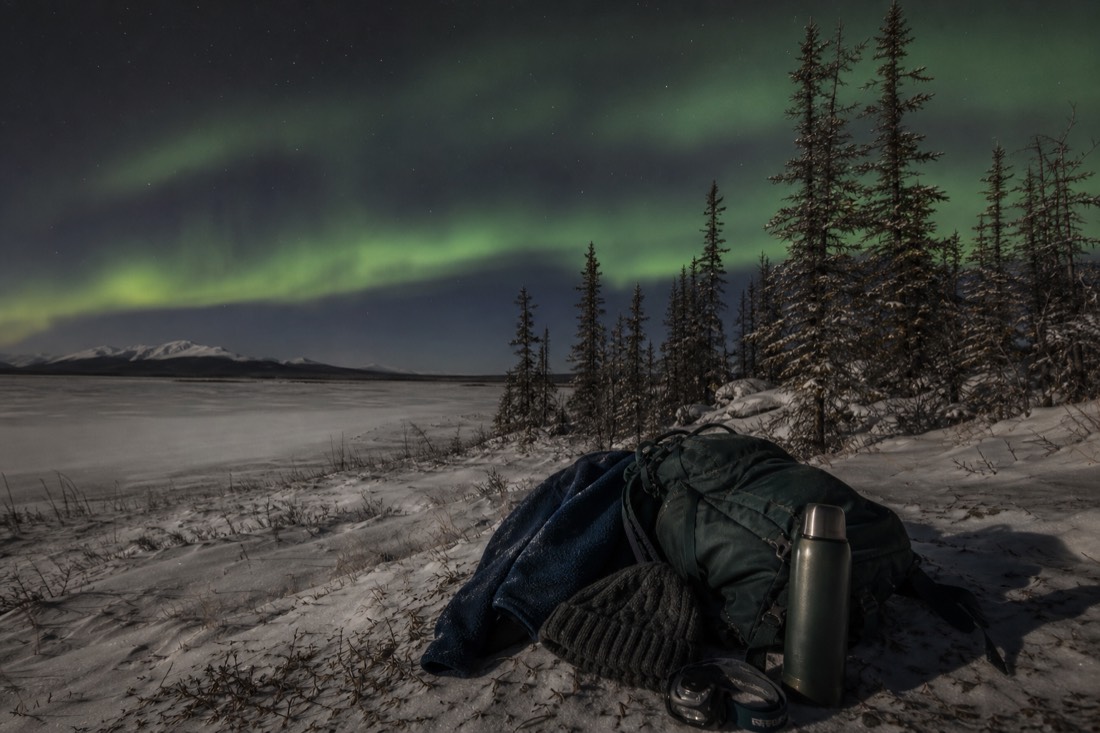
Standing still at midnight always reads colder than the thermometer says, even in September, so pack for a few degrees below the forecast:
| Item | August nights | Late September nights |
|---|---|---|
| Base | T-shirt plus long sleeve | Thermal top |
| Mid layer | Light fleece | Heavier fleece or light down |
| Shell | Windbreaker | Insulated jacket |
| Head and hands | Beanie in the bag, just in case | Beanie on, light gloves |
| Feet | Sneakers or trail shoes | Waterproof shoes, warm socks |
| Extras | Bug spray for August, headlamp | Thermos, headlamp |
One closing honesty note. Autumn's mild reputation depends on the calendar staying inside the window. Come in late July and the sky is still too bright; come in mid-October and you have found the freeze-up gap, the one genuinely bad stretch of the aurora year. Aim for the last two weeks of August or any week of September, book your three or four nights, and let the lakes do the doubling.