What an Aurora Hunt in Yellowknife Is Really Like, Hour by Hour
A Yellowknife guide walks you through a real aurora hunt hour by hour, from the 10pm hotel pickup to lake-hopping the Ingraham Trail to the 2am drop-off.
 By Thomas Beaulieu, Yellowknife tour guide & northern lights specialist
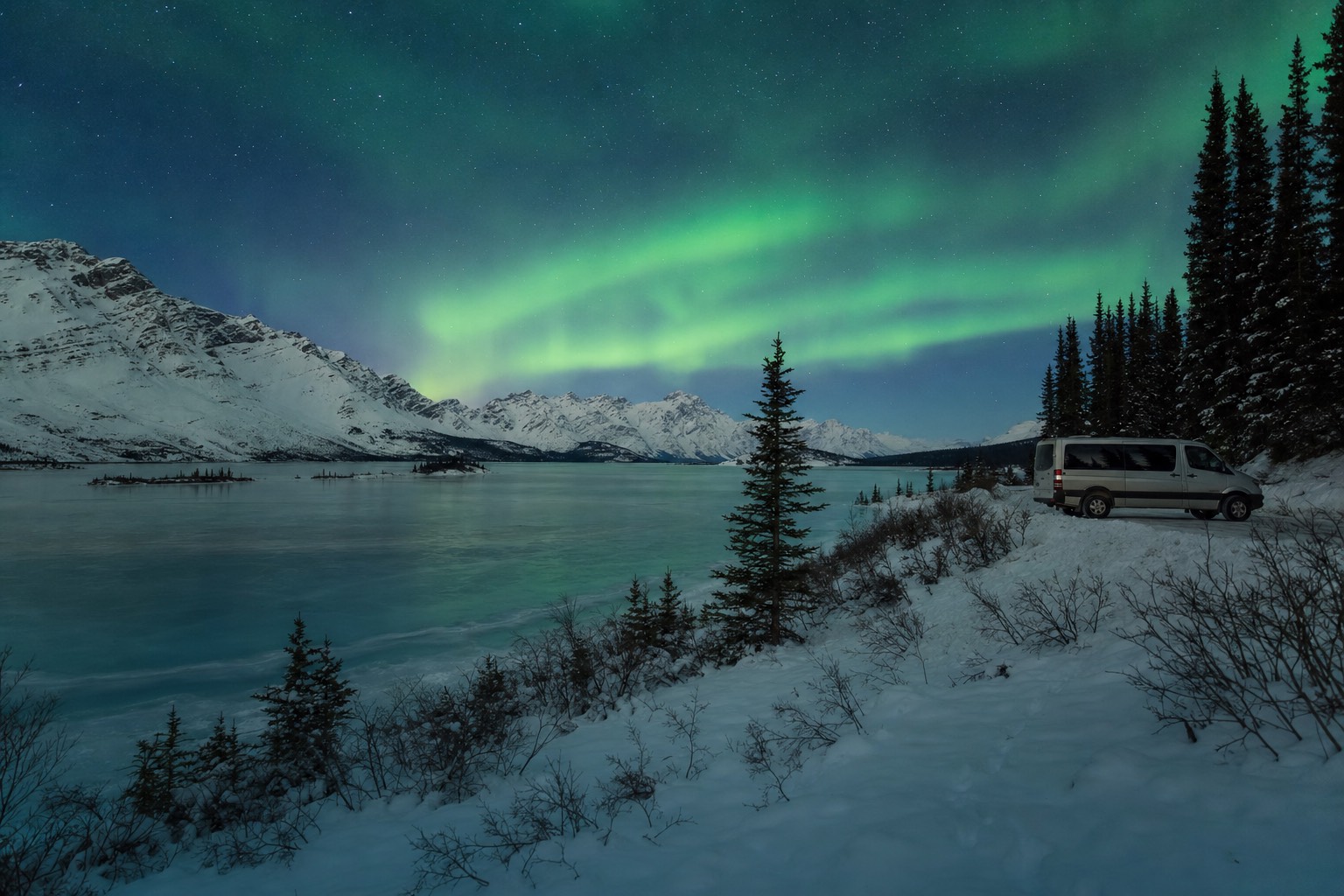
The van is warm and it smells faintly of hot chocolate before anyone has poured any. That is the first thing guests notice at pickup, usually around ten at night, when most of the town is already asleep and we are just clocking in. I have been guiding aurora hunts out of Yellowknife since 2022, and the night still starts the same way every time: sixteen people, a driver who knows every pullout on the Ingraham Trail, a photographer riding shotgun, and a sky that has not yet told us what it plans to do.
What actually happens at the 10pm pickup?
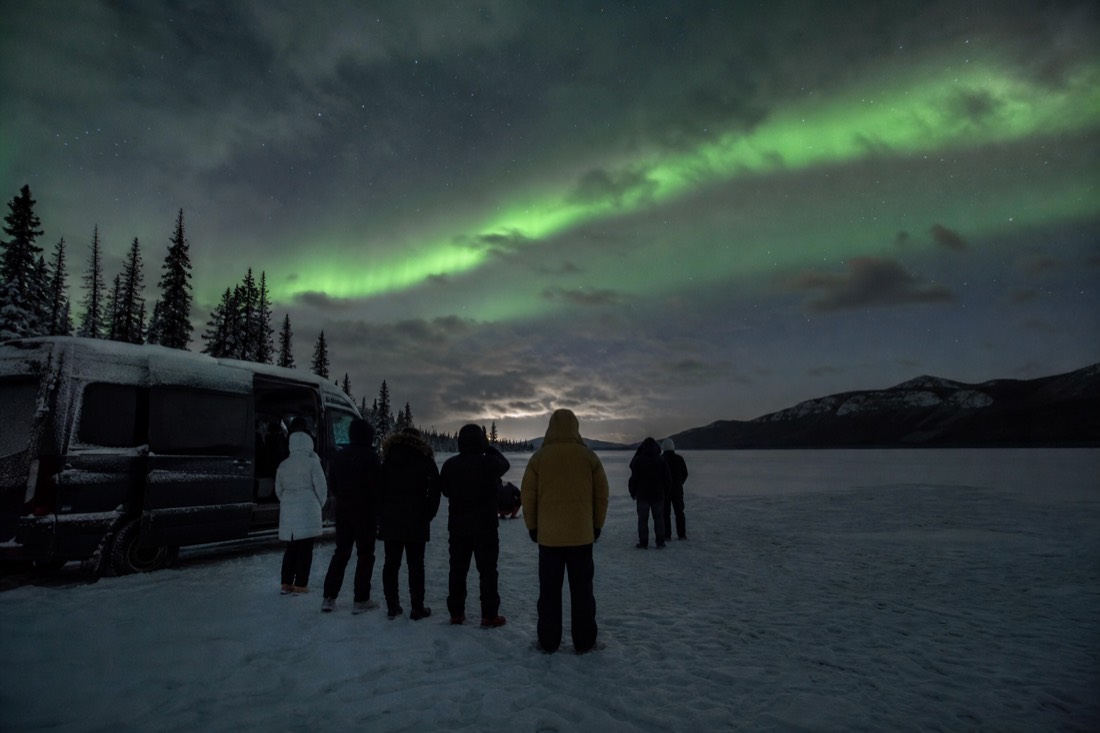
A heated van collects you from your hotel somewhere between 9:30 and 10:30pm, because aurora activity in Yellowknife peaks near local midnight. The flagship hunt carries a maximum of 16 guests plus a photographer, and the first half hour is simply driving out of town, away from the streetlights, while the guide checks the sky.
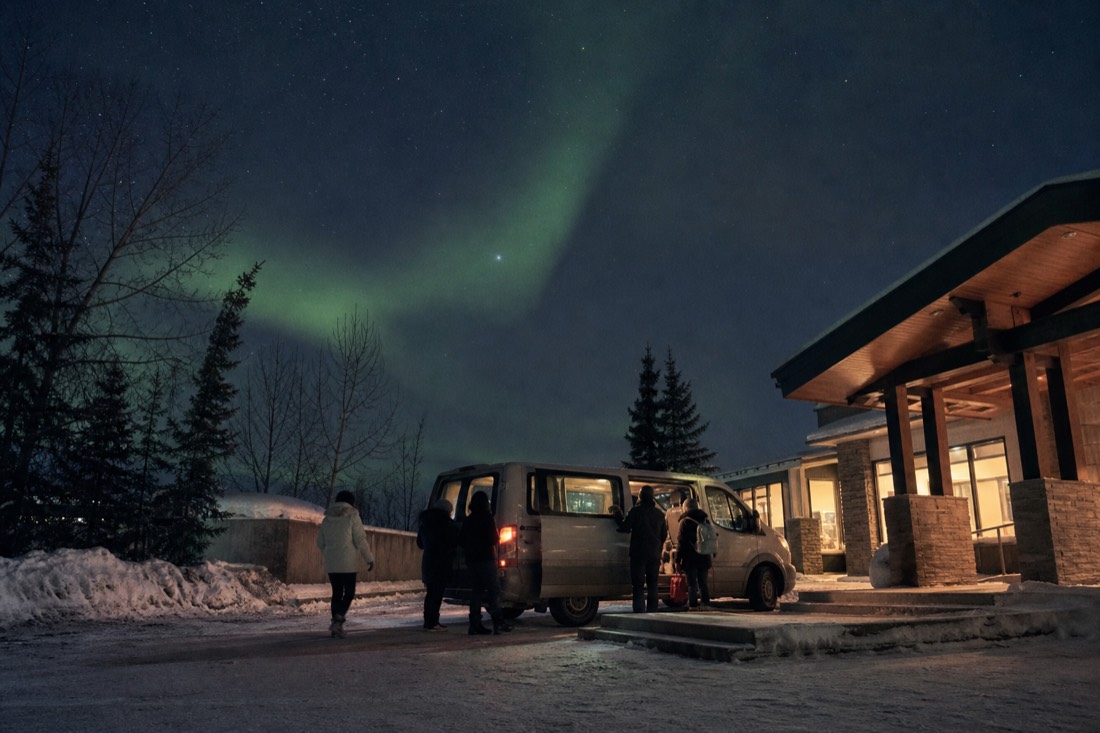
Late starts confuse people. Guests ask why we cannot just go at 8pm like a normal tour, and the honest answer is that the sky does not care about dinner plans. The auroral oval sits directly over Yellowknife, and the activity it throws down tends to build toward midnight, so a hunt that runs roughly 10pm to 2am is fishing in the right hours. Everything about the night is shaped around that window.
Here is how a typical night breaks down. Times drift with the sky, which is the whole point of a hunt rather than a fixed camp.
| Hour | What is happening |
|---|---|
| 9:30 to 10:30pm | Hotel pickups around town, gear check, first sky read |
| 10:30 to 11:15pm | Driving the Ingraham Trail, hunting for a clear hole |
| 11:15pm to 1am | On a lake, cameras up, the prime midnight window |
| 1 to 1:30am | Hot drinks, last photos, sometimes a second viewpoint |
| 1:30 to 2:30am | The quiet drive back and hotel drop-offs |
The van matters more than people expect. Four hours outdoors in a Yellowknife winter is a serious proposition, so the vehicle is the basecamp: warm, stocked, and always close enough to retreat to.
| In the van | Why it is there |
|---|---|
| Hot chocolate, coffee, tea | The 1am morale rescue |
| Cookies | Nobody has ever declined one at midnight |
| A dedicated photographer | Free photos of you under the lights |
| Spare mitts and warm layers | Someone always underdresses |
| Heater running at every stop | Warm-up breaks between camera sessions |
How does a guide read the cloud like a poker hand?
Cloud is the real opponent on an aurora hunt, not the aurora itself. Guides watch satellite loops and the horizon in every direction, then drive toward gaps rather than waiting under a closed sky. The mobile hunt visits up to three viewpoints in a night, hopping lakes along the Ingraham Trail until one opens up.
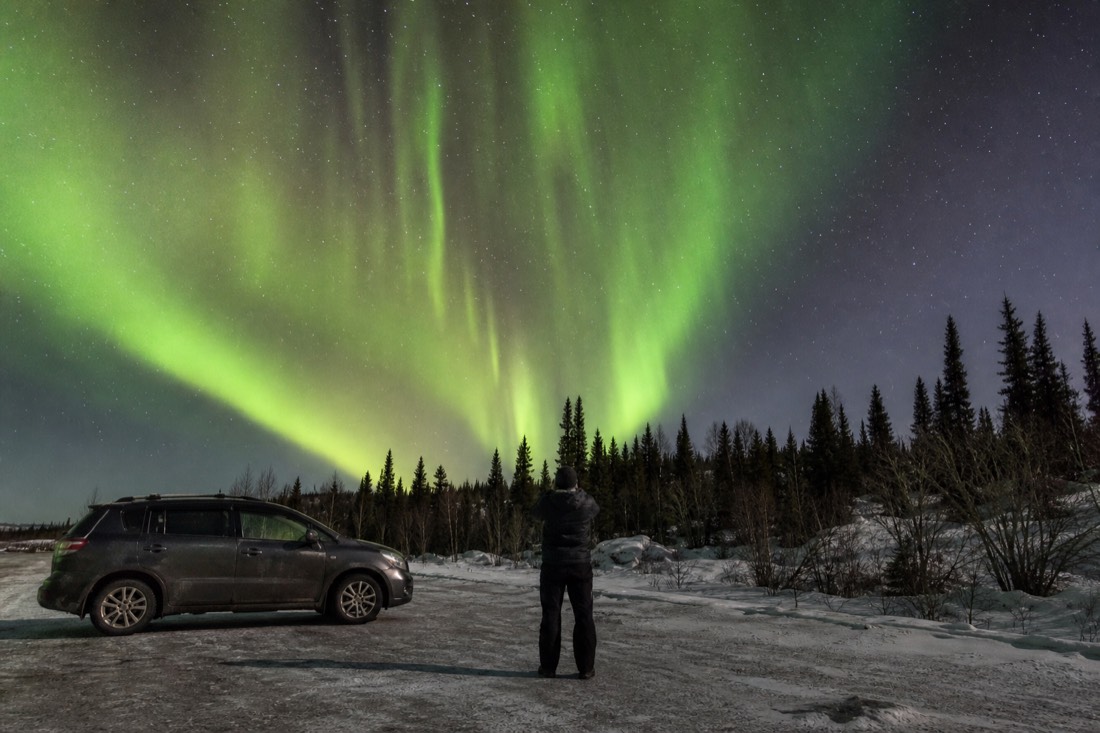
Poker is the right comparison. The forecast deals you a hand before pickup, and then you spend the night deciding when to hold a viewpoint and when to fold it and drive. A bank of cloud sitting over one lake can end thirty kilometres up the trail, and the only way to beat it is wheels. That is the entire argument for a hunting-style tour over a fixed viewing spot: we go where the hole is. The city posts its own aurora and weather conditions page, and plenty of guests are refreshing it in the van while I am watching the actual sky through the windshield.
Yellowknife makes the game easier than almost anywhere else. The land is flat, so the horizon is huge. Precipitation is low, so clear nights are common. And once you are fifteen minutes out of town, light pollution simply stops. Some nights we settle at the first lake and never move. Other nights we play three viewpoints before midnight. The guests who enjoy it most are the ones who treat the driving as part of the show, because in a real hunt, it is.
What does the aurora look like when it finally starts?
It almost never starts green. The first sign is a pale grey-white arc low on the northern horizon, easy to mistake for thin cloud, and your camera will show it green before your eyes do. Given time, the arc brightens, splits, and can break into moving curtains directly overhead.
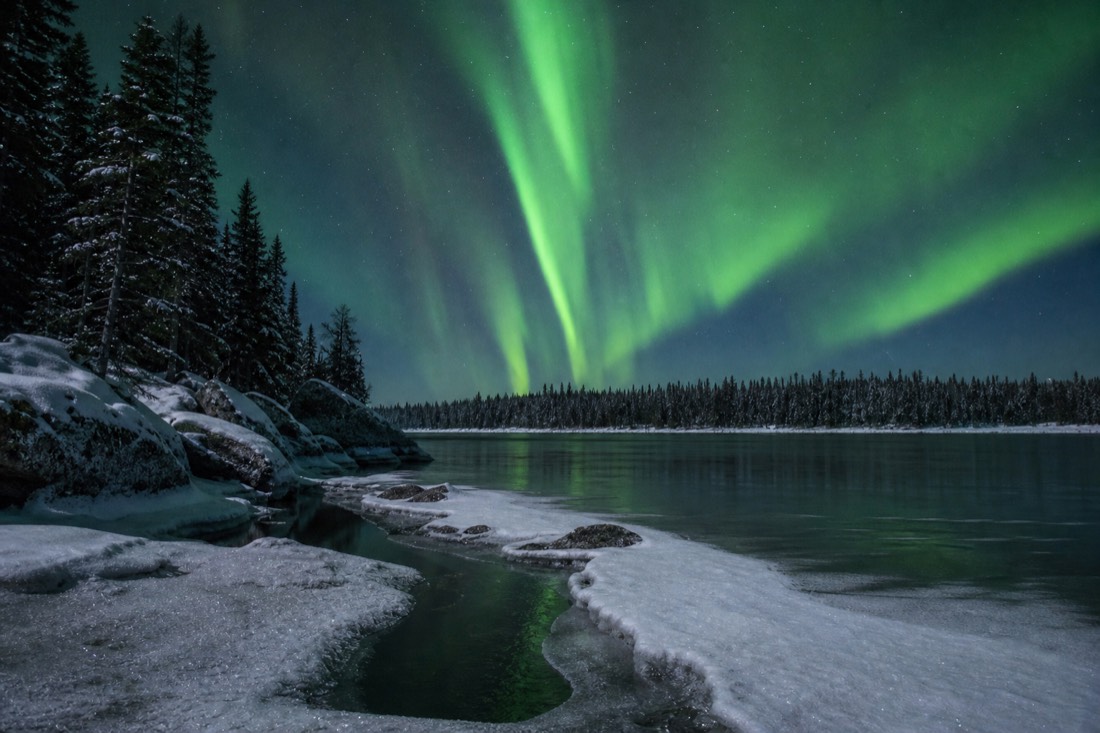
This is the moment I brief people for while we drive, because the biggest rookie mistake is dismissing the beginning. Someone points at a smudge and asks if that is cloud, I put a camera on it, and the screen comes back green. Sensors gather light for seconds at a time; your night vision cannot. So the camera calls it first, and then, if the night builds, your eyes catch up and stop needing any help at all.
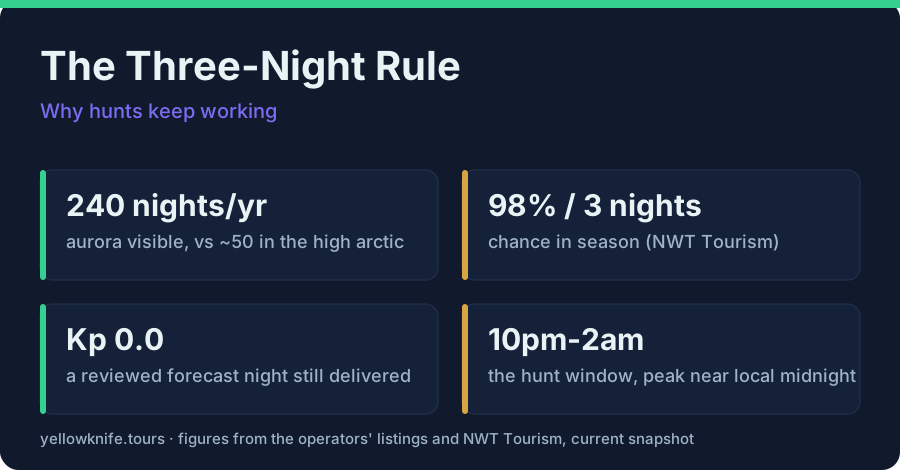
What surprises guests most is how little the forecast number matters here. Yellowknife sits under the auroral oval, so a low Kp is enough; strong storms mostly push the show further south for other people. One real review on the flagship hunt describes a full display on a night forecast at Kp 0.0. I have watched quiet forecasts erupt often enough that I no longer make promises in either direction before midnight. If you would rather have a professional driving that decision for you, the northern lights tour lineup compares every option we recommend, and you can check live availability and prices on Viator for the hunt this article describes.
What happens on a night the sky stays shut?
Some nights stay shut. Cloud wins, or the sun stays quiet, and four hours of honest hunting produces nothing but hot chocolate and stars through gaps. This is exactly why guides preach booking three nights: NWT Tourism puts the odds of seeing aurora at least once across three nights at 98% in season.
I will not pretend the miss nights do not happen, because they do, and a guide who promises otherwise is selling you something. What I can offer is the arithmetic. Aurora is visible over Yellowknife on up to 240 nights a year by NWT Tourism's own numbers, which is astonishing and still not 365. Spread your trip across three nights and the odds move overwhelmingly in your favour. Compress it into one night and you are flipping a weighted coin that occasionally lands wrong.
The good news is that the flagship hunt cancels free up to 24 hours out, so a flexible itinerary costs nothing to build. If you are still choosing dates, the best time to see the northern lights in Yellowknife guide walks the calendar, and the real odds of seeing the lights get their own honest breakdown. Autumn hunters should read about September aurora over open water, which is the season most visitors never hear about.
Why does the 2am drop-off feel so short?
Because the last hour compresses. Hot chocolate comes out, the photographer works through group shots under whatever the sky is doing, and the drive back is twenty minutes of half-asleep silence. Drop-offs land between 1:30 and 2:30am, and most guests are back out with us the next night.
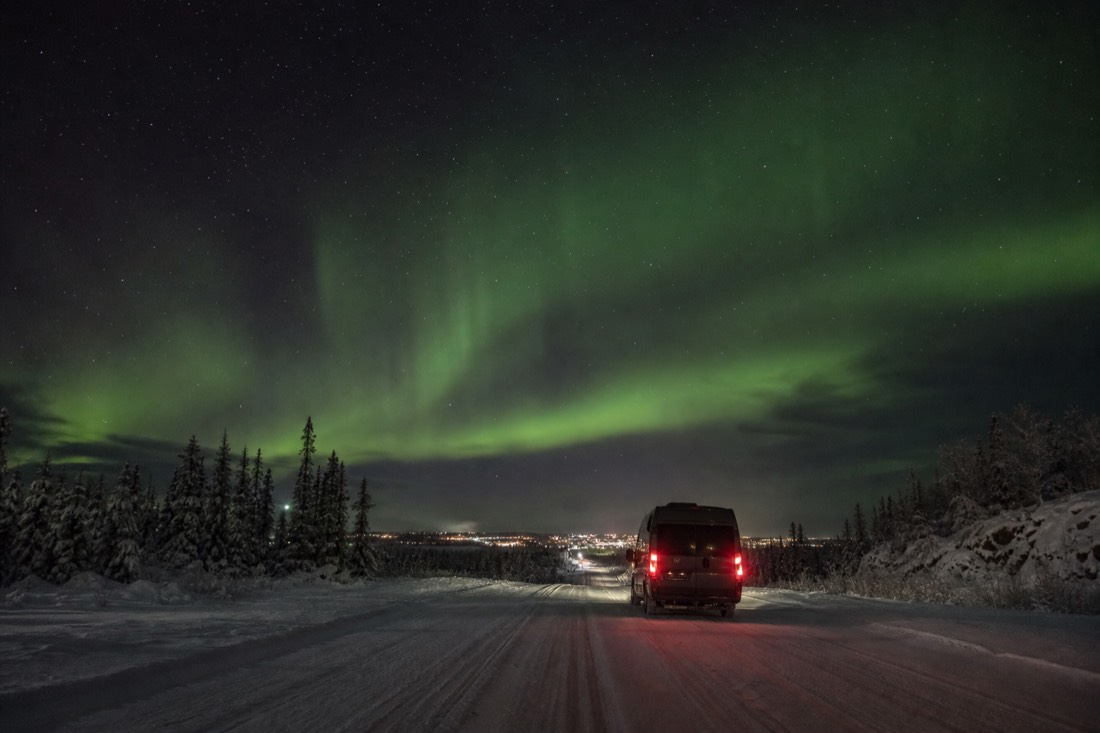
The drive home is my favourite part of the job, honestly. Nobody talks much. Camera screens glow in the dark rows of seats as people scroll what they caught, and the town lights come up over the last hill like something from another planet after two hours on a black lake. Then it is handshakes at the hotel door and a wake-up time that horrifies anyone with a morning flight.
A few closing numbers, for the planners in the back row.
| The night in figures | Value |
|---|---|
| Tour length | 4 hours |
| Group size | Max 16 |
| Viewpoints visited | Up to 3 |
| Rating | 4.8 across 399 Viator reviews |
| Cancellation | Free up to 24 hours before |
| Photos | Taken by the on-board photographer, included free |
One last thing before you book: pack for standing still, not for walking. Four hours of lake-edge stargazing is a different kind of cold than any city errand, and what minus 30 actually feels like is worth reading before your first night out. If you are weighing whether to go guided at all, the honest answer lives in do you need a tour to see the northern lights in Yellowknife. Then get some sleep in the afternoon. Midnight is when the real day starts here.