Chances of Seeing the Northern Lights in Yellowknife: The Real Odds
The published number is 98% over three nights in season, and after a thousand-plus guests I believe it. Here is where that figure comes from and how to push your own odds higher.
 Written with Thomas Beaulieu, Yellowknife tour guide & northern lights specialist
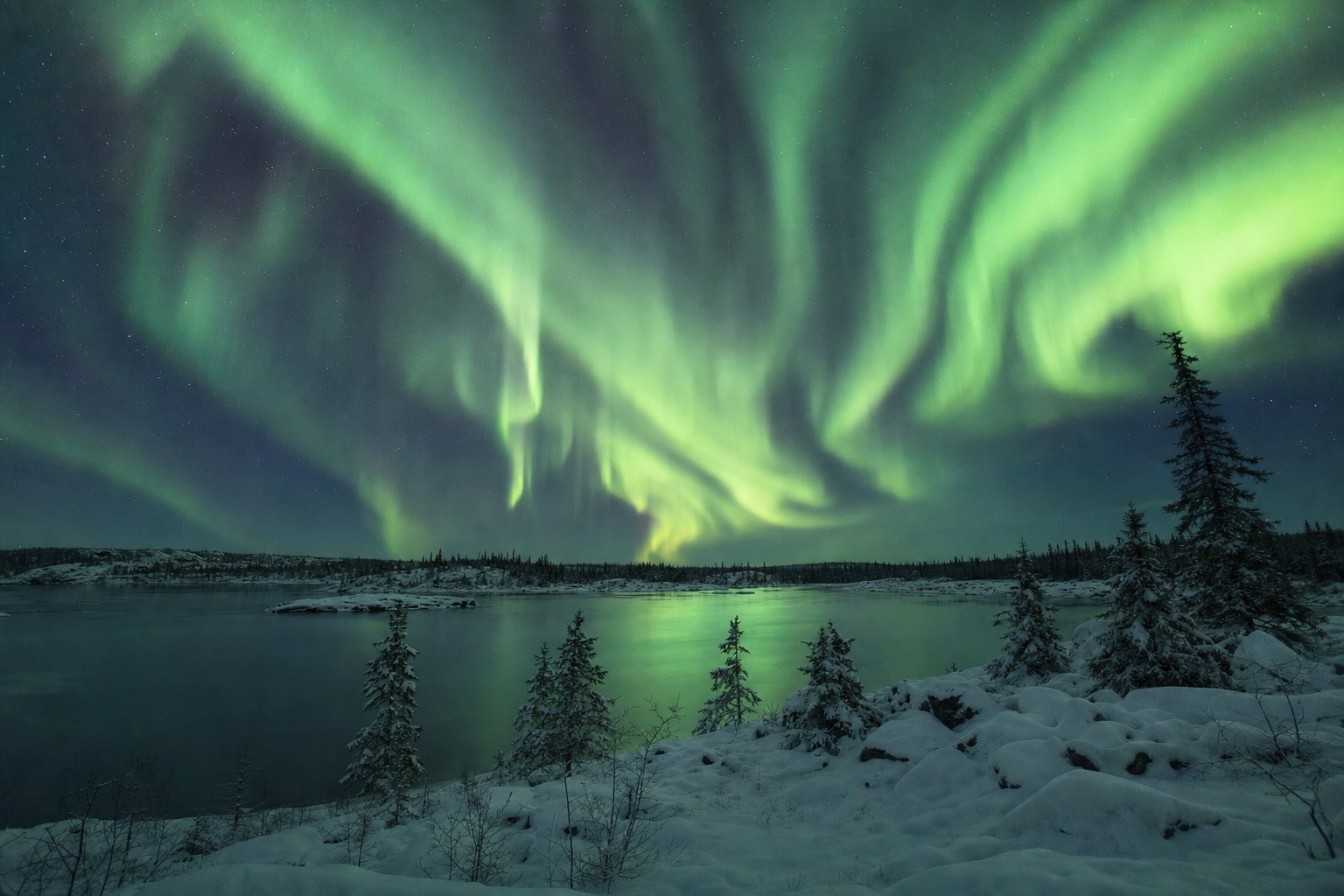
Short answer
Excellent, if you give it time. NWT Tourism puts the chance of seeing the aurora at least once over a three-night stay in season at 98%, with lights overhead up to 240 nights a year. Cloud, not the aurora, is the real enemy, so stay three or more nights and use mobile tours that chase clear sky.
Every few weeks someone emails me before booking: honestly, what are our chances? They expect a salesman's answer. What they get is the only statistic in my industry I can quote without flinching: 98% over three nights, in season, published by the territory's own tourism body. Then I tell them the part the statistic hides, which is that the 2% who miss almost never lose to the aurora. They lose to cloud, or to a trip that was one night too short. Both of those are beatable, and beating them is most of my job.
If you have not settled on a destination yet, the four conditions that decide any aurora sighting anywhere are laid out in how to see the northern lights, and the money side of that choice, which is really a question of how many nights you have to buy before the odds work, sits in the cheapest place to see the northern lights.
What are your actual chances of seeing the aurora in Yellowknife?
Over a three-night stay in season, 98%, per NWT Tourism. The aurora appears over Yellowknife up to 240 nights a year because the city sits directly under the auroral oval, so on any given dark night the show is more likely up there than not. Single-night visits are the main way people miss.
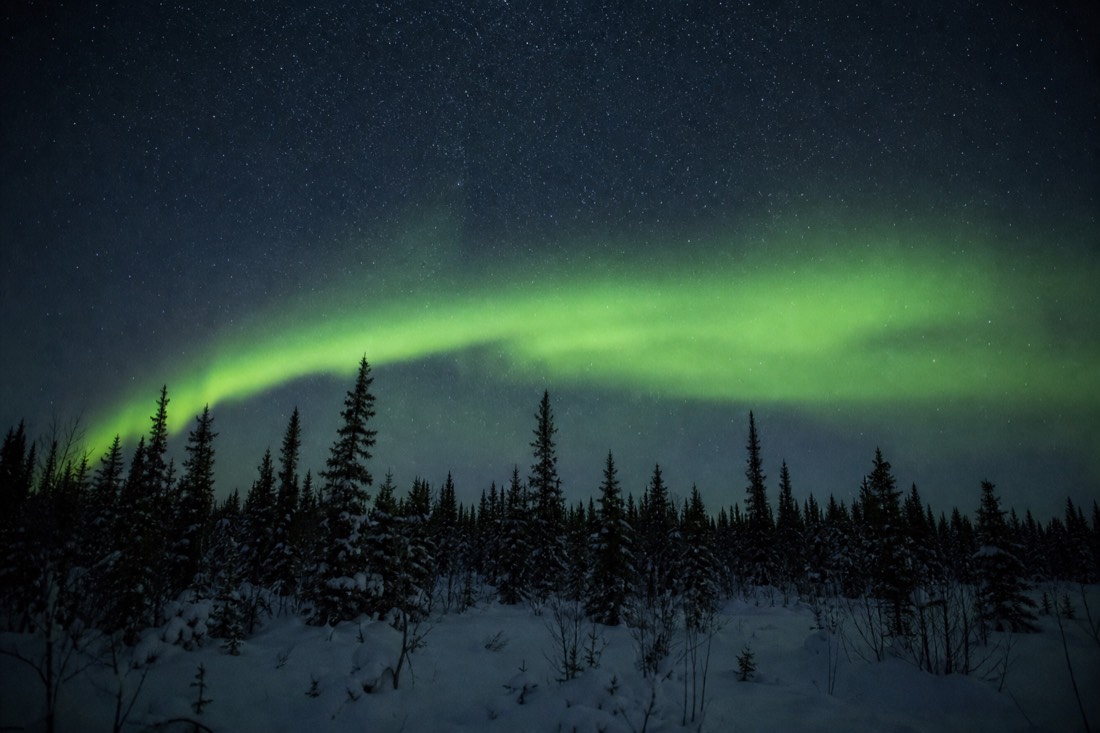
Both numbers come from the territory's published data, laid out on the aurora by the numbers page: up to 240 aurora nights a year, and 98% odds across three in-season nights. My four winters of guiding track that math almost eerily well. Guests who stay three nights nearly always go home with a sighting. Guests who book one night are rolling a die, and when it comes up cloudy there is nothing anyone can do about it by morning.
Note the phrase "in season" doing quiet work in that statistic. It spans the two viewing windows, autumn and winter, and excludes the bright months entirely. From roughly mid-April to late July the midnight sun keeps the sky lit, about 20 hours of daylight around the June solstice, and the odds of seeing aurora are simply zero. No tour, no app, no luck beats a sky that never gets dark.
Why is cloud the real enemy, not the aurora?
Because the aurora is almost always there and the sky is not always open. Under the oval, activity strong enough to see occurs on most dark nights, so the practical question each evening is whether cloud sits between you and it. That is why mobile hunting tours, which drive to gaps in the cloud, outperform fixed viewing spots.
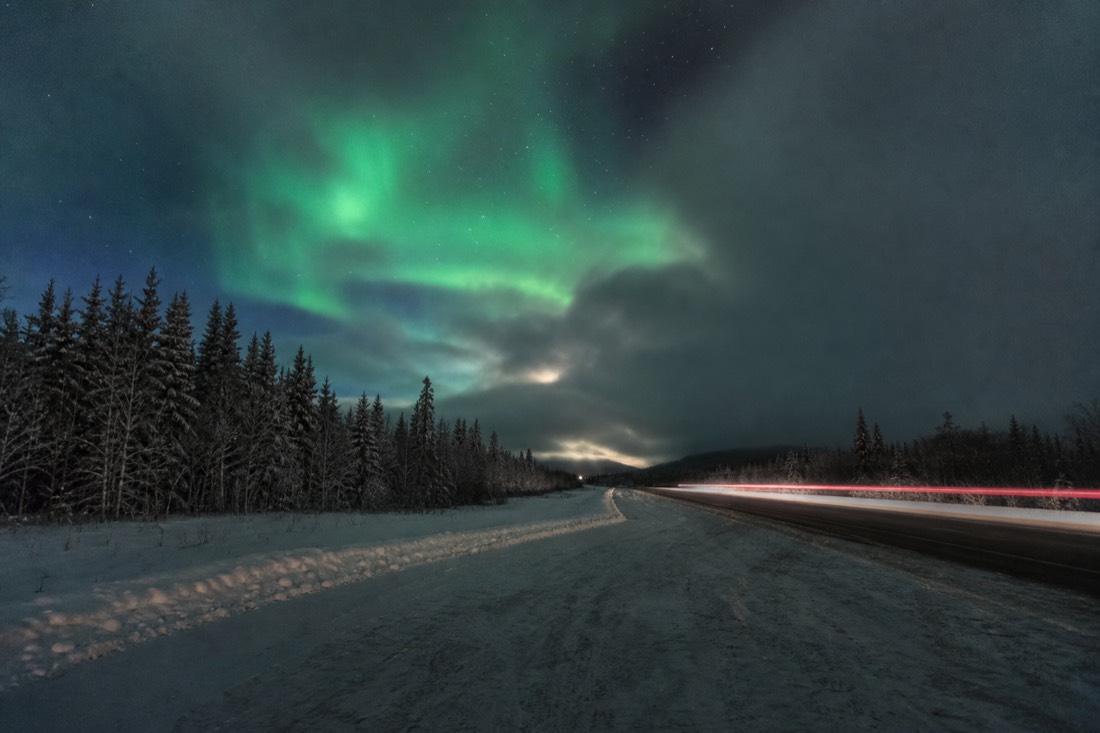
Reframe the problem the way guides do and your strategy writes itself. You are not hunting the aurora, you are hunting clear sky, and Yellowknife is one of the best places on Earth to do it: the interior climate runs relatively dry with frequent clear winter nights, and flat horizons mean any gap in the cloud is usable, even one sitting low near the skyline. On a fully clear night, everyone wins, DIY watchers included, as I explain in do you need a tour to see the lights. On a mixed night, the vehicle wins. A hunt that can cover serious highway distance in four hours will find holes a hotel balcony never sees.
This is also why I tell photographers and odds-maximizers to spread their nights across different tour styles. A fixed lodge is comfort and depth on a clear forecast. A mobile hunt is insurance on a messy one. The full aurora itinerary shows how I sequence them across a real trip.
Do you need a strong Kp forecast in Yellowknife?
No, and this surprises almost everyone. Because the auroral oval sits directly overhead, low geomagnetic activity still produces visible displays here; strong Kp storms mainly push the oval south to benefit other places. One flagship-tour review describes a good show on a night forecast at Kp 0.0, the bottom of the scale.
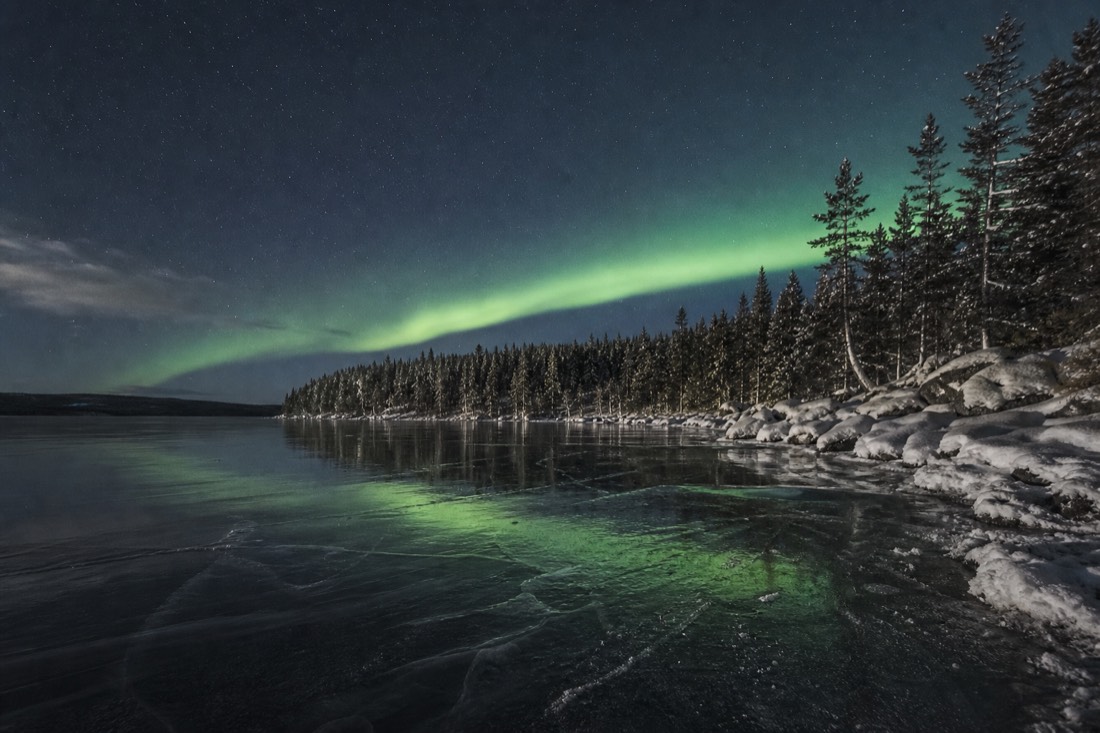
The Kp index measures geomagnetic disturbance from 0 to 9, and aurora apps have trained travelers to treat low numbers as a verdict. In most of the world that instinct is right. Under the oval it is backwards enough that I spend part of most pickups un-teaching it. A quiet sun keeps the oval in its home position, which is on top of us. That Kp 0.0 review is my favourite piece of evidence precisely because a guest wrote it, not a marketer: the forecast said nothing, the sky said otherwise.
So on your Yellowknife nights, read the forecast in this order: cloud first, darkness second, Kp a distant third. The one Kp scenario worth genuine excitement is a big storm, which turns a normal Yellowknife show into an all-sky event. But waiting for one before booking is like refusing to swim until the ocean warms up. The water is already fine.
| Forecast reads... | What it means in Yellowknife |
|---|---|
| Kp 0-1, clear sky | Genuinely good night; overhead displays routinely happen, as the Kp 0.0 review shows |
| Kp 2-3, clear sky | Strong prospects; classic bands and movement likely |
| Kp 4+, clear sky | Potential all-sky storm; cancel nothing, sleep later |
| Any Kp, solid cloud | The real problem night; mobile hunts hunt for gaps |
| Any Kp, mid-Apr to late Jul | Zero chance; the midnight sun leaves no darkness to see against |
Is the solar cycle still on your side in 2026?
Yes. Solar cycle 25's maximum most likely arrived around October 2024, and 2026 sits in the early declining phase, which history shows remains a strong period for aurora. Activity stays high in the years right after a peak, so current seasons are still excellent ones to travel for.
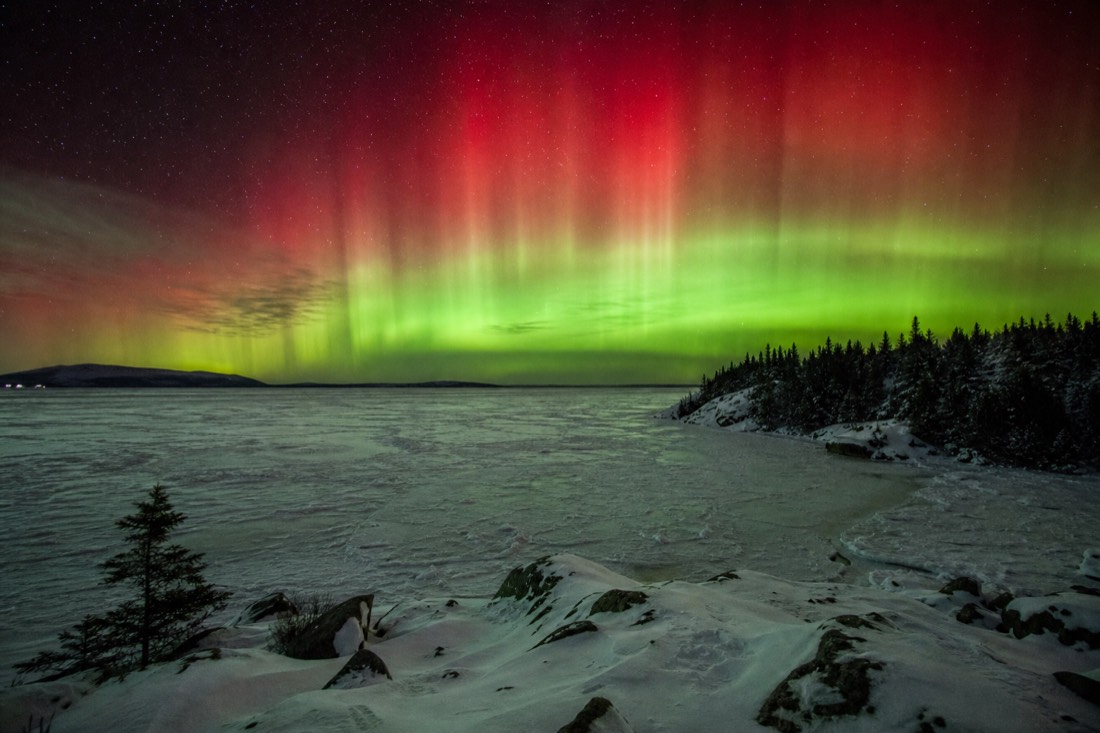
I add this section because a wave of guests arrived in 2025 half panicked that they had "missed solar maximum". The record deserves straightening. The sun runs on a roughly 11-year activity cycle, the current one peaked, per the analysis Space.com published on the sun's recent activity, most likely around October 2024, and the seasons that follow a peak historically stay lively. I will not claim 2026 is the maximum, because it is not. I will say what the data supports: activity remains high, the shows my groups saw this past winter were superb, and under the oval even the cycle's quiet years produce aurora most dark nights. The cycle shifts your odds of storm-class spectacle, not your odds of a sighting.
How many nights do you need before the odds work?
Three, and the number is not arbitrary. NWT Tourism publishes 98% for at least one sighting across three in-season nights, and that is the only probability anyone here can stand behind. Shorter trips trade a published figure for a gamble. A fourth night buys margin against a cloud system that will not move.
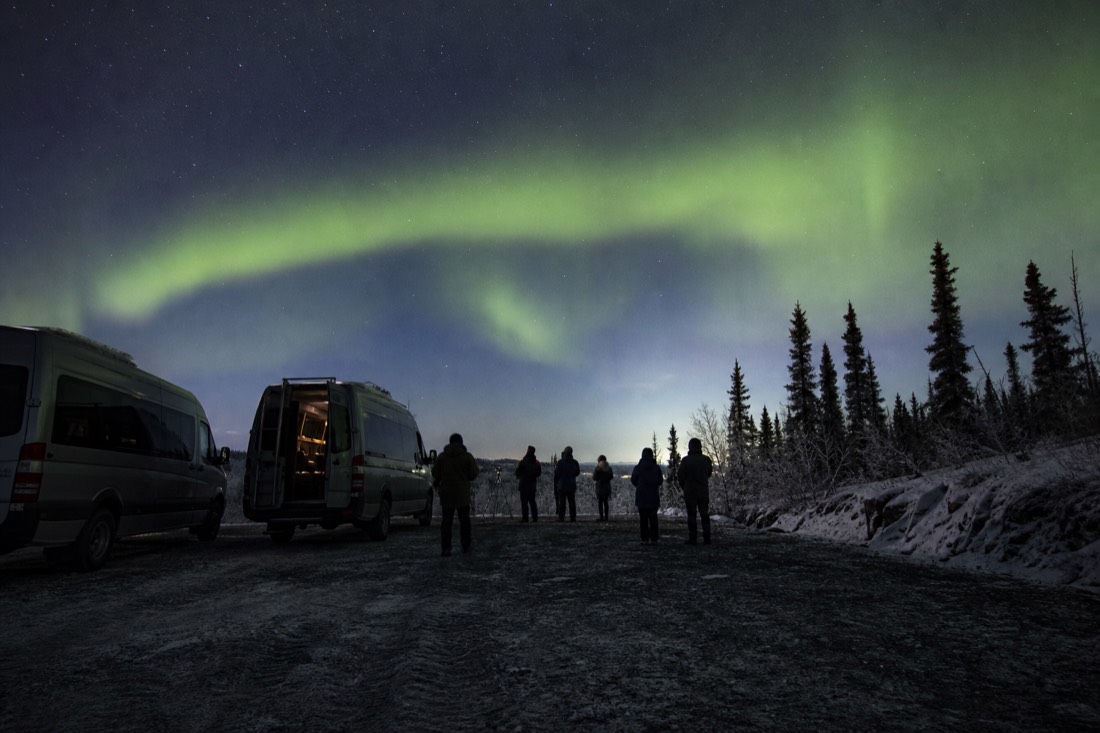
The question behind the question is always the same: what is one night worth? Nobody publishes a per-night figure for Yellowknife, so the honest move is to run the published one backwards and label the result for exactly what it is.
| Nights in season | Chance of at least one sighting | Where the number comes from |
|---|---|---|
| 1 night | about 73% | Illustrative arithmetic, not a measured rate |
| 2 nights | about 93% | Illustrative arithmetic, not a measured rate |
| 3 nights | 98% | Published figure, NWT Tourism |
| 4 nights | about 99.5% | Illustrative arithmetic, not a measured rate |
| 5 nights | about 99.9% | Illustrative arithmetic, not a measured rate |
Read that table with its caveat welded on. Only the three-night row is data. The rest is what you get by back-solving 98% as though every night were an independent, identical draw, and northern weather is nothing of the sort. Cloud arrives as systems that sit for two or three nights at a stretch, so misses cluster instead of scattering. That makes the one-night row read more generous than it behaves in real life, and it means the jump from three nights to four is worth more than a decimal place suggests.
So the direction of the ladder is right and the precision is fiction. Use it to rank your choices, never to quote a number at anyone.
The other half of the picture is the 240 aurora nights a year, and that figure spans the whole calendar, bright months included. Strip out the weeks when nothing can be seen and what remains is a sky that performs on most usable nights, which is why the failures I hear about almost never involve a quiet sun. They involve a short trip, a closed sky, or dates outside the season. Cloud is the one you can still fight after arrival, and the way to fight it is a vehicle plus a forecast habit, which is the whole point of the Yellowknife aurora forecast guide.
Which months are actually dark enough for aurora?
Late August through mid-April, and the reason is astronomical darkness rather than season labels. True darkness returns to Yellowknife around August 27, grows quickly through September, then vanishes again around April 12 to 14. Book a night outside that window and your odds are not low, they are zero.
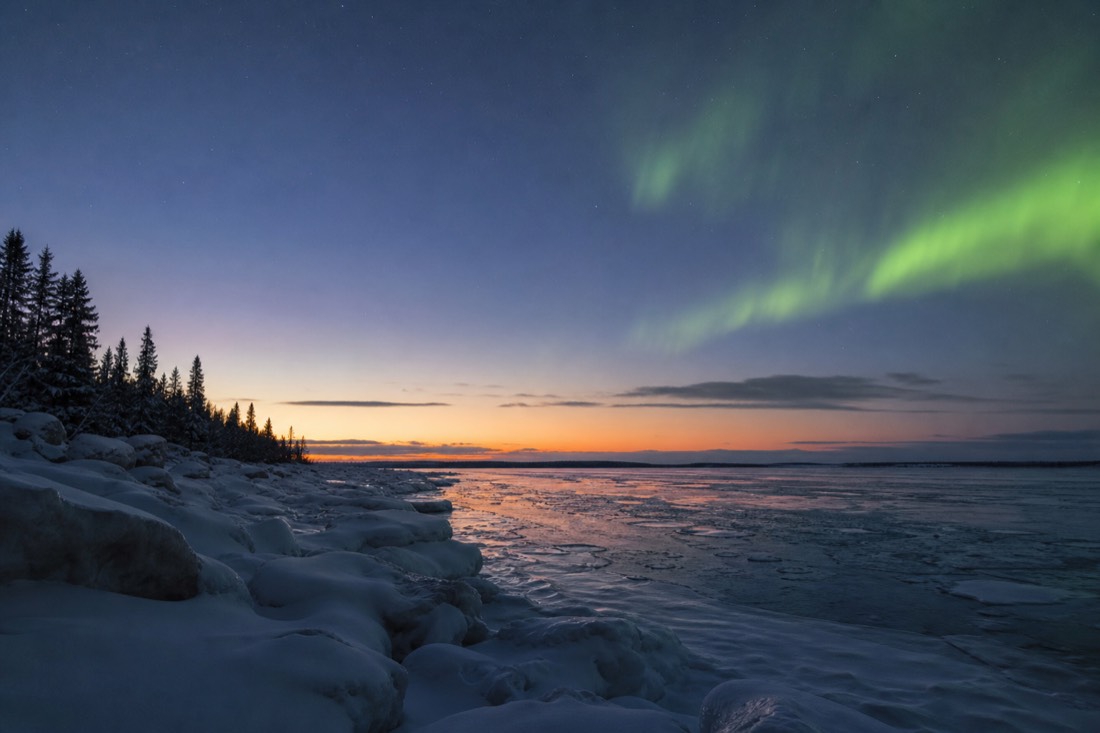
Yellowknife sits at about 62.45N, roughly 400 km south of the Arctic Circle, so it gets neither polar night nor true midnight sun. The sun sets every day of the year here. What changes is how far below the horizon it goes, and that is the number that decides whether a sky can show aurora at all. Here is the picture on the 15th of each month.
| Month | Sunrise | Sunset | Daylight | True astronomical darkness |
|---|---|---|---|---|
| January | 09:42 | 15:52 | 6h10m | about 12h |
| February | 08:21 | 17:21 | 9h00m | about 10h |
| March | 07:51 | 19:41 | 11h50m | about 7h |
| April | 06:08 | 21:06 | 14h58m | none by mid-month |
| May | 04:34 | 22:32 | 17h58m | none |
| June | 03:34 | 23:44 | 20h09m | none |
| July | 04:12 | 23:14 | 19h02m | none |
| August | 05:37 | 21:45 | 16h08m | none at mid-month |
| September | 07:01 | 20:03 | 13h02m | about 5h20m |
| October | 08:21 | 18:24 | 10h02m | about 9h |
| November | 08:50 | 15:53 | 7h03m | about 11h30m |
| December | 09:57 | 15:07 | 5h09m | about 12h45m |
Notice what the mid-month rows hide at the edges of the season, because that is where bookings go wrong.
| Calendar edge | What the sky is doing | What it means for a booking |
|---|---|---|
| Around August 27 | True darkness returns, only minutes of it at first | The season's first genuinely viable nights |
| Through September | The dark window stretches toward five hours and keeps growing | Autumn viewing proper, over open water |
| Around April 12 to 14 | True darkness disappears again | The last viable nights of the winter season |
| Mid-April to late July | The sun sets, but twilight holds all night | No sighting is possible, at any price |
That June solstice figure of just over 20 hours of direct daylight, documented in the Yellowknife sun tables, is why a summer aurora trip cannot be rescued by a good forecast or a determined guide. There is nothing to see against. If the whole light-and-dark cycle up here interests you, whether Yellowknife gets 24-hour darkness works through it properly.
Which month gives you the best odds inside the season?
December and January hand you the most true darkness, close to twelve hours a night, at the coldest temperatures on the chart. September and March deliver five to seven dark hours in far kinder air. The published 98% covers the whole season, so choosing a month is about comfort, daylight and what runs beside the aurora.
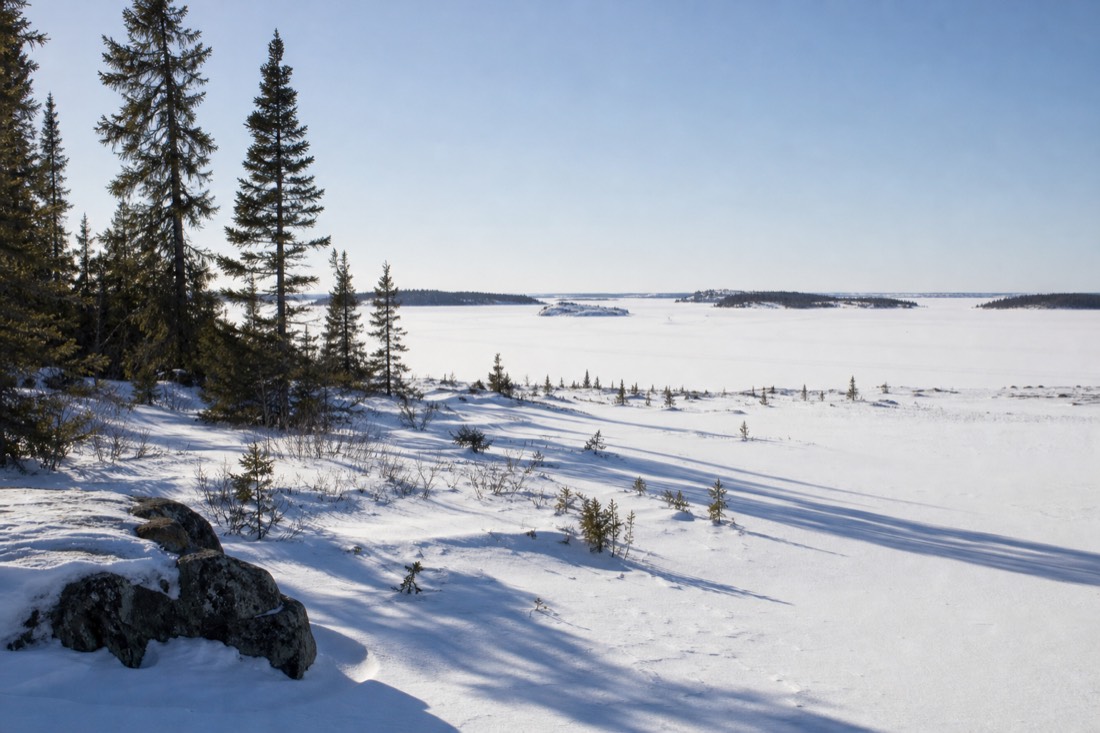
This is the table I wish more people saw before booking, because month choice gets made on vibes and paid for in frostbite. Darkness hours are from the sunrise and sunset data above; the temperatures are Environment Canada's average nightly lows, not the extremes people quote at parties.
| Month | True darkness per night | Average night low | What else is running | The trade |
|---|---|---|---|---|
| Late August | Minutes, growing nightly | about 10.5C | Open water, floatplanes, hiking | The season opens, dark window still tiny |
| September | about 5h20m | about 4.2C | Boats, city tours, autumn colour | Mildest aurora nights, shortest darkness |
| October | about 9h | about -3.6C | Shoulder season, freeze-up begins | Darkness climbs fast, fewer tours running |
| November | about 11h30m | about -16.2C | Winter program starting as ice forms | Long nights, ice road not open yet |
| December | about 12h45m | about -25.6C | Full winter tours, ice road opens late month | Maximum darkness, five hours of daylight |
| January | about 12h | about -29.4C | Everything running, ice road solid | Coldest month on the normals |
| February | about 10h | about -27.4C | Full winter program | Still bitter, daylight returning quickly |
| March | about 7h | about -22.5C | SnowKing on the bay, every winter tour | Best all-round balance |
| Early April | Shrinking to none by the 12th to 14th | about -11.3C | Ice road until mid-month | The season's last call |
The pattern I notice across guests is that the ones who leave happiest are almost never the ones who chased the most extreme conditions. Twelve hours of January darkness sounds like an advantage until you are standing in it at -29C, deciding after twenty minutes that the van is more interesting than the sky. Seven hours in March is plenty, because you only need the window that overlaps the 10pm to 2am peak, and in March you can stay in it. People stay outside longer when they are warm, and staying outside is how the good displays get caught. That is the quiet reason March keeps winning here, and it is also why what you wear on a winter night is an odds question, not a comfort question.
Autumn works on the opposite logic. Five hours of darkness is a short runway, but the air is mild enough that nobody quits early, and the lakes are still open, which doubles every display in the water. Pick the month that lets you stay out, then give it the three nights the statistic was built on.
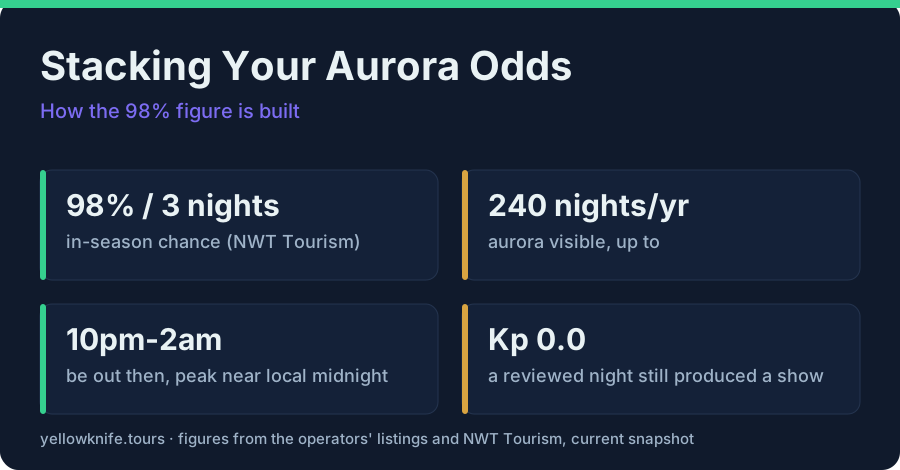
How do you stack the odds as high as they will go?
Give the sky three or more nights, be outside during the 10pm-to-2am peak window, book mobile hunts when cloud threatens, and consider a multi-night package that puts you at a dark-sky base with hunts built in. Every one of those moves attacks a different way trips fail.
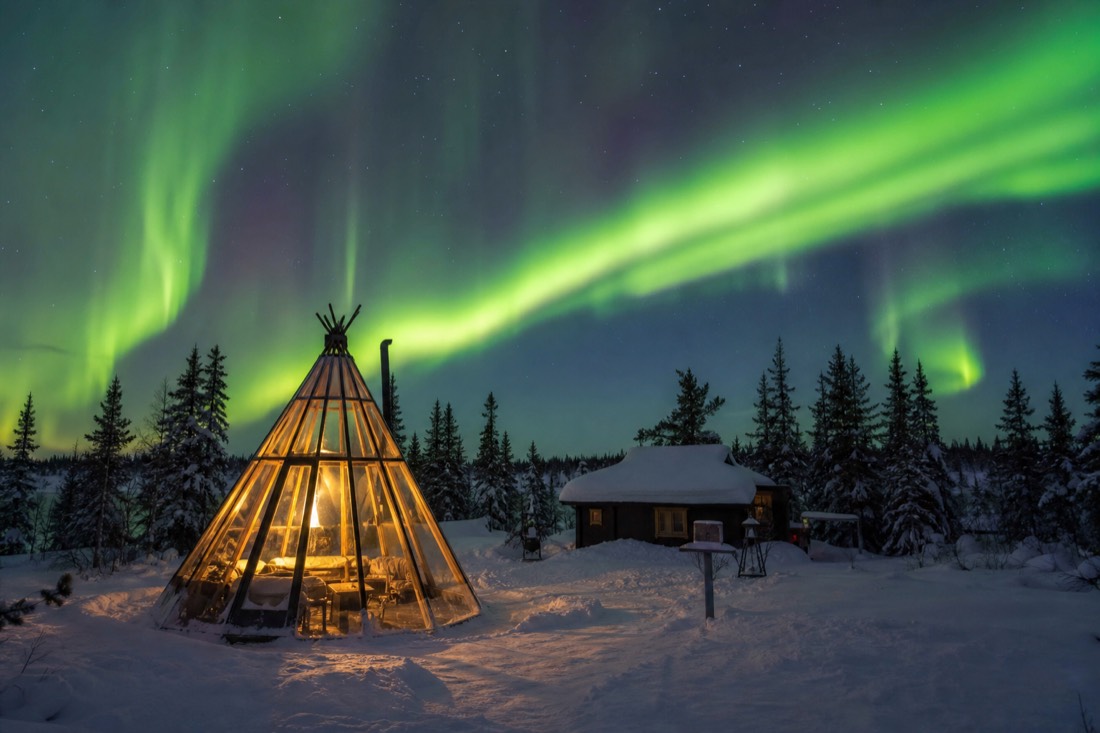
Here is the strategy table I sketch for guests on napkins, formalized.
| Strategy | What it fixes | The move |
|---|---|---|
| Stay 3+ nights | Single-night cloud risk, the main cause of misses | The 98% stat is built on three nights; four is better |
| Watch 10pm to 2am | Sleeping through the show | Peak sits near local midnight; nap after dinner, not after 10 |
| Book a mobile hunt | Cloud parked over town | Hunts drive to clear gaps; the flagship works three viewpoints a night |
| Take a multi-night package | Commuting to darkness nightly | Two consecutive nights based at a dark-sky camp, hunts included |
| Add the autumn option | Deep-cold dread keeping you home | Mid-Aug to early Oct offers milder nights over open water |
The multi-night row is the one people overlook. The two-night cabin package here runs three days at a wilderness base outside town, sleeping in a cabin or glass tipi, with aurora hunting and viewing on both nights, airport and hotel transfers handled, hot soup served out on the ice, and two digital photos included. Hotel nights in town are not included, so plan the bookends. It is the closest thing this market offers to buying the whole statistical window in one purchase. Compare it against single-night trips on the northern lights tours page, then check live availability and prices on GetYourGuide, since small-group cabin dates are finite in a way van seats are not.
Which season window should you pick?
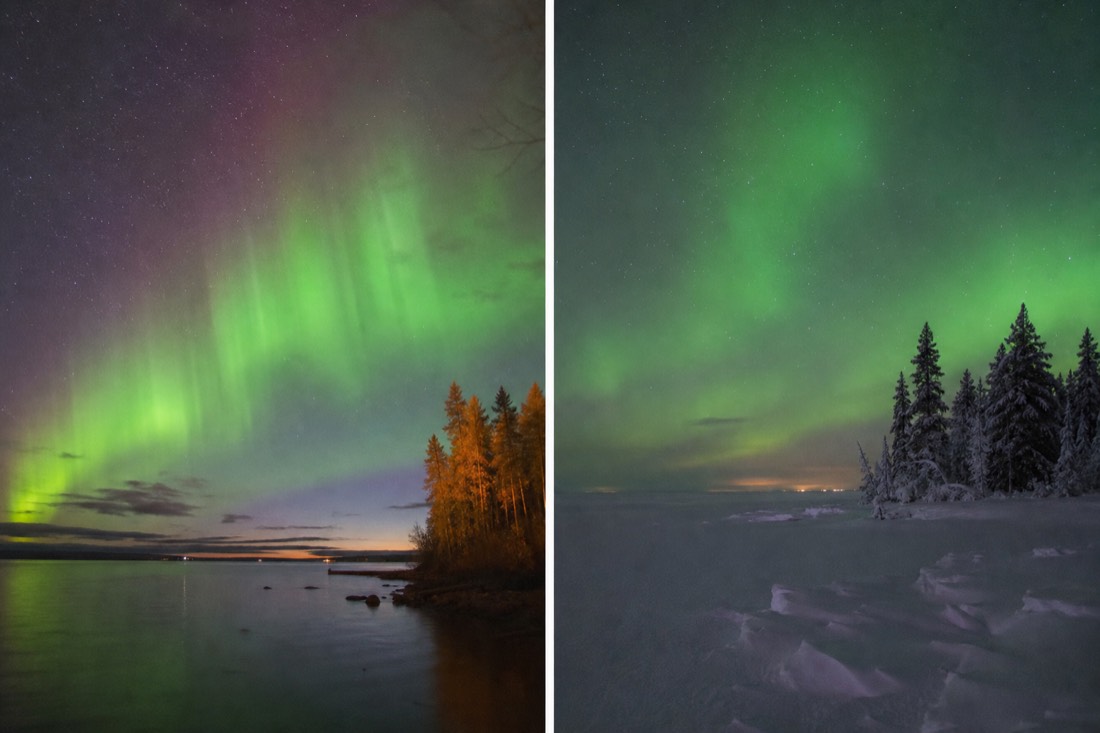
Autumn, mid-August to early October, for milder nights, open-water reflections, and easier packing. Winter, mid-November to early April, for the longest darkness and the classic snow-and-sky spectacle. The odds are strong in both; the experience around the odds is what differs.
| Window | Sky and conditions | Best for |
|---|---|---|
| Mid-Aug to early Oct | Dark returns, lakes still open, mild autumn nights | Reflection photography, cold-averse travelers, easier packing |
| Mid-Nov to early Apr | Longest darkness, deep cold, snow-covered viewing platforms | Classic aurora trips, daytime winter tours, longest nightly windows |
| Mid-Apr to late Jul | Midnight sun, near-22-hour daylight at solstice | Summer travel only; zero aurora chance |
The email I send back to those nervous pre-bookers ends the same way every time. Come in season, give me three nights, be awake at midnight, and the sky does the rest 98 times out of 100. Pick your window with the best-time guide, and if you want to know exactly what those midnight hours feel like from inside the van, this is what an aurora hunt is really like. The odds are the easy part. Showing up is yours.