Are There Polar Bears in Yellowknife? A Local Sets It Straight
No polar bears here, and I field this question weekly. Yellowknife is boreal forest country, not arctic coast. Here is the wildlife that actually lives around town, season by season.
 Written with Thomas Beaulieu, Yellowknife tour guide & northern lights specialist
Short answer
No. Polar bears live along the arctic coast and sea ice far north of Yellowknife. The city sits in boreal forest on Great Slave Lake, which means black bears in summer, foxes, ravens, and famous lake fish instead. The closest you will get to arctic wildlife in town is the Nature's North gallery on the 5.0-rated city tour.
A guest once boarded my van visibly nervous, scanning the treeline at the airport parking lot. She had promised her kids photos of polar bears and was half thrilled, half terrified she might meet one at the hotel. I hated breaking it to her gently: the nearest wild polar bear was hundreds of kilometres north of us, out on the arctic coast, and no road connects here to there. The internet has quietly convinced a lot of travelers that everywhere north of Edmonton is polar bear country. Let me redraw the map properly.
Are there polar bears in Yellowknife?
No. Wild polar bears do not live in or around Yellowknife. They are creatures of the arctic coast and sea ice, far north of here, while Yellowknife sits in boreal forest on the north shore of Great Slave Lake. The local cast is black bears in summer, foxes, ravens, and some of the continent's most famous fish.
This question earns a place in Google's own answer boxes because the confusion is genuinely common. Yellowknife markets itself with arctic imagery, sits in the Northwest Territories, and freezes hard for months, so the mental leap to polar bears is understandable. But biology follows food, not vibes. Polar bears hunt seals from sea ice, and there is no sea ice here, only a huge freshwater lake ringed by spruce and birch. The city's wildlife is the boreal forest's wildlife, and it has its own stars.
If a polar bear is genuinely the point of your trip, I cover the honest alternatives at the end of this guide. If the North in general is the point, you are in the right place: the sky above this bear-free forest lights up with aurora up to 240 nights a year, which is the show this city is actually built around.
Why are there no polar bears this far south?
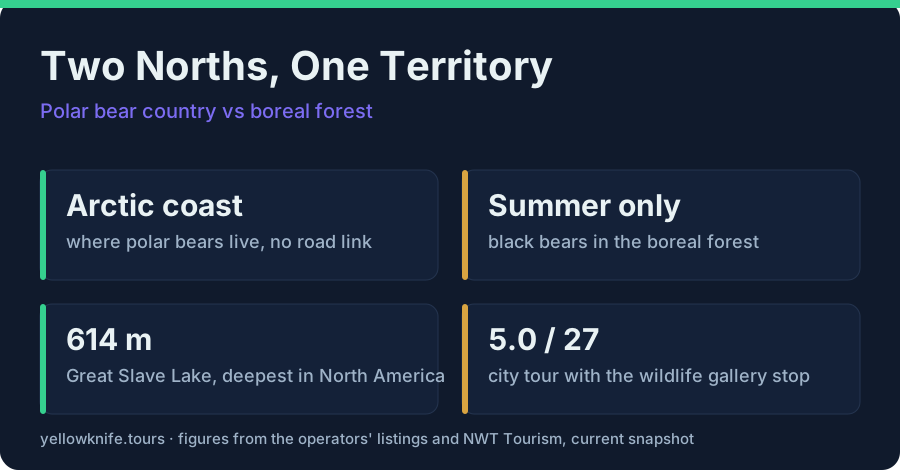
Habitat, in one word. Polar bears live where they can hunt seals from sea ice, along the arctic coastline and islands. Yellowknife lies deep in the boreal forest zone, a landscape of spruce, rock, and freshwater lakes that supports black bears, not white ones. The two ranges do not meaningfully overlap.
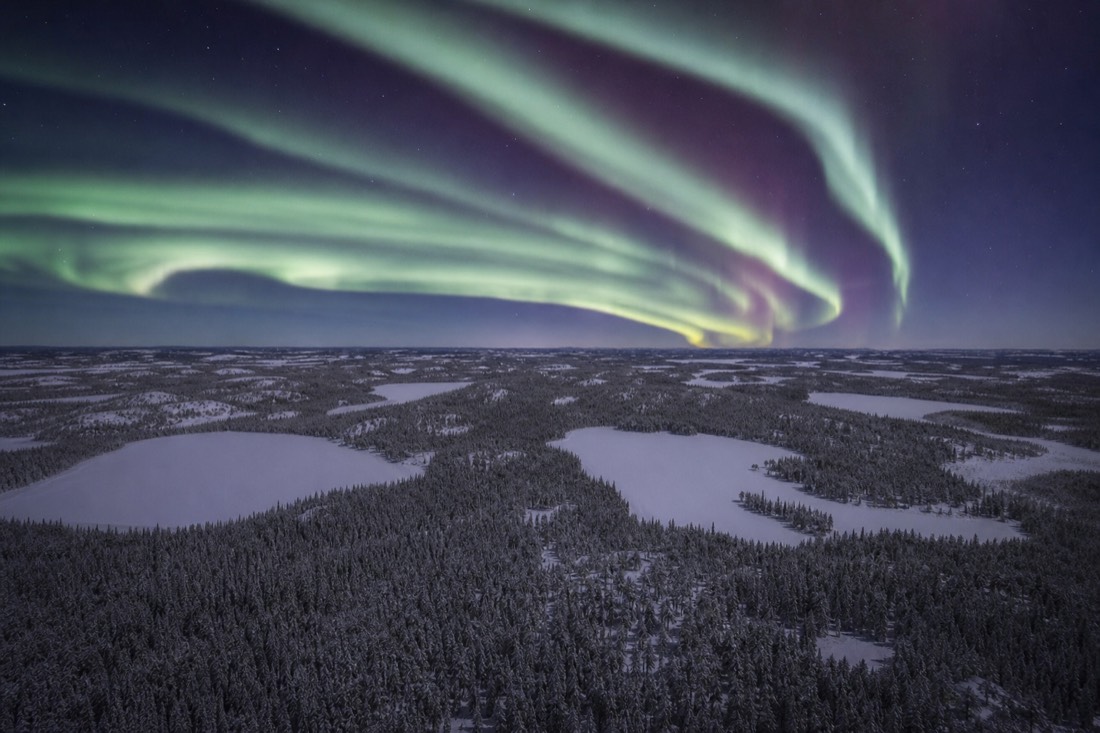
Stand at the Bush Pilots Monument and look north. What rolls away from you is not tundra but taiga: black spruce, exposed Canadian Shield rock, and thousands of lakes, a landscape that continues for a very long way before it thins into the treeless barrens and finally reaches the coast where polar bears live. That distance is the whole answer. A polar bear has no way to make a living down here, no seals, no pack ice, no reason.
The myth-versus-reality gap looks like this once you lay it out flat.
| The myth | The reality |
|---|---|
| Polar bears roam the edges of Yellowknife | Wild polar bears live on the arctic coast, far north of the city |
| The NWT means arctic tundra everywhere | Yellowknife sits in the boreal forest on Great Slave Lake |
| Winter ice brings arctic animals south | Winter brings foxes, ravens, and ice-road traffic, not polar bears |
| Any bear you see here is dangerous arctic wildlife | Local bears are black bears, active in summer, absent in winter hibernation |
| You need a wildlife escort to walk around town | Old Town and downtown are ordinary, walkable city streets |
What wildlife actually lives around Yellowknife?
A boreal cast with real character: black bears in the summer forest, red foxes that trot through town year-round, ravens everywhere in numbers that become a local joke, and beneath the lake ice, lake trout, whitefish, northern pike, and burbot in the deepest lake in North America.
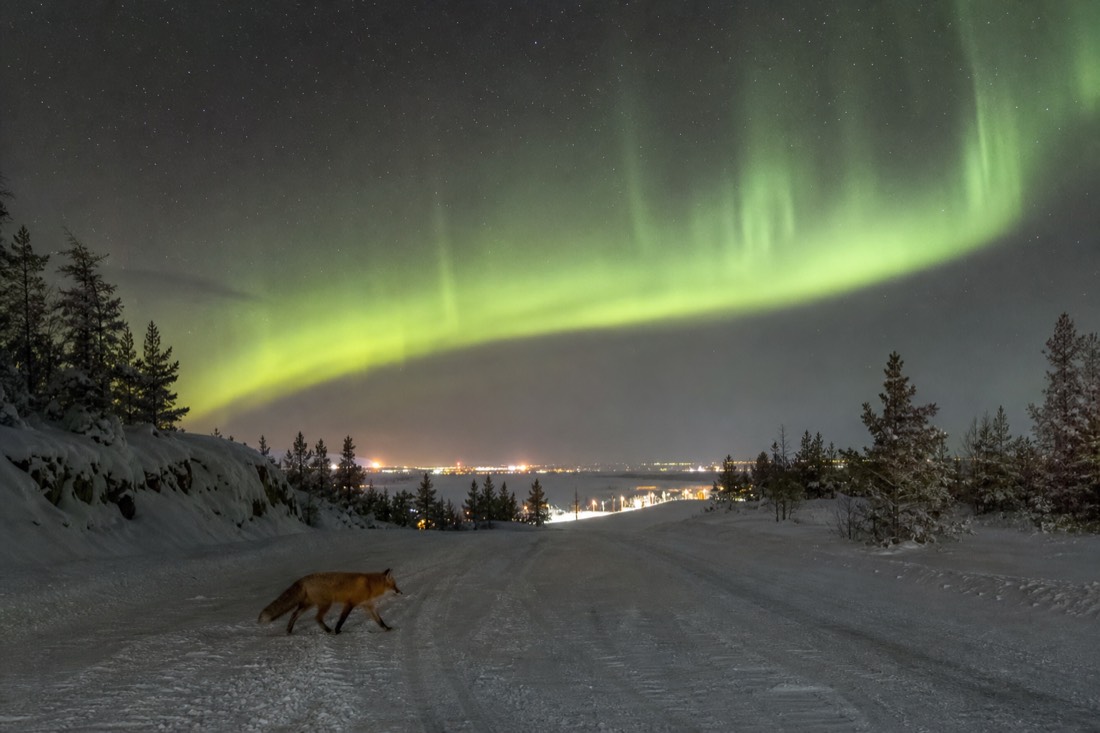
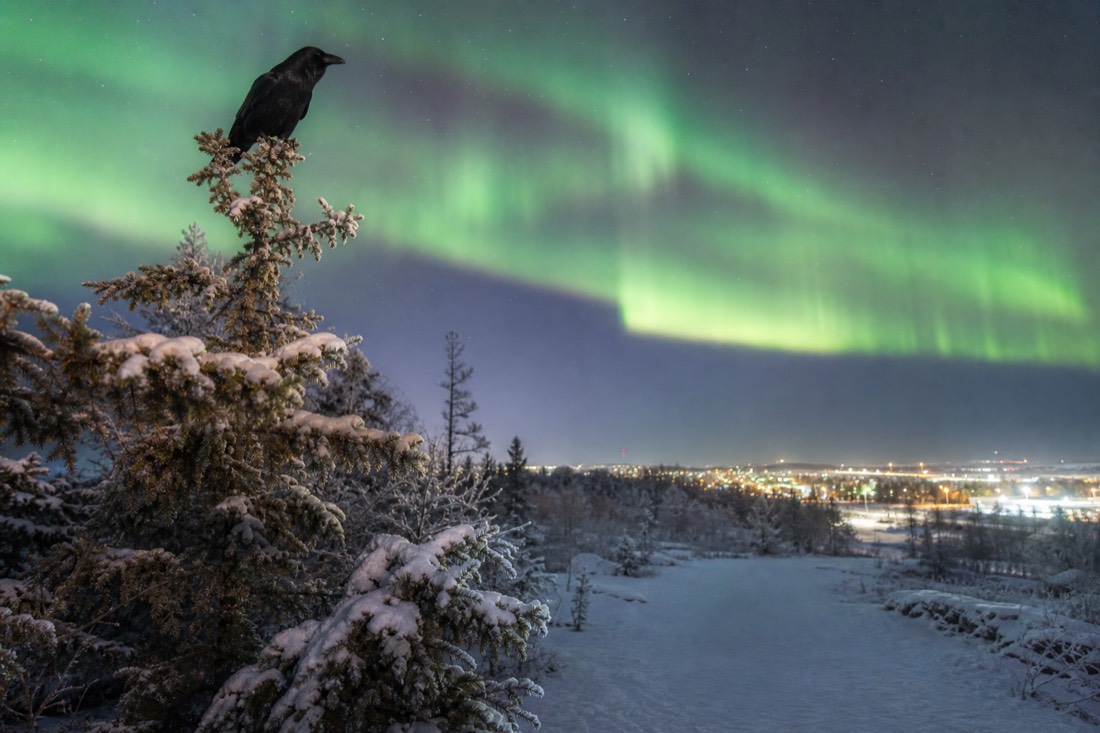
The ravens deserve first mention because no visitor forgets them. They are huge, loud, clever, and utterly unbothered by minus 30, patrolling parking lots and streetlights all winter like they own the municipality. Foxes thread through neighbourhoods at dawn. Black bears keep to the forest and roadside country in the warm months, the standard bear-aware rules apply on summer trails like the one out at Cameron Falls, about 45 minutes from town, and then hibernation empties the woods of them entirely for the winter visitor season.
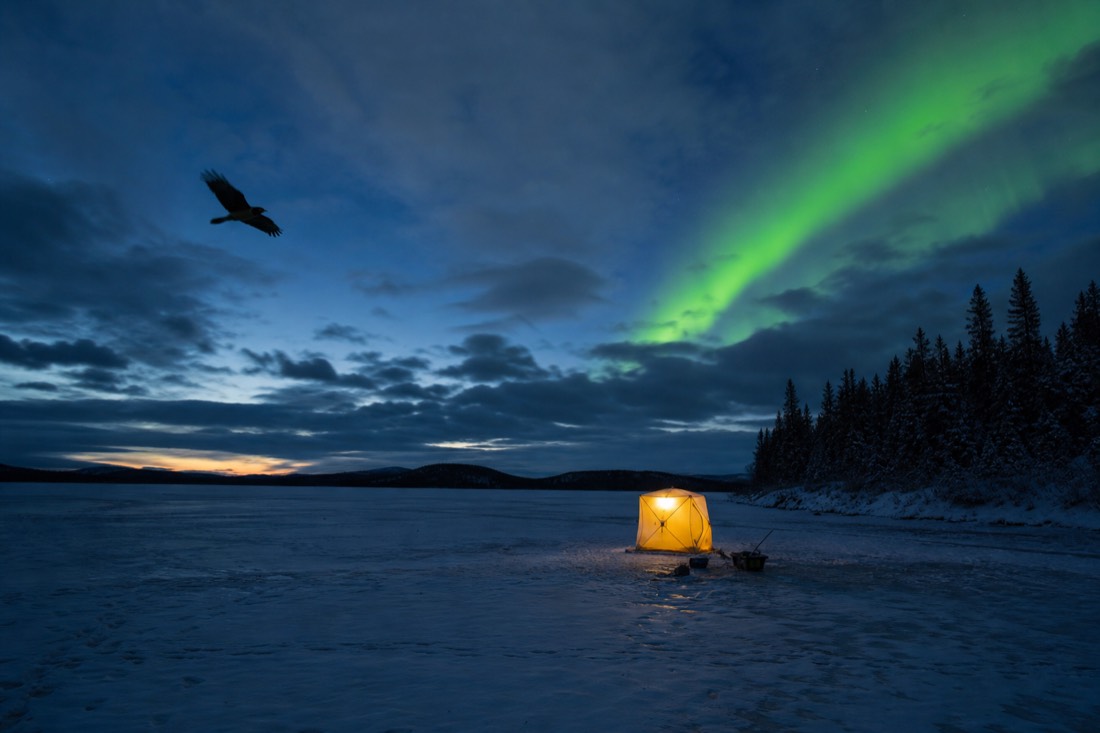
The lake is the quiet headline. Great Slave Lake reaches 614 metres deep, the deepest on the continent, and its cold water grows lake trout, whitefish, northern pike, and burbot. In winter you meet them through a hole in the ice from inside a heated hut, catch cooked for lunch on the spot, an experience I wrote up in ice fishing on Great Slave Lake. It is the closest thing Yellowknife has to a wildlife safari, and the animals come to you.
| Great Slave Lake, the wildlife habitat next door | The numbers |
|---|---|
| Maximum depth | 614 m (2,014 ft), the deepest lake in North America |
| Resident fish | Lake trout, whitefish, northern pike, burbot |
| Fishing licence | Mandatory on all fishing trips, about CA$15, never included in tour prices |
| Winter access | Heated huts on the ice; the Dettah ice road crosses ~6-6.5 km of the bay |
| Houseboat colony | Around 50 houseboats frozen into Yellowknife Bay, visible from Old Town |
Where can you see northern wildlife up close in town?
The Nature's North wildlife gallery, a stop on the city's 5.0-rated tour. It is a taxidermy collection of the North's big animals, which means you stand an arm's length from species you would otherwise never see safely or at all, muskox to wolf, paired with Old Town and the Bush Pilots Monument on a heated route.
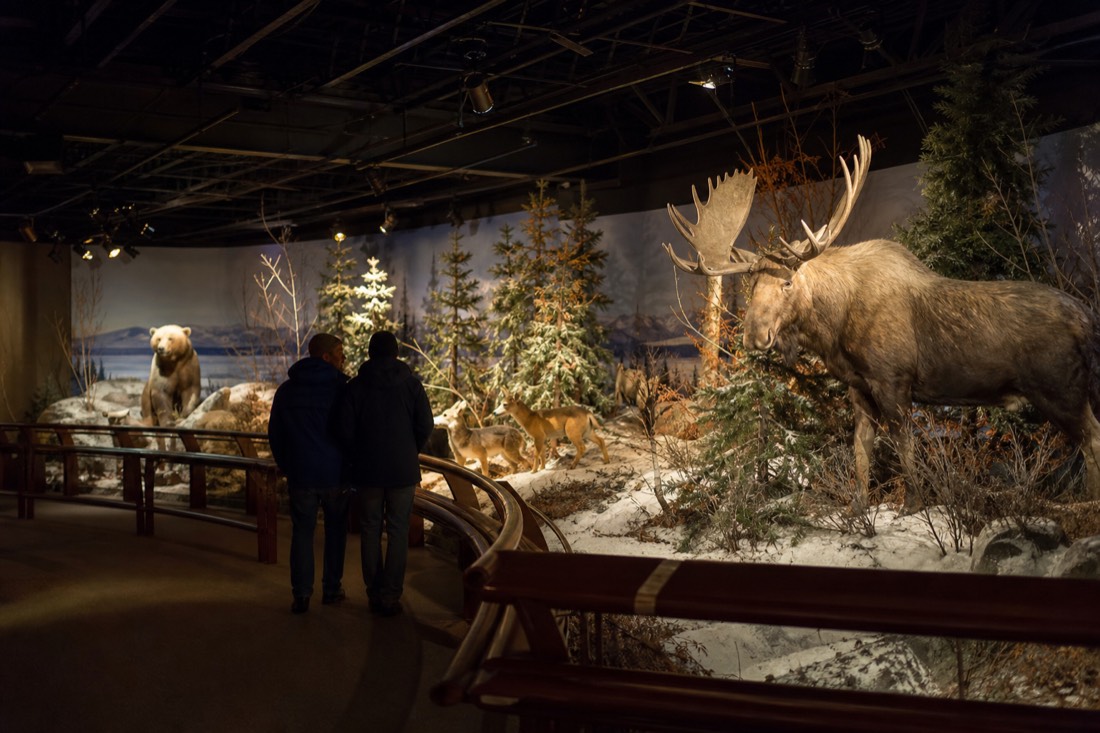
I want to be straight about what this is, because I do not oversell things: the gallery's animals are taxidermy, preserved specimens, not a zoo. That is exactly why it works. The North's most impressive wildlife lives scattered across country the size of Western Europe, and no half-day tour can promise wild sightings of any of it. The gallery collapses all that distance into one room where kids stand nose to nose with the animals of the territory, and the guide fills in the stories. Guests rate the combination a perfect 5.0 across its reviews, the only flawless score in town, and car seats are available, which tells you who loves it most.
The tour wraps the gallery into the city's greatest hits: Old Town's gold-rush lanes, the Bush Pilots Monument above the houseboats, the Legislative Assembly, and the free Prince of Wales Northern Heritage Centre, whose exhibits cover the territory's wildlife and Dene culture in depth. See how it fits your day on the city tours page, then check live availability and prices on Viator; note this one is non-refundable, so pick your date with care.
What wildlife can you expect season by season?
Winter visitors see ravens, foxes, and fish through the ice, with bears absent in hibernation. Summer adds black bears in the forest, birdlife over the lake, and long daylight for spotting all of it. No season offers polar bears, and no honest operator here will promise big-game sightings.
| Season | What you can realistically see | Where |
|---|---|---|
| Winter (Dec-Mar) | Ravens everywhere, red foxes, lake trout and whitefish through the ice | Town, lake ice, heated fishing huts |
| Spring (Apr-May) | Returning birdlife, foxes, first bear activity as forest wakes | Shorelines, Ingraham Trail country |
| Summer (Jun-Aug) | Black bears in forest country, birds, fish, near-22-hour daylight | Trails like Cameron Falls, the lake |
| Autumn (Sep-Oct) | Foxes, ravens, active fish season, aurora returning overhead | Lakeshore, town, open-water tours |
| Any season | The full northern lineup, muskox to wolf, preserved up close | Nature's North gallery on the city tour |
Where should you go if you truly want polar bears?
Not here, and I will not pretend otherwise. Wild polar bear viewing means traveling to the arctic coast or to famous viewing hubs like Churchill, Manitoba, a separate trip on separate logistics. If your heart is set on the white bear, plan that journey on its own, and let Yellowknife be your aurora trip.
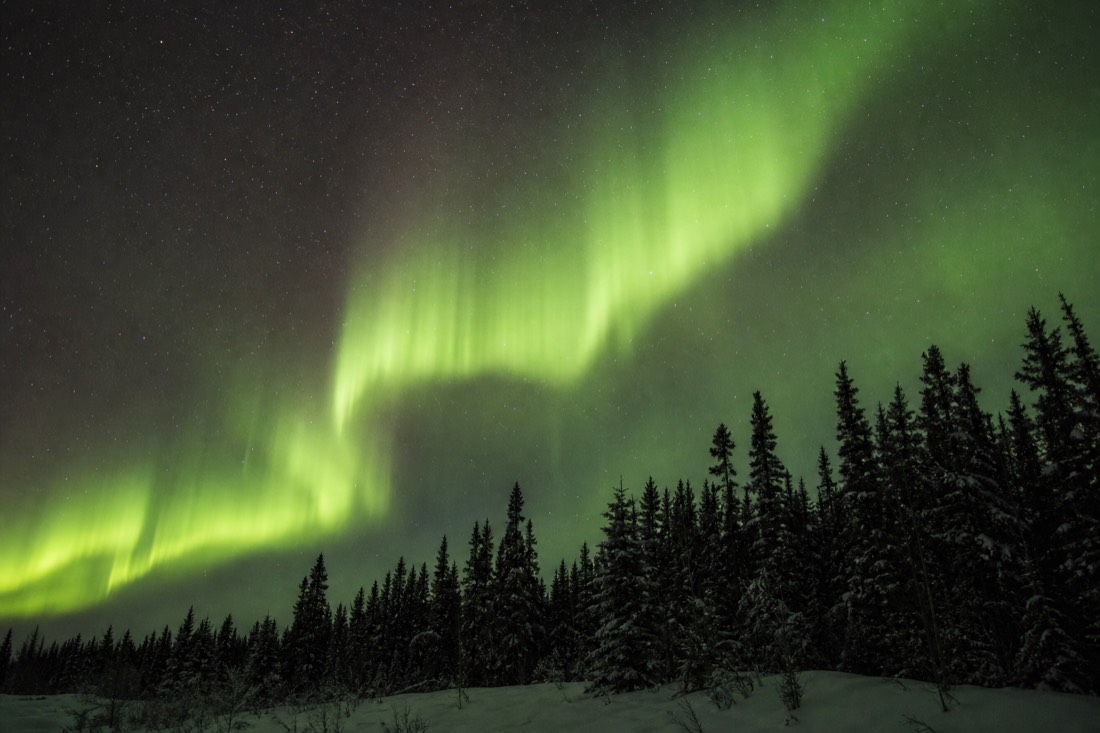
Here is the reframe I offer every polar-bear-hopeful guest, including the nervous mother from my opening, whose kids went home thrilled anyway. Yellowknife's animal kingdom is quieter than the postcard version, but its sky is louder than anywhere else's, and the trip that mixes the wildlife gallery, a morning with sled dogs, and a night under the aurora beats a long-shot bear search every time. Start with whether Yellowknife fits your kind of trip, then build the days out from the winter activity list.