Ice Fishing on Great Slave Lake, a Morning on the Deepest Lake in North America
A Yellowknife guide on ice fishing Great Slave Lake: driving onto 614 m of water, jigging in a heated hut, the CA$15 licence everyone forgets, and lunch on the ice.
 By Thomas Beaulieu, Yellowknife tour guide & northern lights specialist
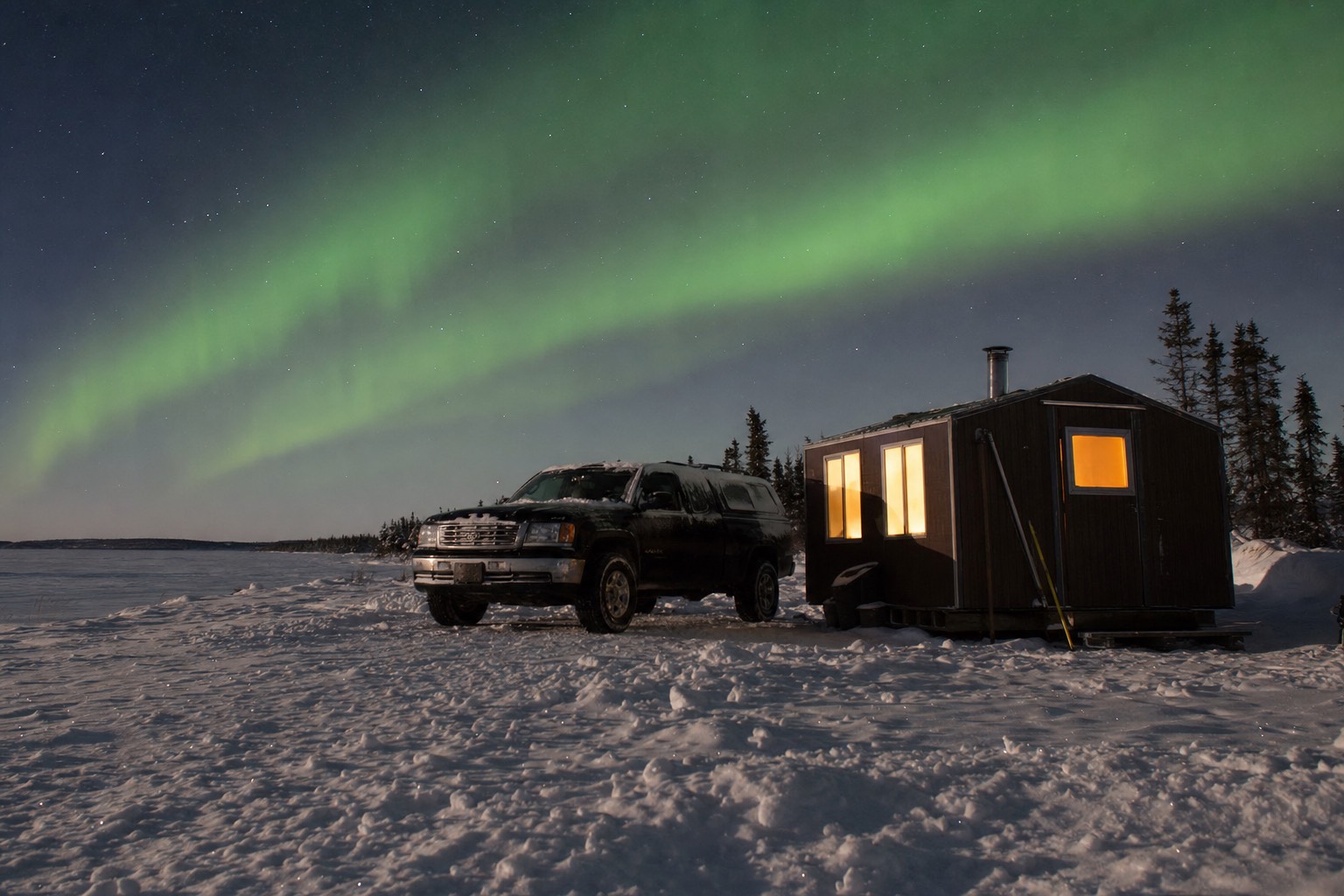
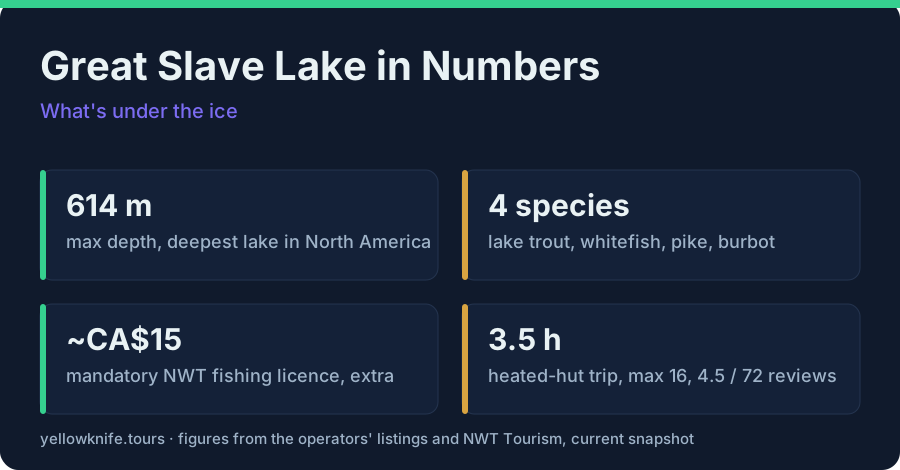
There is a moment on every ice fishing morning when a guest goes quiet in the passenger seat, and I know exactly what just happened. They did the math. We are driving a truck, on water, and the water under us is 614 metres deep, the deepest in North America. The ice does not care. By midwinter it is thick enough to carry anything we bring, and the town drives across the bay to Dettah like it is a normal commute. But that first minute on the lake rearranges your ideas about what solid means.
What does it feel like to drive onto Great Slave Lake?
Strange, then completely normal, in about ninety seconds. The lake freezes so thick that a public ice road runs roughly 6 to 6.5 km across Yellowknife Bay to Dettah from around mid-December to mid-April, driven daily by ordinary cars. Your fishing truck is following a local routine, not performing a stunt.
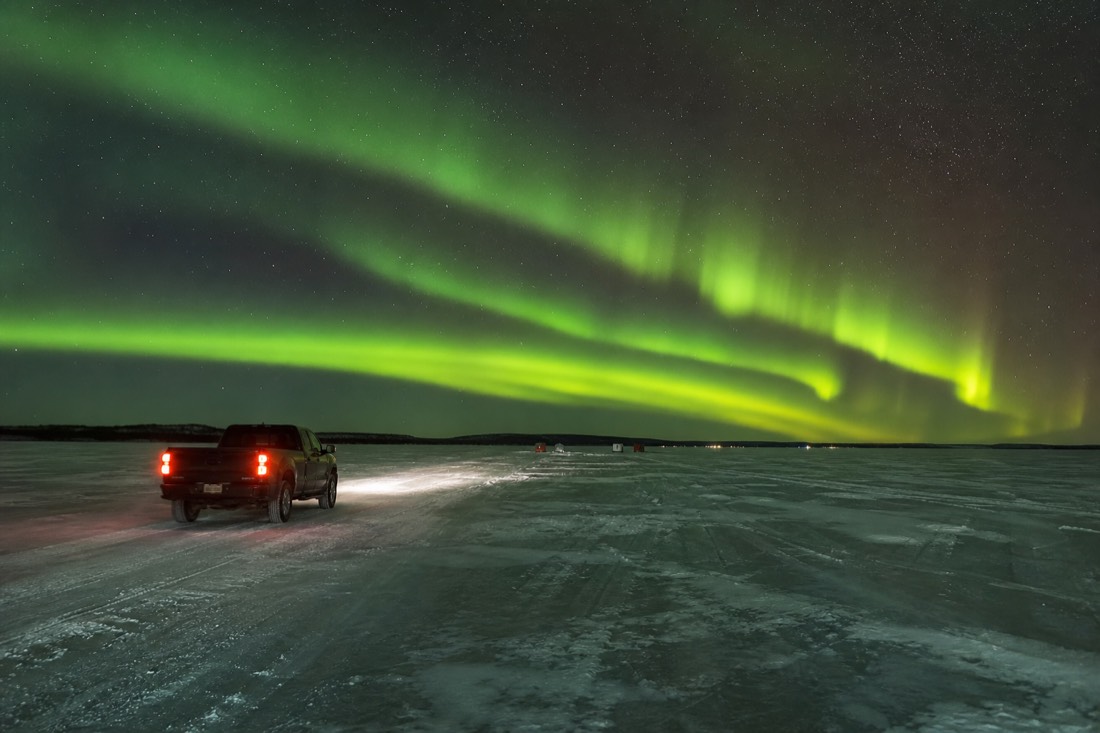
The soundtrack helps you relax. Tires on cold lake ice make a low drumming hum, occasionally punctuated by a deep whale-song boom as the sheet settles somewhere far away. The booms are the ice getting stronger, not weaker, though I have learned to announce that fact before the first one hits rather than after. Guests grip the door handle anyway. Everyone does, once.
If the novelty of the surface itself hooks you, I wrote a whole piece on driving the Dettah ice road, which is the same frozen bay with road signs on it. Out on the fishing grounds there are no signs, just a hut, an auger, and a very long column of dark water below.
| The lake under you | Figure |
|---|---|
| Maximum depth | 614 m (2,014 ft), deepest in North America |
| Ice road across the bay | About 6 to 6.5 km, Yellowknife to Dettah |
| Ice road season | Roughly mid or late December to mid-April |
| What lives down there | Lake trout, whitefish, northern pike, burbot |
How do you actually fish through a metre of ice?
With a power auger, a short rod, and patience. The guide drills the holes, the gear is included, and you jig a lure in the dark water while a heated hut keeps the whole exercise comfortable. The 3.5-hour Viator trip also pulls a set net, so the group sees fish even when the rods stay quiet.
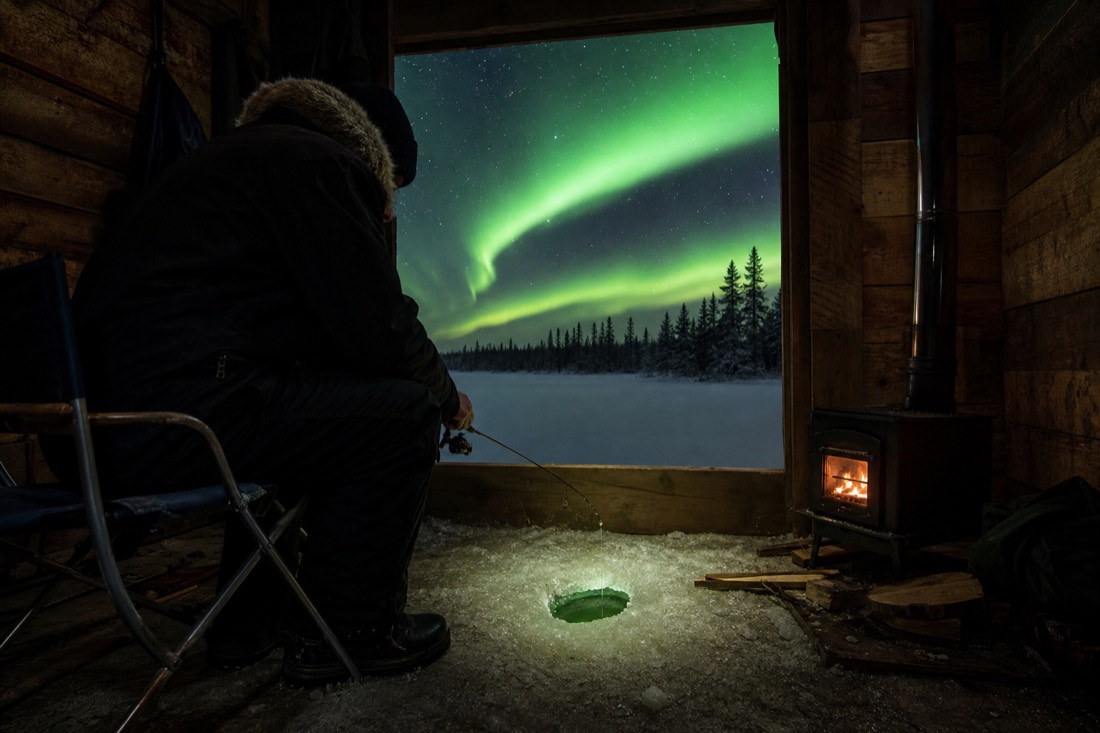
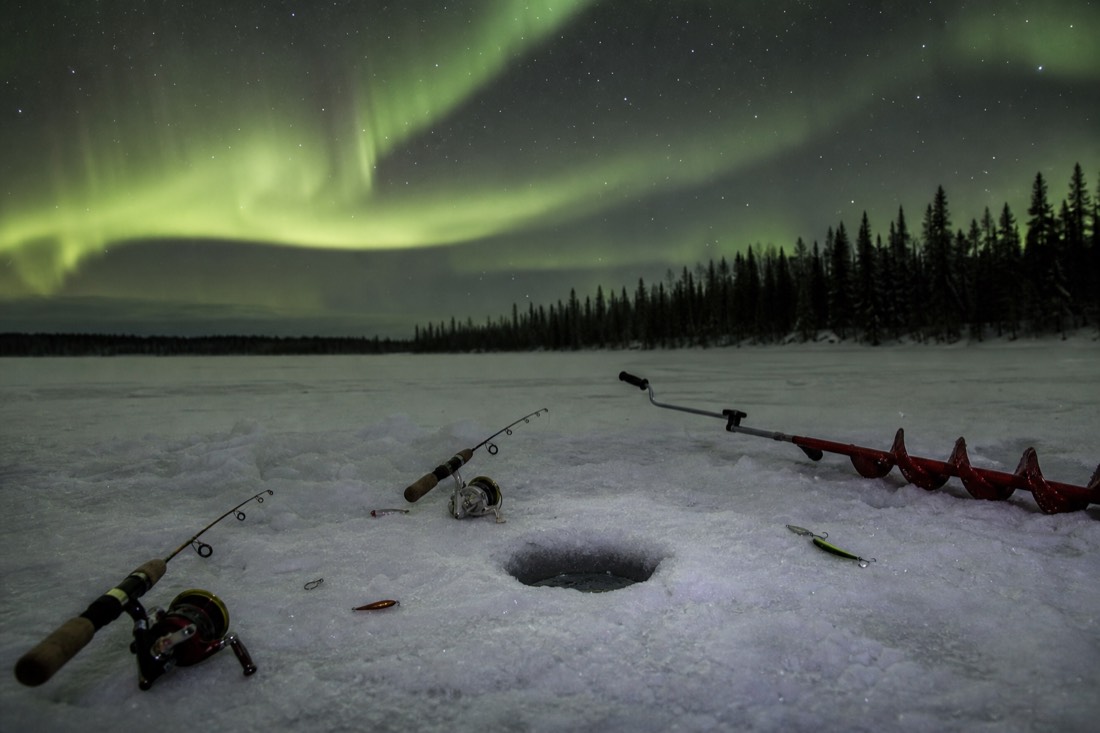
The auger is the ceremony that opens the day. It chews down through the ice in a spray of white shavings, breaks through with a lurch, and suddenly there is a perfect blue-walled porthole into the lake. First-timers always look down it longer than they need to. The water is so clear you can watch your lure flutter out of sight, on its way down toward fish that have never seen daylight.
Then comes the part nobody photographs: the waiting. Jigging is a small rhythmic lift-and-drop, more meditation than sport, and the heated hut turns it into something you can do in a sweater while frost flowers grow on the window. Conversation drifts. Coffee steams. Somewhere under your boots is more fresh water than almost anywhere on the continent, and your entire connection to it is a line the width of dental floss. The quiet out there is total in a way that even the dog sledding trail cannot match, because not even paws are moving.
A typical morning shapes up like this.
| Stage | Roughly | What happens |
|---|---|---|
| Pickup and drive out | 30 min | Town, bay, then open ice |
| Setting up | 20 min | Auger, holes, rods rigged, hut warm |
| Fishing | 90 min or more | Jigging, net pull, the quiet |
| Lunch on the ice | 40 min | Your catch cooked on the spot |
| Pack up and return | 30 min | Photos, drive back to town |
What might you pull into the daylight?
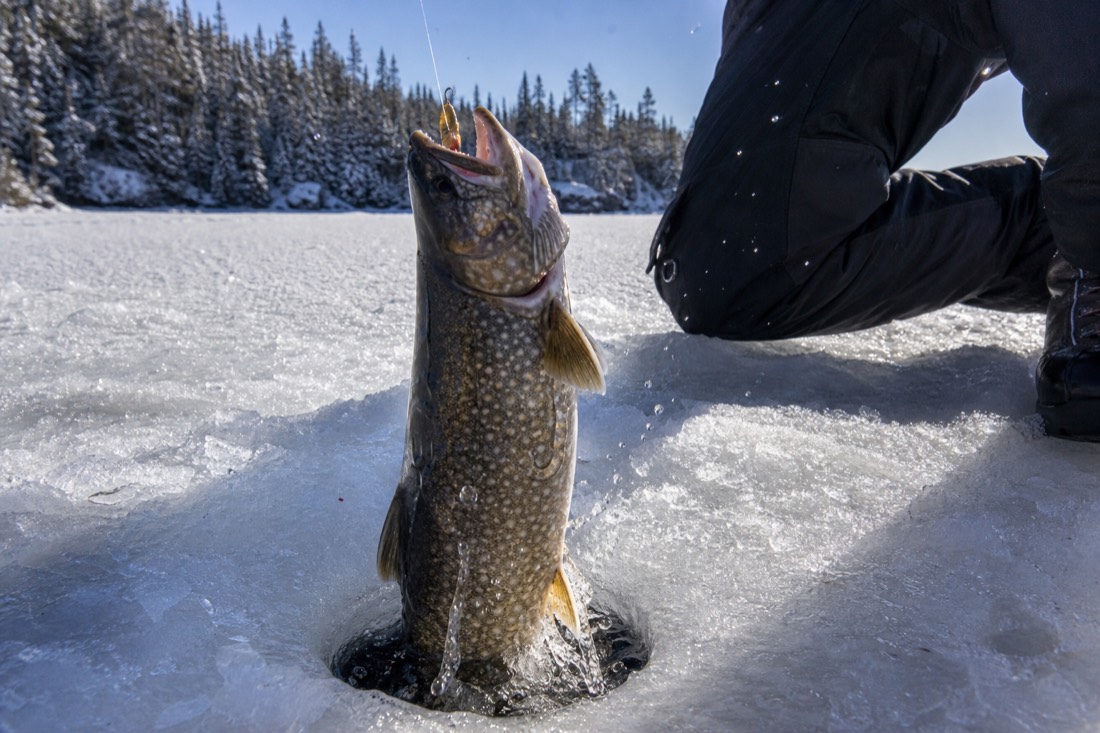
Four species headline the lake: lake trout, whitefish, northern pike, and burbot. A mid-sized lake trout is the classic Great Slave catch, all silver-green muscle and cold to the touch, and the moment one comes flapping up through the hole into the sunlight is the loudest the morning ever gets.
Every species has a personality once you have met a few.
| Species | What it is like |
|---|---|
| Lake trout | The prize. Strong, deep-bodied, superb eating |
| Whitefish | Delicate, silvery, the traditional staple of the lake |
| Northern pike | All teeth and attitude, strikes like a slammed door |
| Burbot | The lake's odd cousin, a freshwater cod that looks prehistoric |
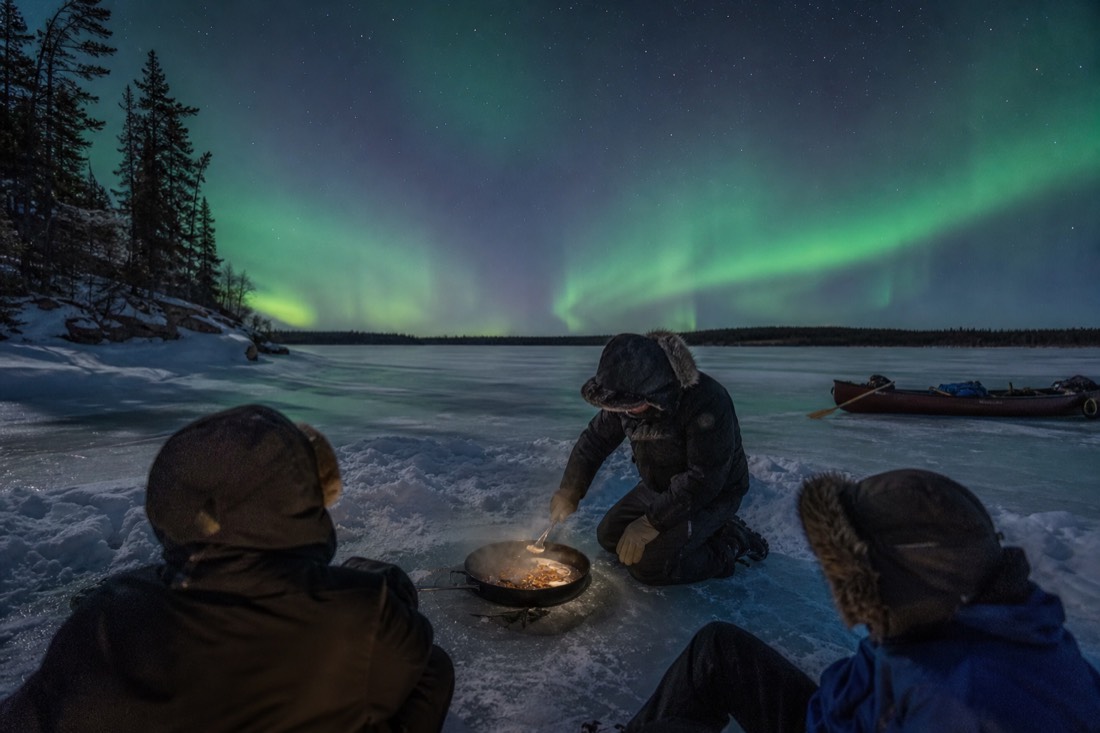
No guide can promise which one takes your lure, and the honest ones say so out loud. What I can promise is what happens if something does: it gets cooked. Fresh lake trout fried on the ice, eaten standing up in the cold with your own hole still steaming beside you, is the single best meal in Yellowknife, and I say that with full respect to every restaurant in town.
Do you really need a fishing licence for a guided tour?
Yes, and this is the thing everyone forgets. An NWT sport fishing licence is mandatory on every fishing trip, it is not included in any tour price, and it costs about CA$15. Operators remind you at booking, but the responsibility, and the small fee, are yours. Sort it before the morning of.
I flag this in every pre-trip message and someone still turns up without one a few times a season. It is a genuine legal requirement, not operator small print, and roughly CA$15 is a cheap price for a stress-free morning. While you are doing trip admin, check conditions too: the city's own weather and aurora page is the quickest read on what the week looks like, and your outfit list lives in the what to wear in a Yellowknife winter guide. The huts are heated, but the walk between truck and hut is not.
Which trip actually puts you on the ice?
Two good ones, built differently. The Viator trip is the comfortable classic: heated huts, all gear, catch cooked for lunch, free cancellation. The North Star Adventures trip is the cultural one: a 100% Indigenous-owned operator fishing traditional Akaitcho Dene territory, with a traditional fish meal, bannock, and stories.
| Ultimate Ice Fishing with Lunch | Sport Fishing & Indigenous Culture | |
|---|---|---|
| Operator | Destination NWT | North Star Adventures |
| Length | 3.5 hours | 4 hours, daily 10:30 to 2:30 |
| Season | Winter ice season | January 15 to April 15 |
| Group | Max 16 | 4 to 10 guests |
| Rating | 4.5 across 72 Viator reviews | Booked direct with the operator |
| Included | Heated huts, gear, net pull, catch cooked for lunch | Gear, transfer, traditional fish meal, bannock, stories |
| Price | Live on the listing | From CA$249 |
| Licence | About CA$15 extra | Extra |
Every option sits side by side on the ice fishing tours page, or go straight to the heated-hut trip and check live availability and prices on Viator. The Dene-guided alternative books on North Star Adventures' own page, runs January 15 to April 15, and keeps groups small at 4 to 10 people, which suits travelers who want the stories as much as the fish.
The drive back to town always feels shorter than the drive out. Part of that is a full stomach. Part of it is that the lake has stopped being an idea and become a place you have stood on, fished through, and eaten from. Look east as you come off the ice and you can see the houseboats frozen into Yellowknife Bay, a whole neighbourhood that trusts this ice all winter. After a morning out there, you will understand why they sleep just fine.