The Best Aurora Forecast Apps in 2026, Judged by Whether They Help You in Yellowknife
Six real apps, ranked by what they do for someone standing on a frozen lake at 11pm, plus the thing almost every aurora forecast app gets wrong about this latitude.
 Written with Thomas Beaulieu, Yellowknife tour guide & northern lights specialist
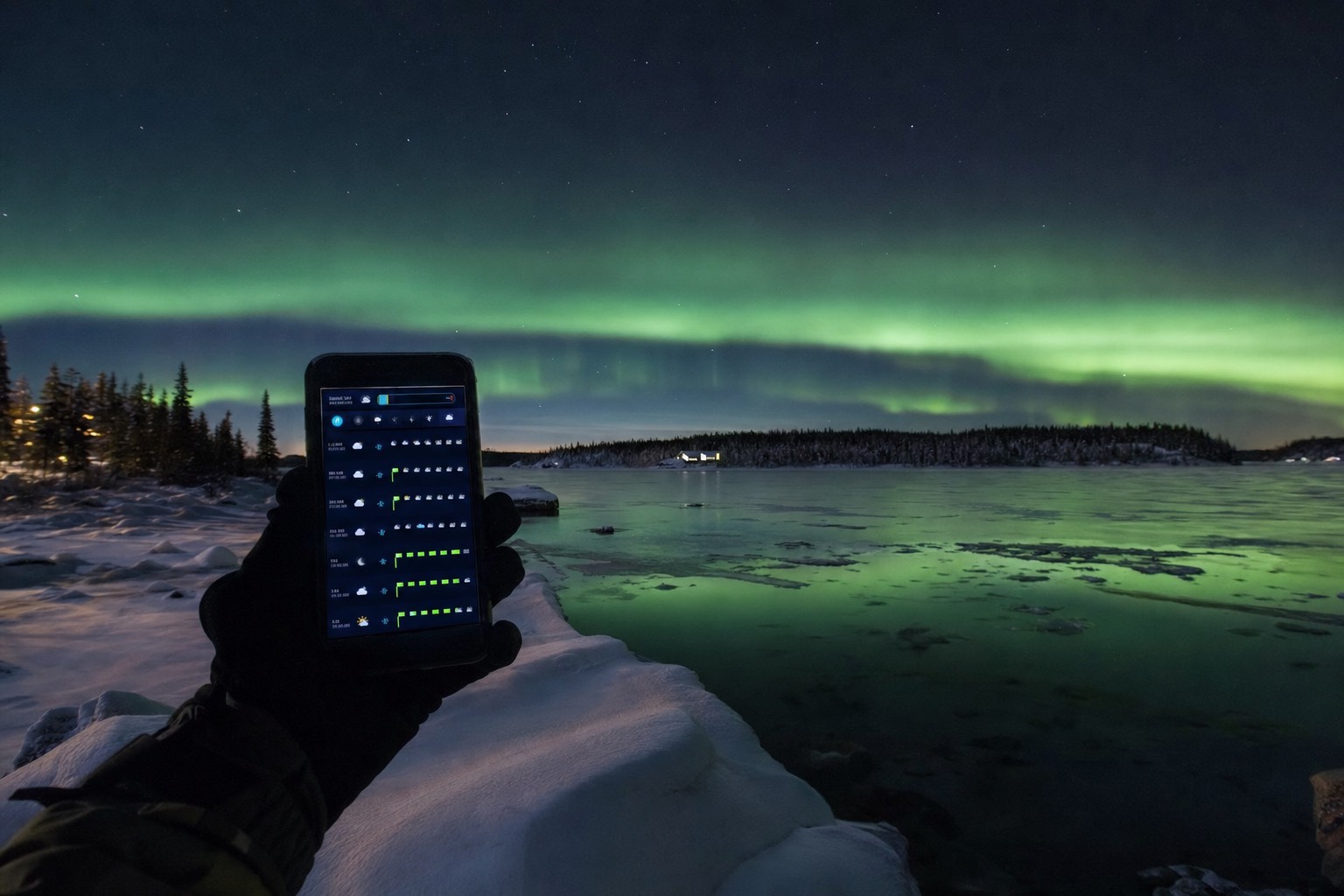
Short answer
Every aurora forecast app repackages the same free public data from NOAA's Space Weather Prediction Center and Space Weather Canada, so pick one for its alerts and readability, not its accuracy. My Aurora Forecast and SpaceWeatherLive cover most visitors. In Yellowknife the Kp number matters far less than the cloud forecast, because the city already sits under the auroral oval.
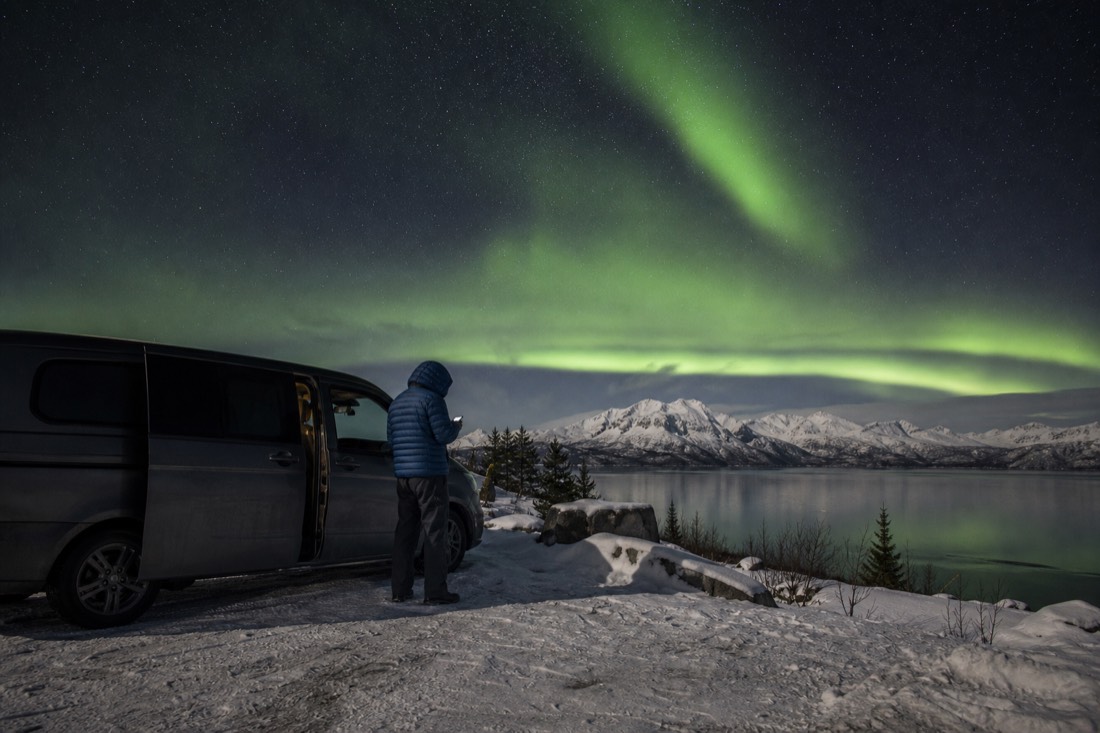
Guests reach for their phones before they reach for their cameras. Somebody in the back of the van has a Kp number up, somebody else has a percentage, and both go quiet because the figure looks small. I have watched a green band open over a lake on a night two apps called dead, and I have watched a promising forecast vanish behind a cloud deck none of them mentioned. Apps are genuinely useful up here. They are just not useful in the way most visitors arrive expecting, and the gap between those two things costs people nights.
Do aurora forecast apps actually work in Yellowknife?
They work, with a large caveat. Every aurora forecast app is a convenience layer over the same free public data, mostly NOAA's Ovation model and Space Weather Canada. None of them has private information. What they add is push alerts, plain-language framing and a map, which is worth something at 11pm in a parka.
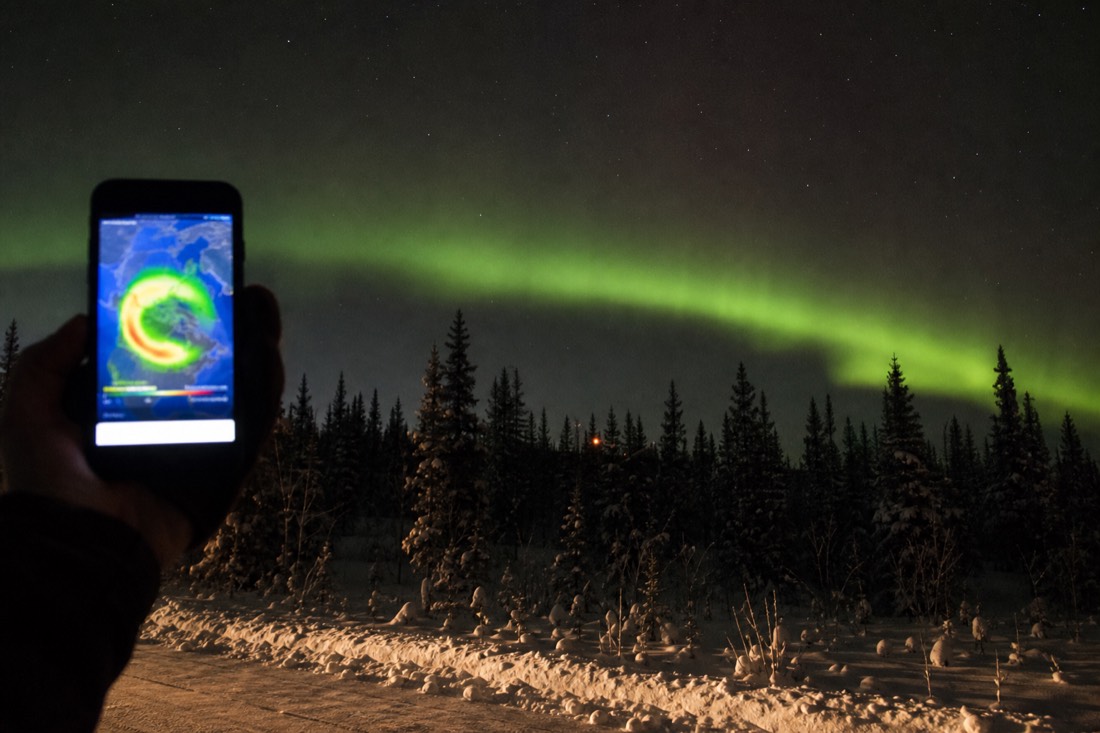
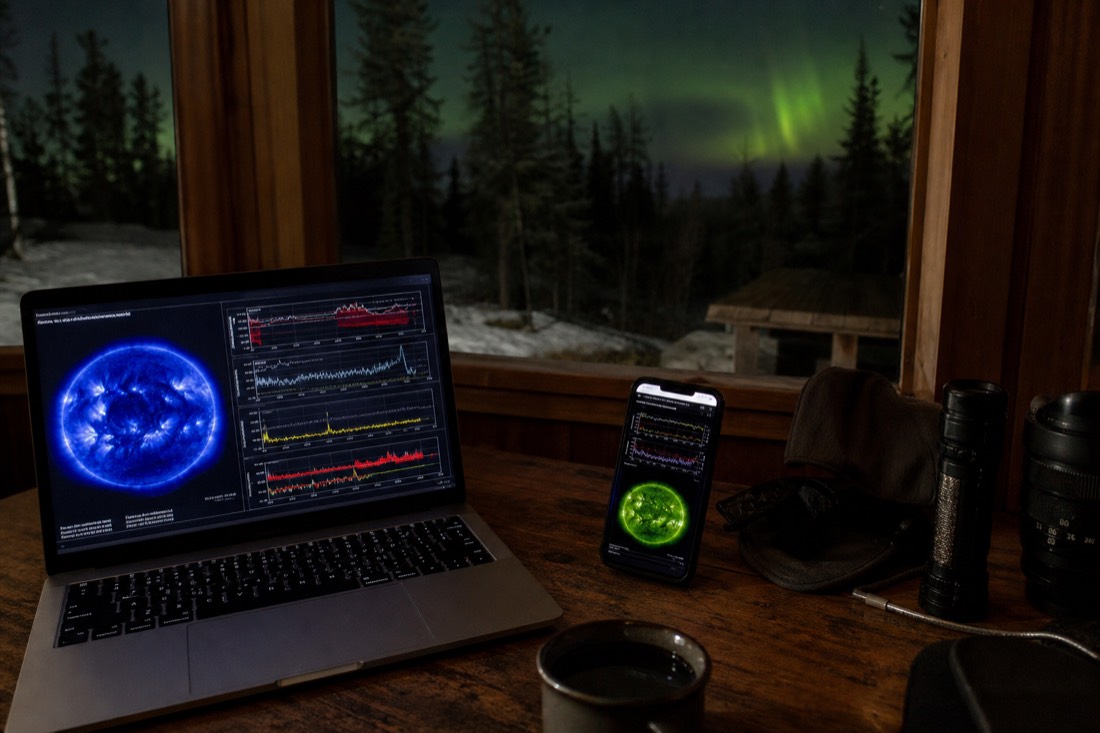
The underlying feeds are public and free. NOAA's 30-minute aurora forecast runs the Ovation model and shows where the oval sits right now. Canada publishes its own version through Space Weather Canada, which includes data from the Yellowknife magnetic observatory, a detail worth knowing when you are standing more or less on top of it. Astronomy North's AuroraMAX forecast and live feed is the one built specifically for this sky, and it resumes on August 10, 2026.
So when an app tells you tonight looks good, it is telling you what those sources already said. The difference between apps is presentation and alerting, not accuracy. That reframing matters, because it means you should choose the one whose alerts you will actually act on rather than hunting for the one that is somehow right more often. None of them is.
The second caveat is bigger, and I will come back to it: most of these apps lead with Kp, and Kp is close to the least useful number for a visitor at this latitude.
Which aurora forecast app is the best one to install?
For most visitors, My Aurora Forecast & Alerts for the push notifications and SpaceWeatherLive for understanding what the numbers mean. Hello Aurora adds live community sightings. Aurora Alerts splits your odds overhead from your odds on the horizon. AuroraWatch UK is excellent and irrelevant here.
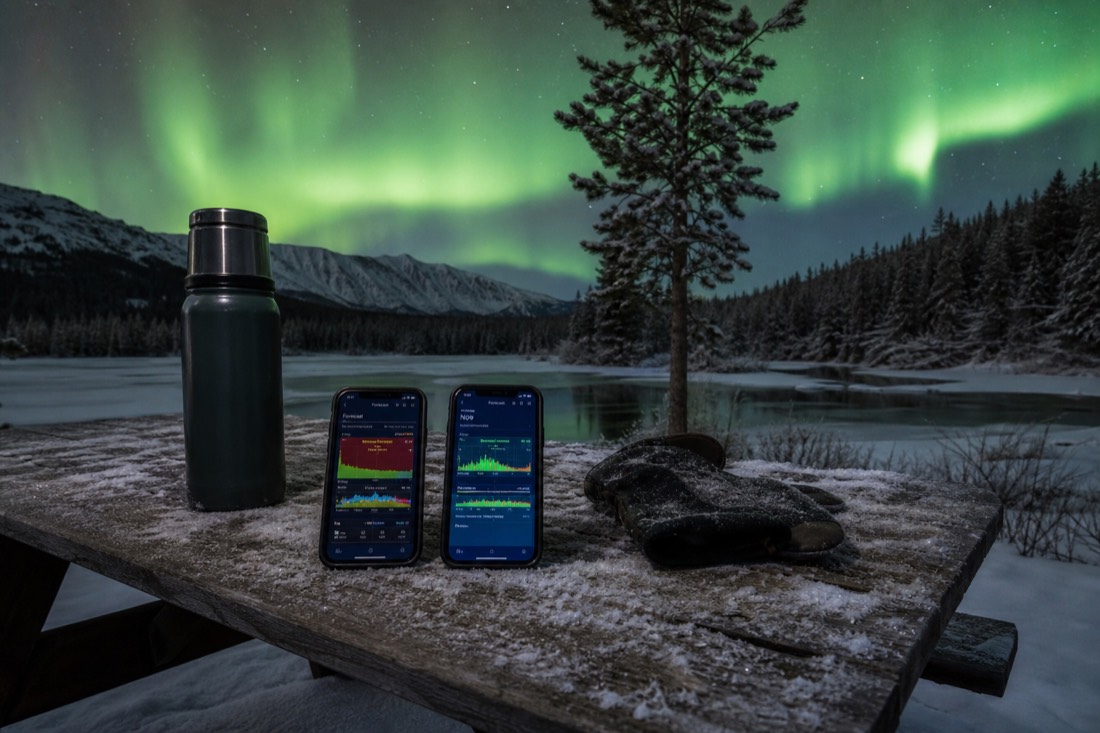
| App | Platforms | Cost model | What it does best | The catch |
|---|---|---|---|---|
| My Aurora Forecast & Alerts | iOS and Android | Free with in-app purchases | Push alerts, Ovation-based probability, saved viewing spots | Leads hard with Kp, which reads as discouraging at this latitude |
| Aurora Alerts / Aurora Now | iOS and Android | Free with a paid pro tier | Separates your chance overhead from your chance on the horizon, and folds in moon and weather | The detail that makes it worth using sits behind the pro tier |
| SpaceWeatherLive | iOS and Android | Free with optional ad removal | Explaining the physics in beginner language, with alerts you configure yourself | Written for space-weather followers first, aurora tourists second |
| Glendale App | Web first, with apps | Free with registration | Geomagnetic substorm tracking and live reports from other watchers | Registration needed, and a web-first layout is awkward in mitts |
| Hello Aurora | iOS and Android | Free | Live map with community photos, filterable by Bz and intensity | The filters assume you already know what Bz is |
| AuroraWatch UK | iOS and Android | Free | Alerts for the UK, from UK magnetometers | Built for Britain, not for here; the honest one to leave off your phone |
If you install exactly one, make it a push-alert app with the threshold set low, because the alert is the whole point. You are asleep, or eating, or in a hotel lobby, and something opens up outside. If you install two, add SpaceWeatherLive so the numbers stop being magic. Everything past that is enthusiasm rather than need.
AuroraWatch UK deserves the honest note rather than a quiet omission. It is a well-run service built around British magnetometers and a UK alert scale, which makes it a poor guide to a subarctic sky on the other side of the Atlantic. Plenty of listicles include it anyway.
How far ahead can a northern lights forecast app be trusted?
Roughly 30 to 60 minutes. The real-time nowcast built on the Ovation model is dependable, one-to-three-day solar wind outlooks are moderate at best, and the 27-day recurrence outlook shows patterns rather than nights. Nobody can tell you what next Tuesday's aurora will do, whatever an app implies.
| Forecast horizon | What it actually is | How much to trust it | What to do with it |
|---|---|---|---|
| 30 to 60 minutes | The Ovation nowcast of where the oval sits now | Dependable | Act on it: get outside, or stay out |
| 1 to 3 days | Solar wind and geomagnetic outlook | Moderate | Shape your evening plans loosely, nothing firmer |
| 27 days | Solar rotation recurrence pattern | Patterns only, not specific nights | Ignore it for trip nights; it is background, not planning |
| Season ahead | Where solar cycle 25 sits | Expectations only | Useful for choosing a year, useless for choosing a night |
This is the single most common misunderstanding I meet. Someone books three nights around a week-old forecast that showed a spike, then feels cheated when the spike moves. Solar wind takes days to arrive and its magnetic orientation, the thing that decides whether the energy couples into our atmosphere, is not known with confidence until the wind reaches the satellites parked upstream. That is roughly an hour of warning, not a week.
The practical answer is to stop planning nights and start planning stays. Book enough nights that the odds work for you, which is the real argument behind the chances of seeing the northern lights in Yellowknife, and let the 30-minute forecast handle the rest.
What Kp do you actually need to see the northern lights here?
Far less than the apps imply. Kp measures global geomagnetic activity on a 0 to 9 scale, and a higher number simply pushes the auroral oval further south. Yellowknife already sits under the oval, so Kp 1 to 3 with clear skies is often plenty. Southern Canada and the northern United States are the places that need Kp 5 and above.
| Where you are standing | Position relative to the auroral oval | Kp usually needed | What that means in practice |
|---|---|---|---|
| Yellowknife | Directly under it | Roughly 1 to 3 | Clear sky is the requirement; low numbers still deliver |
| Southern Canada | South of it | 5 and above | You are waiting for a storm to drag the oval down |
| Northern USA | Well south of it | 5 and above | Storm-dependent, a few nights a year |
| Vancouver and other mid-latitude cities | Far south of it | Strong storms only | Newsworthy when it happens, never reliable |
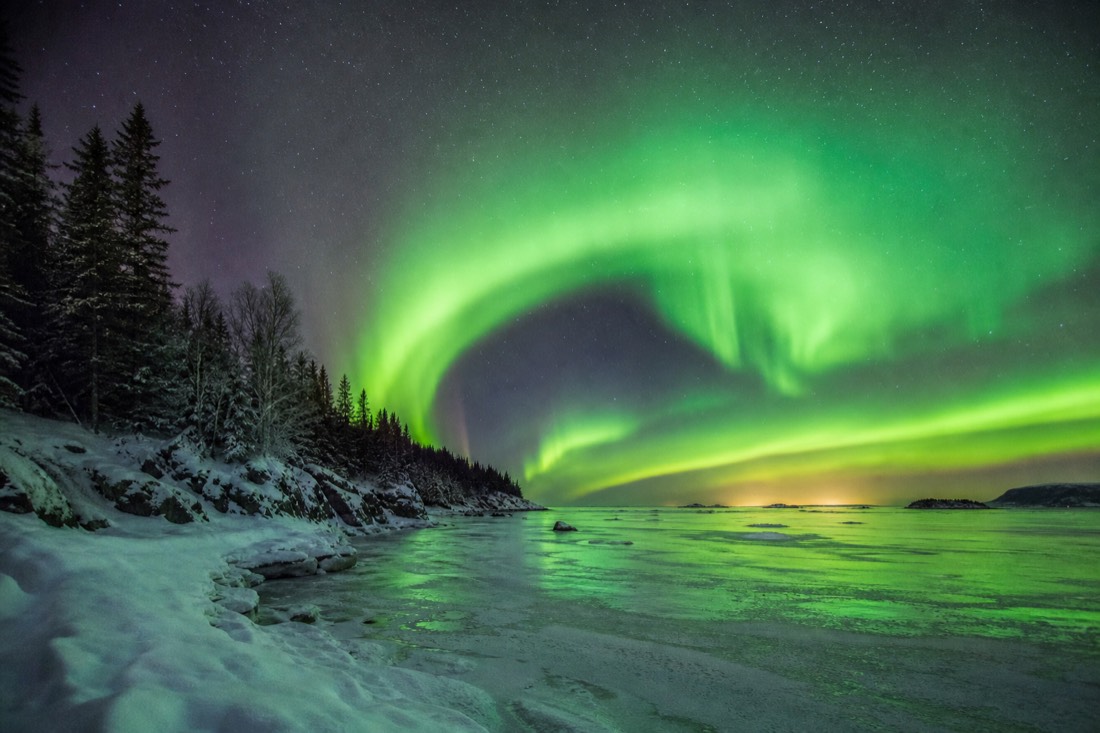
A high Kp reading on your phone is not a promise of a better show over Yellowknife. It means the oval has stretched south, and on a genuinely big storm night the brightest band can sit south of the city while you look up at something quieter. One of the flagship tour's own reviews describes a good display on a night forecast at Kp 0.0. That is not a fluke, it is what living under the oval means.
The corollary hurts a bit: a Kp 6 night with full overcast gives you nothing, and a Kp 2 night with a clear sky can give you an hour of moving green. Which is why the number visitors watch obsessively is usually the wrong one. The whole seasonal picture, including why late August through early April carries real darkness at all, sits in the best time to see the northern lights in Yellowknife.
Does the moon or the cloud cover decide your night?
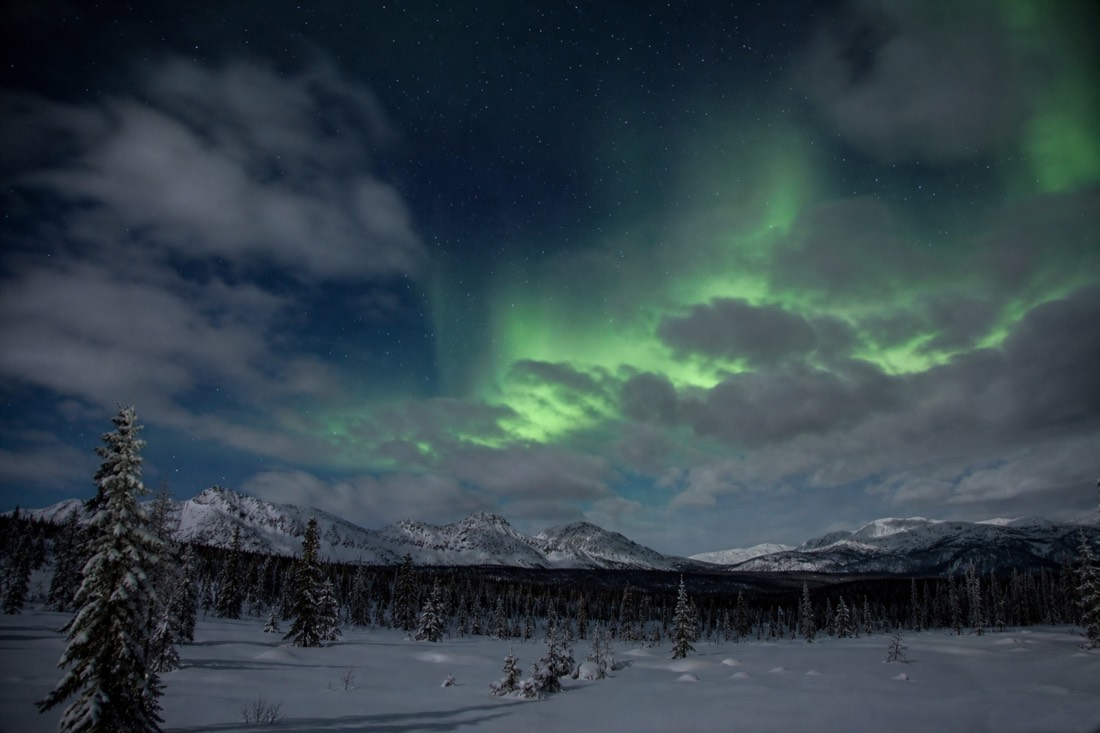
Cloud, almost always. Cloud cover is the single factor that most often decides whether a visitor here sees the lights, so the weather forecast outranks every space-weather number on your phone. The moon matters less than people fear, and mostly to photographers: bright moonlight washes out faint aurora, while a strong display beats it comfortably.
| Sky condition | What you get | What to do about it |
|---|---|---|
| Clear sky, new moon or low illumination | The best case, including faint structure and colour on camera | Go out and stay out through local midnight |
| Clear sky, bright moon | Faint aurora fades, a real display still reads well | Go anyway, and expect the subtle stuff to disappear rather than the show |
| Broken cloud | Genuinely winnable if you can move to the gaps | This is the night a mobile tour earns its cost |
| Full overcast | Nothing gets through, at any Kp | Rest, and treat tomorrow as the night |
Statistically the strongest hours sit around local midnight, roughly 10pm to 2am, which is exactly why tours pick up between 9:30 and 10:30pm and return at 1:30 or 2:30am. An app that alerts you at 9pm and again at midnight is doing its job. An app that shows you a percentage without a cloud layer is only telling you half the story, and it is the less important half.
Photographers get one extra consideration: moon phase changes what your exposures look like more than what your eyes see. If you are planning shots rather than just looking, the settings and the cold-weather battery problem are covered in how to photograph the northern lights in Yellowknife.
Should you trust an app or a guide to find the lights?
Use both, for different jobs. An app tells you the oval is active. It cannot drive you 40 minutes to the one clear patch of sky, and on broken-cloud nights that mobility is the whole difference. If you have a car, warm clothes and patience, the apps are enough. If you do not, a chase tour is buying you the part no app performs.
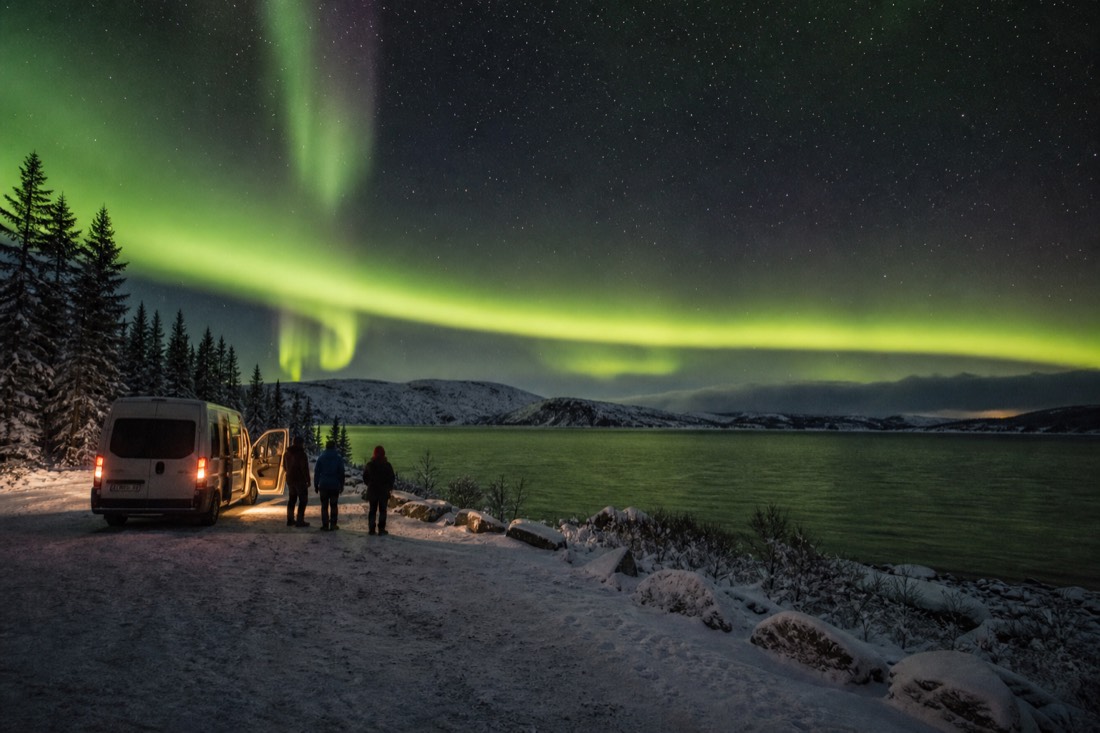
The honest version is that self-guided viewing works here, and I say so plainly in do you need a tour to see the northern lights in Yellowknife. Yellowknife is small, the dark starts a short drive out of town, and the aurora is not shy. What a guided hunt adds on the marginal nights is a driver who has watched this sky for years, three separate viewpoints to try, and someone else deciding whether to wait or move while you keep your hands in your pockets.
If that trade sounds right, compare the northern lights tours and check live availability and prices on Viator for the four-hour hunt with hotel pickup, a maximum of 16 people, three viewpoints, a photographer who hands over the images for free, and hot drinks in the cold; it is rated 4.8 across 399 reviews and cancels free up to 24 hours ahead. What that actually feels like at 1am, including the waiting, is written up in what an aurora hunt in Yellowknife is really like.
Where does the data in an aurora forecast app come from?
A handful of public feeds, and that is the entire industry. NOAA's Space Weather Prediction Center runs the Ovation model, Space Weather Canada publishes the national version including readings from the Yellowknife magnetic observatory, AuroraMAX covers this sky specifically, and Environment Canada supplies the cloud forecast that quietly decides most nights.
| Feed | Who runs it | What it gives you | Why it matters standing here |
|---|---|---|---|
| Ovation 30-minute aurora forecast | NOAA Space Weather Prediction Center | A map of where the auroral oval sits right now | The nowcast under almost every probability number you will see in an app |
| Space Weather Canada | Government of Canada | The Canadian forecast plus magnetometer readings, including the Yellowknife observatory | The instruments are in this city, not a continent away |
| AuroraMAX forecast and live feed | Astronomy North | A Yellowknife-specific forecast and a live sky camera, back on August 10, 2026 | Built for this sky rather than for a whole hemisphere |
| Environment Canada cloud forecast | Government of Canada | Cloud, wind and temperature for tonight | The factor that most often decides whether you see anything at all |
| Solar wind measured upstream | The space-weather agencies | Wind speed, density and the magnetic orientation known as Bz | The source of the roughly one hour of genuine warning |
Once you know that, the category stops being confusing. An app is a front end. It pulls the same numbers everyone else pulls, wraps them in a map and a notification system, and charges nothing or very little for the convenience. That is a real service. Nobody wants to load a government chart on a phone screen at minus 28 with mitts on, and the NOAA space weather site was never designed for that moment.
It also explains the differences you notice between apps. When Hello Aurora lets you filter by Bz, it is filtering on the upstream solar wind measurement, the same one SpaceWeatherLive explains to you in plain language and the same one buried inside another app's single percentage. Nobody is measuring anything privately. The Glendale App's substorm tracking and user reports add a human layer on top, which is genuinely different information, though it is other watchers rather than better physics.
Two consequences follow, and both are worth carrying into the trip. First, if two apps disagree tonight, they are not disagreeing about data, they are disagreeing about how to round it. Second, no app can improve your odds of seeing the aurora over Yellowknife. It can only improve your timing. The odds were set by geography before you downloaded anything, which is the argument running through how to read a Yellowknife aurora forecast.
Which aurora app should you install for the job you actually have?
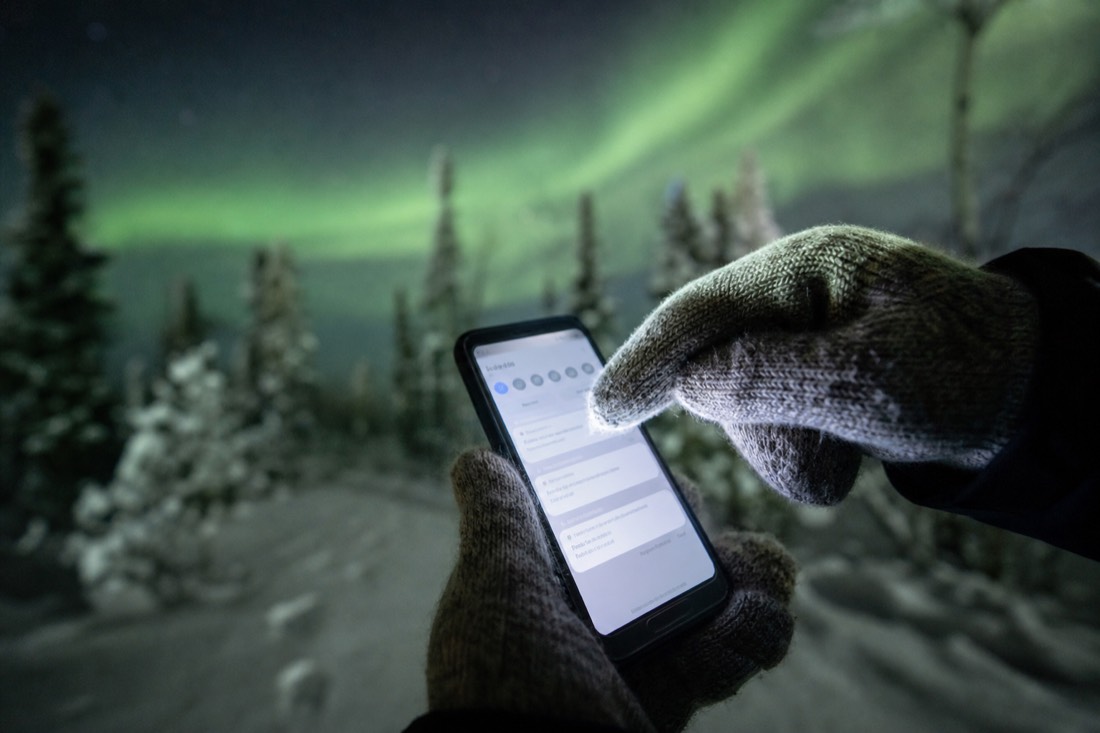
Match the app to the task rather than hunting for a winner. Push alerts while you sleep go to My Aurora Forecast. Understanding the numbers goes to SpaceWeatherLive. Live sightings from other watchers go to Hello Aurora or the Glendale App. Overhead versus horizon odds go to Aurora Alerts.
| The job | What to open | Why that one | What it still will not do |
|---|---|---|---|
| Choosing a month or a year to travel | None of them | Apps forecast hours, not seasons; solar cycle 25 sits past its October 2024 peak and remains in the elevated years | Say anything specific about a night more than a few days out |
| Deciding whether tonight is worth the cold | My Aurora Forecast or SpaceWeatherLive, beside the cloud forecast | The 30 to 60 minute nowcast is the horizon that holds up | Tell you whether your particular patch of sky is clear |
| Getting woken when something starts | My Aurora Forecast, threshold set low | Push alerts are the one thing an app does that a website cannot | Wake you if you muted it after two false alarms |
| Learning what Kp, Bz and solar wind mean | SpaceWeatherLive | Beginner-language explanation with alerts you configure yourself | Translate the physics into an answer specific to this latitude |
| Seeing what people outside right now report | Hello Aurora, or the Glendale App | Community photos, live map, substorm tracking | Promise those reports come from anywhere near you |
| Separating overhead odds from horizon odds | Aurora Alerts / Aurora Now | Splits the two and folds in moon and weather | Show that detail without the paid pro tier |
| Planning photographs | Any of them, read for moon phase and cloud | Moonlight changes your exposures more than it changes what your eyes see | Set your camera for you |
Notice what is missing from that table: a row for improving your chances. There is no such app. Under this oval the aurora is already there on most clear nights, so the entire value of software here is being told at the right moment and going outside.
Alert settings deserve a minute of thought before your first night, because the usual failure is self-inflicted. People install an alert app, set the threshold high because a big number sounds like a big show, then see nothing for two nights and conclude the app is broken. Others set it low, get pinged during dinner, get pinged again in a shop, and switch notifications off by day two. Start low, keep it on for the first night while you learn what the alerts feel like here, then adjust once rather than fiddling nightly.
AuroraWatch UK is absent from the table for the same honest reason given earlier. Its alert scale is keyed to British magnetometers and a latitude where aurora is rare, so an alert from it says nothing useful about the sky above Great Slave Lake. Keep it if you live in Britain. It has no job on this trip, and how many nights you should book instead is the real planning question in the Yellowknife aurora itinerary.
How do you actually use an aurora app during a night here?
Cloud first, everything second. Check the cloud forecast in the afternoon, glance at the 30-minute nowcast before you head out, set one alert, then stop refreshing. The night runs from a pickup around 9:30 to 10:30pm to a return at 1:30 or 2:30am, with the strongest hours near local midnight.
| When | What to look at | What to do with it |
|---|---|---|
| Late afternoon | The cloud forecast for tonight | Decide whether you are going out, and roughly where |
| 8 to 9pm | The 30-minute nowcast, and your alert threshold | Layer up, warm the phone, charge everything |
| 9:30 to 10:30pm | Nothing on a screen | Pickup window for tours; get outside and let your eyes adjust for 20 minutes |
| 10pm to 2am | The sky, with maybe two nowcast checks | The statistically strongest hours; stay out rather than commuting back and forth |
| Around local midnight | The northern horizon | The peak of the window; a flat quiet arc can turn over in under a minute |
| A quiet 20 or 30 minutes | Still nothing | Normal. Activity arrives in bursts, so quiet is a pause, not a verdict |
| 1:30 to 2:30am | Cloud radar, if you are driving yourself | Tour return time; decide honestly whether another hour is in you |
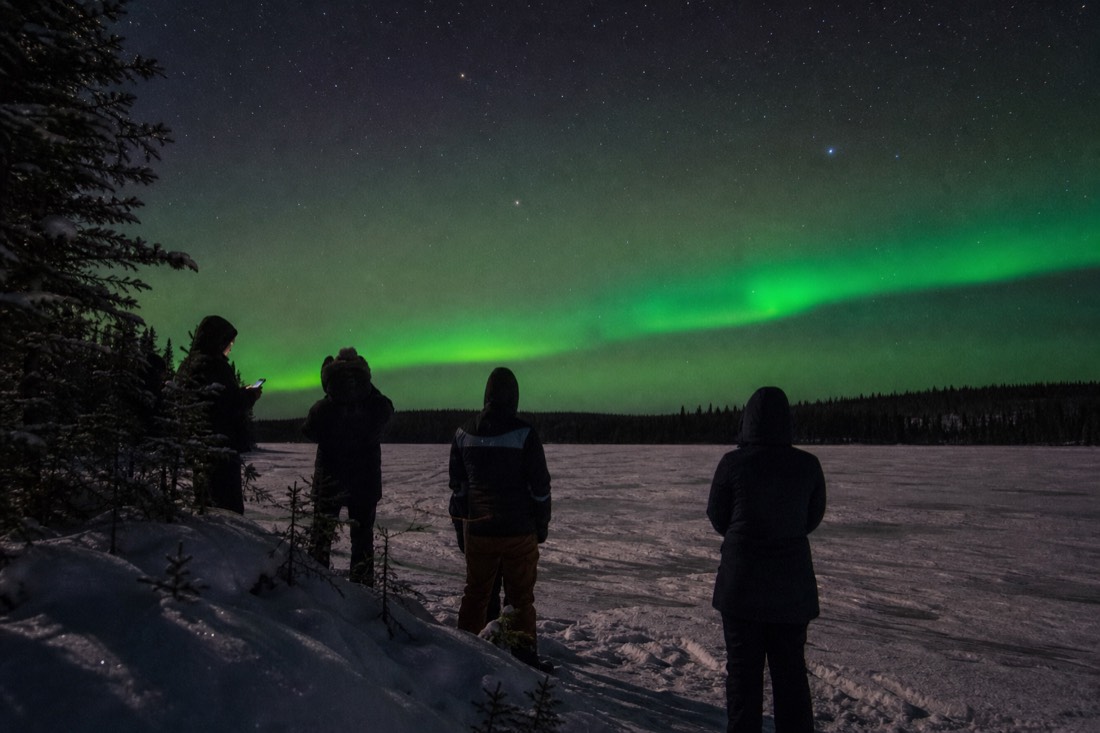
The practical detail nobody warns visitors about is the screen itself. A phone at full brightness resets your night vision every time you check it, and the faint early arc that a dark-adapted eye reads as green is the one a freshly dazzled eye reads as thin cloud. Turn the brightness down before you go out, then leave the phone in a pocket. My worst nights with guests are the ones where half the group is looking at 6 percent probability while the arc builds behind them.
Cold is the other half of it. Batteries drain fast at these temperatures, so a phone kept in an outer pocket can drop from 60 percent to dead in the time it takes to make one good decision. Keep it inside your jacket against your body, and carry spares warm if you are shooting; the clothing that makes any of that possible is set out in what to wear in a Yellowknife winter.
Then there is the thing no app models. Cloud here moves, and it moves in patches rather than sheets, so a broken sky over town can sit beside a clear hole 30 kilometres up the Ingraham Trail. The nowcast will tell you the oval is lit. Only a windscreen and a willingness to drive will tell you where the gap is.
My own routine has not changed in years: check the cloud forecast first, glance at the 30-minute nowcast second, ignore the Kp number almost entirely, then walk outside and look north. The apps on my phone are a nudge, not an oracle. Under this particular patch of sky, the aurora shows up far more often than the forecast makes it sound, and the visitors who see the most are simply the ones who kept going outside.