Northern Lights Forecast Yellowknife: How to Read Tonight's Aurora Odds
Three layers decide whether you see the lights in Yellowknife tonight, and only one of them is the number everyone stares at. Here is how a local guide reads the forecast, in the order that matters.
 Written with Thomas Beaulieu, Yellowknife tour guide & northern lights specialist
Short answer
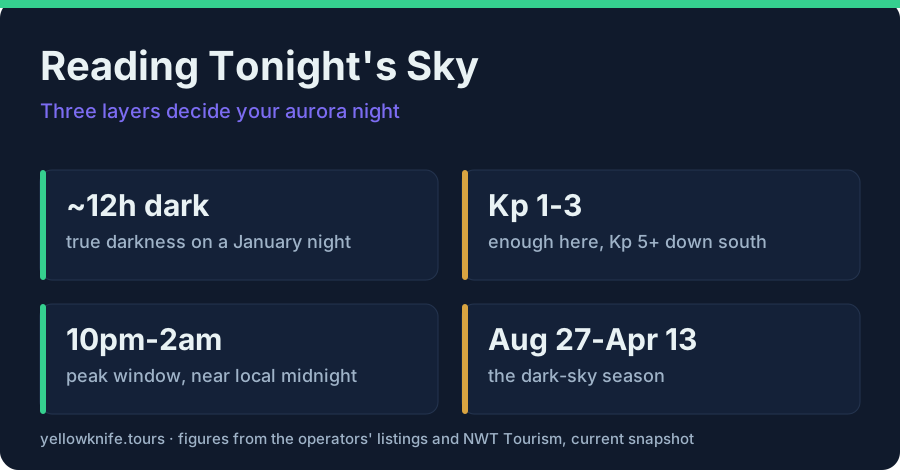
Check three things, in this order: darkness (there is none between roughly mid-April and the last days of August), cloud cover (the layer that most often decides a visitor's night here), and geomagnetic activity. Because Yellowknife sits directly under the auroral oval, a Kp of roughly 1 to 3 with clear skies is often enough, so a low forecast is no reason to stay in.
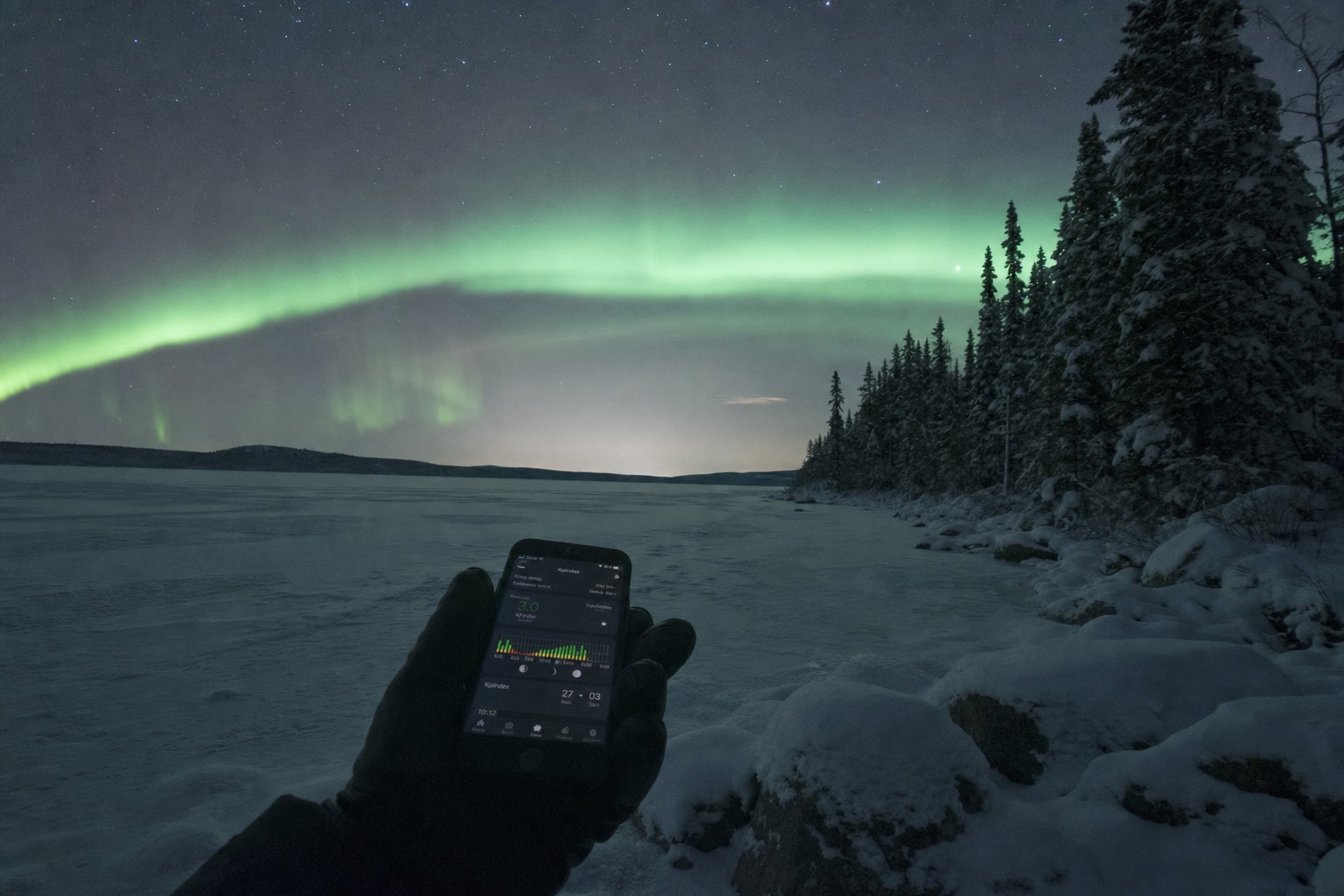
Most evenings, somebody hands me a phone in the hotel lobby before pickup. On the screen is an app, usually a big number, sometimes a scary red bar, and the question is always the same: is tonight any good? Then I ask what the sky looked like when they walked in, and nobody knows, because they have been reading the wrong layer. Forecasting the aurora here is not one number. It is three, stacked, and the one people obsess over is the one that matters least in Yellowknife.
What does the Yellowknife aurora forecast actually measure?
A forecast for this city is really three separate forecasts wearing one name: whether the sky will be dark enough, whether it will be clear enough, and how active the aurora itself will be. Darkness is fixed by the calendar, cloud comes from the weather service, and activity comes from space-weather models. All three have to line up.
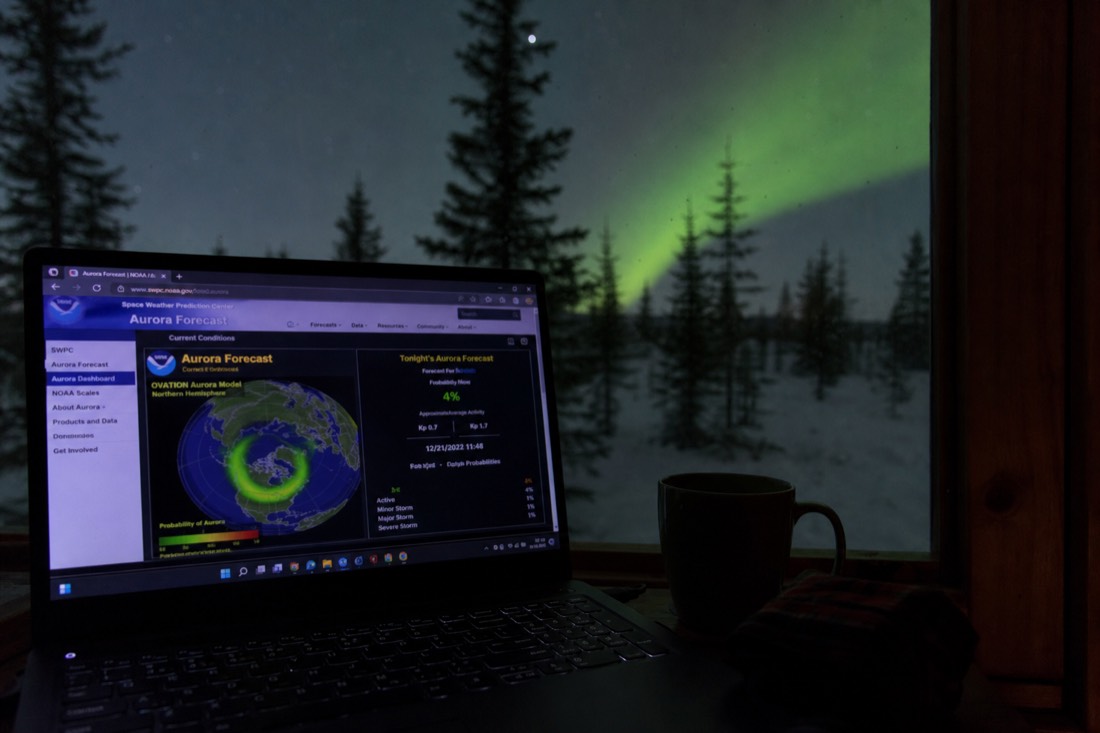
Apps collapse those layers into a single percentage, which is convenient and slightly dishonest. A 90 percent aurora probability under solid overcast is a zero for you. A modest probability under a clean sky, from a spot with no town glow, is a good night. Once you separate the layers, the forecast stops feeling like a lottery ticket and starts behaving like a plan.
| Layer | What it actually tells you | How far ahead it works |
|---|---|---|
| Darkness | Whether astronomical night exists at all on this date | Fixed years ahead by the calendar |
| Cloud cover | Whether you can physically see the sky tonight | Useful 1 to 3 days out, sharpest within hours |
| Geomagnetic activity (Kp, Ovation) | How strong and how far south the oval is pushing | 30 to 60 minute nowcast is the dependable one |
| Moon phase | How much faint aurora gets washed out, mainly for cameras | Fixed years ahead by the calendar |
Note the right-hand column. The 30 to 60 minute nowcast from NOAA's Ovation model is the horizon you can trust; one to three day solar wind outlooks are moderate; the 27-day recurrence outlook shows patterns, not specific nights. Nobody can tell you what next Thursday's aurora will do, and any site that claims otherwise is selling confidence rather than data.
Why does darkness set the season before any forecast matters?
Yellowknife gets no astronomical darkness at all between roughly mid-April and the last days of August. True darkness returns around August 27th or 28th, first as a few minutes, then growing fast through September, and disappears again around April 12th to 14th. That window, not solar activity, is what defines the aurora season here.
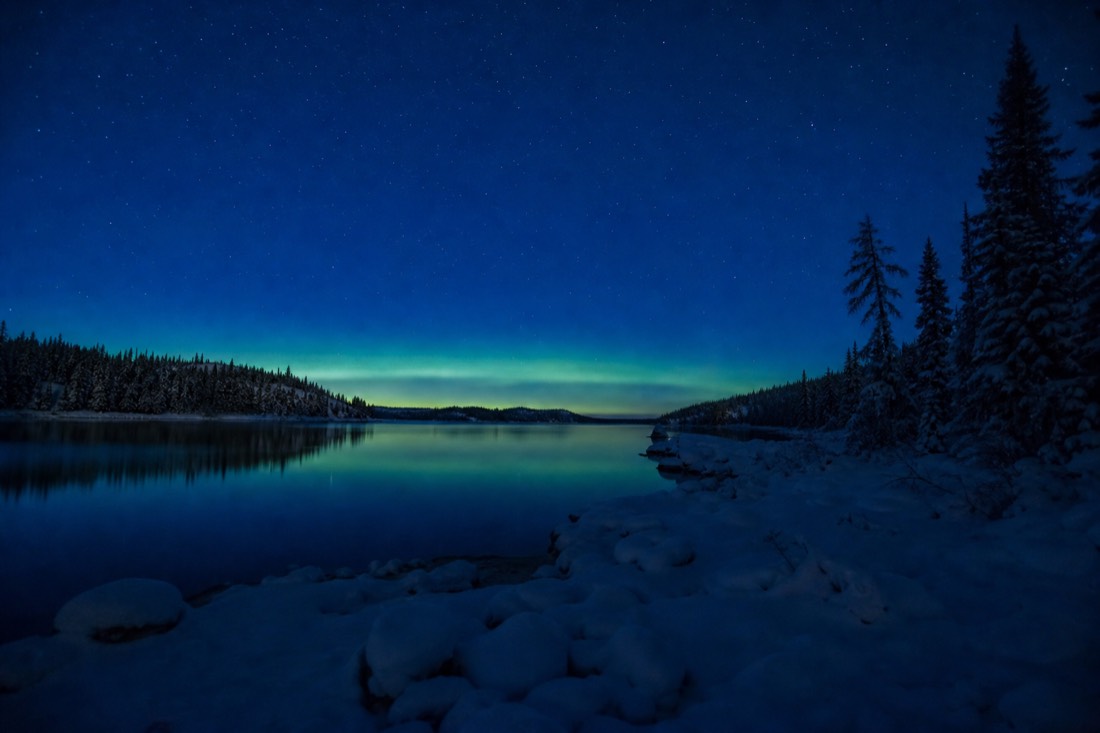
At 62.45 degrees north, roughly 400 km south of the Arctic Circle, this town gets neither true midnight sun nor polar night. Around the June solstice the sun does set, but the sky never leaves twilight, so the aurora is up there and simply invisible. That is the whole explanation for why the season looks the way it does, and it is why the calendar question gets its own treatment in the best time to see the northern lights guide.
| Month (15th) | Sunrise | Sunset | Daylight | True astronomical darkness |
|---|---|---|---|---|
| January | 09:42 | 15:52 | 6h 10m | About 12h |
| February | 08:21 | 17:21 | 9h 00m | About 10h |
| March | 07:51 | 19:41 | 11h 50m | About 7h |
| April | 06:08 | 21:06 | 14h 58m | None by mid-month |
| May | 04:34 | 22:32 | 17h 58m | None |
| June (solstice) | 03:34 | 23:44 | 20h 09m | None |
| July | 04:12 | 23:14 | 19h 02m | None |
| August | 05:37 | 21:45 | 16h 08m | None at mid-month |
| September | 07:01 | 20:03 | 13h 02m | About 5h 20m |
| October | 08:21 | 18:24 | 10h 02m | About 9h |
| November | 08:50 | 15:53 | 7h 03m | About 11h 30m |
| December | 09:57 | 15:07 | 5h 09m | About 12h 45m |
Two seasons fall out of that table. Mid-August to early October gives you lights over open lakes and milder air, with darkness short but rising steeply; mid-November to early April gives you the long nights and the deep cold. September's five and a bit hours are plenty, and the shoulder trip has its own case, made properly in the August and September guide.
Is cloud cover the layer that really decides your night?
Yes. For a visitor standing under the auroral oval, cloud cover is the single factor that most often decides whether the lights get seen. The aurora is usually doing something up there. Whether a sheet of stratus sits between you and it is the practical question, and it is a plain weather forecast, not a space-weather one.
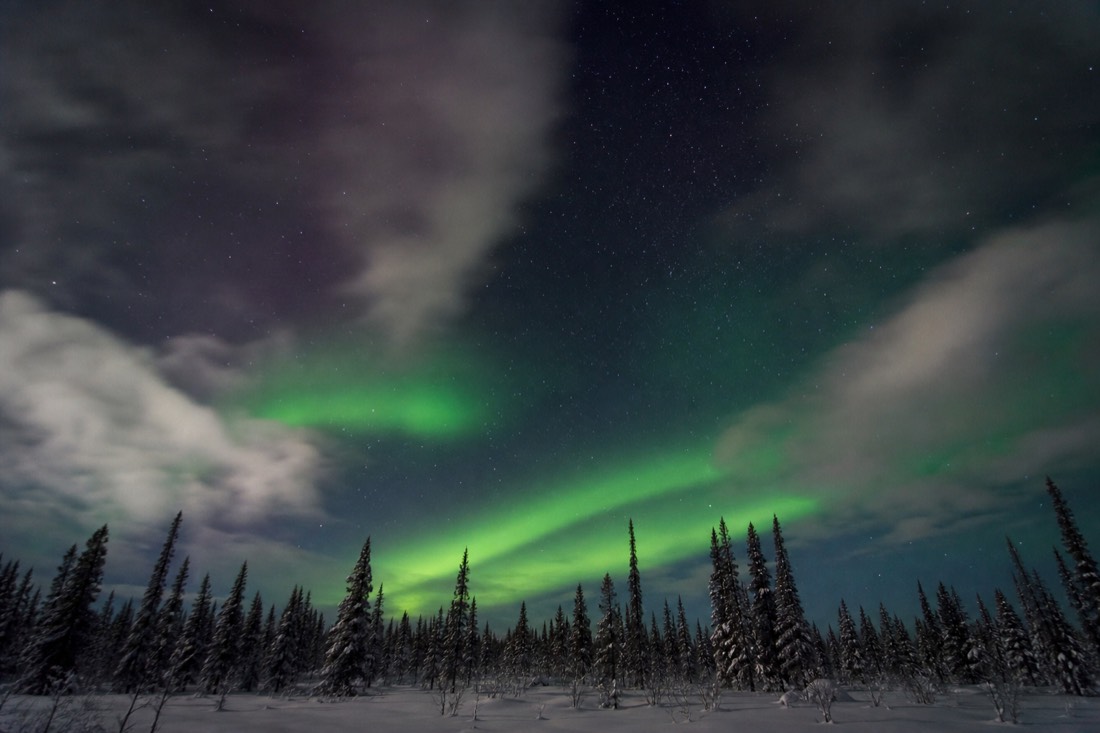
This is the part that flips people's priorities once they hear it. Yellowknife's real advantage over coastal aurora destinations is continental clear-sky reliability: flat horizons, relatively low precipitation, minimal light pollution a short drive from town. Iceland's weak point has never been aurora, it has been cloud. Ours is a better bet for the same reason a desert is a better bet for stargazing.
Cloud also moves, which is the detail that makes guided hunting worth something. A cloud deck sitting over the city at 10pm frequently does not extend 60 or 80 kilometres up the highway, and the whole design of a chase night is to go find the hole. The odds behind all of this, including the figure of aurora being visible up to 240 nights a year and the 98 percent chance across a three-night stay, are unpacked in the chances of seeing the northern lights guide.
What Kp does the northern lights forecast need to show for Yellowknife?
Roughly Kp 1 to 3, with clear skies. The Kp index measures global geomagnetic activity on a 0 to 9 scale, and higher numbers push the auroral oval further south. Yellowknife already sits under the oval, so it does not need a storm. Southern Canada and the northern USA typically need Kp 5 or higher, which is why their advice reads so differently.
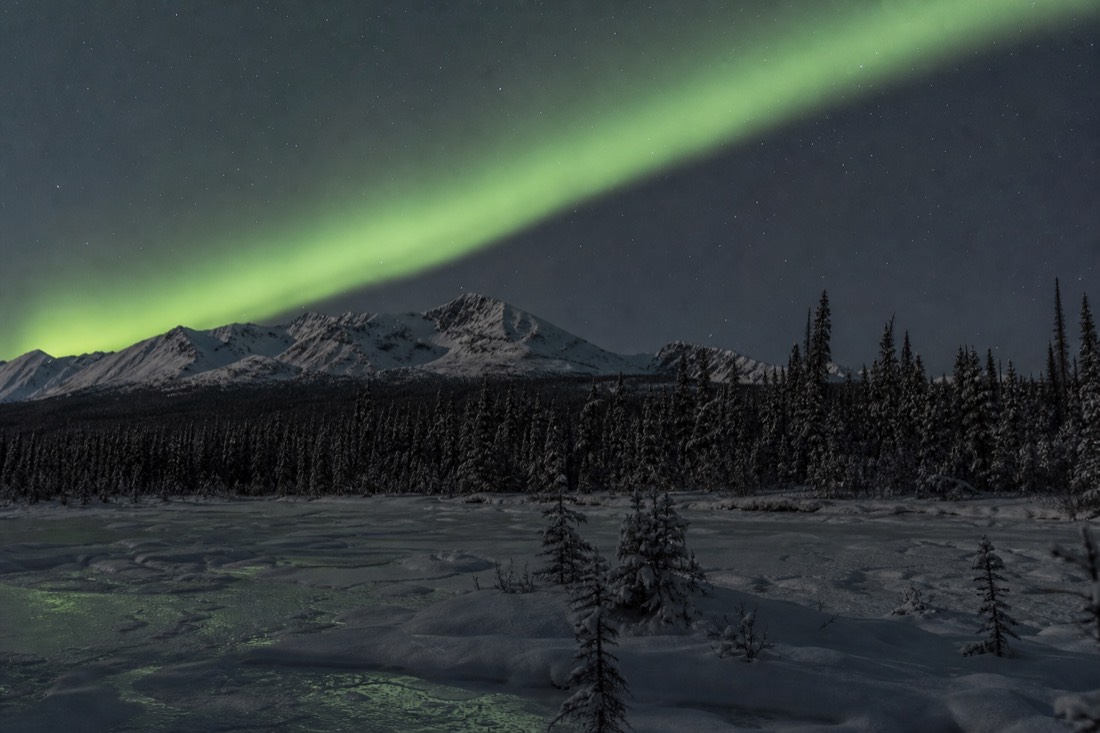
Almost every aurora article on the internet is written for people who live south of the oval, where a big Kp number is genuinely the difference between seeing something and seeing nothing. Copy that advice north and it becomes actively misleading. One of our flagship tour's real reviews describes a good show on a night forecast at Kp 0.0, which tells you everything about how this latitude works.
| Where you are | Kp usually needed | Why |
|---|---|---|
| Yellowknife (62.45N, under the oval) | About 1 to 3, plus clear sky | The oval is already overhead; no expansion required |
| Southern Canada | 5 or higher | The oval has to stretch south to reach you |
| Northern USA | 5 or higher | Same problem, one step further from the oval |
| Vancouver and other mid-latitude cities | Strong storms only | Occasional, newsworthy, never reliable viewing |
Read the Kp scale properly and one more myth falls over: cold nights do not cause stronger aurora. Deep cold correlates with clear high-pressure skies, which is why the memory of a bitter night and a huge display arrive together. The temperature is a passenger, not a driver, and what it actually demands of you is covered in what to wear in a Yellowknife winter.
How do you read the aurora forecast tonight, hour by hour?
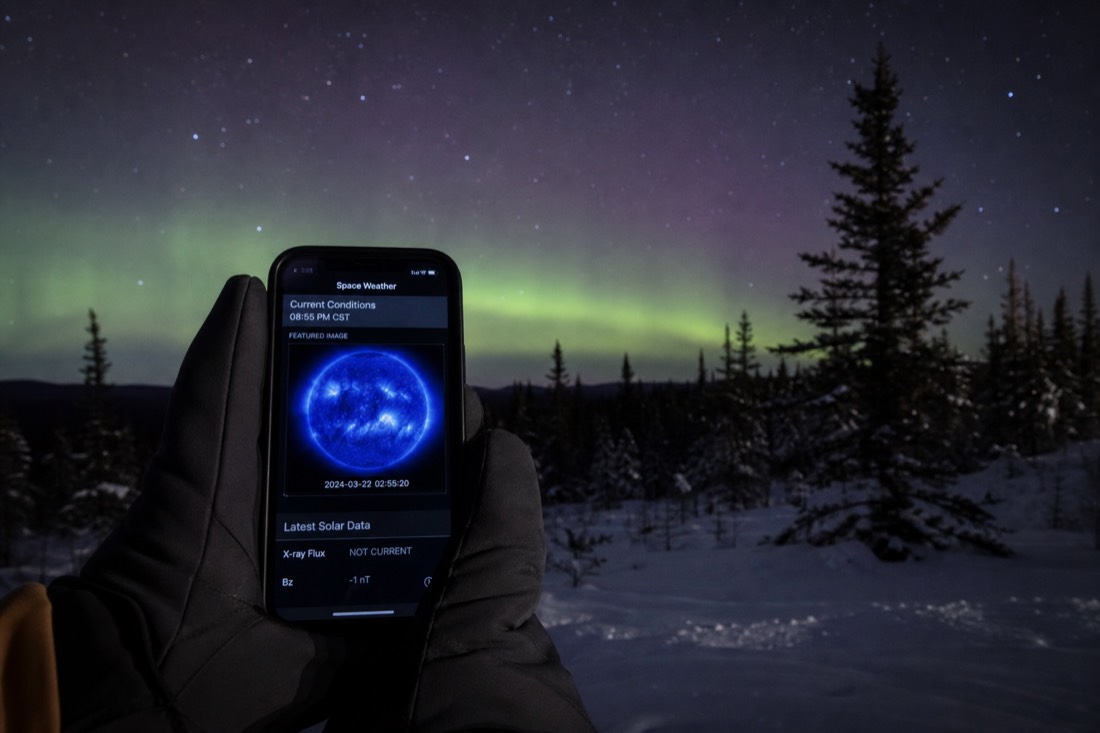
Work down the layers through the day. Morning is for the cloud forecast, because that shapes where you go. Late afternoon is for the space-weather context. The hour before you head out belongs to NOAA's 30-minute nowcast. After that, the sky itself outranks every screen you own.
| When | What to check | What to do with it |
|---|---|---|
| Morning | Environment Canada cloud forecast for the coming night | Decides whether tonight is a stay-close night or a drive-out night |
| Afternoon | Space Weather Canada and the 1 to 3 day outlook | Context and expectations only, never a promise |
| Around dinner | Moon phase and your own gear plan | Matters for photographers, barely for eyes |
| One hour before you go out | NOAA's 30-minute aurora forecast | The dependable horizon; this is the one to trust |
| 10pm to 2am | AuroraMAX and, above all, the actual sky | Stay out, stay warm, keep looking up |
One habit separates the visitors who see the lights from the ones who do not, and it is boring: they go outside repeatedly. Substorms build and collapse over minutes. A sky that looked dead at 10:40 can be moving hard at 11:15, then flat again by midnight, which is exactly why the tours run the hours they do and why a night at the window rarely works as well as a night in the cold.
Should a low forecast make you cancel your night out?
No. In Yellowknife a low Kp forecast is not a reason to stay in, because the oval sits overhead regardless. Cloud is the only forecast worth reacting to, and even then the response is to move rather than to cancel. Guided hunts exist precisely because guides drive out from under the cloud.
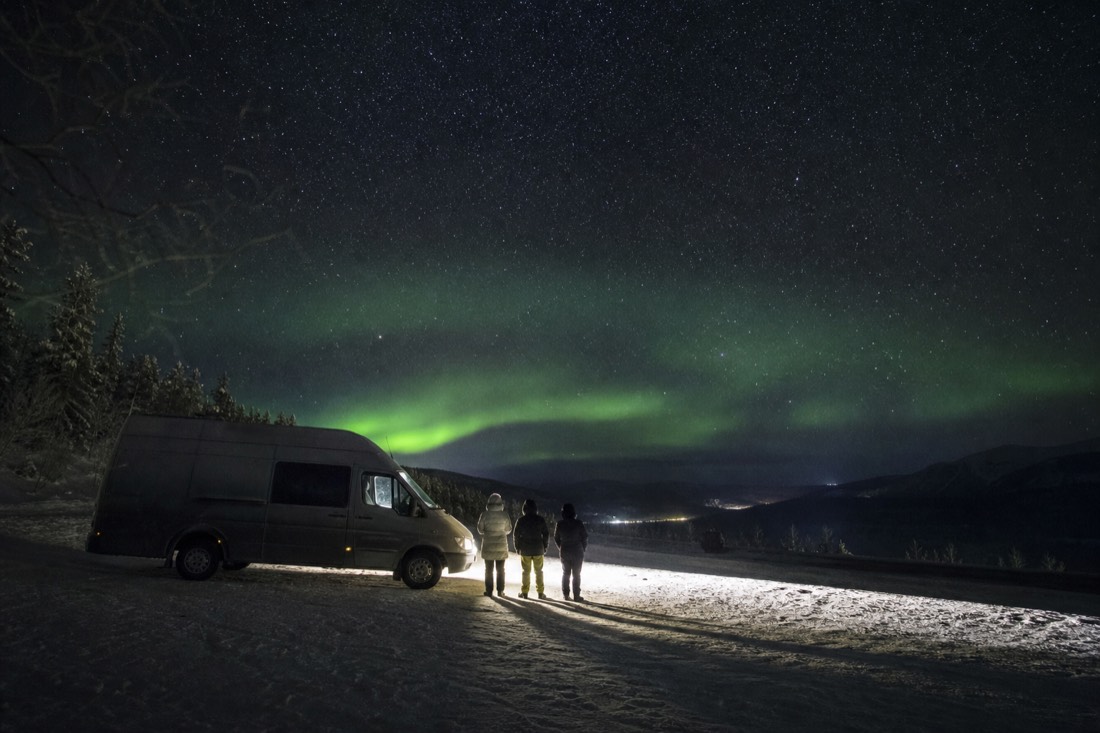
I have watched people talk themselves out of their best night of the trip on the strength of an app. The number was low, the app was right about the number, and the sky was wide open. This far north the correct default is to treat every dark, clear-ish night in season as a night worth being outside for, then let the sky decide.
Mobility is the other half. If you are driving yourself, that means being willing to leave the highway lights behind on short notice, in winter, on cold roads. If you would rather someone else carried that decision, that is the whole product: compare the northern lights tours, then check live availability and prices on Viator for the four-hour hunt with hotel pickup, three viewpoints, an on-board photographer with free photos, and hot drinks, rated 4.8 across 399 reviews with free cancellation up to 24 hours. Whether you need that help at all is argued honestly in do you need a tour, and what one of these nights actually feels like is in what an aurora hunt is really like.
When do the lights appear, and does the moon phase matter?
The statistically strongest hours at this latitude run roughly 10pm to 2am, around local midnight, which is why tours pick up between 9:30 and 10:30pm and return between 1:30 and 2:30am. The moon matters far less than people expect: a bright moon washes out faint aurora and mostly affects photographs, and a strong display beats the moon anyway.
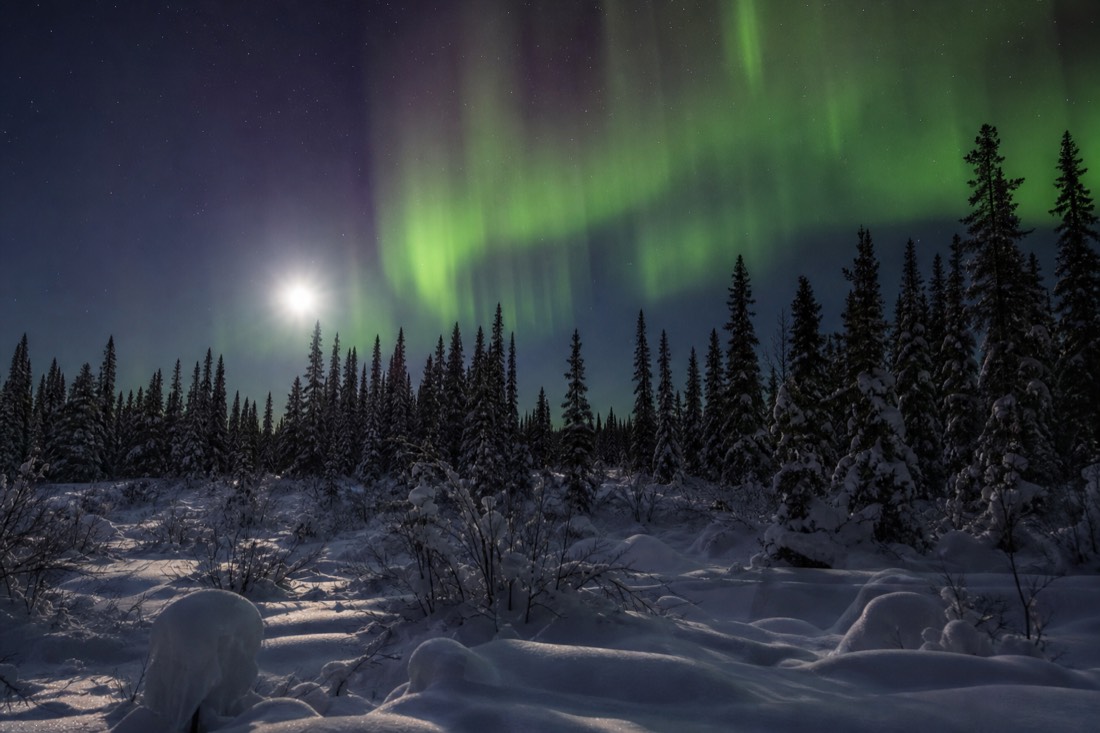
If you are shooting seriously, plan the trip around low lunar illumination and you will get cleaner frames with more visible faint structure. If you are here to stand under it and gasp, book the nights that work for your flights and stop optimising. New moon is a nice bonus, not a requirement, and I have seen far more trips ruined by one-night stays than by moonlight.
The forecast I actually use is shorter than any app. Is it dark season, is the sky opening anywhere within driving distance, and is it near midnight yet. Everything else is decoration on those three questions, and the visitors who learn that in their first hour here tend to go home with photographs.