Does Yellowknife Get 24-Hour Darkness in Winter? No, and Here Is the Real Light
The polar-night myth refuses to die, so let a guide who lives here kill it properly. Yellowknife sees the sun every single day of the year, and the long nights are a feature, not a sentence.
 Written with Thomas Beaulieu, Yellowknife tour guide & northern lights specialist
Short answer
No. Yellowknife never gets 24-hour darkness. Even at the December solstice the city has about 5 hours 5 minutes of daylight, with sunrise around 10:03am and sunset around 3:08pm. True polar night happens much further north; Yellowknife sits about 400 km south of the Arctic Circle.
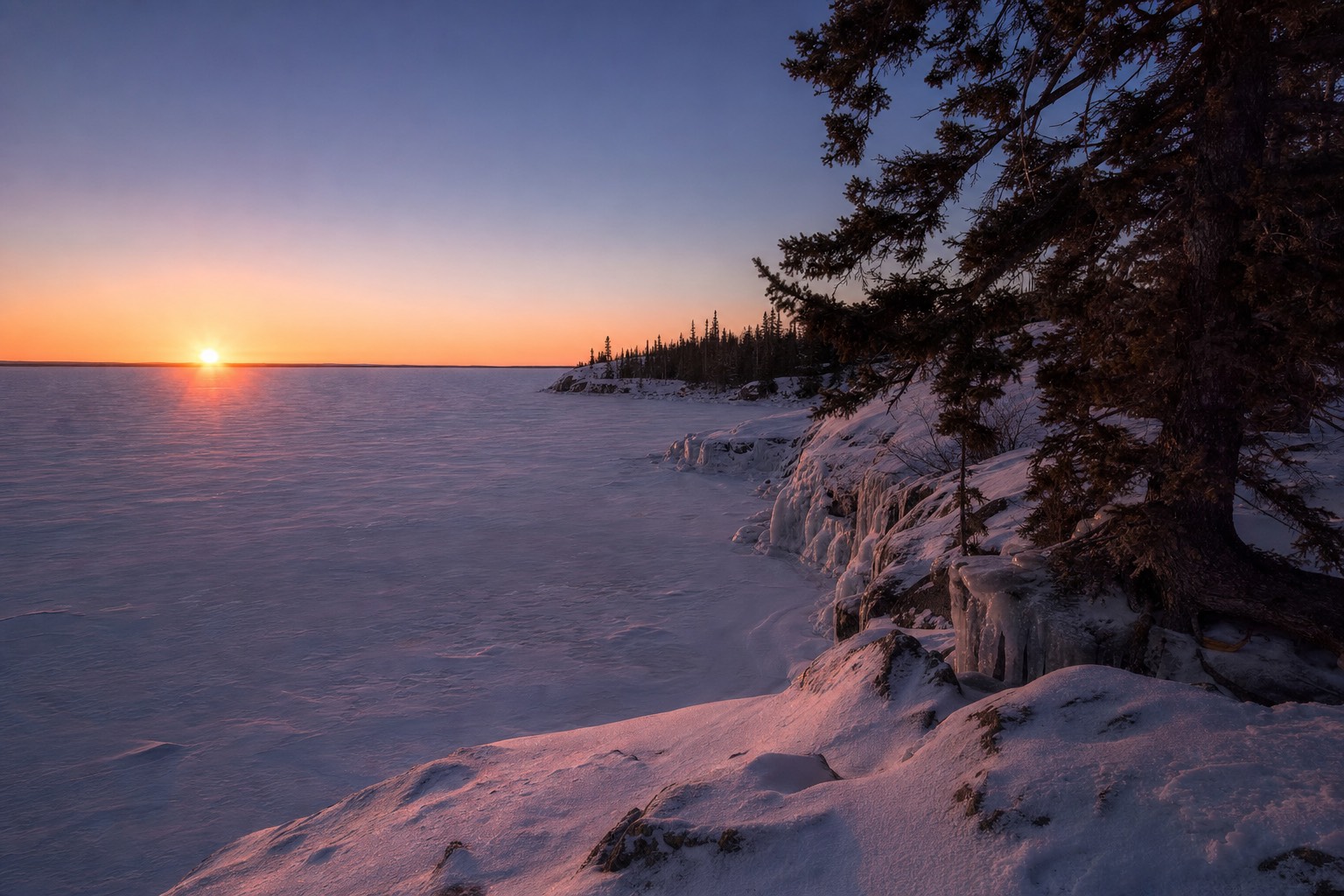
Every winter someone steps off the plane braced for a month of night, and I get to hand them a sunrise. No, Yellowknife does not get 24-hour darkness. At the December solstice, the shortest day of the year, the sun is up for about 5 hours 5 minutes, rising around 10:03am and setting around 3:08pm. True polar night lives hundreds of kilometres further north. What Yellowknife actually has is long, dark, aurora-friendly nights wrapped around a short, strangely beautiful day.
Does Yellowknife get 24-hour darkness?
No. Even on the shortest day of the year, the December solstice, Yellowknife gets about 5 hours 5 minutes of daylight, with sunrise near 10:03am and sunset near 3:08pm. The sun rises every day of the year here. Twenty-four-hour darkness, the true polar night, only happens north of the Arctic Circle.
You can check the exact times yourself on timeanddate's December page for Yellowknife, which is where I send skeptical guests. The numbers surprise people in both directions. Five hours of sun is far more than the zero they feared, yet an 11am sunrise is still strange enough to feel like another planet. Here is the myth laid against the measurable reality.
| The myth | The reality |
|---|---|
| Yellowknife goes dark for weeks in winter | About 5 h 5 m of daylight even at the December solstice |
| The sun does not rise in December | Sunrise ~10:03am, sunset ~3:08pm at the solstice |
| Yellowknife is inside the Arctic Circle | It sits about 400 km south of the Circle, at latitude ~62.45N |
| Summer is normal down south daylight | Around 20 hours of direct daylight in June, and the sky never fully darkens |
| You need polar night to see aurora | The lights show up to 240 nights a year on ordinary long nights |
Why doesn't Yellowknife have a true polar night?
Geography. Polar night requires being north of the Arctic Circle, where the sun stays below the horizon for at least one full day each winter. Yellowknife sits at about 62.45 degrees north, roughly 400 km south of that line. It is a subarctic city, not an arctic one, so the sun always makes an appearance.
The confusion is understandable. Yellowknife markets itself as the North, the aurora is an arctic icon, and the cold is real enough that January nights average around minus 29. People connect the dots to polar night on their own. But the Arctic Circle is a hard astronomical line, and this city is a long drive south of it. If you want the full pin-on-the-map picture, latitude, lake, and all, that lives in where is Yellowknife.
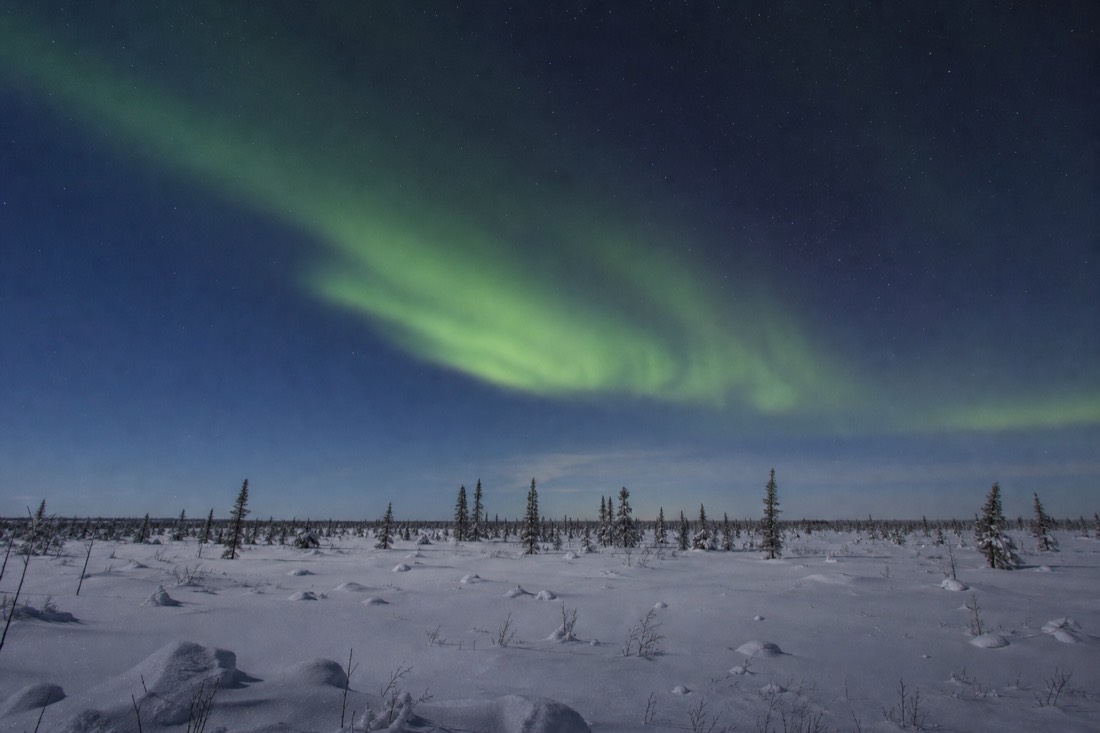
The subarctic position is actually the sweet spot. Go far enough north for polar night and you overshoot the auroral oval, where the lights concentrate. Yellowknife sits directly beneath the oval, which is why displays appear here up to 240 nights a year while the high arctic sees far fewer.
How much daylight does Yellowknife get through the year?
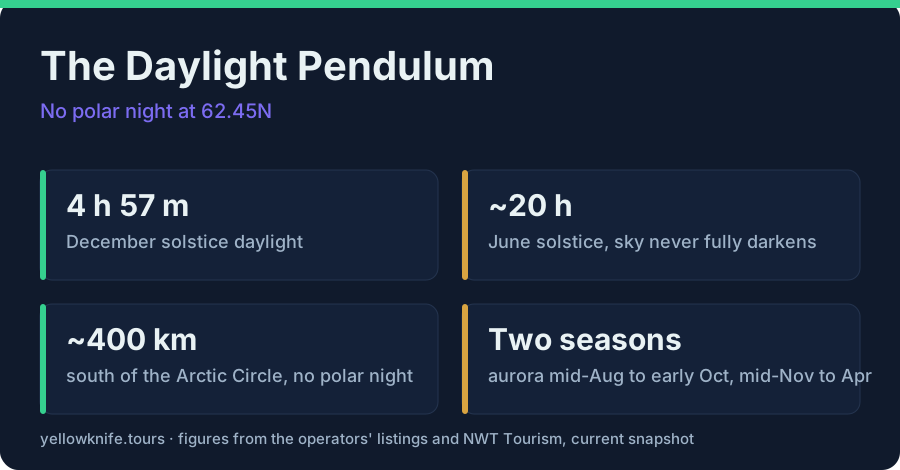
The swing is enormous. From about 5 h 5 m of daylight at the December solstice, the day stretches to roughly 12 hours at the March equinox and around 20 hours of direct daylight at the June solstice, when the sky never fully darkens. September brings the balance back to near 12 hours.
Think of the year as a pendulum. Every week in winter adds noticeable minutes of sun, and by March the change is dramatic.
| Time of year | Daylight | What it means on the ground |
|---|---|---|
| Late December (solstice) | ~5 h 5 m, sunrise ~10:03am, sunset ~3:08pm | Long nights, low golden sun, prime aurora darkness |
| Late March (equinox) | ~12 hours | Full activity days plus dark, aurora-strong nights |
| Late June (solstice) | ~20 hours of direct daylight | Midnight sun feel; the sky never fully darkens |
| Late September (equinox) | ~12 hours | Dark evenings return, autumn aurora over open water |
June deserves its own footnote: beyond the direct daylight, twilight fills the remaining hours, so the sky stays bright all night. The June sun page for Yellowknife shows it plainly. That is glorious for hikers and fatal for aurora viewing, which is why the lights take a break from roughly mid-April to late July. What the bright season offers instead is covered in Yellowknife in summer.
What does December light actually feel like for a visitor?
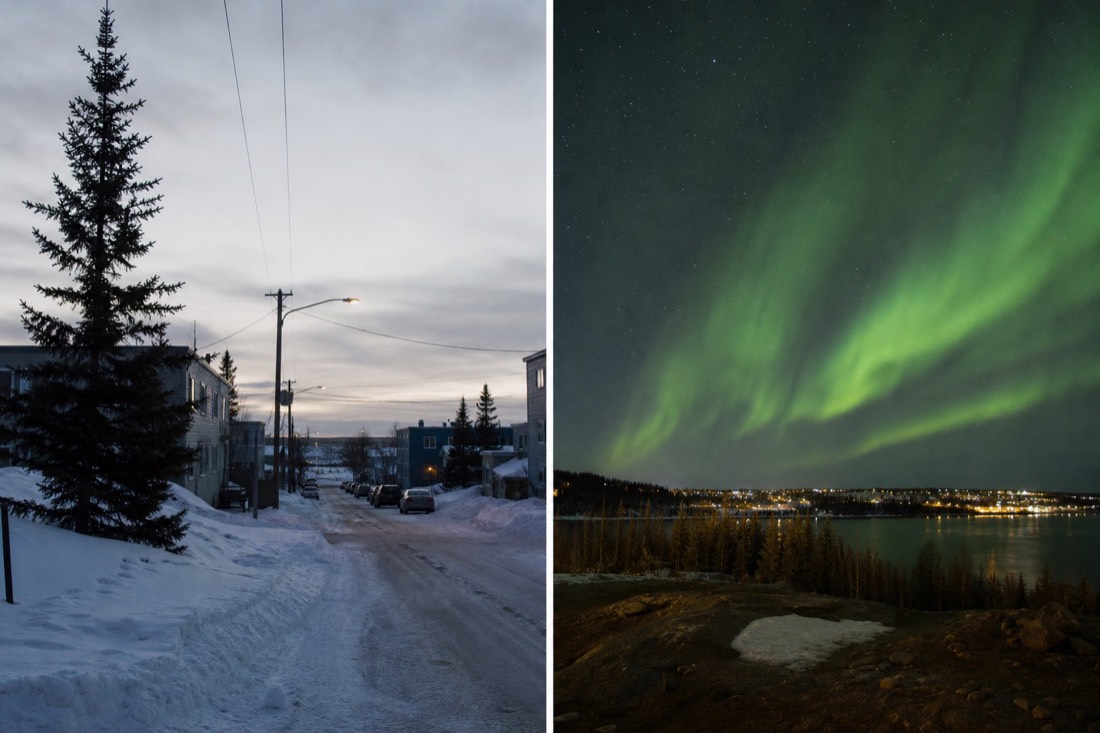
Softer and stranger than the numbers suggest. The sun stays low all day, so the five bright hours run gold and pink like an extended sunrise. Mornings are dark, afternoons dim early, and the city functions normally under streetlights. Most visitors find it atmospheric rather than oppressive.
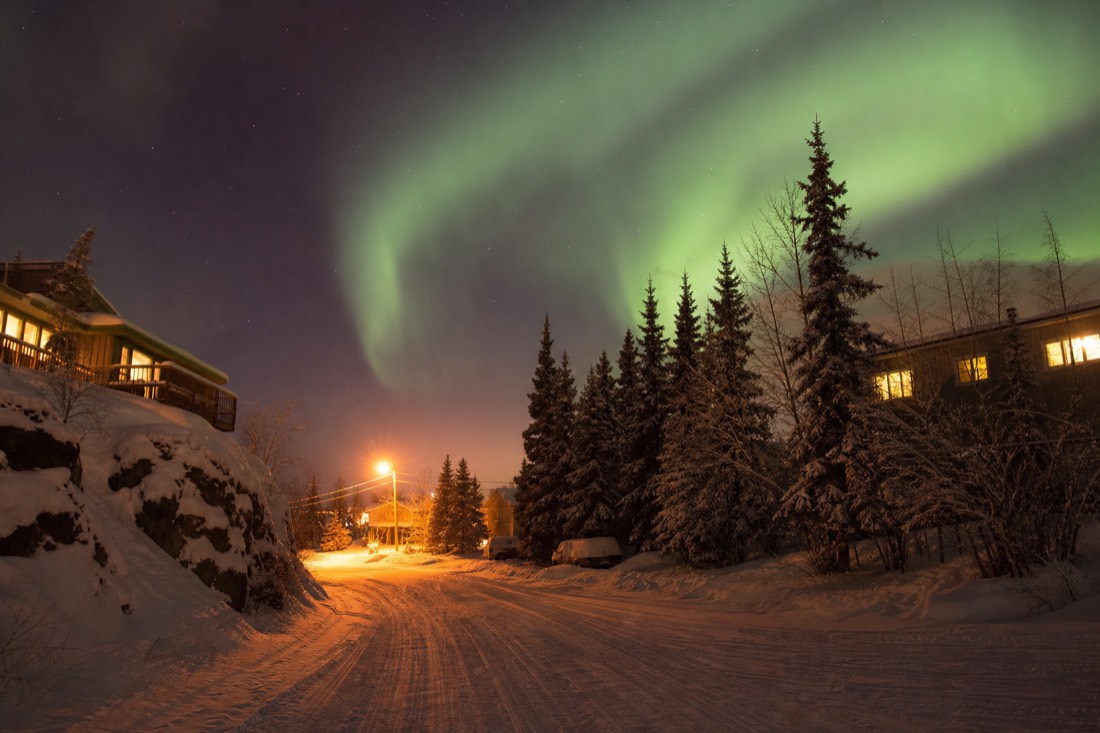
Here is my honest description of a December day, since I live them. You wake in the dark, and breakfast happens under lamps. Around 11am the sun clears the horizon and never climbs far, so the light stays at golden-hour angle for the whole day, which photographers adore. By a little after 4pm it is gone and the long evening begins. The rhythm feels odd for about two days, then most guests stop noticing, because daytime tours, dog sledding, ice fishing, the city loop, all run on schedule regardless.
The cold is the bigger adjustment, not the dark. December through March nights routinely fall below minus 20, and I broke down what that number really does to a body in what minus 30 feels like in Yellowknife. Operators run heated vans and huts, and arctic clothing rental is available in town, so the light and the cold are both managed problems.
Are long nights actually good for seeing the northern lights?
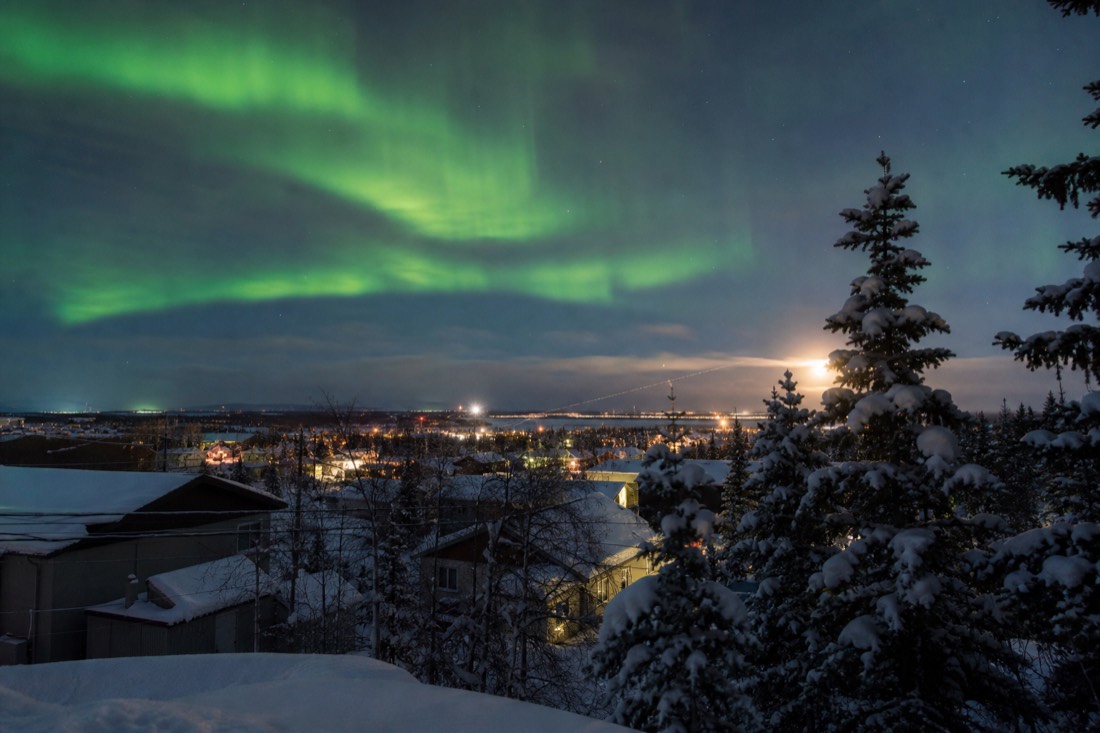
They are the whole advantage. Aurora needs a dark sky, and a December night in Yellowknife gives you 19 hours of it, wrapped around a city that sits under the auroral oval with lights visible up to 240 nights a year. The darkness people fear is precisely why winter is prime viewing season.
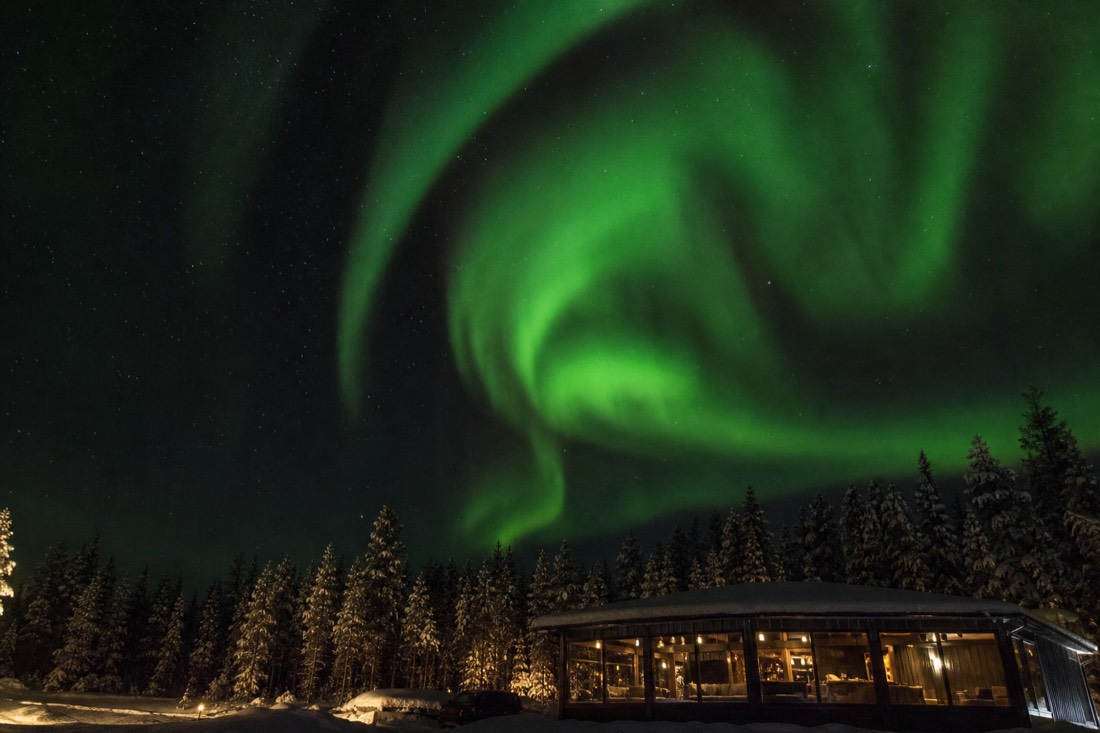
Flip the myth on its head and you find the sales pitch. The viewing season splits into the two windows NWT Tourism describes on its aurora seasons page: mid-August to early October, and mid-November to early April. Winter's contribution is raw dark-sky hours. Peak activity tends to arrive near local midnight, and in December every one of those hours is properly black.
| Darkness and the aurora | The working numbers |
|---|---|
| Autumn viewing window | Mid-August to early October, lights over open water |
| Winter viewing window | Mid-November to early April, the longest darkness |
| No-aurora gap | Roughly mid-April to late July, the sky stays too bright |
| Tour pickup times | About 9:30 to 10:30pm, return 1:30 to 2:30am |
| Peak activity | Near local midnight |
| Odds over 3 nights in season | 98% chance of at least one sighting (NWT Tourism) |
Your odds follow the darkness. Over a three-night stay in season, NWT Tourism puts the chance of at least one sighting at 98%, a figure I unpack in chances of seeing the northern lights in Yellowknife. If you are coming in the dark months, use them properly: a guided hunt drives out from under cloud instead of waiting beneath it, and the flagship trip runs 4.8 across 399 reviews with hotel pickup, three viewpoints, and a photographer shooting free photos. Compare the northern lights tours, then check live availability and prices on Viator before your December nights fill up.
So who does get 24-hour darkness, if not Yellowknife?
Communities north of the Arctic Circle, where the sun stays below the horizon for at least one full winter day. The further north of the Circle you go, the longer the polar night lasts. Yellowknife, 400 km south of the line, trades that extreme for the auroral oval, and wins the trade.
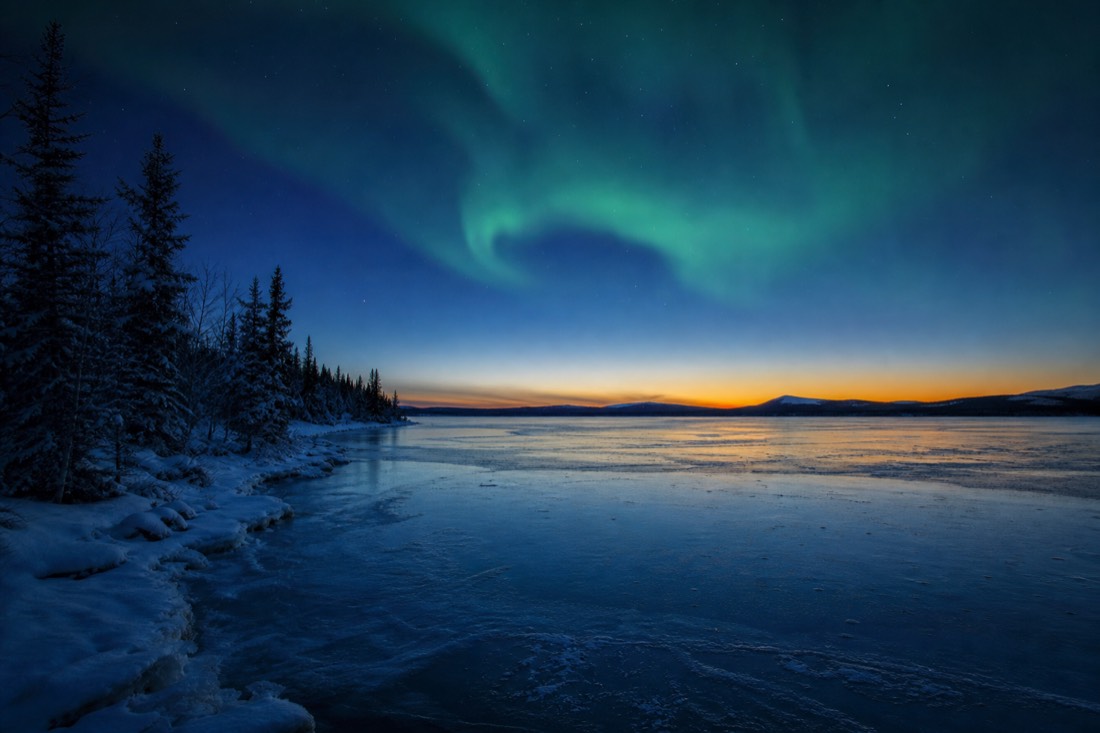
The takeaway I give guests: stop fearing the dark and start scheduling around it. Come between mid-November and early April for maximum night, or in the milder autumn window covered in the best time guide, and let the famous long nights do exactly what they are famous for.