Great Slave Lake Fishing: The Honest Guide to the Big Water
The deepest lake in North America runs two fishing lives, a summer of trophy charters and remote lodges, and a winter of heated huts on the ice. Here is how both actually work.
 Written with Thomas Beaulieu, Yellowknife tour guide & northern lights specialist
Short answer
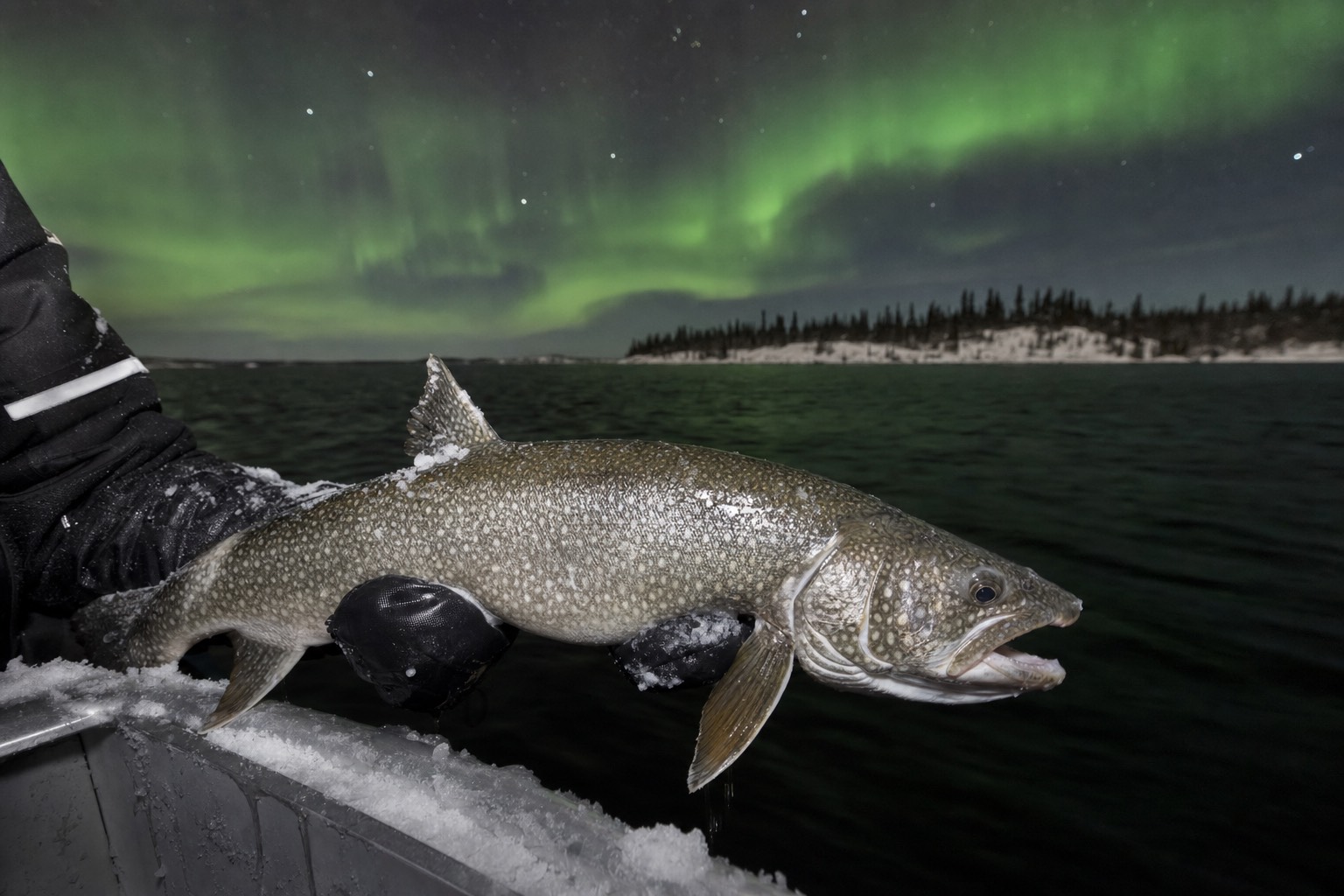
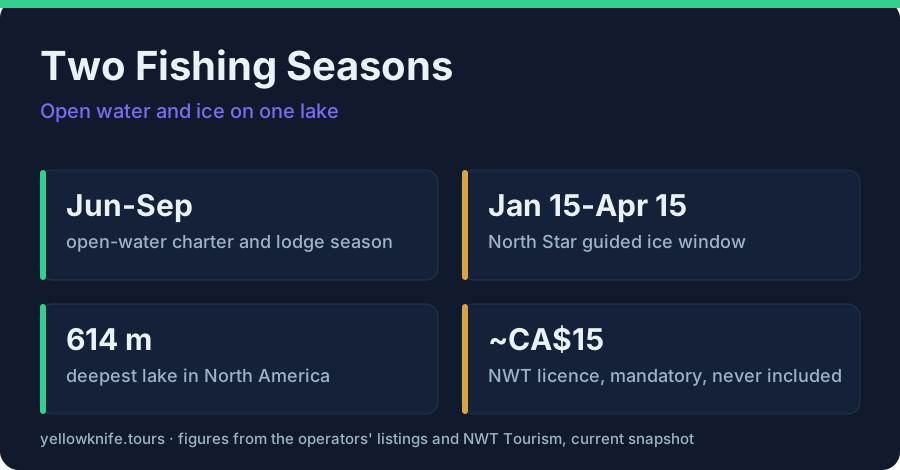
Great Slave Lake, 614 metres deep, fishes two ways. Open-water charters and the East Arm lodges run roughly June to September for trophy lake trout, northern pike, and arctic grayling. In winter, guided ice fishing takes over, heated huts on the frozen lake with your catch cooked for lunch. An NWT licence, about CA$15, is mandatory either way.
The lake I work beside does not really end, it just curves over the horizon. Great Slave is an inland sea with a fishing reputation that predates every tour I run, and guests ask about it in both seasons: in July they want to know about the trophy boats, in February they want to know what the huts out on the ice are doing. Different answers, same water. This guide covers both honestly, including the part where the summer trophy scene is mostly not ours to sell.
What makes Great Slave Lake special for anglers?
Depth and scale. Great Slave is the deepest lake in North America at 614 metres, cold clean water that grows genuinely large lake trout and holds northern pike and arctic grayling in the same trip. Charters and lodges fish the open water June to September; heated huts fish through the ice in winter.
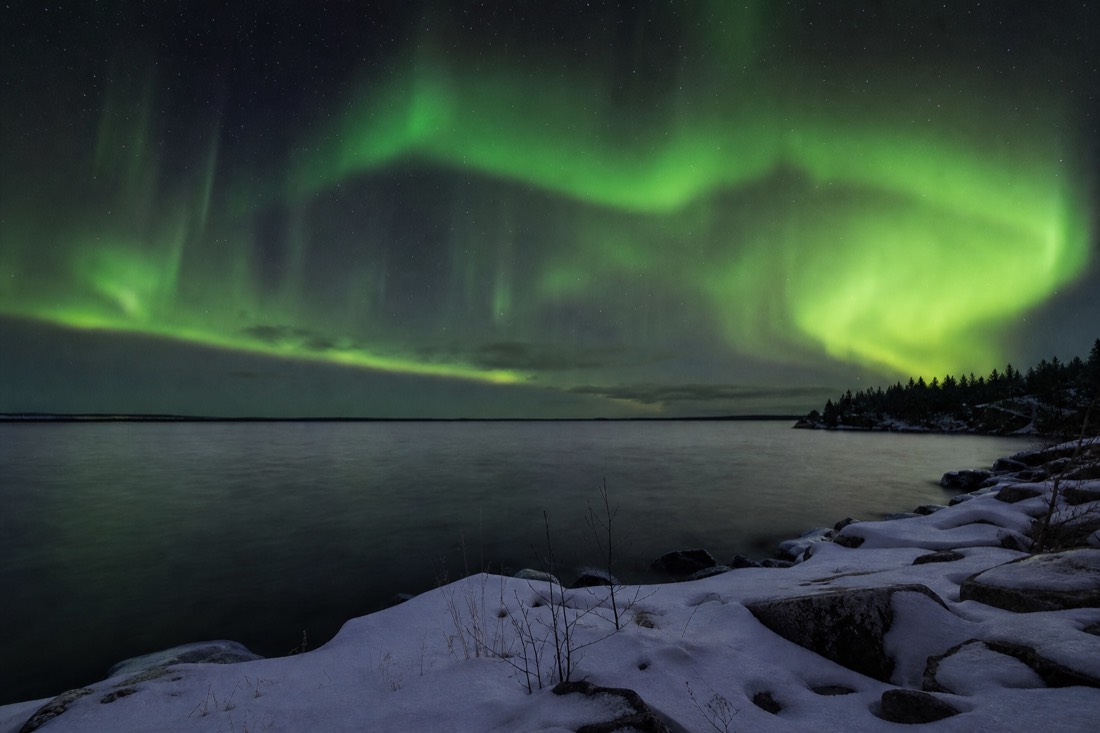
Cold, deep, lightly pressured water is the whole formula. A lake that bottoms out at 614 metres, 2,014 feet, stays cold top to bottom, and cold water is what the north's signature fish want. Add a tiny local population and a short season, and you get a fishery where the fish outnumber and outlive the anglers. The town side of the lake, Yellowknife Bay and the waters within day-trip range, carries the accessible version: summer charters out of town, winter huts on the ice. The remote East Arm, hours away by water or air, carries the trophy-lodge version. Knowing which of those two lakes you are booking is most of the planning.
What fish can you catch in Great Slave Lake?
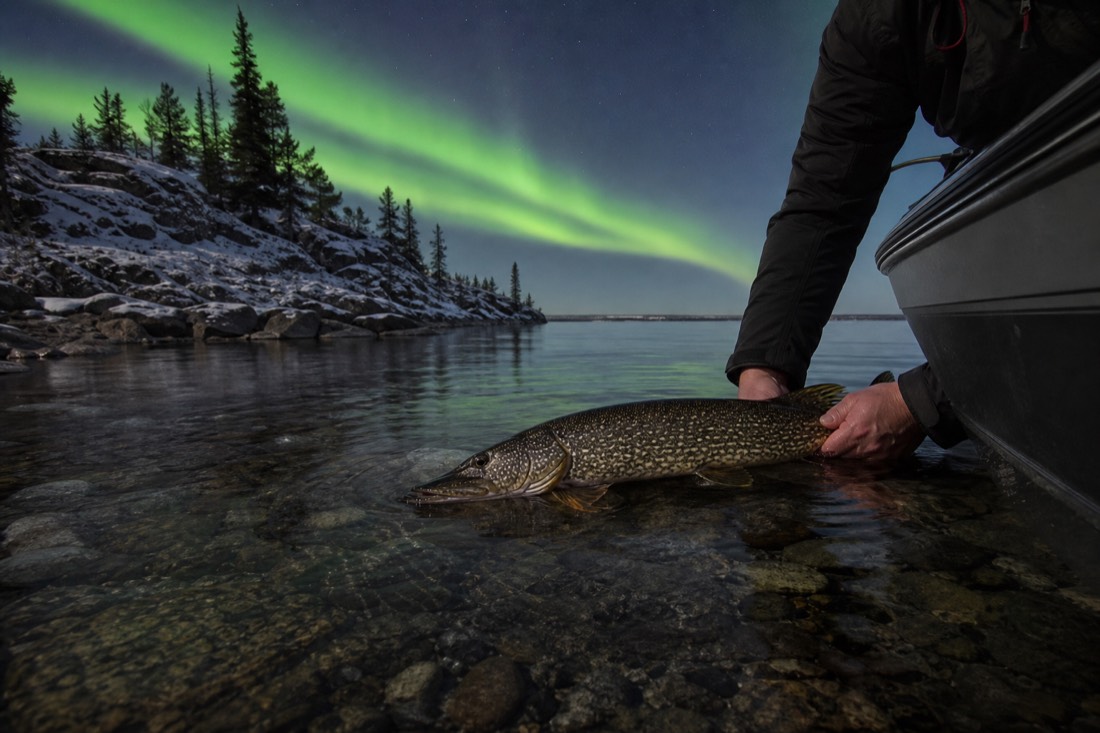
Five names matter: lake trout, the trophy target the lake is famous for; northern pike, the aggressive ambush fight; arctic grayling, the light-tackle prize; plus whitefish and burbot, the two you are most likely to meet through the winter ice. The summer charter scene is built around the first three.
| Species | Why anglers come for it | When and how |
|---|---|---|
| Lake trout | The headline act, the trophy fish of the deep cold water | Open-water charters and lodges, June to September |
| Northern pike | Aggressive, big, spectacular strikes in the shallows | Open-water season |
| Arctic grayling | The elegant northern light-tackle fish | Open-water season |
| Whitefish | The lake's staple, and the classic net catch | A regular guest at the winter net pull |
| Burbot | The strange one, a freshwater cod | Winter ice fishing's character fish |
An honest note on trophy talk: I am not going to invent record weights for you. The reason serious anglers fly here is reputation built over decades of lodge seasons, trophy lake trout in cold water that grows fish slowly and releases them to grow further. What I can vouch for personally is the winter table: whitefish pulled from a net through the ice and cooked minutes later is one of the best simple meals this territory serves, a tradition I watched guests fall for all season on the ice, and the same lake fish anchors the famous fish fry at Bullocks' Bistro back in Old Town.
When is the fishing season on Great Slave Lake?
Two real seasons with dead shoulders between them. Open-water charters and lodges run roughly June to September. Guided ice fishing runs midwinter on thick ice, the North Star traditional trip runs January 15 to April 15, and heated-hut day tours work the same deep-ice window. Freeze-up and break-up belong to nobody.
| Window | The water | How you fish it |
|---|---|---|
| June to September | Open, surface warming to ~15-18C by midsummer | Day charters from Yellowknife, week-long lodge trips on the East Arm |
| October to December | Freeze-up, forming ice | Nothing guided, the waiting season |
| Mid-January to mid-April | Thick ice, road-bearing by late December | Heated-hut day tours, the North Star traditional trip, Jan 15 to Apr 15 |
| Late April to May | Break-up, rotting ice | Nothing, and nobody sane walks out there |
The shoulders are the trap for planners. The same bay that carries the 6.5-kilometre Dettah ice road in February is open boating water in July, and the transitions between those states are exactly when the lake is off limits. If your trip lands in October, November, or May, fishing simply is not on your menu, and you would build the trip around other things instead, the full year-round list is in things to do in Yellowknife.
What is the East Arm lodge scene?
The trophy end of the lake. Two confirmed operating lodges anchor it: Frontier Fishing Lodge on the East Arm and Plummer's Great Slave Lake Lodge at Taltheilei Narrows. These are book-direct, multi-day remote trips built around trophy lake trout, a different product entirely from a day trip out of Yellowknife.
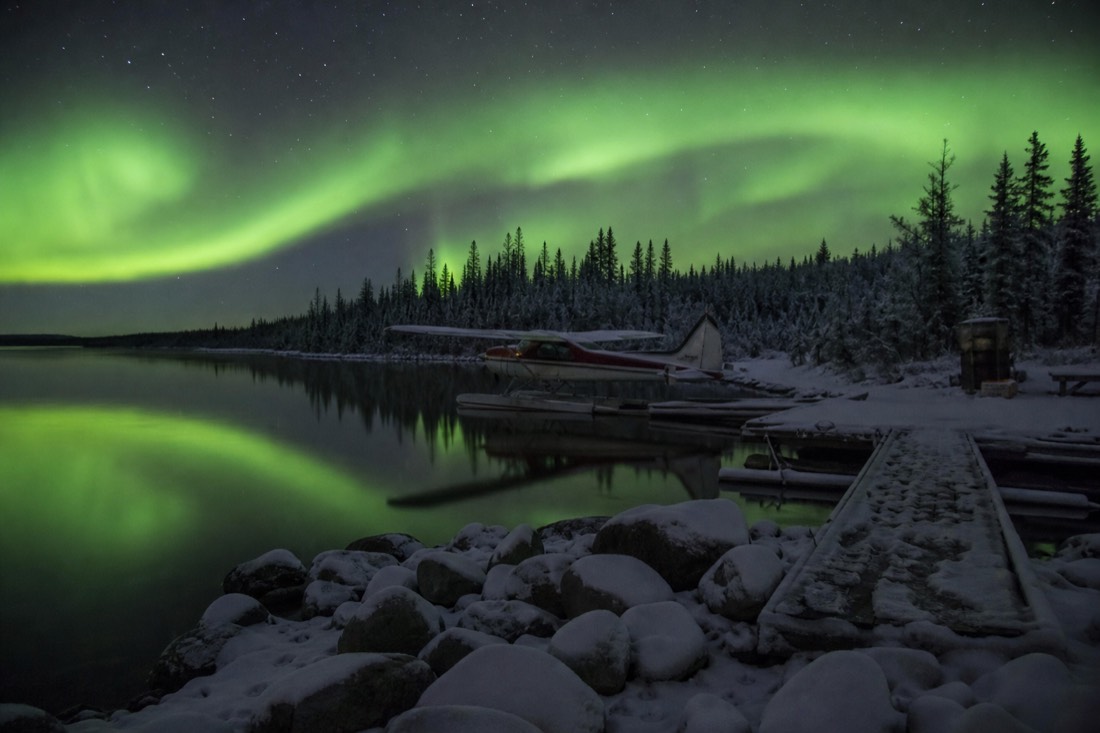
Full disclosure, because this site runs on honesty: we do not sell lodge trips and have no stake in them. The two names that matter are Frontier Fishing Lodge, out on the East Arm, and Plummer's Great Slave Lake Lodge at Taltheilei Narrows, both long-running operations you book directly for the open-water season. If a week of trophy lake trout water is the point of your trip, that is where it lives.
| East Arm lodge week | Yellowknife day trip | |
|---|---|---|
| Season | Open water, roughly June to September | Winter ice season, midwinter |
| The target | Trophy lake trout on remote water | The experience: huts, the net pull, lunch from the catch |
| Time commitment | Multi-day, the trip is the holiday | 3.5 to 4 hours inside a Yellowknife stay |
| Booking | Direct with the lodge | Tour listing, hotel pickup included |
| Licence | NWT licence required | NWT licence required, ~CA$15, never included |
The two products do not really compete. Lodge guests plan around the lodge; Yellowknife visitors bolt fishing onto an aurora trip. Most people reading this site are the second kind, which brings us to winter.
Can you fish Great Slave Lake in winter?
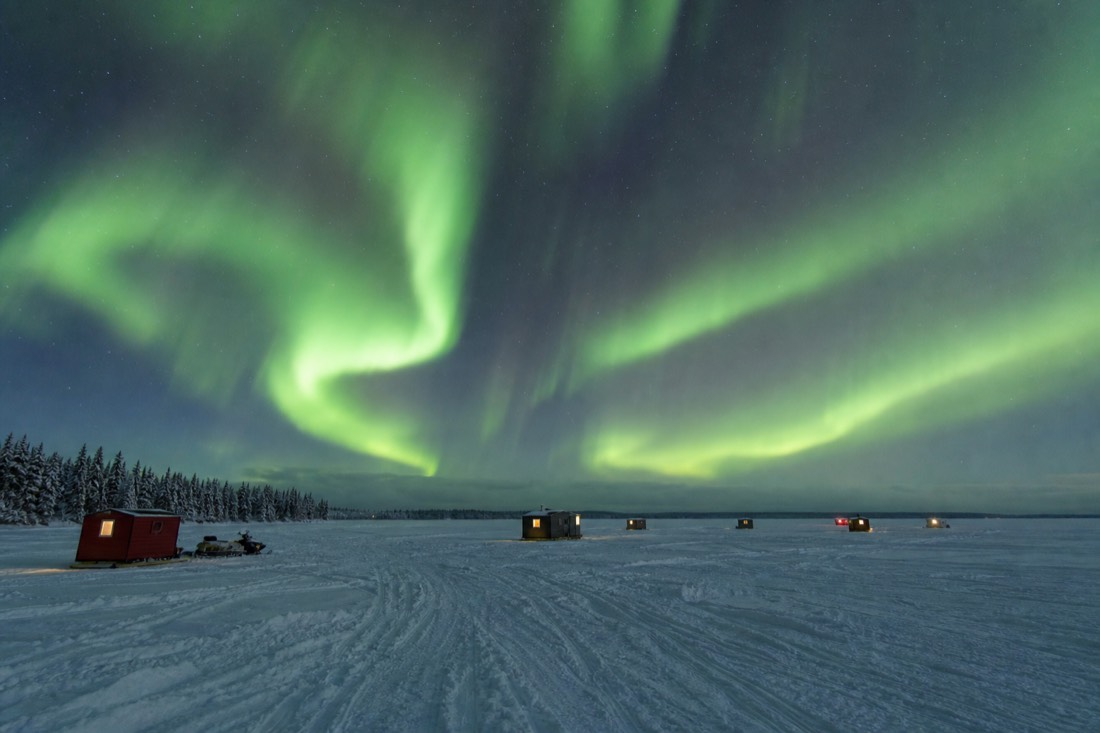
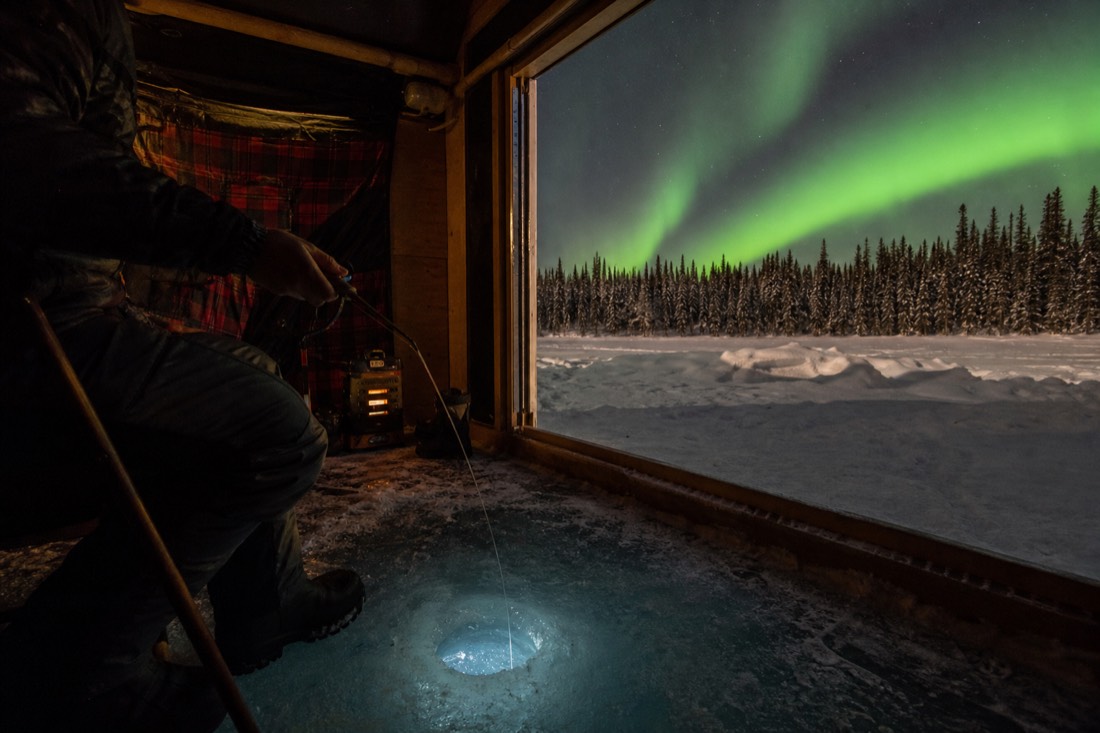
Yes, and for most visitors winter is the accessible version. The heated-hut tour spends 3.5 hours on the frozen lake with a net pulled through the ice and your catch cooked for lunch on the spot, 4.5 across 72 reviews. North Star Adventures runs a traditional Indigenous-guided alternative from CA$249.
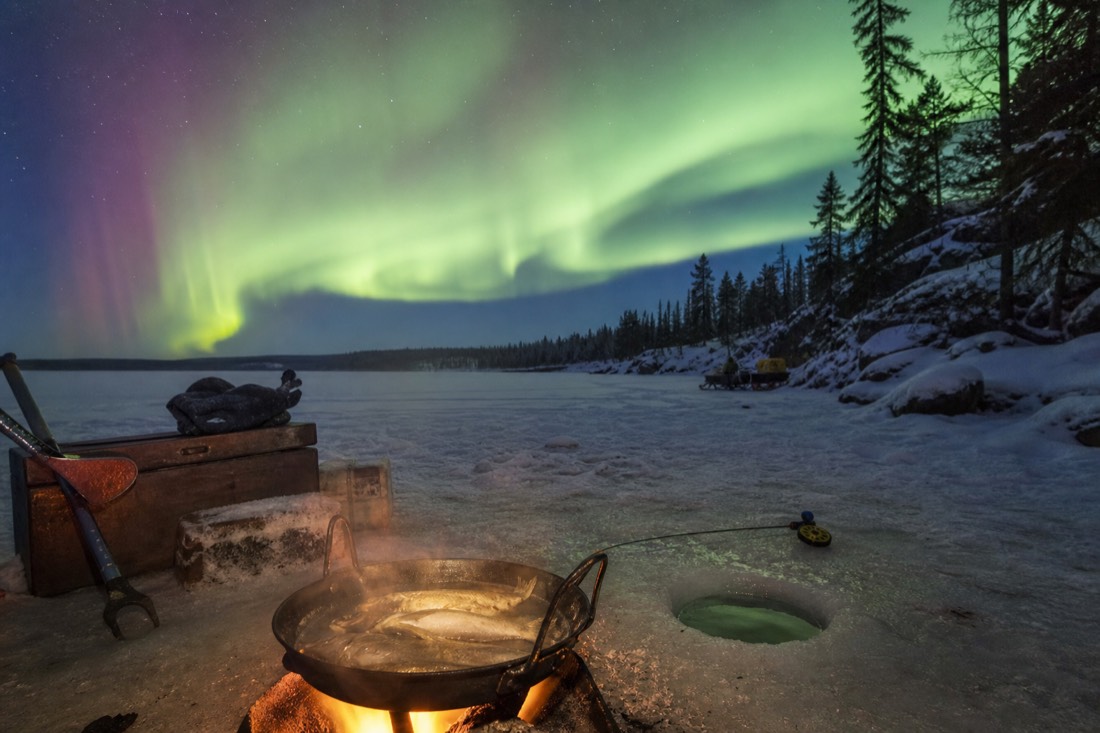
This is the version I actually guide beside all winter, and it is the one I push aurora guests toward, because it fills a midday slot perfectly between late aurora nights. The ice fishing tours run heated huts far out on the lake, groups capped at 16, a net pull that almost always produces, and lunch cooked from the catch right there on the ice. It holds 4.5 across 72 reviews and includes hotel pickup, so check live ice fishing availability and prices on Viator for your dates.
The other winter door is the North Star Adventures traditional trip, run by a 100 percent Indigenous-owned operator on traditional Akaitcho Dene territory. It runs daily 10:30 to 2:30 from January 15 to April 15, groups of 4 to 10, from CA$249 with gear, transfers, a traditional fish meal with bannock, and stories that turn the lake from scenery into a place with owners and history. I compared the two winter styles at length after a season of sending guests to both in ice fishing on Great Slave Lake.
Do you need a fishing licence on Great Slave Lake?
Yes, always. An NWT sport fishing licence is mandatory on every fishing trip, guided or not, summer or winter, and it is never included in the tour price. Budget about CA$15, the figure the Viator listing notes, and sort it out before your morning pickup.
No exceptions for tourists, no exceptions because a guide is standing next to you. Licence fees vary by type, so treat the CA$15 as the listing's working figure rather than gospel, and confirm the current fee when you buy. Operators remind booked guests, but the responsibility is yours, and a conservation officer on the ice will ask you, not your guide.
One lake, two lives. If you are a serious angler, aim a summer week at the East Arm and book a lodge direct. If you are here for the sky, let winter hand you the easy version, a warm hut, a hole in four months of ice, and lunch that was swimming an hour earlier. And if you land in the bright gap between the two, the water is still worth your time, just differently: that story is in can you swim in Great Slave Lake and the wider summer guide.