Things to Do in Yellowknife: The Year-Round List
Everything real that fills a Yellowknife trip, in any season, sorted by what you book, what costs nothing, and what only exists for a few weeks a year.
 Written with Thomas Beaulieu, Yellowknife tour guide & northern lights specialist
Short answer
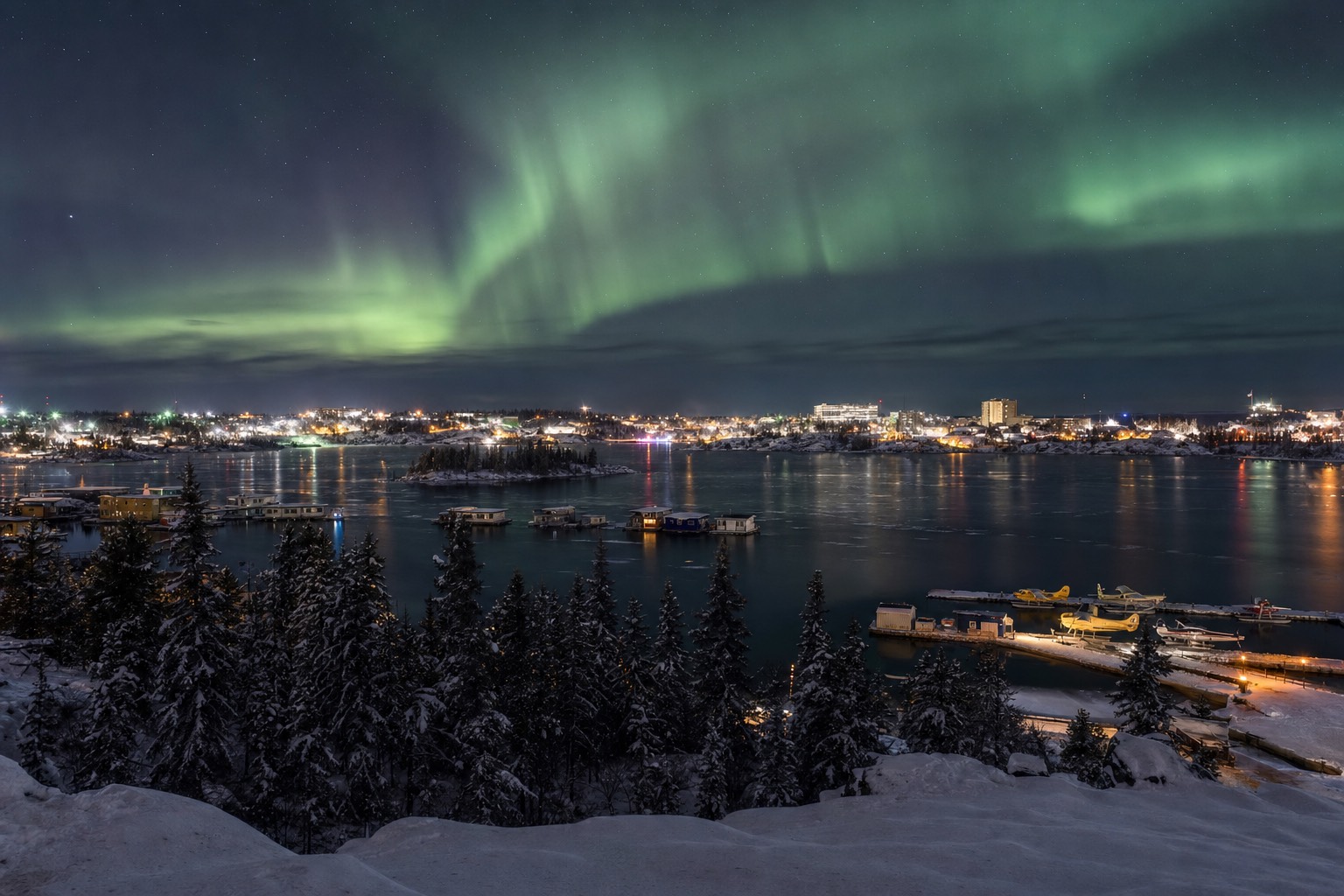
Yellowknife runs on four tour types, aurora hunting at night, dog sledding and snowmobiling, ice fishing, and city tours. Around them sits a free layer, the Heritage Centre, the Legislative Assembly, the Bush Pilots Monument, plus seasonal one-offs like the SnowKing castle in March, the Dettah ice road, and midnight sun swims in summer.
Guests ask me a version of the same question on almost every airport pickup: the aurora is booked, so what fills the rest of the trip? After four years of guiding here I keep the answer in my head as one page. Yellowknife is a town of about 20,000 people with a short, genuinely excellent list, and the whole trick is matching each item to the right season and the right hour of the day. This is that list, all of it.
What is there to do in Yellowknife?
Four bookable tour types carry the trip: aurora hunting by night, dog sledding and snowmobiling, ice fishing on Great Slave Lake, and city tours. Underneath sits a free layer of museums, lookouts, and trails, and the calendar adds one-offs: a snow castle in March, a public ice road all winter, midnight sun in June.
One framing note before anything else. This page is the year-round master list. If your dates already sit in the cold months, the winter deep-dive stacks this same material into hour-by-hour day plans. If you are coming under the midnight sun, Yellowknife in summer covers the no-aurora season with full honesty. Everything below tells you what exists and when it exists, which in a subarctic town is most of the battle.
| Activity | Winter (Nov to Apr) | Autumn (mid-Aug to early Oct) | Summer (mid-Apr to late Jul) |
|---|---|---|---|
| Aurora tours | Yes, longest darkness | Yes, lights over open water | No, midnight sun |
| Dog sledding and snowmobiles | Yes | No snow yet | No |
| Ice fishing in heated huts | Yes | No, open-water charters instead | Open-water charters |
| City and culture tours | Year-round | Year-round | Year-round |
| SnowKing snow castle | March only | No | No |
| Dettah ice road | Late Dec to mid-Apr | No | No |
| Swimming at Long Lake beach | No | Fading fast | Yes |
| Cameron Falls trail | Self-drive winter walk | Yes | Yes |
Which tours are worth building a trip around?
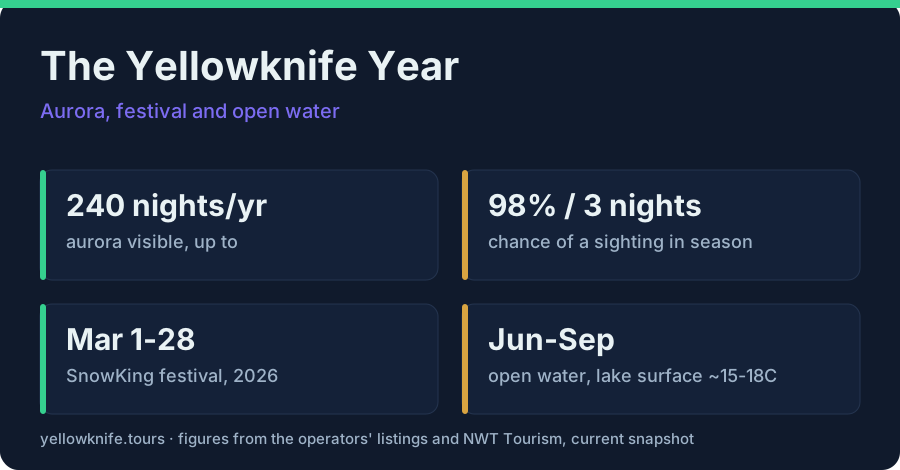
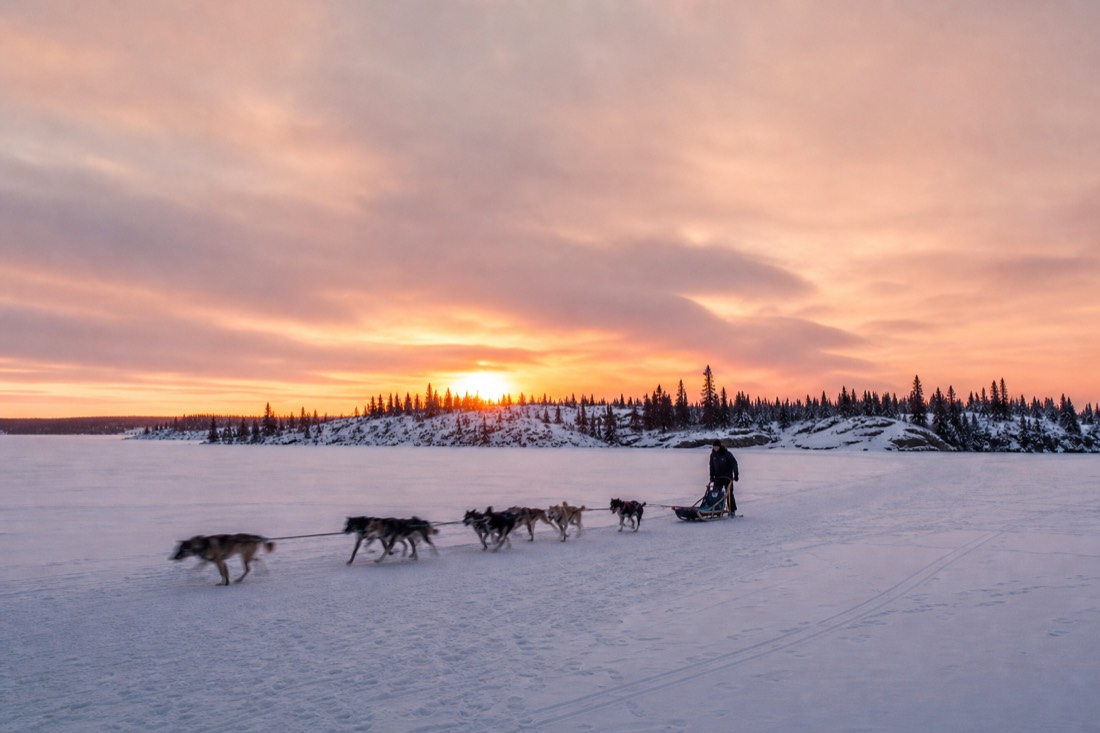
The aurora is the reason most people fly here, visible up to 240 nights a year. Behind it: two very different dog sledding trips plus a beginner snowmobile ride, ice fishing from heated huts with your catch cooked for lunch, and two city tours that run every season. Ratings across the nine platform listings run 4.5 to 5.0.
| Category | The picks | Time it takes | The number that matters |
|---|---|---|---|
| Aurora at night | Flagship hunt, heated lodge, 2-night cabin stay | ~4 h, pickups 9:30 to 10:30pm | Flagship holds 4.8 across 399 reviews |
| Sled and throttle | Enodah kennel huskies, Dene traditional sledding, beginner snowmobile | 2 to 3 h | Snowmobile: 4.9 across 407, most-reviewed in town |
| Ice fishing | Heated-hut trip with lunch, North Star traditional tour | 3.5 to 4 h | Licence ~CA$15 extra, never included |
| City by day | City tour with wildlife gallery, city and culture tour | 1 to 4 h | The city tour holds a straight 5.0 across 27 reviews |
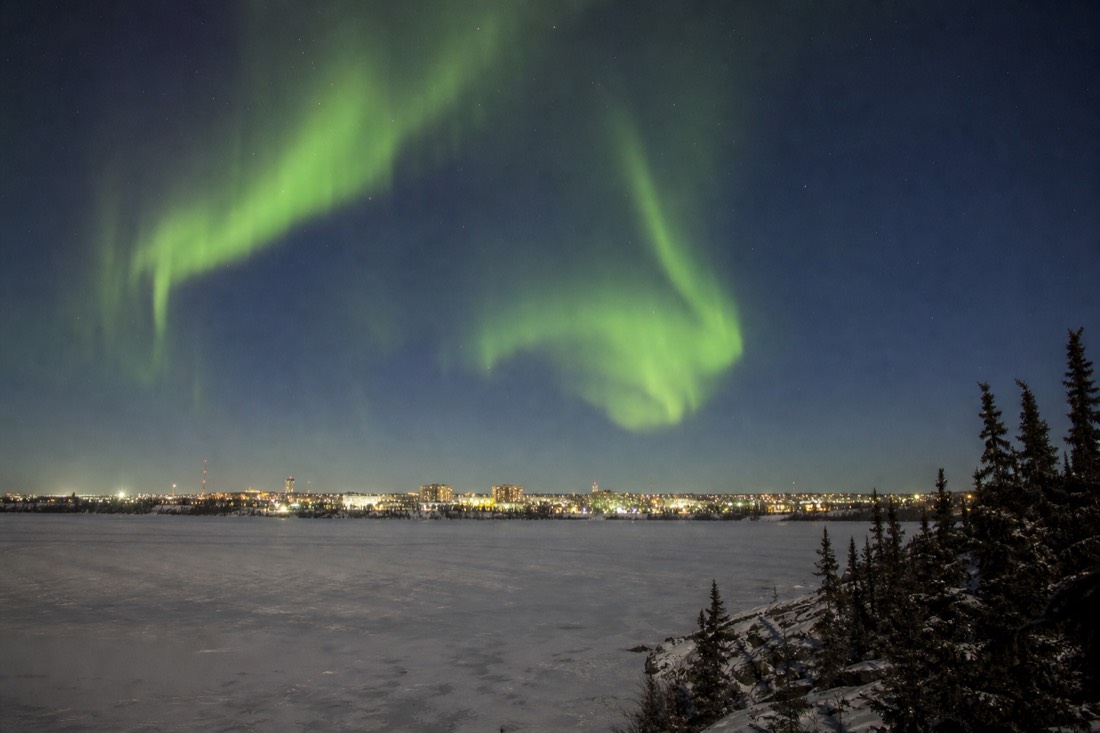
The aurora tours own the nights, and the town's pitch is not hype: Yellowknife sits directly under the auroral oval, and NWT Tourism's own numbers put the lights at up to 240 nights a year. Days belong to the rest. Dog sledding splits into a kennel-first husky experience and a Dene storytelling trip with fresh bannock, and the beginner snowmobile ride spends 50 to 60 of its 120 minutes actually riding. Ice fishing is the sleeper: heated huts on the deepest lake in North America, a net pull, lunch cooked from the catch.
Then there are the city tours, the only category that never pauses. Both versions stop at the Heritage Centre, the Legislative Assembly, and the Bush Pilots Monument, one adds a wildlife gallery and the other adds Ragged Ass Road with some admissions included. Groups are small, 14 to 23 people, so check live city tour availability and prices on Viator before your daytime slots fill. One honest note from the listing: the wildlife-gallery version is non-refundable, so pin your dates first.
What can you do in Yellowknife for free?
The territory's two best indoor sights cost nothing: the Legislative Assembly and the Prince of Wales Northern Heritage Centre both have free admission. Outside, the Bush Pilots Monument stairs buy the best view in town, Ragged Ass Road is a two-minute detour, and the Frame Lake Trail loops about five kilometres through downtown.
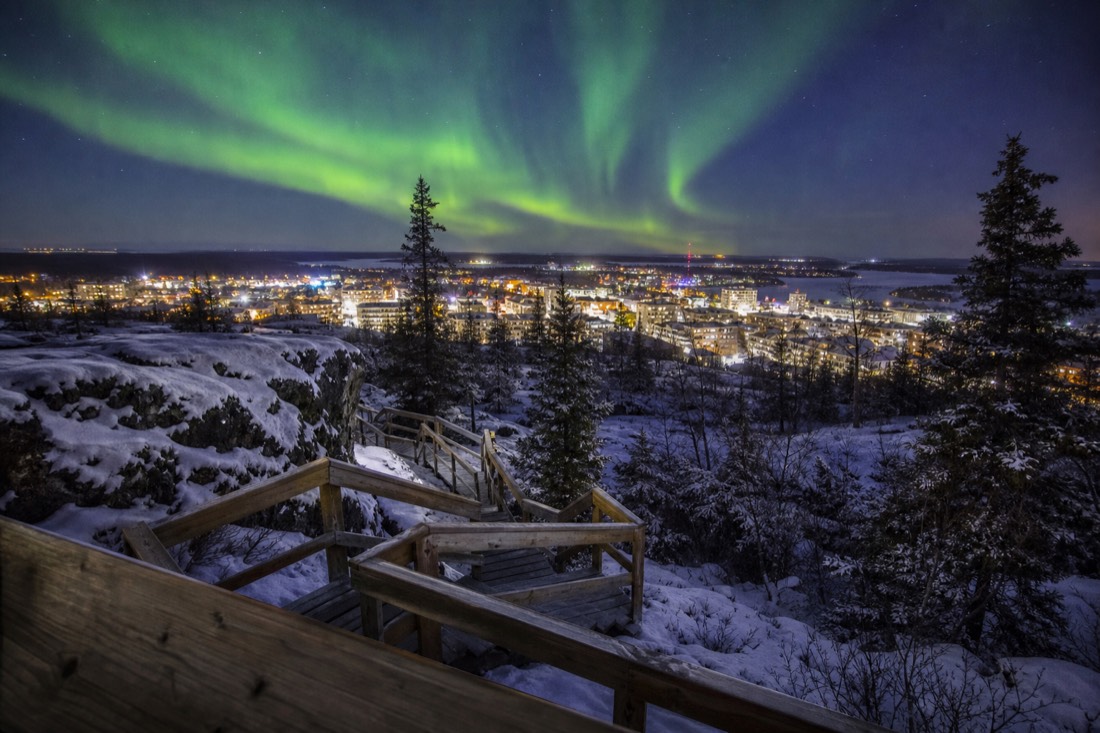
The free layer is what keeps this trip from becoming a string of receipts, because Yellowknife is an expensive town and I would rather say that plainly. The Heritage Centre is a real museum, Dene and Inuvialuit culture, territorial history, bush planes, and it deserves the full write-up I gave it. The Legislative Assembly welcomes visitors free as well. Old Town supplies the rest: the monument climb, the famous street sign, the houseboats out in the bay.
| Free version | The paid upgrade of the same idea |
|---|---|
| Heritage Centre and Legislative Assembly on your own | A city tour stringing them together in a warm vehicle |
| Bush Pilots Monument climb | Old Town stories on the guided culture tour |
| Frame Lake Trail loop, ~5 km through downtown | Guided sightseeing with local commentary |
| Watching the sky from any dark edge of town | An aurora hunt chasing clear sky with a photographer |
| Walking onto the bay ice near Old Town | A heated ice-fishing hut with lunch on the ice |
Which seasonal one-offs should you time a trip around?
Four big ones. The SnowKing Winter Festival raises a carved snow castle on the frozen bay every March. The Dettah ice road opens to regular cars from late December to mid-April. The midnight sun peaks near the June solstice at about 20 hours of direct daylight. And summer brings real swimming at Long Lake beach.
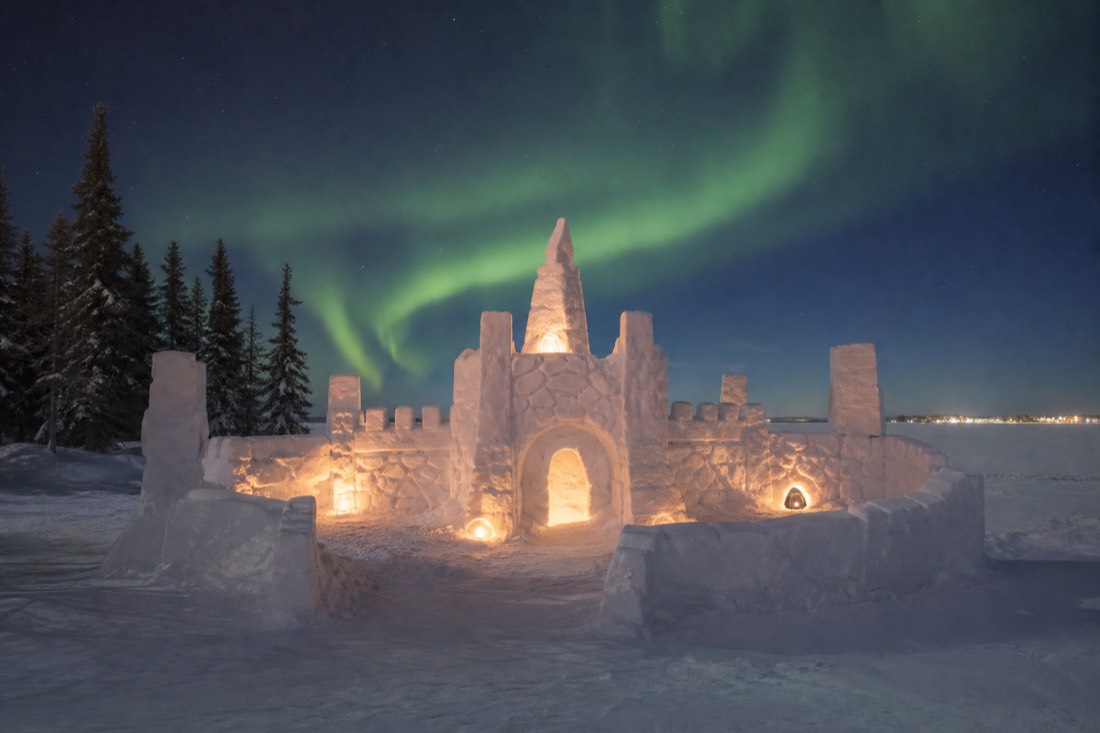
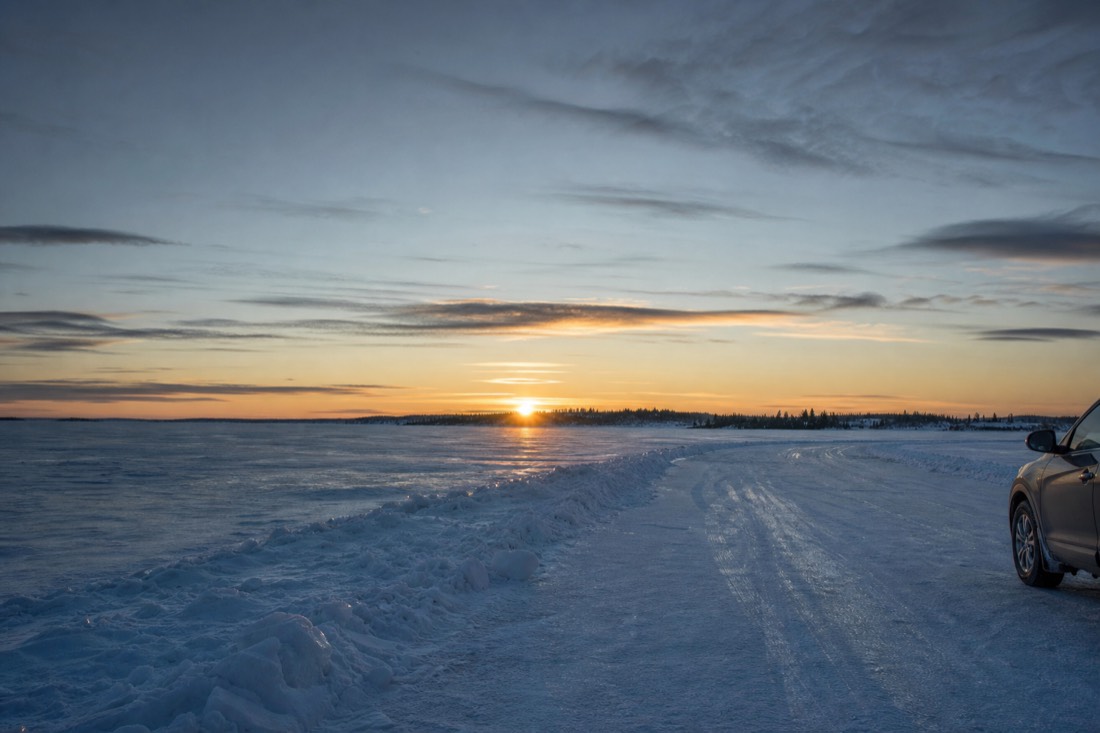
The SnowKing festival runs March 1 to 28 in 2026, with the same window already announced for 2027, and a month of events inside a castle built of snow is exactly as good as it sounds. The Dettah ice road is winter's other headline: about 6.5 kilometres of plowed public road straight across the frozen bay to the Yellowknives Dene community of Dettah, driven daily by ordinary cars.
Summer flips the script entirely. There is no aurora from roughly mid-April to late July because the sky never gets dark, but the surface of Great Slave Lake warms to about 15 to 18 degrees, and locals genuinely swim, the sandy beach at Long Lake sits minutes from the airport. I answer the disbelieving questions about that in can you swim in Great Slave Lake. In any warm month, Cameron Falls is the best half-day out: a trail to a loud set of falls about 46 kilometres and 45 minutes from town along the Ingraham Trail.
How much fits in one day, and what does three days unlock?
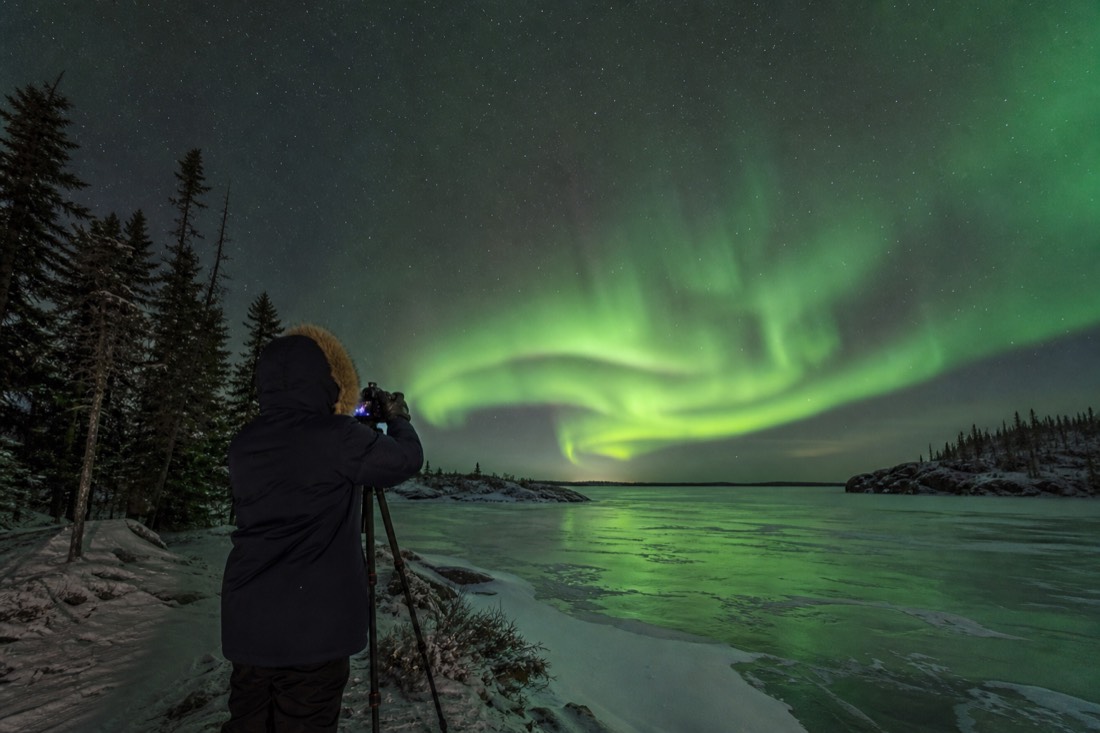
One full day covers a city tour, the Heritage Centre, the Bush Pilots Monument, and an aurora hunt that night. Three days is the real unit: NWT Tourism puts the odds of seeing the lights at least once across three nights in season at 98 percent, and the daytime anchors stop competing with each other.
| Slot | The one-day version | The three-day version |
|---|---|---|
| Day 1, daytime | City tour, Heritage Centre, monument climb | Same, plus Ragged Ass Road and Old Town on foot |
| Day 1, night | Aurora hunt, 9:30pm to 2:30am | Aurora hunt |
| Day 2 | Not available | Slow morning, then dog sledding or snowmobile midday |
| Day 2, night | Not available | Aurora again, different viewpoints |
| Day 3 | Not available | Ice fishing, or the Dettah ice road, or SnowKing in March |
That 98 percent figure is the one stat I quote most, and it is NWT Tourism's own, tied to a three-night stay in season. It is also why I push back when people route through for a single night. One clear night usually delivers here, low Kp is enough this far under the oval, but weather is weather, and three nights is what turns a gamble into a near-promise.
What is actually open in which part of the year?
Most of this list is seasonal, and the windows are tighter than the brochure photos suggest. Sledding and hut fishing need real ice, roughly November through March. The Dettah ice road runs late December to mid-April. March belongs to SnowKing. Open water, boats and swimming belong to June through September.
| What you want | The real window | The catch |
|---|---|---|
| Winter aurora season | Mid-November to early April | Longest darkness, deepest cold |
| Autumn aurora season | Mid-August to early October | True darkness only returns around August 27 to 28 |
| The no-aurora gap | Mid-April to late July | Twilight all night, nothing to chase |
| Dog sledding and snowmobiling | November to March | Snow and ice dependent at both ends |
| Ice fishing from heated huts | Roughly January to April | North Star runs its own season January 15 to April 15 |
| Dettah ice road | Late December to mid-April | Public road, ordinary cars, about 6.5 km |
| SnowKing snow castle | March 1 to 28 in 2026, same window in 2027 | Every March, and only March |
| Folk on the Rocks | July 17 to 19 in 2026 | Full summer, so no aurora that week |
| Old Town Ramble & Ride | The August long weekend | Old Town only |
| Open water, swimming, boat charters | June to September | Surface water reaches about 15 to 18 degrees |
| City and culture tours | Year-round | The only category that never pauses |
Two hinges control that whole table. The first is darkness: true astronomical darkness comes back to this sky in the last days of August and disappears again around April 12 to 14, which is the real reason the aurora seasons start and stop where they do. The second is ice, and ice is slower than the calendar. Early November snow does not automatically mean a sled team is running, and a mild April can close the bay road before the posted end of the window.
March is the month where nearly everything overlaps at once, which is why I send hesitant planners there. You get around 11 hours 50 minutes of daylight at the equinox, a mean temperature near minus 16.6 instead of January's minus 25.5, strong aurora, every winter tour still operating, the ice road open, and the snow castle running all month. The full March breakdown has the day-by-day version.
One honest correction to older travel articles: the Long John Jamboree, which used to anchor late March, has been put on ice indefinitely. Do not plan a trip around it. Folk on the Rocks is the summer counterweight, and the rest of the calendar sits in the festivals guide. If the ice road is the part that hooked you, the ice roads guide explains which ones the public can actually drive.
Is the free layer worth spending your daylight on?
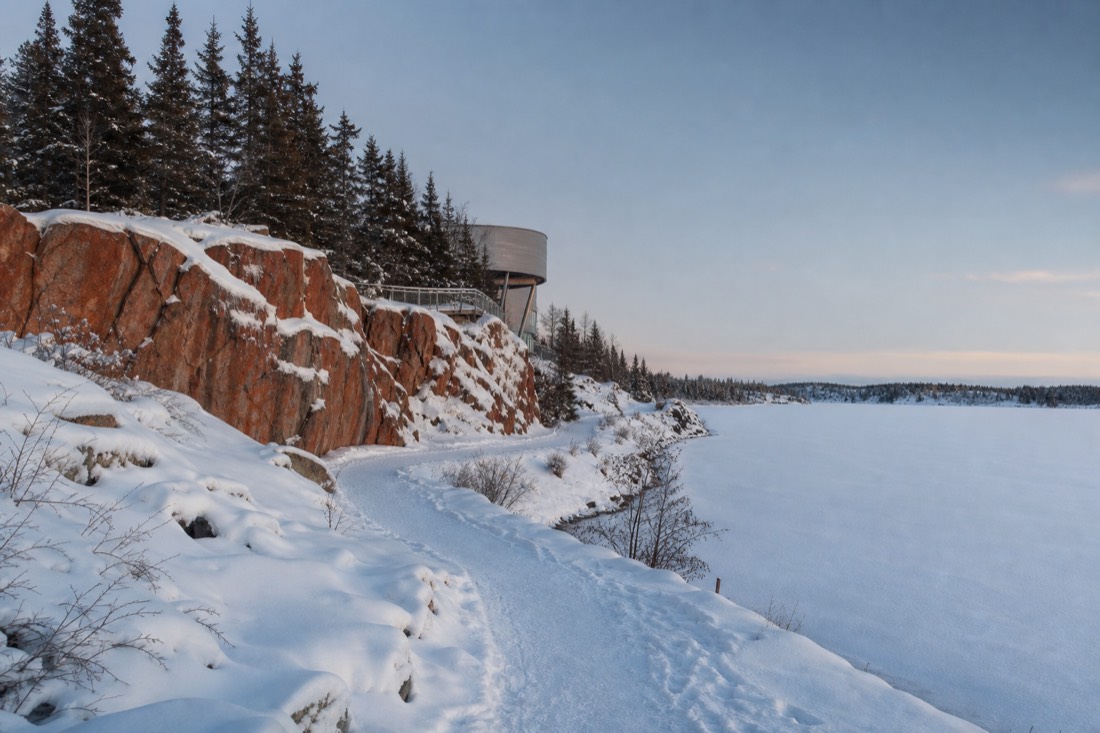
Yes, with one condition. In December you are spending part of a five-hour day, so choose deliberately. The Heritage Centre and the Legislative Assembly are both free and both warm. The monument, Old Town and the Frame Lake loop cost nothing except daylight, layers, and the will to keep walking.
| Free thing | Time it eats | When it works | What it still costs you |
|---|---|---|---|
| Prince of Wales Northern Heritage Centre | 1 to 2 hours | Tue to Sun 10am to 5pm, Thursdays to 8:30pm, closed Mondays | Only daylight, and you are indoors and warm |
| Legislative Assembly | Under an hour | Daytime, year-round | A short walk across downtown |
| Bush Pilots Monument | 20 to 30 minutes | Year-round, best near dusk | A wooden staircase and real wind at the top |
| Old Town on foot, Ragged Ass Road, the houseboat view | 1 to 2 hours | Year-round | Full winter layers from December to March |
| Frame Lake Trail loop | 1 to 1.5 hours | Year-round, partly paved | About 5 km of walking, snow-packed in winter |
| Driving the Dettah ice road | About 40 minutes return | Late December to mid-April | A rental car, and a little nerve |
The daylight arithmetic is what nobody warns you about. Mid-December gives you roughly 5 hours 9 minutes between sunrise and sunset, January about 6 hours 10 minutes, and September a comfortable 13 hours. In the dark months the free layer is not really free: it is charged against the shortest resource you have. That is the argument for putting the Heritage Centre on a cloudy afternoon or a Thursday evening, when it stays open to 8:30pm, and saving the clear blue-hour light for the monument.
Warmth is the second hidden cost. January highs average about minus 21.6 with nights near minus 29, and a 5 km lake loop at that temperature is a different proposition from the same loop in September. Guests who try the whole free layer on foot in one January afternoon usually come back cold, tired and unwilling to stay awake for the aurora pickup, which is a bad trade for a night you already paid for.
Old Town rewards slow walking more than any other part of town, and the Old Town walking guide maps the cabins, the float-plane base and the roughly 50 houseboats sitting out in the bay. Budget for lunch honestly while you are down there, because free sights do not make this a cheap town: mains commonly run CA$15 to $30, and the restaurant rundown covers who is open year-round versus summer only.
What would a local guide skip if you only had one day?
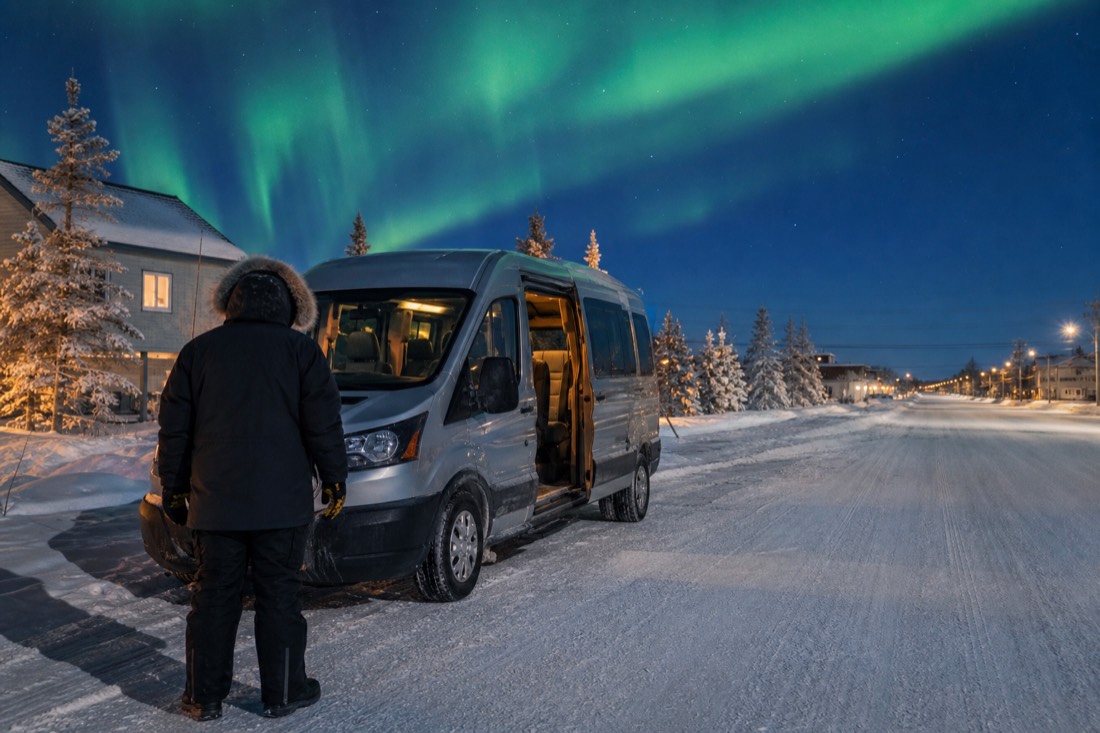
Skip the drive out the Ingraham Trail, and skip stacking a second daytime tour onto an aurora day. Keep the Heritage Centre, keep Old Town in daylight, keep the afternoon free for sleep. Pickup is 9:30 to 10:30pm and you are back at your hotel between 1:30 and 2:30am.
| The one-day choice | My call | Why |
|---|---|---|
| Cameron Falls out the Ingraham Trail | Skip | About 46 km and 45 minutes each way, and it eats the only daylight you get |
| A second daytime tour on aurora day | Skip | You return at 2:30am, so the next morning is already spoken for |
| Prince of Wales Northern Heritage Centre | Keep | Free, indoors, and the best single hour for understanding where you are |
| Old Town and the monument in daylight | Keep | Bay, houseboats and float planes inside one short walk |
| A city tour with the culture or wildlife stop | Keep if pre-booked | Small groups, warm vehicle, and it strings the free sights together |
| The Dettah ice road | Keep, winter only | Under an hour return, and nothing else on the trip feels like it |
Four seasons of guiding here, past a thousand visitors by my own count, and the regrets cluster into two shapes. The first is people who spent their single daylight window driving somewhere scenic and came back with no sense of the town at all. The second is people who skipped the Heritage Centre because a museum sounded like a rainy-day filler, then realised on the flight home that the Dene and Inuvialuit galleries and the bush-plane hall were the context everything else needed.
Almost nobody regrets the ice. That surprises people. Standing on a frozen surface you could sail a ship across in July does something no photo prepares you for, and Great Slave Lake is 614 metres deep at its deepest point in Christie Bay, the deepest in North America, with ice cover that typically holds from November into mid-June. The lake guide has the rest of those numbers.
If you do have a second day, the honest ranking is sledding or the snowmobile first, then ice fishing in a heated hut, then the ice road. And whichever way you build it, protect the night. Everything daytime here is repeatable somewhere else on earth. The sky over this particular bay is not.
What do first-time visitors get wrong?
Three things: booking morning activities after aurora nights that end at 2:30am, treating the town like a big-city checklist when it is a small place with a short excellent list, and underestimating January, when highs average about minus 21.6, the daily mean sits near minus 25.5, and nights run around minus 29.
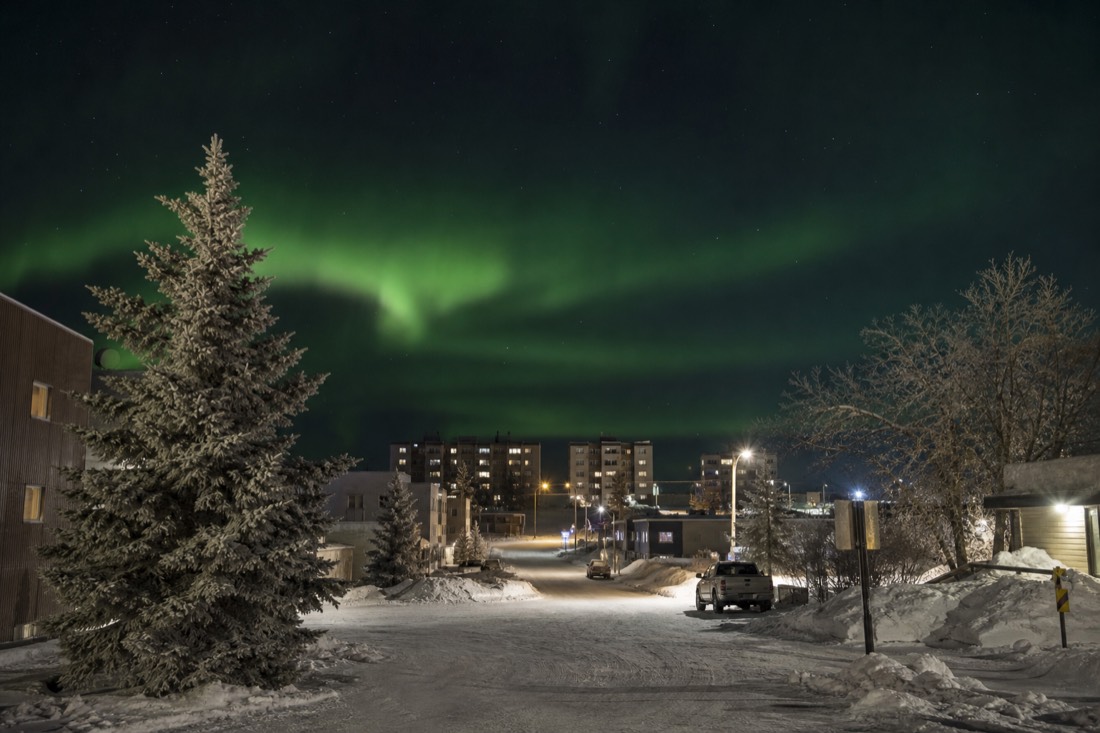
The pacing mistake is the one I fix most often. Aurora tours peak near local midnight and drop you back at your hotel between 1:30 and 2:30am, so mornings after are for coffee, not kennels. The checklist mistake solves itself once you accept the shape of the place: a few anchors, a free layer, one big sky. The cold mistake is the dangerous one, and the fix is knowledge plus rented gear, arctic clothing rental exists in town, and the full month-by-month numbers live in Yellowknife weather by month.
That is the whole town, honestly told. Book the sky first, hang the days off it, keep the free layer for the gaps, and let the calendar hand you whichever one-off your dates happen to hit. The list is short. It is also better than almost anywhere's long one.