How Much Does a Yellowknife Trip Cost in 2026? (An Honest Budget Structure)
Yellowknife is an expensive town to reach and to eat in, and pretending otherwise helps nobody. What the budget articles miss is the free layer underneath, and the handful of real numbers you can actually plan around.
 Written with Thomas Beaulieu, Yellowknife tour guide & northern lights specialist
Short answer
Think in structure, not a single number. Flights are the wildcard and change too fast to print. Tours are live-priced on their listings and driven by season. Restaurant mains commonly run about CA$15 to 30. Against that sits a genuinely free layer: the Legislative Assembly, the Heritage Centre, the Bush Pilots Monument, and the ice road itself.
Guests apologize to me for asking about money, and they should not, because it is the most sensible question in the planning stage. Here is my rule for reading any Yellowknife budget article, including this one: distrust totals, trust structure. Anyone printing "a trip costs $X" is guessing about your flights, your month, and your appetite. What I can give you instead is how the cost stacks, the few numbers stable enough to print, and where this expensive town quietly gives things away for free.
How much does a Yellowknife trip actually cost?
More than a southern city break, and the honest breakdown has four layers: flights, the wildcard; lodging, driven by aurora season demand; tours, live-priced on their booking listings; and food, where mains commonly run CA$15 to 30. Under all of it sits a free layer of sights that costs exactly nothing.
Everything here rides on the same economics: a small subarctic capital at the end of long supply lines, with a compressed tourist season. That is why the fish is spectacular and the grocery receipts sting. Rather than fight it, structure the trip around it:
| Category | What drives it | How to save |
|---|---|---|
| Flights | Route, season, how far ahead you book | Fly the western hubs, book early, stay flexible on days |
| Lodging | Aurora-season demand in a small hotel market | Book far ahead; location matters less than you think |
| Tours | Season and demand, priced live on listings | Book the must-do first, use free-cancel windows |
| Food | Remote supply lines | Mix one big fish dinner with casual CA$15-end mains |
| Gear | Deep-cold clothing | Rent a parka in town instead of buying at home |
| Sights | Nothing | The free layer: legislature, museum, monument, ice road |
Why are flights the biggest wildcard?
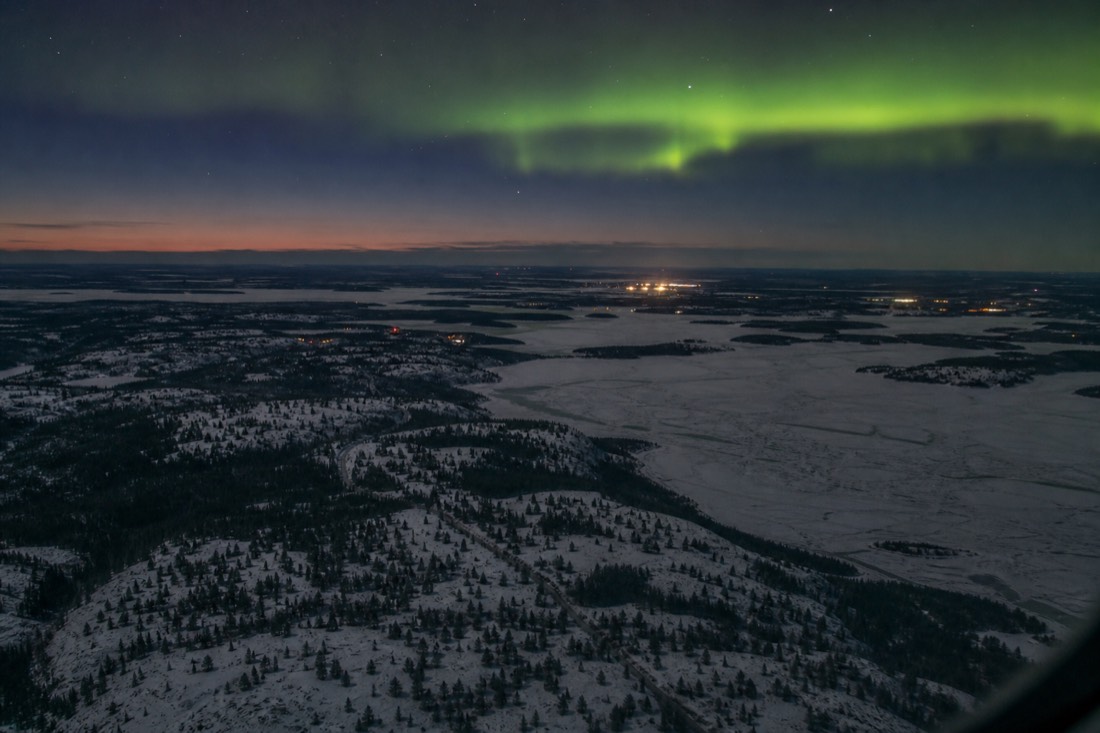
Because they swing with route and season more than any other line in the budget, which is exactly why I will not print fares. What holds steady is the pattern: direct flights from Edmonton, Calgary, and Vancouver, with Toronto and Ottawa routes including seasonal service, and one western connection covering everyone else.
A printed fare is stale before the article finishes loading, so treat any blog quoting one as decoration. The territory's tourism board keeps the current carrier picture on its air travel page, with Air Canada, WestJet, Canadian North, and Air North covering the map. The cost-control levers are the boring, effective ones: book early for aurora season, compare all three western gateways rather than defaulting to one, and let your dates flex a day either side if they can.
The one flight-adjacent cost people forget is the schedule itself. Winter connections want generous buffers, and a missed connection north is an expensive fix. Routing logic, airport-to-town basics, and the carry-on rule for deep-cold arrivals are all in getting to Yellowknife.
What do tours in Yellowknife cost?
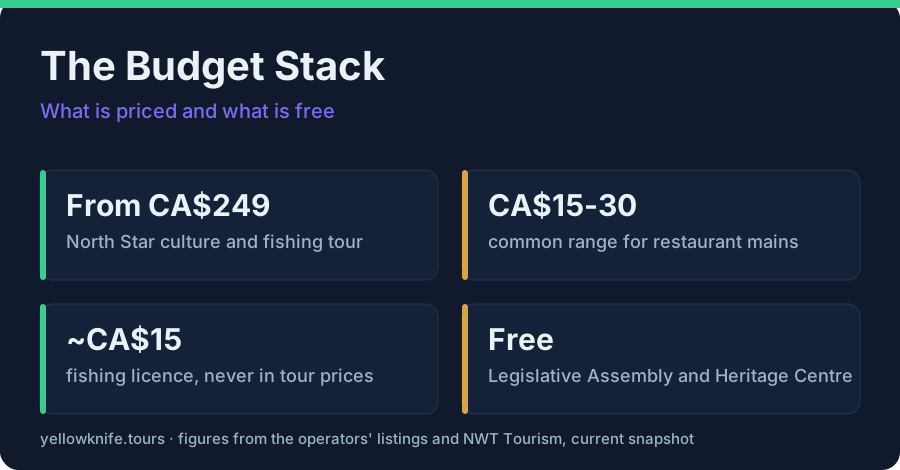
Tour prices live on the booking listings and move with season and demand, so check them live rather than trusting any article's stale figure. The real printed anchors are small: North Star's ice fishing culture tour from CA$249, a fishing licence around CA$15 per the listing's note, and a CAD 15 axe-throwing add-on.
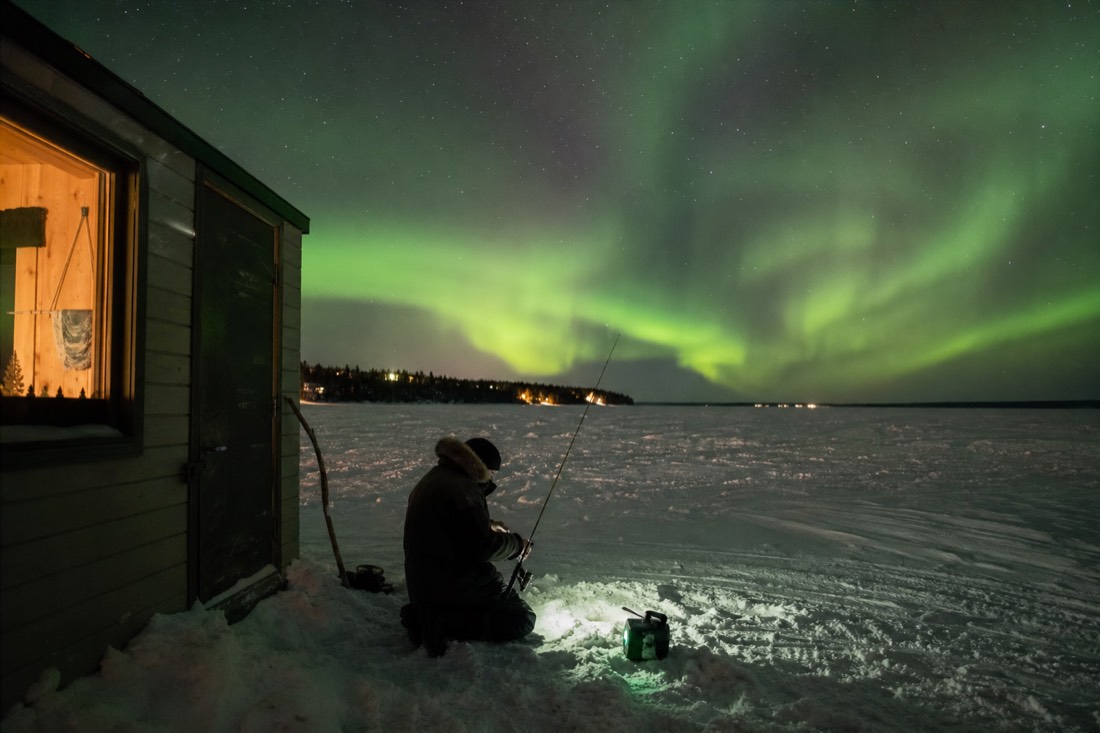
That CA$249 figure comes straight from North Star Adventures' own page for their four-hour sport fishing and Indigenous culture tour, running daily mid-January to mid-April, and it is useful as a scale marker for what a substantial, meal-included half-day costs up here from a 100% Indigenous-owned operator. Around it, watch for the honest little extras: the mandatory NWT sport fishing licence is never included in any fishing trip, about CA$15 per the Viator listing's note, and the traditional dog sledding tour offers axe throwing as a CAD 15 add-on.
Tours are where I tell people to spend with intent rather than thinly everywhere. Pick the one non-negotiable, an aurora hunt for almost everyone, book it first, and build around it. For the comfort end of the aurora budget, compare the northern lights tours and check the lodge night's live price on Viator: a heated base near Madeline Lake with games, WiFi, a chase option, and a photographer, rated 4.7 across 130 reviews. Most tours here cancel free up to 24 hours ahead, which turns the weather from a financial risk into a scheduling one.
How much does eating in Yellowknife cost?
Plan on restaurant mains commonly running about CA$15 to 30, with the famous fish dinners sitting at the top of that range and beyond. Food arrives here over enormous distances, and menus show it. The save is structural: casual lunches at the low end, one or two big fish dinners as the events they deserve.
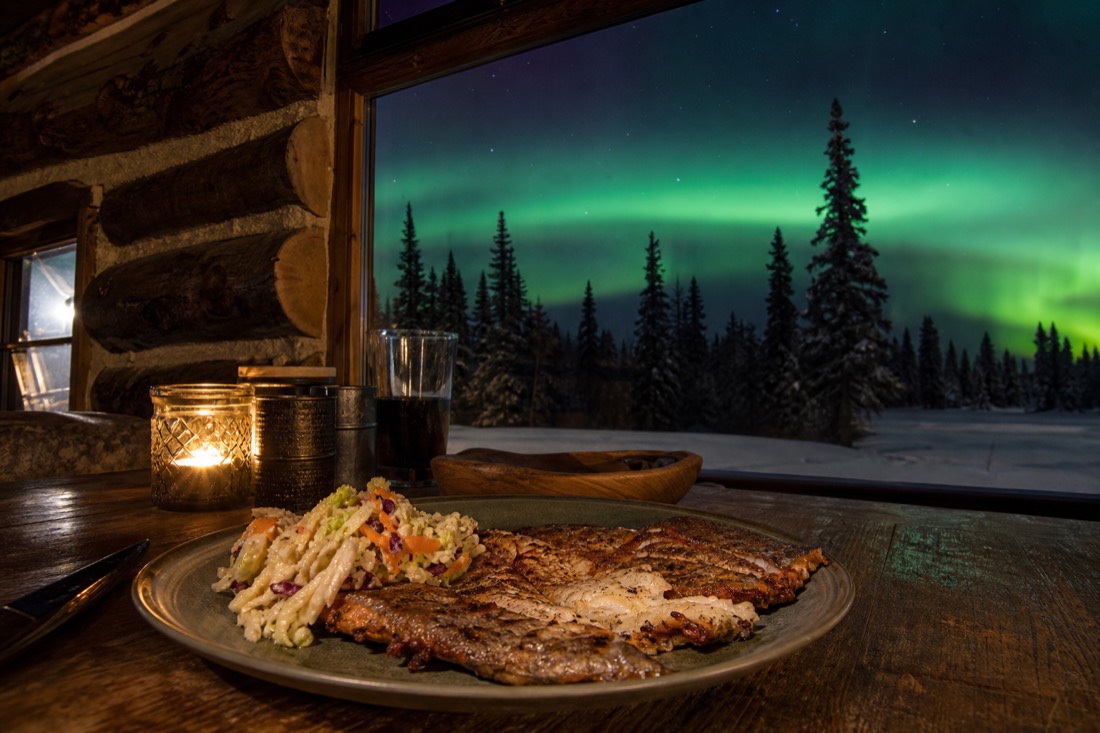
I will not pretend the food budget is small, but I will argue it is worth shaping rather than shrinking. The eating that belongs to this town is the lake on a plate: Bullocks' Bistro built its name on Great Slave Lake fish fry, and in summer the Wildcat Cafe serves out of its 1937 log cabin in Old Town. Skip those to save money and you have saved yourself out of a highlight. The better play is asymmetry, cheap and cheerful at lunch, then one dinner that is the story you tell at home.
Two quieter notes. Aurora hunts feed you a little, the flagship run hands out cookies and hot drinks in the van, and tour lunches count: the ice fishing tour cooks your catch for lunch on the ice, folding a meal into the ticket. Budget accordingly on those days.
What can you do in Yellowknife for free?
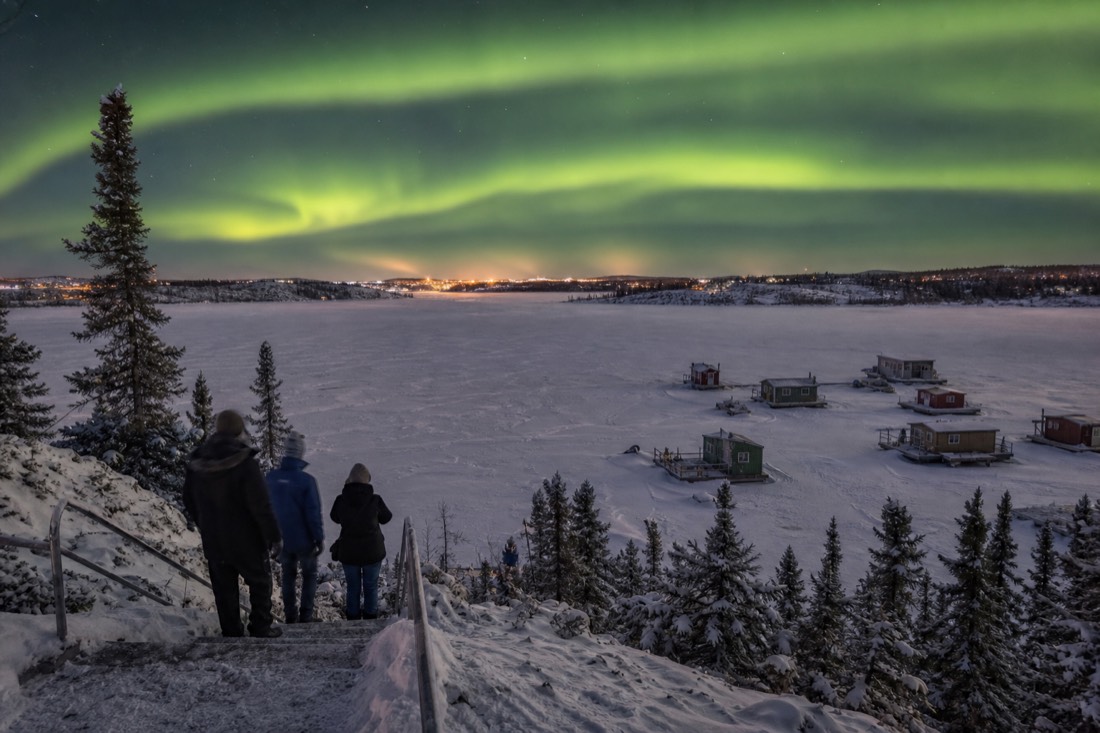
A surprising amount. The Legislative Assembly and the Prince of Wales Northern Heritage Centre are free to visit, the Bush Pilots Monument and its Old Town views cost nothing, the visitors centre is free, and in winter you can drive or walk the Dettah ice road, a genuine highlight with no ticket at all.
| Experience | Paid version | Free version |
|---|---|---|
| The town's story | Guided city and culture tours | Legislative Assembly and Heritage Centre, free admission |
| The classic viewpoint | City tour stop with commentary | Walk up the Bush Pilots Monument yourself |
| Standing on Great Slave Lake | Ice fishing in a heated hut with lunch | Walk or drive the Dettah ice road, roughly 6 km across the bay |
| Northern culture | Dene storytelling on the sledding tour | SnowKing's castle scene on the March bay, Old Town wandering |
| The aurora itself | Guided hunts that chase clear sky for you | The sky is free anywhere dark, minus the chasing and the warmth |
That last row deserves honesty in both directions. Yes, the lights are free; whether to hunt them with pros or on your own is a real decision with real trade-offs, and I argue it out properly in do you need a tour to see the northern lights. The free civic layer, meanwhile, is not consolation-prize material. The Heritage Centre is the best hour of context in the territory, and the monument view over the houseboats is the town's postcard, no charge.
Where does the money actually go across a three-night trip?
Four lines take nearly all of it: getting here, sleeping here, the two or three tours you came for, and food. As my own planning allowance rather than any kind of quote, I hand about a third to flights, a quarter to beds, a quarter to tours, and roughly a sixth to eating.
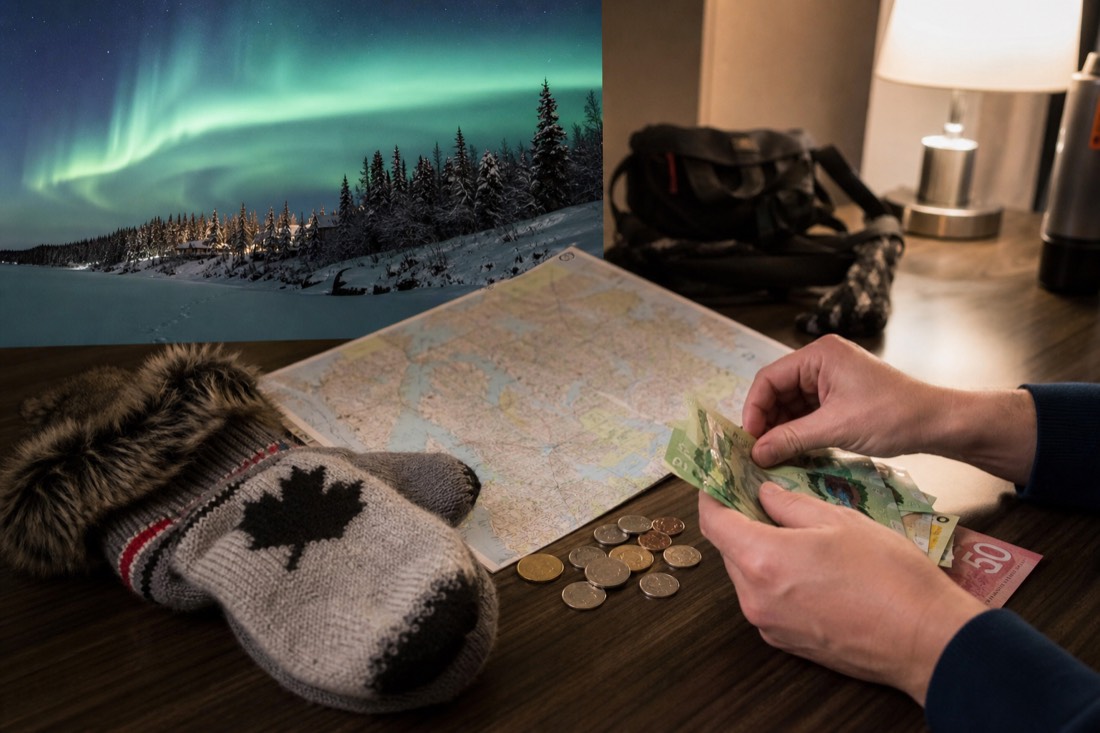
Those proportions are mine, not the market's. They come from listening to guests describe their week on the last night, once they have stopped guessing and know what actually took their money. Use the shape to test a plan before you have a single real price in front of you. If one line is swallowing far more than its share, that is the line to argue with.
| Budget line | My planning allowance, three nights | What it is really buying |
|---|---|---|
| Flights | About a third | The hardest part of the trip to reach, and the number nobody can print honestly |
| Beds, three nights | About a quarter | A small hotel market in peak aurora season, which is why early booking is the whole strategy |
| Tours, two or three | About a quarter | The experiences you flew here for, priced live on their listings |
| Food | Roughly a sixth | Mains commonly CA$15 to 30, plus the one fish dinner that deserves more |
| Gear rental and extras | Whatever is left | Parka kit rented in town, the fishing licence, small paid add-ons |
| Sights and the sky | Nothing at all | The free civic layer, the ice road, the aurora itself |
Read down that middle column and the timing gives itself away. The top two lines are settled months before you land, and no cleverness on the ground rescues a late February booking. Your tour line is the only one you can still reshape during the week itself, which is why free-cancellation windows matter more here than in a mild-weather destination where a rained-out morning costs you nothing but mood.
The bottom row is the quiet subsidy nobody budgets for, because it does not appear on any statement. Daytime here can cost zero and still justify the flight: an hour inside the Prince of Wales Northern Heritage Centre is free, and a slow afternoon walking Old Town down to the frozen bay costs nothing either. Guests who fill every daylight hour with a paid activity end up with a heavier budget and a thinner trip. The nights are the point, and you want energy left for them.
What makes a Yellowknife trip expensive without you noticing?
Rarely the big-ticket items. Guiding here since 2022, past a thousand travellers, the pattern I keep seeing is small and repetitive: gear bought at home instead of rented in town, non-refundable tickets booked onto a rigid schedule, a trip cut to two nights, and extras nobody costed.
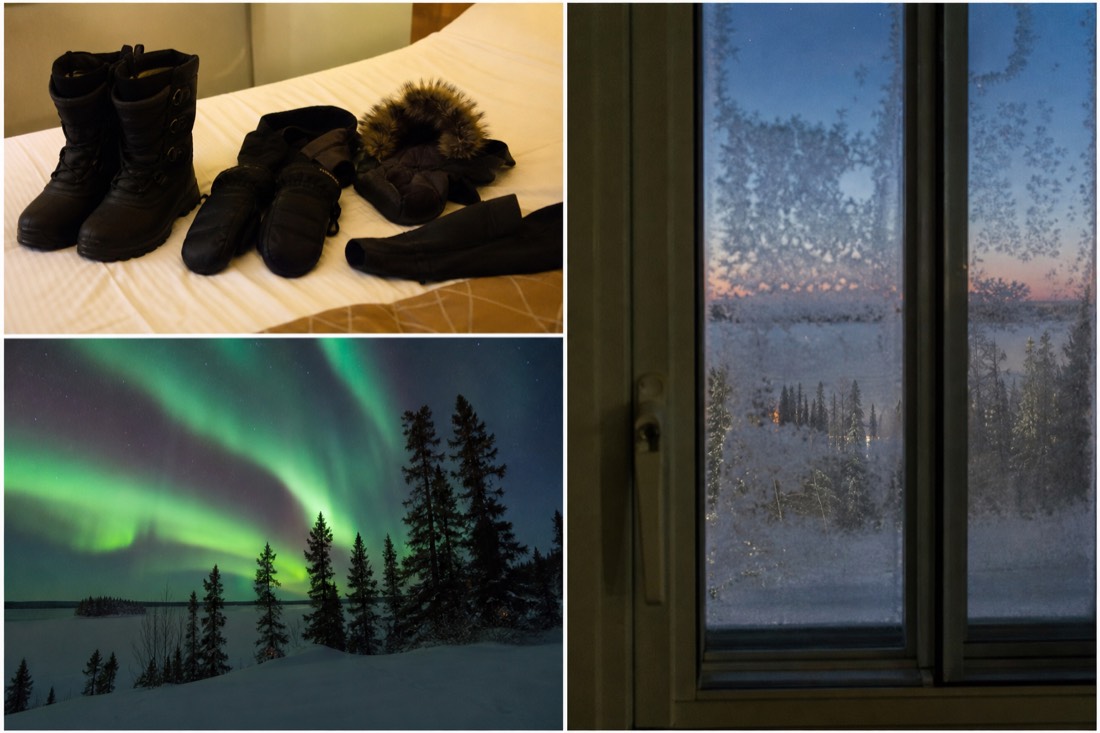
None of these are traps. They are just the places where a reasonable decision made at home turns out to cost something once you are north of sixty degrees. The most expensive one, by a distance, is the shortest trip.
| The quiet cost | How it happens | What I tell guests |
|---|---|---|
| Buying deep-cold clothing | A full arctic kit ordered before departure for three days of use | Rent the parka, pants, boots and mitts in town; several operators hire them out |
| Non-refundable tickets | Some listings, including the city tour and the Enodah husky sledding, do not refund | Read the cancellation line before you read the price line |
| The fishing licence | The NWT sport fishing licence is mandatory and never included in a tour price | Carry it as its own line, about CA$15 per the Viator listing's note |
| On-the-day add-ons | The traditional dog sledding tour offers axe throwing as a CAD 15 extra | Decide before you go, not while everyone else is queueing |
| A two-night trip | Trimming a night to save on a bed, then losing both nights to cloud | Three nights is the number the 98% figure is built on; it is the cheapest insurance in town |
| Eating at the top of the range | Every meal treated as the fish dinner | One dinner as an event, the rest at the CA$15 end of the menu |
The gear row is the one I argue about most often, and I have never lost the argument with anyone who has actually stood outside at minus thirty in southern winter clothing. Renting here is cheaper than buying, warmer than what you own, and it does not eat half a suitcase. The layering logic, and what genuinely has to come from home, is set out in what to wear in a Yellowknife winter.
The cancellation row is subtler and costs more. A free-cancel booking lets you move a hunt when the forecast turns; a non-refundable one quietly makes your schedule rigid, and rigid schedules in a place with real weather are how money disappears. I am not telling you to avoid the non-refundable tours, because two of the best daytime trips in town sit in that column. I am telling you to book them on the days you are most certain about, and to keep the flexible ones for the nights the sky decides.
How do you actually pay for things in Yellowknife?
In Canadian dollars, on a card, almost everywhere. The complication is not local: it is that a booking platform may show you your own currency at its own exchange rate on the day, which is one reason a tour price you screenshot in October is not the one you find in January.
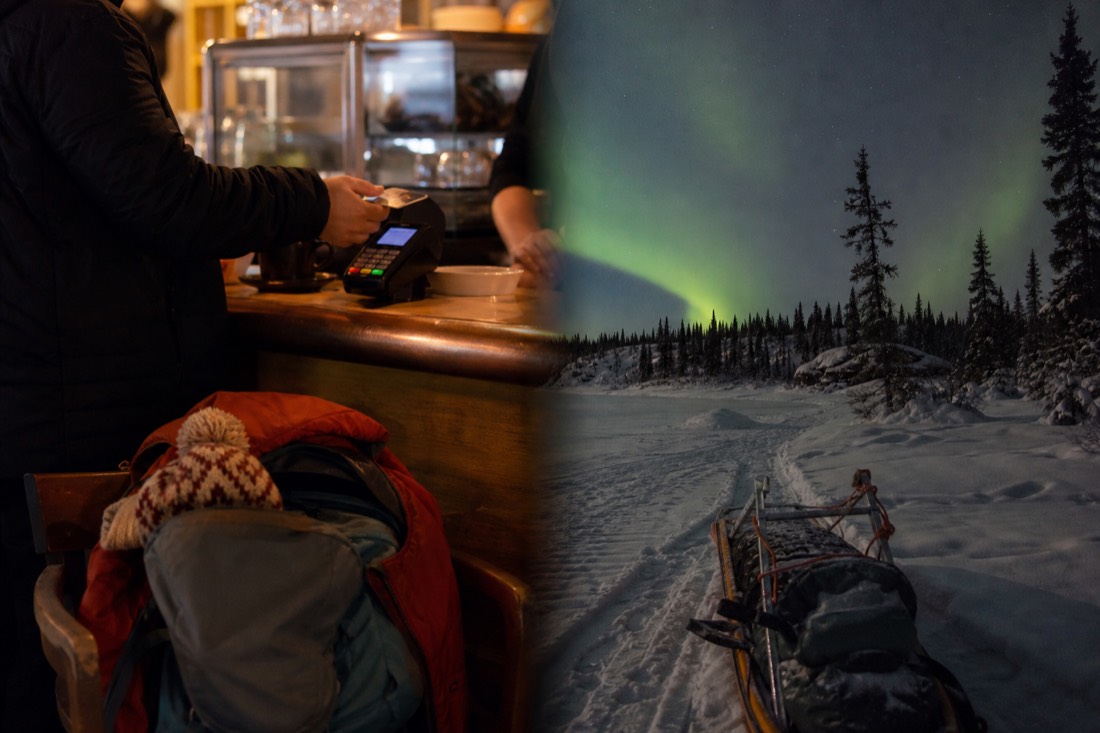
Everything here is priced in Canadian dollars, written CAD or CA$. Tap payment is normal, cards are taken in restaurants, shops and by tour operators, and you can run most of a trip without touching cash. A little cash is still handy for tipping, and Canadian menu and shelf prices are generally quoted before tax, which gets added at the till. Tipping itself is a custom rather than a rule up here: sit-down restaurant service is normally tipped, counter service much less so, and guides get tipped when guests feel moved to. Nobody is counting, and nothing is compulsory.
| What you are paying for | How it is quoted | What moves the number |
|---|---|---|
| Tour listings on the booking platforms | Canadian dollars at source, often converted into your home currency | Your date, demand, and the platform's exchange rate that day |
| North Star's fishing and culture tour | Canadian dollars on the operator's own site, from CA$249 | The season window, mid-January to mid-April, and group size |
| Restaurant mains | Canadian dollars, commonly CA$15 to 30 | Where you eat and whether the lake is on the plate |
| NWT sport fishing licence | Canadian dollars, about CA$15 per the listing's note | Licence type, which is why it stays attributed rather than fixed |
| Axe-throwing add-on on the sledding tour | Canadian dollars, CAD 15 | Nothing; it is a flat extra you either take or skip |
| Parka and boot rental | Canadian dollars, live at the rental counter | How many days you hire the kit for |
The practical consequence of that first row is worth sitting with. Two people looking at the same aurora hunt on the same evening, from different countries, can genuinely see different prices, because the platform is converting and the conversion is not yours to control. That is not a trick, and it is not a reason to distrust the listing. It does mean that any figure printed in an article, this one included, would be wrong for somebody the moment it was written. Check the live listing in your own currency, on your own dates, and treat the anchors in this guide as scale markers instead of quotes.
One habit saves real money for foreign visitors. If a terminal or a checkout offers to charge you in your home currency instead of Canadian dollars, that conversion is usually the worse of the two on offer. Paying in CAD and letting your own bank handle the exchange is the plainer route, though your card may still add its own foreign transaction fee. Small thing, repeated across a week of meals and tours, and it adds up faster than anything else in this section.
What does a budget trip versus a comfort trip look like?
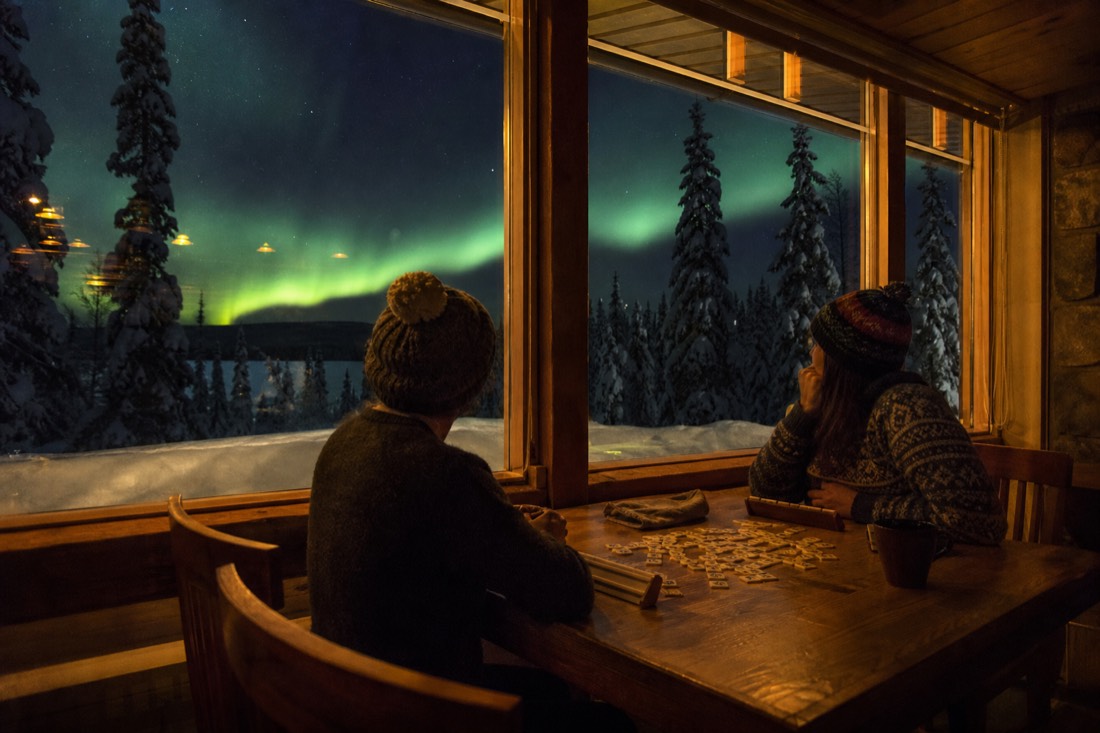
Same town, same sky, different shapes. A budget trip runs three nights, one guided hunt, a rented parka, the free civic layer, and casual meals. A comfort trip runs four or five nights, hunts plus a lodge or cabin night, daytime tours stacked through the week, and the fish dinners without flinching.
| Trip layer | Budget shape | Comfort shape |
|---|---|---|
| Nights | 3, the minimum the odds respect | 4 to 5, with a spare night for weather |
| Aurora | One guided hunt, other nights self-watched | Hunts plus a lodge or 2-night cabin bundle |
| Days | Free layer: museum, legislature, monument, ice road | Dog sledding, snowmobile, ice fishing hut |
| Gear | Rent the parka kit in town | Rent it anyway; buying deep-cold gear rarely pays |
| Food | Casual mains at the CA$15 end, one fish dinner | The fish fry, the Wildcat in season, no flinching |
| Booking style | Free-cancel tours, flexible dates | Book the small-capacity bundles early |
Notice what does not change between the columns: three nights minimum, because the 98% over-three-nights figure from NWT Tourism is the one statistic that should bend your budget rather than the other way around. Cutting the trip to one night to save money is the only genuinely bad deal in town. Where the beds themselves fit in, downtown versus Old Town and the rest, is covered in where to stay in Yellowknife, and if you want the multi-night logistics pre-solved, the tour packages guide shows how the one true bundle and the build-your-own stacks compare.
The summary I give guests over coffee: Yellowknife will never be a cheap destination, and it does not need to be. Reach it smartly, spend deliberately on the two or three experiences that need paying for, eat one dinner like it matters, and let the free layer and the sky, which charges nothing, carry the rest.
One last thing worth saying to anyone still weighing this trip against Iceland or Lapland. The cheapest aurora destination is rarely the one with the lowest nightly cost, because a place where you need six nights to get a fair chance costs more in total than a place where three nights carries 98 percent. That arithmetic, and where each destination genuinely sits on it, is worked through in the cheapest place to see the northern lights.