Getting to Yellowknife (Direct Flights and Winter Arrivals)
Yellowknife is easier to reach than its latitude suggests, three western cities fly direct, and everything else connects through them. The real trick is landing ready for the cold.
 Written with Thomas Beaulieu, Yellowknife tour guide & northern lights specialist
Short answer
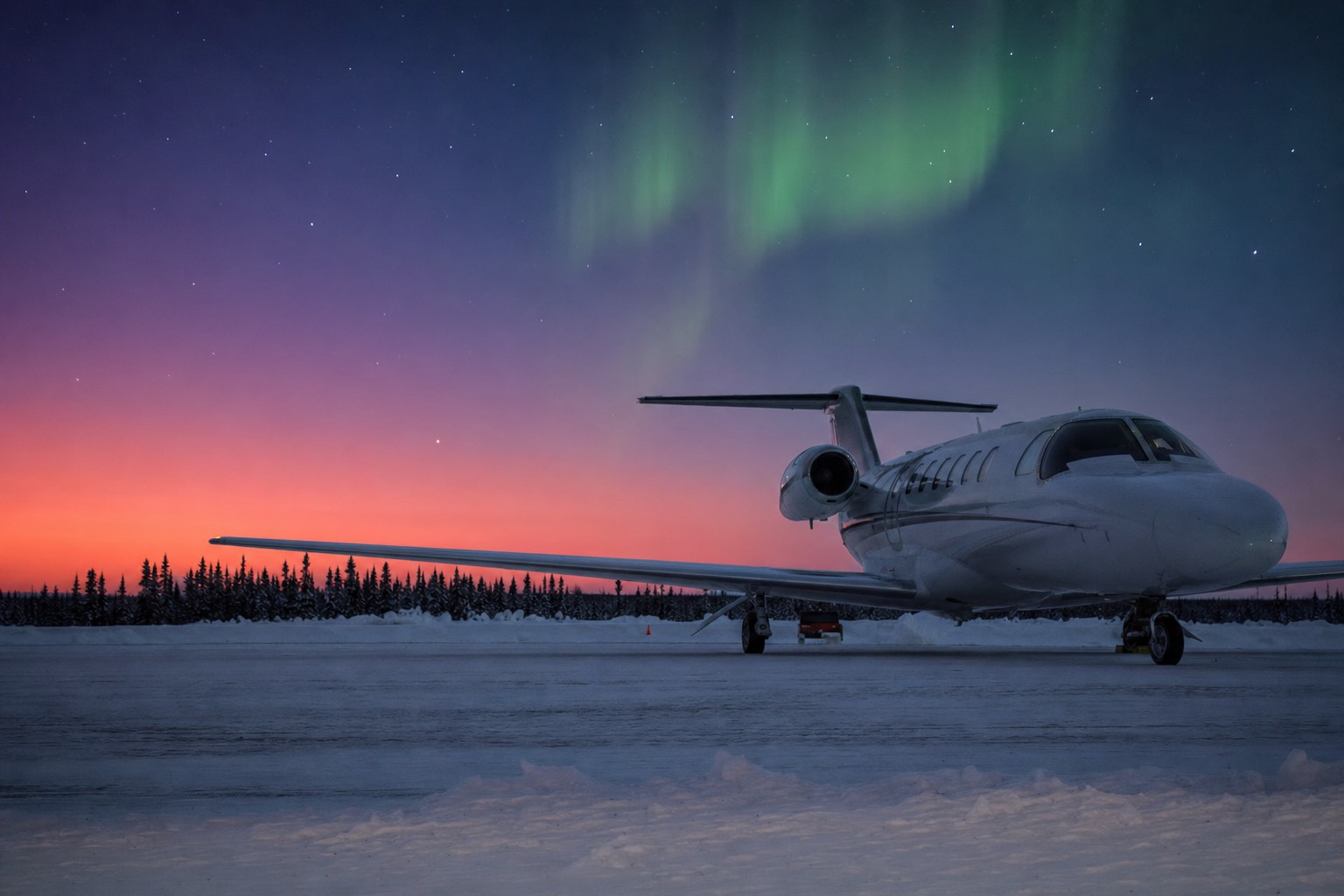
Edmonton, Calgary, and Vancouver have direct flights to Yellowknife (YZF), with routes also touching Whitehorse, Ottawa, and Toronto seasonally. Most itineraries connect through one of the three western hubs. The airport sits a short ride from downtown, and winter arrivals should keep real warm layers in carry-on.
The first thing guests tell me at pickup is almost always about the flight in: how the trees shrank, then scattered, then gave way to white lakes stitched with snowmobile tracks. Yellowknife feels remote from a window seat. On the routing map it is surprisingly simple, one airport, a handful of gateway cities, and a short ride into town at the end.
Which cities have direct flights to Yellowknife?
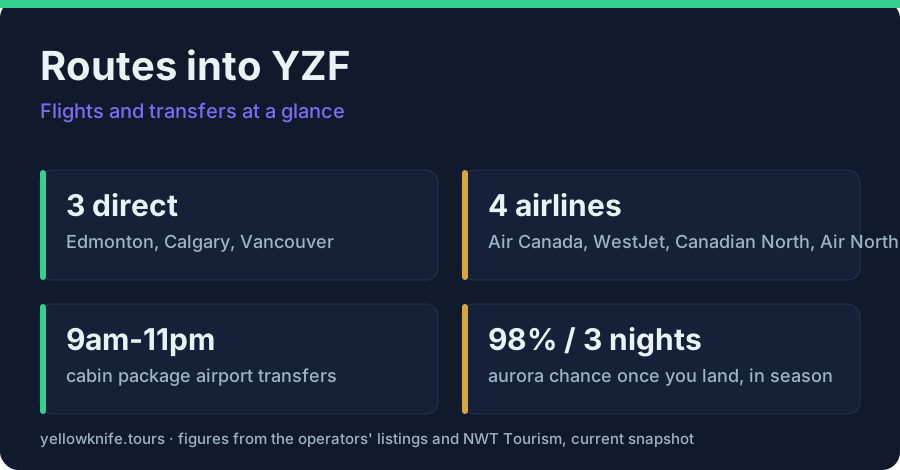
Edmonton, Calgary, and Vancouver all have direct flights to Yellowknife's airport, YZF. Routes also link Whitehorse, Ottawa, and Toronto, some seasonally. Four airlines serve the airport between them: Air Canada, WestJet, Canadian North, and Air North. For almost everyone else on earth, the trip means one connection through a western hub.
The territory's tourism board keeps a current air travel page listing who flies in, and the shape of flights to Yellowknife has been stable for years: the three western hubs carry the load, with the eastern and northern routes filling out the picture. What that means in practice:
| Origin | Service pattern | Practical read |
|---|---|---|
| Edmonton | Direct | The workhorse gateway, shortest hop north |
| Calgary | Direct | Strong option with wide onward connections |
| Vancouver | Direct | The west coast and international gateway |
| Whitehorse | Routed service | Links the two northern capitals |
| Ottawa / Toronto | Routes incl. seasonal service | Check dates, do not assume year-round |
Two cautions born of watching guests plan. The four airlines are the pool that serves YZF, not a fixed route map: which carrier operates which city shifts with the season and the year, so use the list to know who flies north and let the booking engine tell you who flies your date. Schedules move as well, which is why I will not quote flight times or fares here. The pattern above is the part that holds.
How do most itineraries actually connect?
Through Edmonton, Calgary, or Vancouver. Whether you start in London, Tokyo, Sydney, or New York, the standard shape is one long-haul flight to a western Canadian hub, then the direct leg to YZF. Pick the hub your long-haul airline serves best and give yourself a generous connection window.
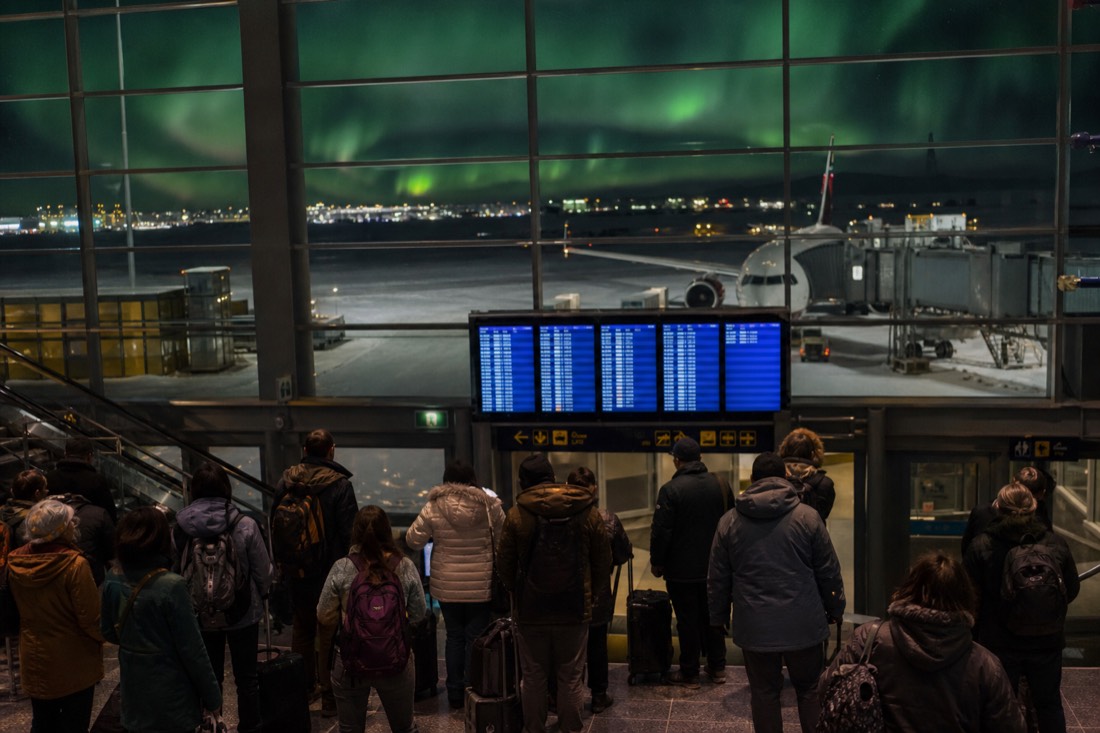
There is no secret routing to hunt for. The three hubs are the funnel, and the choice between them usually makes itself: fly whichever one your long-haul ticket already touches. What deserves actual thought is the connection buffer, especially in winter, when weather can wobble schedules anywhere in the country. A tight connection that misfires can cost you a whole aurora night, and nights are the currency of this trip, since three of them in season carry a 98 percent chance of seeing the lights at least once.
Some travelers split the journey deliberately, an overnight in the hub city on the way up, which turns a brutal travel day into two easy ones and protects the aurora nights. Vancouver guests sometimes ask whether the flight is necessary at all, since the lights do occasionally reach southern British Columbia during a strong storm. The honest arithmetic on that, and why an hour and a half in the air changes the odds so completely, is in seeing the northern lights from Vancouver. If your dates land in late August or September, the reward at the far end is the autumn season, lights over open water, described in Yellowknife in September.
How do you get from the airport into town?
Easily. The airport sits about 5 km from downtown, under a 10 minute drive, and arrivals are simple: taxis, hotel shuttles, and rental cars cover most travelers. One package solves it entirely, the two-night aurora cabin stay includes airport transfers between 9am and 11pm, so someone is waiting when you land.
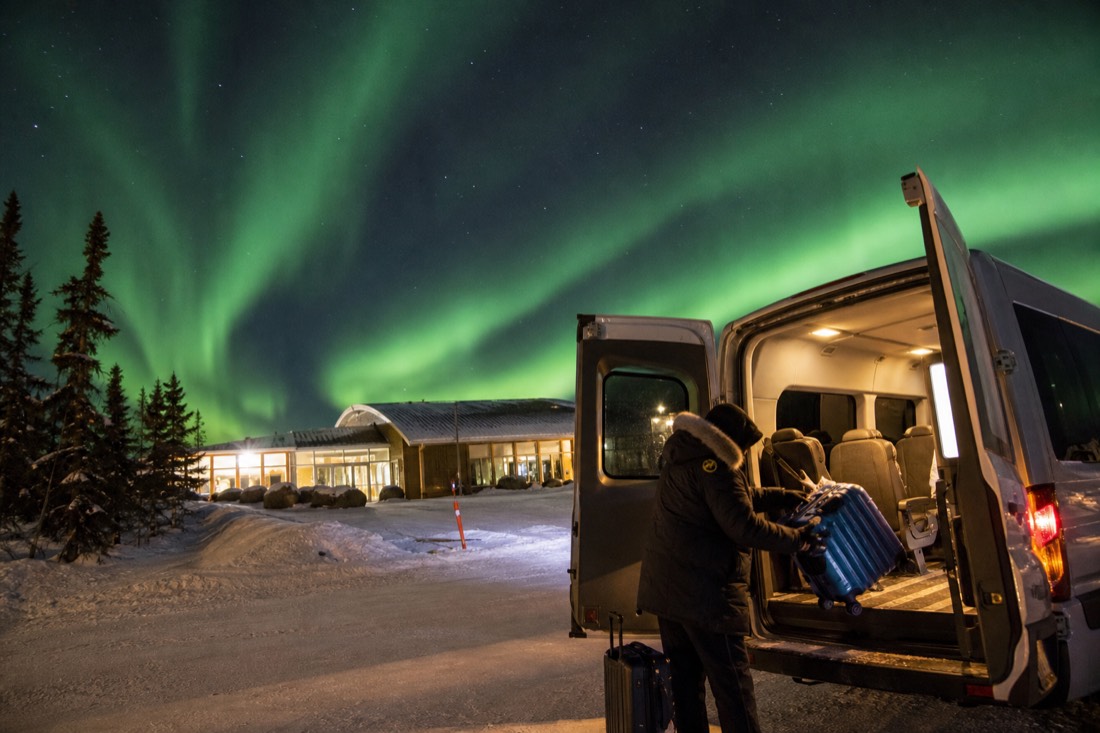
YZF is a small northern airport, which is a compliment: bags come fast and the exit is steps from the curb. Downtown, where the where-to-stay guide points you, is roughly five kilometres up the road, so there is no long transfer to plan around, just the gap between a warm terminal and a warm vehicle. The building itself, what is inside it, which rental desks sit in the hall, which hotels run shuttles, and how the cold changes a departure, gets its own walkthrough in the Yellowknife airport guide, and the official site flyyzf.ca is where to look on the day you travel. This page stops at the curb.
The transfer-included option deserves its own sentence. The two-night cabin and glass tipi package builds airport pickups and drop-offs into the price, covering arrivals between 9am and 11pm, along with hotel transfers, two nights in a cabin or glass tipi, and soup served out on the ice. For travelers who want zero logistics between the jet bridge and the aurora, that is a genuine plus that no hotel booking replicates. It anchors the aurora tour lineup for multi-night stays, and you can check live availability and prices for the 2-night cabin on GetYourGuide before locking flights around it. Note the fine print: your city hotel for any nights outside the package is not included.
For the hotel nights themselves, two central places run their own airport shuttles, which settles the arrival question before you land. The full comparison lives in where to stay in Yellowknife.
The Explorer Hotel (downtown, airport shuttle) Check rates ›
Chateau Nova Yellowknife (tour meeting point, shuttle) Check rates ›
What does a minus 25 arrival mean for your carry-on?
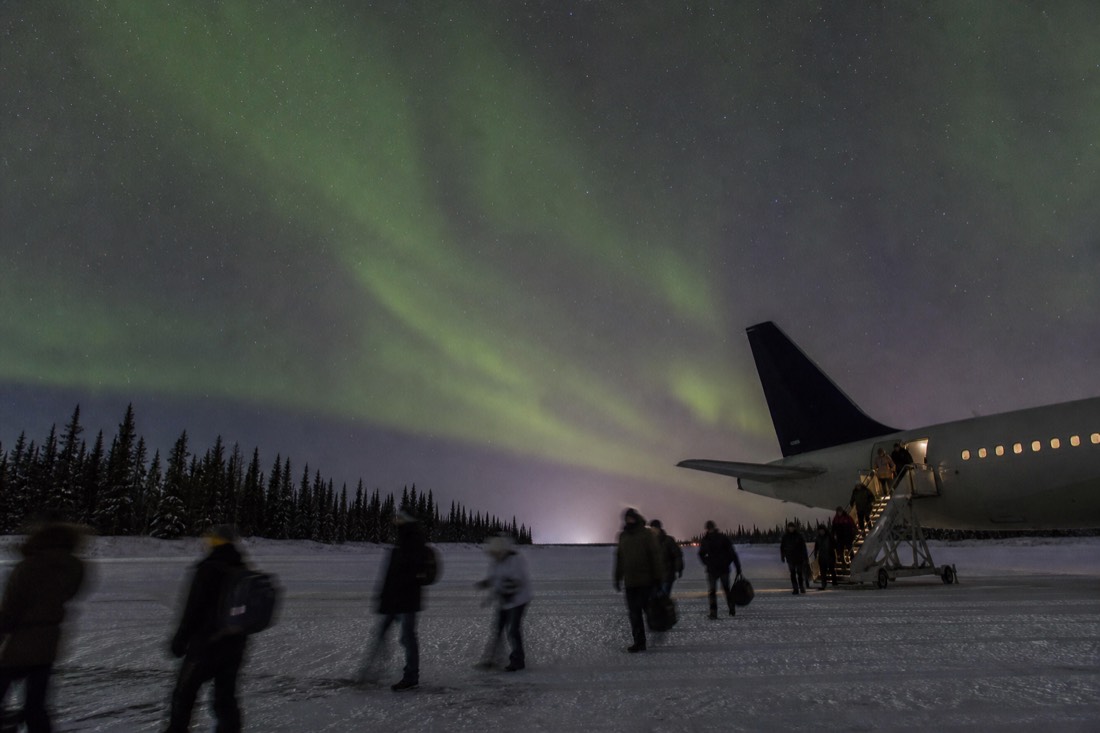
It means your warm layers fly in the cabin with you. A January arrival can step off into air around minus 25, and checked bags occasionally arrive later than you do. Keep a real insulated jacket, hat, gloves, and warm footwear in carry-on so the first ten minutes outside are comfortable, not shocking.
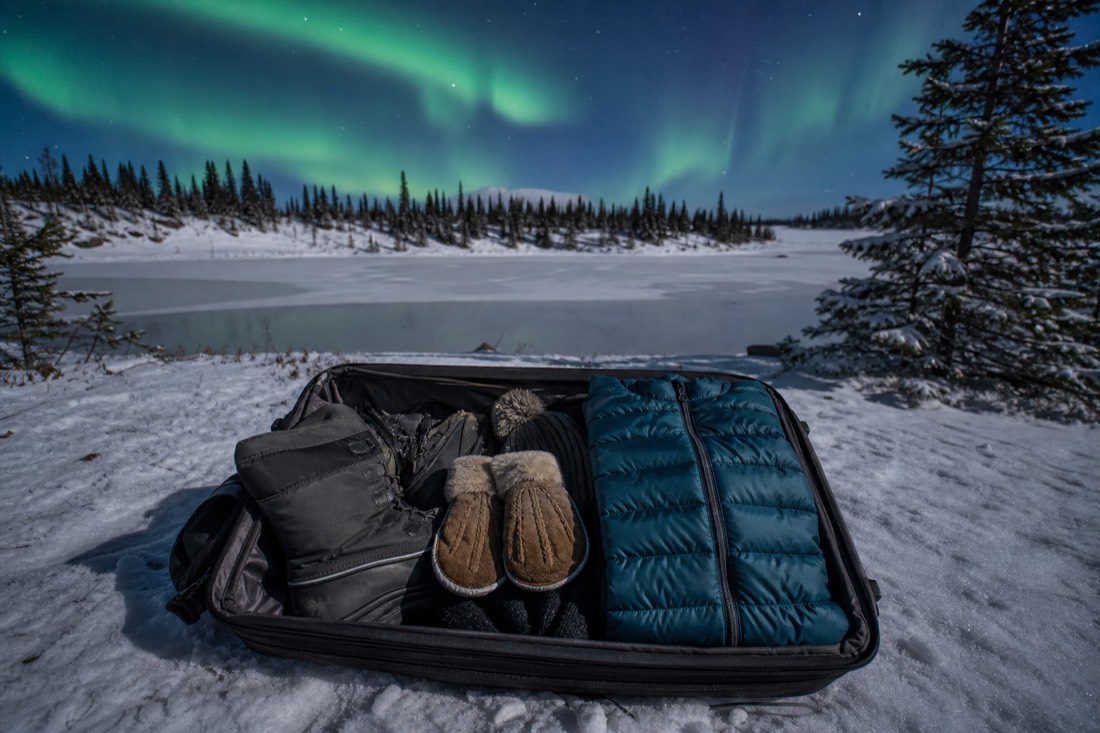
January highs in Yellowknife average around minus 21.6C with nights near minus 29C, and the walk from plane to terminal can be across open tarmac. That first breath of properly cold air is a rite of passage, minus 30 has a feel all its own, but it should be a thrill, not an emergency. The fix is a packing split:
| Goes in carry-on | Can ride in checked luggage |
|---|---|
| Insulated jacket you can wear off the plane | The big parka, if you own one |
| Toque, gloves or mitts, buff or scarf | Spare layers, extra socks |
| Warm closed footwear worn or packed | Insulated boots, if bringing your own |
| Any medication, plus tour confirmations | Everything else |
Here is the reassuring part: you do not need to own arctic gear at all. Several operators in town rent full kits, parka, insulated pants, boots, and mitts, which is why the carry-on list above is about comfort on arrival day rather than survival. The complete layering system, rentals included, is covered in what to wear in a Yellowknife winter.
When should you land relative to your first aurora night?
Land by late afternoon and your arrival day can be aurora night one. Tours pick up between about 9:30 and 10:30pm, so even an evening arrival leaves room if the timing is honest. Plan three nights minimum in season, and put the tours on the earliest nights in case weather asks for a retry.
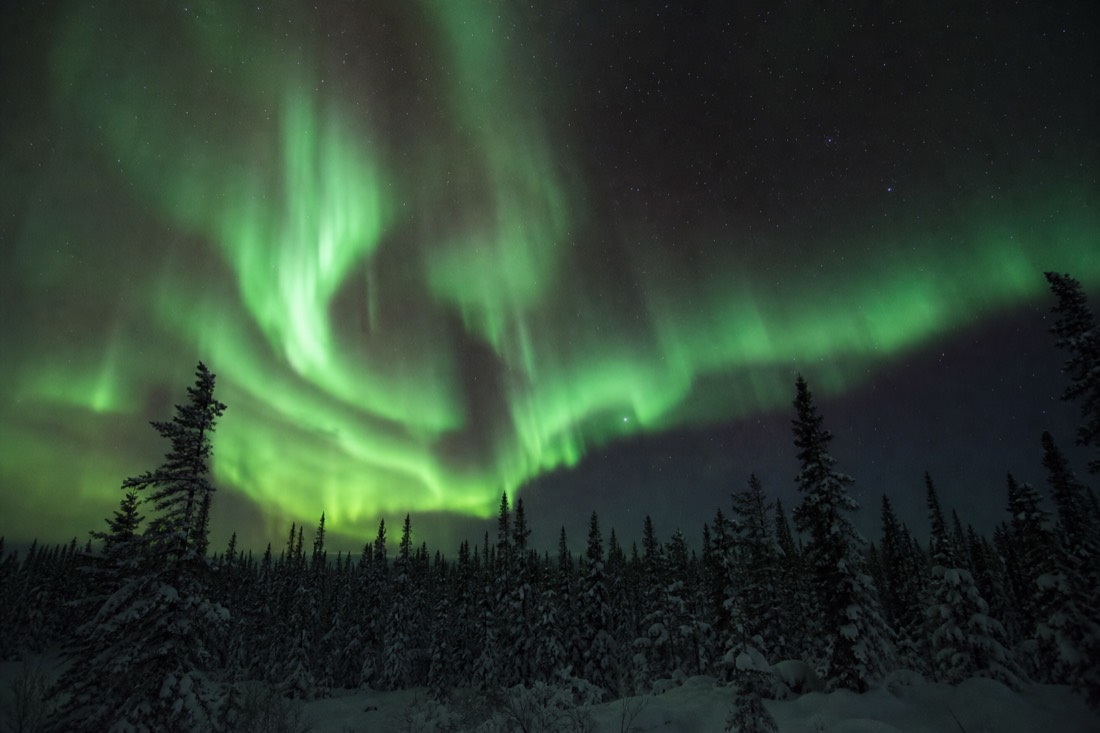
This is where flights and aurora math meet. The lights peak near local midnight and the tour vans run late, which quietly works in your favour: an afternoon landing leaves hours for check-in, dinner, and gear before a 9:30pm pickup.
| Arrival time | First realistic aurora night | Notes |
|---|---|---|
| Morning or midday | Same night, comfortably | Nap first, the return runs to 1:30-2:30am |
| Late afternoon | Same night, workable | Book ahead and confirm your pickup point |
| Late evening | Next night | Use day two's daylight for gear and town |
Front-load the sky. If you hold three nights, make them your first three, so a cloudy night still has understudies behind it. Timing of the season itself, autumn versus deep winter, is a separate decision covered in the best time to see the lights, and the full day-by-day shape lives in the aurora itinerary guide.
Do you need a car once you are in Yellowknife?
No, not for the tours. Every aurora and activity operator picks up from hotels and B&Bs in town, and downtown is walkable between meals, rentals, and pickups. A rental car earns its keep only for self-drive extras like the Dettah ice road or Cameron Falls on the Ingraham Trail.
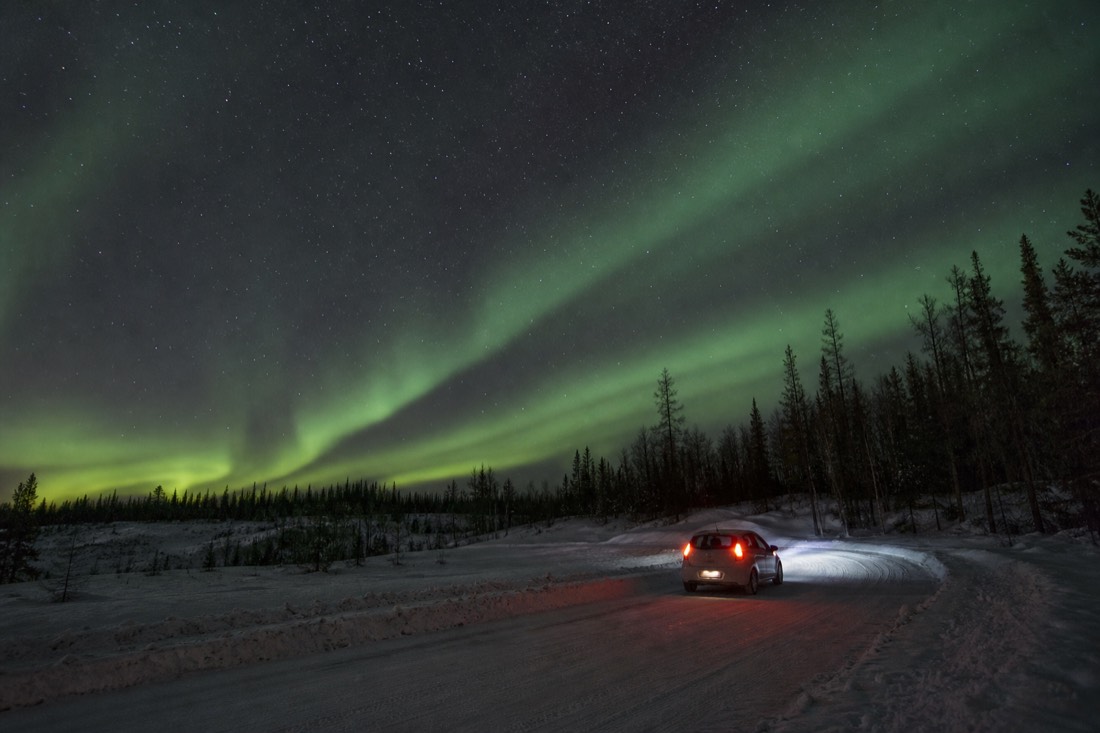
Plenty of my guests never sit in a car they drove themselves, and their trips lose nothing: pickups handle the tours, and the downtown blocks handle the rest on foot. The case for renting is the do-it-yourself layer, the roughly 6.5 kilometre ice road across the bay to Dettah, open in a typical year from late December to mid-April, and the drive out the Ingraham Trail. If those are not calling you, skip the car, spend the money on another night out under the sky, and let the drivers who do this every night handle the winter roads.
How should you time flights to Yellowknife around aurora season?
Book flights to Yellowknife inside the two aurora windows, mid-August to early October and mid-November to early April, and hold the tour seats at the same time as the tickets. Then look hard at the flight home, because tours return between 1:30 and 2:30am and a dawn departure quietly deletes your final night.
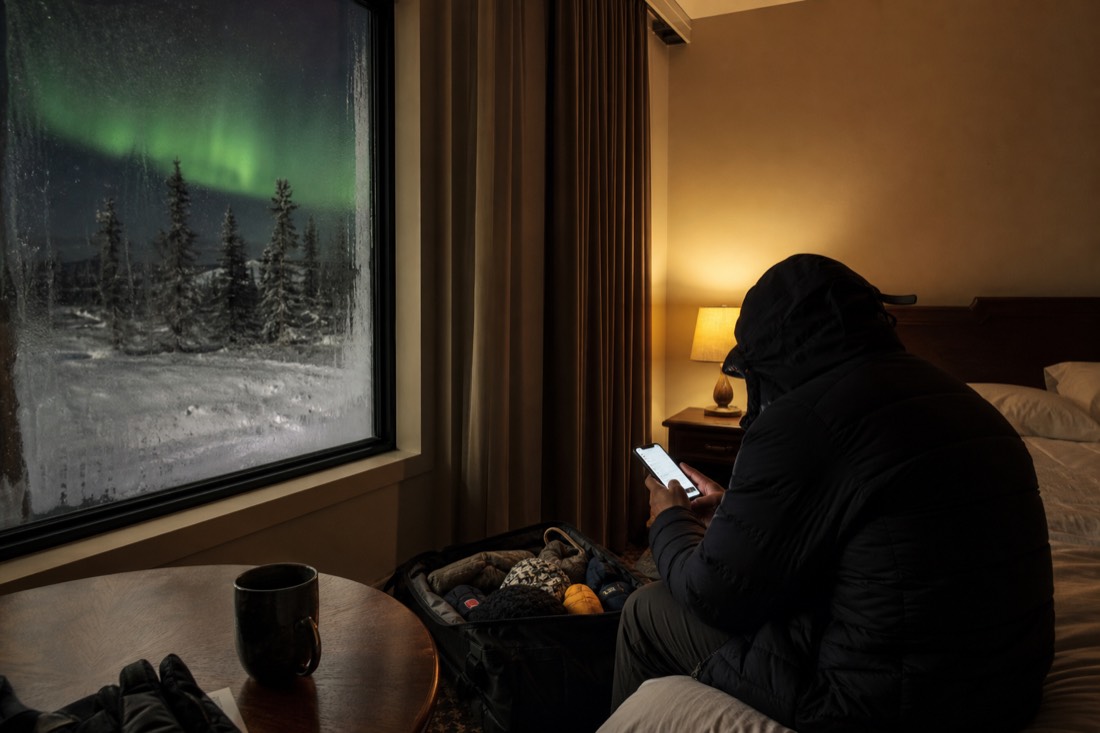
Darkness sets the calendar, not the airlines. True astronomical darkness comes back to Yellowknife in the last days of August, disappears again around the 12th to 14th of April, and every aurora visitor on earth is aiming at the gap between those two dates. That is the demand pattern in one sentence: a small northern airport, a fixed number of seats on a handful of routes, and a season everybody wants the same nights of. I hear the same dates asked for again and again, so my advice to guests is unromantic. Pick the nights first, hold the tour seats and the tickets together, and treat a flight without a confirmed seat on the tour as half a plan.
The flight home is where good trips lose a night. Pickups run about 9:30 to 10:30pm and the vans get back between 1:30 and 2:30am, which means an early-morning departure leaves you two bad choices: skip the last hunt, or go to the airport on ninety minutes of sleep. Guests do the second one more often than you would think, and they regret it in the security line.
| Flight home | What it costs you |
|---|---|
| Early morning | The final aurora night, or almost all of your sleep |
| Midday | The night stays intact, the morning does not |
| Afternoon or evening | Full last night, unhurried morning, daylight hours to spend |
The drive back out is short, so a late departure needs no heroic buffer, just a taxi booked the evening before or a shuttle time confirmed at the desk. If that leaves you a free daylight stretch on the last day, spend it: the winter things-to-do list is full of half-day options that fit between checkout and a boarding pass.
Book the flights to protect the nights, keep the warm layer in the cabin, and the hard part is done before you land. What the trip looks like once the wheels touch down starts with where to stay, and after that the sky takes over the schedule.