Cheapest Place to See the Northern Lights? Count Nights, Not Nightly Rates
Every aurora budget I read compares nightly prices and skips the number that decides the bill: how many nights you have to buy before the sky finally pays out.
 Written with Thomas Beaulieu, Yellowknife tour guide & northern lights specialist
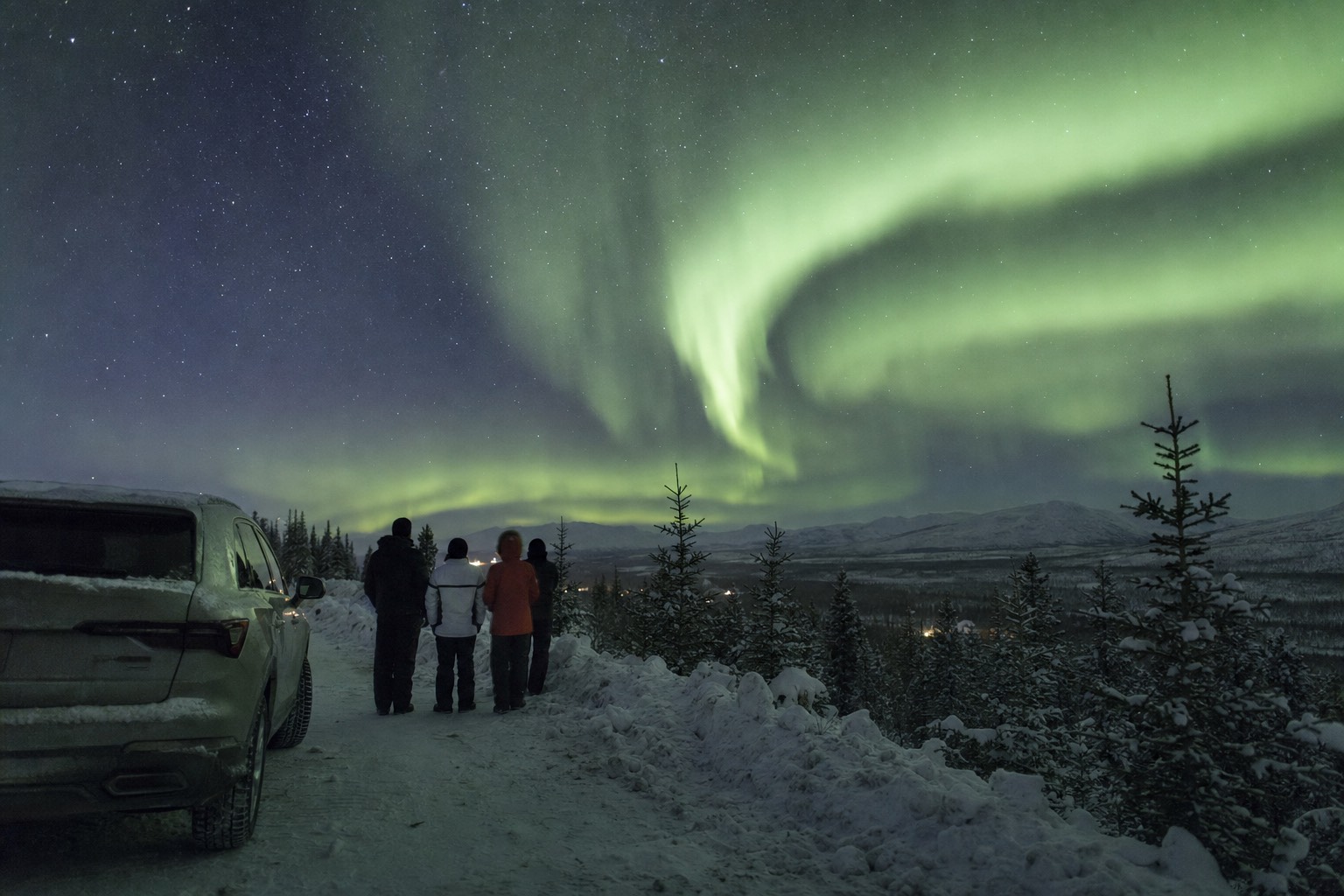
Short answer
The cheapest northern lights trip is the one that needs the fewest nights, not the one with the lowest nightly price. Total cost is nights needed multiplied by what a night costs you, so a low sticker price with a poor hit rate ends up billing you for extra beds, meals and tours. Yellowknife is not a cheap town, but with 98% odds over three nights in season it is an efficient one.
Guests arrive with a spreadsheet more often than you would think, and the column that always catches my eye is the one comparing nightly hotel rates across six countries. Comparing them is sensible. Optimizing for them is not. What actually decides the size of an aurora bill is how many nights you end up buying before the sky cooperates, and almost nobody prices that in before they book.
What is the cheapest place to see the northern lights?
The cheapest place to see the northern lights is the one where you need the fewest nights, not the one with the lowest nightly price. Total cost equals nights needed multiplied by what a night costs you. A cheap destination with a poor hit rate quietly bills you for extra beds, extra meals and extra tour tickets.
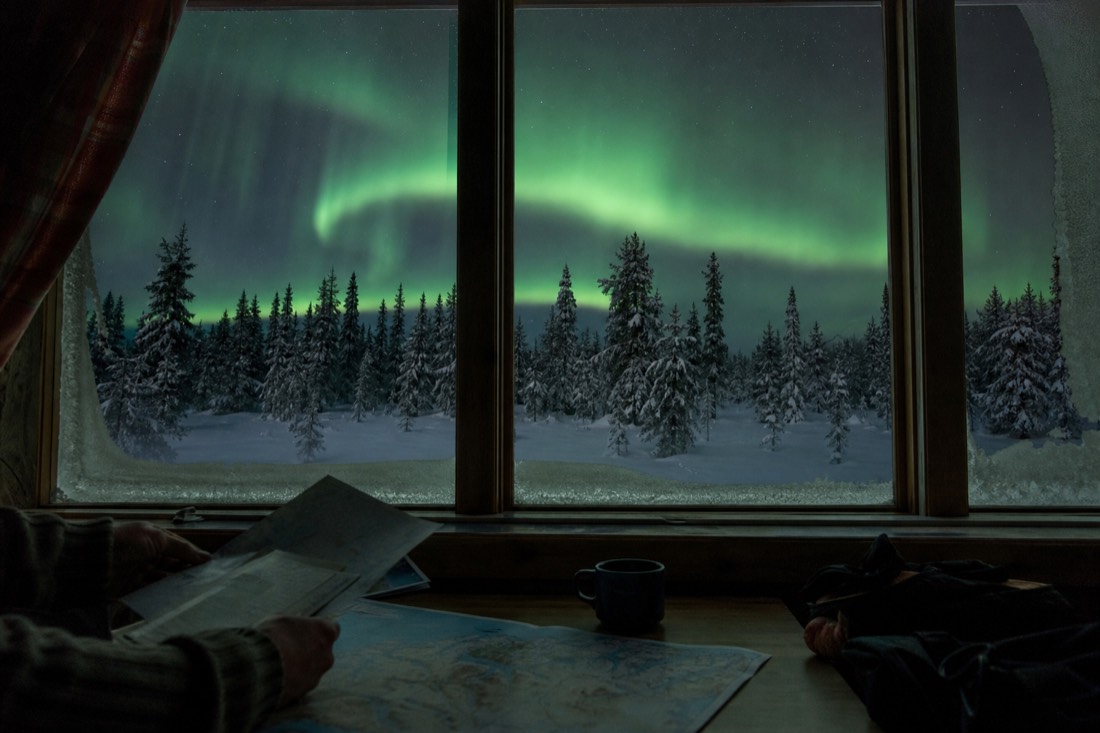
Look at what you are really buying. Not a hotel room, not a tour seat: a sighting. That is the only unit that means anything once you are home, so the honest cost question is cost per sighting, and cost per sighting turns on probability rather than on price lists.
Yellowknife is the clearest case of that arithmetic working in a traveler's favour, and I guide here, so weigh my enthusiasm accordingly. The territory's tourism body publishes the figures: aurora visible up to 240 nights a year, and a 98% chance of at least one sighting across a three-night stay in season, because the city sits directly under the auroral oval. Canadian Geographic reports the same two numbers, which is why I keep quoting them without flinching. Three nights is not a marketing round number, it is where the probability curve flattens, and I take the whole calculation apart in the real odds of seeing the lights here.
None of that makes this a cheap town. Beds and groceries ride to the end of very long supply lines, and the receipts show it. What it makes Yellowknife is efficient, which is a different claim and a more useful one.
Why is the cheapest northern lights trip rarely the one with the lowest nightly cost?
Because probability compounds and money does not. If each night is a 30% shot, five nights still leaves you around 83%. Every night you add to repair the odds buys another bed, another day of meals and often another tour ticket, so the cheap destination overtakes the expensive one on total spend.
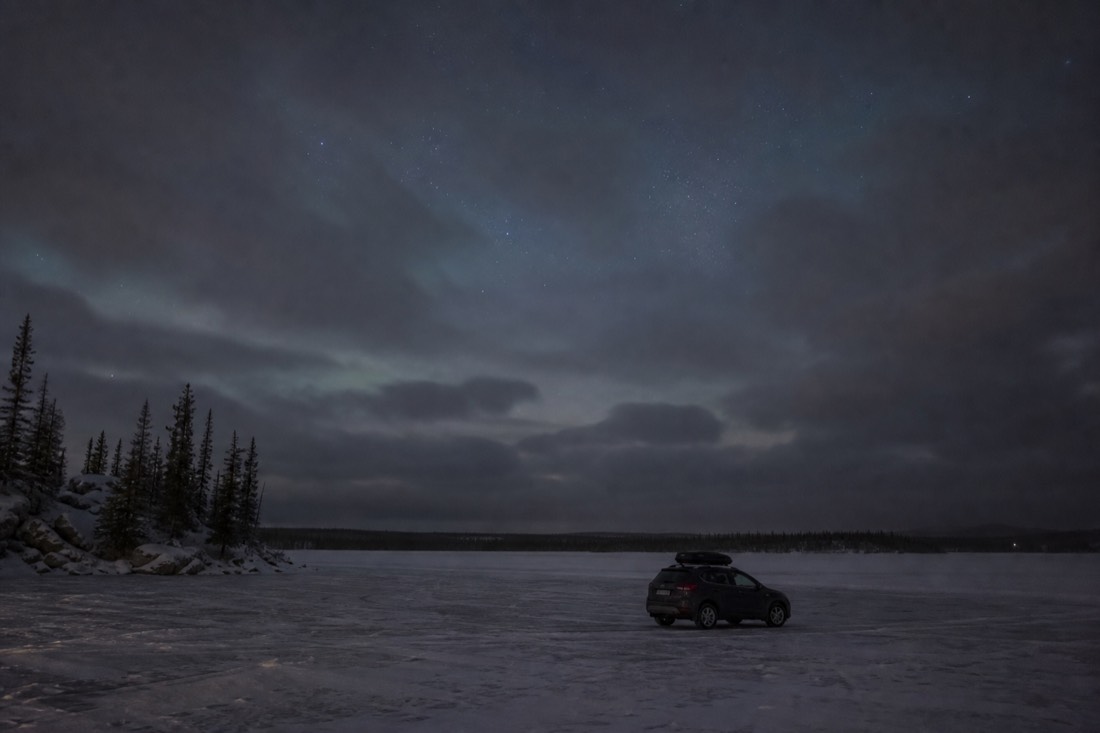
Run the numbers yourself on an imaginary destination where any given night is a 30% chance. I am using that figure as arithmetic, not as a claim about a real place, because nobody publishes credible per-night odds for most of the shortlist. Here is how the cumulative picture builds.
| Nights booked | Cumulative chance if each night is a 30% shot | What that night adds to the bill |
|---|---|---|
| 1 | 30% | First bed, first tour ticket, first day of meals |
| 2 | 51% | Second bed, second day of food, often a second ticket |
| 3 | 66% | Third bed, and you are still below Yellowknife's published three-night figure |
| 4 | 76% | Fourth bed, another full day of eating out |
| 5 | 83% | Five paid nights and no guarantee at the end of them |
Sit with the last row for a second. Five nights of paying, and you are still short of the confidence that three nights under the oval is published to deliver. The reverse case never gets advertised, which is a shame, because it is the useful one: strong odds let you deliberately book a shorter trip, and a shorter trip is cheaper on every line at once except the flight.
That is also why I argue against cutting a stay here to a single night to save money. It is the one genuinely bad deal in town. The layer-by-layer breakdown of what a stay actually costs, from flights to the free sights, sits in the Yellowknife trip cost guide. This page handles the decision you make before that one: which destination to fly to at all.
Which destinations compete, and what makes each one cheap or expensive?
Eight names come up again and again: Yellowknife, Fairbanks, Whitehorse, Churchill, Iceland, Tromso, Rovaniemi and Abisko. Each is structurally cheap about one thing and structurally expensive about another. No destination is cheap on every line, and I will not print prices that change weekly.
| Destination | Structurally cheap about it | Structurally expensive about it |
|---|---|---|
| Yellowknife, NWT | The fewest nights needed of anywhere publishing its odds; free civic sights; parka rental in town instead of buying gear | Remote supply lines push food and beds up; nobody passes through, so the flight is a dedicated one |
| Fairbanks, Alaska | Domestic routing for Americans, no passport, a larger bed market under the same oval | Still a long haul for anyone east of the Rockies, and interior Alaska is not a budget region |
| Whitehorse, Yukon | Sits on the highway network, so a driving itinerary can skip the flight entirely | No published aurora odds to plan against, so a careful traveler budgets extra nights |
| Churchill, Manitoba | Very little, honestly, and it does not pretend otherwise | No road connection at all: access is by train or plane from Winnipeg, on wildlife-town logistics built around polar bears |
| Iceland | Genuinely cheap to reach on transatlantic routings, and the trip still works in daylight if the lights never show | Maritime cloud costs you nights, and the daytime plan B of car plus tours becomes its own budget line |
| Tromso, Norway | Well connected by European carriers with a dense, competitive tour market | Coastal weather loses nights the same way Iceland does, in a famously expensive country |
| Rovaniemi, Finland | The best-connected Lapland base, reachable on budget European flights and an overnight train from Helsinki | December collides with the busiest family-tourism season in the north, which is not when you want to be buying beds |
| Abisko, Sweden | Its reputation rests on clear skies in a mountain rain shadow, which is the fewest-nights logic working for you | A long land journey after the flight to Kiruna, into a small bed market with limited alternatives |
Two rows carry different cost shapes from the rest, and they deserve saying out loud. Churchill is a bear town first: the aurora there rides on the back of remote logistics priced for wildlife tourism, and if the lights are your goal you are paying a premium for somebody else's headline product. Iceland is the opposite failure mode. It is often the cheapest destination on the list to reach, and that is real, but reachability is not the same as reliability, and its weak point has never been the aurora. It is cloud. I put the two side by side properly in Yellowknife versus Iceland.
For North Americans, the live decision is usually a three-way one. The Alaskan case is in Yellowknife versus Fairbanks, and the Yukon case, including that highway option, is in Yellowknife versus Whitehorse.
Where does your money actually go on an aurora trip?
Into six lines, and only two of them are printable. Flights depend entirely on your origin city. Lodging depends on how many nights the odds force you to buy. Tours are priced live on their listings. Food, gear and permits are the small predictable ones, and the sights here can cost nothing at all.
| Line on the bill | What drives it | Where the real number lives |
|---|---|---|
| Flights | Your origin city, the season, how far ahead you book | Nothing stable enough to print; it moves constantly |
| Nights of lodging | How many nights the destination's odds force you to buy | Aurora-season demand in whichever small market you chose |
| Tour tickets | Season, demand, group size, private versus shared | Live on the booking listing, always |
| Food | Local supply lines | Here, restaurant mains commonly run about CA$15 to 30 |
| Cold-weather gear | Whether you buy arctic clothing or rent it | Parka, pants, boots and mitts rent by the day in town |
| Permits and add-ons | Activity specific, never bundled | Fishing licence about CA$15 per the listing note; axe throwing is a CAD 15 add-on |
| Sights | Whether the town gives any away | Free here: Legislative Assembly, Heritage Centre, Bush Pilots Monument |
One real scale marker helps more than a hundred estimates. North Star Adventures publishes from CA$249 on their own site for a four-hour sport fishing and Indigenous culture tour with gear, transfer and a traditional fish meal included, running mid-January to mid-April. That tells you what a substantial, food-included half-day costs at this latitude. Every other tour on my list prices live, which is why I send people to the listing rather than to a blog's stale figure.
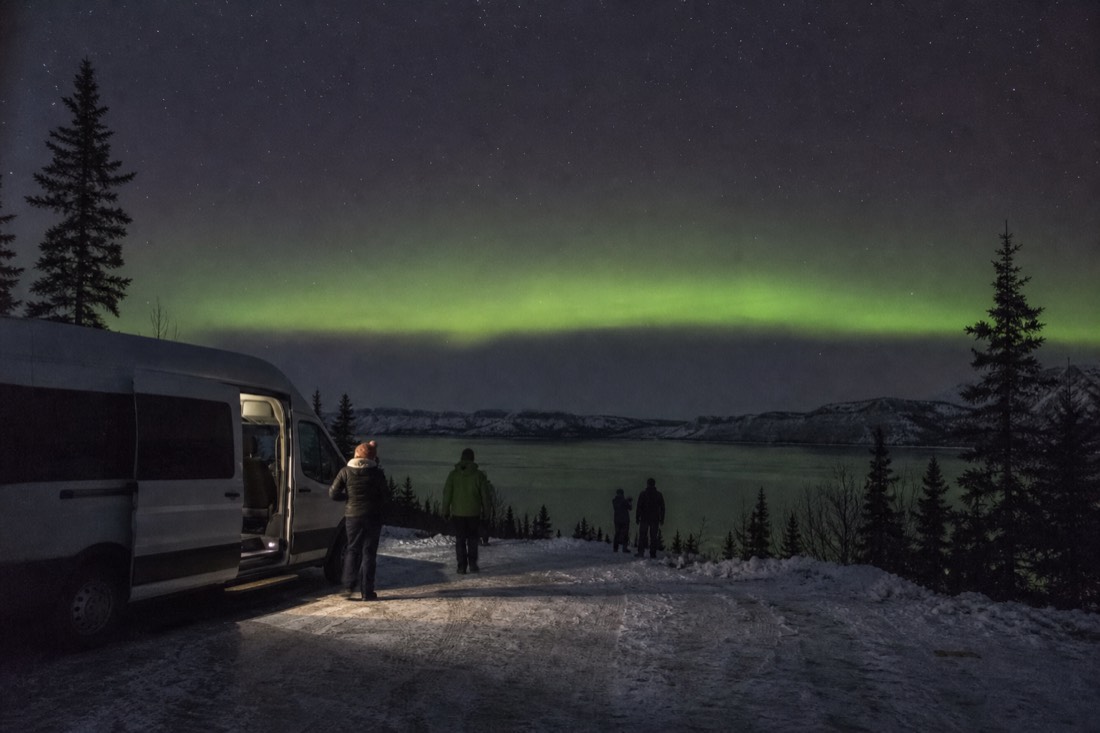
The saving inside that line is group size. A shared van seat costs a fraction of a private charter and, on a mobile hunt, actually performs better, because the guide is chasing gaps in the cloud rather than managing one family's schedule. That is where I point budget-minded guests first: compare the northern lights tours and check live availability and prices on Viator for the four-hour flagship hunt, rated 4.8 across 399 reviews, capped at 16 guests, with hotel pickup, three viewpoints, a photographer aboard and free photos.
Why do sources disagree about the most affordable northern lights destination?
Because they are ranking different things and rarely say so. Capture the Atlas and Canadian Geographic land on Yellowknife, Aurora Now points at Fairbanks, Frontiers North makes the case for Churchill. All three sit near the oval. What separates them is cloud climate, season length, ease of access and what fills the daytime.
The disagreement is honest, not a scam. A tour operator in Churchill genuinely believes in Churchill. What almost never appears in those rankings is the word "cheapest" attached to a defensible method, because a real cost comparison would have to know your origin airport, and no article knows that.
There is a second reason to distrust the price tables you find. Most of the figures floating around belong to multi-day, multi-destination packages that bundle flights, transfers, meals and side trips in different combinations. Comparing a Lapland Christmas bundle against an Alaska road-trip package tells you almost nothing about which sky is cheaper to stand under. So I compare structure instead: how many nights you must buy, what a shared tour costs on its live listing, and which parts of a town are free.
Season length belongs in that structural comparison too. Yellowknife runs two viewing windows, mid-August to early October and mid-November to early April, which is a wide target for anyone whose travel dates are fixed by school terms or work. True astronomical darkness returns here in the last days of August and holds until around the middle of April. Between those points the sky simply never gets dark enough, and no budget beats that.
How do you cut the cost of a Yellowknife trip without wrecking it?
Five levers, in order of how much they save without damaging the trip: travel in the shoulder of the season, share a group tour instead of chartering a private one, rent your parka rather than buying arctic clothing, skip the rental car you will not use, and build your daytimes out of the free layer.
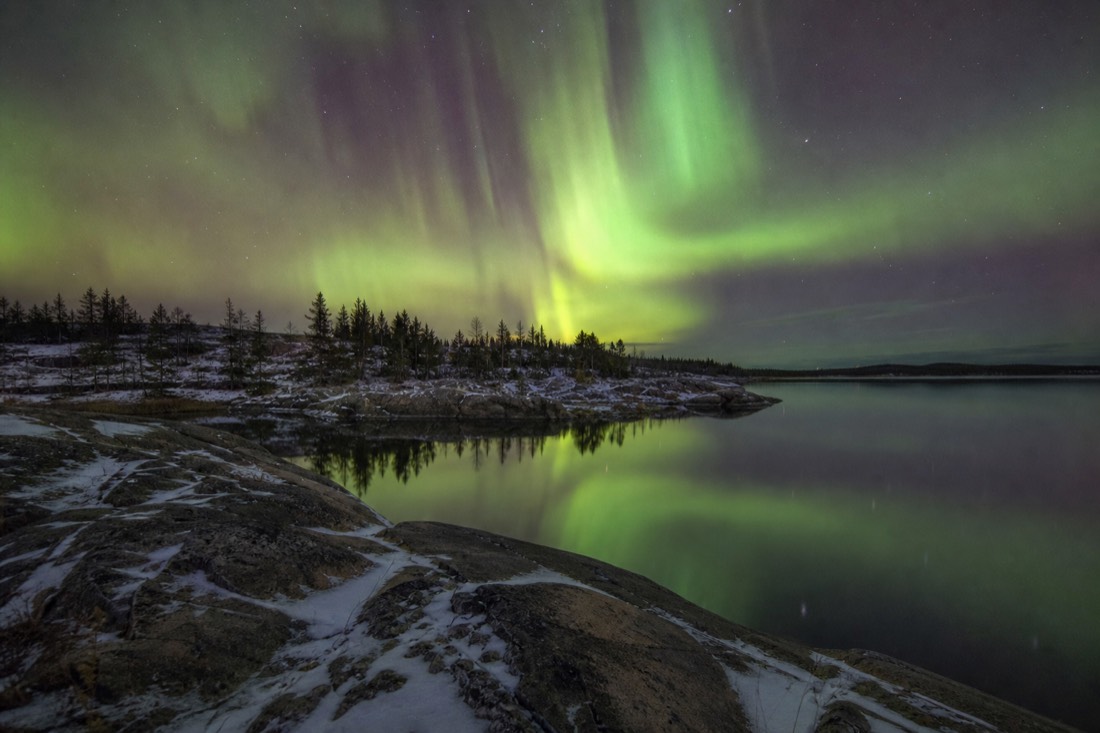
Start with timing. The deep-winter image most people carry, January and February at minus thirty, is only part of the season. Late August and September give you open water under the lights, mild enough that the gear problem mostly disappears, and March runs about minus ten to minus twenty with roughly twelve hours of daylight at the equinox and aurora at full strength. A small bed market always prices hardest when demand concentrates, so widening your dates widens your options. Where those beds actually are, downtown against Old Town, is covered in where to stay in Yellowknife.
Then the car. Every tour on my list includes hotel pickup and downtown is walkable, so a rental earns its keep only if you plan to drive the Ingraham Trail or the ice road yourself. Plenty of visitors book one out of habit and then leave it plugged in outside the hotel for four days.
| Free or nearly free | What it is | Why it earns a slot |
|---|---|---|
| Prince of Wales Northern Heritage Centre | Free admission, on Frame Lake downtown, with Dene and Inuvialuit galleries and a bush-plane exhibit, Tuesday to Sunday | The best hour of context in the territory, at no cost |
| Legislative Assembly | Free to visit, the seat of territorial government | Northern politics and architecture in one stop |
| Bush Pilots Monument | Wooden staircase up the Rock in Old Town, 360-degree view over the bay | The town's postcard, and roughly 50 houseboats below you |
| Dettah ice road | About 6.5 km of public ice road across the frozen bay, late December to mid-April | Driving onto a frozen great lake costs nothing at all |
| Frame Lake Trail | Around 5 km looping through downtown, partly paved, usable year round | A real walk that needs no car and no ticket |
| The sky itself, anywhere dark | The aurora is free wherever light pollution stops | You give up the chasing and the warmth, not the lights |
Gear is the last easy win. Buying a parka, snow pants, boots and mitts for one trip is money that never comes back, and several operators in town rent the full kit by the day. If you want the multi-night logistics pre-solved instead of assembled piece by piece, the tour packages guide compares the one true bundle against building your own.
So which affordable northern lights destination is right for you?
Work backwards from your own airport. Take the two or three destinations you can reach in one connection, then rank them by how many nights each needs rather than by nightly price. The winner is usually the one with published odds and a dry continental sky, because it lets you book fewer nights on purpose.
For an American starting in Denver or Atlanta, Fairbanks removes a passport and a border, and that is worth real money. For a European already crossing the Atlantic, Iceland is close to free to add and you should add it, as long as you go in understanding that you are buying a stopover with a chance of lights rather than an aurora mission. For anyone flying specifically to see the aurora and wanting the trip to end with a sighting, the fewest-nights logic points north of 60, and this is where I stand.
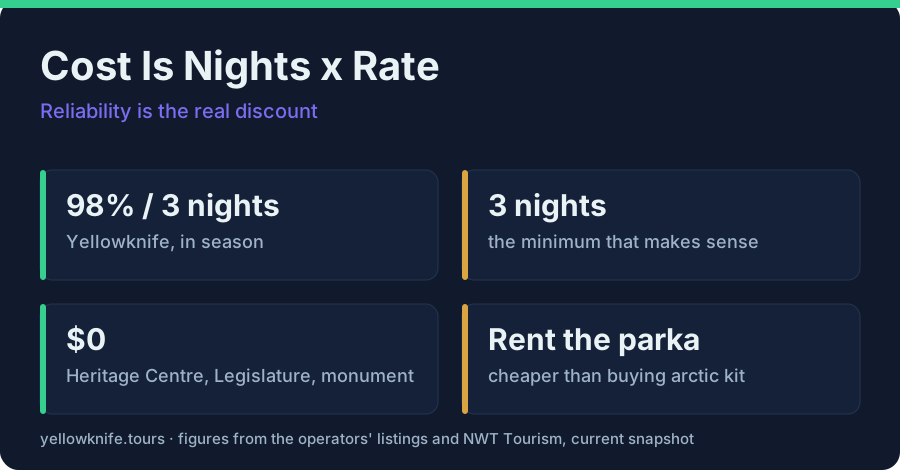
What I tell guests over the last hot chocolate of a hunt is simple enough to carry home. Nobody wins an aurora trip by shaving a few dollars off a hotel rate. You win it by choosing a sky that does not make you buy five nights to do the work of three, then spending the money you saved on the one guided night that actually goes looking.