Old Town Yellowknife: What to Do and How to Walk It
Old Town is the oldest and oddest corner of Yellowknife, and most visitors give it forty minutes. Here is the actual route, the timings, and what changes once the bay freezes over.
 Written with Thomas Beaulieu, Yellowknife tour guide & northern lights specialist
Short answer
Old Town is the historic waterfront neighbourhood below downtown, and you can walk the whole thing in about two hours. Climb the wooden staircase to Pilot's Monument for the 360-degree view over Yellowknife Bay, walk Ragged Ass Road and the shoreline lanes, then eat at Bullocks' Bistro, open year-round, or the Wildcat Cafe in summer.
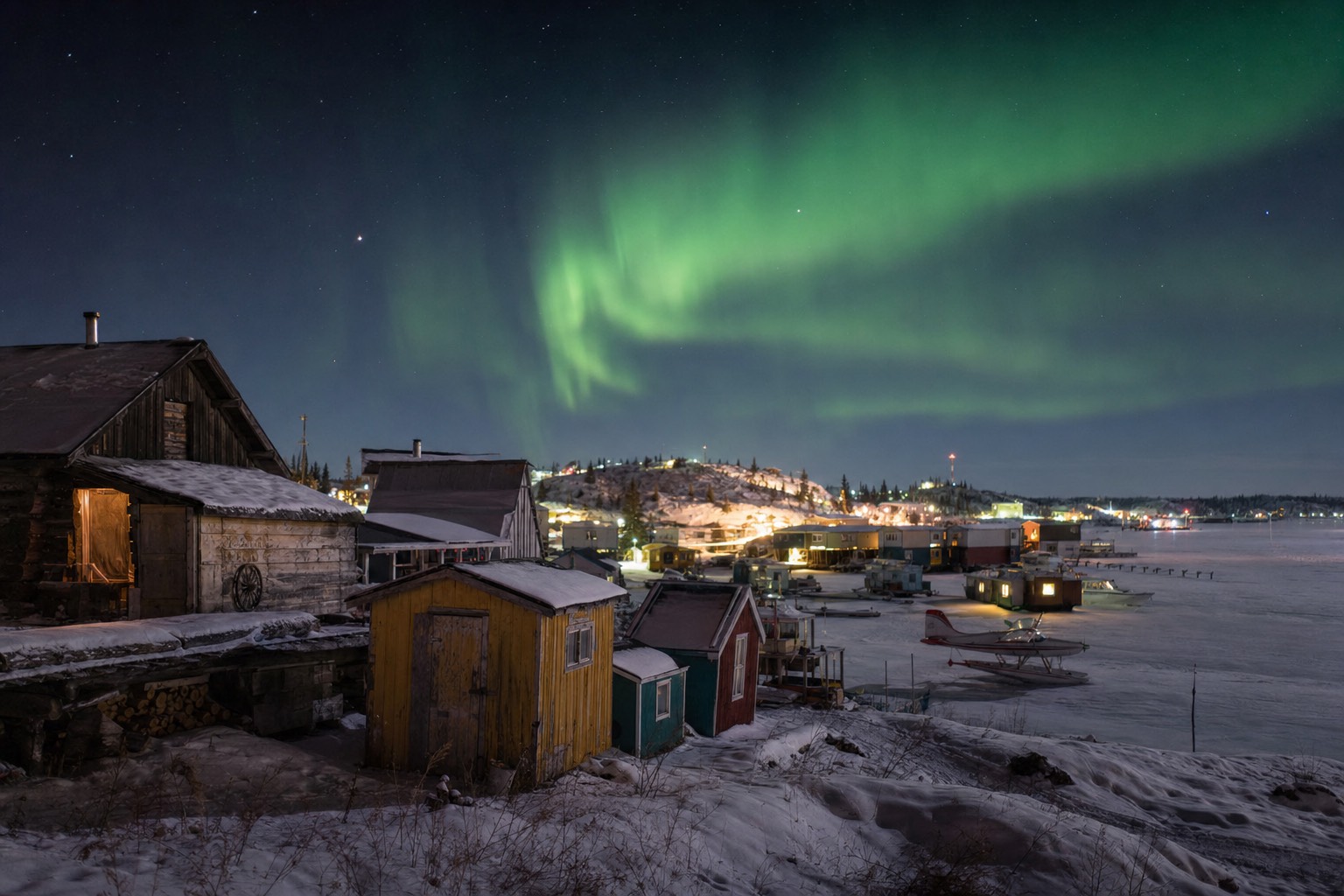
Walk past the last downtown office block and the town quietly changes trades. Siding gives way to log walls, the lots stop being square, and somewhere below you a float plane is running up its engine on Yellowknife Bay. Old Town is the part of the city people remember years later, and it is also the part most visitors get wrong: they drive down, photograph one street sign, and leave inside forty minutes. This guide is the practical version of the walk, what stands where, how long each stop honestly takes, and how completely the neighbourhood reorganises itself once the bay freezes. The bush-pilot history behind all of it has its own telling in Old Town and the bush pilots.
What is Old Town Yellowknife, and how do you get down there?
Old Town is the historic waterfront neighbourhood below downtown: log cabins, houseboats, galleries and restaurants strung along Yellowknife Bay. It sits at the bottom of the hill from the city centre and you can walk down in roughly twenty minutes, or drive it in about five.
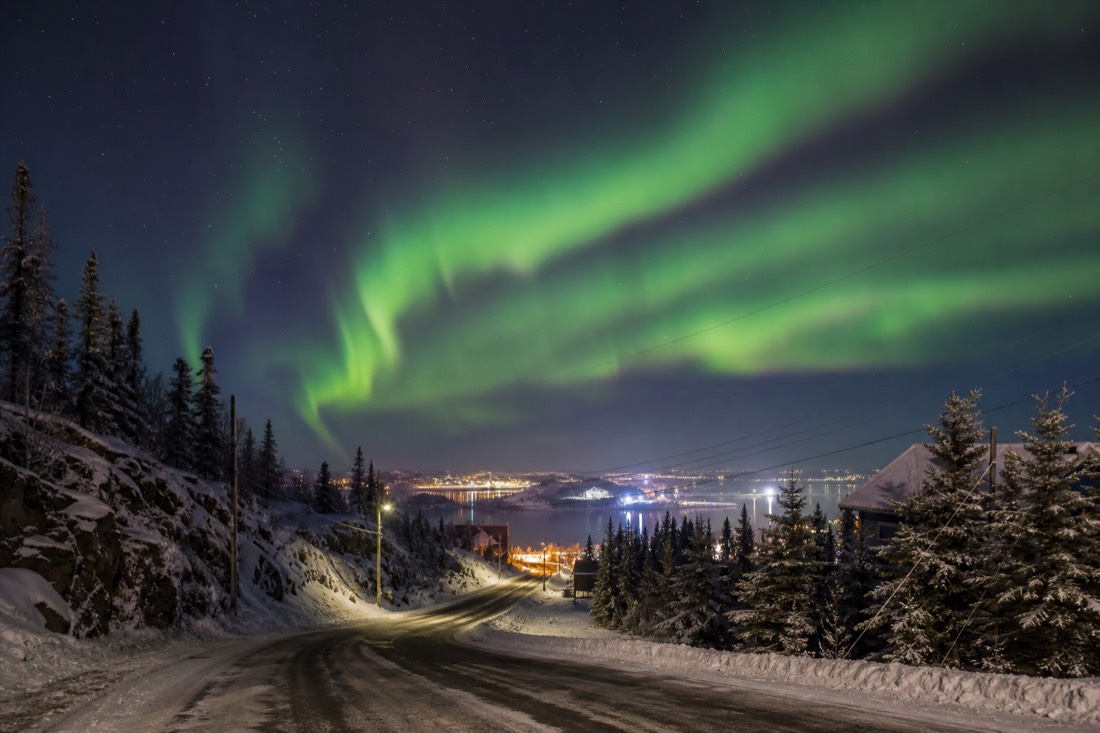
Geography explains the personality. Downtown Yellowknife sits up on the plateau where the government offices and the hotels are, and the original town clings to the rock and shoreline underneath it, where the gold-rush camp actually started in the 1930s. Nothing was planned. Cabins went up where the rock allowed, lanes bent around outcrops, and what survives is a neighbourhood that looks assembled rather than designed. NWT Tourism cheerfully calls it Canada's weirdest neighbourhood, and I have never heard a local argue.
Getting there is easy in every season. On foot it is a downhill walk from the downtown hotels, pleasant in summer and perfectly doable in winter if you are dressed properly, though remember the return leg is uphill and into whatever wind is coming off the lake. Taxis run. Both city tours drive down as a matter of course. If you are still deciding how Old Town fits into a two or three day trip, the wider things to do in Yellowknife list puts it beside the lake, the aurora and the museums.
What to do in Old Town, and in what order?
Six stops make the walk: Ragged Ass Road, the shoreline lanes and galleries, the wooden staircase up to Pilot's Monument, the view from the Rock, the float-plane base, and a meal. Done properly it runs about two hours on foot, or half a day if you sit down to eat.
Order matters more than you would expect, because Old Town is small enough to backtrack accidentally three times. I take groups down the hill first, work the flat streets while legs are fresh, save the staircase for the middle, and finish at the water. Doing the monument last means climbing on a full stomach, which nobody thanks you for.
| Stop | What it is | Allow |
|---|---|---|
| The walk down from downtown | The descent off the plateau into the old camp | 20 minutes on foot |
| Ragged Ass Road | Yellowknife's most photographed street sign, gold-rush cabins either side | 10 minutes |
| Shoreline lanes and galleries | Log houses, woodpiles, artists' studios, boats parked in yards | 20 to 30 minutes |
| Staircase to Pilot's Monument | Wooden steps up the Rock, the neighbourhood's one real climb | 5 to 10 minutes up |
| The top of the Rock | 360-degree view over the bay, the houseboats and the town | 20 to 30 minutes |
| Float-plane base and the water's edge | Working aviation in summer, the ice-road shore in winter | 15 minutes, longer if a plane goes |
| Bullocks' Bistro or the Wildcat Cafe | The meal that makes it a proper afternoon | 60 to 90 minutes |
Those timings are mine, built from doing this walk with visitors in every month of the year, and they are generous on purpose. The commonest mistake is booking Old Town as a one-hour gap between other plans. It is not a photo stop. It is the only neighbourhood in the city where the original town is still standing and still lived in, and people who rush it come back up the hill saying they should have stayed longer.
When is the best month to walk Old Town, and how much daylight do you get?
Any month works, but the day you get is wildly different. Mid-January hands you 6 hours 10 minutes of daylight, sunrise at 9:42am, sunset at 3:52pm. The June solstice hands you 20 hours and a sun that sets at 11:44pm. Plan this walk around the light rather than the thermometer.
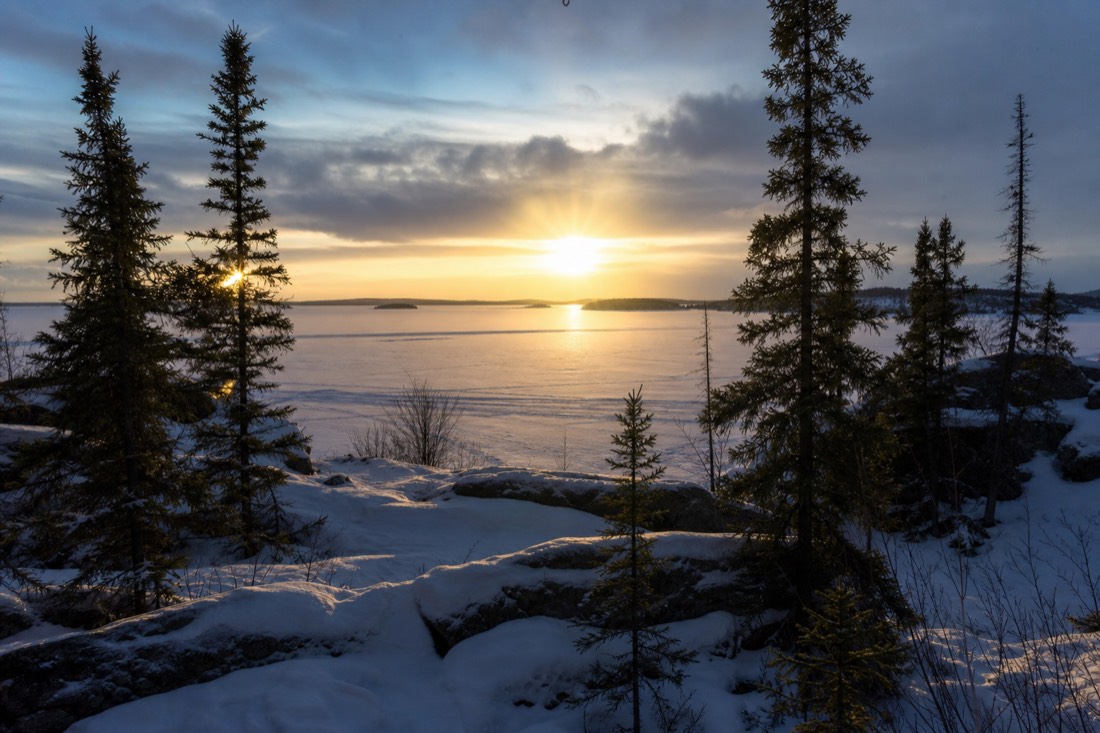
Temperature is what everyone asks about and, honestly, the smaller of the two problems. You can dress for minus 30. You cannot dress for darkness. In the depth of December the sun clears the horizon at 9:57am and is gone again by 3:07pm, which the December daylight table sets out hour by hour, and that gives the walk one usable window with no margin for a slow breakfast. Come in June and the opposite problem appears: there is so much light that visitors wander the lanes at ten at night and forget to eat.
Here is the working calendar I use when people ask which month to give this neighbourhood.
| Month (mid-month) | Sunrise to sunset | Average daily high | What is happening down at the water |
|---|---|---|---|
| December | 9:57am to 3:07pm | -18.0C | The bay locks up, and the Dettah ice road usually opens across it late in the month |
| January | 9:42am to 3:52pm | -21.6C | Full winter: ice road running, houseboats frozen in place, the staircase under snow |
| March | 7:51am to 7:41pm | -10.6C | Almost 12 hours of light, and SnowKing's snow castle stands on the frozen bay all month |
| April | 6:08am to 9:06pm | 0.3C | The ice road closes around mid-month, the lanes turn to slush and bare rock |
| June (solstice) | 3:34am to 11:44pm | 18.6C | Open water, float planes working the docks, and biting insects that are no joke |
| August | 5:37am to 9:45pm | 18.4C | The Old Town Ramble & Ride takes over the neighbourhood on the long weekend |
| October | 8:21am to 6:24pm | 1.5C | Freeze-up weather, with lake ice normally setting in through November |
Two things stay fixed whatever the month: Bullocks' Bistro trades year-round, and the Wildcat Cafe's 1937 log cabin is a summer proposition, so half the year you admire it from the path. Everything else moves. March is the month I push hardest for a first visit, because you get a long day, aurora nights that still start early enough to be humane, the ice road at its most solid, and the snow castle sitting out on the bay, which the festivals guide covers properly. August is the sleeper: warm, alive, and the one weekend when Old Town throws a party for itself.
Where do you get the best photographs in Old Town?
From the top of the Rock, looking down on the bay and its roughly 50 houseboats. In December and January that view turns gold and then blue in the middle of the afternoon, because the sun sets at 3:07pm mid-December. Aurora is the exception: town light spoils it, which is why the tours drive out.
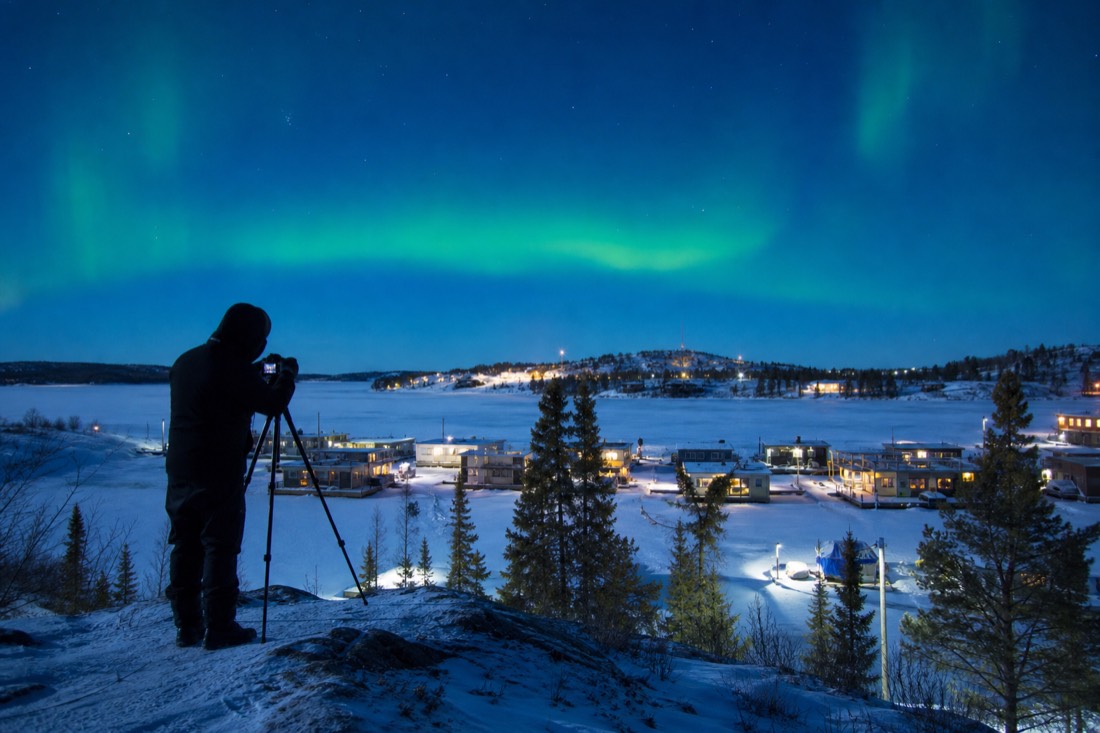
Winter photographers get a gift here and rarely realise it in advance. Blue hour, the thing landscape shooters chase, arrives in the middle of the afternoon rather than at the end of a long evening, so you can shoot the best light of the day on a full stomach and still be back at the hotel before dinner. The bay reads as a flat white field at that hour, the plowed ice-road line cuts across it, and the houseboats sit in it like a small stranded town.
| The shot | Where I stand | When I go | What usually goes wrong |
|---|---|---|---|
| The bay, the ice line and the houseboats | Top of the Rock, beside Pilot's Monument | The last hour of light, which in January means around 3pm | Wind. It is the most exposed point in the neighbourhood, and bare hands last minutes |
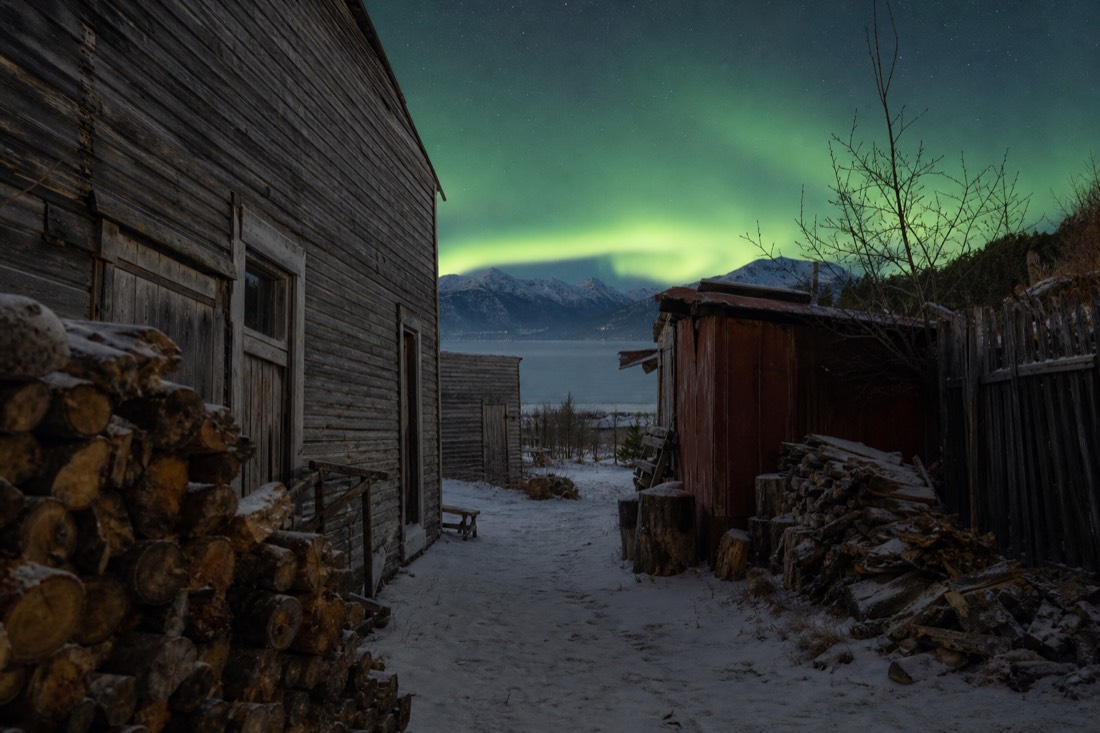
| Gold-rush shacks, woodpiles, boats in yards | Street level in the shoreline lanes | Any time the sun is low, so most of a winter day | Wires and parked trucks. Move two steps and the frame cleans up |
| The Ragged Ass Road sign | The street itself, shot low | Overcast days, when the sign is not backlit | Everyone shoots it flat on. The cabins behind it are the actual picture |
| Float planes working the water | The float-plane base and the water's edge | Summer evenings, with light holding past 9pm | Waiting. A takeoff comes when it comes |
| Aurora | Not in Old Town. Out of town, away from the streetlights | Roughly 10pm to 2am, in season | Town glow, and cold-killed batteries. Keep spares in an inside pocket |
The last row is the one that saves people a wasted night. Yellowknife is small and its light dome is modest, but Old Town still sits inside it, and a faint display that would look fine from a dark lake looks washed and grey from the shoreline here. That is precisely why every aurora operator in town drives away from the streetlights: the flagship hunt runs three separate viewpoints outside the city with a photographer along and free photos afterwards, which is how it holds 4.8 across 399 reviews. Gear talk belongs elsewhere, so the settings that actually work in this cold, manual mode, a wide aperture, ISO between 800 and 3200 and exposures of five to fifteen seconds, sit in the northern lights photography guide.
How do you fit Old Town into a day that ends on an aurora tour?
Build the day backwards from the pickup. Aurora tours collect between 9:30 and 10:30pm and return between 1:30 and 2:30am, so the shape that works is a free indoor stop first thing, Old Town through the middle of the day, a late sit-down lunch, then a proper rest before dark.
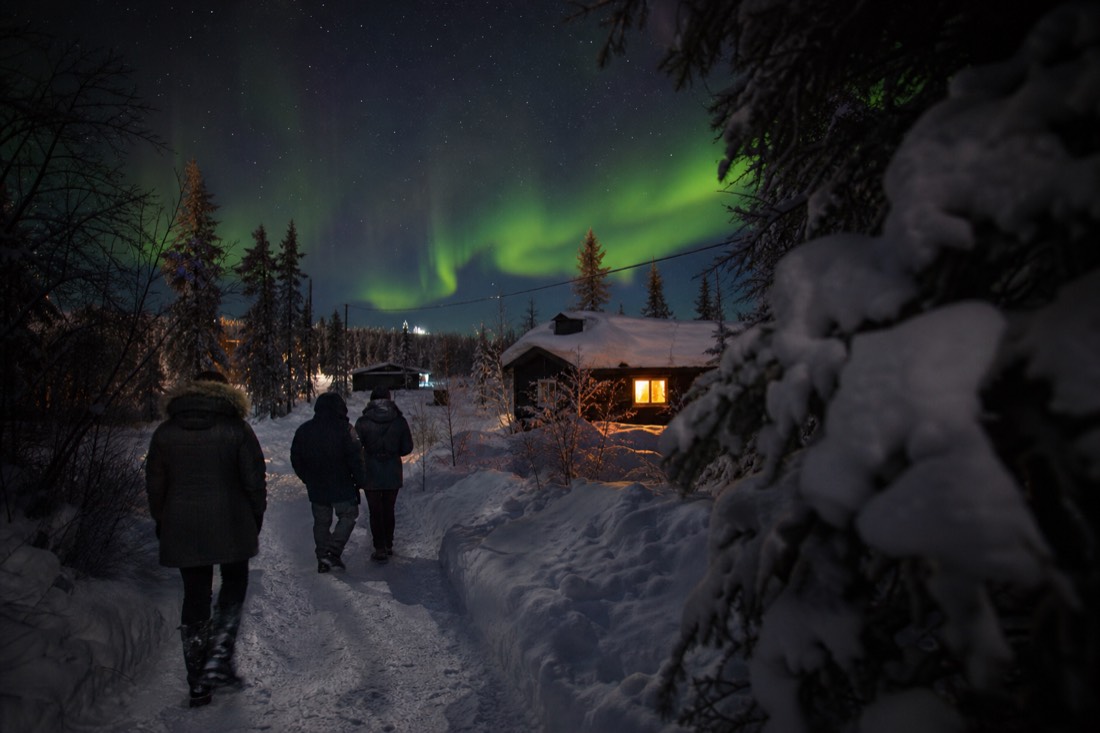
Almost every winter visitor here is running a nocturnal schedule and trying to sightsee on top of it. The mistake I see most often is a full outdoor day that leaves people wrecked by nine at night, right when the good part starts. Below is the running order I give my own groups, built from guiding here since 2022 and something over a thousand visitors. The clock times against sunrise and sunset are real, mid-January figures. The allowances between them are mine, generous by design, and a judgment call rather than a rule.
| Clock | Where you are | Why I put it there |
|---|---|---|
| 9:42am | Breakfast downtown while the sun comes up | Mid-January sunrise. There is no earlier start worth having |
| 10:00am to 11:15am | Prince of Wales Northern Heritage Centre, free, open Tue to Sun 10am to 5pm | A warm indoor hour while the light is still thin, and it opens at 10 |
| 11:30am | Walk or drive down the hill into Old Town | About 20 minutes on foot, roughly 5 by car |
| 11:45am to 12:45pm | Ragged Ass Road, the shoreline lanes, the galleries | Flat ground first, while you are still warm and interested |
| 12:45pm to 1:30pm | The staircase and the top of the Rock | The coldest, most exposed stretch. Better before lunch than after |
| 1:30pm to 3:00pm | Late lunch at Bullocks' Bistro, year-round | The thaw-out. It gets busy, so a late sitting is the easier one |
| 3:52pm | Sunset from the shore or the ice road edge | Mid-January sunset, and the best light of the day is free |
| 4:30pm to 9:00pm | Hotel, hot shower, sleep, then dress for the cold | The part people skip, and the part that decides how the night goes |
| 9:30pm to 10:30pm | Aurora pickup window | Fixed by the operators, not by you. Everything above bends around it |
Two caveats before you copy that out. The Heritage Centre closes on Mondays, so a Monday plan flips: do Old Town first and keep the museum for another day. And in summer the whole structure collapses in the best way, because there is no aurora to be up for and the light runs past ten at night, which turns the walk into a long unhurried evening instead of a scheduled block. For the multi-day version of this, with aurora nights, rest days and the drive-out stops threaded together, the Yellowknife aurora itinerary does the sequencing across a whole trip.
What is the climb to Pilot's Monument like, and what do you see from the Rock?
Pilot's Monument, the Bush Pilots Monument, sits on the rock outcrop in the middle of Old Town and is reached by a wooden staircase. The climb is short, a few minutes, and steep enough to be felt. The reward is a 360-degree view over Yellowknife Bay, the houseboats, the float-plane docks and the whole old neighbourhood underneath you.
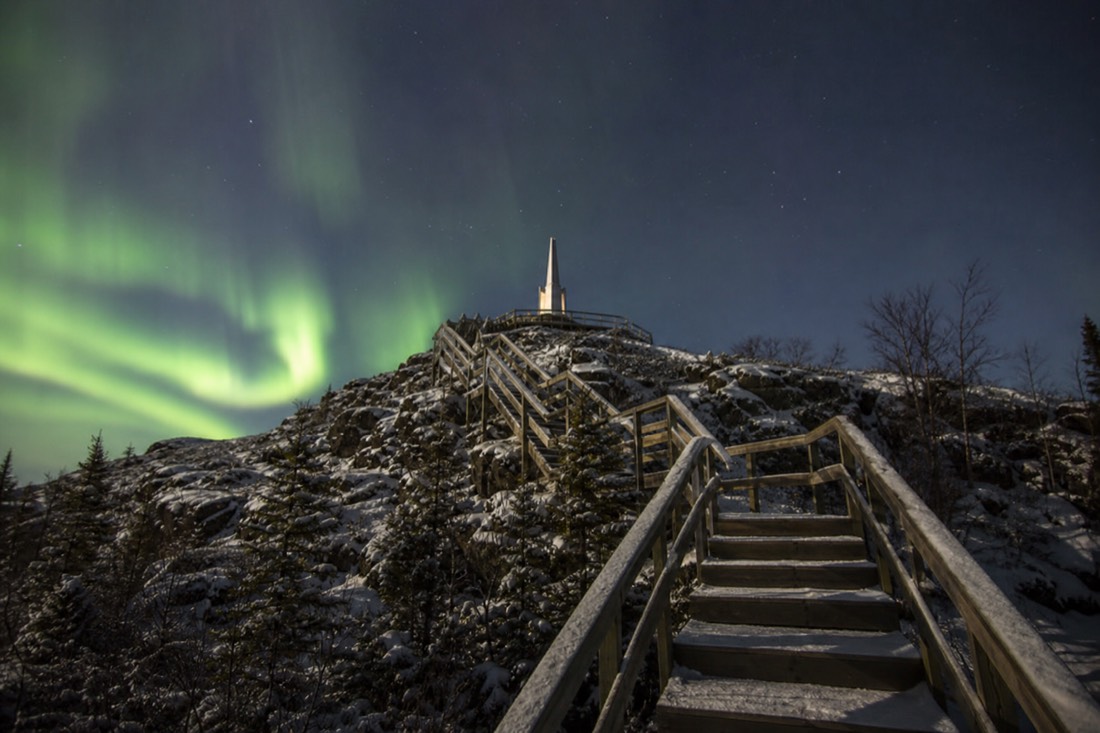
This is the single best free thing in the city, and it costs nothing but the steps. The territory keeps a page on the Bush Pilots Monument explaining why the flyers earned a monument at all, which is worth two minutes of reading before you climb. From the top the whole geography finally makes sense: downtown up on its plateau behind you, the old camp scattered below, and Great Slave Lake running out past the last island until you lose the far shore. Roughly 50 houseboats sit out there, a floating neighbourhood with its own rules and its own logistics, which I wrote about properly in the houseboats of Yellowknife Bay.
Now the honest winter caveat, because nobody else seems willing to give it. That staircase is wooden, it is exposed, and from November through April it collects snow and ice. It stays walkable and people use it all winter, but take it slowly, use the handrail, and wear boots with actual grip rather than fashion soles. The bigger issue at the top is wind: the Rock is the most exposed point in the neighbourhood, and at minus 30 a few minutes of standing still with your face uncovered is genuinely unpleasant. Cover the skin, take the photos, go back down. On calm January afternoons, with the low sun sitting on a white bay, it is the finest view in the Northwest Territories and the coldest twenty minutes of your day at the same time.
How does Yellowknife Old Town change between summer and winter?
Completely. In summer the bay is open water, float planes work the docks, the Wildcat Cafe opens its 1937 log cabin, and the light barely quits. In winter the same bay is a solid white plain with houseboats frozen into it and a public ice road running across it toward Dettah.
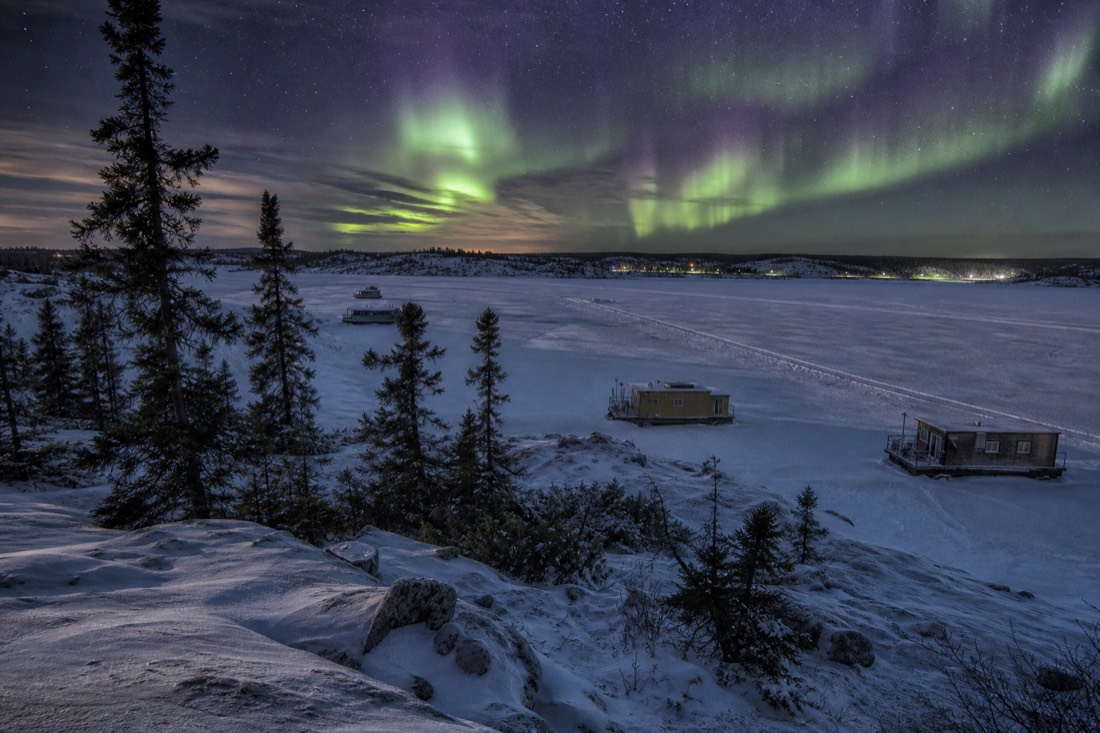
I bring repeat visitors down here twice for exactly this reason. The neighbourhood is the same buildings and a different world. The Dettah ice road starts from the edge of Old Town and runs across the frozen bay to the Yellowknives Dene community, typically from late December to mid-April, and standing on the shore watching ordinary cars drive onto a lake is the moment most people finally believe where they are. The rules that keep that road safe, and the truth about the television truckers' route, are laid out in the ice roads guide.
| Summer Old Town | Winter Old Town | |
|---|---|---|
| The bay | Open water, canoes, boats, working float planes | Frozen solid, a white plain out to the horizon |
| The houseboats | Floating, reached by boat, laundry on the lines | Frozen in place, reached on foot or by ski-doo |
| The ice road | Nothing there, it is a lake | Public road to Dettah, typically late December to mid-April |
| The Wildcat Cafe | Open, seasonal, the log cabin at its best | Closed, look at it from outside |
| Bullocks' Bistro | Open | Open, year-round |
| The staircase up the Rock | Bare wood, easy | Snow and ice, grip boots, handrail, take it slow |
| Daylight for the walk | Around 20 hours at the June solstice, walk it at 10pm | About 6 hours in mid-January, sunrise near 9:42am |
| What to wear | A jacket, sometimes a t-shirt | Parka, insulated boots, face cover, no exposed skin |
If you only get one season, pick the one that matches your trip. Aurora travellers land in the dark months and get the ice road, the frozen houseboats and a walk that has to be timed around a short day. Summer visitors get float planes, open galleries and light that lets them wander at ten at night. Neither is the correct answer, and the neighbourhood is honestly better in whichever one you are standing in.
Where do you eat and drink in Old Town Yellowknife?
Two Old Town institutions carry the neighbourhood: Bullocks' Bistro, open year-round and famous for its Great Slave Lake fish fry, and the Wildcat Cafe, a 1937 log cabin that opens seasonally in summer. Mains around town commonly run CA$15 to CA$30, and Yellowknife is an expensive place to eat.
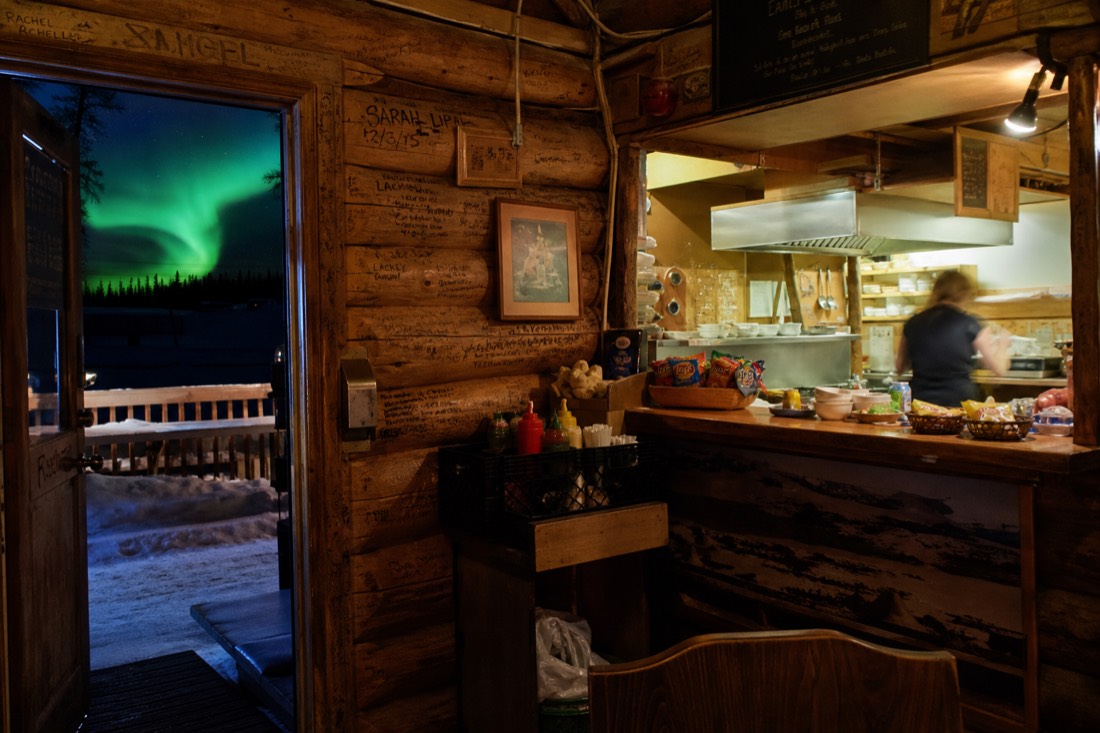
Let me be blunt about cost, because visitors arrive surprised. Everything up here comes a long way by truck or plane, and the prices reflect that. Mains commonly landing in the CA$15 to CA$30 band is the honest working range for the town, and lake fish is the thing worth paying for: it comes out of the water below you rather than off a freight route. Budget the meal into the walk rather than treating it as an extra.
| Place | Known for | Season | Where |
|---|---|---|---|
| Bullocks' Bistro | The Great Slave Lake fish fry, the town's signature meal | Year-round | Old Town waterfront |
| The Wildcat Cafe | A 1937 log cabin, the most photographed restaurant in the North | Summer only | Old Town |
| Copperhouse Eatery + Lounge | Modern comfort food built on local ingredients | Year-round | In town, minutes from Old Town |
| Birchwood Coffee Ko | Coffee, the warm-up stop before or after the walk | Year-round | In town, minutes from Old Town |
| The Woodyard Brewhouse & Eatery | Local beer brewed in the Northwest Territories | Year-round | In town, minutes from Old Town |
Winter changes the plan whether you like it or not, since the Wildcat's summer-only opening means half the year's visitors never eat inside that cabin. Bullocks' carries the season, and it stays busy, so treat a walk-in at peak dinner time as optimistic. The fuller ranking of where to eat in the city sits in the best restaurants guide, and the first-person version of eating my way from the cabin to the fish fry is in eating in Yellowknife.
Is a guided city tour better than walking Old Town yourself?
Walking it yourself is free, flexible and genuinely good. A guided tour buys three things the walk cannot: the stories that make the buildings mean something, a heated vehicle between stops in winter, and the sights beyond walking range, including the Legislative Assembly and the Heritage Centre.
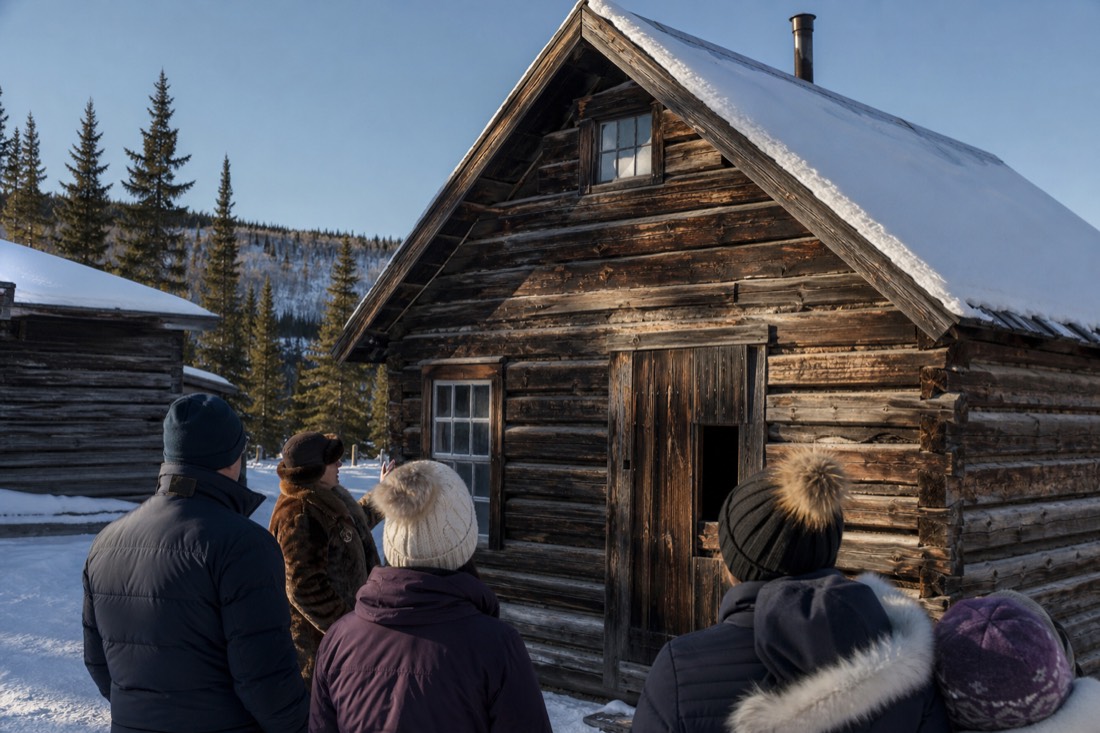
I guide for a living, so take the bias as read and here is the fair version anyway. In July, with good shoes and a curious streak, the self-guided loop above is a lovely afternoon and you lose nothing. In January, at minus 30, a walking tour of Old Town becomes an endurance exercise, and the guided version turns the same stops into something you actually enjoy. Both city tours in town stop in Old Town, both take in the Heritage Centre and the Legislative Assembly, and the free indoor stops are the reason a winter tour works: the vehicle and the museums break the cold into manageable pieces. The Heritage Centre deserves its own visit either way, as the Prince of Wales Northern Heritage Centre guide explains.
| Walking Old Town yourself | Guided city tour | |
|---|---|---|
| Cost | Free | Live-priced on the listing |
| Time | Your own pace, about 2 hours | 1 to 4 hours, or 3 hours fixed |
| The stories | You bring your own, or read first | Told on the spot by locals |
| Winter comfort | Fully exposed, the whole time | Heated vehicle between stops |
| Stops beyond Old Town | Only what you can walk to | Legislative Assembly, Heritage Centre, wildlife gallery |
| Group size | Yours | Max 23 on the 5.0-rated tour, max 14 on the small-group one |
| Booking risk | None | One is non-refundable, the other cancels free up to 24 hours |
The 5.0 rating across 27 reviews on the city tour with the wildlife gallery is the highest in town, and it flexes from one hour to four, which suits travellers with an awkward gap before an aurora pickup. The alternative is smaller, three hours, capped at 14, holds 4.9 across 25 reviews and cancels free up to 24 hours ahead. Weigh them side by side on the city tours page, then check live availability and prices on Viator for the 5.0-rated option, remembering it is non-refundable, so book it for a day you are certain about.
Give Old Town an unhurried half day and it stops being a photo stop. Climb the stairs, stand in the wind long enough to pick out the houseboats, walk the lanes where the shacks still have woodpiles against them, and finish with lake fish. That sequence is the closest thing this city has to a signature afternoon, and it works in every month of the year, provided you dress for the one you turn up in.