Is Yellowknife Safe? An Honest Answer From a Local Guide
Guests ask me this quietly at pickup, usually after their first walk downtown. The honest answer has less to do with people than with minus 25 and frozen water.
 Written with Thomas Beaulieu, Yellowknife tour guide & northern lights specialist
Short answer
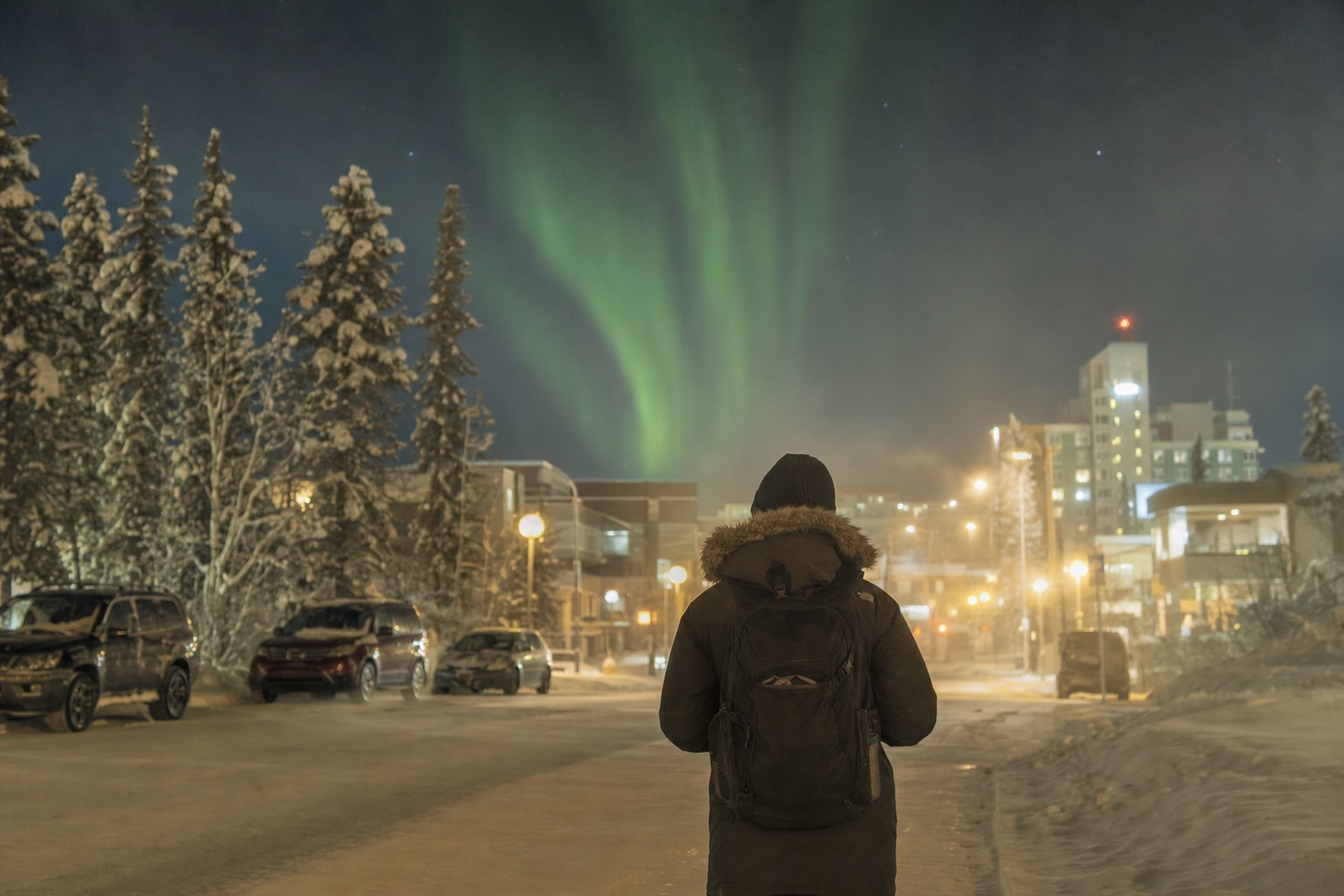
Yellowknife is generally safe for tourists with normal city sense. Downtown social struggles are visible and can feel uncomfortable, but they rarely pose danger to visitors. The real risks here are cold exposure and lake ice, which is why safety in Yellowknife is mostly about winter competence, not crime.
The question usually arrives in a lowered voice on the second morning, after a first walk through downtown: is it safe here? I have picked guests up from every hotel in this city since 2022, at every hour an aurora hunt demands, so I will give you the answer I give them. It has two parts, and the part that deserves your attention is not the one most people expect.
Is Yellowknife safe for tourists?
Yes, generally, with the same city sense you would use anywhere. Trouble involving visitors is rare. Downtown has visible social struggles that can feel uncomfortable to walk past, but discomfort and danger are different things. The risks that actually put travelers in hospital here are cold exposure and thin lake ice, not people.
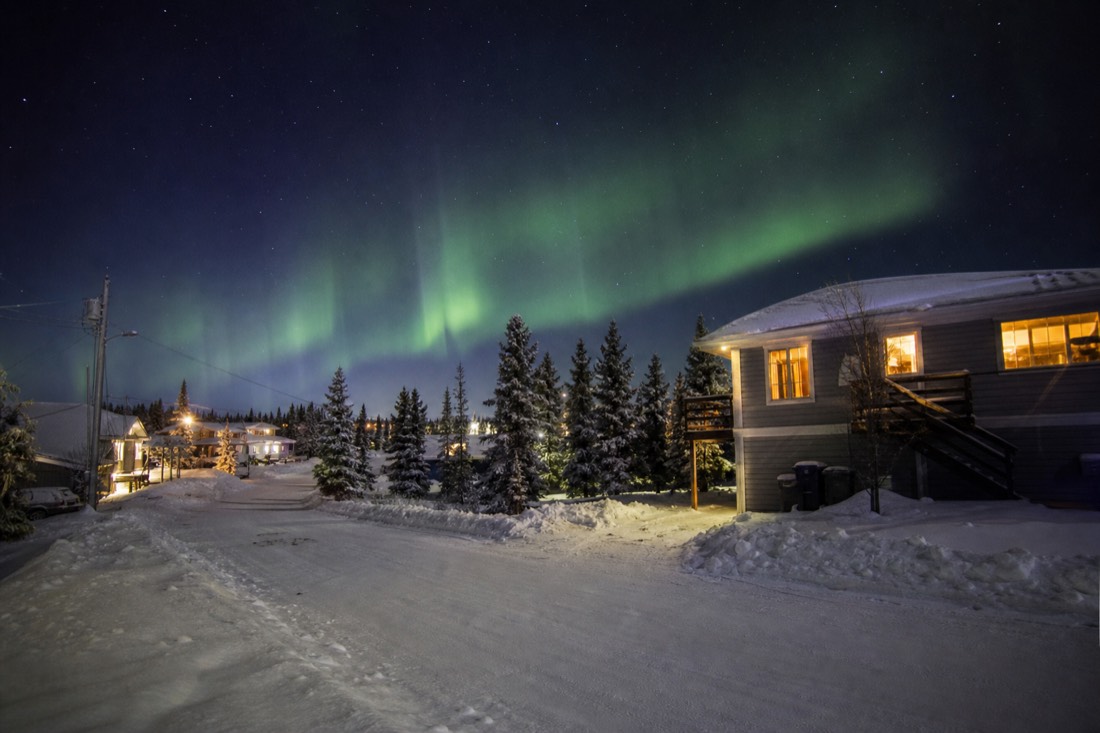
Some context helps. This is a territorial capital of around 20,000 people where you will recognize your waiter from yesterday's tour. Canada's formal reference for travelers is the government advisories hub at travel.gc.ca, and Yellowknife asks nothing special of you beyond what any Canadian city does: watch your belongings, stay aware at night, keep to lit streets. What it does demand, uniquely, is respect for winter. That is where this guide will spend most of its time, because that is where visitors actually get hurt.
What will you actually notice downtown?
A small working capital with a compact core, and yes, visible homelessness and addiction on a few central blocks. It can read as rough on first impression. In four years of nightly hotel pickups, the problems my guests bring back are cold fingers and missed alarms, not encounters with people.
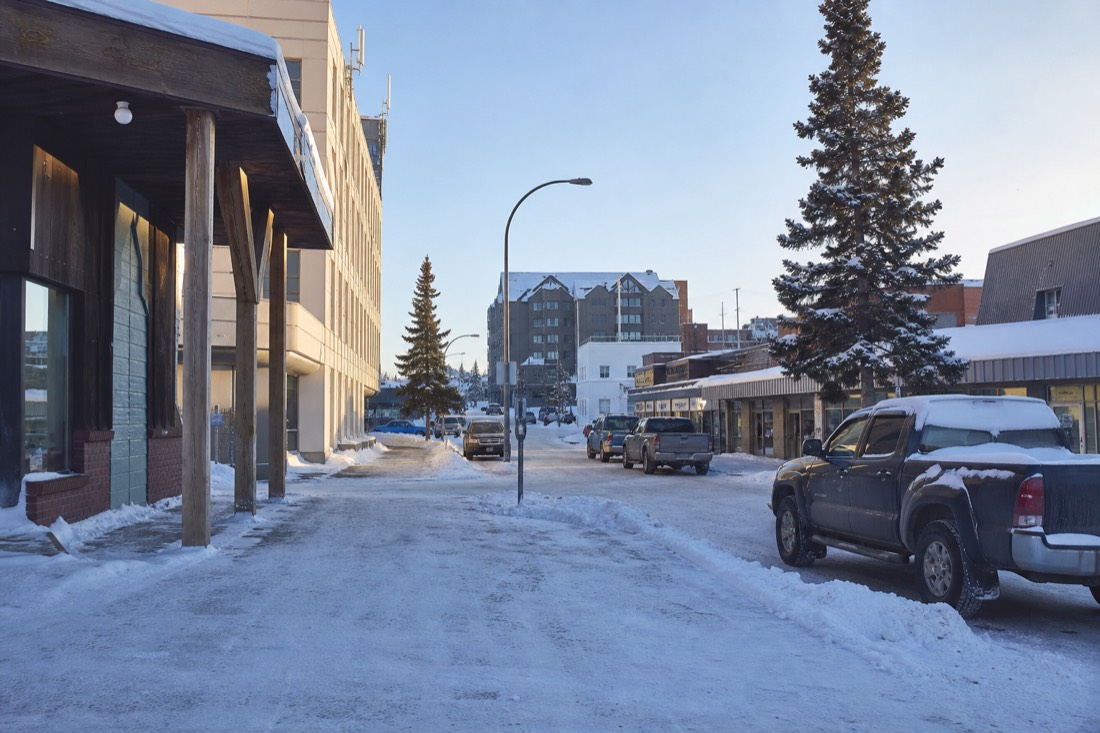
I will not gloss this, because you will see it within an hour of arriving. Like many northern towns, Yellowknife carries hard social struggles in plain sight, concentrated downtown. People may ask you for change. Someone may be shouting at nobody in particular. It is real, it is sad, and it deserves more compassion than fear: it is very rarely aimed at visitors. Walk with purpose, decline politely, and carry on. Guests who arrive from big cities barely register it. Guests from quiet suburbs sometimes need this paragraph, which is why it is here.
The flip side of a small town is that nothing is anonymous and nowhere is far. Your hotel, the restaurants, and the tour pickups all sit within a few walkable blocks, and the evening streets around them are lit and regularly trafficked by other travelers doing exactly what you are doing.
What are the real risks in Yellowknife?
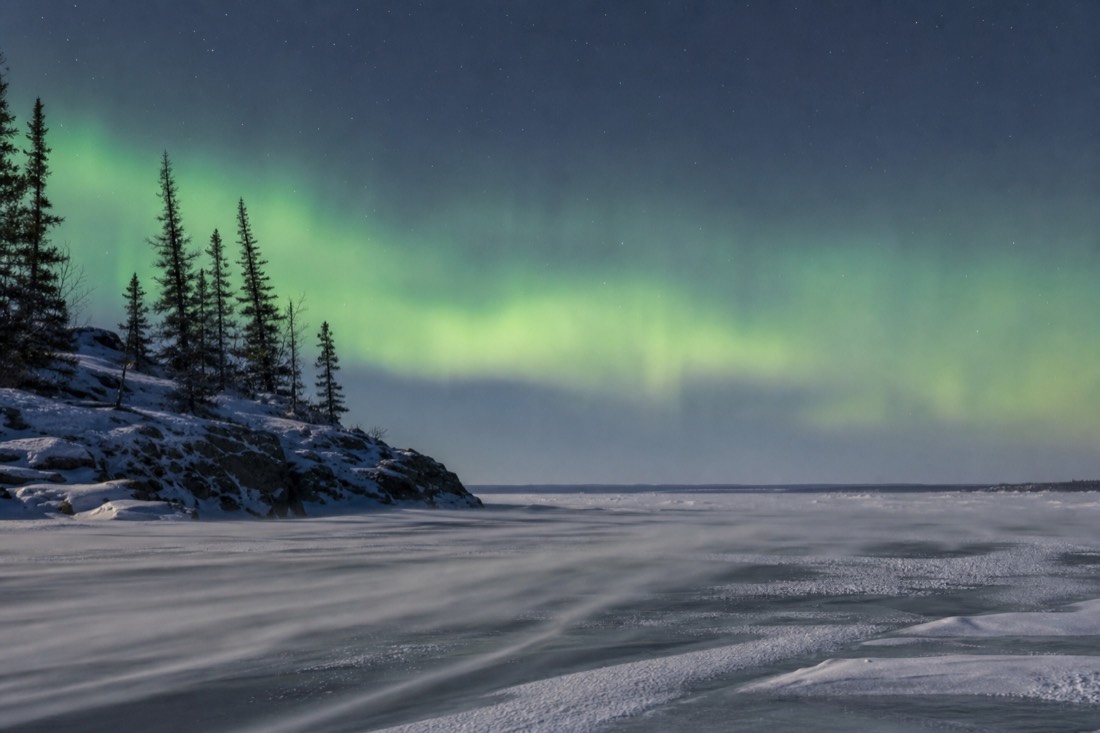
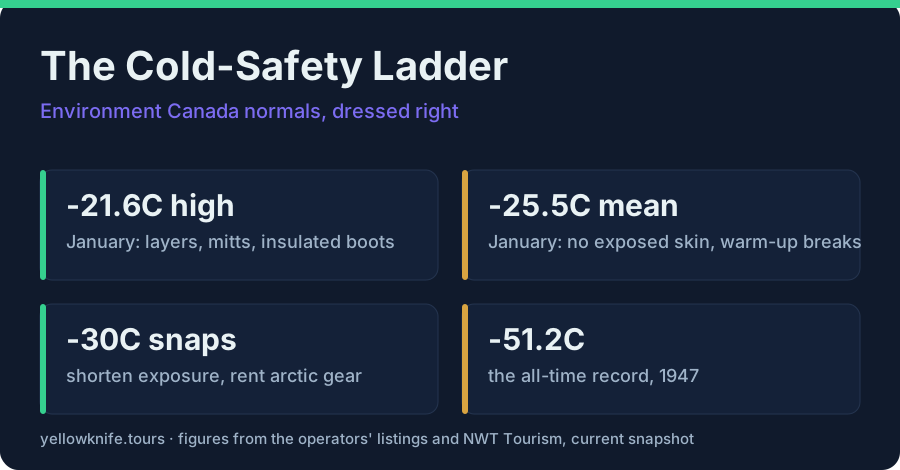
Cold exposure and lake ice, in that order, with winter driving third. January highs average about minus 21.6, the daily mean sits near minus 25.5, and nights average around minus 29. Water freezes hard enough to drive on by midwinter and drowns people at the edges of the season. Every serious safety habit here flows from those two facts.
| Risk people ask me about | How it actually rates for visitors | What to do about it |
|---|---|---|
| Street crime downtown | Low; visible social struggles, rarely any danger to travelers | Normal city sense, lit streets at night, polite refusals |
| Cold exposure | The real one; January nights average around minus 29 | Dress in layers, cover skin, rent arctic gear if unsure |
| Lake and river ice | The other real one, worst early and late in the season | Follow the city's ice-safety guidance, never freelance onto ice |
| Winter roads | Manageable; rentals come winterized, ice roads have low limits | Slow down, plug in the block heater, drive rested |
| Wildlife | Minor in town; ravens and the odd fox, black bears on summer trails | Give animals space, follow territorial wildlife guidance |
Notice what leads that table. The safety conversation in Yellowknife is mostly a winter-competence conversation. Get the clothing and the ice rules right and you have handled the two hazards that matter.
How do you stay safe in the cold?
By dressing for the number on the thermometer, not the one in your imagination. Layers, covered skin, insulated boots, mitts over gloves, and warm-up breaks turn minus 25 into an experience instead of an emergency. Several operators in town rent full arctic clothing, parka to boots, so nobody has to buy gear for one trip.
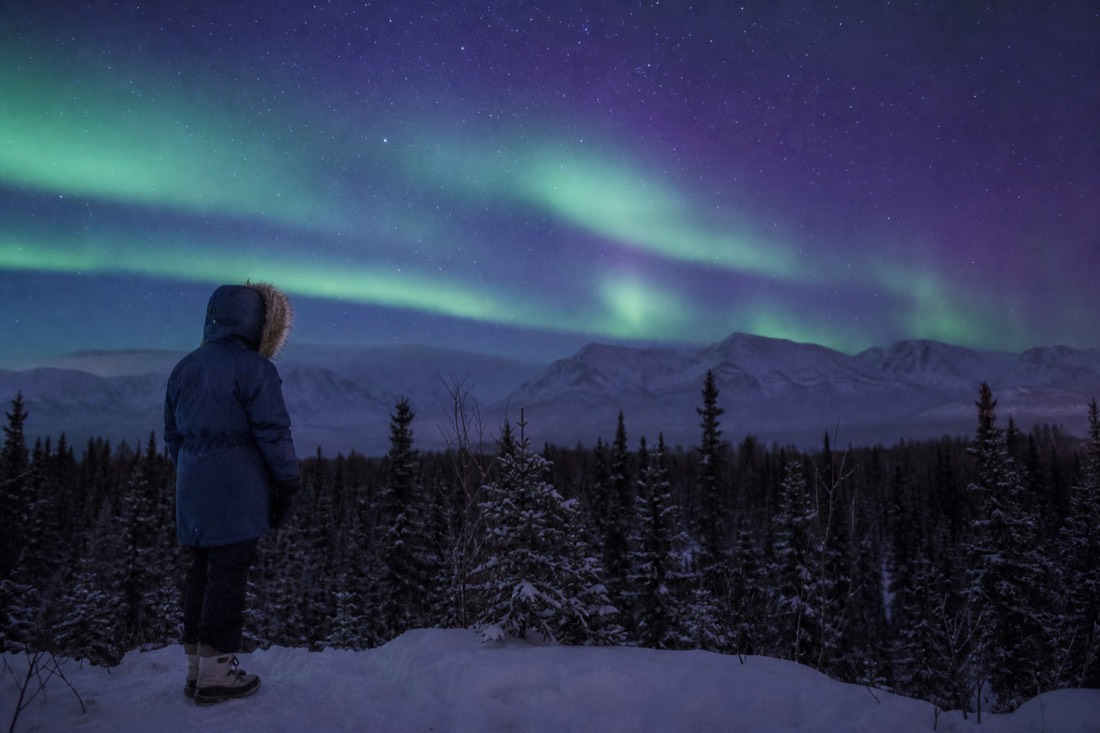
The cold here is a ladder, not a wall, and each rung has its own rules. The bands below use Environment Canada's monthly normals for the city, so you can match them to your travel dates.
| Temperature band | Where it falls in the year | How to handle it |
|---|---|---|
| Minus 10 to minus 17 | November (mean -12.6) and March (mean -16.6) | Full winter kit, but exposed skin is fine in short stretches |
| Minus 18 to minus 25 | December (mean -21.8), February (mean -22.7), January days (high -21.6) | Layered everything, insulated boots, mitts beat gloves |
| Minus 25 to minus 29 | January overall (mean -25.5) and its nights (low -29.4) | Cover every centimetre of skin, take warm-up breaks, watch each other's faces for frostnip |
| Minus 30 and below | Cold snaps, every winter | Shorten time outside, keep a heated base close, rent the arctic gear |
| Minus 51.2, the 1947 record | History, not forecast | Not a planning number, but it explains why locals never bluff the cold |
That record is real, by the way: minus 51.2 without wind chill, set in 1947. For what the modern numbers feel like on your face, read what minus 30 actually feels like, then build your kit with what to wear in a Yellowknife winter. The full month-by-month picture lives in how cold does it get in Yellowknife.
When is the lake ice safe, and when is it not?
Trust ice with official traffic on it and distrust everything else. By midwinter the bay carries a public road, the roughly 6.5 km Dettah ice road, typically open from late December to mid-April. Early and late season are the dangerous windows: never walk onto ice in freeze-up or thaw, full stop.
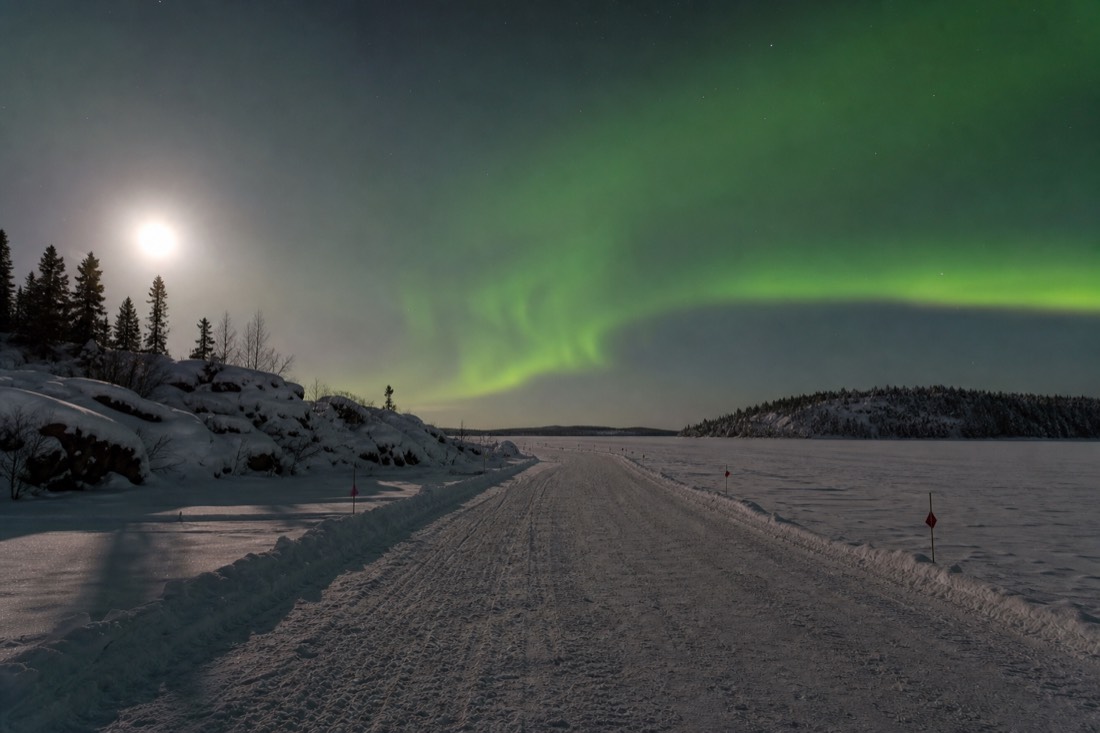
Great Slave Lake freezes into something astonishing: a surface solid enough for cars, fishing huts, and a snow castle. That solidity arrives on a schedule, and the city publishes exactly how to respect it on its ice-safety information page. Read it before you set foot on anything frozen. The short version I give guests: mid-season ice with an open official road and daily local traffic is the North working as designed. A tempting white surface in November or late April is how visitors become news stories.
The frozen roads themselves have their own rules and their own myths, including which ones tourists are actually allowed to drive. I untangle all of that in Yellowknife ice roads.
Is it safe to be out at midnight chasing the aurora?
Yes, and the easiest version is the guided one. Aurora tours collect you from your hotel around 9:30 to 10:30pm, drive you in heated vans, and return you between 1:30 and 2:30am. Guided, heated, and driven removes every genuine night risk at once: no dark self-drive, no standing lost in the cold, no guessing at ice.
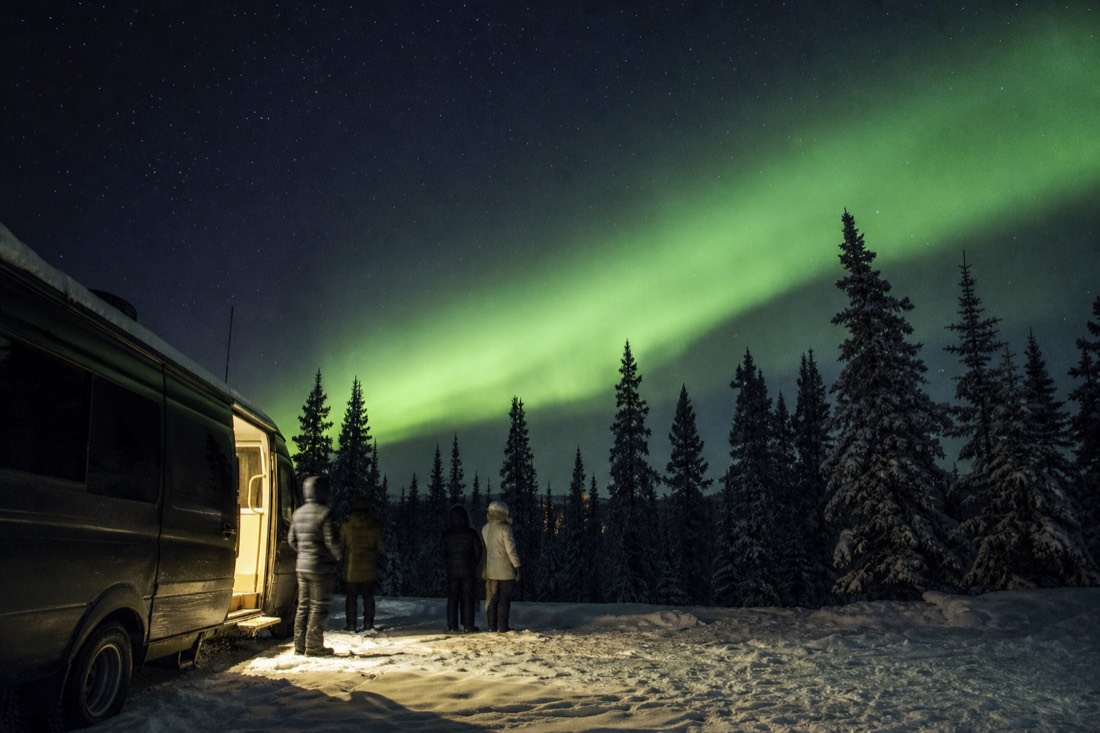
The night hours are when the safety questions stack up: deep cold, darkness, unfamiliar roads, frozen water. A good tour dissolves the whole stack. The driver knows the highways, the van stays warm between viewpoints, and nobody has to judge ice or fight sleep at 2am. This is the one purchase on this site I recommend partly on safety grounds, not just spectacle. Compare the guided nights on the northern lights tours page, then check live availability and prices on Viator for the flagship hunt, which runs 4.8 across 399 reviews with hotel pickup and a photographer.
For a night out on your own steam, downtown dinners and a walk back to the hotel, the rules are unremarkable:
| Do | Don't |
|---|---|
| Keep to lit, trafficked streets between venues | Shortcut across dark lots or any frozen shoreline |
| Keep your phone charged and inside a warm pocket | Let the battery die in the cold, it drains fast below minus 20 |
| Dress for the walk home, not the restaurant | Step outside at minus 25 in the outfit you flew in |
| Tell someone your plan if you self-drive out of town | Drive dark winter highways drowsy at 1am |
| Decline politely and keep moving if approached | Escalate, photograph, or lecture; just walk on |
So, is Yellowknife safe? Safe enough that in four years my pre-tour safety briefing has never once been about people. It is about zipping the parka to the chin, keeping mitts on for the camera, and staying off pretty ice in the wrong month. Master those and the scariest thing left in this town is the restaurant bill.