Yellowknife in February 2027: Full Winter Without January's Bite
February keeps every winter activity on the board while handing back three hours of daylight and roughly three degrees on the thermometer. Here is the month planned properly.
 Written with Thomas Beaulieu, Yellowknife tour guide & northern lights specialist
Short answer
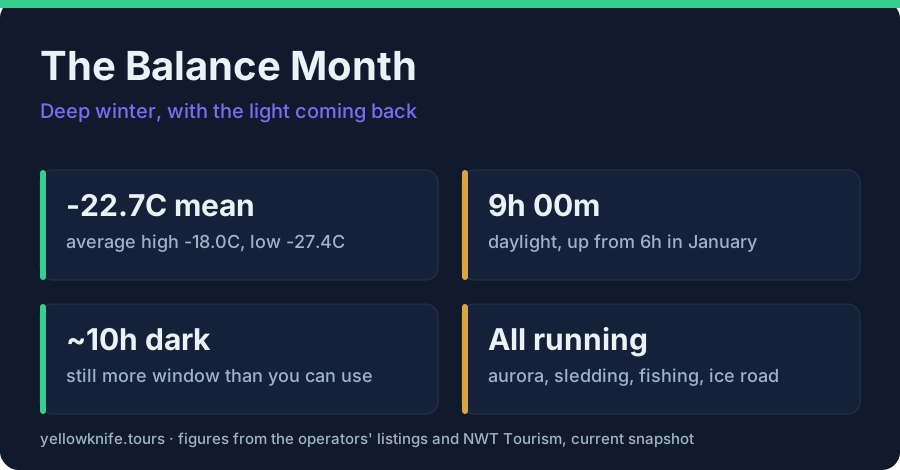
February is the balance month of Yellowknife's deep winter. The daily mean sits near minus 22.7 against January's minus 25.5, daylight on the 15th runs from 08:21 to 17:21, and about ten hours of true darkness still remain for aurora. Dog sledding, ice fishing, snowmobiling, aurora hunts and the Dettah ice road are all operating.
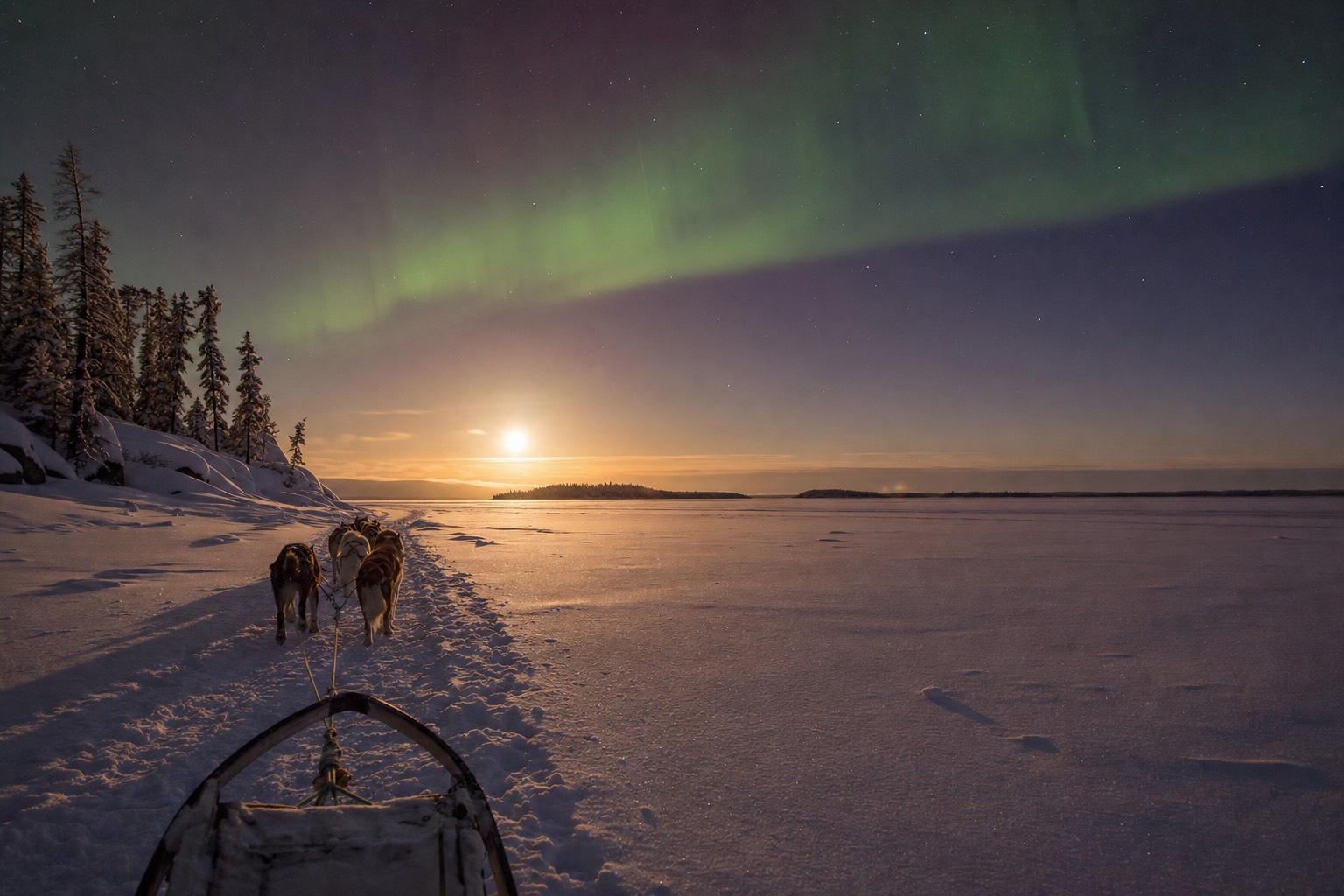
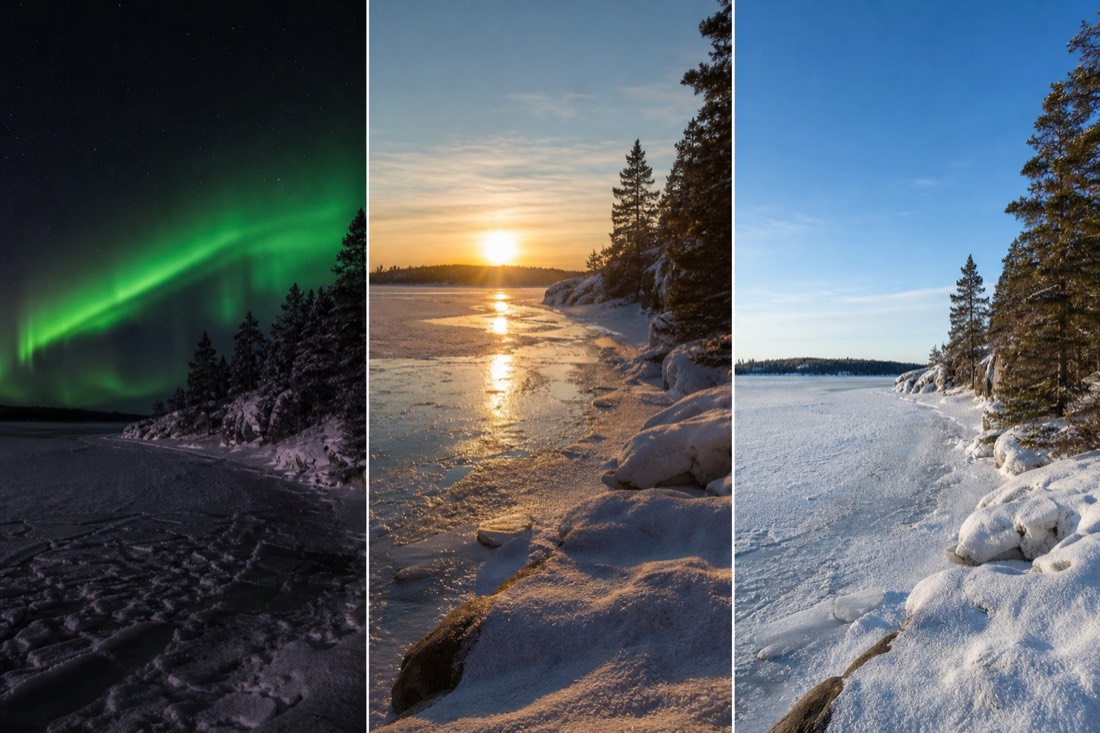
The tell is the drive home from a hunt. In January you leave your hotel in the dark and come back in the dark and never once see the lake you have been standing on. By mid-February the sun is still above the treeline when the teams are harnessed at four, and guests start asking me what that shape out on the ice is. It is the bay. They had been on it three nights without seeing it.
What is February in Yellowknife actually like?
Full deep winter, softened at both ends. The daily mean sits near minus 22.7 against January's minus 25.5, daylight on the 15th runs 08:21 to 17:21, and roughly ten hours of true astronomical darkness remain. Every winter tour operates and the Dettah ice road is open.
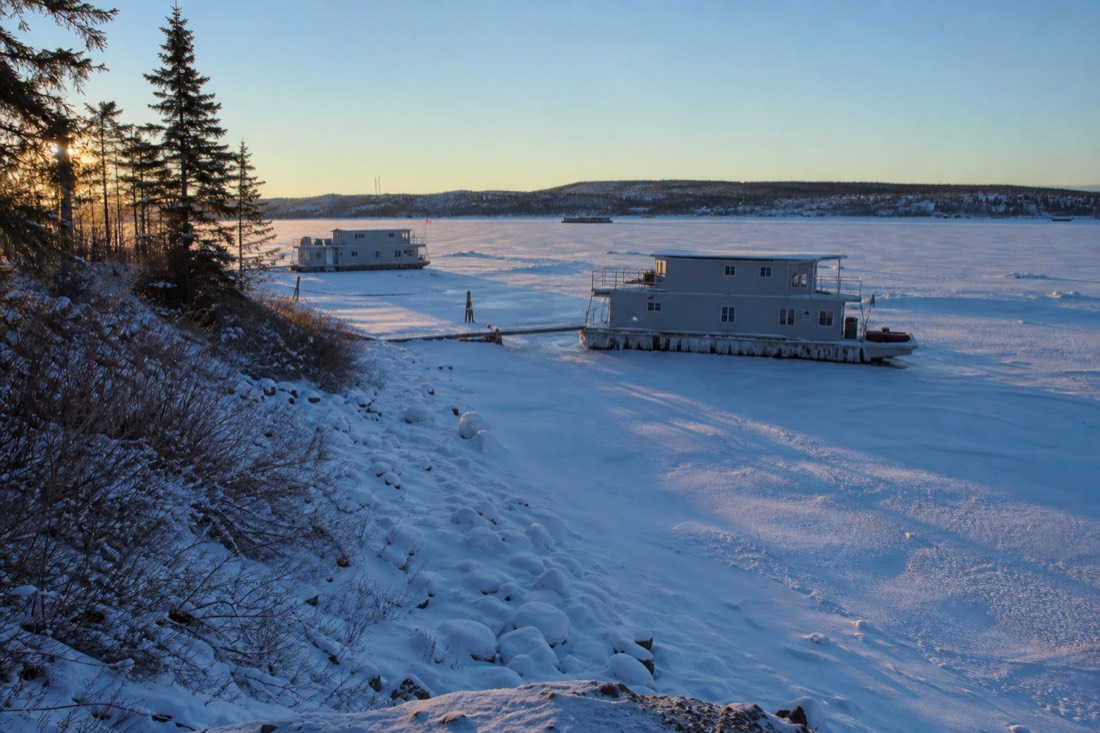
Nothing has been taken off the winter list yet. The snowpack is deep, lake ice is at its thickest and most predictable, the kennels run full schedules, and the aurora season published by NWT Tourism runs mid-November to early April, putting February squarely in the middle. What has changed since January is your capacity to be outside, and your ability to see what you are looking at.
A trip here is really two trips stacked on each other, a daytime one and a nighttime one, and January quietly cancels most of the first. February gives it back. If you want the whole calendar side by side instead of one month in depth, the month-by-month weather guide does the comparing.
How cold is Yellowknife in February?
Cold, but measurably less brutal than January. February normals run a daily mean of minus 22.7, an average high of minus 18.0 and an average low of minus 27.4. January's equivalents are minus 25.5, minus 21.6 and minus 29.4. Real arctic clothing is still mandatory, not optional.
Here is the softening trend in full, with January behind and March ahead:
| Normal (C) | January | February | March |
|---|---|---|---|
| Daily mean | -25.5 | -22.7 | -16.6 |
| Average high | -21.6 | -18.0 | -10.6 |
| Average low | -29.4 | -27.4 | -22.5 |
| Daylight on the 15th | 6 h 10 m | 9 h 00 m | 11 h 50 m |
| True astronomical darkness | about 12 h | about 10 h | about 7 h |
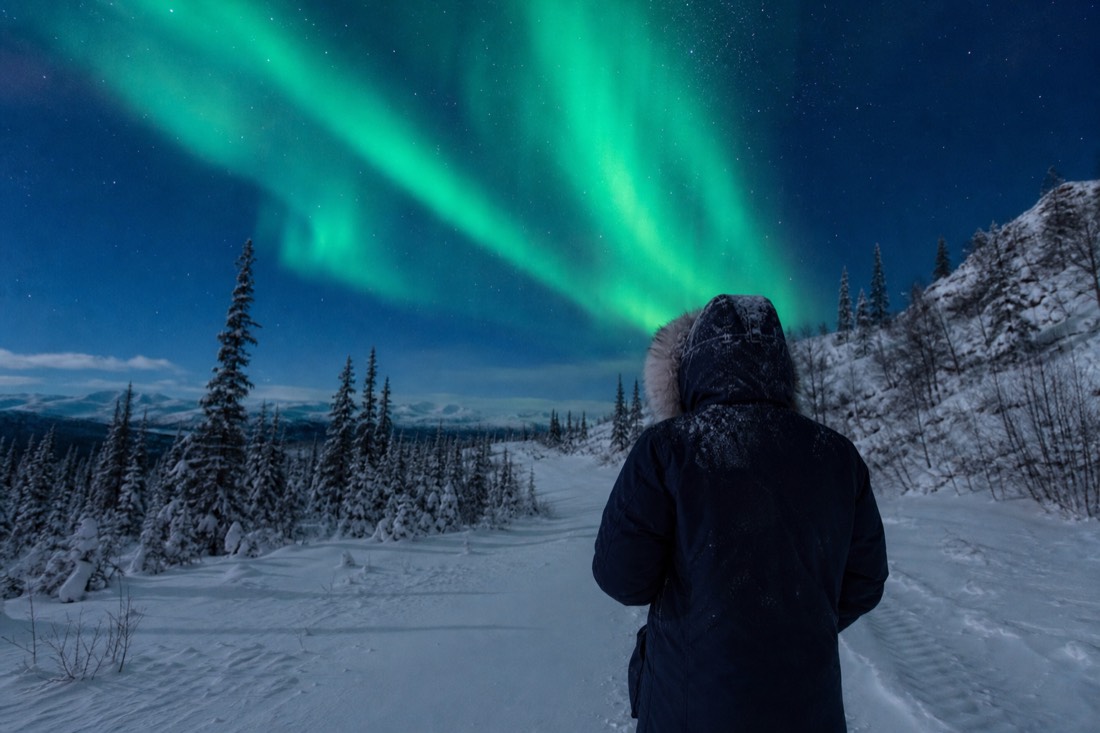
Read the middle column honestly. Three degrees of mean temperature does not turn winter into spring, and a February night on the ice can still sit near minus 30 under the clearest skies. What those degrees buy is stamina. At minus 29 you watch in short bursts with van breaks between; nearer minus 20 you stay planted through the slow part of a display, which is exactly when a faint arc erupts. Rent the parka, pants, boots and mitts in town if you do not own them, and read the winter clothing guide first: cotton and city boots fail here in minutes.
How much daylight does Yellowknife get in February?
About nine hours at mid-month, sunrise 08:21 and sunset 17:21, against January's six hours and ten minutes. That is a gain of nearly three hours in four weeks. It is the single biggest practical difference between the two months, and it is why February trips get a real daytime programme.
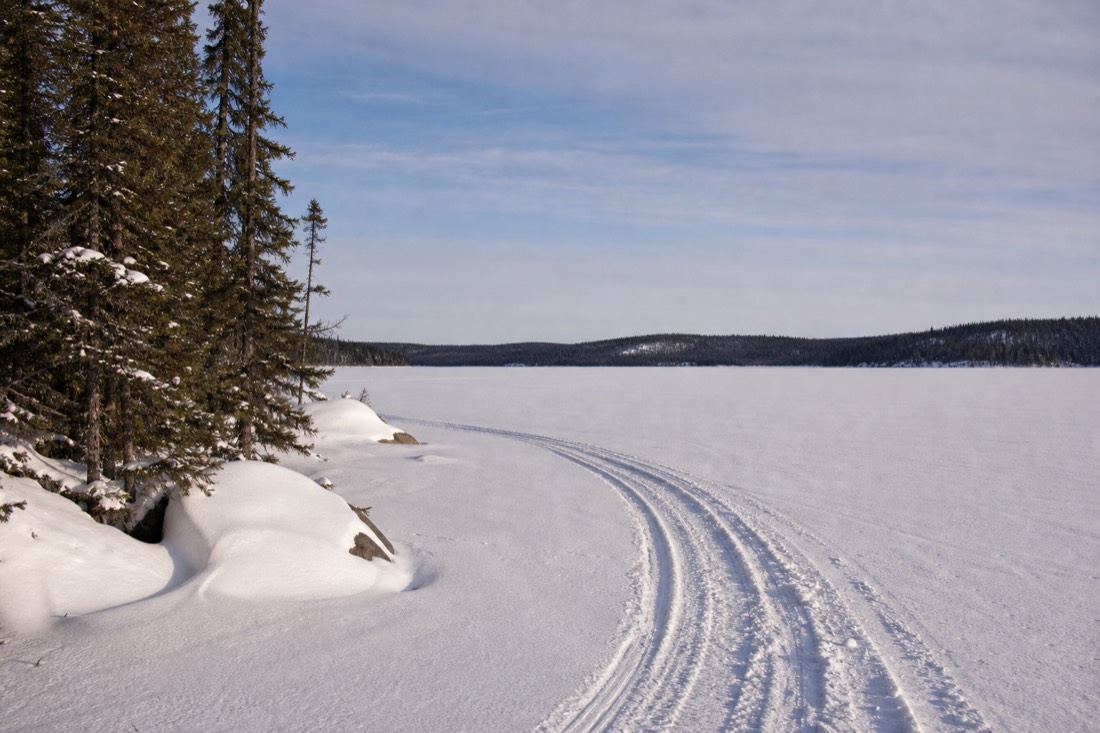
Yellowknife sits at about 62.45 degrees north, roughly 400 km south of the Arctic Circle, and at that latitude the light swing either side of midwinter is steep. The town gains close to three hours between the January and February readings, then nearly three more by March. You feel it week to week. Sun tables are public if you want your exact dates on timeanddate's Yellowknife pages.
Now the part people get backwards. Losing darkness sounds like losing aurora, and in February it simply is not. Nine hours of daylight still leaves about ten hours of true astronomical darkness, and a tour uses roughly four of them. You cannot spend the surplus. So the daylight gain costs you nothing on the aurora side while adding a usable working day on the other.
How good is the Yellowknife February aurora?
Excellent, with no seasonal asterisk. The town sits directly under the auroral oval, where the lights appear up to 240 nights a year, and NWT Tourism puts the chance of seeing them at least once over a three-night stay at 98 percent in season. February's ten hours of darkness comfortably cover the peak window near local midnight.
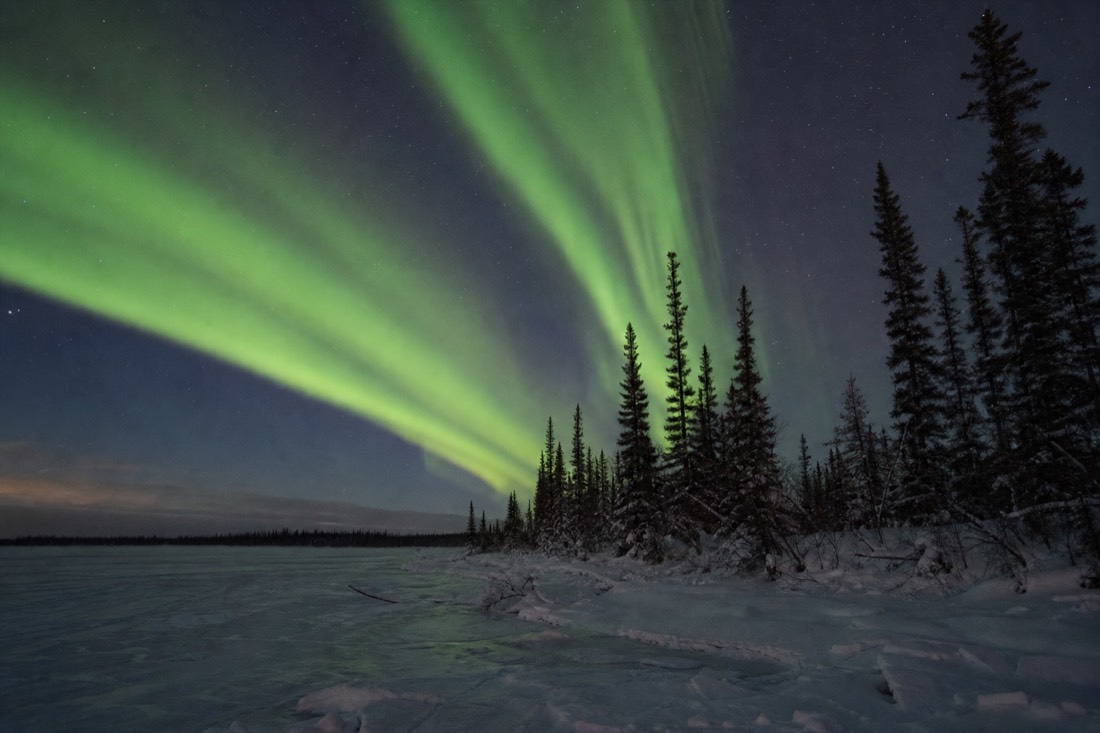
Those figures are not marketing gloss; they are corroborated in Canadian Geographic's reporting from Yellowknife. Sitting under the oval also changes what you need from a forecast. A low Kp of roughly 1 to 3 is often plenty here, while southern Canada waits for Kp 5 and above. What actually decides your night is cloud cover, so check the sky before you check the space weather.
A February hunt runs the same shape as any winter night: pickup between 9:30 and 10:30pm, guides moving between viewpoints for clear sky, peak activity near local midnight, hotel by 1:30 to 2:30am. Solar cycle 25 most likely peaked around October 2024 and 2026 sits in the declining phase, still inside the elevated years. Compare the options on the northern lights tours page, and let the aurora itinerary sequence the nights across a three or four night stay.
What can you actually do during the day in February?
Everything winter offers. Dog sledding, ice fishing in heated huts on Great Slave Lake, beginner snowmobiling, city and culture tours, and the public Dettah ice road across the frozen bay. February is deep enough in the season that lake ice is thick and settled, and light enough that these run in daylight rather than twilight.
| Running in February | Shape of it | Worth knowing |
|---|---|---|
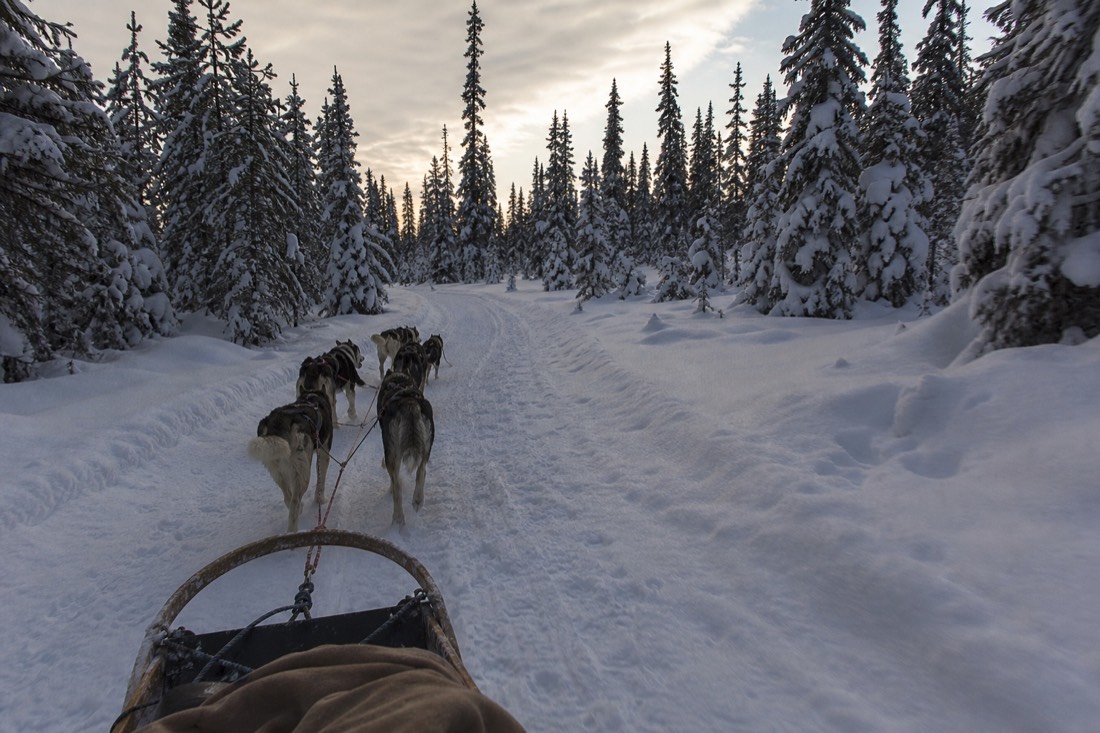
| Dog sledding | 2 hours, Dene sled-dog storytelling, about 25 minutes behind the team, fresh bannock | Optional axe throwing add-on at CAD 15 |
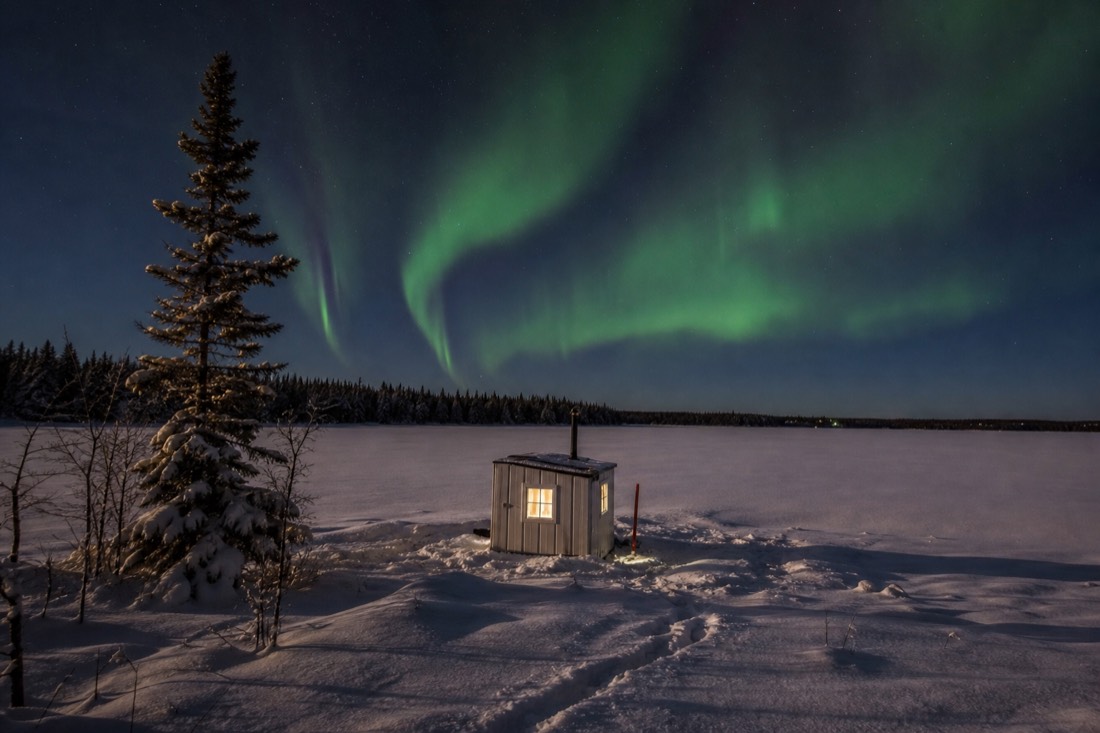
| Ice fishing | 3.5 hours, heated huts on Great Slave Lake, net pull, catch cooked on the ice | NWT licence about CA$15, not included |
| Snowmobiling | 2 hours, 50 to 60 minutes of riding, heated handlebars | Caps at 15, gear rental available |
| Aurora hunts | 9:30pm pickup to 2:30am return, multiple viewpoints | Photographer aboard on the flagship hunt |
| Dettah ice road | About 6.5 km across the frozen bay, driven by ordinary cars | Typically open mid or late December to mid-April |
| City and culture | Old Town, Pilot's Monument, free Heritage Centre | Good weather-proof fallback on a whiteout day |
The ice road deserves its own line. February sits mid-window, the most reliable stretch for driving it, and it costs nothing. Obey the posted low speed limits, which protect the ice rather than police you, and pull fully out of the lane before anyone opens a door. The local guidance on driving the public ice roads is worth two minutes first.
Dog sledding is the activity that gains most from February's light, since a four in the afternoon run now happens under real sun: compare the dog sledding tours and check live availability and prices on Viator for the traditional Dene-guided run. If you want to know what the two hours actually feel like before booking, I wrote the whole thing up in this account of a Yellowknife dog sledding run.
What does a February day and night in Yellowknife look like?
Late start, one daytime tour in the sun, an early dinner, then the hunt. February's nine hours of light let you fit a real activity and a rest before a 9:30pm pickup, which January's six hours do not. Build the day backward from the hunt, always.
| Time | The plan |
|---|---|
| 8:21am | Sunrise, and you are still asleep after a 2am return home |
| 10:00am | Slow breakfast, layer up properly, no rushing |
| 11:30am | Ice fishing on the lake: 3.5 hours, heated hut, your catch cooked at noon |
| 3:30pm | Drive or walk the Dettah ice road while the sun is still up |
| 5:21pm | Sunset, the town goes gold then dark |
| 6:00pm | Early dinner, then a real nap. The step people skip |
| 9:30 to 10:30pm | Aurora hunt pickup from the hotel |
| Near midnight | Peak window, guides chasing the clearest sky |
| 1:30 to 2:30am | Home, with about eight hours of darkness still unused |
Swap the fishing hut for a dog team or a snowmobile morning and the frame holds all week. The nap is not optional. Guests who skip it are the ones asleep in the van at the exact moment the sky opens. For a fuller menu of daytime options, including the free ones, see things to do in a Yellowknife winter.
February versus January and March: which month suits you?
February suits the traveler who wants every winter activity without January's severity and does not need March's warmth or festival. January suits maximum darkness and lowest crowds. March suits anyone who wants comfort, twelve-hour days and the SnowKing snow castle, and will accept softening cold.
| If this is you | Best month | Why |
|---|---|---|
| First trip, wants the full winter list | February | Everything runs, minus 22.7 mean, nine hours of usable day |
| Photographer chasing maximum dark hours | January | About 12 hours of true darkness, longest nights of the season |
| Cold-sensitive traveler or family | March | Mean minus 16.6, highs near minus 10.6, easiest conditions |
| Wants a festival built into the trip | March | The snow castle occupies the whole month |
| Wants daytime activity plus aurora, evenly | February | The day-and-night split is at its most balanced |
| Determined to drive the ice road | February | Mid-window, thickest ice, most reliable conditions |
That balance is the honest case for February, and the only case it needs. It is not the warmest winter month and it has no castle; the March guide makes that month's argument, and it is a strong one. February is the point on the curve where the cold has eased enough to keep you outside and the light has returned enough to fill a day, while the dark still runs deeper than any tour can spend.
One last note if you are building a fishing day in: the Indigenous-owned sport fishing and culture trip from North Star Adventures runs January 15 to April 15, so February sits inside its season, and the ice fishing tours page carries guided options all month. Book the nights first, then let the days fall in behind them. In February there are hours enough for both.