Yellowknife Weather by Month: The Real Numbers
The full Environment Canada normals, every month, plus what each temperature band actually feels like and which activities each stretch of the year makes possible.
 Written with Thomas Beaulieu, Yellowknife tour guide & northern lights specialist
Short answer
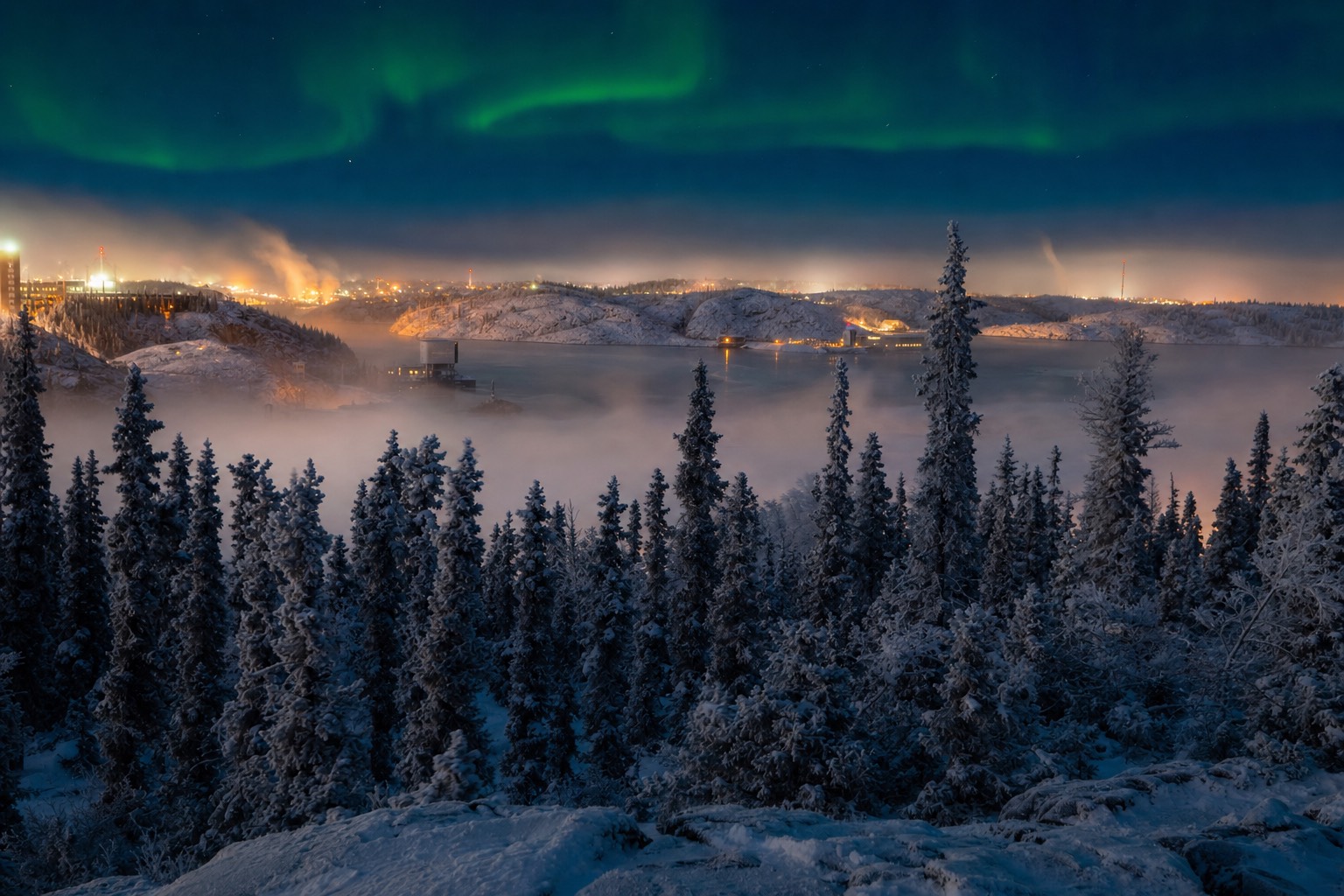
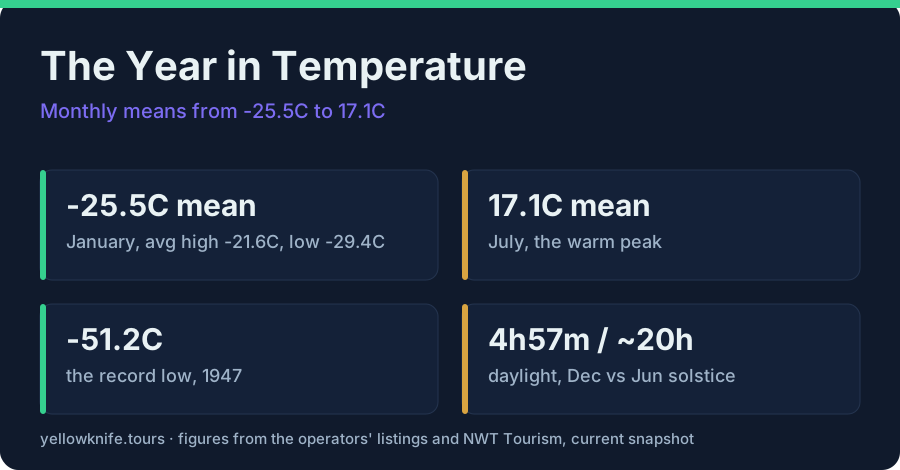
January is the coldest month in Yellowknife, a daily mean near -25.5C with highs around -21.6C and lows near -29.4C. July is the warmest at a mean of 17.1C. Daylight swings from about 5 hours 5 minutes at the December solstice to about 20 hours in June, and the all-time record low is -51.2C.
I check the Yellowknife forecast the way other people check their phone lock screen, out of pure reflex, because every night of my working life depends on it. So let me hand over the actual numbers, the Environment Canada climate normals for all twelve months, and then translate them, because a table says minus 25 and a morning on the lake ice says something much more specific than that.
What is Yellowknife's weather like month by month?
January is the coldest month, a daily mean of -25.5C with average highs near -21.6C and lows around -29.4C. July is the warmest, a mean of 17.1C with average highs of 21.5C. Between those two poles the town swings roughly 43 degrees, one of the widest annual ranges anywhere you will ever plan a trip.
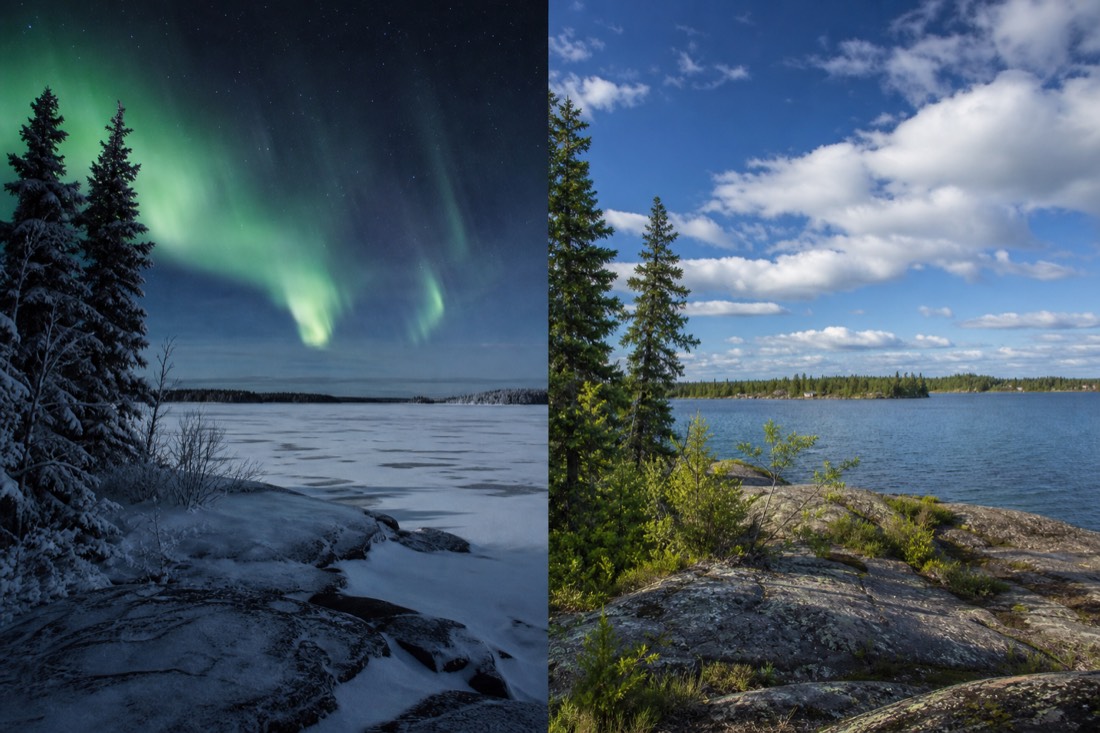
One thing this page is not: an aurora verdict. The month-by-month decision about when the lights are best, weighing darkness, cloud, and cold together, lives in best time to see the northern lights, and I will not repeat its conclusions here. This page is the climate layer underneath that decision. Here is the full table, Environment Canada normals, in degrees Celsius.
| Month | Daily mean | Average high | Average low |
|---|---|---|---|
| January | -25.5 | -21.6 | -29.4 |
| February | -22.7 | -18.0 | -27.4 |
| March | -16.6 | -10.6 | -22.5 |
| April | -5.5 | 0.3 | -11.3 |
| May | 5.3 | 10.4 | 0.1 |
| June | 13.8 | 18.6 | 9.0 |
| July | 17.1 | 21.5 | 12.6 |
| August | 14.5 | 18.4 | 10.5 |
| September | 7.6 | 10.9 | 4.2 |
| October | -1.0 | 1.5 | -3.6 |
| November | -12.6 | -9.0 | -16.2 |
| December | -21.8 | -18.0 | -25.6 |
How cold does Yellowknife winter really get?
Colder than the averages read. From December through March, nights below -20 are routine and -30 genuinely happens. The all-time record without wind chill is -51.2C, set in 1947. Operators build the whole winter around it: heated vans, heated huts, heated handlebars, and arctic clothing rental in town.
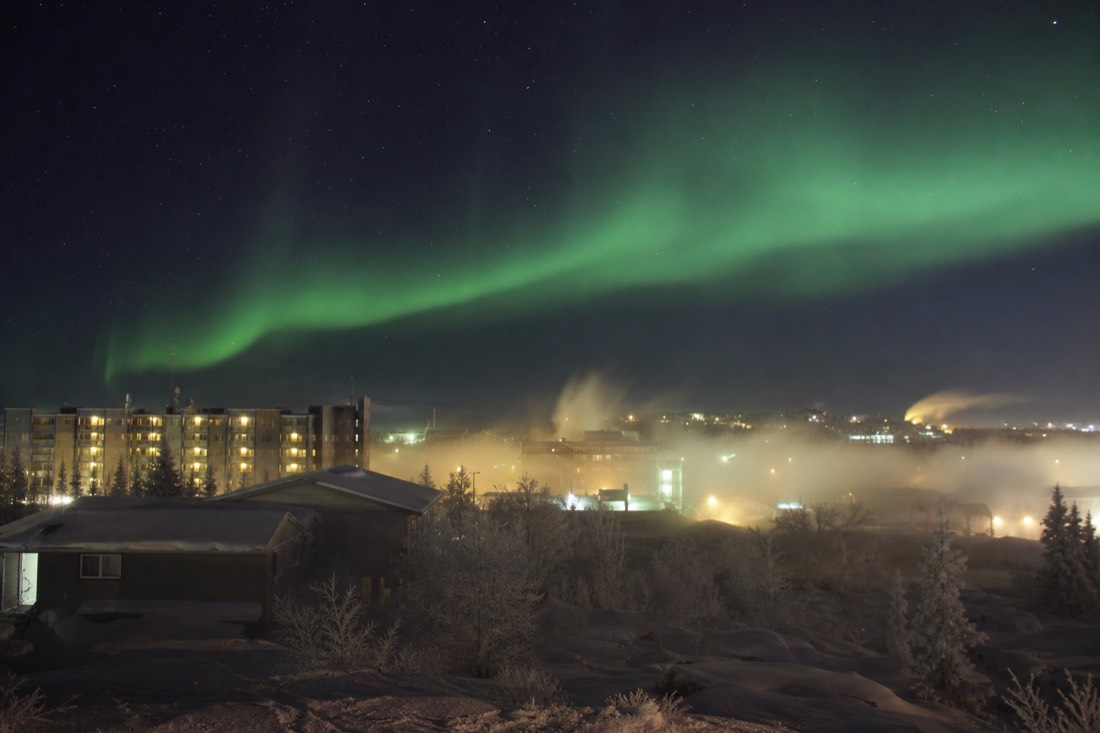
Averages smooth out the story. A January mean of -25.5 contains plenty of -35 nights balanced by milder spells, and the tail of the distribution is long: local journalists digging into the record books found that Yellowknife once hit -51.2C, back in 1947. Nobody plans a holiday around a 1947 data point, but it tells you what this climate is capable of.
What the numbers cannot tell you is that deep cold here is workable, because everything is designed for it. Tours run on days that would cancel activities almost anywhere else. The physical experience, what your face, your camera, and your phone battery do at the bottom of the scale, is a story I tell properly in what minus 30 feels like, and the clothing system that makes it comfortable is in what to wear in winter. The short version: rent the arctic gear, layer underneath it, and the cold becomes scenery instead of threat. The deeper cold-weather physics get their own answer in how cold does it get in Yellowknife.
What does each temperature band feel like on the ground?
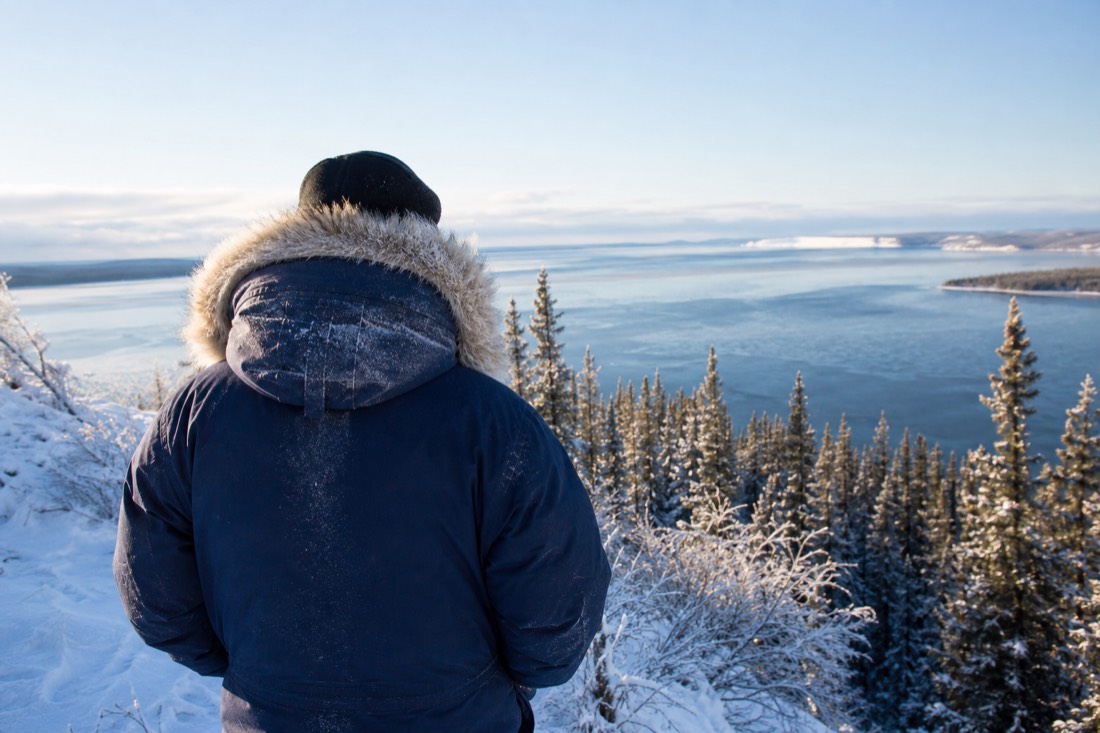
A -25 morning and a -10 afternoon are different trips entirely. The ladder below translates each band into what a day actually does with it, from squeaky-snow deep cold at the bottom to t-shirt afternoons at the top, drawn from guiding through every rung of it.
| Band | Typical timing | What it feels like |
|---|---|---|
| -30 and below | Dec to Feb cold snaps, most nights hit the -25 to -29 range | Snow squeaks underfoot, eyelashes frost, ice fog hangs over town, bare fingers get about a minute of camera work. Rental parka territory, no debate |
| -20 to -29 | Dec to Feb standard, Nov and Mar nights | Ordinary working winter here. Fine for hours in real gear, miserable in fashion jackets. Batteries drain fast, keep spares warm |
| -10 to -19 | Mar days, Nov, Feb warm spells | What locals call a nice winter day. Long outdoor activities feel easy, kids stay out all afternoon |
| -9 to 0 | April, October | Shoulder feel, freeze by night and soften by midday. The town starts shedding layers at the first 0 |
| 1 to 15 | May, June and September edges | Genuine spring or fall. A fleece does the job, the lake is open or opening |
| 16 and up | June to August afternoons | T-shirt weather, real summer, average July highs of 21.5 with long bright evenings |
The band system matters more than the calendar. I have guided mild minus-teens evenings in January and brutal minus-30s in March. Check the forecast for your actual dates, then sort your plans by exposure, indoor-heavy on the coldest day of your window, long outdoor stuff on the mildest.
How much daylight does Yellowknife get through the year?
The swing is enormous, but there is no polar night. The December solstice brings about 5 hours 5 minutes of daylight, sunrise near 10:03am and sunset near 3:08pm. The June solstice brings about 20 hours of direct sun, and the remaining hours never leave bright twilight.
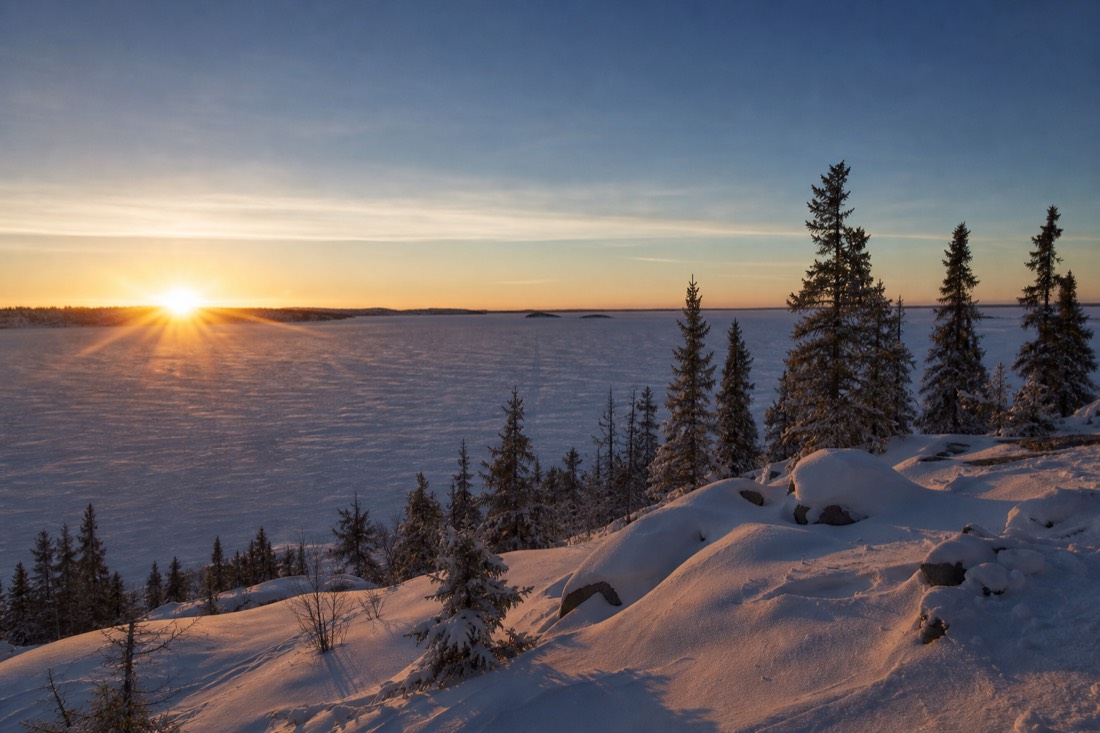
Snow behaves the way you would expect from the temperature table: it arrives for good in the October-to-November freeze-up, stays dry and squeaky through the deep months, and holds until the April thaw, which is why the ice road and the ice-fishing season stretch as late as they do. Darkness is the more surprising curve. People assume a subarctic capital goes fully dark in winter, and it does not: December still delivers almost five hours of sun, a workable midday window for sightseeing. The opposite end is the trap for aurora hopefuls, because June's near-20-hour days leave no darkness for the lights at all. I unpack the whole polar-night myth in does Yellowknife get 24-hour darkness.
How does the weather map to the tour calendar?
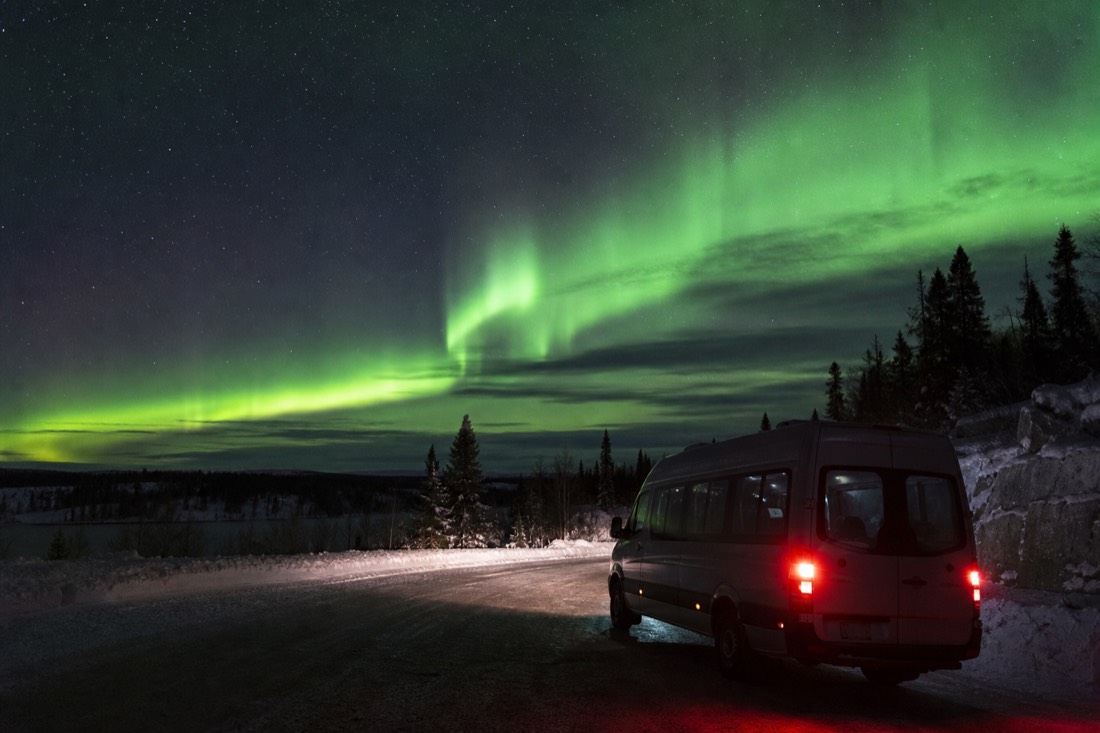
Two aurora seasons: mid-August to early October, mild nights over open water, and mid-November to early April in the deep cold and long dark. Ice activities run once the bay freezes thick, roughly late December to mid-April. Open water from June to September belongs to charters, beaches, and trails.
| Window | The weather reality | What it makes possible |
|---|---|---|
| Mid-Aug to early Oct | Sep mean 7.6C, mild nights, real darkness back | Autumn aurora over open lakes, light-jacket viewing |
| Mid-Nov to early Apr | Means -12.6 to -25.5, longest darkness | Winter aurora, dog sledding, snowmobiles, heated-hut ice fishing |
| Late Dec to mid-Apr | Bay ice thick enough for traffic | The Dettah ice road, tours far out on the lake |
| Jun to Sep | Means 7.6 to 17.1, open water | Fishing charters, Long Lake swimming, Cameron Falls hikes |
| Mid-Apr to late Jul | Bright nights, no true darkness | No aurora at all; city tours carry the daytime, year-round |
Notice what the map implies: the aurora does not need the mildest weather, it needs darkness, and the tours are engineered around whatever temperature comes with it. The flagship hunt runs its heated vans through the coldest weeks of the year with a photographer aboard, which is why the aurora tours stay the town's main event from August to April regardless of the thermometer. If your dates are set, check live aurora hunt availability and prices on Viator for your window, then let the weather decide the daytime menu when you land. The city keeps a useful plain-language page on local weather and aurora conditions worth a look the week before you fly.
Which month should you actually pick?
Not this page's verdict to give. The aurora-month decision, weighing darkness, cloud, cold, and comfort together, lives in the best-time guide. As a pure weather note: September is the mildest aurora month at a mean of 7.6C, and March pairs returning daylight with a workable mean of -16.6C.
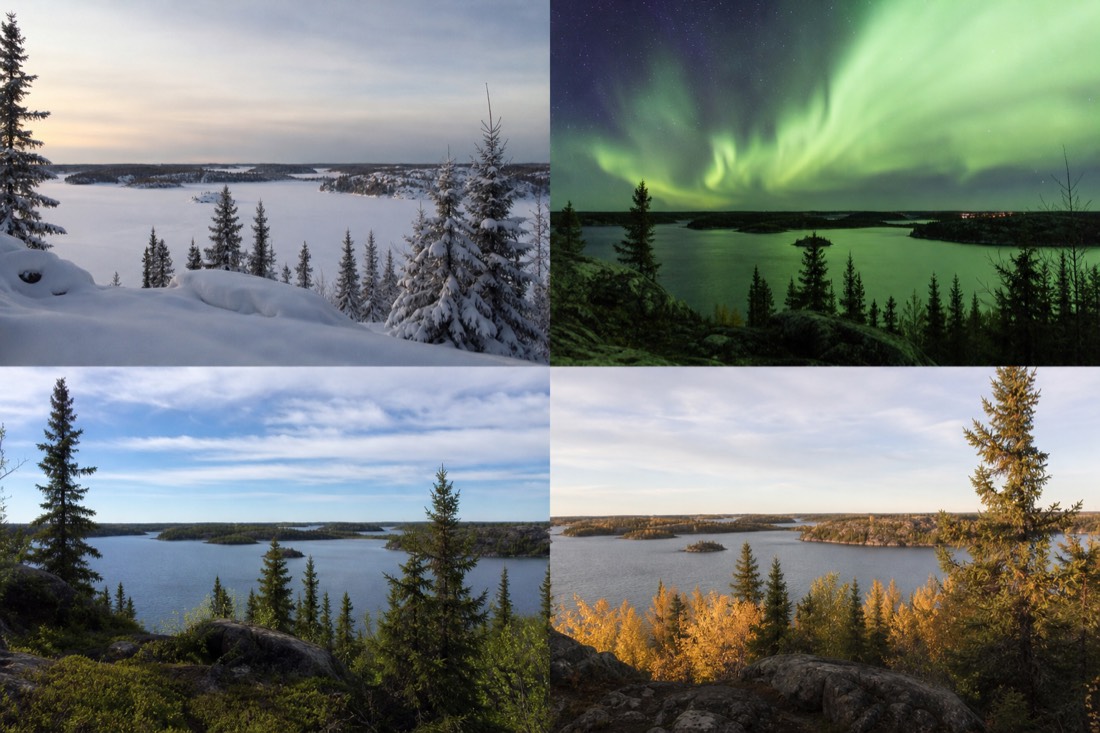
What the climate table can honestly contribute is the comfort axis. Autumn trades some aurora-season cold away entirely. Deep winter buys the longest nights at the price of the -20s. March sits in the middle, warming fast, still dark enough, festival season on the bay, and I wrote it up month-length in Yellowknife in March. Cross that against the aurora logic in the best-time guide and your month picks itself.
Once you have narrowed it to a month, the numbers above stop being the whole story, because what is actually running matters as much as the temperature. The shoulder trade-off is laid out in October in Yellowknife, where the nights are already long but the lake has not frozen. Winter switches on through November, the darkness peaks in December with the ice road opening at the end of it, and the cold bottoms out in January. February is the month I recommend most often, because the daylight has come back far enough to fill a day while the nights are still enormous. Then April closes the season, and it closes earlier than most visitors expect: true darkness runs out around the 12th to the 14th.
Read the table once, pick your band, pack for the low rather than the mean, and the weather here stops being a gamble. It becomes the thing it actually is for those of us who live with it: the schedule everything else runs on.