Can You See the Northern Lights From Vancouver? An Honest Answer
Can you see the northern lights in Vancouver? Sometimes, during big storms. A Yellowknife guide explains why latitude decides it and what actually works.
 By Thomas Beaulieu, Yellowknife tour guide & northern lights specialist
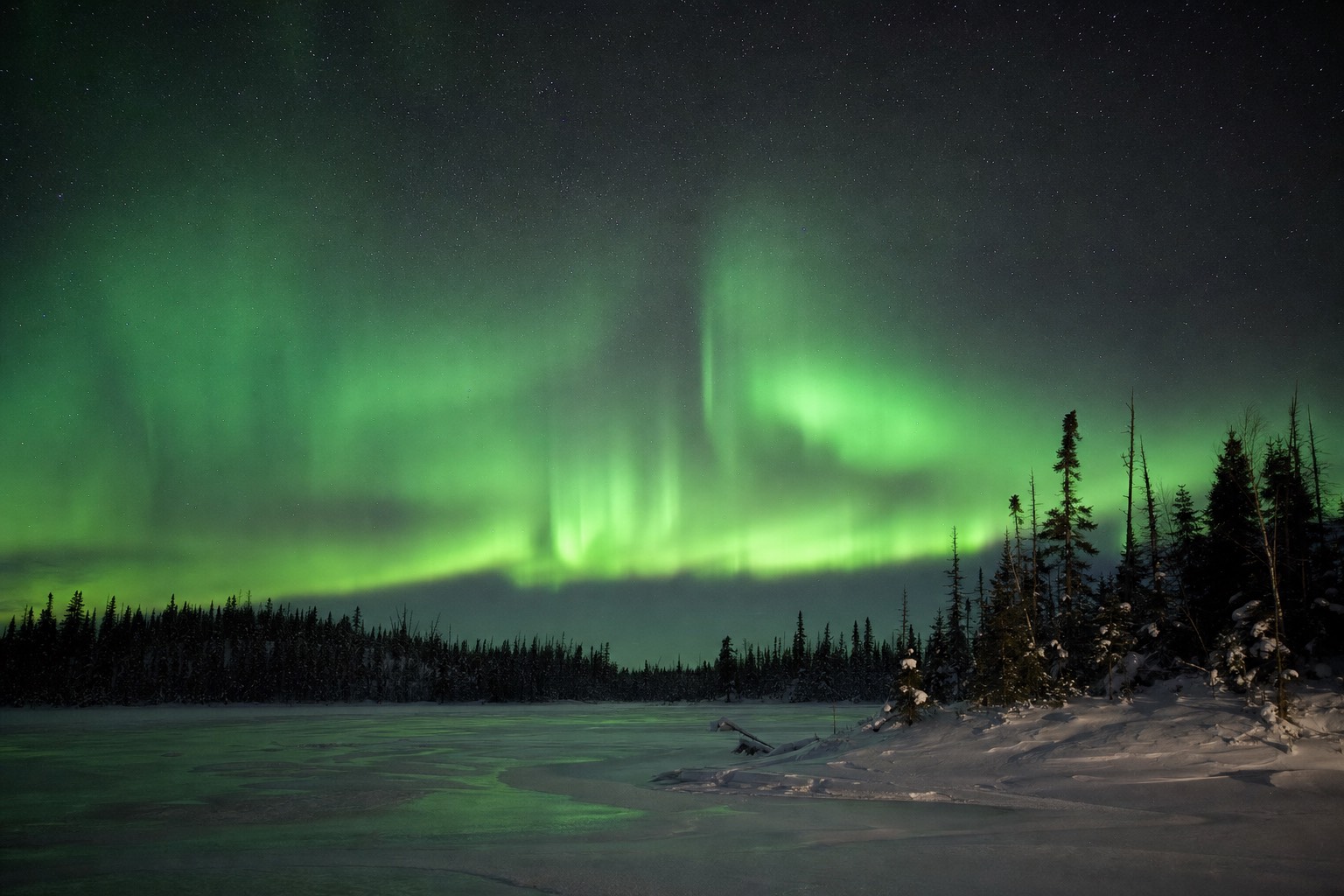
Somewhere in the second hour of most hunts, a guest tells me they already tried this once at home. Vancouver comes up more than any other city. They drove out past the streetlights on a night the internet was excited about, stared at a pale wash sitting low over the water, and went home genuinely unsure whether they had seen the aurora or a lit cloud. Then, months later, they booked a flight north, which is why they are standing on a frozen lake next to me at half past midnight. I have been guiding here since 2022. That conversation comes up often enough that it deserves a straight answer rather than a hopeful one.
Can you see the northern lights in Vancouver?
Yes, occasionally. Aurora does reach southern British Columbia, but only when a strong geomagnetic storm pushes the auroral oval hundreds of kilometres south of where it normally sits. That is exactly why the December 2024 display made the news across the region. Vancouver is a mid-latitude city, so it can never offer reliable viewing.
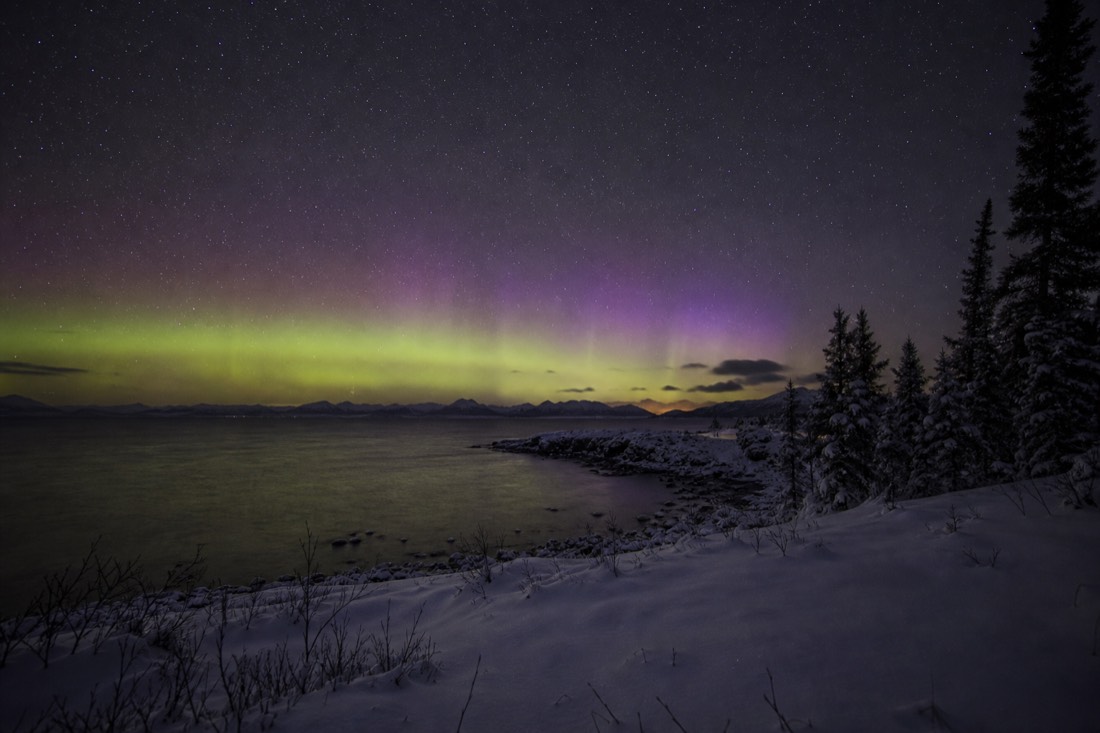
The word doing all the work in that answer is "occasionally". Storm nights are real events, people photograph them, and the pictures are honestly lovely. What those nights are not is a plan. You cannot book a week off in October and expect the sun to cooperate, because nothing in space weather forecasting gives you a usable answer that far out. So the question people are really asking when they type "northern lights vancouver" into a search box is not whether it has ever happened. It is whether they can go and see it. Those are different questions with very different answers.
Here is the comparison I end up drawing on the van window with a gloved finger about once a week.
| What actually decides a sighting | Vancouver | Yellowknife |
|---|---|---|
| Latitude | roughly 49N, mid-latitude | 62.45N |
| Position relative to the auroral oval | well south of it | directly underneath it |
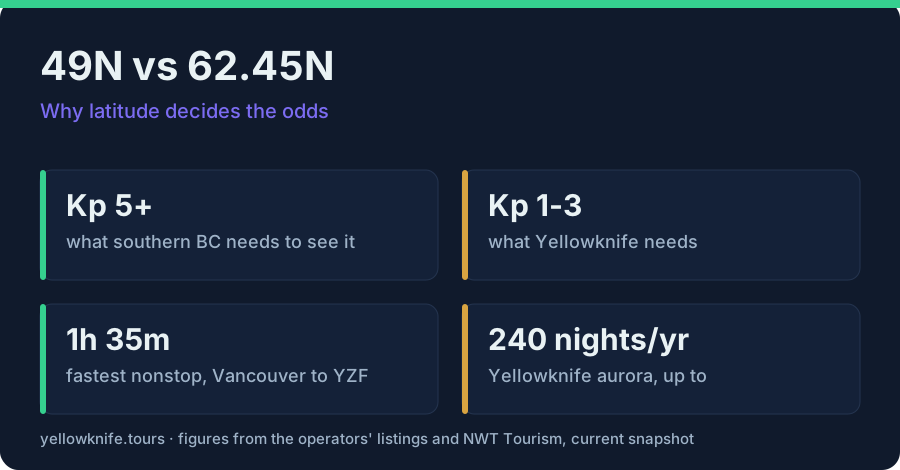
| Geomagnetic activity usually needed | Kp 5 and up, storm conditions | roughly Kp 1 to 3 |
| Nights aurora is visible | storm nights only, unpredictable | up to 240 a year |
| Light pollution | a large metro area to escape | stops about fifteen minutes out of town |
| Typical view when it does appear | a low glow on the northern horizon | arcs and curtains, often overhead |
Aurora over Yellowknife is visible on up to 240 nights a year by NWT Tourism's own count. No mid-latitude city has a number like that, because no mid-latitude city sits where the lights live.
Why does the auroral oval matter more than luck?
The aurora is not scattered randomly across the sky. It forms a ring, the auroral oval, centred roughly on the geomagnetic pole. Yellowknife sits under that ring, so quiet nights still produce displays. Southern cities sit outside it and only get a view when a storm stretches the ring their way.
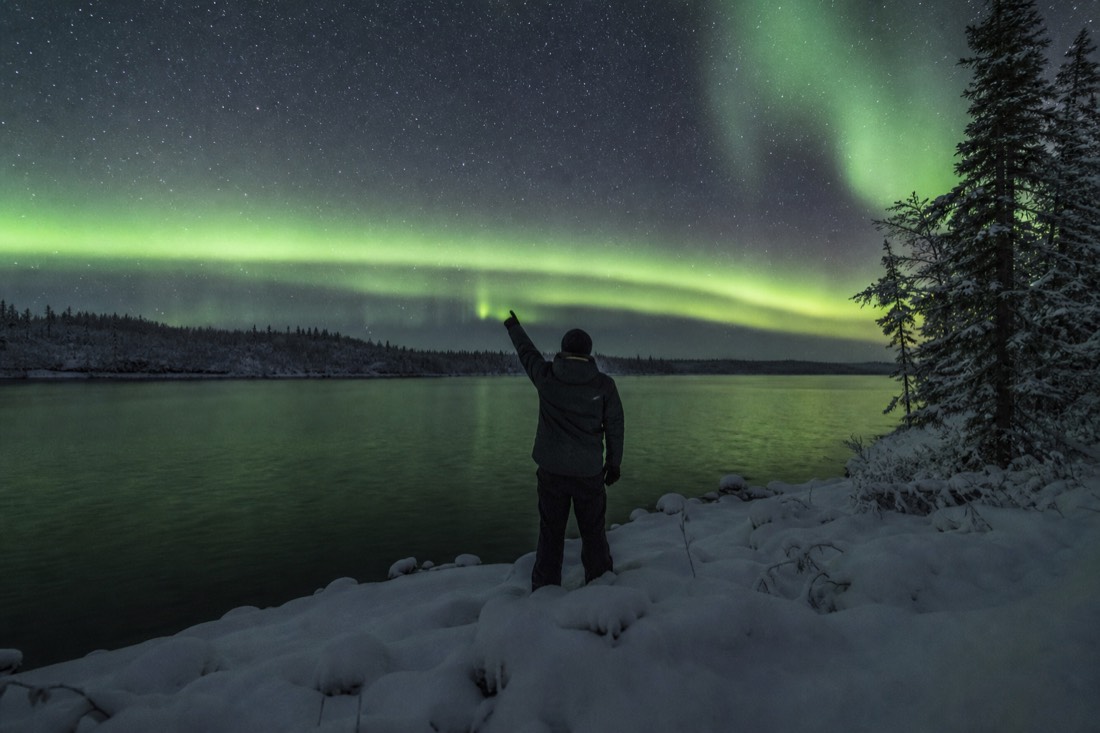
Once people picture the ring, everything else clicks. The Kp index runs 0 to 9 and measures global geomagnetic activity, and its practical effect is simple: higher Kp means the ring swells and slides south. If you are already standing under the ring, you do not need it to swell. If you are 1,400 kilometres south of it, you need a shove big enough to make headlines.
| Kp forecast | Under the oval, at 62.45N | Mid-latitudes, around 49N |
|---|---|---|
| Kp 0 to 1 | Displays still happen. One review of the flagship hunt describes a good show on a night forecast at Kp 0.0 | No realistic chance |
| Kp 2 to 3 | The normal working range here. Cloud, not activity, is the open question | No realistic chance |
| Kp 5 and up | Bright, often overhead, sometimes filling the sky | The threshold where southern Canada starts to get a look in |
That last column is the whole reason a Vancouver aurora hunt is a waiting game and a Yellowknife one is a scheduled tour. If you want to watch the mechanism in action, the NOAA 30-minute aurora forecast draws the oval on a map in near real time. Pull it up on a random Tuesday and you will see the ring sitting comfortably over the Northwest Territories while southern BC is nowhere near it. Which city comes out on top overall is a longer argument, and the honest version lives in what city in Canada has the best northern lights.
Is there a real northern lights tour from Vancouver?
Not in the way there is from a city under the oval. Any northern lights tour from Vancouver depends on a storm arriving during the hours you booked, and nobody can forecast that at booking time. Dependable aurora touring exists where the lights are overhead on ordinary nights, which means going north.
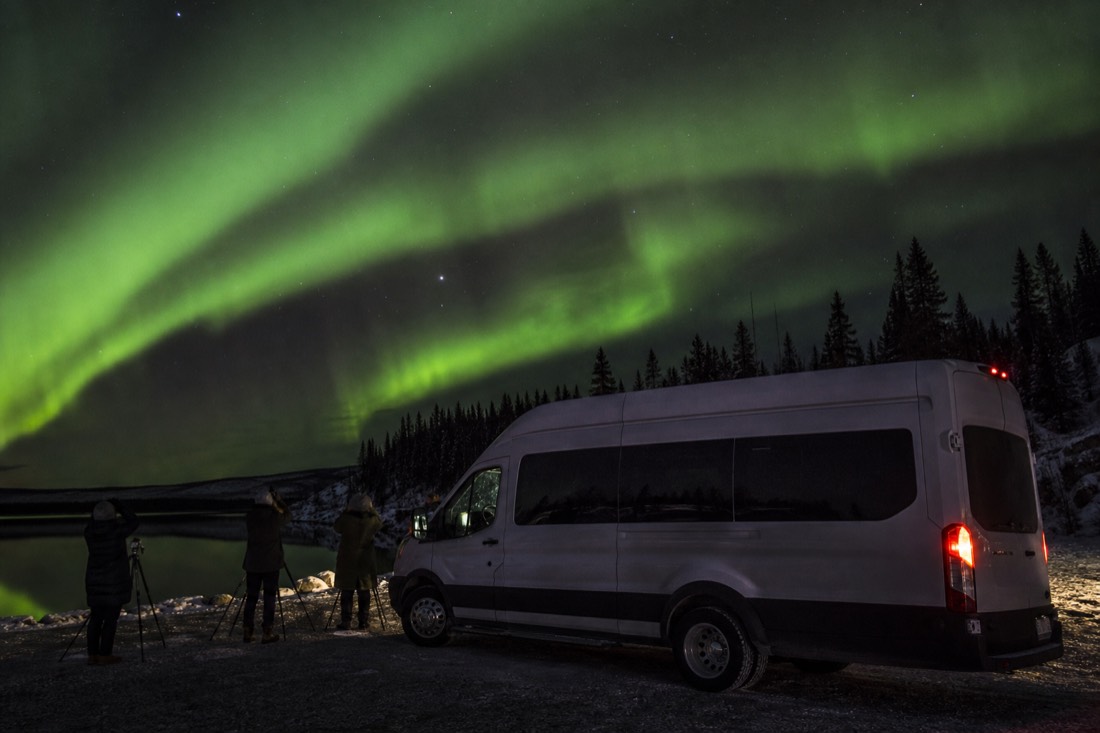
I want to be fair here, because guides in every region work hard and coastal operators are not selling snake oil. A dark-sky trip out of a big southern city is a genuinely good night out: stars, quiet, someone who knows the sky. The problem is structural, not moral. The product cannot promise the thing you came for, so the honest ones do not promise it, and the reviews read accordingly.
What a tour under the oval buys you is different. It buys mobility against cloud, which is the factor that most often decides whether a visitor here sees anything. Our flagship hunt runs about four hours, caps the group at sixteen, picks up at your hotel and drives between up to three viewpoints along the Ingraham Trail hunting for a clear hole in the sky. When the forecast says quiet and the sky says otherwise, being in a moving heated van is worth more than any app on your phone. If you want to see what a night under the oval actually costs and when it runs, the northern lights tour lineup lays out every option we recommend, and you can check live availability and prices on Viator for the hunt I guide.
What does the difference actually look like in the sky?
A storm-night glow at mid-latitude usually reads as a pale, motionless smear low on the northern horizon, greener in a camera than in your eyes. A display under the oval starts the same way and then keeps going: the arc brightens, splits, and can break into curtains that move directly over your head.
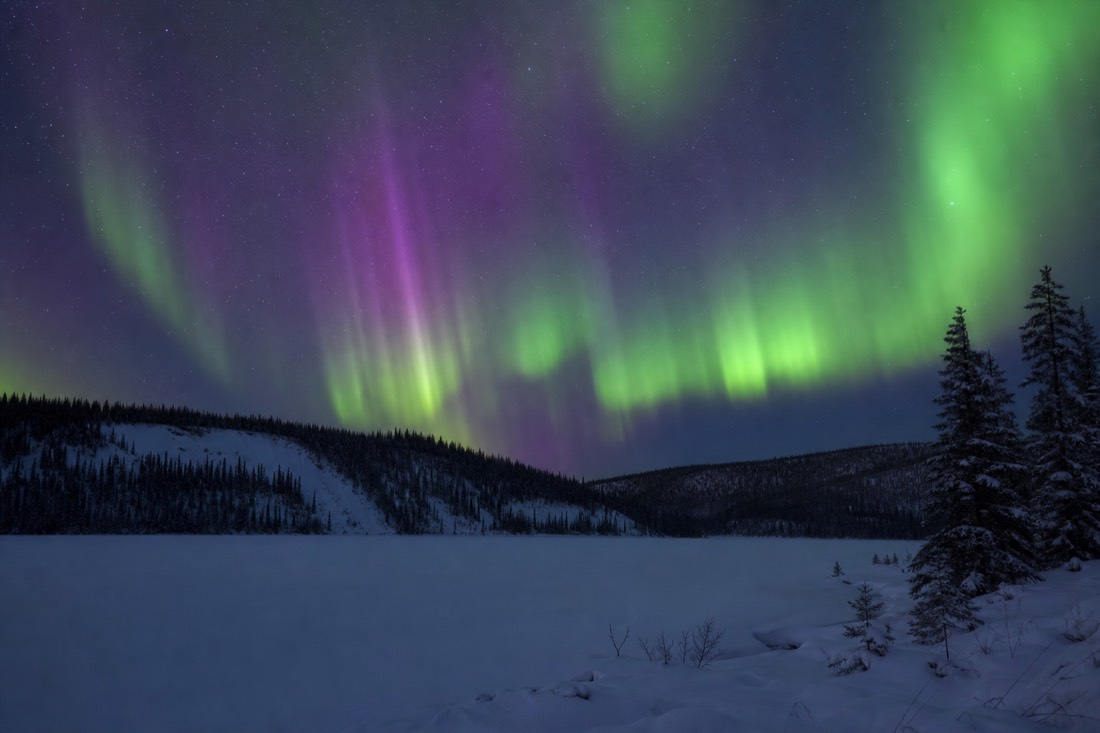
Guests who saw a storm from the south describe the same experience almost word for word. They saw something. They were not sure. The camera settled the argument. That is not a failure of their eyes, it is geometry: from far away you are looking at the bottom edge of a light show happening over somebody else's head, flattened onto the horizon and dimmed by all the atmosphere in between.
Standing under it removes the guessing. The arc is not a smudge in one corner of the sky, it stretches across the whole northern horizon before anything else happens, and on a good night it climbs past the zenith and starts moving fast enough that people stop talking. Nobody asks me "is that it?" on those nights. The full hour-by-hour version of a night out here is in what an aurora hunt is really like, pickup to drop-off, including the nights that stay shut.
What is the realistic plan if you are starting in Vancouver?
Fly. There are direct flights from Vancouver to Yellowknife and the fastest nonstop takes about 1 hour 35 minutes, less than a domestic hop most people would not think twice about. Give yourself three nights in season and the odds stop being a gamble: NWT Tourism puts the chance of at least one sighting across three nights at 98%.
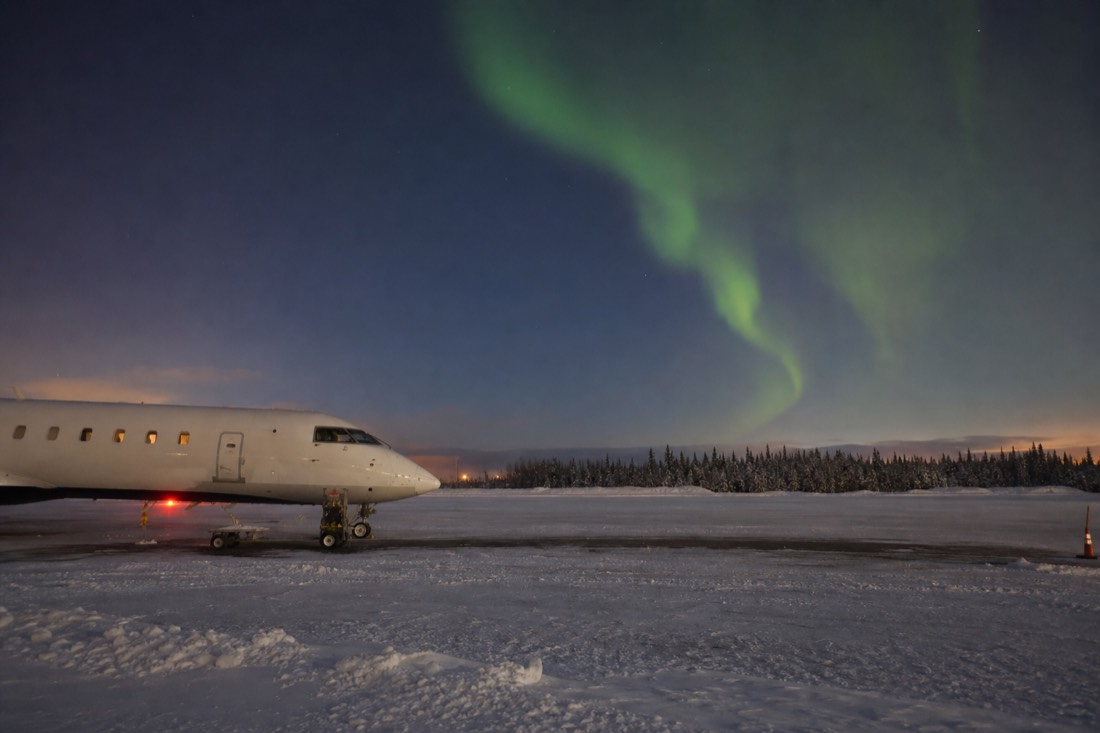
An hour and a half of flying is the part that surprises people most. They picture an expedition. What it actually takes is a short northbound flight, a hotel that does aurora pickups, and enough nights that one bad weather system cannot ruin the trip. The getting to Yellowknife guide covers the routes and airlines in detail, and Canadian Geographic backs the same odds we quote here.
Timing matters more than most visitors expect, because the limiting factor at this latitude is darkness, not aurora.
| Window | What darkness is doing | Aurora status |
|---|---|---|
| Around 27-28 August to early October | True astronomical darkness returns, minutes at first, growing fast | Season one: lights over open water, milder nights |
| Mid-November to early April | The longest dark hours of the year | Season two: deep cold, maximum viewing time |
| Around 12-14 April to late August | True darkness disappears entirely | No viewing, whatever the sun is doing |
Set against that, here is how the realistic options stack up for someone sitting in Vancouver right now.
| Your plan | Time it costs | Realistic chance | The catch |
|---|---|---|---|
| Wait at home for a storm | Months of watching alerts | Entirely dependent on a storm landing on a clear night you are free | Nothing beyond an hour ahead is forecastable |
| Fly north, one night | Two travel days, one dark night | Real, but a single roll of the dice | One clouded night ends the trip |
| Fly north, three nights in season | About four days door to door | 98% at least once, per NWT Tourism | You have to come inside the dark-season windows |
| Fly north outside the season | Same flights | Zero | Mid-April to late August has no true darkness |
Three nights is the number I give everyone. Tours pick up between roughly 9:30 and 10:30pm and drop off between 1:30 and 2:30am, so a three-night stay costs you three late evenings and gives you daylight hours back for everything else. The three-night aurora itinerary shows how that fits together, the best time to see the northern lights guide narrows the calendar, and the real odds get their own unvarnished breakdown in chances of seeing the northern lights.
None of this means you should stop watching the sky at home. Keep the alerts on, go out when a big storm hits, and enjoy it when the horizon turns strange colours over the water. Just do not confuse that with the trip you are imagining. The version where the lights are overhead, moving, and bright enough that your camera becomes an afterthought is a ninety-minute flight away, and the only real preparation it asks for is warm clothing and three nights on the calendar.