What City in Canada Has the Best Northern Lights?
Yellowknife is the defensible answer, and not because I guide here. It sits directly under the auroral oval with numbers no other Canadian city publishes. Here is the fair comparison.
 Written with Thomas Beaulieu, Yellowknife tour guide & northern lights specialist
Short answer
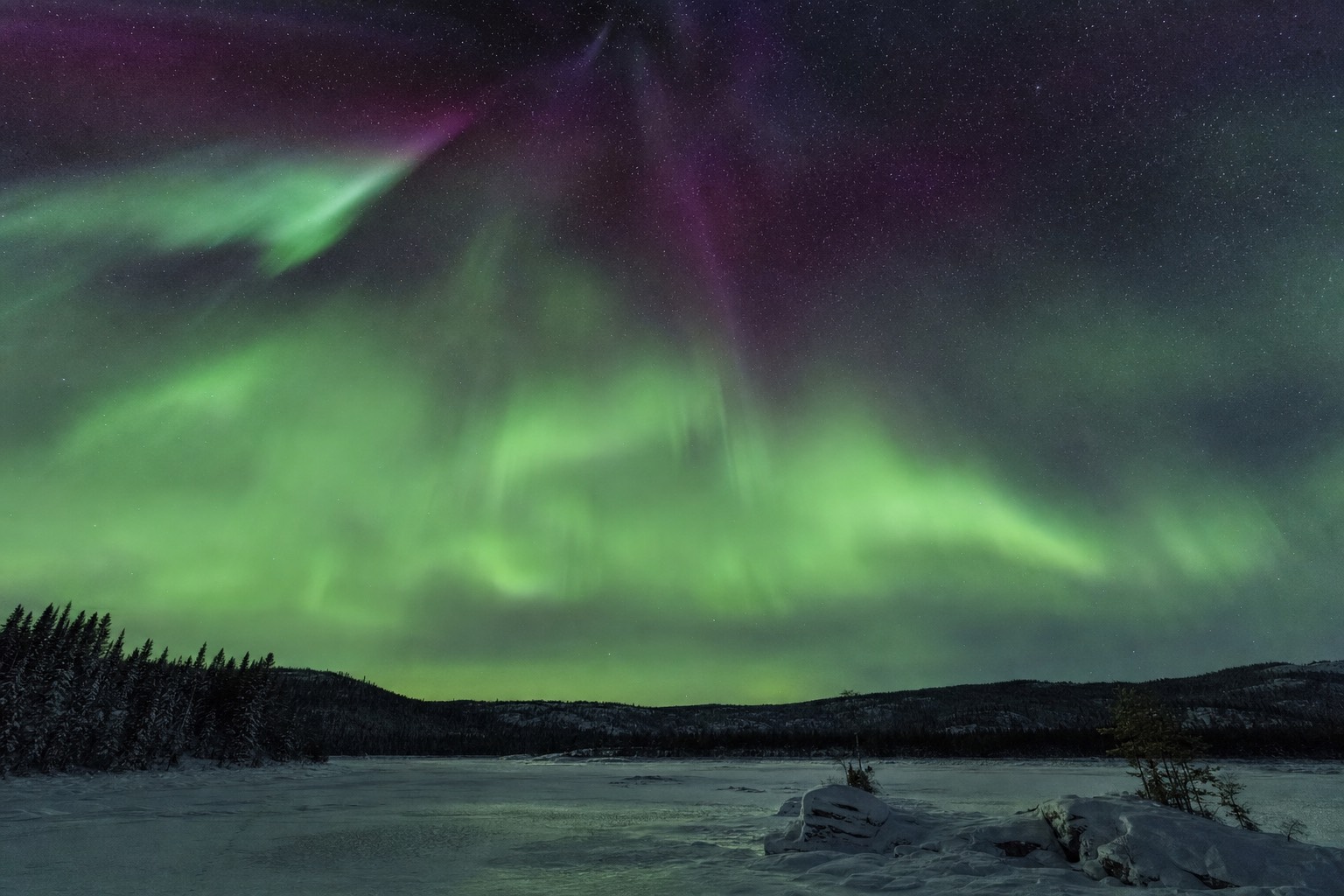
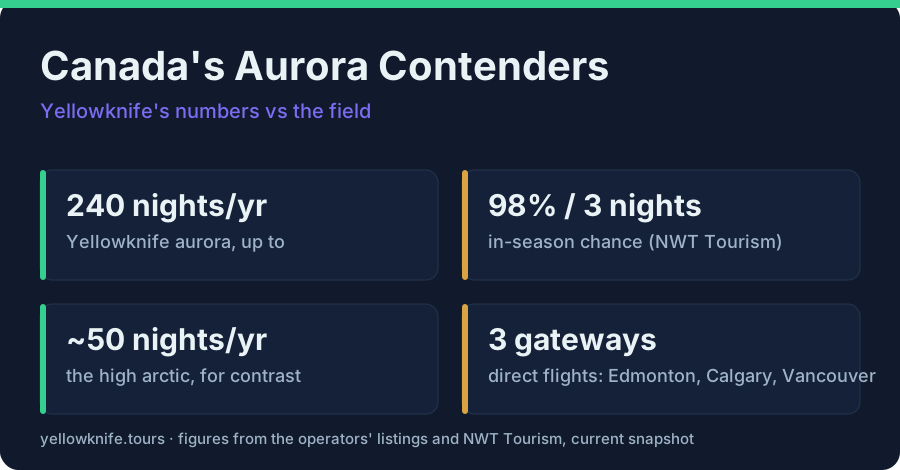
Yellowknife, Northwest Territories. It sits directly under the auroral oval, sees aurora up to 240 nights a year, and NWT Tourism puts the chance of a sighting over three nights in season at 98%. Whitehorse and Churchill are fine aurora destinations, but neither pairs numbers like these with a full aurora tour industry.
I have watched guests arrive here straight off a lap of the usual suspects: Iceland where it rained for a week, a cruise where the lights stayed on the wrong side of the ship. On their first clear night outside Yellowknife they ask some version of the same question: why did nobody tell us to just come here first? The honest answer is that plenty of places advertise the aurora, but very few sit where the aurora actually lives. Canada has several northern cities worth respecting. One of them sits directly under the oval.
What city in Canada has the best northern lights?
Yellowknife, by the numbers that matter. It sits directly under the auroral oval, the ring where displays concentrate, with aurora visible up to 240 nights a year and a 98% chance of a sighting over three nights in season, per NWT Tourism. No other Canadian city pairs that data with flat horizons, dry winters, and a dedicated aurora industry.
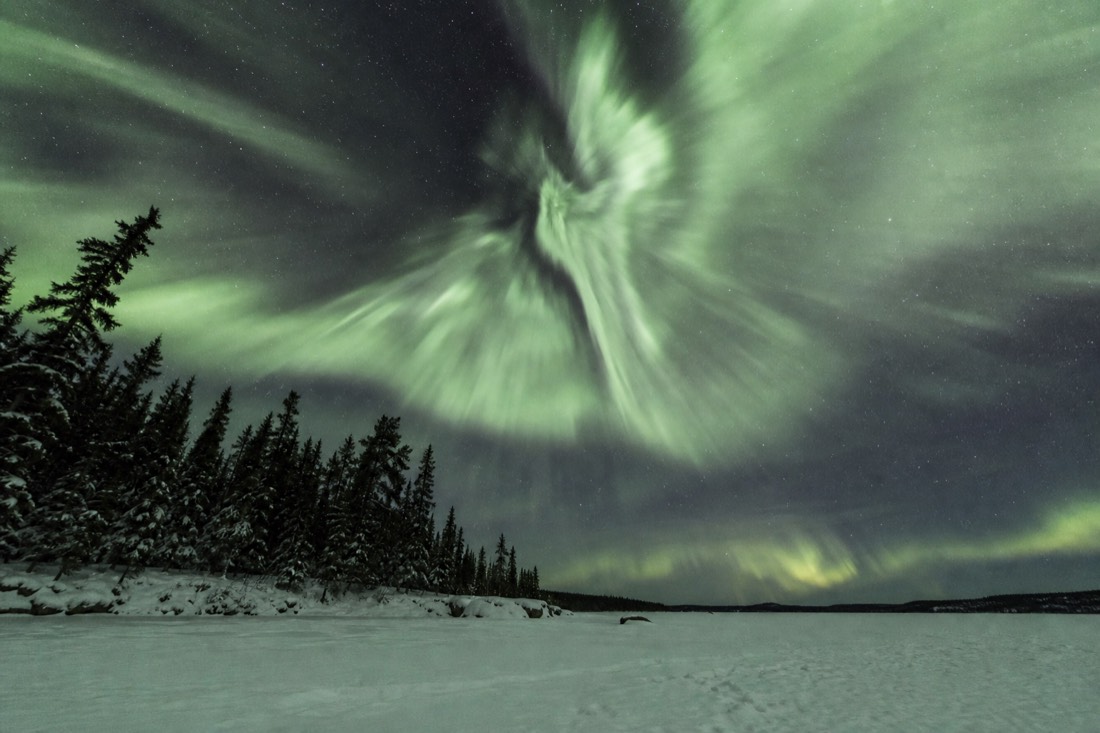
The claim rests on published figures, not hometown pride. NWT Tourism's aurora by the numbers page carries both stats I lean on nightly: up to 240 aurora nights a year, and the 98% three-night figure. Travel and Leisure repeated the 240-night figure when it covered the city, which matters because no rival Canadian destination publishes anything comparable. When one contender has audited-feeling numbers and the others have adjectives, the comparison mostly makes itself.
What the stats compress is position. The auroral oval is a ring around the magnetic pole where activity concentrates, and Yellowknife sits underneath it. Head much further north and you actually overshoot: the high arctic sees aurora on the order of only 50 nights a year, a detail that surprises almost everyone I tell.
| The Yellowknife case, in numbers | |
|---|---|
| Aurora frequency | Visible up to 240 nights a year |
| Three-night odds in season | 98% chance of at least one sighting (NWT Tourism) |
| High-arctic comparison | Roughly 50 aurora nights a year further north |
| Activity needed | Low; a Kp 0.0 forecast night has produced a reviewed show |
| Viewing seasons | Mid-Aug to early Oct, and mid-Nov to early Apr |
| Access | Direct flights from Edmonton, Calgary, and Vancouver |
Why does sitting under the auroral oval matter so much?
Because it removes the need for luck. Cities under the oval see aurora on ordinary quiet nights, while cities south of it wait for strong storms to push the ring toward them. In Yellowknife, low activity still produces overhead displays. Elsewhere in Canada, low activity usually means no show at all.
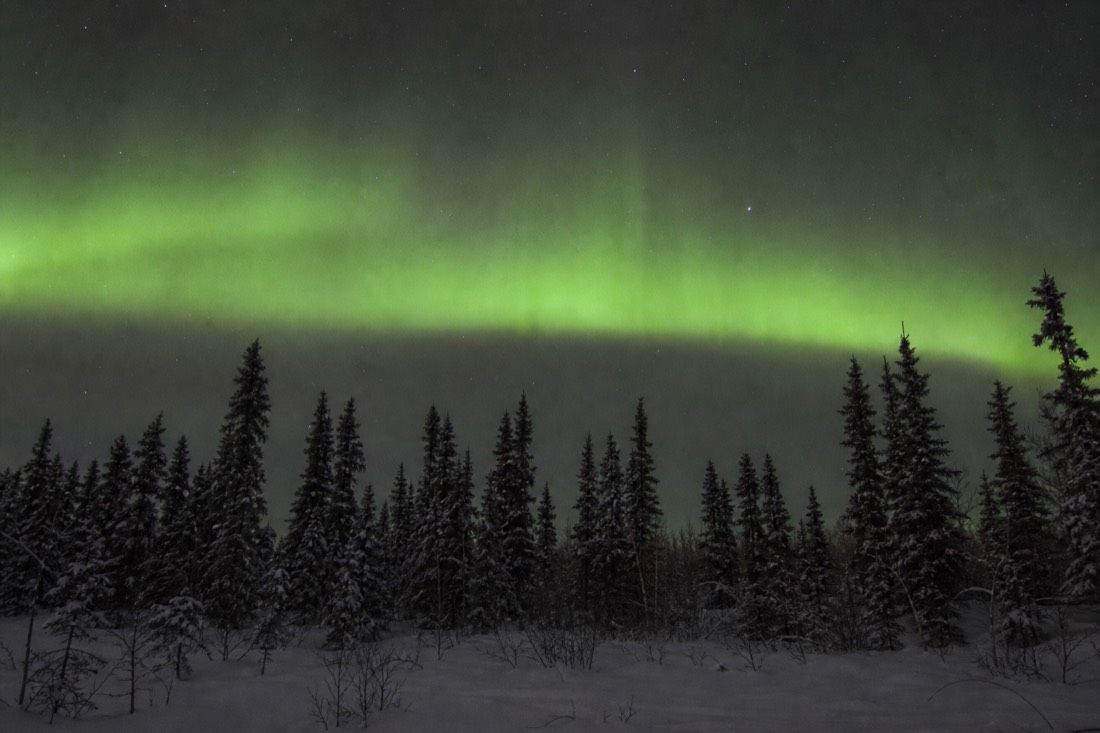
Here is the mechanic in plain language. Aurora forecasts run on the Kp index, a 0-to-9 scale of geomagnetic activity. A southern city needs a high Kp storm to drag the oval down to its latitude. Yellowknife needs nothing: the oval is already overhead, so low-Kp nights deliver. One review of the flagship hunting tour here describes a good show on a night forecast at Kp 0.0, the literal bottom of the scale. I have stood under those nights. They are not rare.
That is the structural difference between an aurora city and a city where aurora sometimes happens. A strong storm improves every location in Canada. A quiet sun only leaves one kind of place with a show, and I run the odds for different trip lengths in the chances of seeing the lights guide.
How does Yellowknife compare with Whitehorse and Churchill?
All three are legitimate northern destinations, and I will not pretend otherwise. Whitehorse is the Yukon's easygoing capital with good aurora viewing in season, and Churchill is a remote Hudson Bay town famous above all for polar bears. Yellowknife is the one built around the aurora itself, with the published numbers to show for it.
I keep this table fair on purpose: hard numbers for Yellowknife because they exist, honest qualitative notes for the others because inventing rival stats would be exactly the kind of nonsense this site refuses to do.
| Yellowknife, NWT | Whitehorse, Yukon | Churchill, Manitoba | |
|---|---|---|---|
| Aurora position | Directly under the auroral oval | Northern latitude with regular in-season viewing | Northern latitude with regular in-season viewing |
| Published viewing odds | Up to 240 nights/yr; 98% over 3 nights in season | No comparable published figure | No comparable published figure |
| Landscape for viewing | Flat horizons, lakes in every direction | Mountainous surroundings | Open subarctic coast on Hudson Bay |
| Winter sky | Relatively dry, frequently clear | Varies with mountain weather | Varies with coastal weather |
| Getting there | Direct flights from Edmonton, Calgary, Vancouver | Scheduled flights via western hubs | Remote; fly or long train, no road |
| Main identity | The aurora city | Yukon adventure base | Polar bear capital |
| Aurora tour industry | Entire ecosystem: hunts, lodges, camps, multi-night packages | Aurora tours among many activities | Aurora offered alongside wildlife trips |
Churchill deserves its fame, but the fame is bears, and if bears are your dream that is a different trip, one I discuss honestly in are there polar bears in Yellowknife. Whitehorse is the closest true rival and gets its own deep-dive in the Yellowknife vs Whitehorse comparison. And for the cross-border question, Yellowknife vs Fairbanks covers the Alaskan contender.
What is the best place to see the northern lights in Canada?
Yellowknife again, and the wider question is more interesting than the answer. Once you drop the word "city" the field opens to dark-sky preserves, remote lodges and arctic hamlets, yet position under the auroral oval still beats protected darkness every time. A dark sky in Alberta cannot manufacture an aurora that is not overhead.
Fair warning before the argument: reputable sources do not agree here, and the people making the case usually have a stake in it. Capture the Atlas and Canadian Geographic put Yellowknife first and quote the same 240-night and 98% figures I lean on. Aurora Now hands the title to Fairbanks. Frontiers North makes the case for Churchill, which is also where Frontiers North runs its trips, and I owe you my own version of that disclosure: I guide here. So another opinion is not much use. Naming the criteria is. The cross-border half of the question, with Alaska in the picture, gets worked through in the best place in North America comparison.
Dropping "city" from the question lets three other kinds of place into the running. Alberta protects its night sky at Jasper and Wood Buffalo, both formal dark-sky preserves sitting near 53 degrees north. Remote lodges sell isolation. Iqaluit offers real arctic latitude. All of them are darker than a downtown, and darkness is a genuine variable, since a bright sky dilutes a faint display. It is the second variable, though. The first is whether the oval is overhead at all, and near 53 north the ring only arrives when a storm drags it south, which is a handful of nights a year rather than a season.
| Kind of place | What it gives you | What it cannot fix |
|---|---|---|
| City under the oval (Yellowknife) | Aurora on ordinary quiet nights, plus flights, hotels, guides and daytime tours | Its own light dome, which is why every tour drives out of town |
| Southern dark-sky preserve (Jasper, Wood Buffalo) | Protected darkness, easy reach from Edmonton or Calgary | Latitude near 53 N: the oval only reaches it on storm nights |
| Remote northern lodge | No light pollution, open sky in every direction | Cloud, because one fixed site cannot move to the clear gap |
| Far-north hamlet (Iqaluit) | Genuine arctic latitude and long dark winters | Cost and connections; no published viewing odds to compare |
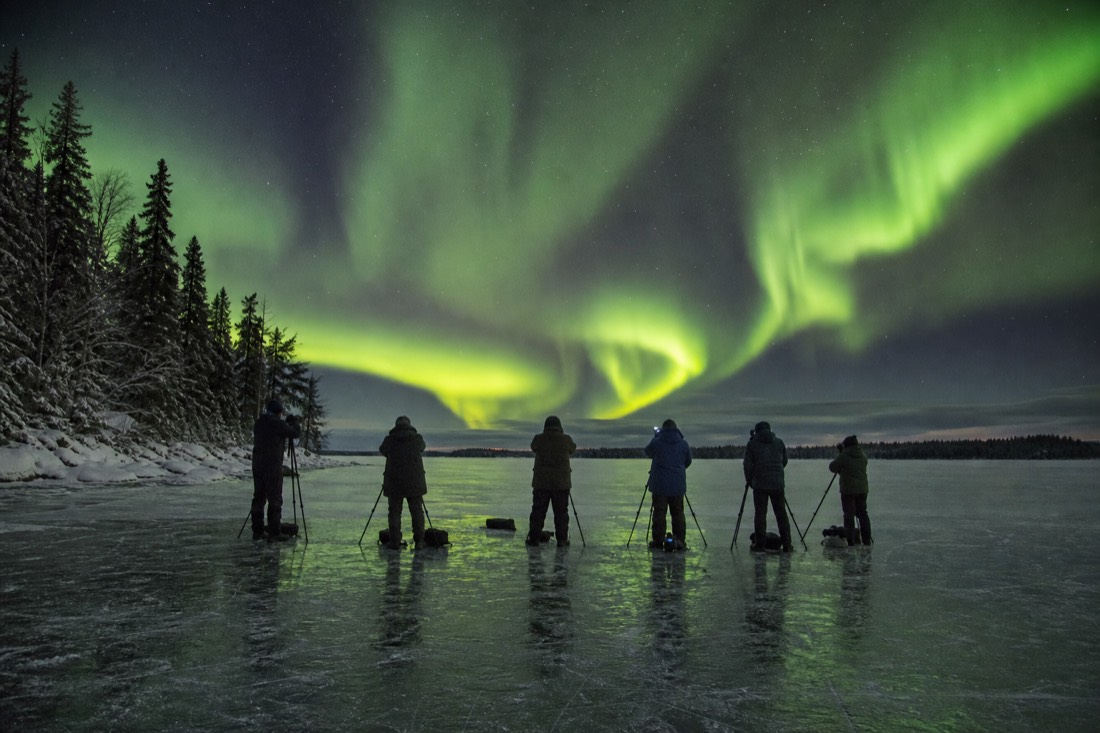
That is the trade most people get backwards. A preserve hands you guaranteed dark and unreliable aurora, while a city under the oval hands you reliable aurora with dark sky fifteen minutes from the hotel lobby, because this city is small, flat and ringed by frozen lake. The advantage that never shows up in a table is mobility. A lodge is a fixed bet on one patch of sky, whereas a hunt spends four hours driving toward whatever hole in the cloud exists that night, and cloud, not geomagnetic activity, is usually what decides whether a visitor here sees anything.
Does Yellowknife's weather actually cooperate?
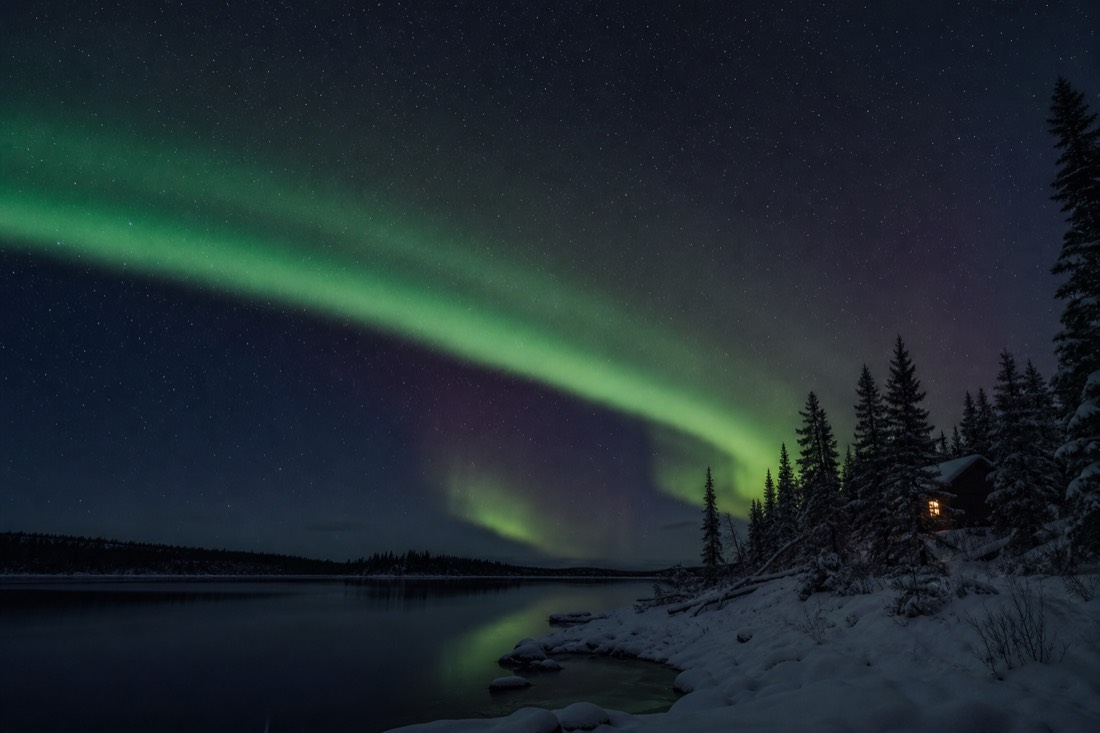
More than any aurora destination I have worked in. The subarctic interior climate runs relatively dry with a lot of clear winter nights, the land is flat to every horizon so nothing blocks a low display, and true darkness starts minutes from downtown. Cloud remains the main enemy, but you get fewer cloudy nights to fight.
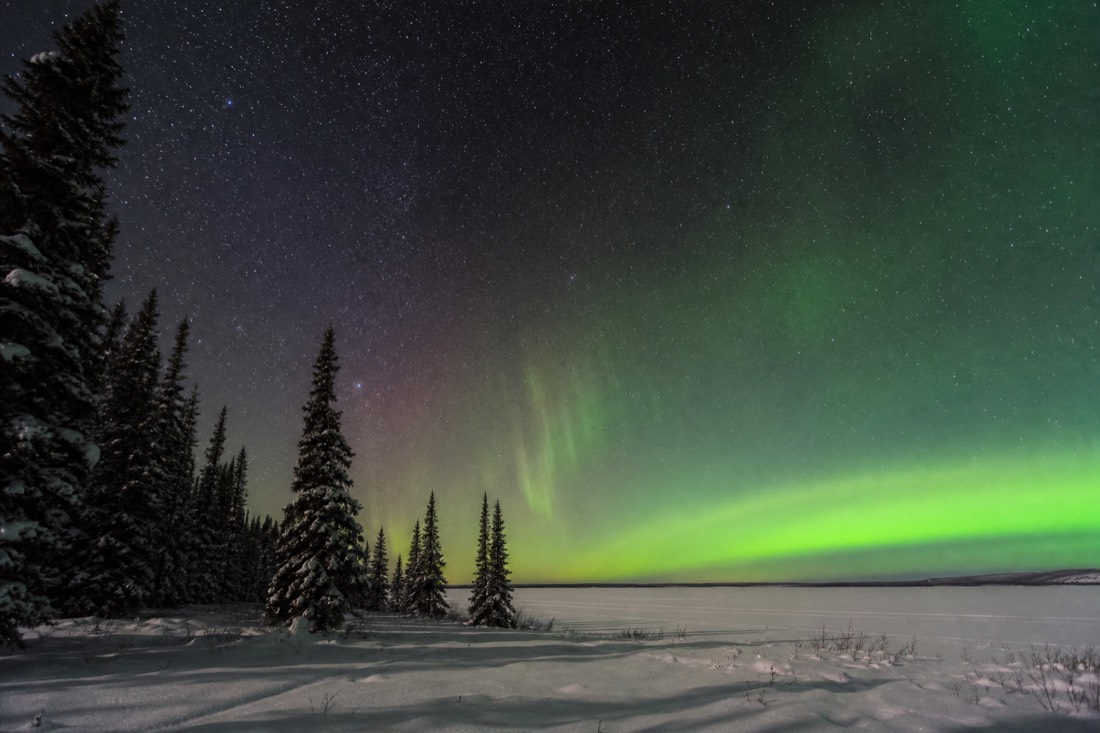
Position under the oval gets the headlines, but the supporting conditions decide real nights. Coastal aurora towns fight marine cloud. Mountain towns lose chunks of sky to ridgelines. Yellowknife's interior air is dry, its horizon is a flat ring of lake and low forest, and the city is small enough that its light dome ends almost immediately. On a hunting tour we use all three advantages at once: drive fifteen minutes, own the whole sky, and if cloud does move in, drive to the gap. The one variable weather cannot touch is daylight itself, which is why the season windows in the best-time guide matter more than any single forecast.
When is the best time to see the northern lights in Canada?
Between late August and mid-April, and the limit is darkness, not aurora. In Yellowknife the two windows run mid-August to early October and mid-November to early April. True astronomical darkness returns in the last days of August and disappears again around the 12th to 14th of April, which is precisely why the season stops where it does.
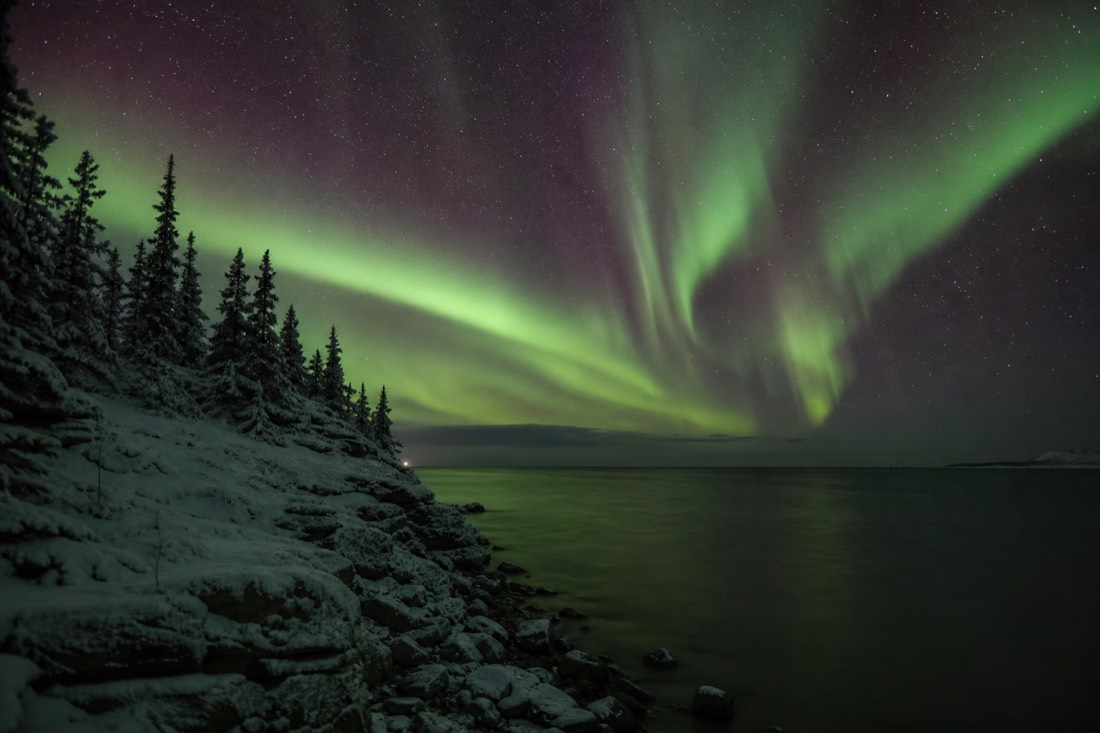
The aurora does not take the summer off. The sky does. Yellowknife sits at 62.45 degrees north, roughly 400 km south of the Arctic Circle, so there is no true midnight sun and no polar night either. At the June solstice the sun does set, it simply never drops far enough below the horizon for the sky to go properly black. Twilight all night means no visible aurora, no matter how busy the sun happens to be.
Follow the darkness instead of the calendar and the season explains itself. True astronomical darkness comes back around 27 August, at first for only a few minutes a night. By mid-September there are about five hours and twenty minutes of it, roughly nine hours by mid-October, and close to twelve hours forty-five by mid-December. Then it drains away through spring and vanishes around 12 to 14 April. The advertised aurora season starts slightly ahead of that arithmetic: mid-August nights here are dark enough for a strong display but not a faint one, and it is the last week of the month when the sky properly turns.
Latitude shifts the same pattern everywhere else in Canada, earlier at the southern end of the northern group and later at the top. I will not print invented figures for places nobody has measured for me, so the table below gives season shape and the reason behind it, with hard darkness numbers only where they genuinely exist.
| Where in Canada | Approx latitude | Season shape | What sets the limit |
|---|---|---|---|
| Yellowknife, NWT | 62.45 N | Mid-Aug to early Oct, mid-Nov to early Apr | Measured darkness: back about Aug 27, gone about Apr 12-14 |
| Whitehorse, Yukon | About 61 N | Late Aug to mid-Apr | Similar darkness window; mountains cut the usable horizon |
| Iqaluit, Nunavut | About 64 N | Late Aug to mid-Apr | Higher latitude, so the bright summer runs longer at both ends |
| Churchill, Manitoba | About 59 N | Aug to Apr | Furthest south of the northern group, so darkness returns earliest |
| Alberta dark-sky preserves | About 53 N | Dark year-round, aurora on storm nights only | Not the season but the oval, which rarely reaches this far south |
Two smaller things move your odds inside the season. A bright moon washes out faint aurora and matters most to photographers, while cloud matters to absolutely everyone. Neither is a reason to change your month. Both are reasons to book more than one night, and the full arithmetic of flights, nights and budget sits in the Canada northern lights trip planner.
When should you visit Canada's best aurora city?
Inside the two viewing seasons: mid-August to early October, when lights shimmer over open water in mild autumn air, or mid-November to early April, when long dark nights and clear cold deliver the classic show. Avoid mid-April through late July, when the midnight sun leaves the sky too bright for any aurora.
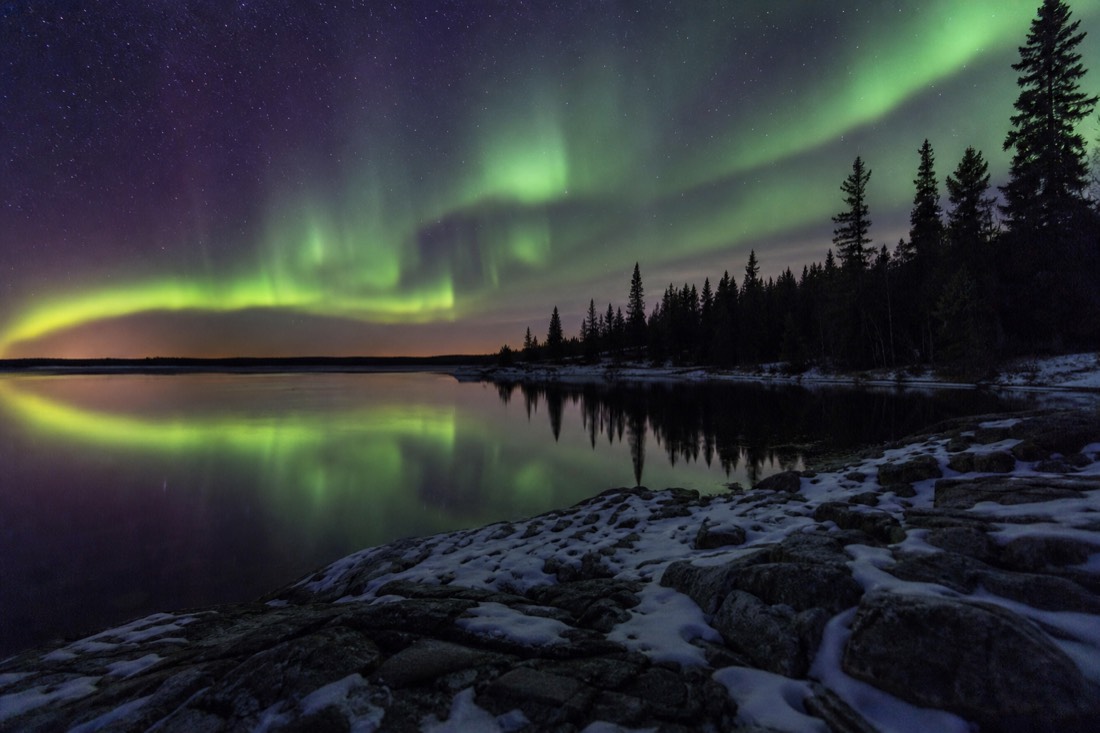
The autumn season is Yellowknife's underrated gem: milder nights, lakes still open, and the aurora doubling itself in reflection, a spectacle I wrote about in September's aurora over open water. Winter is the classic: darkness from late afternoon, snow-covered lakes as viewing platforms, and the deep-cold clarity photographers chase. Between them sits the one dead zone, roughly mid-April to late July, when about 20 hours of solstice daylight switches the show off entirely.
| Season window | The experience | Watch out for |
|---|---|---|
| Mid-Aug to early Oct | Milder nights, aurora doubled in open water | Shorter darkness early in the window |
| Mid-Nov to early Apr | Longest dark hours, snow-covered lake viewing | Deep cold; December through March nights below minus 20 are routine |
| Mid-Apr to late Jul | Midnight sun, near-22-hour solstice daylight | Zero aurora; do not book these months for the lights |
Timing inside a night is fixed year-round: activity peaks near local midnight, which is why hunts pick up between 9:30 and 10:30pm and return by 2:30am. When your dates are set, compare every option on the northern lights tours page and check live availability and prices on Viator for the flagship hunt, which sells out its 16 seats on clear-forecast nights.
What does the aurora industry here add to the answer?
Depth no rival matches. Because Yellowknife's whole visitor economy orbits the aurora, you can pick between mobile hunts, heated lodges, teepee camps, and multi-night cabin packages, with pros whose only job is finding clear sky. Being the best aurora city is partly geography and partly this machine built on top of it.
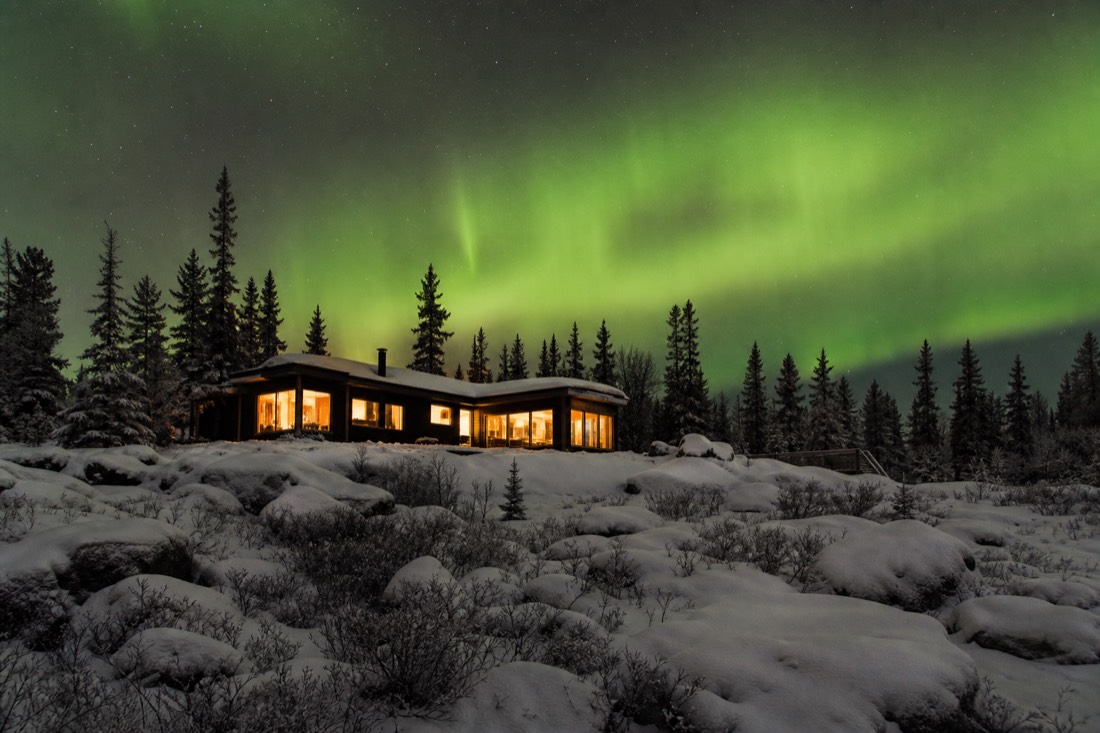
So my answer to the title question stays what it was before I ever guided a night here: Yellowknife, on the evidence. Whitehorse for a Yukon trip that includes aurora, Churchill for bears with lights as a bonus, but for a journey where the aurora is the point, one Canadian city sits under the ring itself and can prove it. Come between August and April, give it three nights, and let the sky make my argument for me.