The Best Place to See the Northern Lights in North America
Three respected sources, three different winners. Instead of adding a fourth opinion, here are the four things that decide an aurora trip, and how the continent's real contenders score on each.
 Written with Thomas Beaulieu, Yellowknife tour guide & northern lights specialist
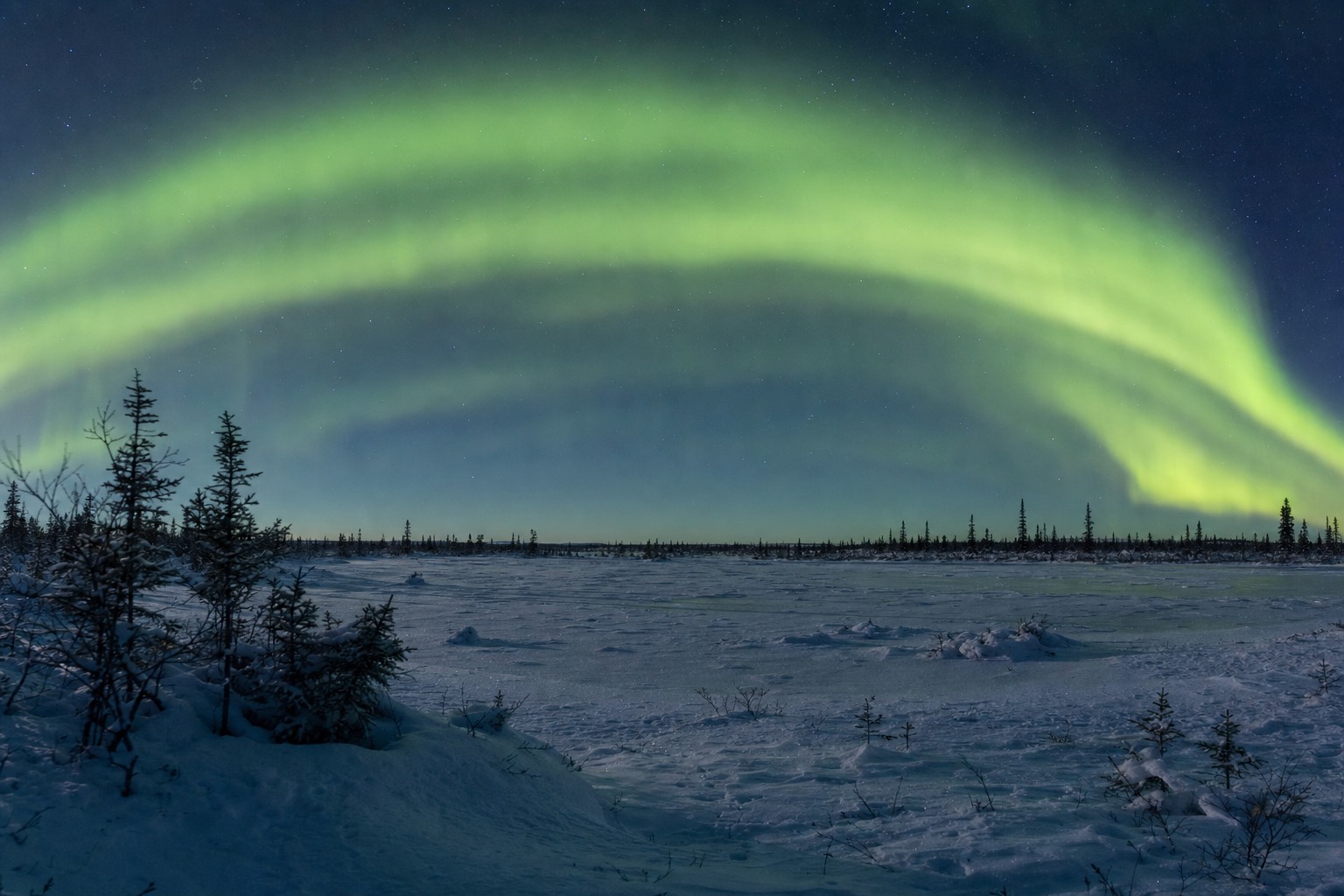
Short answer
Yellowknife, with Fairbanks the closest rival. Both sit under the auroral oval and both have dry continental skies, but only Yellowknife publishes odds: aurora visible up to 240 nights a year and a 98% chance of a sighting over a three-night stay in season. Churchill, Whitehorse and Iqaluit are genuine northern destinations, each strong on something other than reliability.
A guest handed me her phone on the drive out to the second viewpoint one January night, three browser tabs open, three different answers to the same question. One said Yellowknife. One said Fairbanks. One said Churchill. She wanted to know which article was lying to her, and the honest reply is none of them. They were arguing from different criteria without saying so out loud. Sort the criteria first and the continent falls into a fairly clear order.
What is the best place to see the northern lights in North America?
Yellowknife, on the published evidence, with Fairbanks the closest rival. Both sit under the auroral oval and both get dry continental air. Yellowknife is the one with numbers attached: aurora visible up to 240 nights a year, and a 98% chance of at least one sighting across a three-night stay in season.
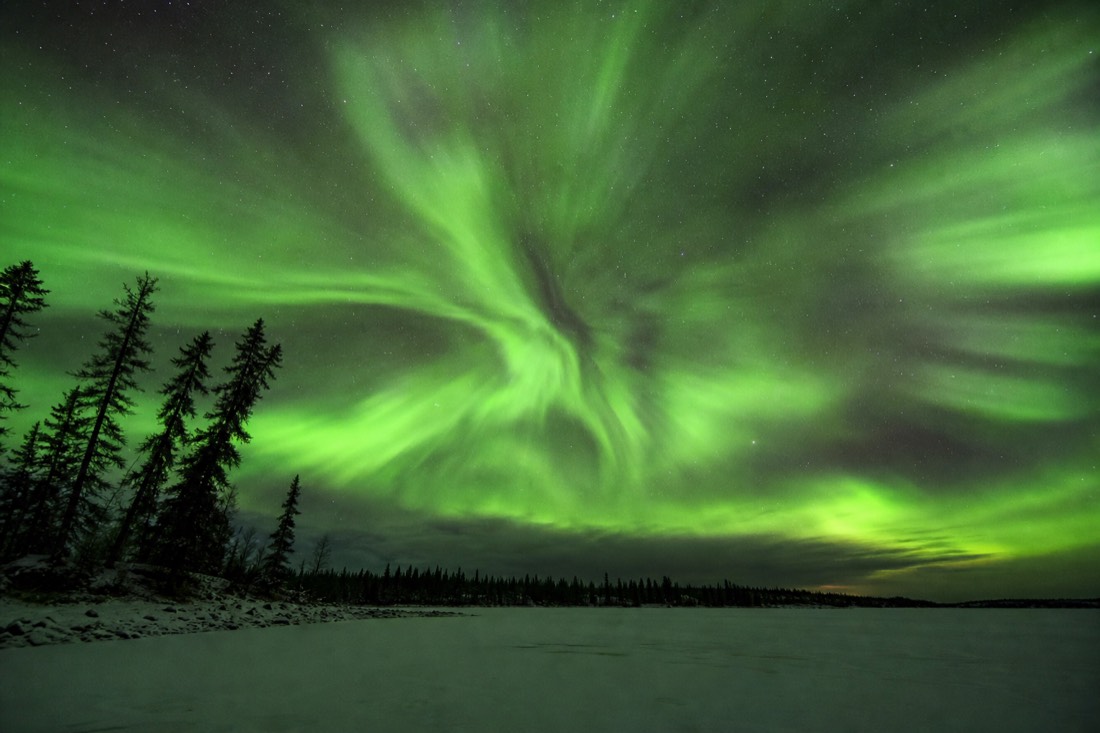
Those two figures come from NWT Tourism's aurora by the numbers page, and Canadian Geographic repeated both when it reported on chasing auroras here. I lean on them because they are the only viewing odds of that kind published for a North American aurora destination. Nowhere else on this list has an equivalent to point at, which is not the same as saying nowhere else performs well.
The North America question is genuinely different from the Canada-only version I answer in the best Canadian aurora city guide, because it drags Alaska into the room. Fairbanks is a serious opponent, better connected to most American travellers, and pretending otherwise would be marketing rather than guiding.
Why do reputable sources disagree on the best northern lights destination in North America?
Because each one is optimising for something different. Capture the Atlas and Canadian Geographic weight oval position and clear-sky reliability, which points at Yellowknife. Aurora Now comes from the forecasting side and favours Fairbanks. Frontiers North works out of Churchill, where aurora shares the bill with polar bears and belugas.
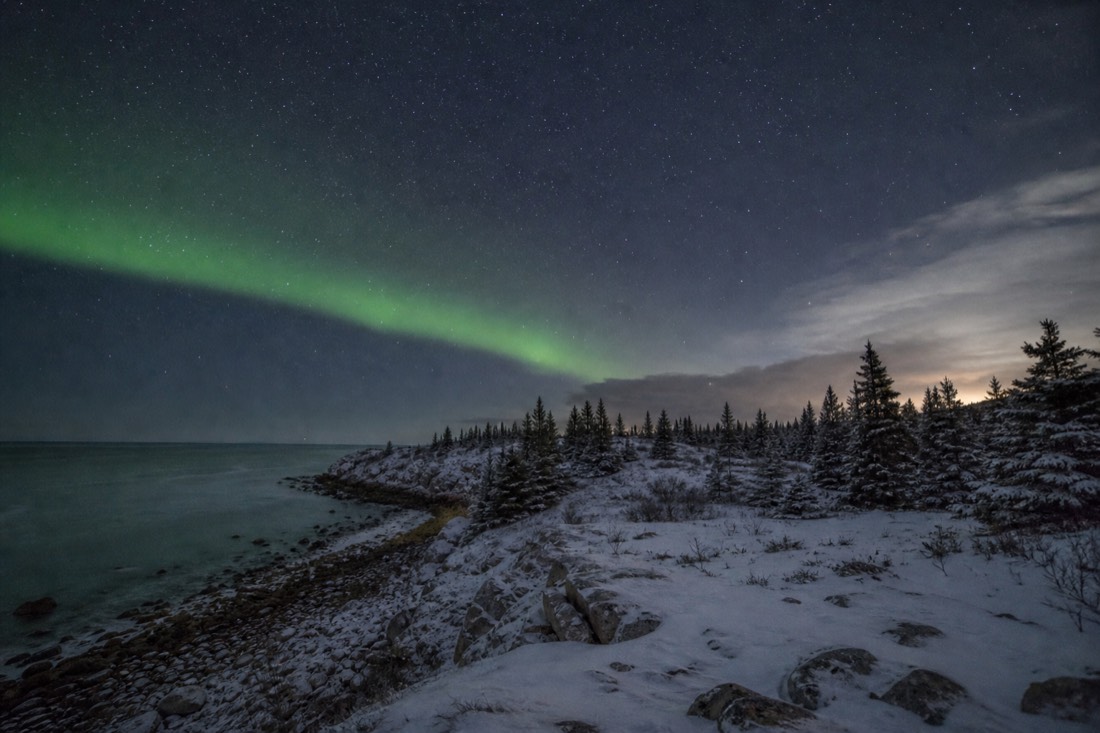
None of those verdicts is dishonest. They answer slightly different questions: where are the odds best, where is the forecasting community concentrated, where does an aurora trip come bundled with wildlife you cannot see anywhere else. A reader who only reads one of them walks away thinking the case is closed.
| Source | Crowns | The lens it is using |
|---|---|---|
| Capture the Atlas | Yellowknife | Photographer's view: oval position, clear skies, foreground lakes |
| Canadian Geographic | Yellowknife | Reported the 240-night and 98% three-night figures |
| Aurora Now | Fairbanks | Forecasting and app-user perspective |
| Frontiers North | Churchill | Operator base; aurora plus Hudson Bay wildlife |
Read them side by side and the disagreement stops looking like a contradiction. It looks like four people describing four different trips.
Which four criteria actually decide where you see the aurora?
Position under the auroral oval, clear-sky odds, season length and true darkness, and access plus what else there is to do. The first two decide whether the lights appear and whether you can see them. The third decides how many nights of the year are even eligible. The fourth decides whether the trip is worth taking.
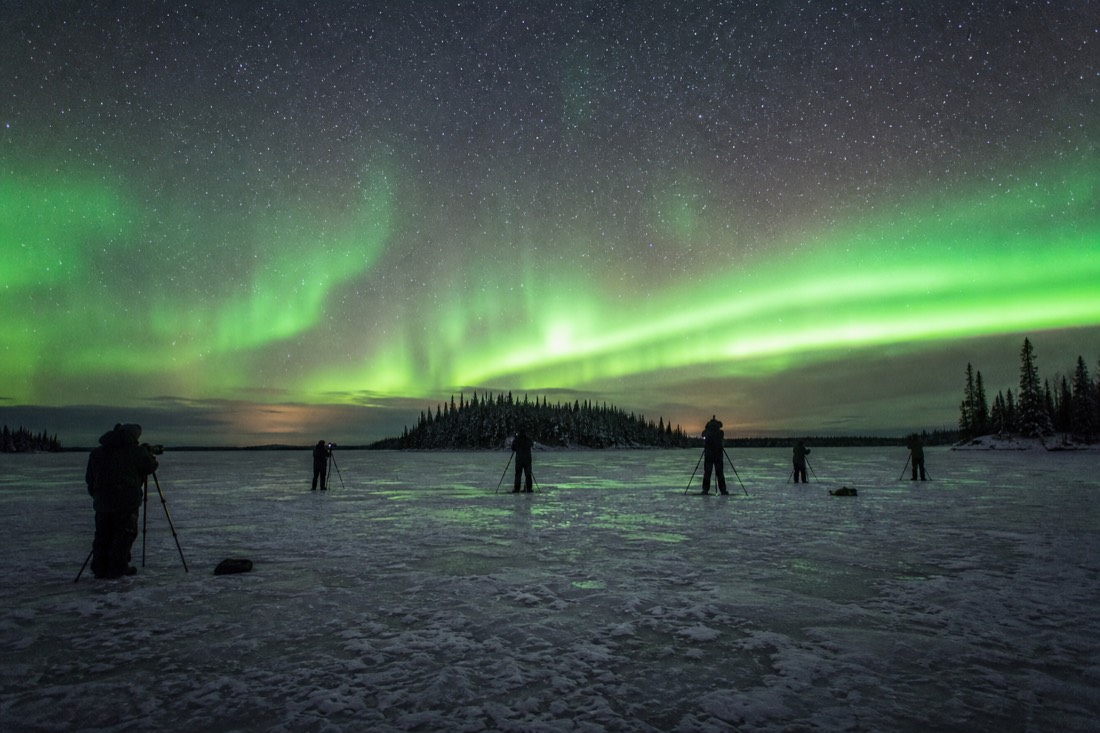
Oval position comes first because it removes the need for a storm. The Kp index runs 0 to 9 and measures global geomagnetic activity: higher Kp pushes the auroral ring further south. Sit under the ring already and a quiet Kp 1 to 3 night with clear sky will do. Sit south of it, as most of Canada and the northern United States does, and you are waiting for Kp 5 or better. I have run good hunts on a Kp 0.0 forecast.
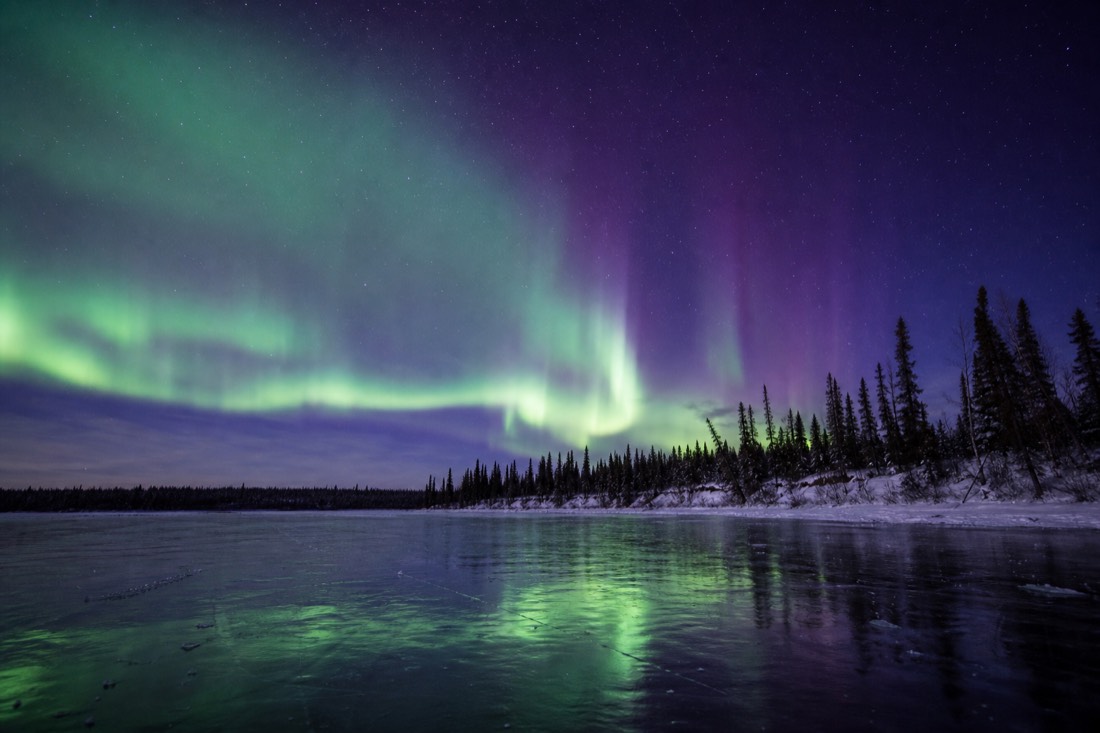
Clear-sky odds are the criterion visitors underweight most badly. Cloud, not geomagnetic activity, is what usually costs someone their night, and it is the whole reason coastal aurora destinations struggle against continental ones. That is the same structural argument I make in the Yellowknife versus Iceland comparison, and it applies just as cleanly inside North America.
Darkness sets the calendar. Aurora needs a properly dark sky, and above about 60 degrees north there are weeks in summer when true astronomical darkness simply does not exist. Access and the rest of the trip matter last but they matter: a destination with excellent odds that you can only reach by charter, and where there is nothing to do between 10am and 10pm, is a hard sell for anyone but a specialist.
How do the North American contenders score on those four criteria?
Yellowknife and Fairbanks lead on oval position and clear-sky odds. Churchill and Whitehorse score well on position but carry coastal and mountain weather. Iqaluit is remote and thin on infrastructure. The Alberta dark-sky preserves are the easiest to reach and the least reliable by a wide margin.
The scores below are my judgment as a guide who works one of these skies, not published data. Only the Yellowknife figures are measured numbers, and I have deliberately left the other cells qualitative rather than invent cloud percentages or night counts that nobody publishes.
| Destination | Oval position | Clear-sky odds | Season and darkness | Access and other things to do |
|---|---|---|---|---|
| Yellowknife, NWT | Directly under the oval; low Kp is enough | Strong: dry continental interior, flat horizon | Two seasons, roughly 240 eligible nights a year | Direct flights from Edmonton, Calgary, Vancouver; full winter tour ecosystem |
| Fairbanks, Alaska | Under the oval; the closest structural match | Strong: interior Alaska is also dry and continental | Long dark winter at a higher latitude | Best US connections of the group; substantial visitor infrastructure |
| Whitehorse, Yukon | High enough for regular in-season viewing | Mixed: mountain weather moves fast, ridgelines eat sky | Full winter season | Scheduled flights via western hubs; broad Yukon adventure menu |
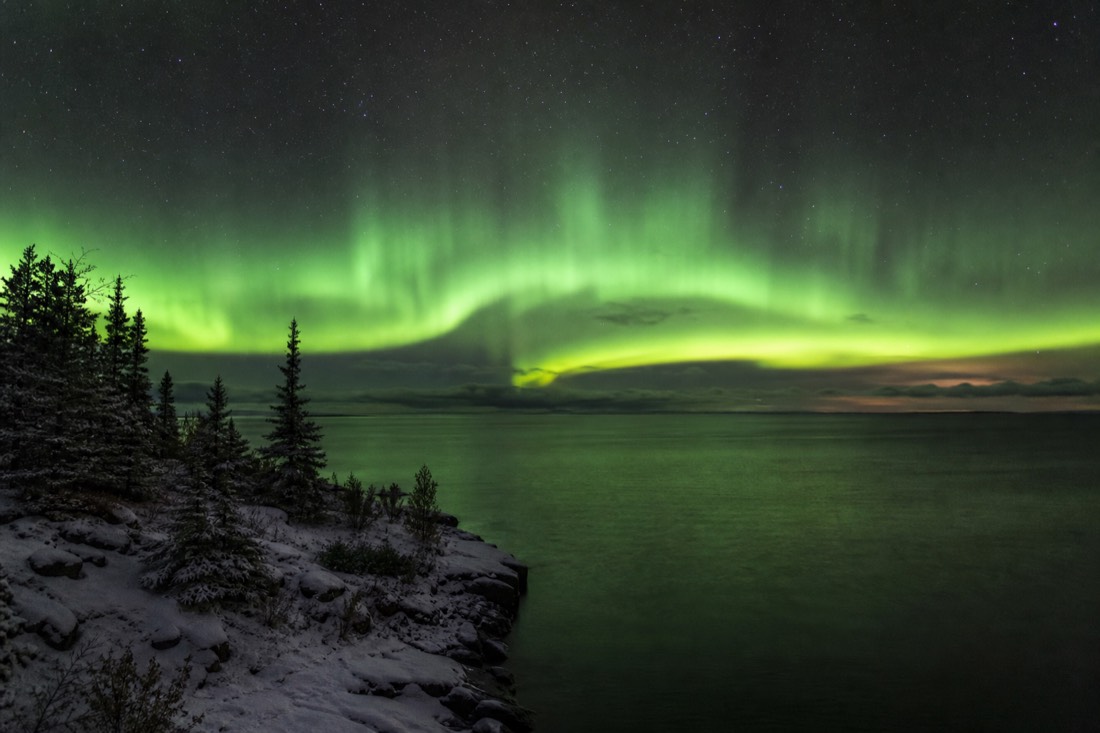
| Churchill, Manitoba | Effectively under the oval thanks to the magnetic pole's position | Mixed: Hudson Bay coastal cloud | Full winter season | No road access, fly or train; polar bears and belugas in their own seasons |
| Iqaluit, Nunavut | Far north, and further north is not automatically better | Mixed: eastern arctic coastal weather | Full winter season | No road access, expensive, very limited aurora tour industry |
| Alberta dark-sky preserves | South of the oval; needs a real storm | Variable, and mountain sky in Jasper is unpredictable | Dark skies protected, aurora nights sparse | The easiest of all to reach from a major airport |
The Iqaluit row is where most people's instinct fails. Going further north feels like it should improve the odds, and past a point it does the opposite: the high arctic sees aurora on the order of 50 nights a year against Yellowknife's 240, because the oval is a ring and you can overshoot it. Whitehorse gets the fuller treatment in the Yellowknife versus Whitehorse guide, and Fairbanks in the head-to-head with Fairbanks.
When is aurora season at each destination, and how dark does it actually get?
Every northern contender runs roughly the same shape of season: nothing usable through high summer, then aurora from late August or early September until early or mid-April. What differs is where the summer blackout starts and ends, and only Yellowknife's darkness window is measured precisely here.
Yellowknife sits at 62.45 degrees north, about 400 km south of the Arctic Circle, and true astronomical darkness returns in the last days of August, around the 27th or 28th. It vanishes again around the 12th to 14th of April. Those two dates, not tradition or marketing, are why the season runs mid-August to early October and mid-November to early April. By mid-December the sky here is properly dark for close to 12 hours and 45 minutes.
For the rest I will describe the pattern rather than fake the arithmetic. Latitude drives it: the higher you go, the longer the summer blackout, so Fairbanks and Iqaluit lose their dark skies earlier in spring and get them back later than Churchill does. The month-by-month detail for our sky lives in the best time to visit guide.
| Destination | Approx latitude | Season shape | Darkness note |
|---|---|---|---|
| Yellowknife, NWT | 62.45 N | Mid-Aug to early Oct, mid-Nov to early Apr | Measured: true darkness returns about Aug 27-28, gone about Apr 12-14 |
| Fairbanks, Alaska | about 65 N | Late Aug to mid-Apr | Higher latitude, so the summer blackout runs longer at both ends |
| Iqaluit, Nunavut | about 64 N | Late Aug to mid-Apr | Similar blackout length to Fairbanks; no published local figures quoted here |
| Whitehorse, Yukon | about 61 N | Late Aug to mid-Apr | Close to Yellowknife's window; mountains shorten the usable horizon |
| Churchill, Manitoba | about 59 N | Aug to Apr | Furthest south of the northern group, so darkness returns earliest |
| Alberta dark-sky preserves | about 53 N | Year-round darkness, aurora only on storm nights | Dark sky is protected here, but the oval rarely reaches this far |
Which northern lights destination suits your kind of trip?
A first-timer with three nights wants the highest published odds and hotel pickup. A photographer wants foreground and clear air. A family wants short transfers, warm shelter and daytime activities. A bucket-list traveller may happily trade reliability for polar bears or for the far end of the map.
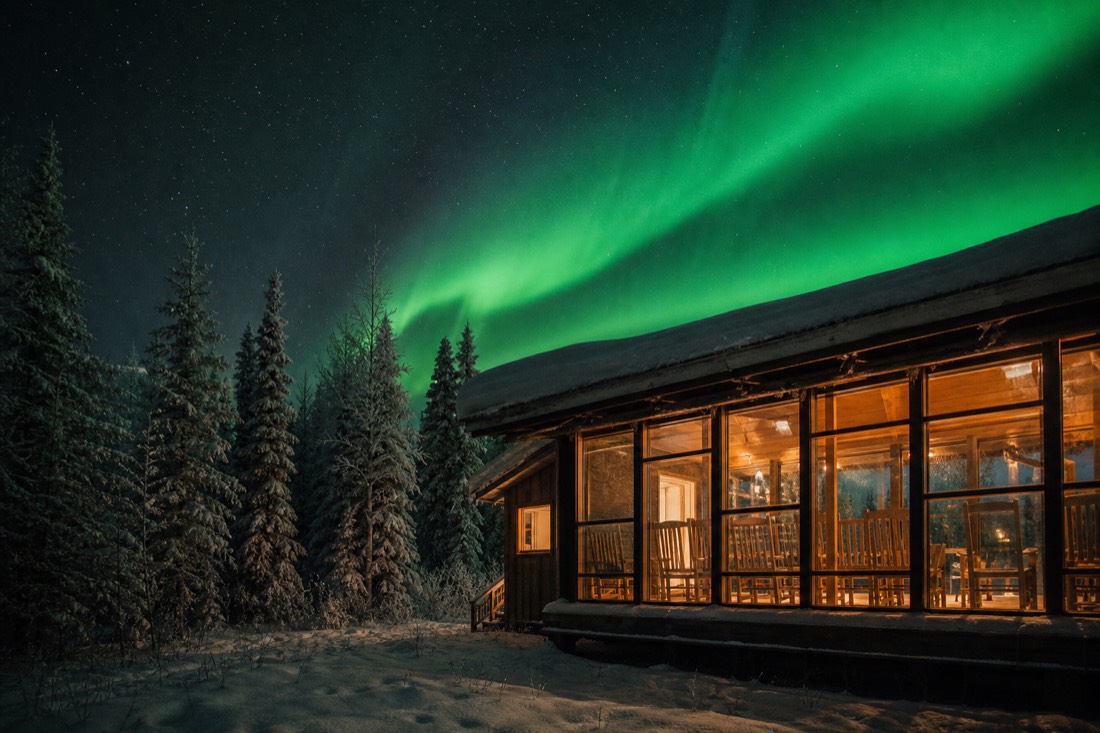
This is the table I actually use when someone emails asking whether to come here or go somewhere else. Sometimes the honest answer is somewhere else, and I would rather say so than sell a trip that disappoints.
| Traveller | Best fit | Why | Poor fit |
|---|---|---|---|
| First-timer, 3 nights | Yellowknife | The 98% three-night figure exists for exactly this trip; every tour includes hotel pickup | Iqaluit, Alberta preserves |
| Photographer | Yellowknife or Fairbanks | Dry air, dark nights, and in Yellowknife flat lake foregrounds in every direction | Churchill, where coastal cloud is the variable |
| Family with kids | Yellowknife or Fairbanks | Heated lodges and huts, short drives, dog sledding and snowmobiling by day | Iqaluit, on cost and logistics |
| Bucket-list wildlife traveller | Churchill | Polar bears and belugas in season, aurora as the night half of the trip | Anywhere judged on aurora reliability alone |
| Easy weekend from a big city | Alberta dark-sky preserves | Simple to reach, genuinely dark, no flight north | Anyone who wants a near-certain sighting |
| Multi-activity northern trip | Whitehorse | Aurora sits inside a wide Yukon adventure menu | Travellers whose only goal is the lights |
When the aurora itself is the point of the trip, compare the options on the northern lights tours page and check live availability and prices on Viator for the flagship hunt, which fills its 16 seats fast on clear-forecast nights. Prices move on the live listings, and any comparison that quotes multi-day package totals across different destinations is comparing bundles, not aurora.
Is Fairbanks or Churchill ever the better call?
Yes, and the reasons are easy to name. Fairbanks wins on flight connections for most American travellers and matches Yellowknife structurally on oval position and dry air. Churchill wins outright if you want polar bears or belugas in the same trip, which no other contender on this list can offer.
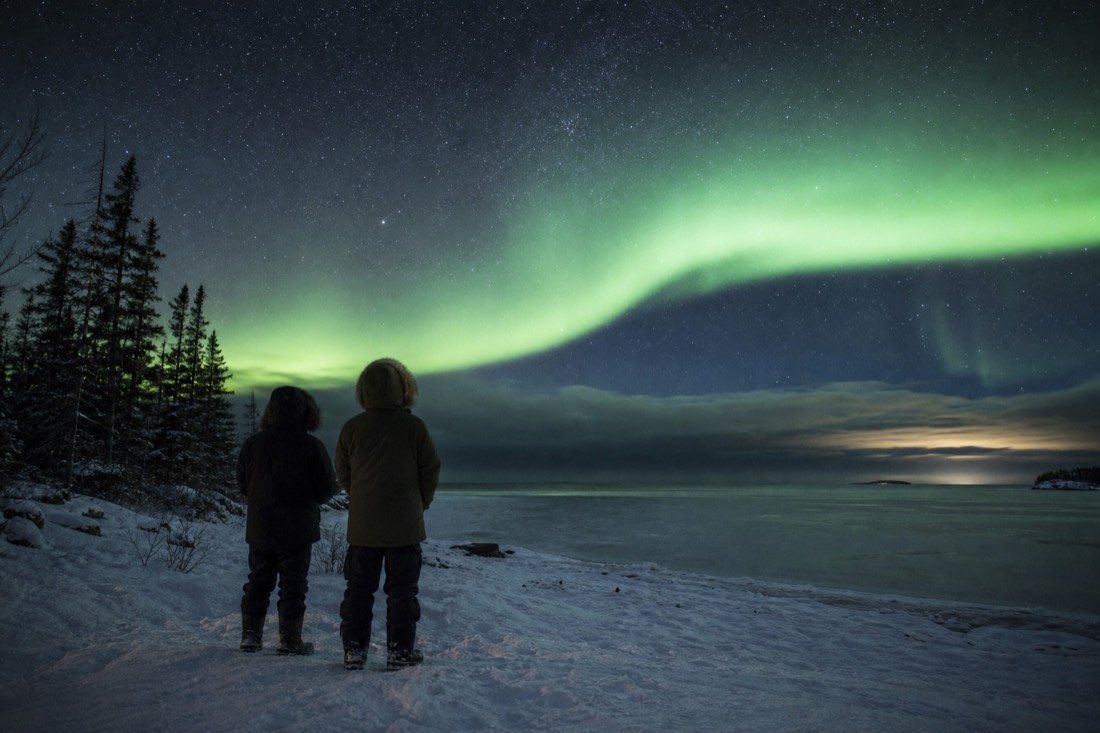
What I will not concede is the reliability argument. Position under the oval plus dry continental sky plus a small city whose light dome ends fifteen minutes out of town is a combination Yellowknife holds as well as anywhere on the continent, and it is the only one of these places that publishes what that combination is worth over a three-night stay. If your holiday is short and the lights are the reason for it, odds should outrank everything else, which is the same logic behind the realistic chances guide.
So the disagreement between the sources is real, and it resolves once you say which criterion you care about. Bears, Churchill. Cheap flights from Seattle or Chicago, Fairbanks. A Yukon road trip with lights on top, Whitehorse. Odds, and only odds, and the answer sits under the oval on the north shore of Great Slave Lake, which is also the case I make for the town itself in is it worth visiting. Give it three nights between late August and early April and let the sky finish the argument.