Yellowknife vs Whitehorse: Which Northern City Fits Your Trip?
One is a mountain town on a famous highway, the other a lake town directly under the auroral oval. Both are worth flying north for. The right pick depends on what your trip is actually about.
 Written with Thomas Beaulieu, Yellowknife tour guide & northern lights specialist
Short answer
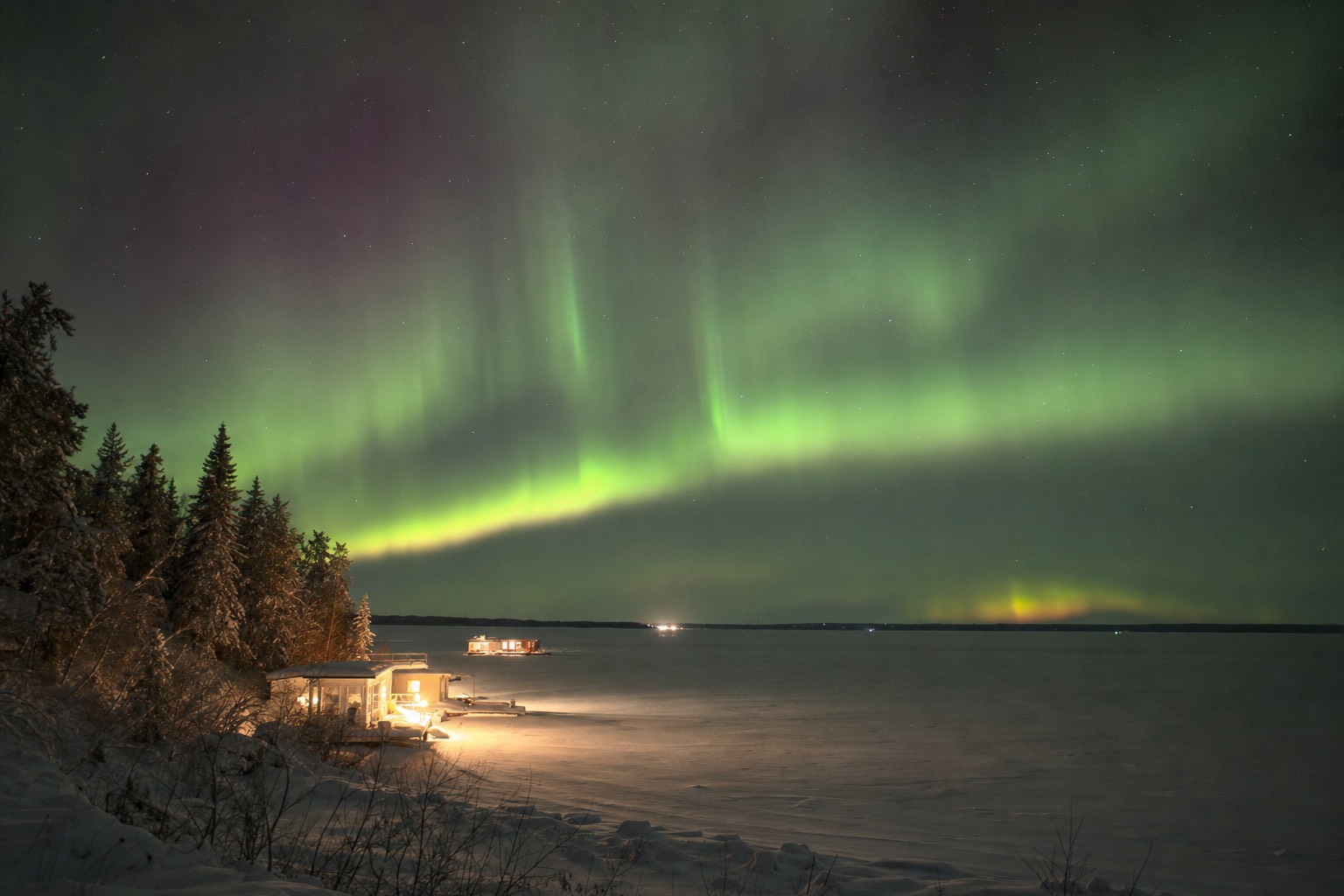
For a northern lights trip, Yellowknife: it sits directly under the auroral oval, with aurora visible up to 240 nights a year and a 98% chance over three nights in season. For a mountain road-trip with milder winters and summer hiking, Whitehorse. Neither is a wrong answer, they are different trips.
Whitehorse people and Yellowknife people rib each other the way siblings do, and I say that with affection, because half the pilots and cooks I know have worked in both towns. When a guest asks me which city is nicer, they are really asking two questions at once: which place is more pleasant to stand in, and which one delivers the trip they came north for. Those have different answers, so let me take them apart honestly.
Which is nicer, Whitehorse or Yellowknife?
Nicer depends on what you rate. Whitehorse has the prettier postcard: mountain scenery, milder winters, and a big highway network that makes it Canada's northern road-trip base. Yellowknife has the stronger character: a gold-rush lake town directly under the auroral oval, with the country's best published aurora numbers.
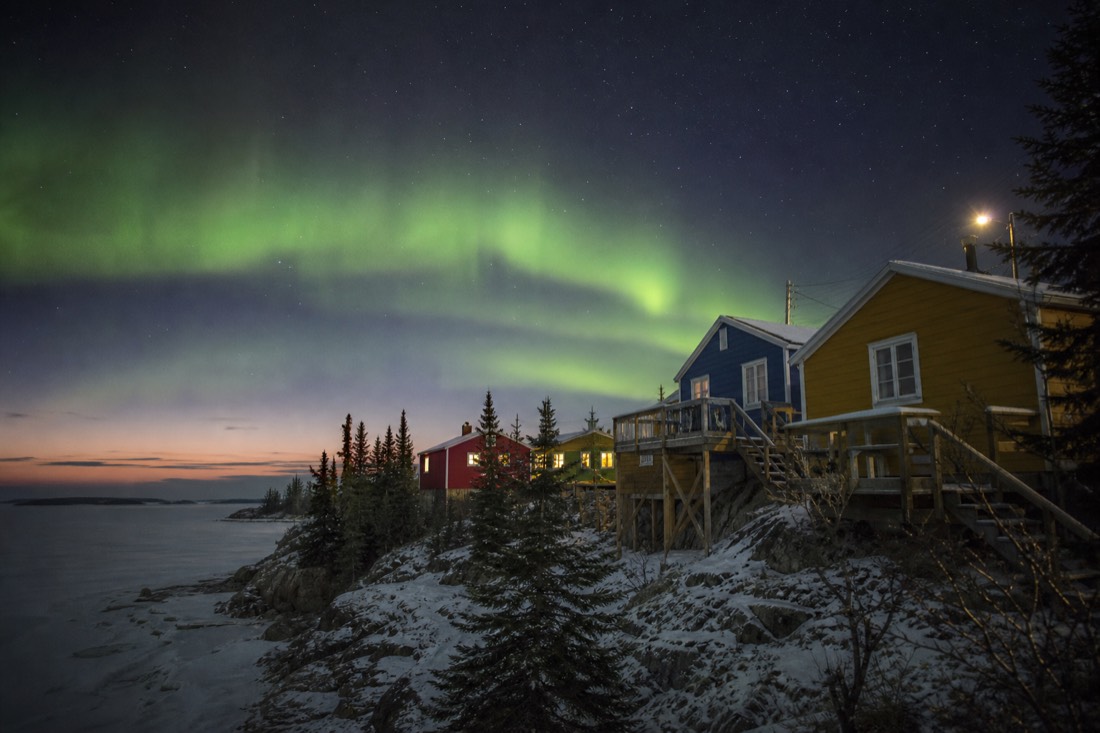
Whitehorse is the Yukon's capital, and it looks the part of a mountain town: peaks near the horizon, a storied highway running through, and a strong summer hiking culture. Winters there run milder than ours. If your mental image of the north is ridgelines and river valleys, Whitehorse matches it.
Yellowknife grew up differently. We are a 1930s gold-rush town turned diamond capital, built on bare Canadian Shield rock on the north shore of Great Slave Lake, the deepest lake in North America at 614 metres. Old Town still has its shacks and its famous Ragged Ass Road, the Bush Pilots Monument still looks out over a bay full of houseboats, and the city stays small enough that dark sky starts minutes from downtown. Prettier is arguable. More distinct is not, in my biased but honest opinion.
Here is the side-by-side, kept fair: qualitative where I am describing their town, factual where I am describing mine.
| Whitehorse | Yellowknife | |
|---|---|---|
| Setting | Mountain scenery, river valley, highway hub | Lake plain on Great Slave Lake, deepest in North America at 614 m |
| Winter feel | Milder northern winters | Deep dry cold, January highs around -21.6C, mean near -25.5C |
| Aurora position | Sees real aurora nights | Directly under the auroral oval, up to 240 nights/yr |
| Signature season | Summer hiking and road trips | Winter and aurora seasons |
| Town character | Yukon road-trip base | Gold-rush Old Town, houseboats, ice road, snow castle |
Is the Yukon or Yellowknife better for the northern lights?
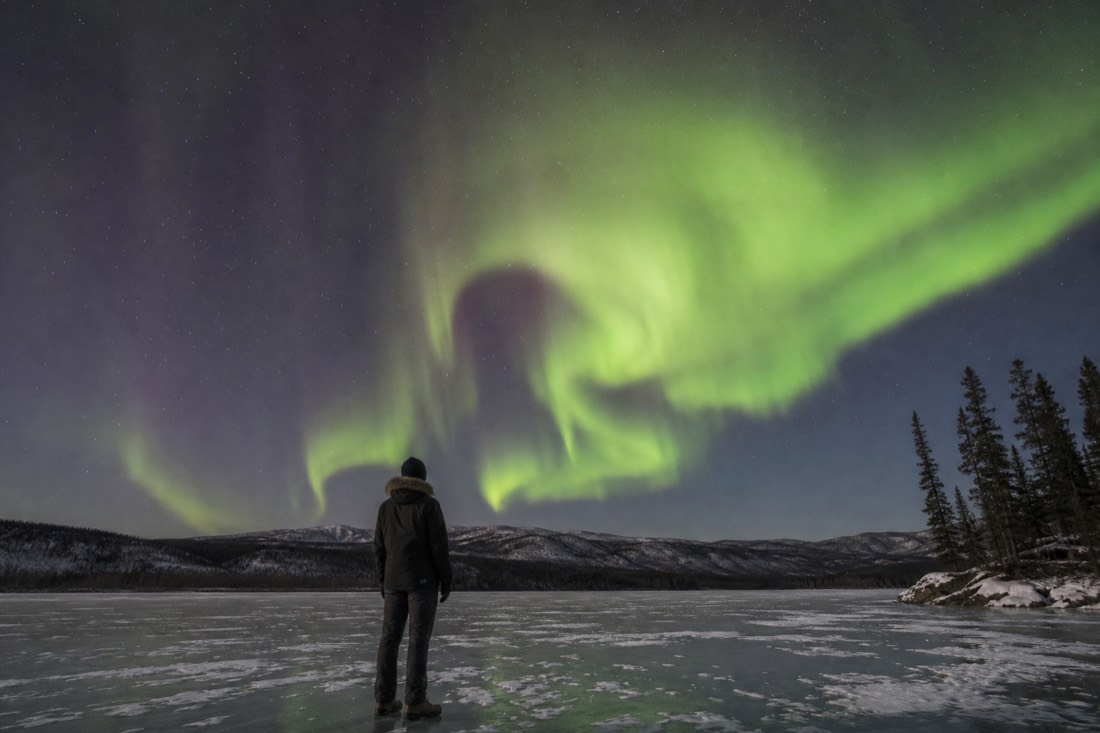
Yellowknife, on the numbers. Whitehorse gets genuine aurora nights and nobody serious denies it. But Yellowknife sits directly under the auroral oval, with published figures behind the claim: aurora visible up to 240 nights a year and a 98% chance of at least one sighting over a three-night stay in season.
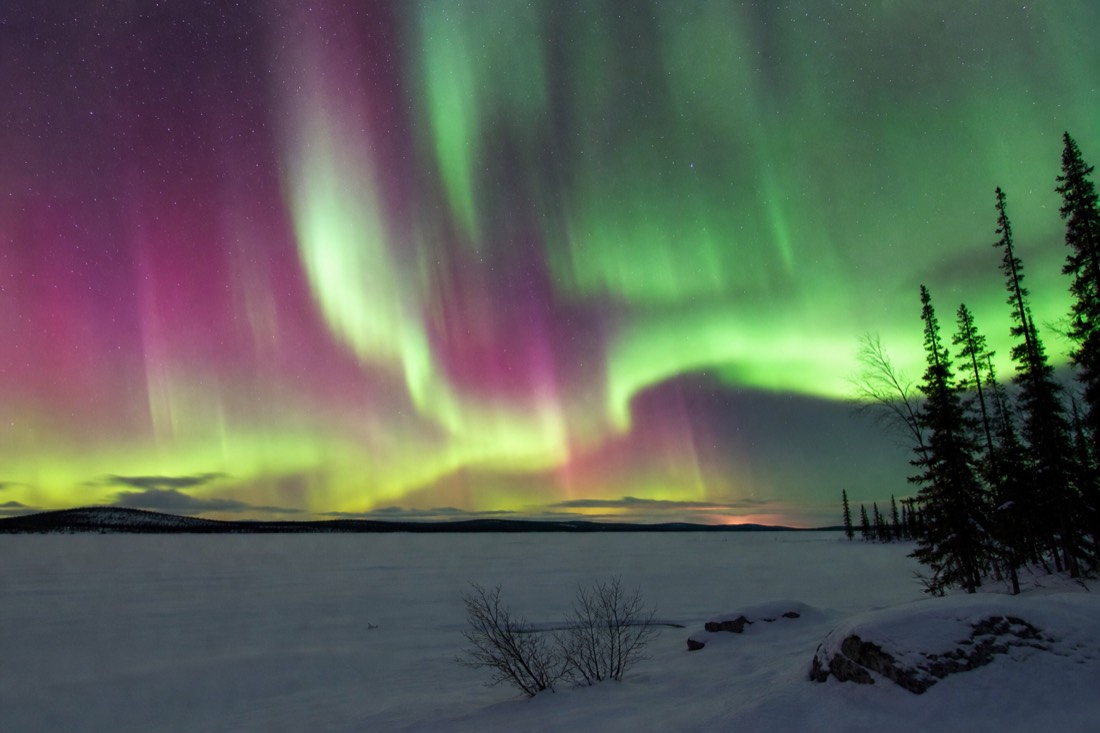
This is the question I can answer with sources instead of loyalty. NWT Tourism publishes the viewing numbers: up to 240 possible aurora nights a year here, against roughly 50 in the high arctic further north, and that 98% three-night figure. The reason is position. Under the oval, low activity is enough for a show. One review of our flagship hunt describes a good display on a night the forecast read Kp 0.0. When a strong storm hits, the oval pushes south toward everyone else; we just get a louder version of a normal night.
The viewing geometry helps too. Great Slave Lake gives us flat, uninterrupted horizons in nearly every direction, so a low early-evening arc is visible here from the ground up. The tour industry is also denser in Yellowknife: multiple operators running nightly in season, hotel pickup around 9:30 to 10:30pm, back by about 2:30am. The practical logistics look like this.
| Aurora logistics in Yellowknife | Detail |
|---|---|
| Autumn season | Mid-August to early October, lights over open lakes |
| Winter season | Mid-November to early April, longest dark |
| No-aurora window | Roughly mid-April to late July (midnight sun) |
| Typical tour rhythm | Pickup 9:30-10:30pm, return 1:30-2:30am |
| Peak activity | Near local midnight |
| Activity needed | Low Kp suffices under the oval |
How those seasons and odds interact night by night is covered in chances of seeing the northern lights in Yellowknife. And if the city you are actually torn between is in Alaska, the same fair treatment lives in Yellowknife vs Fairbanks.
What is winter actually like in each city?
Whitehorse winters run milder, which some travelers count as a win. Yellowknife winters are colder and drier: January highs average about -21.6C with nights near -29C, and the payoff is stable clear sky. Operators run heated vans and huts, and arctic clothing rents by the day in town.
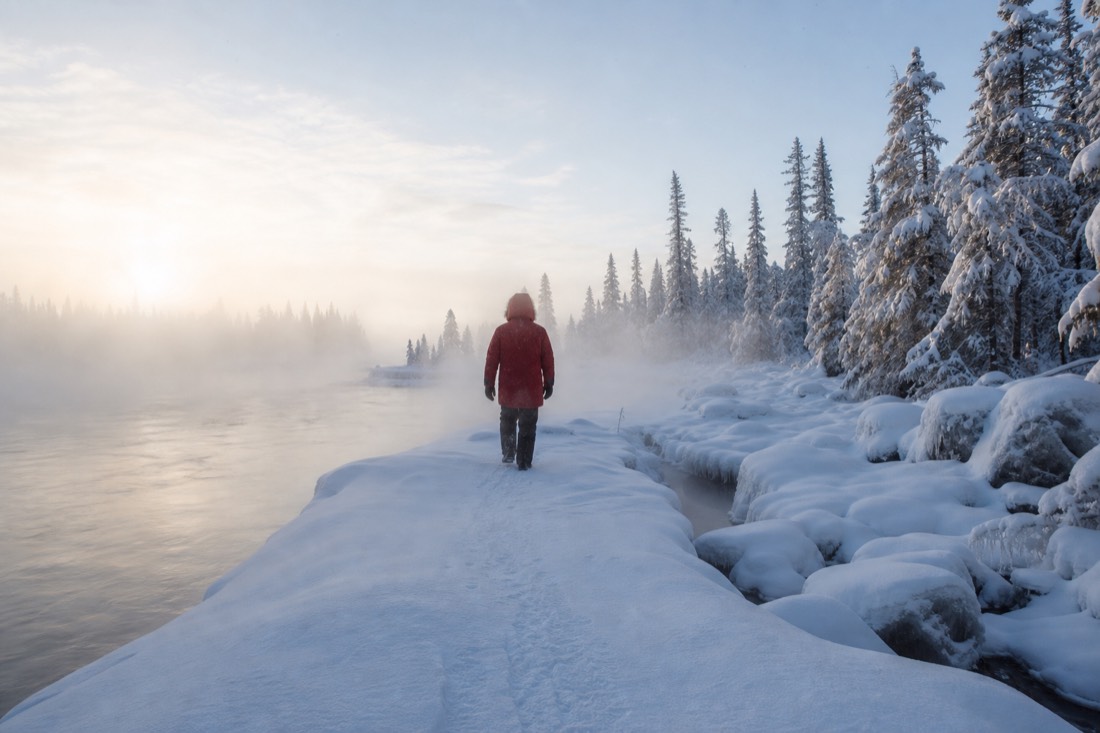
I will not pretend our cold is cosmetic. Yellowknife's all-time record, checked against the archives by Cabin Radio, is -51.2C, set back in 1947. A normal deep-winter night sits below -20 and -30 happens. But dry cold behaves. Dress for it, and it becomes part of the show: squeaking snow, ice fog, sundogs. Several outfits in town rent full arctic kit, parka, wind pants, boots and mitts, so nobody needs to buy a wardrobe for one week. The full clothing plan is in what to wear in a Yellowknife winter.
The trade is simple. Milder Whitehorse winters are easier on the body. Colder, drier Yellowknife winters are kinder to your aurora odds and give the season its texture. Pick the trade that matches your goal.
What does Great Slave Lake add that mountains cannot?
A whole winter culture that happens on the lake, not beside it. From roughly late December to mid-April you can drive the 6.5 km Dettah ice road in an ordinary car, walk a bay dotted with about 50 houseboats, and in March visit the SnowKing snow castle built on the frozen bay itself.
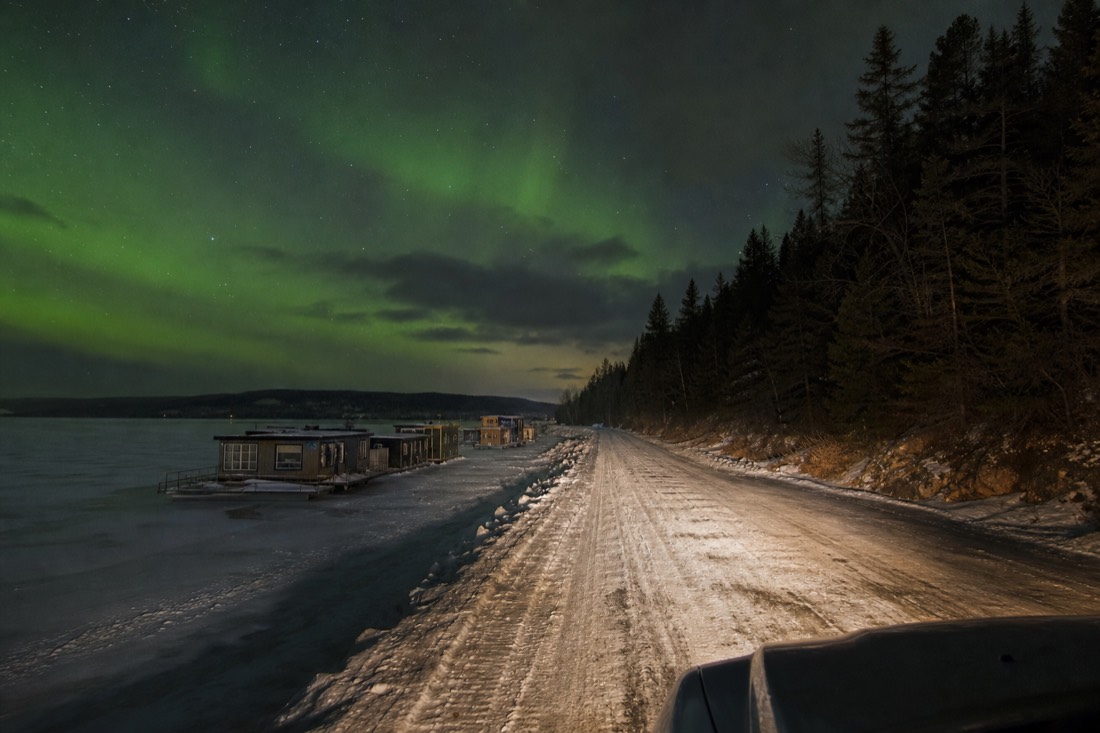
Mountains are scenery you look at. A frozen great lake is scenery you use, and that is the part of a Yellowknife winter that surprises people most. The public ice road to the Yellowknives Dene community of Dettah is a real road, plowed and driven daily by regular sedans, and driving the Dettah ice road is a rite of passage I send every winter guest on. The houseboats of Yellowknife Bay sit frozen-in below Old Town all winter. Every March the SnowKing festival raises an actual snow castle on the bay, March 1 to 28 in 2026, with 2027 dates already announced.
| Great Slave winter fixture | The facts |
|---|---|
| Dettah ice road | About 6-6.5 km across the bay, open roughly late December to mid-April, public, regular cars |
| Houseboats | Around 50 in Yellowknife Bay, viewable from the Old Town shore |
| SnowKing snow castle | Every March; March 1-28, 2026 confirmed |
| The lake itself | Deepest in North America, 614 m; lake trout, whitefish, pike, burbot under the ice |
The town side is walkable in an afternoon but better with stories attached. A local-guided city tour covers Old Town, the Bush Pilots Monument, the Legislative Assembly and a northern wildlife gallery, holds a 5.0 rating across 27 reviews, and you can check live availability and prices on Viator before your dates fill. The wider activity menu, from dog sledding to ice fishing, is mapped in things to do in Yellowknife in winter.
Which city is easier to get to?
Both are one flight from a major western hub. Yellowknife has direct service from Edmonton, Calgary and Vancouver, plus seasonal routes including Ottawa and Toronto, on Air Canada, WestJet, Canadian North and Air North. Whitehorse adds the road option: it sits on the highway network, so you can drive in.
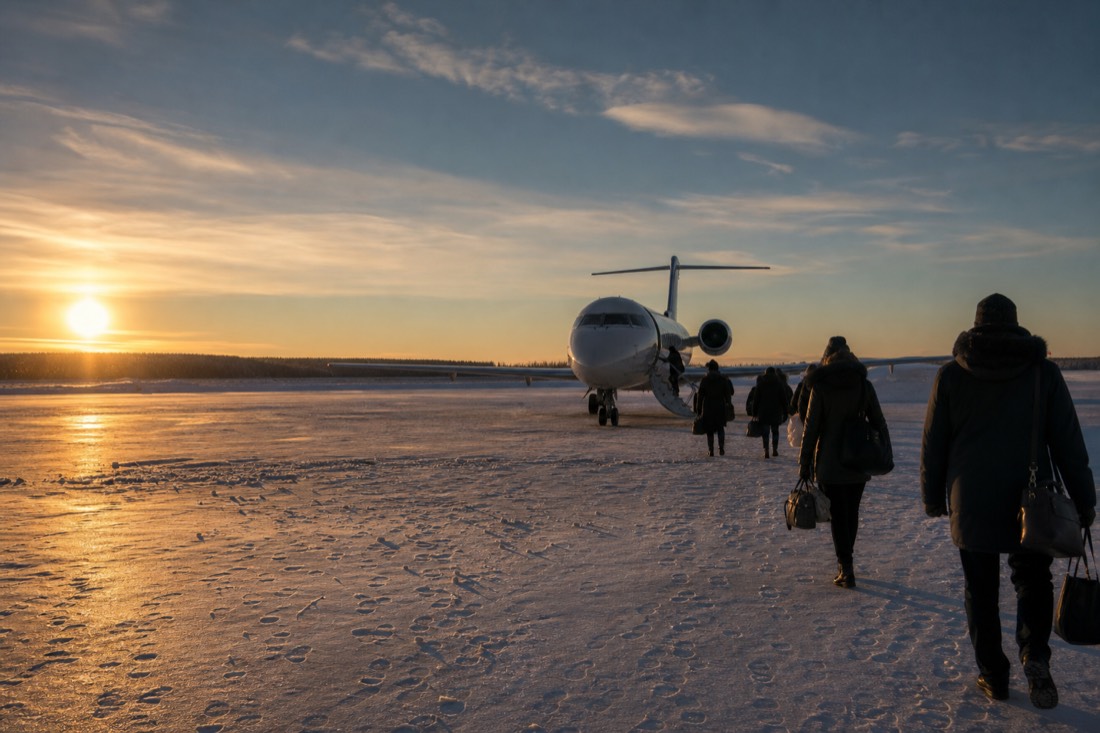
Access is the one category where the honest answer is a shrug: both cities are easy by northern standards. Yellowknife's direct flights from three western hubs mean most itineraries are a single connection from anywhere in the world, and there is even a Whitehorse route on the map, so some travelers do both capitals in one trip. Details, timings and airport notes are in getting to Yellowknife.
Whitehorse's genuine advantage is rubber on road. It is the north you can drive to on a classic highway itinerary. If the drive is the point, that settles it, and I will wave as you pass.
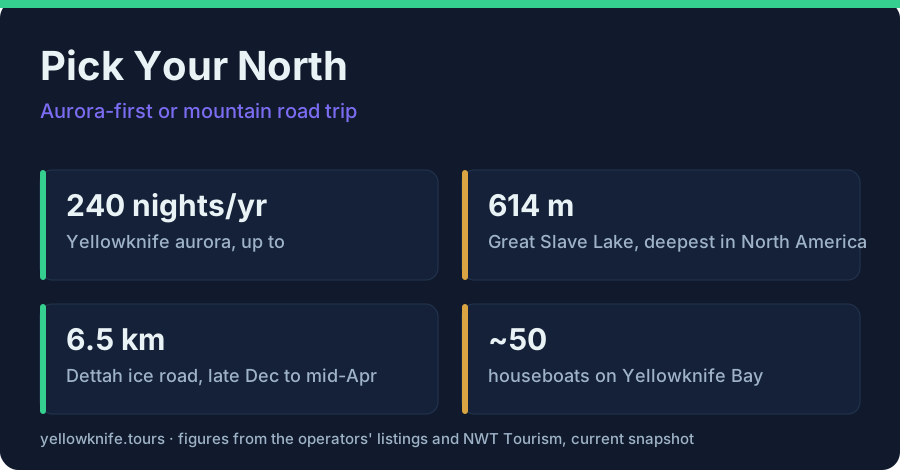
So which one should you pick?
Pick by trip goal. Aurora-first: Yellowknife, and it is not close on published numbers. Mountain road-trip, milder winter, summer hiking: Whitehorse. Winter culture on a frozen great lake: Yellowknife. Driving the north in your own vehicle: Whitehorse. Doing both in one itinerary is genuinely possible.
| Your trip is about | Book | The deciding fact |
|---|---|---|
| Seeing the aurora, above all | Yellowknife | Up to 240 nights/yr, 98% over 3 nights in season |
| A mountain road-trip | Whitehorse | Highway network and mountain scenery |
| Deep-winter atmosphere | Yellowknife | Ice road, houseboats, snow castle, dry stable cold |
| Milder-weather winter comfort | Whitehorse | Gentler winters by northern standards |
| Summer hiking | Whitehorse | Its strongest season |
| Summer under the midnight sun on a lake | Yellowknife | About 20 hours of June daylight, no aurora until mid-August |
Whichever capital you choose, choose it for the right trip and you will come home defending it like a local. If the lights are the point, my money and my working nights are here, and the honest odds math in chances of seeing the northern lights in Yellowknife is where I would start planning.