Dene Culture in Yellowknife: Whose Land You Are Standing On
Yellowknife sits in Akaitcho territory, and the city carries the name of the people who were here first. Here is what a visitor can honestly see, hear and eat, without pretending to more.
 Written with Thomas Beaulieu, Yellowknife tour guide & northern lights specialist
Short answer
Yellowknife stands in Akaitcho territory, the home of the Yellowknives Dene First Nation and its two communities, Detah and Ndilo. The city's name comes from the copper-bladed knives the Yellowknives Dene were known for. Visitors meet Dene culture most directly at the free Prince of Wales Northern Heritage Centre and on tours run by North Star Adventures, which is 100% Indigenous-owned.
The question comes up on nearly every aurora night, usually somewhere around midnight when the sky finally opens. Someone asks me what the local people believe about the lights. I used to answer with more confidence than I had earned. Now I tell guests one story, name where it is published, and stop there, because the rest is not mine to hand out. Yellowknife sits in Akaitcho territory, and the Yellowknives Dene are not a chapter of local history. They are neighbours, two communities across and around the bay, living here now.
Who are the Yellowknives Dene?
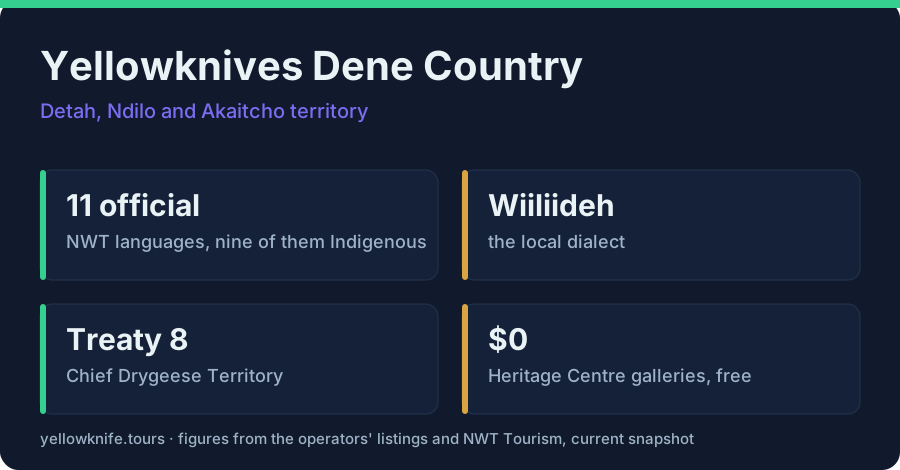
The Yellowknives Dene First Nation is the Indigenous nation whose territory Yellowknife occupies, with two communities: Detah, across Yellowknife Bay, and Ndilo, at the end of Latham Island in Old Town. The area is Akaitcho territory, also called Chief Drygeese Territory, and it falls under Treaty 8.
Start with the city's own name, because most visitors never learn it. Yellowknife refers to the copper-bladed knives the Yellowknives Dene were known for. The town on the map is named after them, which is a fairly direct way of saying who was here first. I cover the naming story alongside the gold and diamond history in what Yellowknife is famous for.
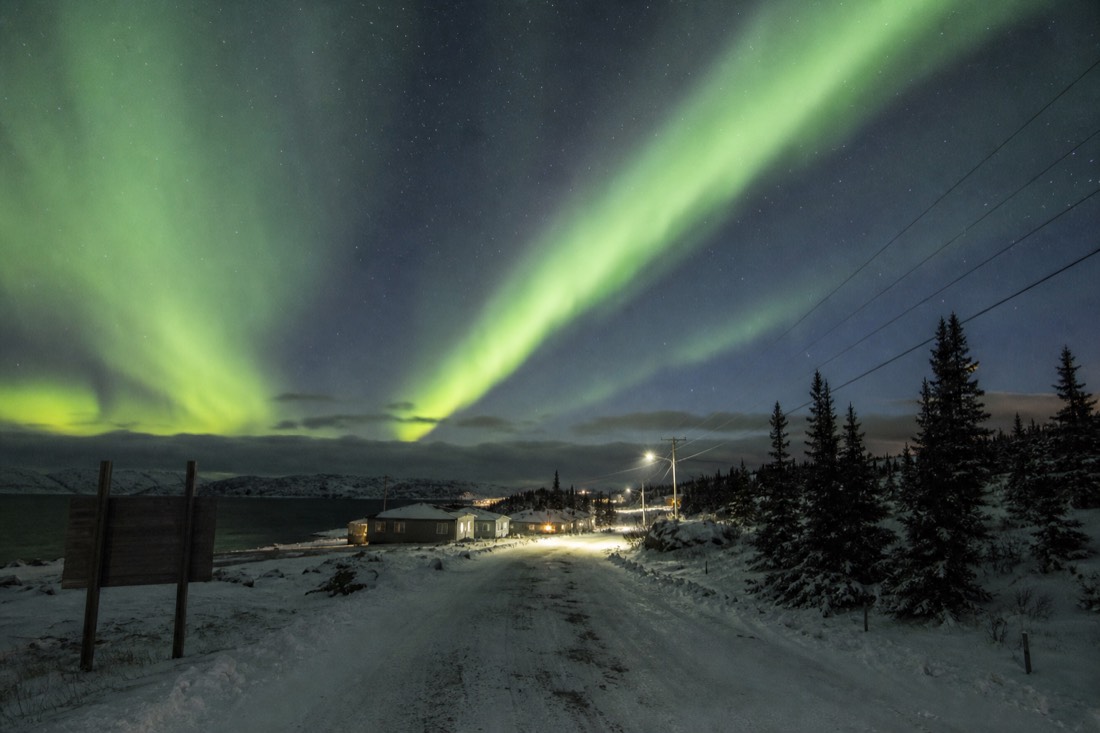
Geography helps here. Ndilo sits at the far end of Old Town, past the houseboats and the float-plane base, close enough that people walk it in summer. Detah, which you will also see written Dettah, sits across the bay and is reached by road all year and by the public ice road each winter, a crossing I describe in the Yellowknife ice roads guide. Both are residential communities. Neither is a visitor attraction, and treating them as one is the single most common mistake I see.
Where can you experience Dene culture in Yellowknife?
Three places, honestly: the free Prince of Wales Northern Heritage Centre and its Dene and Inuvialuit galleries, tours run by North Star Adventures, which is 100% Indigenous-owned, and artwork sold by artists registered with the territory's NWT Arts program. Everything else is incidental.
I keep this list short on purpose. Plenty of northern marketing implies more cultural access than actually exists on a three-day trip, and a table is the fairest way to show what is real and who owns it.
| Where | What it actually is | Indigenous-owned? |
|---|---|---|
| Prince of Wales Northern Heritage Centre | The territory's museum, with galleries on Dene and Inuvialuit culture, plus NWT history and bush planes. Free admission | No, it is the territorial museum |
| North Star Adventures | Aurora and fishing tours built around Dene storytelling, drumming and traditional foods | Yes, 100% Indigenous-owned by their own statement |
| Detah and Ndilo | Yellowknives Dene communities where people live and work | Communities, not businesses or attractions |
| NWT Arts registered artists | The territory's program registering NWT artists, so you can buy from a named maker | The program is territorial; the artists are individual |
| Traditional dog sledding, North of 60 Aurora Adventures | A sled run wrapped in Dene sled-dog storytelling, with fresh bannock | Ownership is not stated by the operator |
| City and culture tour, Destination NWT | A three-hour city circuit that stops at the Heritage Centre | Ownership is not stated by the operator |
The Heritage Centre is where I send everyone first, because it costs nothing and it is built to be looked at. Its visitor information is at pwnhc.ca, and I walk through the galleries and the practical visit in the Prince of Wales Northern Heritage Centre guide. If you want to take something home, buy it from a maker registered with NWT Arts rather than from a souvenir shelf.
What languages belong to Dene culture in the Northwest Territories?
The Northwest Territories recognizes 11 official languages: English, French, and nine Indigenous languages. The Yellowknives Dene speak the Wiiliideh dialect. English runs every visitor situation in Yellowknife, so the other ten are something you encounter rather than something you need.
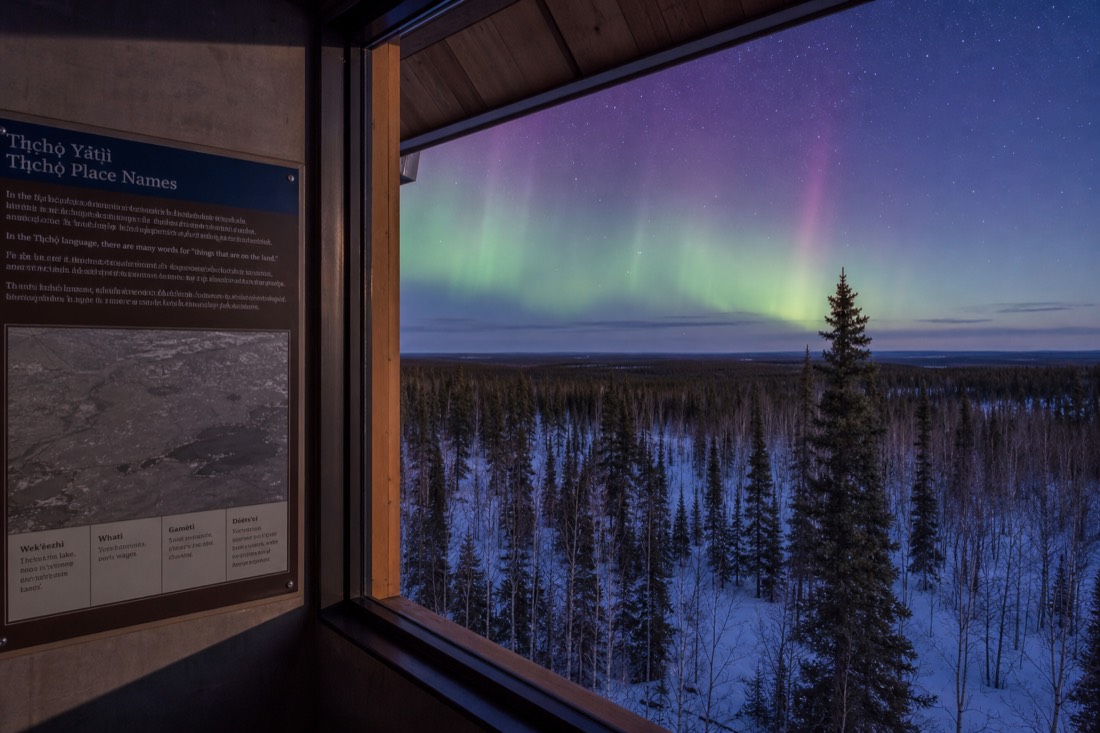
Eleven official languages, for a territory of about twenty thousand people in its capital and small communities beyond it, is the most striking single fact about this place. The territorial government keeps the authoritative list and the rights attached to it on its official languages page, and that is the page to read rather than any travel site's summary, mine included.
| Language | Status | Where a visitor meets it |
|---|---|---|
| English | Official | Everywhere: hotels, tours, restaurants, the airport |
| French | Official | Government services and signage, the francophone community |
| Wiiliideh dialect | One of the nine Indigenous official languages | The Yellowknives Dene of Detah and Ndilo |
| The nine Indigenous languages together | Official, territory-wide | Community life, place names, museum galleries, storytelling on tours |
The practical side of all this, meaning whether you will ever be stuck, gets its own page: what language they speak in Yellowknife answers it properly. Short version, you will not be stuck.
What do the Dene say about the northern lights?
One story is published by the territory's own tourism arm, and it is the only one I will repeat. Spectacular NWT's Legends of the Aurora places the origins of the lights in a fire built by the world's creator, and holds that the aurora remains in the sky as a reminder the creator is still watching over us.
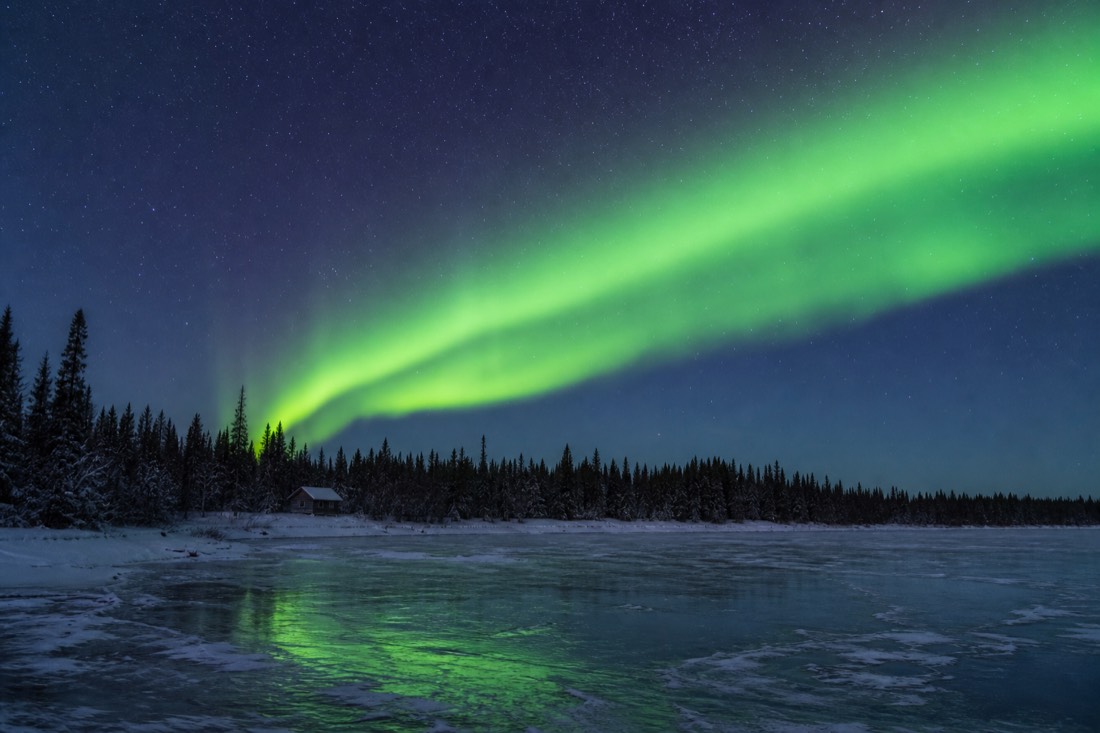
That account comes from Legends of the Aurora, published by the NWT's tourism organization, and I attribute it every time I tell it. Here is why the attribution matters more than it might seem. The Dene are many communities across a huge territory, and no single telling speaks for all of them. A guide who says "the Dene believe" and then improvises is doing something worse than getting a detail wrong.
So when guests ask me for more legends, I say I do not have more to give them, and I point at the two honest routes to hearing them properly: the Heritage Centre galleries, and a tour where a Dene guide is the one speaking. Stories belong to the people who carry them. Buying an aurora ticket does not buy the rest.
Is there an Indigenous-owned tour in Yellowknife?
Yes. North Star Adventures is 100% Indigenous-owned by its own statement and runs aurora and fishing trips with Dene storytelling, drumming and traditional foods. Its sport fishing and Indigenous culture tour runs January 15 to April 15, four hours daily, 10:30am to 2:30pm, four to ten guests, from CA$249.
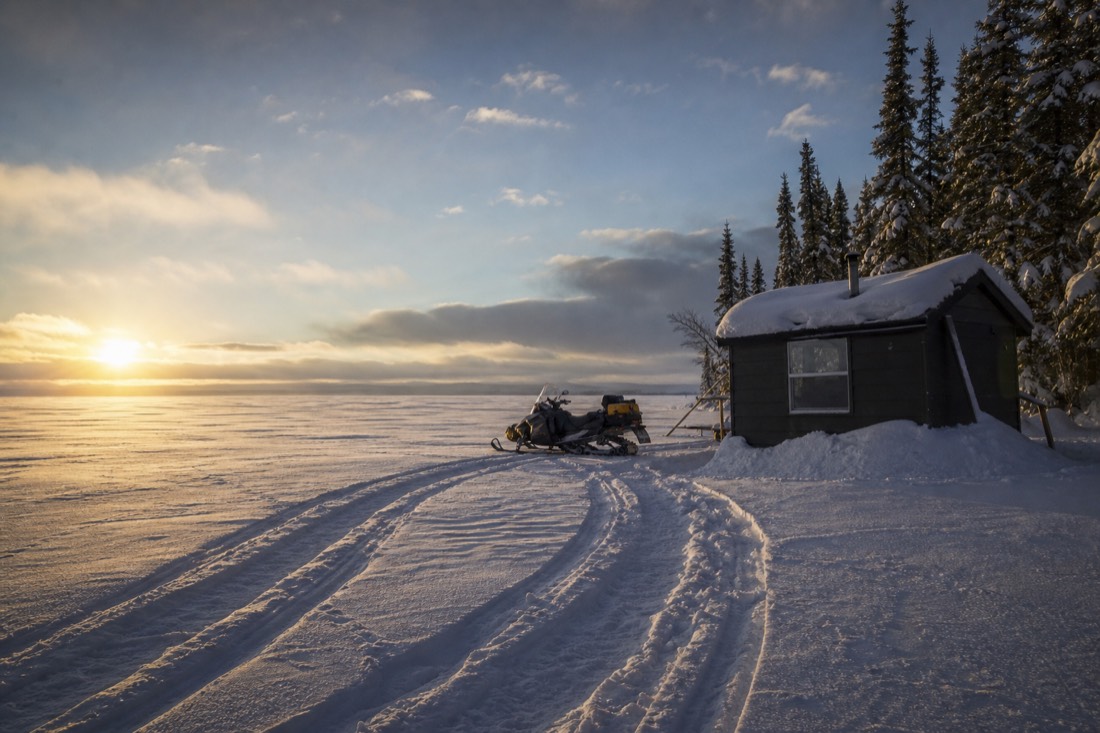
If you want your money to reach Indigenous hands, this is the clearest way to do it in Yellowknife. The trip includes gear, transfer, a traditional fish meal with bannock, and stories through the day; the territorial fishing licence costs extra, as it does on every fishing trip here. You can read the details and book it straight from the operator at North Star Adventures. We take nothing from that link, which is exactly the point of including it.
The city and culture tour is a different animal and I want to be plain about it: it is a general city tour, not an Indigenous-led one. What it does well is orientation, three hours covering Ragged Ass Road, the Heritage Centre, the Pilot Monument and the Legislative Assembly with some admissions included, rated 4.9 across 25 reviews. Do that on your first afternoon and the rest of the trip lands better. Compare the options on the city tours page, then check live availability and prices on Viator for your dates.
When can you see Indigenous culture in Yellowknife through the year?
The Heritage Centre galleries are open year-round, Tuesday to Sunday, free. North Star's fishing and culture tour runs January 15 to April 15. National Indigenous Peoples Day falls on June 21 across Canada. The town's big festivals sit in March, July and August.
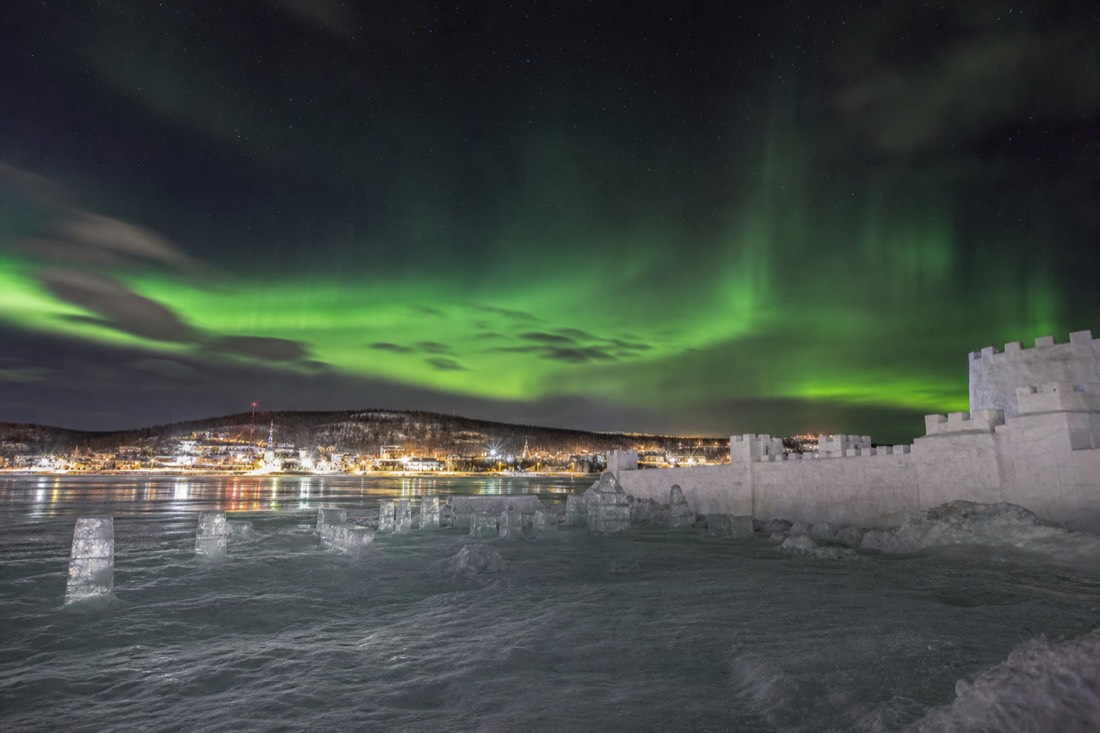
Two of these are Indigenous specifically; the rest is simply what is on, and I have marked which is which so nobody arrives expecting the wrong thing.
| When | What | Indigenous specifically? |
|---|---|---|
| Year-round, Tue to Sun | Dene and Inuvialuit galleries at the Heritage Centre, free admission | The galleries, yes |
| Mid-December to mid-April | The public Detah ice road across the frozen bay | No, a road to a community |
| January 15 to April 15 | North Star Adventures sport fishing and Indigenous culture tour, daily 10:30am to 2:30pm | Yes, Indigenous-owned operator |
| All of March | SnowKing Winter Festival, the snow castle on the bay, March 1 to 28 in 2026 and 2027 | No, a town festival |
| June 21 | National Indigenous Peoples Day, marked across Canada | Yes; check locally for the year's programme |
| July 17 to 19, 2026 | Folk on the Rocks music festival | No, a music festival |
| August long weekend | Old Town Ramble & Ride, in Old Town | No, a neighbourhood festival |
June is the odd one for aurora travellers, since there is no darkness then. The winter list, including what is worth building a trip around, sits in things to do in Yellowknife.
What Dene foods will you actually eat here?
Two, realistically: bannock and Great Slave Lake fish. Bannock comes fresh on the traditional dog sledding trip and with North Star's fish meal. The lake's whitefish, lake trout and pike show up on the ice, in Old Town restaurants, and cooked over lunch on the ice fishing tour.
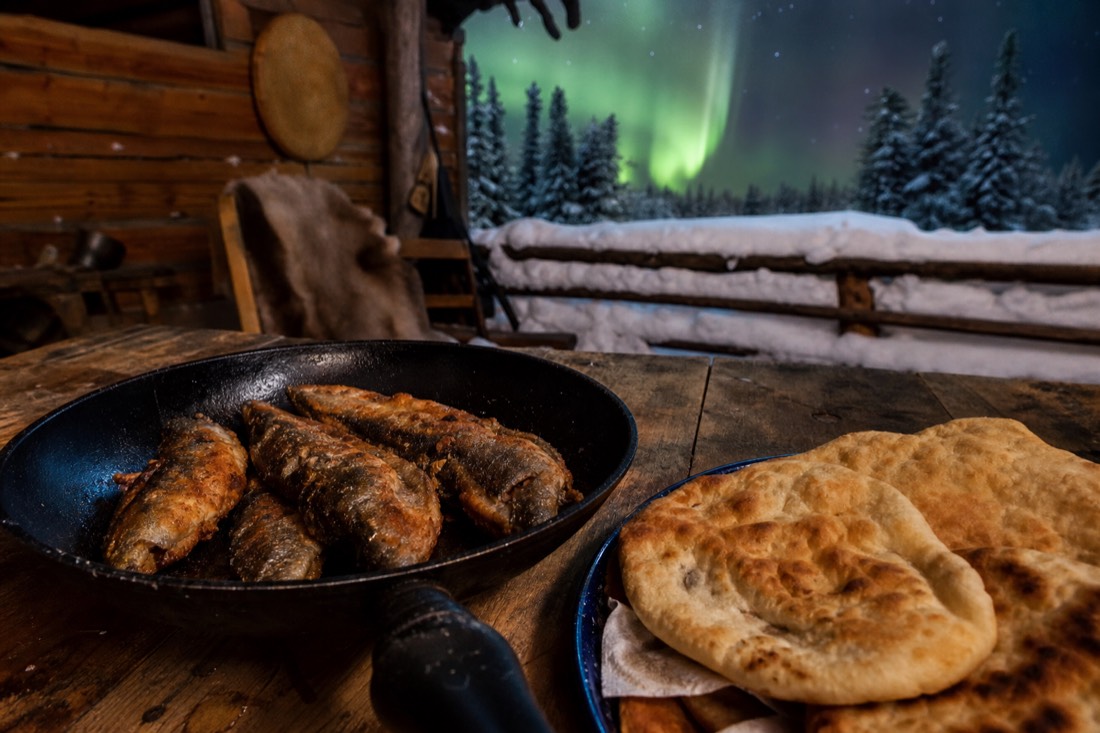
I am not going to dress this up into a cuisine tour. The food you meet is honest and limited, and it is better for being eaten where it is caught.
| Food | Where a visitor meets it | Note |
|---|---|---|
| Bannock, fresh | The traditional dog sledding trip, and North Star's traditional fish meal | Served warm, usually beside the fire or the hut |
| Lake fish, cooked on the ice | The ice fishing tour, where the catch becomes lunch in a heated hut | Territorial licence required, about CA$15 per the listing |
| Great Slave Lake fish, in town | Bullocks' Bistro in Old Town, the fish fry it is known for | Year-round; mains around town commonly run CA$15 to 30 |
| Lake trout, whitefish, northern pike | The species you are most likely to be handed | The same fish the lake has always fed people |
Old Town is where most of that eating happens, in among the log cabins and the float-plane base, and I wrote up the neighbourhood and its flying history in Old Town Yellowknife and the bush pilots.
How should visitors behave in Detah and Ndilo?
As you would in any small town where people live, because that is what they are. No published visitor protocol exists that I can point you to, so I will not invent one. Ask before photographing anyone, do not record stories without permission, and do not drive out to look at people.
I want to be careful here, because a list of rules dressed up as tradition would be exactly the kind of thing this page exists to avoid. What follows is ordinary courtesy, nothing more, and it is the same courtesy I would want in my own street. Photograph the landscape freely. Photograph people only after asking. If someone tells you a story, that is a gift and not content, so leave the phone in your pocket unless they say otherwise.
The ice road to Detah is a genuine drive and worth doing. Drive it as a road, slowly, obeying the posted limits, and turn around at the far side rather than cruising the community. If you want time with Dene culture, the honest routes are the ones above: an afternoon in the free galleries, an Indigenous-owned tour, and money spent with registered artists.
One last thing, said plainly. This page is written by a tour guide, not by a Dene person, and it stops where my knowledge stops. That is the reason it is short on legends and long on addresses. Go to the galleries, book the Indigenous-owned trip, buy from the artist, and let the people who live here tell you the rest in their own words.