Wildlife in Yellowknife: What You Will Actually See, From a Local Guide
Forget the postcard fantasy of moose at the hotel door. Here is the honest species list for a Yellowknife trip, where to look for each one, and the one guaranteed close-up.
 Written with Thomas Beaulieu, Yellowknife tour guide & northern lights specialist
Short answer
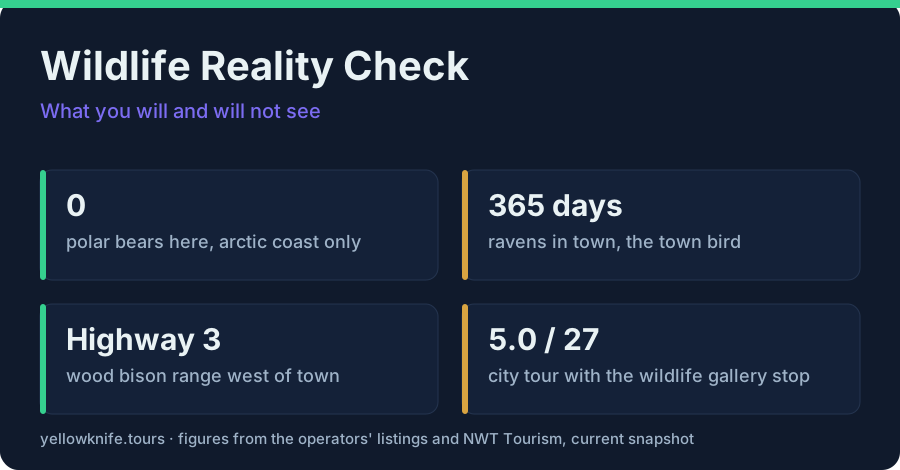
Around Yellowknife you will reliably see ravens, often red foxes, wood bison along Highway 3 west of town, and lake fish under the ice. Black bears are possible on summer trails. There are no polar bears here. For a guaranteed close-up, the 5.0-rated city tour visits the Nature's North wildlife gallery.
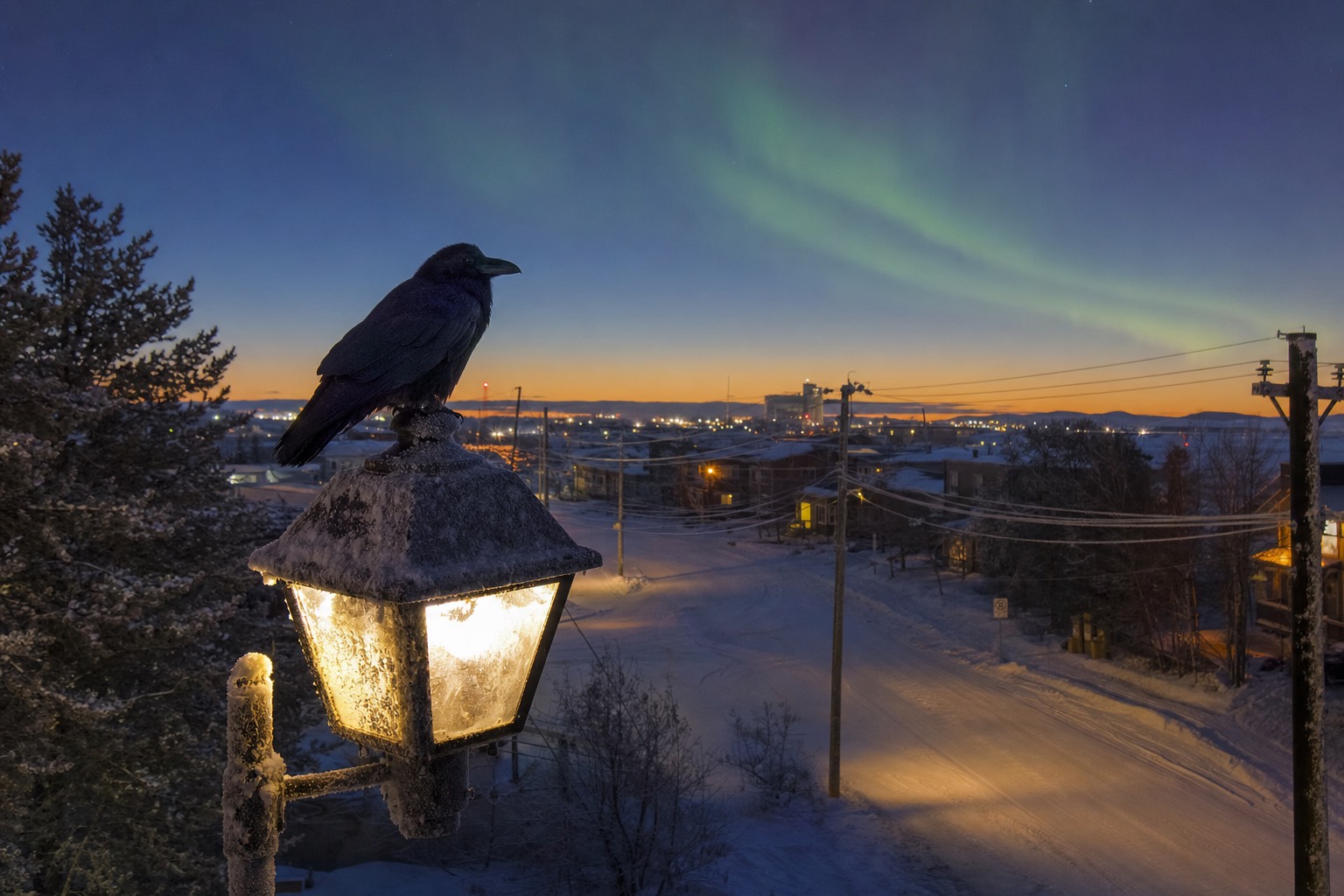
There is a raven the size of a house cat that works the lamppost outside my grocery store, and it knows the parking lot better than most drivers do. That bird is the truthful face of Yellowknife wildlife. Guests arrive picturing caribou at the airport fence, and I would rather reset expectations now than watch disappointment at the trailhead: the real list is shorter, stranger, and better than the fantasy, if you know where each animal actually lives.
What wildlife will you actually see in Yellowknife?
Ravens, guaranteed and daily, all year. Red foxes turn up in and around town. Wood bison graze along Highway 3 west of the city, black bears are possible on summer trails, and lake trout, whitefish, pike, and burbot swim under the ice. What you will not see is a polar bear. They belong to the arctic coast, far north of here.
Let me kill the biggest myth first. Yellowknife sits roughly 400 km south of the Arctic Circle, in subarctic boreal forest, and polar bears do not live here. I wrote a whole page on that question because so many people ask it: are there polar bears in Yellowknife settles the bear question for good. This page is the other half of the answer, the full guide to what you will actually see.
| Season | Reliable | Possible with luck |
|---|---|---|
| Winter (Nov to Apr) | Ravens everywhere; lake fish through an ice-fishing hole | Red fox crossing a quiet street or the lake edge |
| Summer (Jun to Aug) | Ravens; open-water fish on a charter | Black bear on a trail, fox at dusk, bison on Highway 3 |
| Shoulder (Sep to Oct) | Ravens; autumn foxes hunting the verges | Bison along Highway 3, last open-water fish |
| Any season, from a car | Wood bison zone along Highway 3 west | A whole herd instead of a lone bull |
The territory's own tourism writers make the same honest point: the NWT's wildlife story is about where the wild things actually are, which is mostly out on the land, not posing beside the highway sign at city limits.
Why is the town completely full of ravens?
Because ravens are the one animal that decided winter here is comfortable. They stay all year, thrive at minus 30, and treat the city as their territory: lampposts, dumpsters, parking lots, the thermals over Old Town. Yellowknife embraces them as the unofficial town bird, and after two days you will understand why.
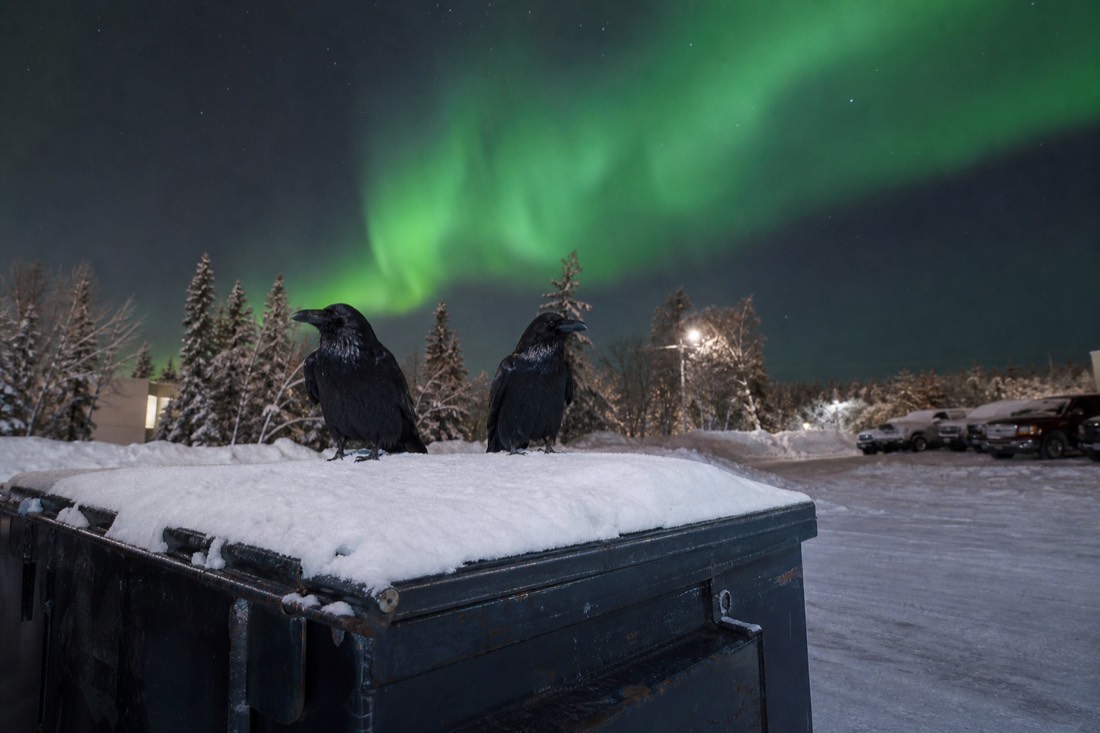
I tell guests to treat ravens as the first wildlife encounter of the trip, not background noise. Watch one for five minutes and it earns the attention. They are enormous, glossy, and unnervingly clever: opening latches, working in pairs, croaking in a dozen voices from the streetlights. In deep winter, when nearly everything else has gone quiet or south, the ravens own the soundscape. Guests who arrive as bird-indifferent people leave with a favorite corvid story. It happens on almost every city and culture loop I hear about, because the birds shadow the town the way gulls shadow a harbor.
They also make winter photography easy. A black raven on fresh snow against a pink noon sky needs no telephoto lens and no luck, just a walk to the nearest parking lot.
Will you meet foxes or black bears?
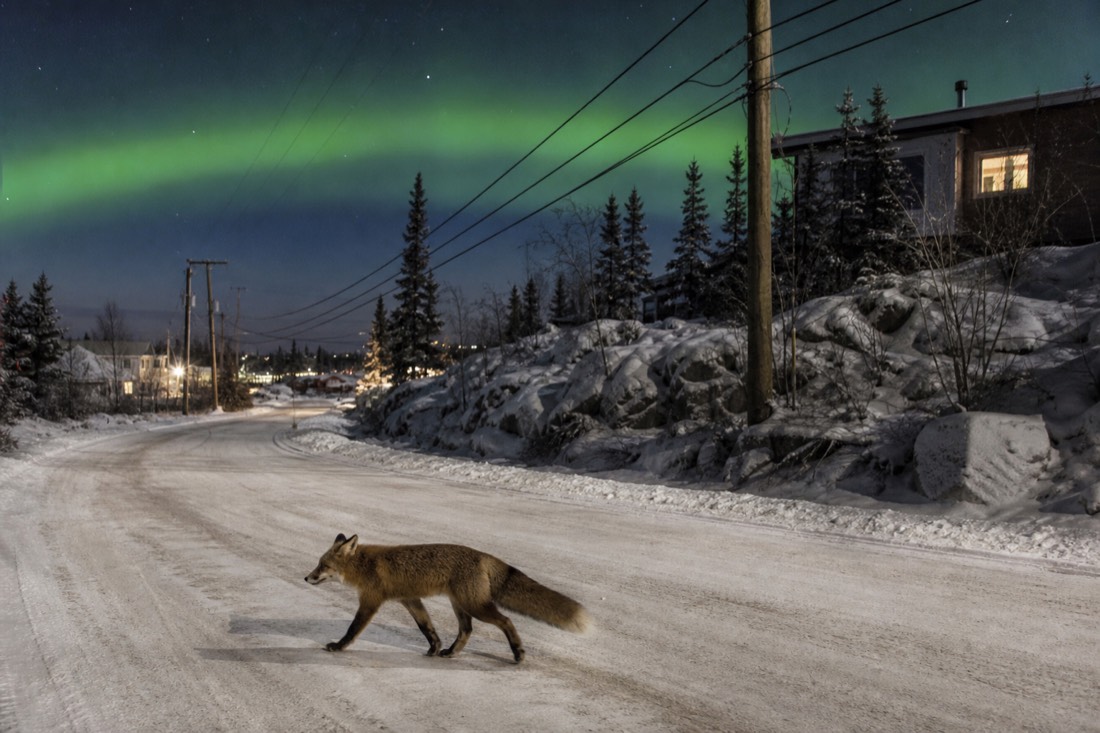
Foxes, quite possibly: red foxes live in and around town and cross quiet streets at dawn and dusk. Black bears, only in summer and only out on the trails, where they are possible rather than likely. Both are wild animals, not photo props, and the territory's wildlife-safety guidance applies to every trail walk.
The fox is the town's second mascot after the raven, a flash of orange along a fence line or the lake edge. Enjoy it from where you stand. The moment a wild fox associates people with food, the story ends badly for the fox, so cameras yes, snacks never.
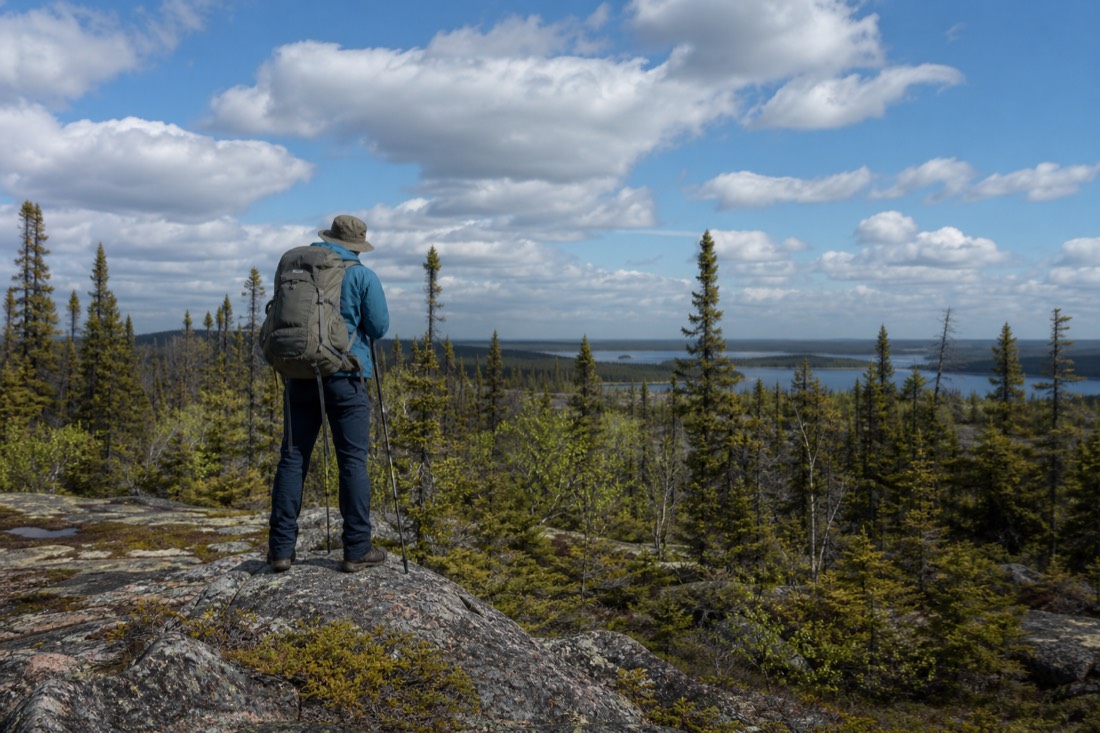
Bears are a summer-trail conversation. On the Frame Lake loop through downtown you are effectively in town. Out at Cameron Falls and along the Ingraham Trail you are in boreal forest that black bears genuinely use, and the territorial wildlife-safety guidance is the document to read before you lace up. My rules for guests are the standard northern ones:
| Do | Don't |
|---|---|
| Make noise on summer trails so nothing is surprised | Walk earbuds-in through berry patches and blind corners |
| Give every animal room, foxes and bison included | Approach, crowd, or follow an animal for a photo |
| Pack out every scrap of food and wrapper | Feed anything, ever; a fed animal is a doomed animal |
| Photograph bison from inside the car on Highway 3 | Step onto the shoulder to get closer to a herd |
| Read the territory's wildlife-safety page before hiking | Assume a trail 45 minutes from town is a city park |
Which trails suit which season, and where the bear conversation actually applies, is mapped out in Yellowknife hiking trails.
Where do you watch wood bison near Yellowknife?
Along Highway 3, west of the city, from the comfort of a car. The Mackenzie wood bison population ranges through this stretch of boreal forest, and a dark shape by the treeline that resolves into a one-tonne bull is the closest thing this region offers to a safari moment. Stay in the vehicle and let them own the road.
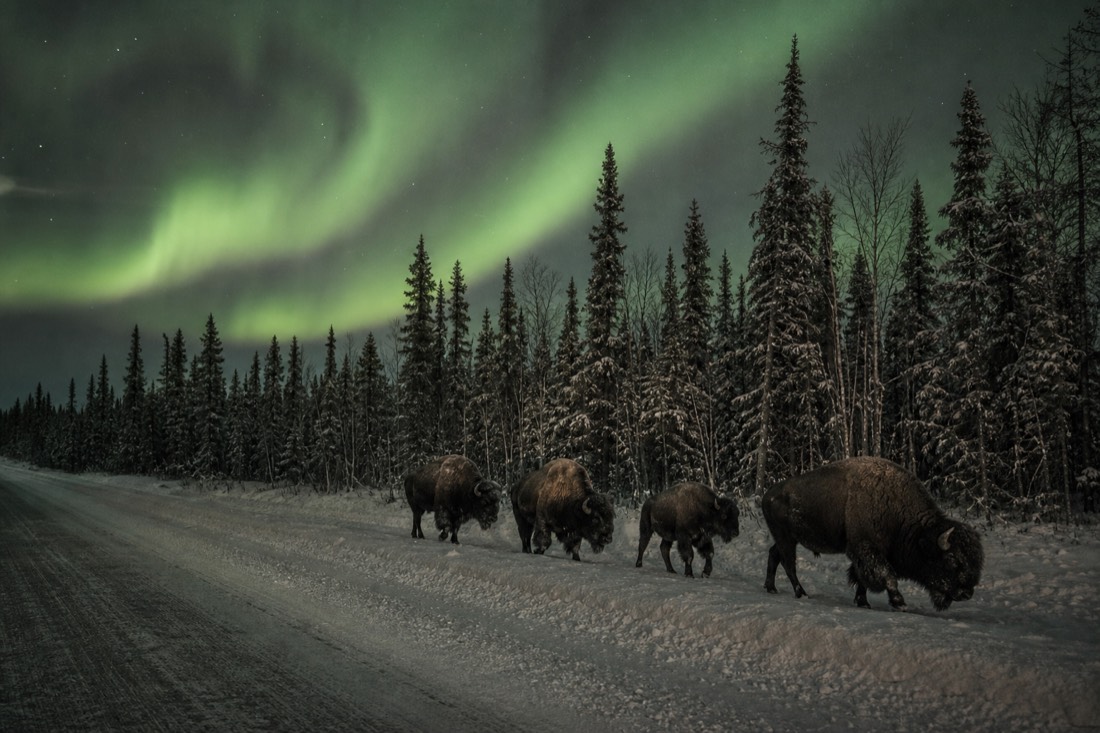
These are wood bison, the bigger northern cousin of the plains animal, and the territory manages the Mackenzie population that lives along this corridor. Sightings are a roadside lottery rather than a schedule, which is exactly what makes a good one memorable. Drive the highway in daylight, scan the verges and clearings, and treat any animal on the road with total patience.
The practical catch: no tour on this site runs a dedicated bison drive, so Highway 3 is a self-drive outing. That single fact tips some travelers into a one-day rental, and I break down when that makes sense in do you need a car in Yellowknife.
What lives under the ice of Great Slave Lake?
Serious fish in serious water. Great Slave is the deepest lake in North America at 614 metres, and it holds lake trout, whitefish, northern pike, and burbot beneath the winter ice, with arctic grayling joining the open-water story in summer. An ice-fishing trip is the only way most visitors ever meet this half of the wildlife list.
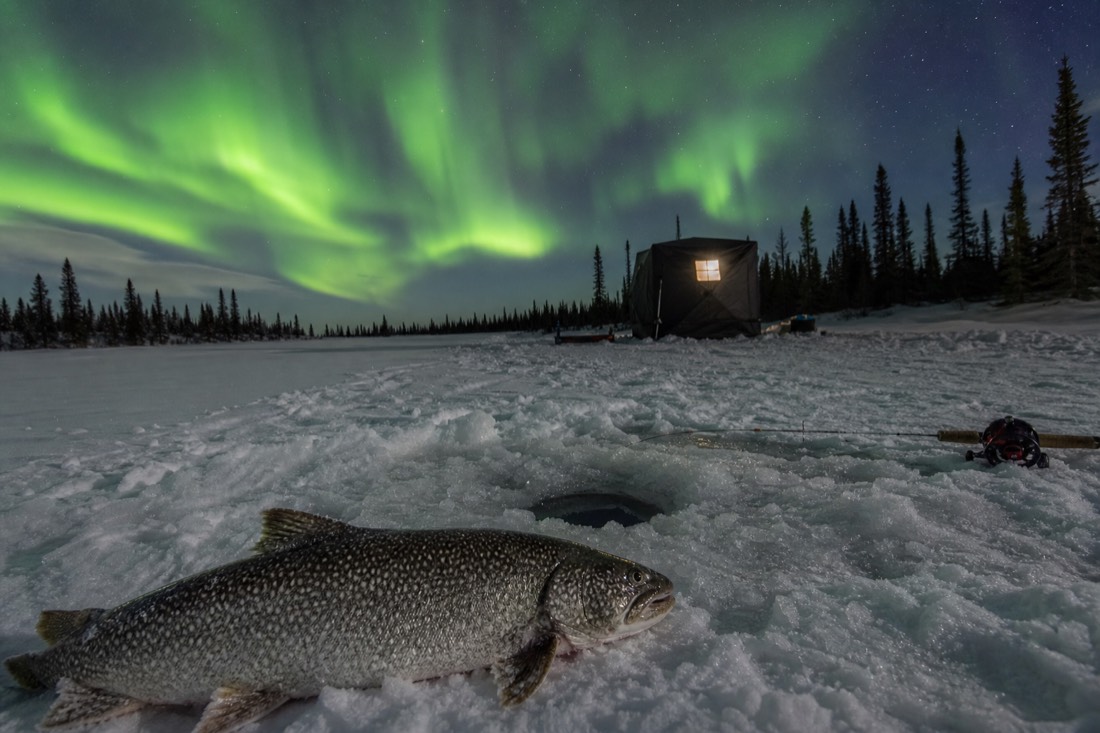
I count the fish as wildlife because the moment a net comes up through a hole in metre-thick ice, every guest agrees. The winter version is the ice fishing tours experience: heated huts out on the lake, a net pull, and on the flagship trip your catch cooked into lunch on the ice. Note the territorial licence, about CA$15 per the listing and not included, applies on every fishing trip. I wrote up a full day of it in ice fishing on Great Slave Lake.
Summer flips the same water into charter season, roughly June to September, with trophy lake trout and pike chased from boats instead of huts. That open-water world, including the historic fly-in lodges on the far arms of the lake, gets its own guide in Great Slave Lake fishing.
What is the guaranteed way to see northern wildlife up close?
The Nature's North wildlife gallery, visited on the 5.0-rated city tour. It is a taxidermy collection, so every animal is stationary, close, and visible in any weather, which makes it the one wildlife stop in Yellowknife that cannot be rained out, clouded over, or simply absent. For families and photographers it is the reliable hour.
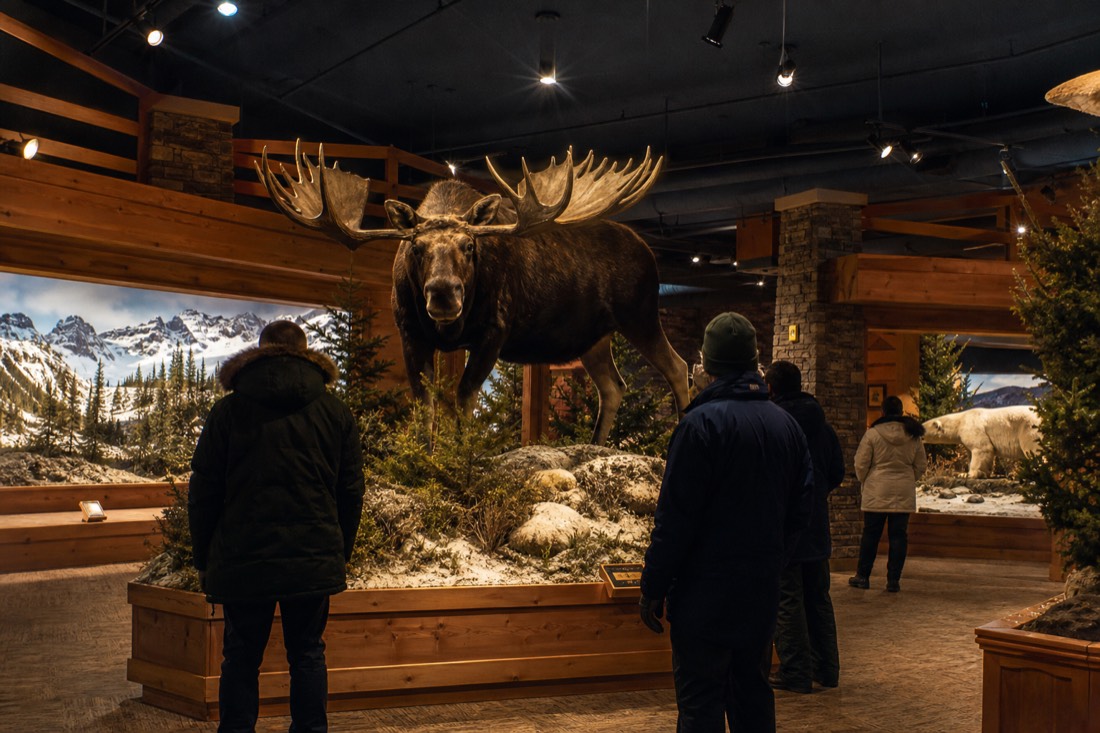
I am upfront with guests about what this is: preserved animals, not live ones. Then they visit and come back converted, because nowhere else can you stand an arm's length from northern species and study them properly, with a guide explaining what you are looking at. Paired in one outing with Old Town, the Bush Pilots Monument, and the Legislative Assembly, it turns a cold or cloudy afternoon into the most informative hours of a trip. The tour that includes it is the best-rated listing in the city, a perfect 5.0 across 27 reviews, with car seats available for families. Compare both town options on the city tours page, then check live availability and prices on Viator for the gallery tour, and note it is non-refundable, so pick your date with care.
Here is the full where-to-look map in one table:
| Where | What you can see | How |
|---|---|---|
| Downtown and Old Town | Ravens daily, the odd red fox | On foot, free, any season |
| Frame Lake and summer trails | Fox tracks, black bears possible in season | Hike prepared, noise up, repellent in June and July |
| Highway 3 west of town | Wood bison of the Mackenzie population | Self-drive in daylight, watch from the car |
| On and under Great Slave Lake | Lake trout, whitefish, pike, burbot | Ice-fishing tour in winter, charters in summer |
| Nature's North gallery | Northern species up close, taxidermy | City tour, 5.0 across 27 reviews, any weather |
My last piece of guiding advice: put the raven at the top of your list instead of the bottom, plan one daylight drive west if a bison would make your trip, and book the gallery hour as insurance against weather. Do that and you will fly home with a fuller wildlife story than the visitors who spent three days hoping a moose would wander past the hotel. In this town, the sky performs on schedule. The animals make you work for it.