Yellowknife in April 2027: The Month the Aurora Season Runs Out
April is the month Yellowknife hands back its nights. The aurora season ends here, and it ends for a reason that has nothing to do with the sun's behaviour.
 Written with Thomas Beaulieu, Yellowknife tour guide & northern lights specialist
Short answer
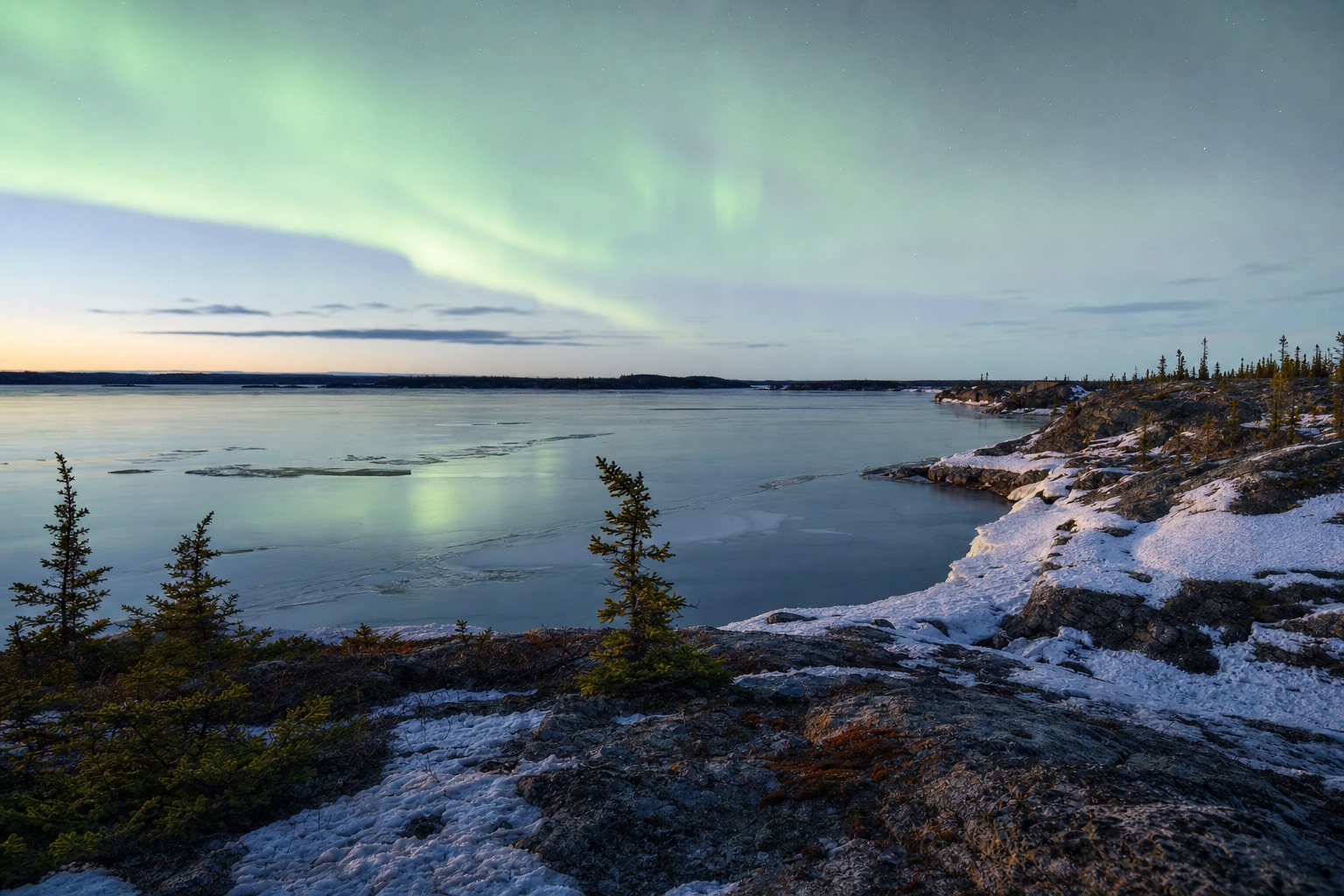
The first ten days of April are a genuine aurora window. True astronomical darkness disappears from Yellowknife around 12 to 14 April, and by the 15th sunrise is about 06:08, sunset about 21:06, and there is no astronomical night left at all. Book early April for lights, late April only as a bright, thawing shoulder trip.
There is a night in April, usually somewhere in the second week, when I pull the van into the third viewpoint at half past midnight and the northern horizon is still faintly blue. Not black. Blue. Guests always ask whether the aurora is weak tonight, and the honest answer is that the sky itself has stopped cooperating. This is the piece almost nobody writes down, so here it is in full: the aurora season in Yellowknife does not end because the sun goes quiet. It ends because the nights stop being dark.
What is Yellowknife in April actually like?
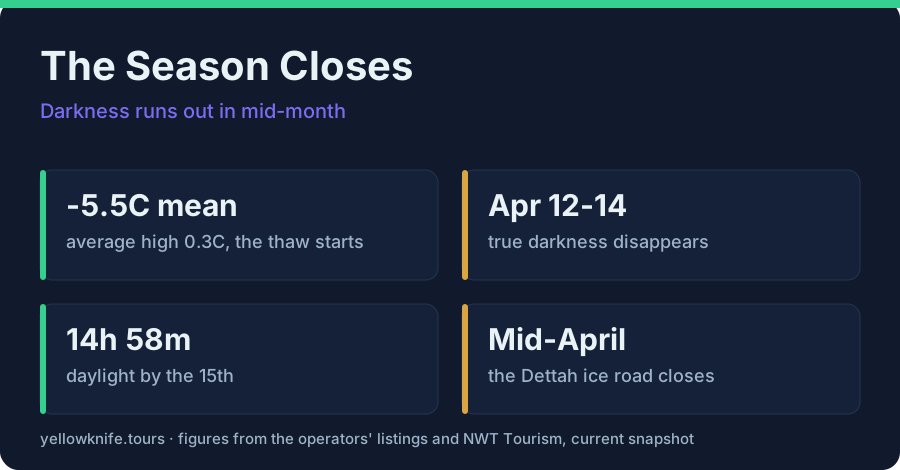
April is the thaw month and the closing month. Normals run to a daily mean of minus 5.5C with an average high of 0.3C, the first month of the year whose average daytime high crosses zero. Daylight leaps past fifteen hours by mid-month, and the winter product list winds down week by week.
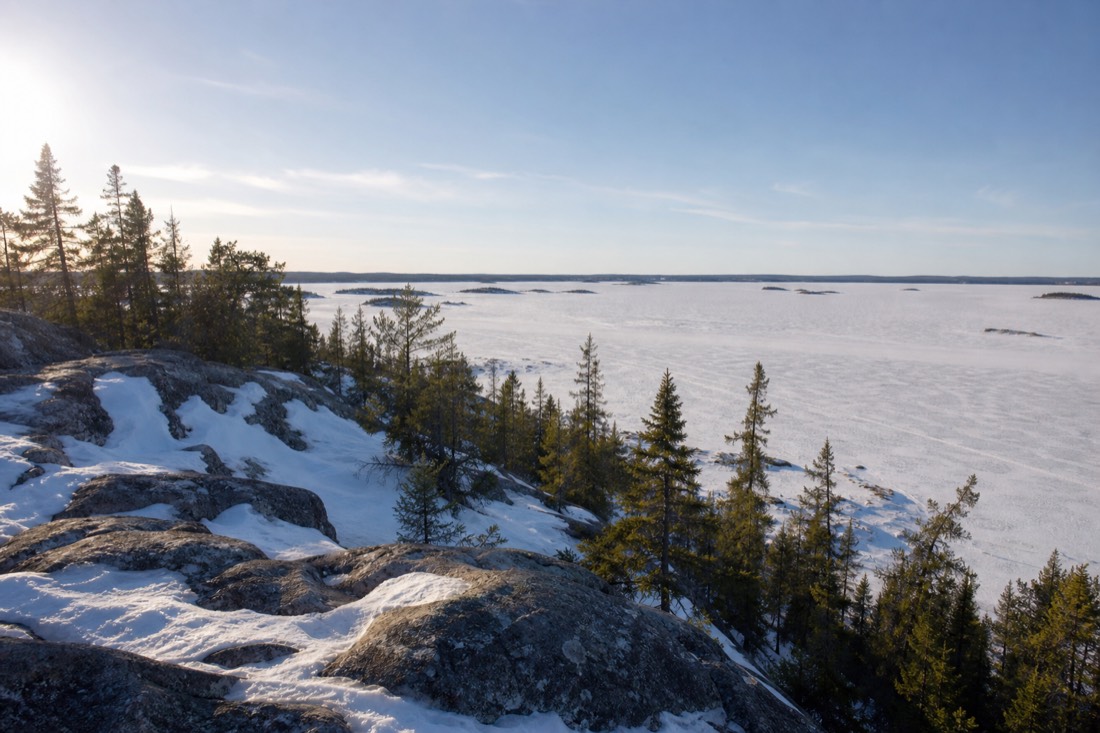
Two things happen at once, and they pull in opposite directions. The town gets easier: you can stand outside without gloves in the afternoon, the snowbanks shrink, and everyone's mood lifts in a way that is genuinely nice to be around. Meanwhile the thing most visitors flew here for quietly closes. If you want the whole calendar side by side, the month-by-month weather guide does that job; this page stays on April.
| Climate normal | March | April | May |
|---|---|---|---|
| Daily mean | -16.6C | -5.5C | 5.3C |
| Average daytime high | -10.6C | 0.3C | 10.4C |
| Average overnight low | -22.5C | -11.3C | 0.1C |
| Change in daily mean from the month before | +6.1C | +11.1C | +10.8C |
That +11.1C jump is the largest month-on-month warming of the Yellowknife year, and you feel every degree of it. Nights still drop below minus 10 on average, so this is not spring in any southern sense, but the days are no longer a cold-endurance exercise the way March is.
Can you see the northern lights in Yellowknife in April?
Only in the first part of the month. The winter aurora season runs from mid-November to early April, and the darkness that makes it possible ends around 12 to 14 April. Before that, April nights work normally. After it, there is no astronomical night for the lights to appear against.
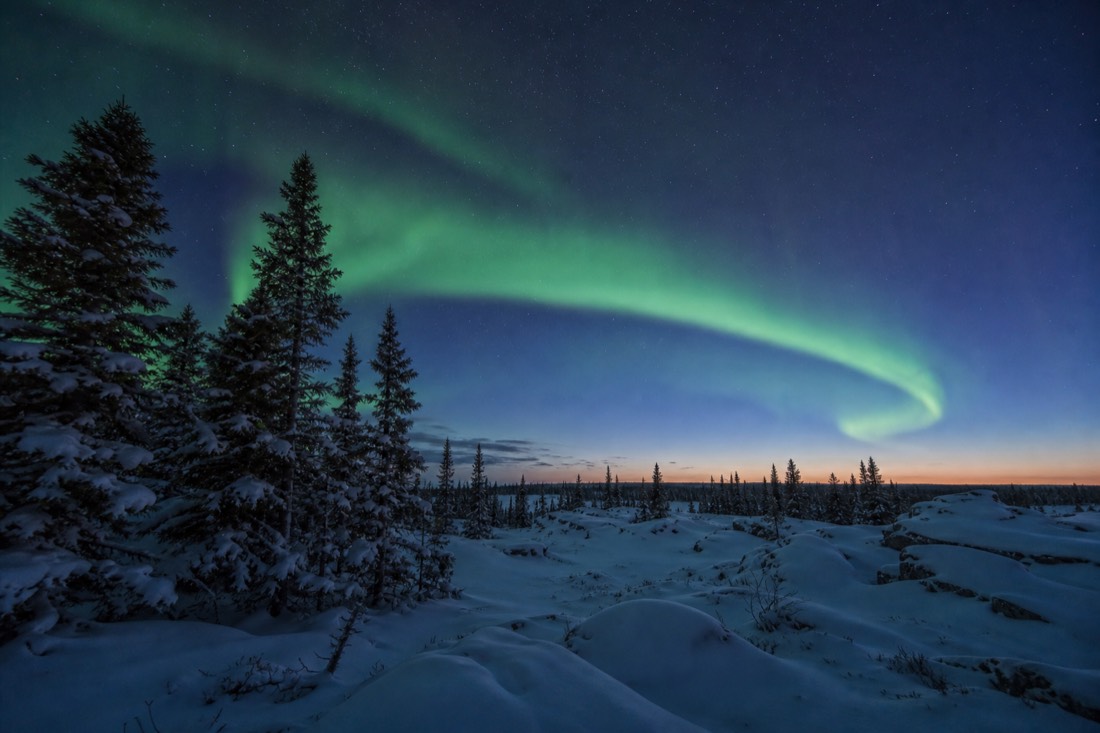
The underlying odds have not changed. Yellowknife sits directly under the auroral oval, with lights visible up to 240 nights a year and a 98% chance of at least one sighting over a three-night stay in season, per NWT Tourism's own numbers. Solar cycle 25 peaked around October 2024 and activity in the years right after a peak stays high. None of that helps you on 25 April, because the sky over your head never gets darker than deep twilight.
So the practical rule is blunt. If aurora is the reason for the trip, land in the first ten days and give yourself three nights inside that window. The odds page explains why three nights is the number, and the best-time comparison shows where early April sits against the rest of the season. It sits at the very edge, which is a fine place to be as long as you know it.
Early-April nights are the last of the season and the small vans sell out first, so compare the northern lights tours and check live availability and prices on Viator as soon as your flights firm up. The flagship hunt caps at sixteen guests, works three viewpoints a night, and sends you home with the photographer's shots at no extra cost.
Why does true darkness disappear from Yellowknife around 12 April?
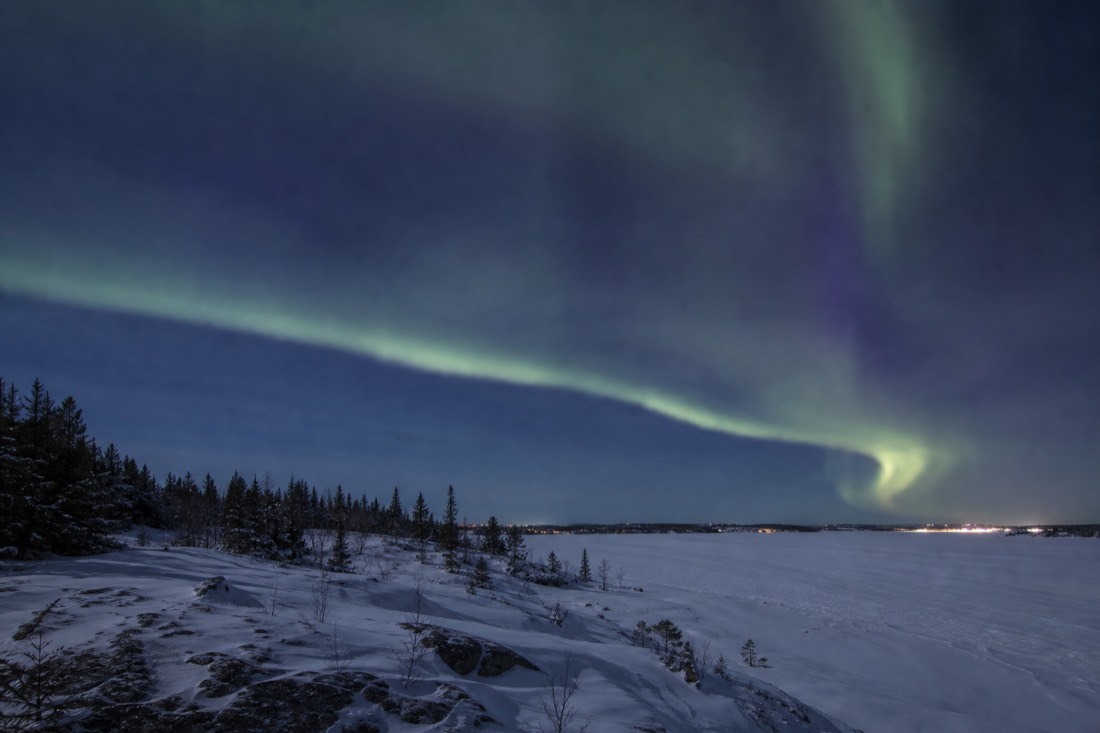
Astronomical night needs the sun to sit more than 18 degrees below the horizon. Yellowknife is at 62.45N, and by the middle of April the midnight sun angle no longer reaches that depth. The darkness does not fade gradually to a low level: it hits zero, on a date, and stays at zero until late August.
Here is the crossover, using verified anchor dates rather than a made-up figure for every square on the calendar. Early-April values sit between the March and April rows and fall fast.
| Anchor date | Sunrise / sunset | Daylight | True astronomical darkness |
|---|---|---|---|
| 15 March | 07:51 / 19:41 | 11 h 50 m | About 7 hours |
| 12 to 14 April | Between the rows above and below | Close to 15 hours | Runs out entirely |
| 15 April | 06:08 / 21:06 | 14 h 58 m | None |
| 15 May | 04:34 / 22:32 | 17 h 58 m | None |
| June solstice | 03:34 / 23:44 | 20 h 09 m | None |
The same thing happens in reverse at the end of August, when astronomical darkness returns for a few minutes around the 27th and grows quickly through September. Note what this is not: Yellowknife never gets true midnight sun and never gets polar night, because it sits roughly 400 km south of the Arctic Circle. The sun does set here at the June solstice, it just never drops far enough to bring back the stars. The 24-hour darkness question covers the winter half of that misunderstanding.
How cold does April in Yellowknife feel on the ground?
Cold in the morning, mild by mid-afternoon, and wet underfoot by the end of the month. With an average high of 0.3C and lows near minus 11.3C, April swings across freezing every single day, which changes what you pack more than the raw numbers suggest.
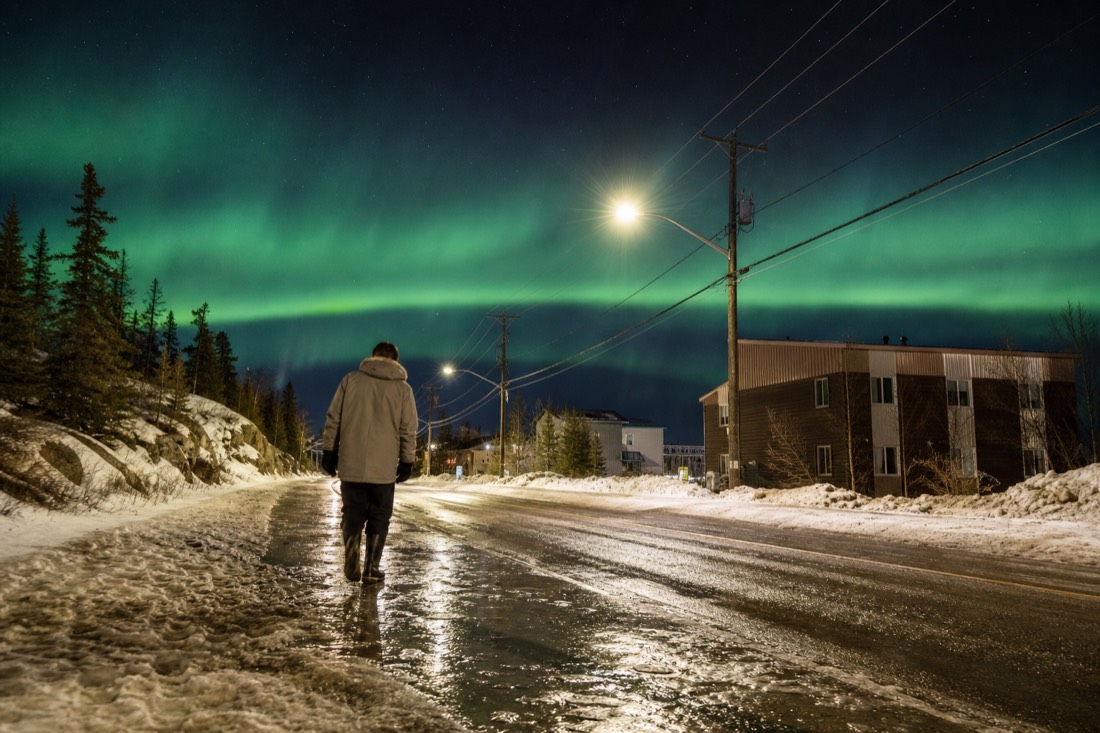
The freeze-thaw cycle is the story. Overnight everything locks up hard, so mornings are icy and boots with grip matter. By two in the afternoon the sun is high enough to soften the top layer, and you get slush, meltwater along the curbs and bare rock showing through on the ridges. Waterproof footwear beats extra insulation here, which is the opposite of the advice for January.
You still want a real parka for an early-April aurora night, because standing still at minus 12 for four hours is nothing like walking around at zero. Rental gear is available in town. But you do not need the full deep-winter kit that a February trip demands, and most guests over-pack for April by a wide margin.
What is still running in April, and what has already closed?
The winter product list thins through the month. Aurora tours run to the early-April end of the season, the Dettah ice road typically closes mid-April, and the dog-sledding and ice-fishing programmes are built around the deep-winter months and wrap up around March. By the last week, most winter activities are finished.
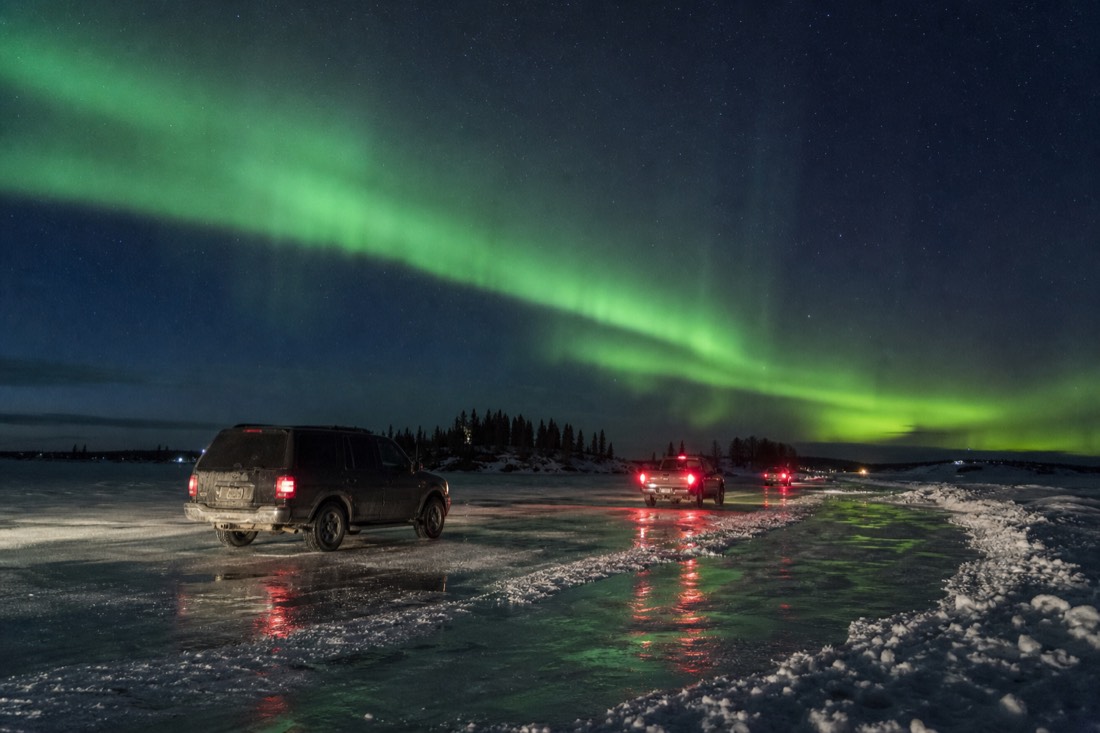
The Dettah ice road is the one to watch, because it is free, it takes twenty minutes, and it is the best cheap excursion in town while it lasts. The public route runs about 6.5 km across the frozen bay and is normally open from late December to mid-April, with the closing date set by ice condition rather than a calendar. Check the official drive the ice roads page before you go, and read the ice road guide for the rules that keep the surface intact.
Great Slave Lake itself holds ice from November to mid-June, so the bay stays frozen long after the road is shut. Frozen is not the same as safe. Late-season ice is exactly the ice you do not walk out on, whatever it looks like from shore.
Is early April or late April better in Yellowknife?
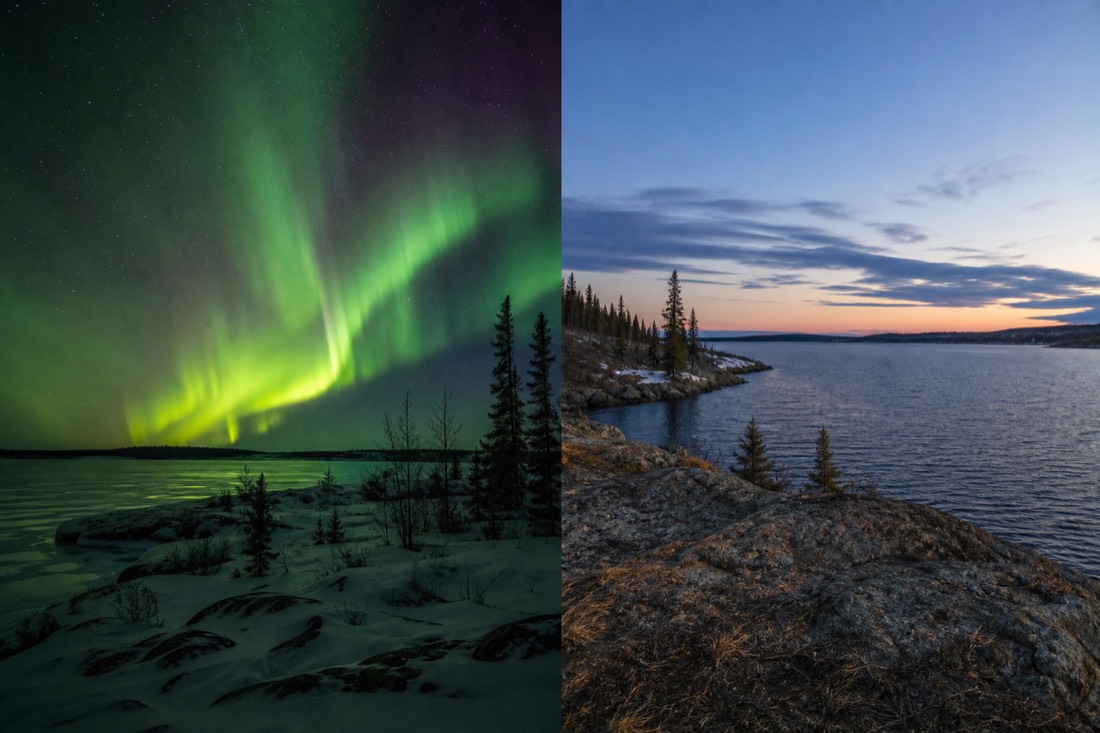
They are two different trips. The first ten days still deliver darkness, aurora tours and a working ice road. The last third gives you fifteen-plus hours of daylight, above-freezing afternoons, thinner tour options and no northern lights at all. Pick by what you actually came for.
| Factor | 1 to 10 April | 20 to 30 April |
|---|---|---|
| True astronomical darkness | Present, shrinking daily, gone by 12 to 14 April | None |
| Northern lights | Real window, inside the winter season | Effectively over for the year |
| Aurora tours | Running to the early-April season end | Winter season closed |
| Dettah ice road | Normally still open | Usually closed, mid-April is typical |
| Dog sledding and ice fishing | Tailing off, deep-winter programmes wrapping up | Largely finished |
| Underfoot | Firm snow and ice | Slush, meltwater, bare rock appearing |
| Evenings outdoors | Cold and dark enough to need a parka | Bright past nine, jacket weather |
I will not oversell the back half of the month. Late April is a pleasant time to be in Yellowknife if you want long light, quiet streets and a town waking up, and it is a poor time to fly this far for aurora. Guests who arrive on the 24th expecting green curtains are the hardest conversation I have all year, and it is always avoidable with one look at a sunset table.
Who should book April in Yellowknife, and who should look elsewhere?
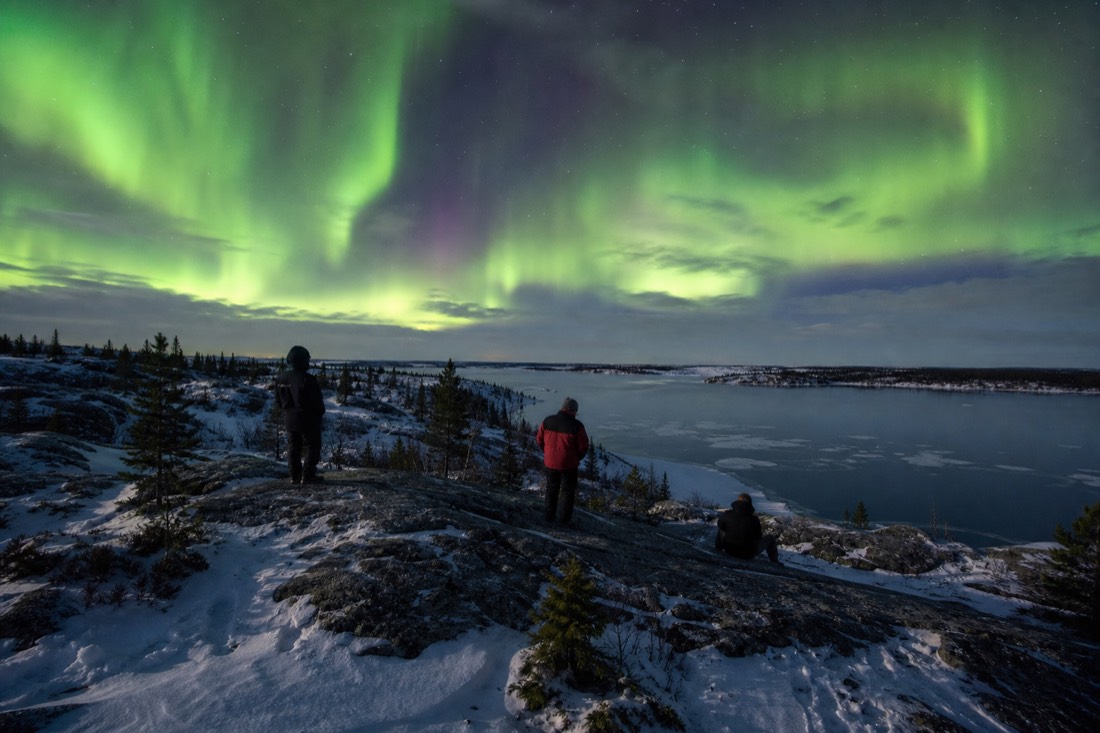
Aurora travellers should book the first ten days or move the trip earlier. Shoulder-season travellers who want daylight, mild afternoons and fewer people can take late April happily. Anyone whose dates are locked into the last week should reframe the trip entirely, not hope for lights.
| Traveller | April verdict |
|---|---|
| First-time aurora visitor | First ten days only, three nights minimum |
| Aurora photographer | Early April, or wait for the late-August return of darkness |
| Wants dog sledding or ice fishing | Come in February or March instead |
| Wants quiet, mild days and long light | Late April is genuinely good |
| Family with fixed school-break dates late in the month | Plan a spring city trip, treat any aurora as luck you will not get |
| Wants open water, boats and midnight light | Skip to the summer guide |
If your dates are flexible and the lights are the point, move them. The seasons published by NWT Tourism end the winter window in early April for exactly the reason this page has been circling, and March keeps everything April is giving up. If your dates are fixed and late, come anyway, but come for the thaw, the fifteen-hour days and a town that has just got its light back. That is a real trip. It is simply not an aurora one.