Yellowknife in November 2026: The Month Winter Switches On
November is the hinge of the Yellowknife year. The lake starts locking up, the nights go enormous, and the winter aurora season opens halfway through the month, which makes your dates matter more here than in any other month.
 Written with Thomas Beaulieu, Yellowknife tour guide & northern lights specialist
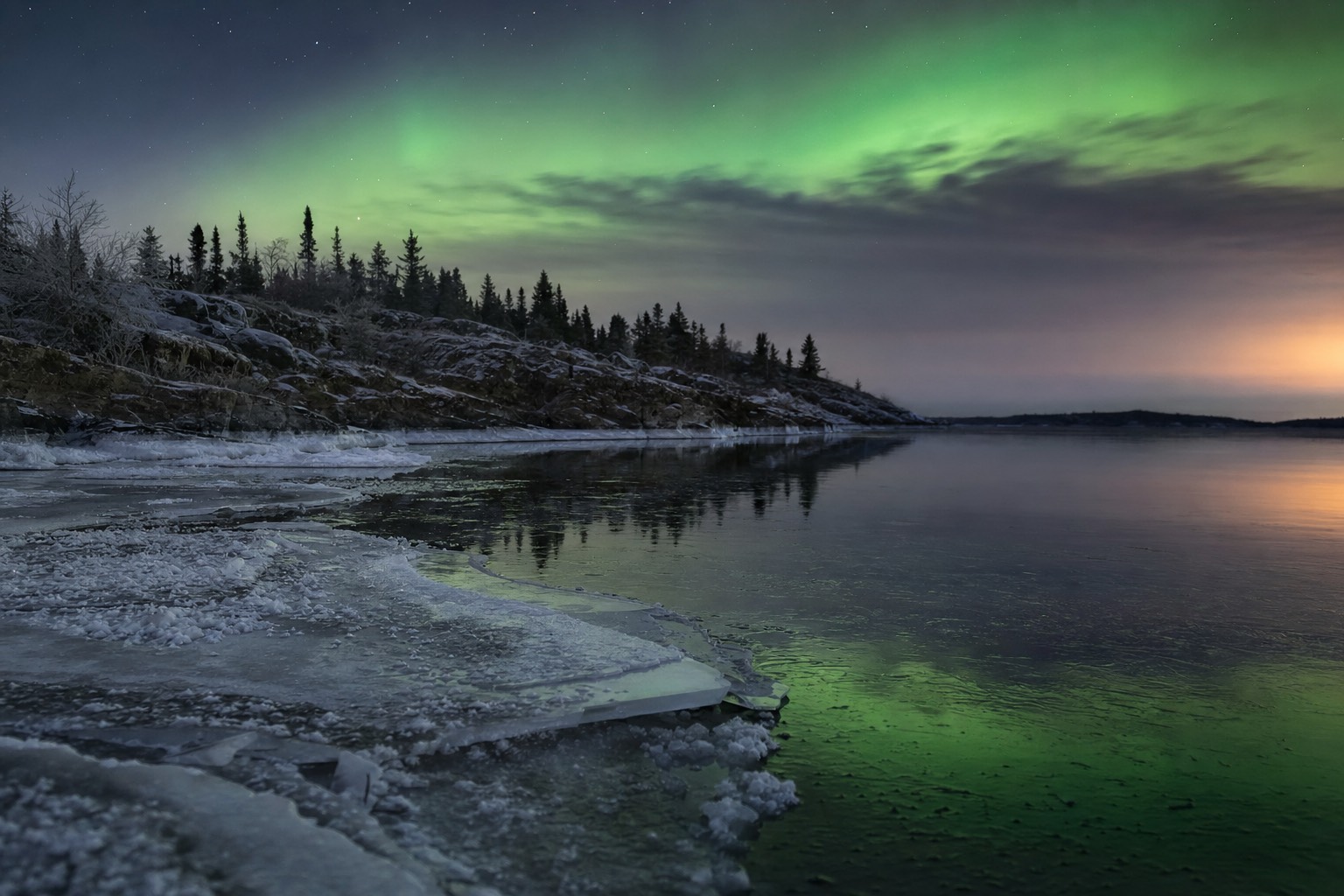
Short answer
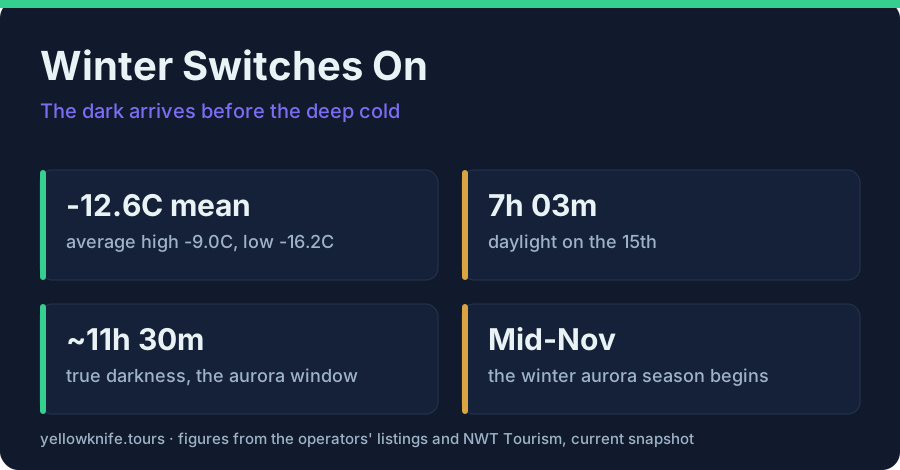
November averages a mean of minus 12.6C with highs near minus 9.0C and lows near minus 16.2C, far milder than December. Daylight on the 15th runs 08:50 to 15:53, about seven hours, leaving roughly 11 hours 30 minutes of true astronomical darkness. The winter aurora season opens mid-November, so late-November dates beat early-November dates.
Around the first week of November I stop carrying my truck keys in an outside jacket pocket, because the metal gets cold enough to sting. That is my private marker for the turn. October finishes with black water still slapping the rocks below Old Town, and by the last days of November the bay has gone quiet and pale and the vans are running full again every night. If you want all twelve months lined up side by side, the month-by-month weather guide does that comparison. This page does something narrower: it takes November apart, because November is the month the switch gets thrown, and the half of the month you book decides what trip you get.
What is Yellowknife in November actually like?
It is the first real winter month, and a month of two halves. The mean temperature falls from minus 1.0C in October to minus 12.6C. Daylight collapses to about seven hours by mid-month. The lake begins freezing, and the winter aurora season opens partway through, which splits November into two different trips.
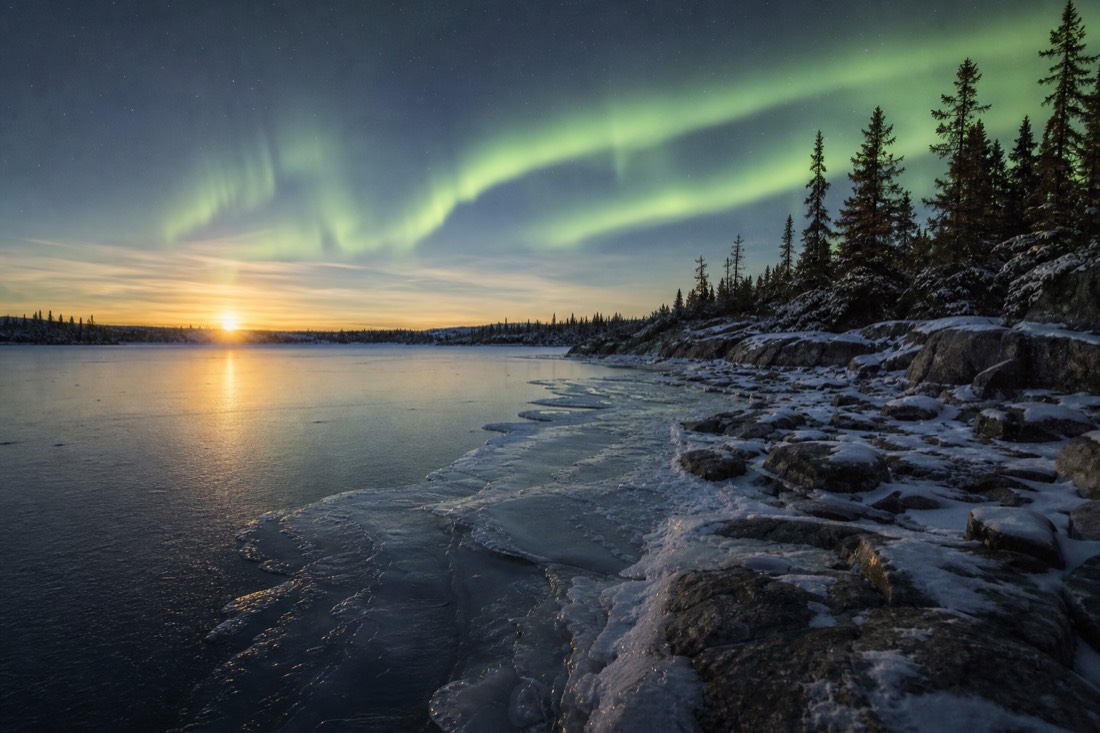
The plunge is the story. October here is a shoulder month with a thermometer that still crosses zero in the afternoon. December is deep winter with the lowest sun of the year. November sits between them and moves fast, which is why a trip on the 3rd and a trip on the 25th are not the same holiday at all.
| Measure | October | November | December |
|---|---|---|---|
| Mean temperature | -1.0C | -12.6C | -21.8C |
| Average high | 1.5C | -9.0C | -18.0C |
| Average low | -3.6C | -16.2C | -25.6C |
| Sunrise / sunset on the 15th | 08:21 / 18:24 | 08:50 / 15:53 | 09:57 / 15:07 |
| Daylight on the 15th | 10 h 02 m | 7 h 03 m | 5 h 09 m |
Read that middle column against both neighbours and the appeal becomes obvious. November hands you nights that are almost as long as December's while the thermometer is still roughly nine degrees kinder.
How cold does it get in Yellowknife in November?
Cold, but not deep-winter cold. Highs average minus 9.0C, lows average minus 16.2C, and the monthly mean is minus 12.6C. That is about nine degrees warmer than December across every measure, and roughly thirteen warmer than January. You need proper winter clothing, not survival gear.
Guests who have read about Yellowknife's reputation tend to arrive braced for something November does not deliver. The minus 30 nights people talk about, and the minus 51.2C record from 1947, belong to the January end of the calendar. My honest framing for November is this: it is colder than most visitors have ever experienced and warmer than they were afraid of. The full breakdown of how cold it gets here covers the deep-winter numbers if you want the worst case.
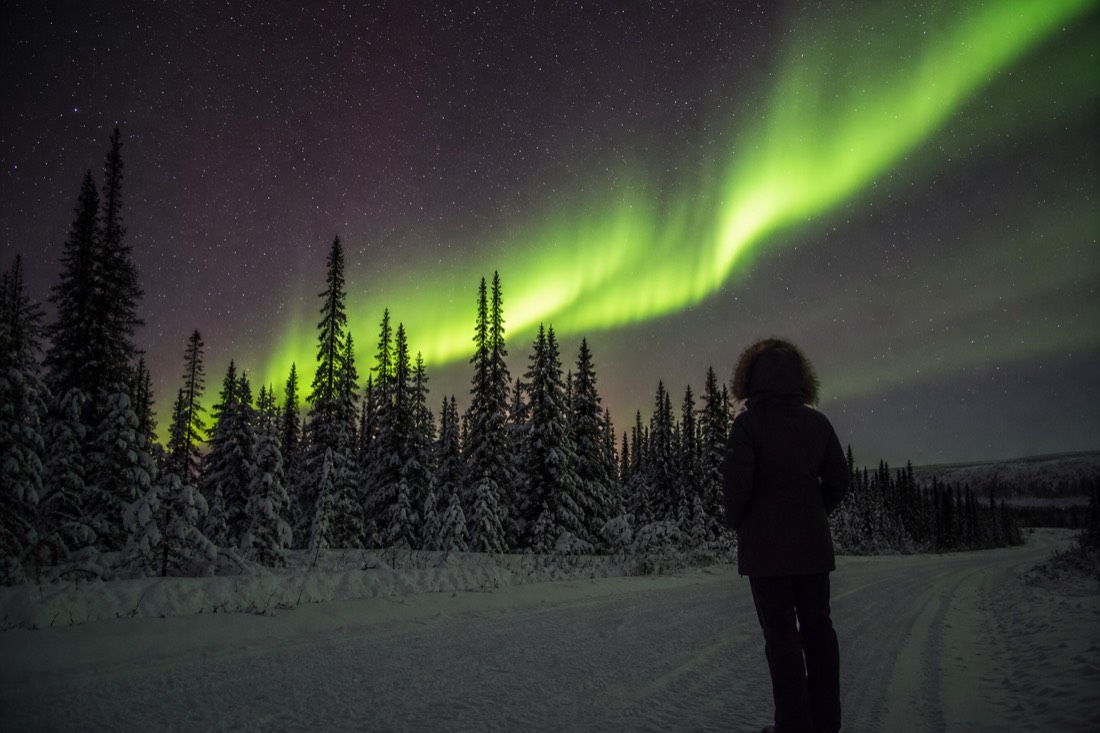
What changes the experience is standing time. Under an aurora display at minus 12 you can stay planted outside for the whole show, and staying out is exactly how you catch a faint arc turning into a corona overhead. At minus 29 you watch in five-minute shifts between warm-up breaks in the van. That difference is the quiet argument for November over January, and it is a bigger deal than the raw numbers suggest.
When does the Yellowknife November aurora season actually start?
Mid-month. The winter aurora season published by NWT Tourism runs from mid-November to early April, following the autumn season that closes in early October. So the first fortnight of November falls between the two published windows, and the second fortnight sits fully inside the winter season.
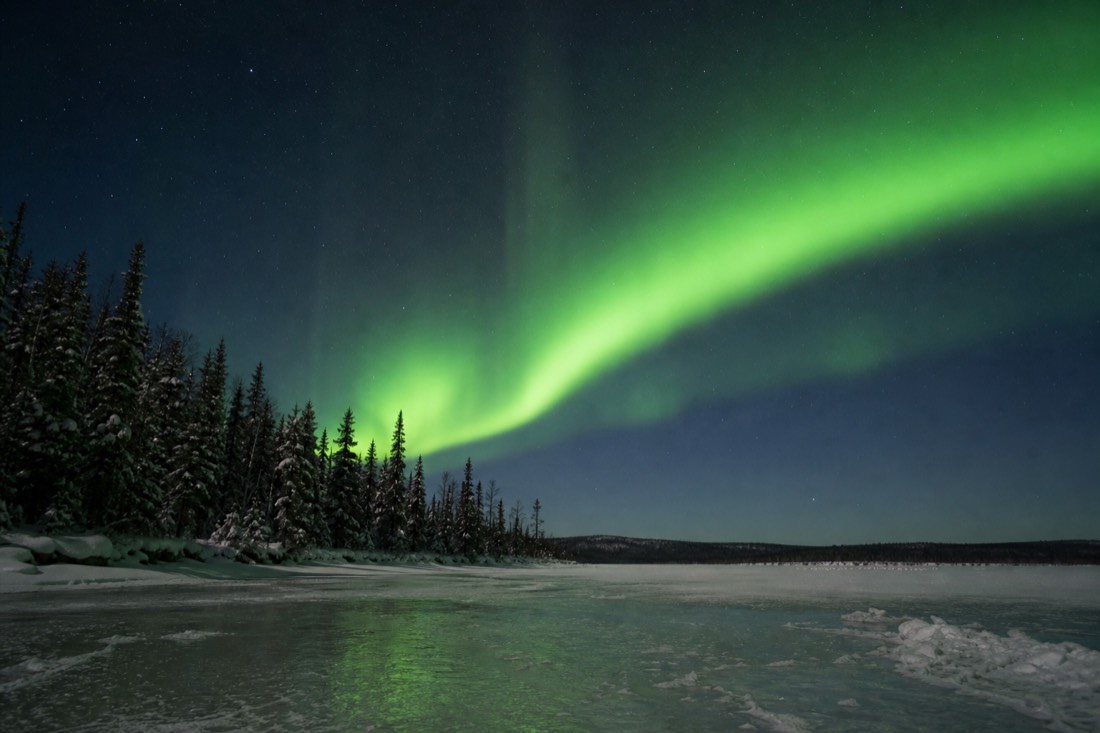
The sky itself does not obey a calendar, and the physics behind it certainly does not. Yellowknife sits directly under the auroral oval year-round, which is why the lights appear here up to 240 nights a year, and why a low Kp number with clear skies is often enough. What actually gates the season is darkness, and by early November there is plenty of it. The practical reason the seasons are drawn where they are is that operators need the full winter setup running, from heated viewpoints to reliable road access, and the demand pattern follows suit.
So the first half of November is not a dead zone. It is a period when fewer nightly departures run and the town is quieter. The second half is when the machine turns on properly, tour frequency picks up, and you get the full choice of operators and formats. Across a three-night stay in season, NWT Tourism puts the odds of at least one sighting at 98%, which is the figure the chances of seeing the northern lights guide unpacks in detail.
If your dates land in the back half of the month, compare the northern lights tours and check live availability and prices on Viator for the flagship hunt. It caps at sixteen guests, works three viewpoints in a night, and a photographer rides along and shoots you under the lights for free.
How many hours of darkness does November in Yellowknife give you?
About 11 hours 30 minutes of true astronomical darkness on the 15th, against roughly 9 hours in October and 12 hours 45 minutes in December. Daylight itself runs 08:50 to 15:53, about seven hours. November already gives you nearly all of the darkness December does.
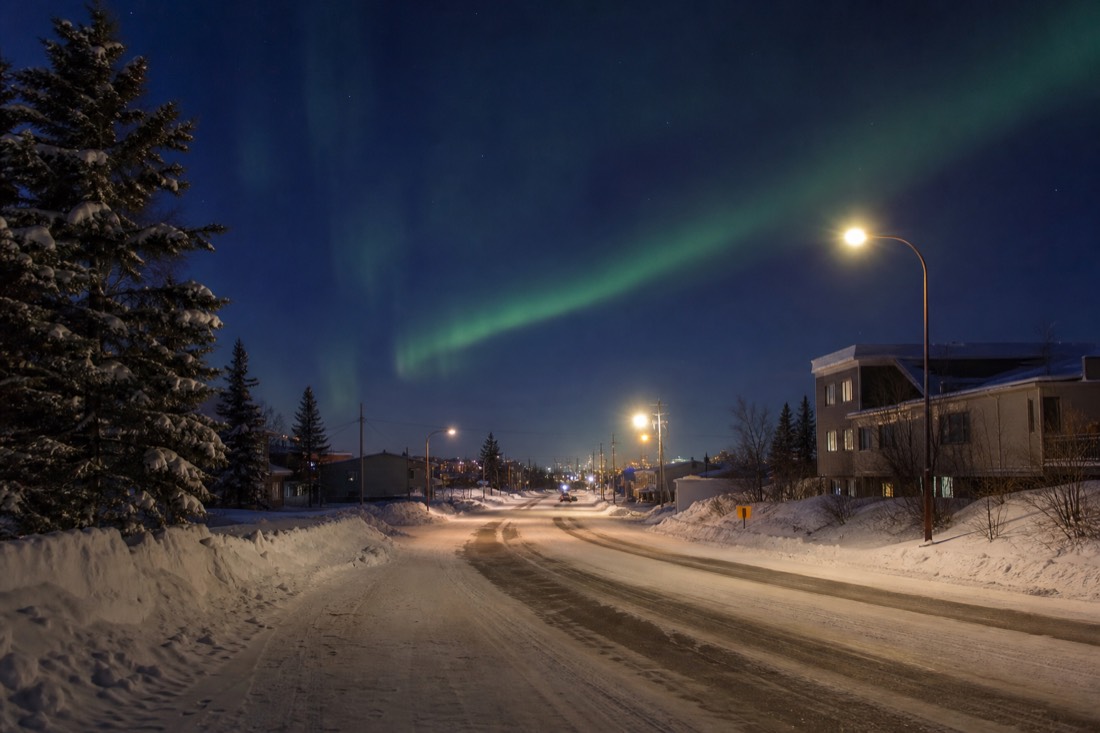
This is the number that matters most and the one almost nobody checks. Daylight hours get quoted everywhere; hours of genuine astronomical darkness, the kind faint aurora needs, get quoted almost nowhere. Here is the year:
| Month (15th) | True astronomical darkness | In an aurora season? |
|---|---|---|
| January | about 12 h | Yes, winter |
| February | about 10 h | Yes, winter |
| March | about 7 h | Yes, winter |
| April | none by mid-month | Season ends early April |
| May to July | none | No |
| August | none at mid-month | Autumn season opens mid-August |
| September | about 5 h 20 m | Yes, autumn |
| October | about 9 h | Autumn season closes early October |
| November | about 11 h 30 m | Winter season opens mid-month |
| December | about 12 h 45 m | Yes, winter |
True darkness returns to Yellowknife in the last days of August and vanishes again around the 12th to 14th of April. That, rather than temperature, is the real reason the aurora calendar looks the way it does. November's line in that table is the interesting one: it is the second-darkest month of the year while sitting nowhere near the coldest. Tours still run the same late rhythm regardless, with pickups between 9:30 and 10:30pm and returns between 1:30 and 2:30am, because peak activity clusters near local midnight. For the full month-ranking argument, the best time to see the northern lights guide weighs darkness against cold across the whole calendar.
What is running in early November versus late November?
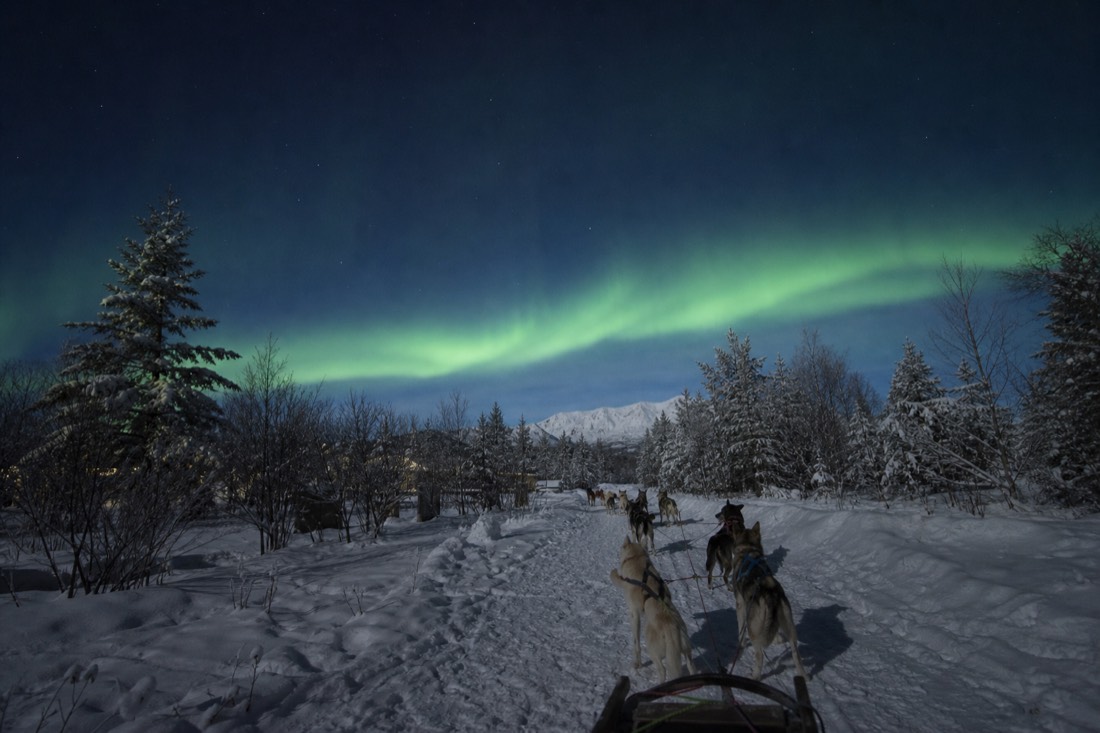
Not the same list. The winter aurora season opens mid-month, and dog sledding and ice fishing start their November-to-March run around the same turn. The Dettah ice road stays shut until late December in either half. If your dates are flexible, weight them to the second half.
| What | Early November | Late November |
|---|---|---|
| Winter aurora season | Between published seasons | Open, runs to early April |
| Nightly darkness | Growing fast from October's 9 hours | About 11 h 30 m and climbing |
| Dog sledding | Starting up | Running |
| Ice fishing huts | Starting up | Running |
| Lake ice | Forming, unsafe to walk on | Thickening |
| Dettah ice road | Closed | Closed until late December |
| Snow cover | Patchy to establishing | Established |
Great Slave Lake carries ice cover from November to mid-June, so November is when the freeze begins rather than when it finishes. That distinction has teeth. New ice is the single most dangerous thing about early winter here, and the city publishes ice safety guidance for exactly this reason: never walk on early-season ice, and take guided access at face value when a guide says a spot is not ready.
The public ice road across the bay to Dettah typically opens in late December and runs to mid-April, so no November visitor drives it. Plan around that instead of hoping. What you get in exchange is a town before the peak-season crowd, with dog sledding tours and huts on the ice starting their season, and a fuller menu of winter things to do appearing week by week.
What do you need to pack for Yellowknife in November?
Genuine winter kit, but not polar expedition kit. Insulated parka, insulated pants, rated boots, mitts over gloves, and thermal base layers cover a minus 9 to minus 16 month. Arctic clothing rental, parka to boots, is available in town from several operators, so you do not have to buy any of it.
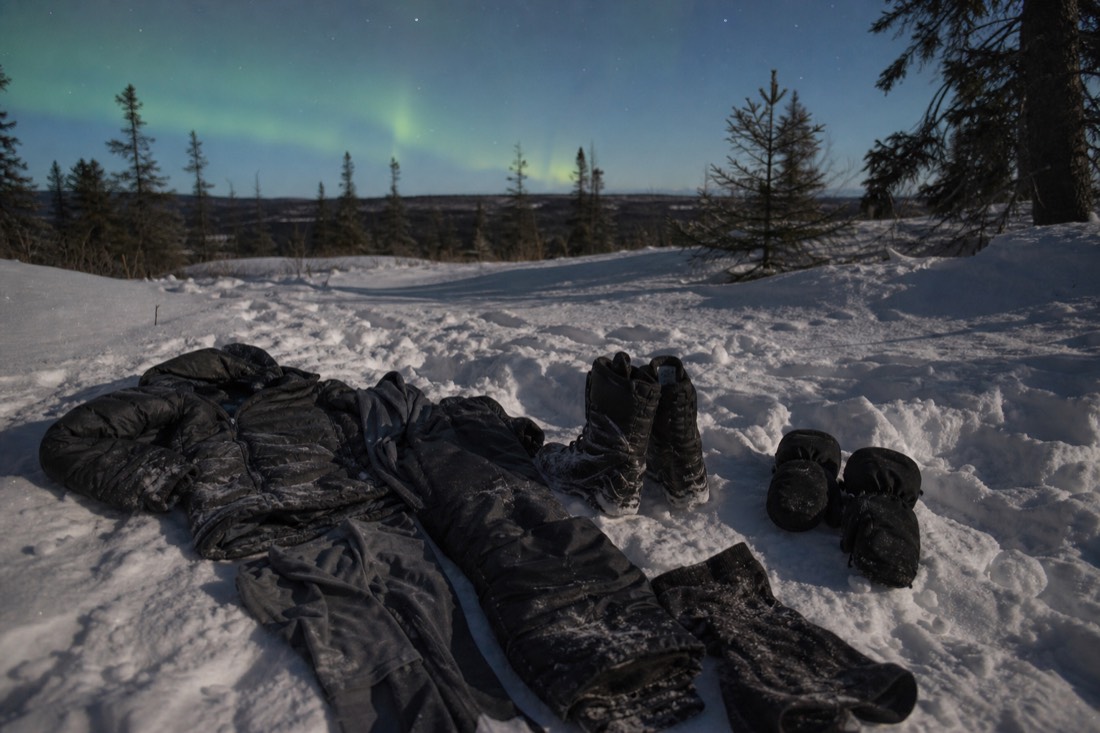
| Item | Why November needs it | Rent or bring |
|---|---|---|
| Insulated parka | Standing still under the aurora for hours, not walking | Rentable in town |
| Insulated snow pants | Legs are the first thing to fail when you stop moving | Rentable in town |
| Rated winter boots | Street boots fail below minus 10 on frozen ground | Rentable in town |
| Mitts, with liner gloves under | Mitts beat gloves; liners let you touch a camera | Bring liners, mitts rentable |
| Thermal base layers | Merino or synthetic; no cotton against skin | Bring |
| Hat plus neck gaiter | Faces and ears go first outdoors at night | Bring |
| Hand and toe warmers | Cheap insurance for a four-hour night tour | Bring or buy locally |
| Spare camera batteries | Batteries drain fast in cold; keep them in an inside pocket | Bring |
The rental point genuinely changes the packing maths. A visitor coming from Singapore or Sydney has no reason to buy a parka for four nights, and the rented gear here is rated for far worse than November throws at you. Layer selection matters more than gear cost, and the what to wear in winter guide works through the system layer by layer, including the mistakes I watch people make on their first night out.
Is November in Yellowknife better than December?
For a lot of travellers, yes. Both months sit inside the winter aurora season once November's opens mid-month, and November's true darkness runs about 11 h 30 m against December's 12 h 45 m. But November averages roughly nine degrees warmer on every measure. December wins on the ice road, deeper snow and holiday atmosphere.
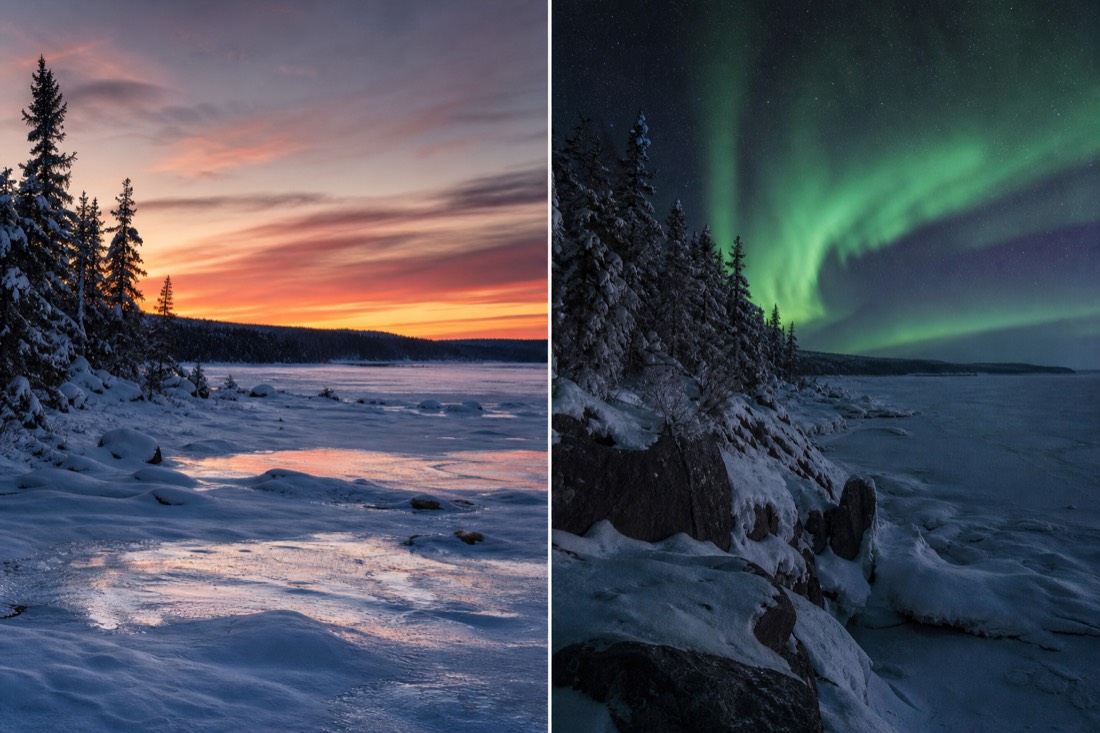
Look at what you actually give up by choosing late November over December. You lose about an hour and a quarter of astronomical darkness per night, on nights that already run past eleven hours. You lose the Dettah ice road, which is a genuine loss, since it is the best free excursion of the winter. You lose some snowpack depth. December's daylight figures, sunrise near 10:03am and sunset near 3:08pm at the solstice according to timeanddate's sun tables, are startling in a way November's are not, and some people come precisely for that.
What you gain is a thermometer that lets you stand still outside, cheaper and quieter shoulder timing before the December rush, and a season that has just opened rather than one running at capacity. Solar activity also stays elevated in the years just after solar cycle 25's peak around October 2024, which covers a 2026 or 2027 November as well as any other month.
My advice after several of these Novembers is unglamorous and it works: pick the last ten days of the month. You get the season open, the darkness near its annual maximum, the winter tour list filling out, and a thermometer you can actually stand around in. Book the first half only if the flights or the price make it worth accepting fewer nightly departures, and if you do, come anyway. The oval does not check the calendar.