How to See the Northern Lights: What Actually Has to Line Up
Four conditions decide whether you see the northern lights, and only one of them is the sun. Here is how each one works, which ones you control, and where the odds stack in your favour.
 Written with Thomas Beaulieu, Yellowknife tour guide & northern lights specialist
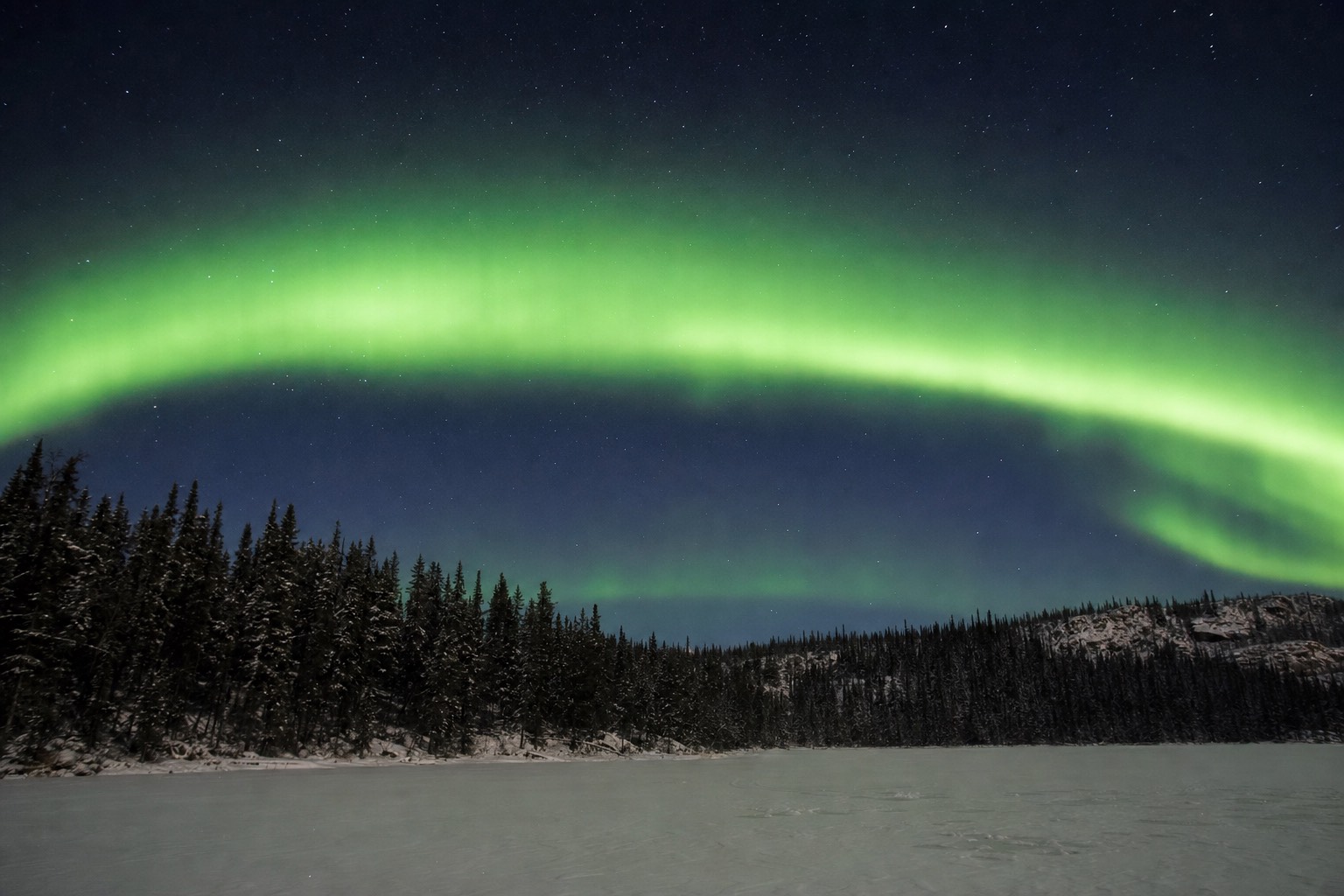
Short answer
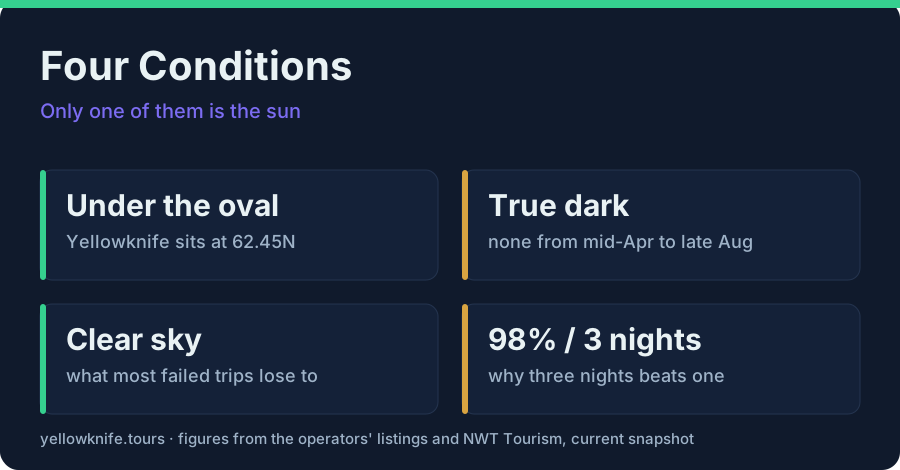
To see the northern lights you need four things at once: a position under or near the auroral oval, true astronomical darkness, a gap in the cloud, and enough nights for those three to overlap. Latitude alone is a poor guide, and clear sky decides more trips than solar activity does. Three nights in an oval destination with continental weather is the setup that works.
Somebody asks me this on nearly every drive out of town, usually about twenty minutes in, when the last streetlight has dropped behind us and the sky finally looks like a sky. How do you actually see these things? The honest answer has nothing to do with luck charms or secret spots. Four conditions have to line up on the same night, in the same place, over your head. Only one of them involves the sun, and that is the one travellers spend all their energy worrying about. This guide walks through all four, in the order they matter, and it will not pretend the answer is only ever one town.
What do you actually need to see the northern lights?
Four things have to line up. You need to be under or near the auroral oval, you need true astronomical darkness, you need a gap in the cloud above you, and you need enough nights for those three to overlap at least once. Miss any single one and the display is invisible to you, no matter how strong it is.
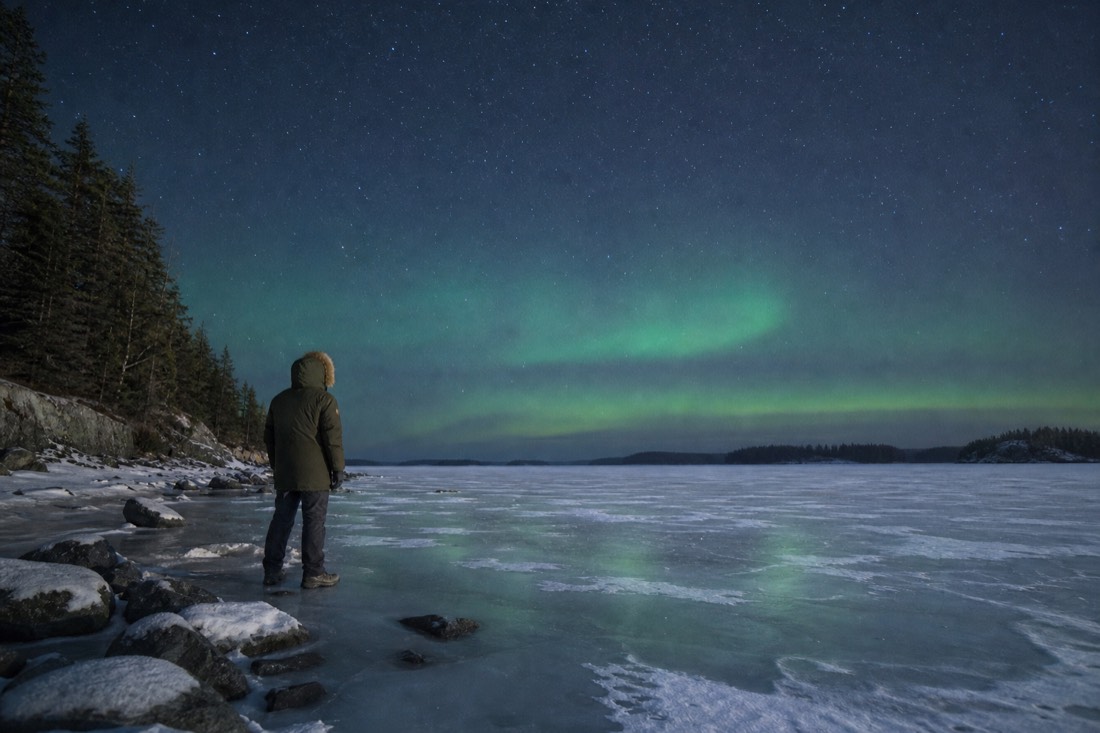
The useful thing about that list is how much of it you control. Solar activity is the one factor nobody can book, and it is also the one that matters least in the right location. The other three are travel decisions: where you fly, what month you go, whether you can move under a hole in the cloud, and how many nights you put on the calendar.
| Condition | What it means | How much you control it |
|---|---|---|
| Position under the oval | The aurora lives in a ring, not at "high latitude" generally | Total: it is your destination choice |
| True darkness | Astronomical darkness, not just sunset | Total: it is your month choice |
| Clear sky | Cloud blocks aurora completely, from below | Partly: climate choice, plus chasing on the night |
| Enough nights | Multiple chances for the three above to coincide | Total: it is your trip length |
| Solar activity | Geomagnetic energy feeding the oval | None, and under the oval you need less of it |
Read that table backwards and you get the traveller's version of the physics. Four of the five rows are decisions. The one row you cannot influence is the one most people plan around.
What is the aurora, and why does it sit in a ring?
Aurora is what happens when charged particles from the sun follow Earth's magnetic field down into the upper atmosphere and collide with gas there, making it glow. The magnetic field funnels them into an oval-shaped ring around each pole, so the lights appear in a band, not everywhere in the far north.
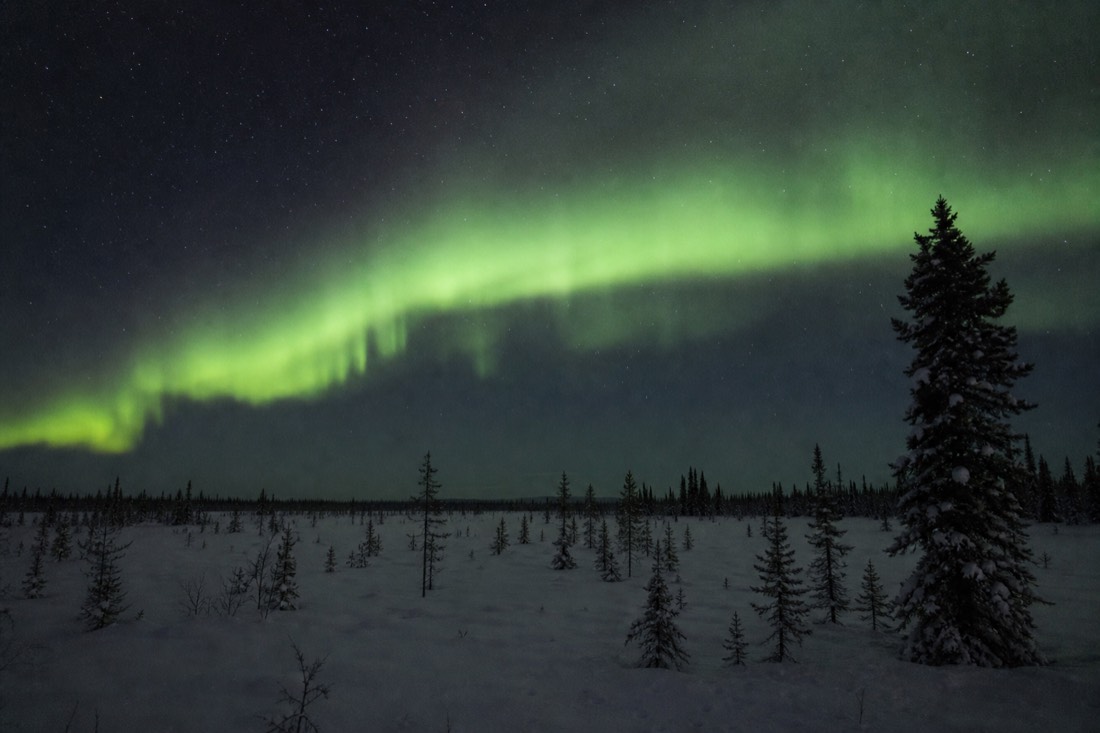
That ring shape is why latitude is such a bad shopping guide. Going further north does not automatically improve your odds, because past a certain point you climb out through the top of the oval and the sky above you goes quiet. The high arctic, well north of most aurora destinations, sees the lights on roughly 50 nights a year. Yellowknife, at 62.45N and about 400 kilometres south of the Arctic Circle, sits directly beneath the ring and records aurora on up to 240 nights a year, a figure Canadian Geographic reports alongside the territory's own numbers.
So the first question is not "how far north can I get" but "what is under the oval". That distinction reshuffles the map, and it is the reason a subarctic town on a lake outranks places much closer to the pole. I go through the geography properly in the comparison of which Canadian city has the best northern lights.
When is it dark enough to see the aurora?
You need astronomical darkness, which is deeper than sunset and deeper than dusk. At subarctic latitudes that darkness disappears entirely in summer. In Yellowknife there is none at all from roughly mid-April to the last days of August, which is why the aurora season starts and ends when it does.
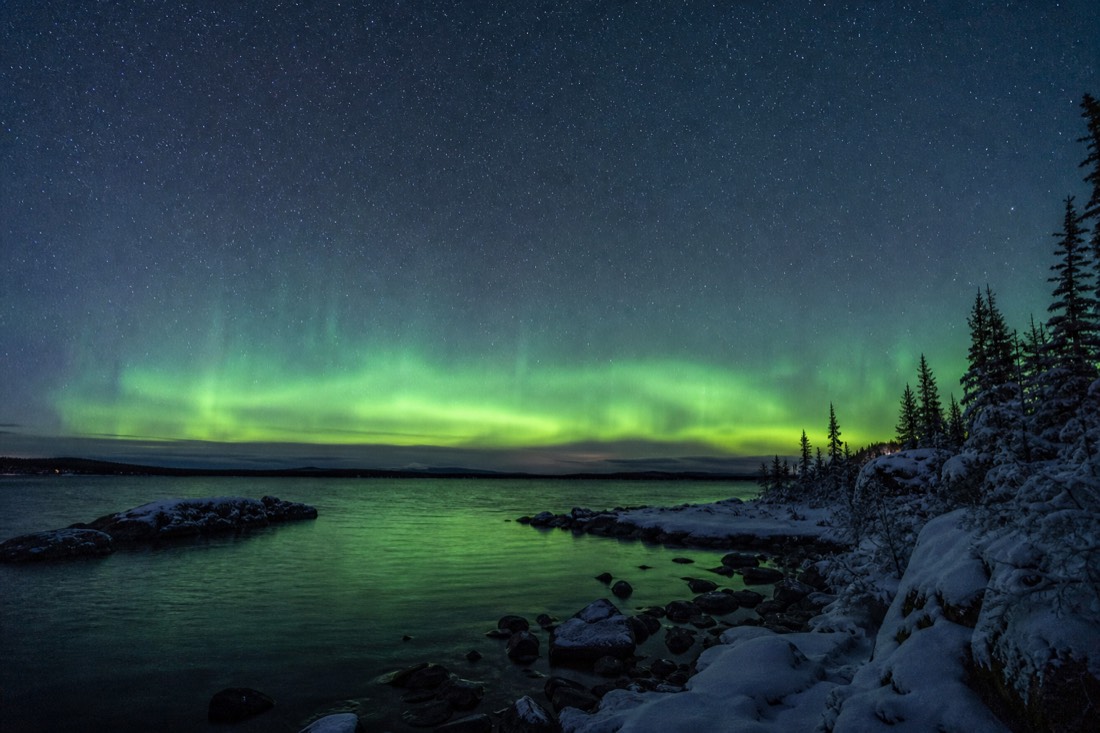
This one catches people out badly. A tour operator can be running, the sun can be throwing out plenty of energy, and the sky still never gets dark enough for anything faint to register. The lights are technically up there in June. You simply cannot see them, because the sky above you is still lit.
| Month (mid-month) | Daylight | True astronomical darkness |
|---|---|---|
| January | 6h10m | About 12h |
| February | 9h00m | About 10h |
| March | 11h50m | About 7h |
| April | 14h58m | None by mid-month |
| May to July | 18h to 20h+ | None |
| August | 16h08m | None at mid-month, returns around the 27th-28th |
| September | 13h02m | About 5h20m |
| October | 10h02m | About 9h |
| November | 7h03m | About 11h30m |
| December | 5h09m | About 12h45m |
The two shoulder dates are the ones to remember: darkness returns in the last days of August, only minutes at first and growing fast, and it vanishes again around the 12th to 14th of April. That gives two real seasons, autumn over open water and the long dark of winter, which I break down month by month in the guide to the best time to see the northern lights.
How much solar activity do you need, and what is Kp?
Kp is a 0 to 9 scale of global geomagnetic activity. Higher Kp pushes the auroral oval further south, which is why mid-latitude cities need a storm. Under the oval you need far less: a quiet Kp of roughly 1 to 3 with clear sky is often plenty, and no storm is required.
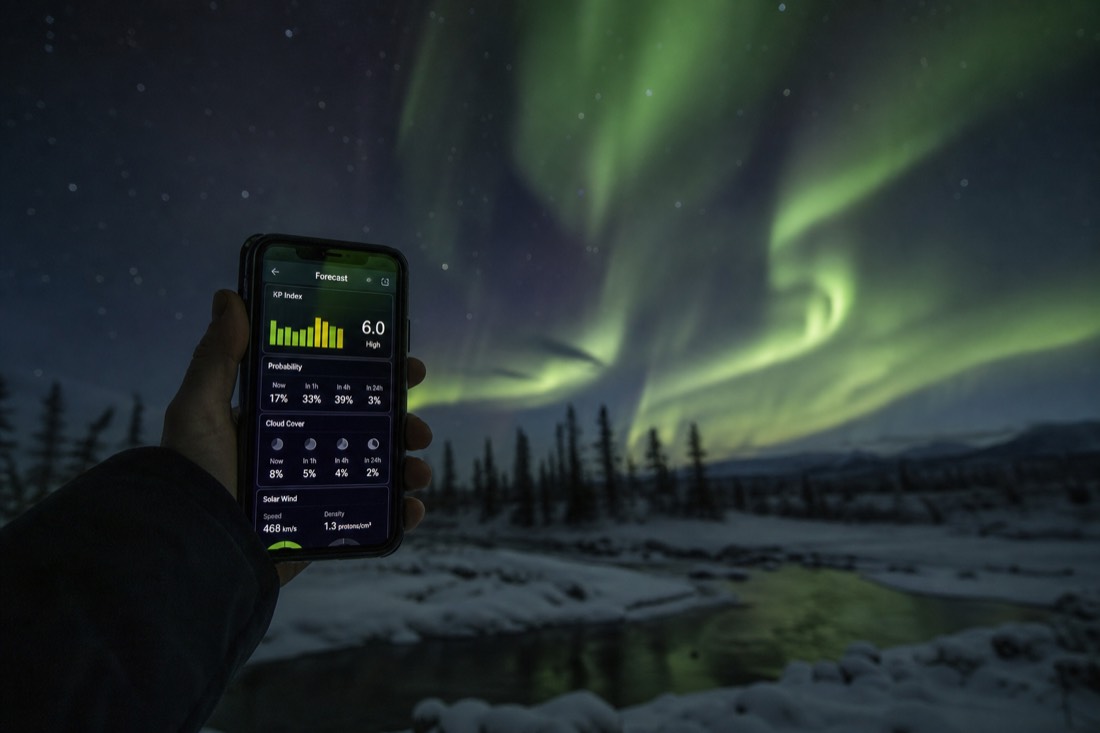
Kp is the number every aurora app leads with, and it is the most misread figure in this whole subject. It does not measure how bright the lights are above you. It measures how far the ring has spread. If you are standing under the ring already, spreading it south does nothing for you, and a low number costs you nothing. Guests routinely see a strong show on a night the app called dead.
| Where you are | Kp typically needed | What that means for a trip |
|---|---|---|
| Under the oval (Yellowknife, 62.45N) | Roughly 1-3 | Ordinary quiet nights work; storms are a bonus |
| Northern USA and southern Canada | Usually 5 or higher | You are waiting on a storm, not on a season |
| Mid-latitude cities such as Vancouver | Strong storms only | Newsworthy when it happens, never plannable |
| Far north of the oval | High Kp pulls the ring away | More latitude, fewer nights |
The NOAA Space Weather Prediction Center's 30-minute aurora forecast is the tool worth trusting, because short-horizon nowcasts are genuinely reliable while week-ahead aurora predictions are not. For this specific patch of sky, AuroraMAX from Astronomy North runs a local forecast and live feed, returning for the season on August 10, 2026.
Why does cloud decide more aurora trips than the sun?
Because cloud blocks the aurora completely and cannot be forecast away. The single factor that most often decides whether a visitor sees the lights is cloud cover, not geomagnetic activity. That is why the climate of your destination matters more than its reputation, and why continental interiors beat coastal ones.
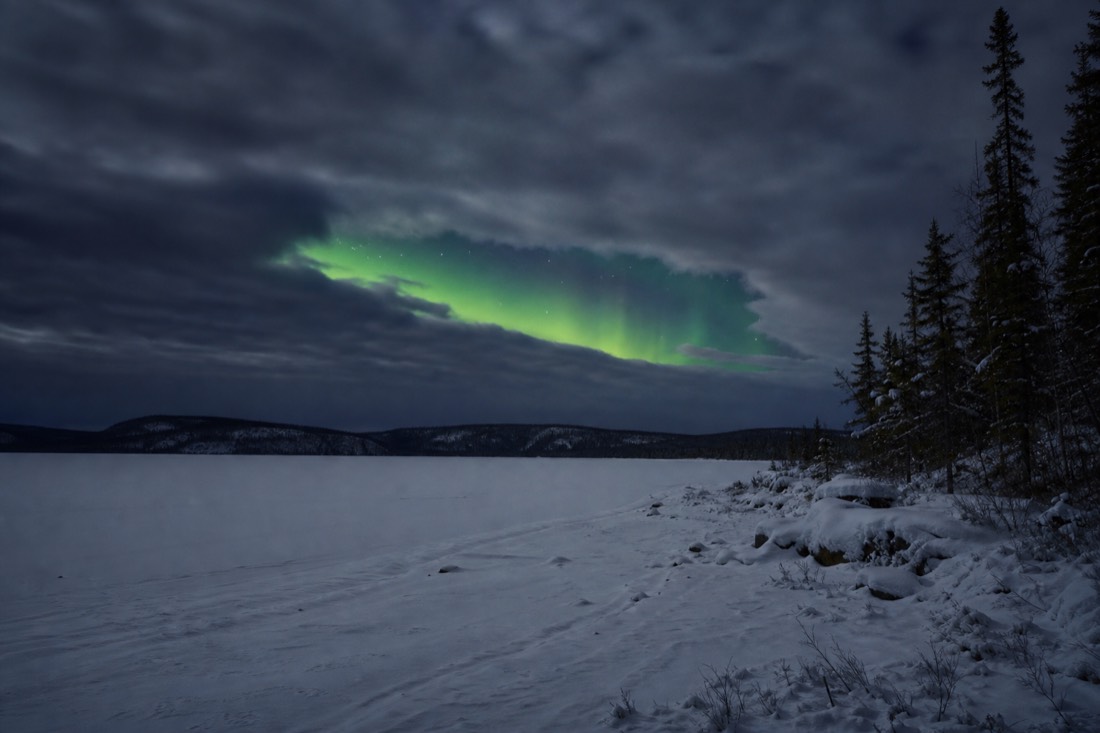
Coastal aurora destinations sit in the path of maritime weather systems, so their weak point has never been the aurora, it has been the sky in front of it. Iceland is the clearest example: the lights are there, the cloud arrives too. Continental interiors get low precipitation and long stretches of clear cold nights instead, which is the structural reason places like this one convert so many nights into sightings. I put the two side by side in Yellowknife versus Iceland.
Cloud is also the one condition you can partly fight on the night, and that is exactly what a hunting tour is for. Sitting at a fixed camp, you get the sky you are given. Driving, you get to go find the hole in it. Whether that is worth paying for depends on your trip, and I argue both sides in do you need a tour to see the northern lights.
How many nights do you need to book?
Three, minimum. In season, a three-night stay here carries a 98% chance of seeing the aurora at least once. One night is a single roll of the dice with no recovery if the cloud sits in, and I would not put a number on it, because no honest one exists.
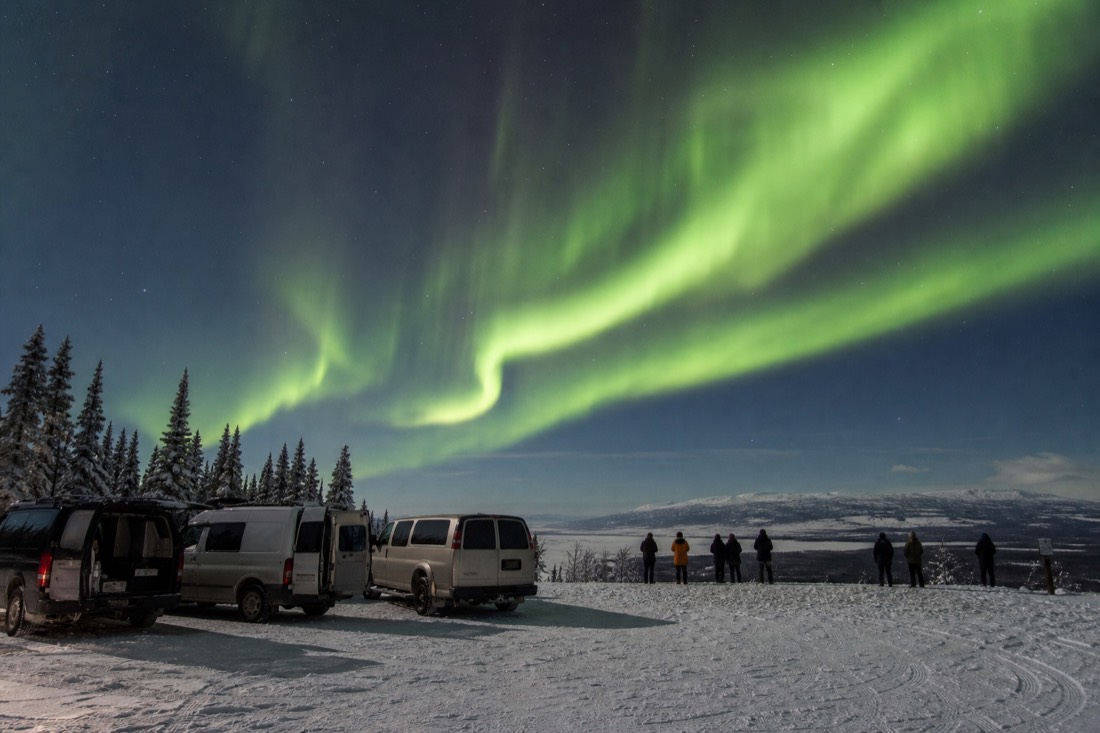
The 98% figure over three nights, published by NWT Tourism and corroborated in the northern lights by the numbers, is the most useful planning statistic in the whole subject. It exists because three nights is roughly how long it takes for a weather system to move on. Add a fourth and you are buying margin, not just repetition.
| Nights booked | Realistic position | What it buys you |
|---|---|---|
| 1 | One weather system, one chance, no recovery | Nothing but hope; no published odds figure exists |
| 2 | Better, still exposed to a single cloudy stretch | A second look if the first night is socked in |
| 3 | 98% chance of at least one sighting, in season | The number the whole destination is built on |
| 4 or more | Margin plus daytime range | Room for a strong night, not just any night |
Nights are the cheapest lever on this list, which is why I would rather a visitor cut a restaurant than a night. The trip shape that follows from all of this, including what to do with the daylight hours, sits in the three-night aurora itinerary. When you are ready to compare the guided options, look through the northern lights tours and then check live availability and prices on Viator for the small-group hunt rated 4.8 across 399 reviews, capped at 16 guests, with hotel pickup, three viewpoints, a photographer and free photos.
What do the northern lights actually look like in person?
Less colourful than the photographs, and more alive. Your eyes see mostly pale green and grey-white with structure and movement; a camera on a long exposure gathers the pinks and purples you cannot register. On a strong night the naked eye wins anyway, because nothing in a still image moves.
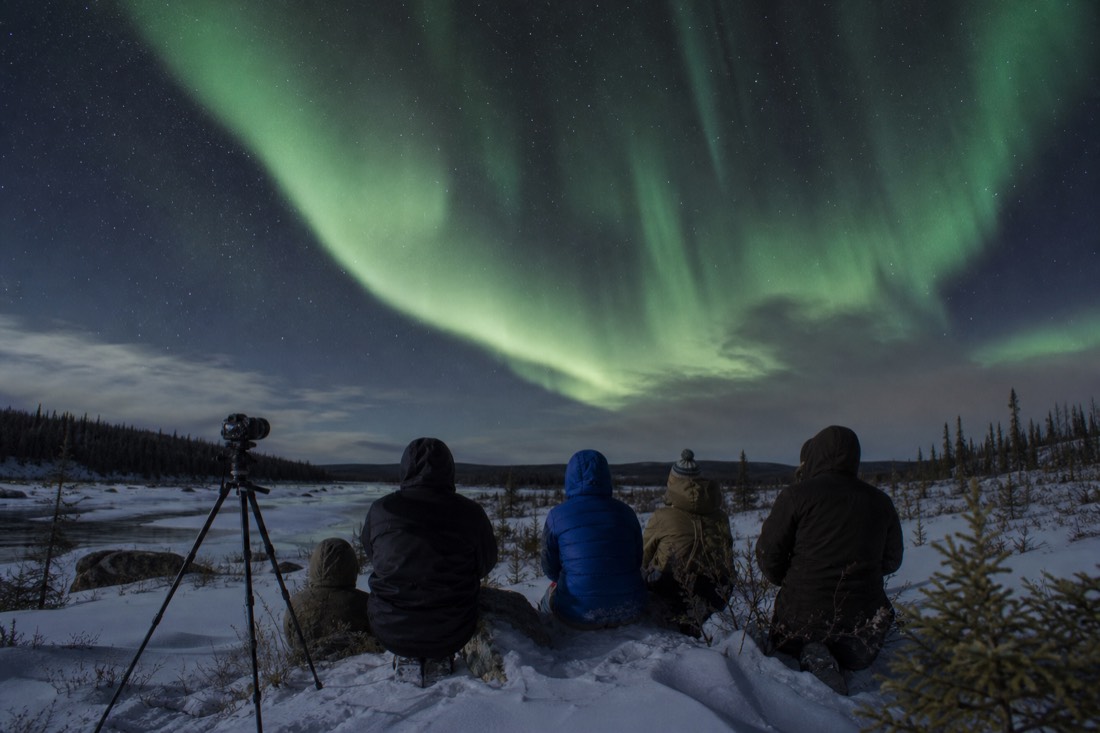
I would rather say this plainly than have a guest feel let down at midnight. Human night vision is poor at colour, so a faint arc that photographs as a saturated green ribbon looks to you like a pale smear, easy to mistake for cloud until it starts to shift. Then it moves, and the mistake becomes impossible. When the display goes strong, the colour arrives in your eyes too, and the sky does something no photograph reproduces.
Timing helps. The statistically best hours at this latitude run from about 10pm to 2am, around local midnight, which is why tours here pick up around 9:30 to 10:30pm and get you back between 1:30 and 2:30am. A bright moon washes out the faint stuff and matters most for photography. A strong display beats the moon regardless. If your odds question is really about this specific place, the numbers are collected in chances of seeing the northern lights.
What should you do on the night itself?
Check the cloud forecast before the space weather, dress for standing still rather than walking, and be outside and dark-adapted through the 10pm to 2am window. Give your eyes twenty minutes away from phone screens and headlights, and keep spare batteries somewhere warm against your body.
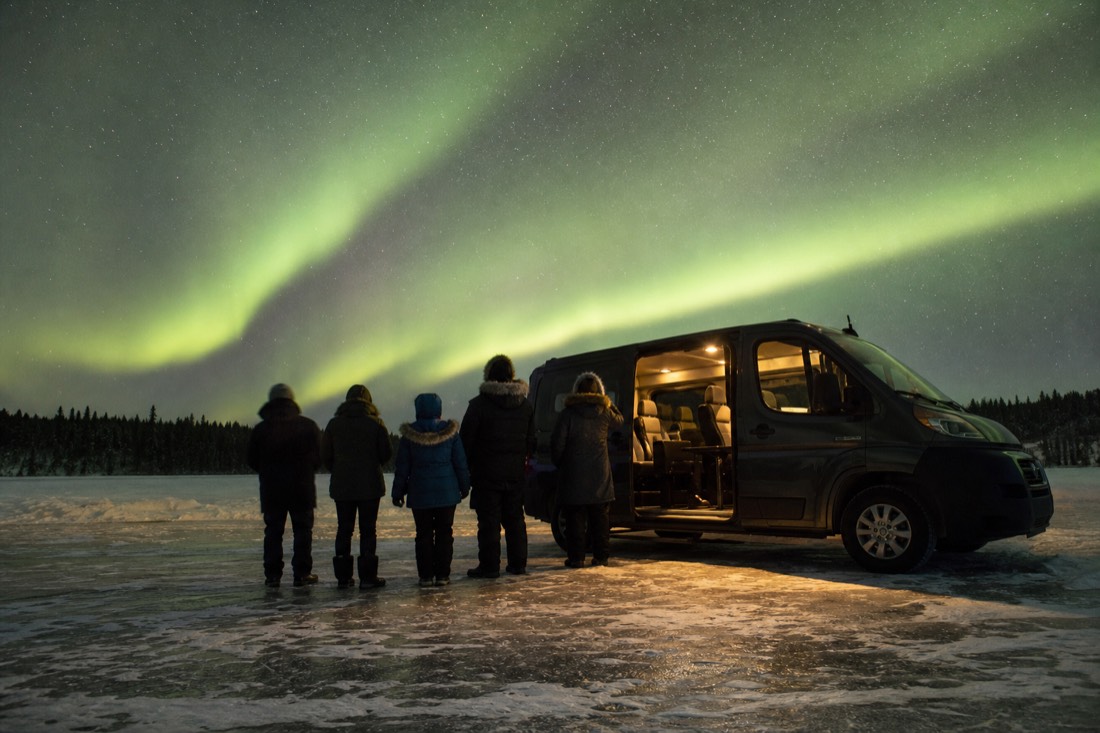
The order of those checks is the part people get backwards. Nearly every guest opens an aurora app first and a weather app second, when the sky in front of the lights is what decides the night. Read the cloud forecast in the afternoon, decide from that, and treat the geomagnetic numbers as the smaller question. Forecast horizons matter too: the 30 to 60 minute nowcast is the dependable one, one to three day solar wind outlooks are middling, and the 27-day recurrence outlook shows patterns rather than nights. Nobody can tell you on Monday what next Saturday's sky will do, which is the whole argument for booking nights instead of a night. I go deeper into which tools to trust in the Yellowknife aurora forecast guide.
| When | What to do | Why it matters |
|---|---|---|
| Late afternoon | Read the cloud forecast for the coming night before you look at Kp | Cloud is the factor that most often decides the outcome |
| Around 9pm | Layer for standing still, boots and mitts last so you do not overheat indoors | You stop generating heat the moment you stop walking |
| 9:30-10:30pm | Tour pickup window here; self-drivers should be leaving town | Gets you dark and in position before the good hours |
| On arrival | Check the 30-minute nowcast once, then put the phone away | Short-horizon forecasts are reliable, week-ahead ones are not |
| 10pm-2am | Stay out, scan north and overhead, sit through the quiet stretches | Statistically the best hours at this latitude |
| 1:30-2:30am | Typical return, or your own call if the sky is still working | Displays pulse and fade; the good one often comes late |
Dressing is where first-timers underestimate the job. This is not hiking cold, it is standing-around cold, sometimes for four hours with no exertion to keep you warm. Rental parkas, snow pants, boots and mitts are available in town from several operators, and in January that is not an indulgence. The numbers below are the average overnight lows, so a colder-than-normal night sits well beneath them. The full clothing system, layer by layer, is in what to wear in a Yellowknife winter.
| Month | Average overnight low | What that means standing still |
|---|---|---|
| September | About 4C | Warm jacket, hat, gloves; often damp rather than frozen |
| October | About -4C | Proper winter layers and real boots |
| November | About -16C | Full arctic layering; exposed skin stops being comfortable |
| December | About -26C | Rental parka territory, face cover, mitts instead of gloves |
| January | About -29C | Coldest month of the season; hand warmers earn their keep |
| February | About -27C | Nearly as cold, with longer usable evenings |
| March | About -22C | The kindest cold of the winter season, still deep freeze |
Two small habits do more for a first sighting than any gear. Protect your night vision, because one glance at a bright screen resets twenty minutes of adaptation and a faint band is exactly the thing you lose. And keep camera and phone batteries in an inside pocket, since deep cold drains them fast and a dead battery at 12:40am is a genuinely common ending. Exposure numbers belong in the northern lights camera settings guide rather than here. If you want the shape of a whole night before you commit, I walked through one in what an aurora hunt is really like.
Which aurora beliefs cost people a sighting?
Four wrong ideas do most of the damage: that you need a Kp of 5 or higher, that the aurora only appears in deep winter, that cold nights cause the lights, and that a full moon ruins everything. Under the oval all four are false, and two of them talk travellers out of trips that would have worked.
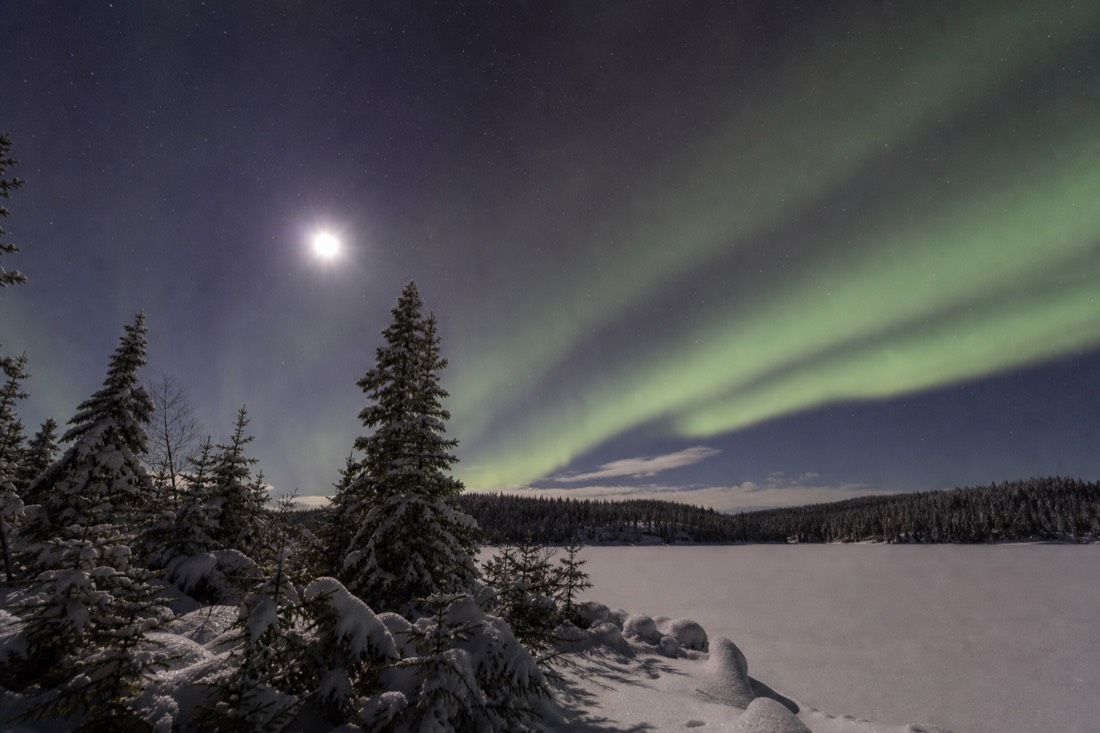
I hear all of these in the van, usually from people who have done a lot of reading. Most aurora advice online is written for southern viewers, where the ring has to stretch a long way to reach you and a storm really is the whole story. Bring that advice under the oval and it misleads you in expensive ways: cancelled nights, a season narrowed to January, a trip postponed for a peak that already happened.
| Common belief | What is actually true | What it changes for you |
|---|---|---|
| You need Kp 5 or higher | Kp measures how far south the ring spreads, not brightness overhead; roughly 1 to 3 works under the oval | Stop writing off nights because an app shows a low number |
| Aurora only happens in deep winter | Two seasons run here: mid-August to early October, and mid-November to early April | Autumn nights over open water count as a real option |
| Cold nights cause aurora | Cold weather goes with clear skies; it does not create the lights | Chase clear sky, not low temperature |
| A full moon ruins it | Moonlight washes out faint displays and matters most to photographers; a strong show beats it | Plan around cloud and nights booked, not moon phase |
| A week-ahead forecast can pick your night | Nowcasts work at 30 to 60 minutes, outlooks weaken past a day or two | Book three nights rather than the "best" one |
| 2026 is the solar maximum | Solar cycle 25 most likely peaked around October 2024 and is in its early declining phase, still elevated | Activity stays high; there is nothing to wait for |
The autumn one is the myth I most want gone. Late August through early October gives you darkness returning fast, milder standing-around temperatures, and reflections off water that has not frozen yet, which is a different photograph entirely from the frozen version. That season has its own guide, aurora in August and September. The solar-cycle one is worth settling too, since space.com's read of recent solar activity puts us in the years right after the peak, which are still strong years. Waiting for a better cycle mostly means waiting.
So where should you go to see the northern lights?
Anywhere under the oval with continental clear-sky odds and a long dark season. Reputable sources genuinely disagree on the single best spot in North America, naming Yellowknife, Fairbanks and Churchill. Judge them on oval position, cloud climate, season length, cost and what else there is to do.
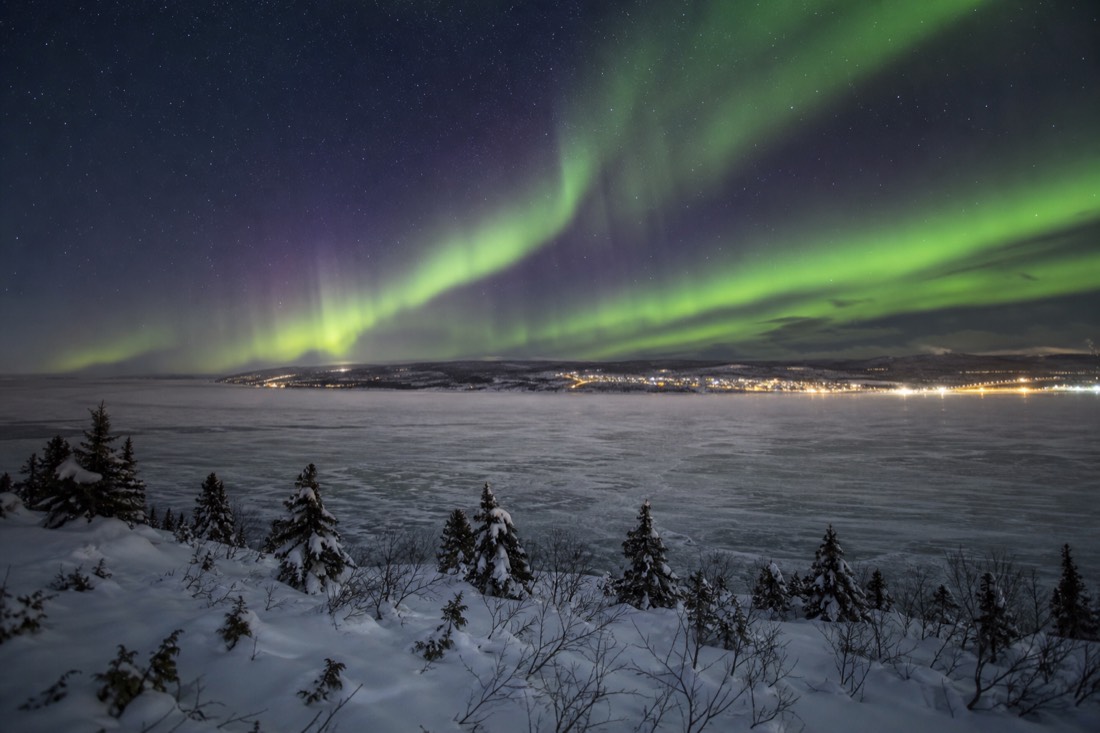
I am not going to pretend there is one answer everybody agrees on, because there is not. Capture the Atlas and Canadian Geographic land on Yellowknife, Aurora Now points at Fairbanks, Frontiers North makes the case for Churchill. All three sit near the oval. The tiebreakers are the boring practical ones: how often the sky is clear, how many months the season runs, how easy the town is to reach and stay in, and how the daytime fills.
On those criteria this town scores the way it does because of the four conditions rather than in spite of them: under the oval at 62.45N, a flat horizon, low precipitation, minimal light pollution outside a small city, and a season split across autumn and winter. Fairbanks is the closest structural rival, and the honest head-to-head is in Yellowknife versus Fairbanks. The one thing I would not accept from any destination is a promise. The conditions can be stacked. They cannot be guaranteed.
The thing nobody tells you before the first sighting is how ordinary the setup is. No storm, no expedition, no perfect gear. A dark sky in the right ring of latitude, a hole in the cloud, a warm coat, and the patience to stand outside past midnight for three nights instead of one. Do that and the sky usually does the rest.