Yellowknife Airport (YZF): Terminal, Transport, and Winter Arrivals
YZF is small, fast, and about five kilometres from your hotel, which is the best thing a northern airport can be. Here is what waits inside the terminal, how you get into town, and the winter details nobody warns you about.
 Written with Thomas Beaulieu, Yellowknife tour guide & northern lights specialist
Short answer
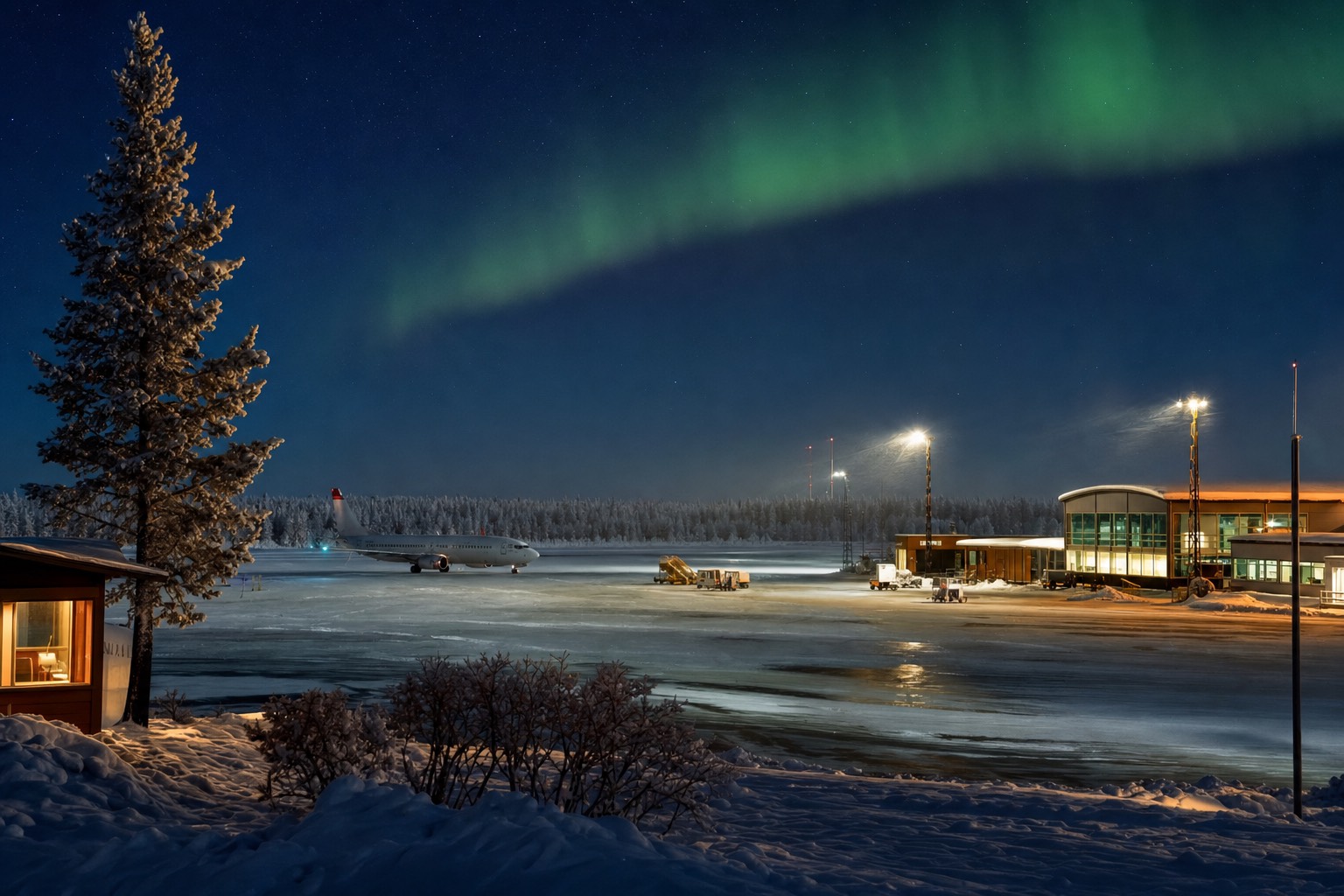
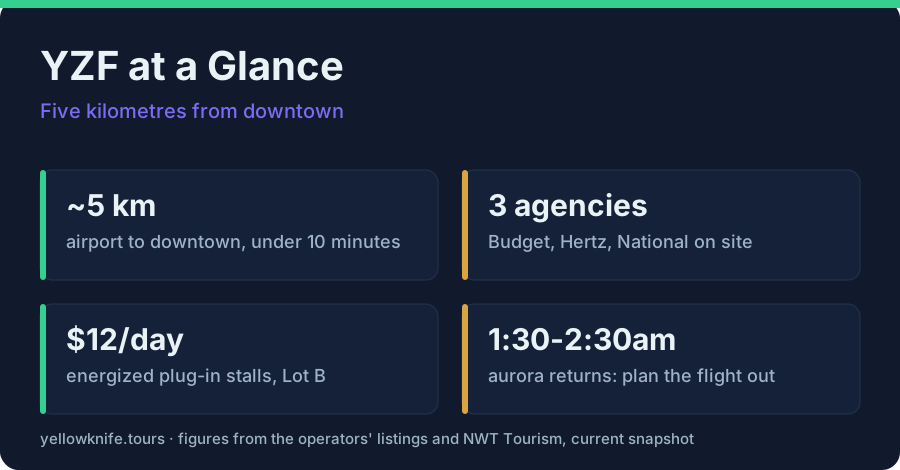
Yellowknife Airport (YZF) sits about 5 km from downtown, under a 10 minute drive. Taxis wait outside, several hotels run their own shuttles, and Budget, Hertz and National have rental desks on site. Inside you will find Javaroma coffee, Quiznos, and The Cabin gift shop. Bags come off fast, so the whole arrival is short.
You can tell who has flown north before by what happens at the doors. Experienced arrivals stop in the vestibule, zip up, pull the hat down, then push out into the cold. Everyone else walks straight through in a hoodie and makes a sound I have heard a thousand times. Yellowknife Airport is a small terminal doing a big job, and once you know its shape, the gap between the jet bridge and your hotel room takes about twenty minutes. The flight-booking side of the trip, which cities fly here and how connections work, lives in getting to Yellowknife. This guide is about the building and the ground.
What is Yellowknife Airport (YZF) actually like?
YZF is a single compact terminal about 5 km from downtown, under a 10 minute drive. It handles jets from the southern hubs alongside small northern carriers serving communities with no roads. Bags arrive quickly, the exit is steps from the carousel, and the curb is right outside the doors.
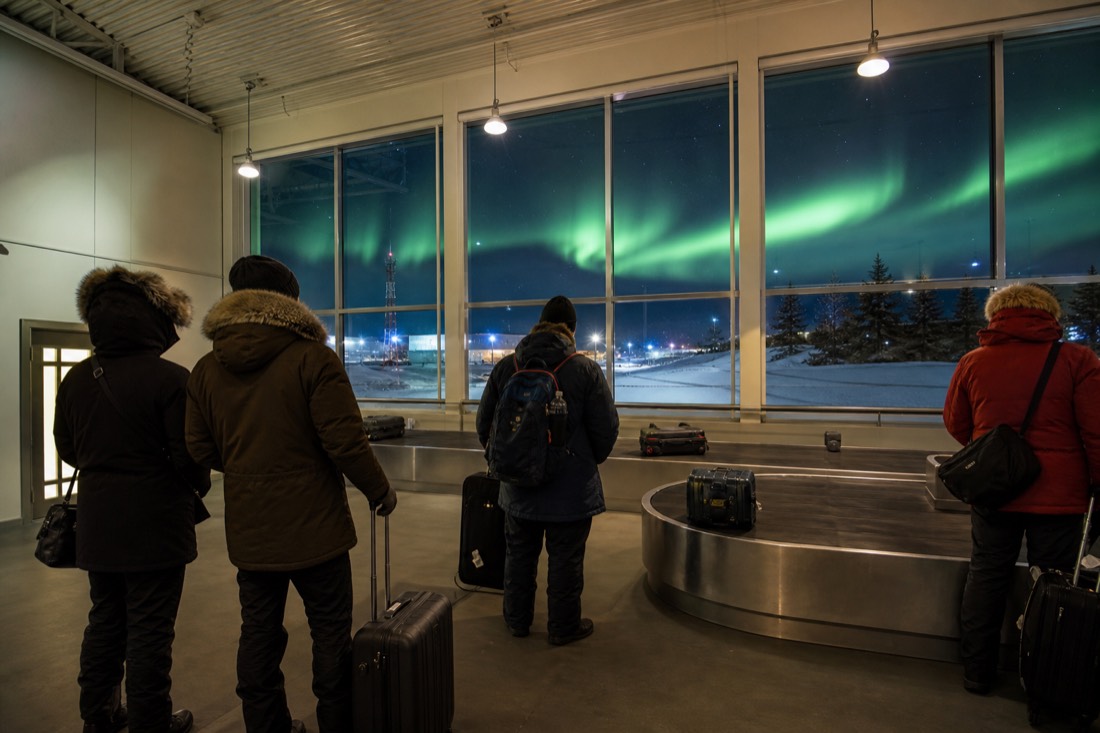
Scale is the whole story. Big-airport habits, the train between concourses, the long march to ground transport, do not apply. You walk off, you collect, you leave. The official Yellowknife Airport site carries current operational notices, the one thing worth checking before a winter departure day.
The character comes from who else is in the room: people flying home to communities off the highway system, crews rotating out to mine sites, hunters with gear cases. It is a working airport for a territory the size of a country, and the aurora crowd rides along on top of that.
How do you get from Yellowknife airport to downtown?
Four realistic ways: a taxi from the curb, a hotel shuttle if your property runs one, a rental car from the desks inside, or a package that includes transfers. Downtown is about 5 km away, so every option is a short ride. Accessible taxis exist here, but they need booking about 24 hours ahead.
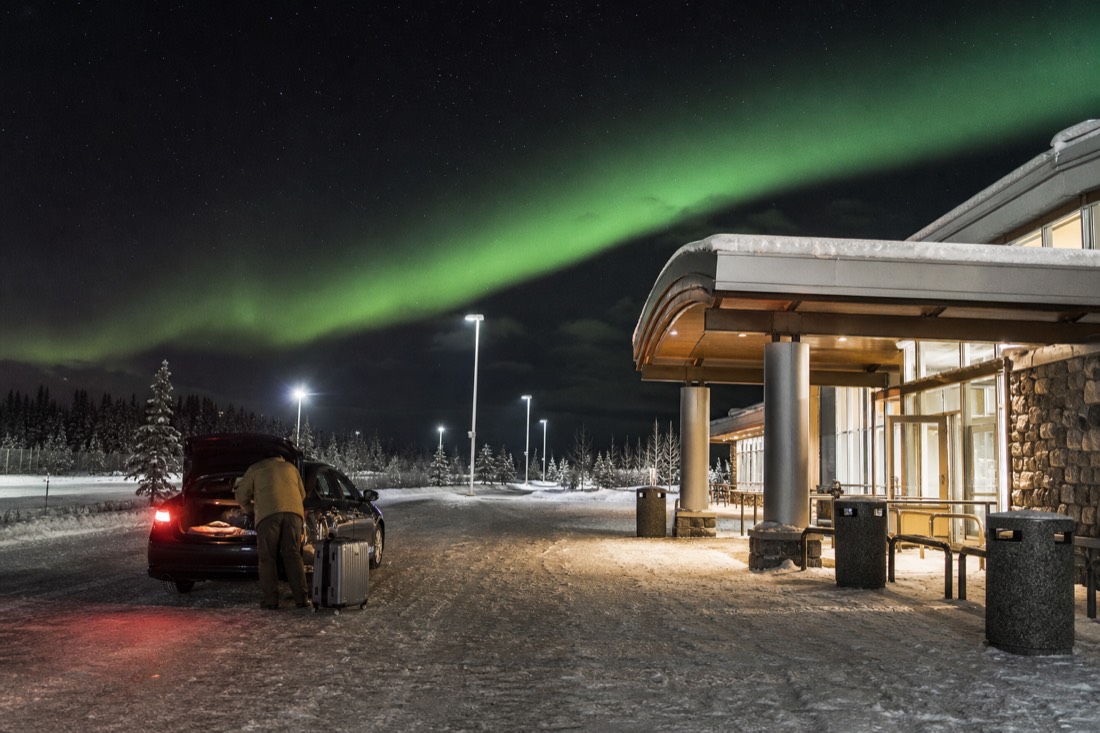
There is no airport train and no express bus lane. The distance is so short that the choice comes down to convenience and what your trip needs later in the week.
| Way into town | How it works | Who it suits |
|---|---|---|
| Taxi | Cabs wait outside the terminal doors; no advance booking for a standard car | Almost everyone, including late-evening arrivals |
| Accessible taxi | Bookable, but reserve about 24 hours ahead | Wheelchair users and anyone needing a lift-equipped vehicle |
| Hotel shuttle | Several properties run their own, Capital Suites and Quality Inn & Suites among them | Guests of those hotels, who can skip the taxi line entirely |
| Rental car | Budget, Hertz and National keep desks at the airport | Trips that include self-drive days out of town |
| Rental with hand controls | Available on request, so ask when you book, not on arrival | Drivers who need adapted controls |
| Included transfer | The two-night aurora cabin package builds airport pickup and drop-off into its price | Travellers who want zero arrival logistics |
I will not print a taxi fare, because a wrong number is worse than none. Ask the driver or confirm on the spot. The useful advice sits upstream of that: pick your hotel partly on whether it shuttles, since that removes the decision entirely. The shortlist and the trade-offs are in where to stay in Yellowknife.
One thing surprises people: on most aurora trips, the ride from the airport is the only vehicle you need to arrange all week, because every tour in town collects from hotels. Whether a rental earns its cost at all is argued from both sides in do you need a car in Yellowknife.
What is inside the YZF terminal?
Enough, and not more. Javaroma Gourmet Coffee & Tea for the caffeine, Quiznos for hot food, and The Cabin gift shop for the last-minute souvenir. Car rental desks for Budget, Hertz and National sit on site, and Lot B has energized plug-in parking stalls at $12 per day.
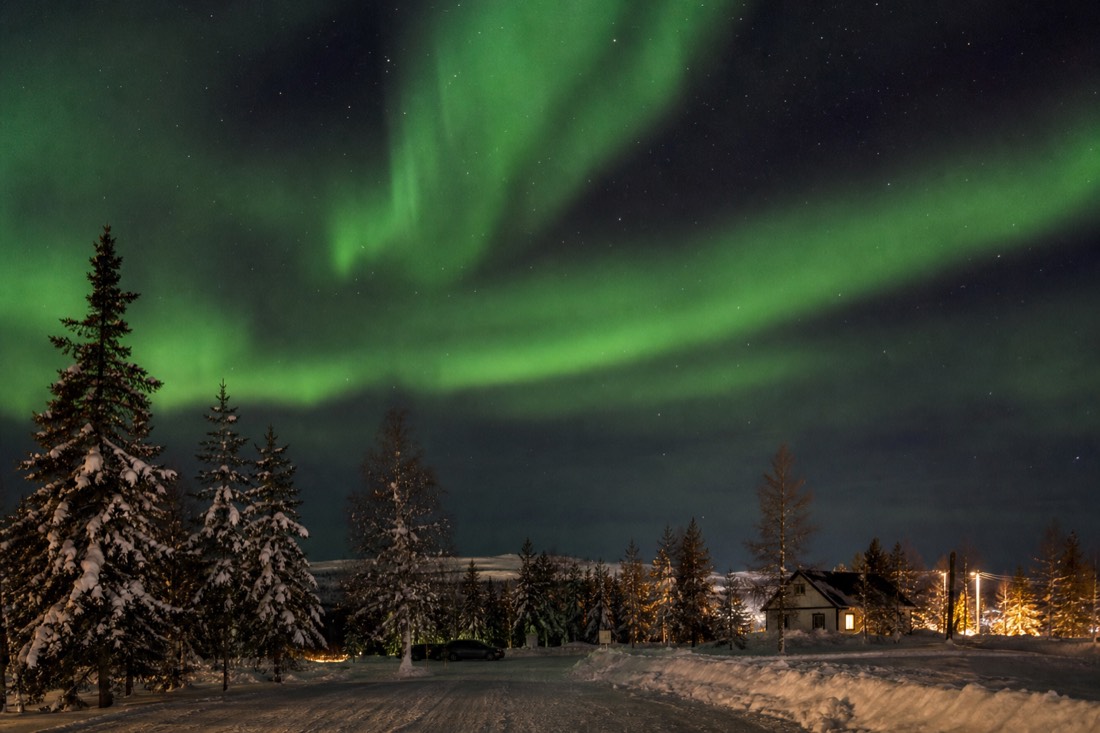
Plan around the size rather than fighting it. This is not an airport where you kill three hours happily, and it is not one where a tight turnaround hurts you either.
| In the terminal | What it is | When you will want it |
|---|---|---|
| Javaroma Gourmet Coffee & Tea | Local coffee and tea counter | The 6am departure after a 2am aurora return |
| Quiznos | Hot sandwiches | Last real food before a long southbound connection |
| The Cabin | Gift shop | The souvenir you meant to buy downtown and did not |
| Budget, Hertz, National | Car rental desks | Pickup on arrival, drop-off before the flight out |
| Lot B energized stalls | Plug-in parking, $12 per day | Leaving your own or a rented car through a cold snap |
| Taxi stand | Cabs waiting at the curb | Any arrival without a shuttle |
Those energized stalls deserve a paragraph, because visitors read them as an electric-vehicle thing and they are not. They power engine block heaters. Plugging a car in overnight is ordinary life here in winter, the way you would put a cover on a bike down south, and every winter rental comes set up for it.
Which airlines fly direct to Yellowknife airport?
Edmonton, Calgary and Vancouver hold the direct routes, with service also touching Whitehorse, Ottawa and Toronto, some of it seasonal. Four carriers cover that map: Air Canada, WestJet, Canadian North and Air North. Which airline operates your specific date changes by season, so confirm in a live search.
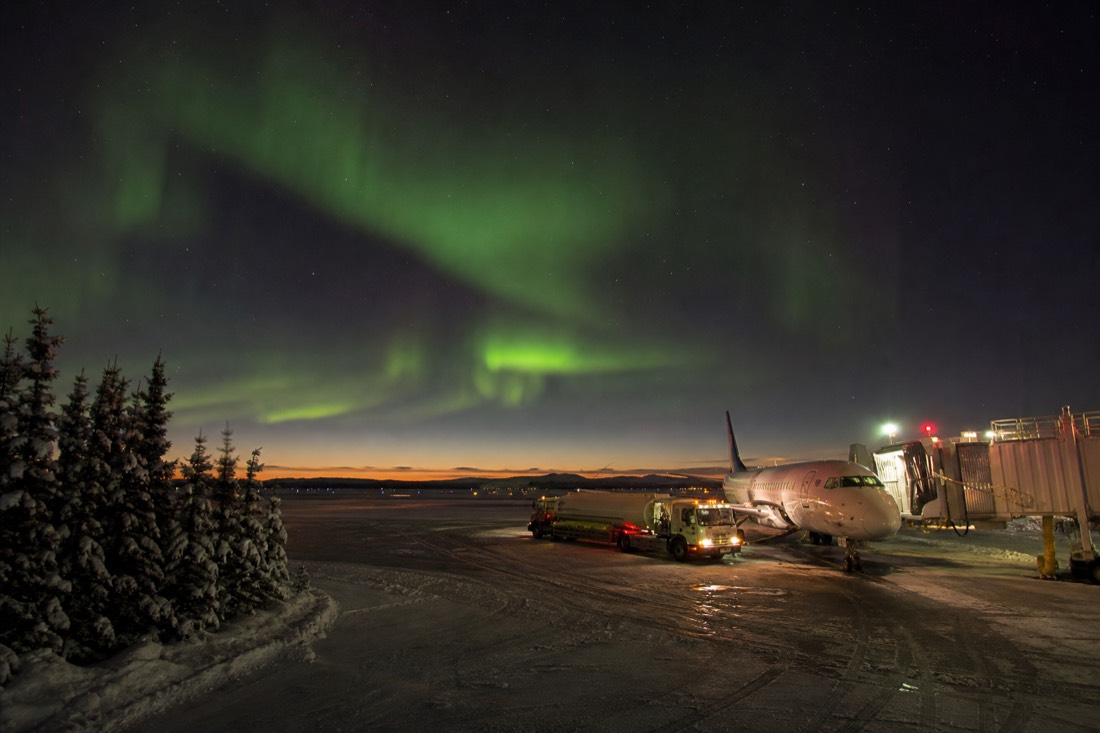
The territory's tourism board keeps the current picture on its air travel page, and the shape has been stable for years. What follows is the terminal-level read, meaning what each route actually does to your day on the ground rather than how to book it.
| Route | Service pattern | What it means on the ground at YZF |
|---|---|---|
| Edmonton | Direct | The workhorse. Shortest hop, so a delay south is recoverable the same day |
| Calgary | Direct | Wide onward network, useful if your long-haul lands there |
| Vancouver | Direct | The Pacific and Asia gateway; the nonstop runs about 1 hour 35 minutes |
| Whitehorse | Routed service | Links the two northern capitals for a two-territory trip |
| Ottawa | Routes including seasonal | Verify your exact dates; do not assume year-round |
| Toronto | Routes including seasonal | Same caution, and check the eastbound return separately |
Two habits save trips. Give yourself a generous connection window at the hub, because winter weather anywhere in Canada can wobble a schedule, and treat any seasonal route as unconfirmed until a live search shows it on your date. The connection logic in full, hub by hub, is the job of getting to Yellowknife.
How should you time your first and last night around the aurora tours?
Land by late afternoon and night one is live. Aurora tours pick up around 9:30 to 10:30pm and return between 1:30 and 2:30am, so an early-morning flight out the day after a tour is the classic scheduling mistake. Book a midday or later departure, or leave the last night free.
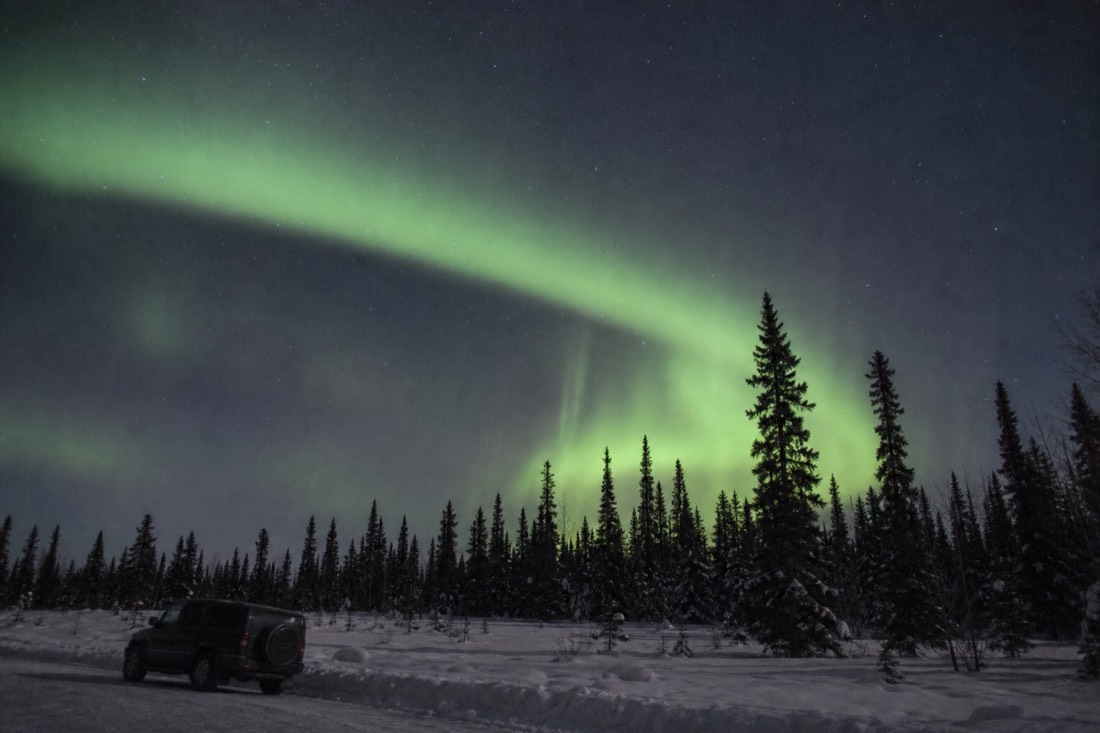
This is the part of airport planning nobody thinks about until it hurts. The lights peak near local midnight, and the vans are built around that, which means a good aurora night ends closer to breakfast than to bedtime. Pair that with a 6am check-in and you have bought a tour you are too wrecked to enjoy and a flight you will spend unconscious.
| Flight timing | Effect on the aurora plan | The fix |
|---|---|---|
| Morning or midday arrival | Night one is comfortably live | Nap in the afternoon, the return runs to 1:30-2:30am |
| Late afternoon arrival | Night one still works | Confirm your pickup point before you land |
| Late evening arrival | Night one is gone | Start on night two and use day two for gear |
| Early morning departure after a tour night | Two hours of sleep, at best | Move to a midday flight or skip the final night's tour |
| Departure day with no tour the night before | Nothing lost, everything easier | The cleanest way to end a short trip |
| One night only, in season | No second chance if clouds win | Hold three nights and front-load the tours |
Front-loading is the rule I repeat most. Book your aurora nights first, keep the last night loose, and a cloudy evening costs you a night instead of the trip. The full day-by-day version is in the aurora itinerary guide, and the whole lineup of hunts, lodges and cabin stays sits on the northern lights tours page.
Daylight hours are the other half of the arithmetic. Your arrival day and departure day are usually half days at best in winter, which is why the light-hours activity that fits them is a short guided circuit rather than anything ambitious. Compare the city tours, then check live availability and prices on Viator for the Old Town, Bush Pilots Monument, Legislative Assembly and wildlife gallery run, rated 5.0 across 27 reviews and flexible between one and four hours. It is non-refundable, so pin it to a day you are certain about, not your arrival day.
What does deep cold do to departures and to parked cars?
Winter operations here are routine, not fragile, but cold and blowing snow can move departure times, and a car left outside overnight in minus 30 may not start without a block heater. Build slack into your travel day, keep the plug-in habit, and treat your final flight as the flexible part of the plan.
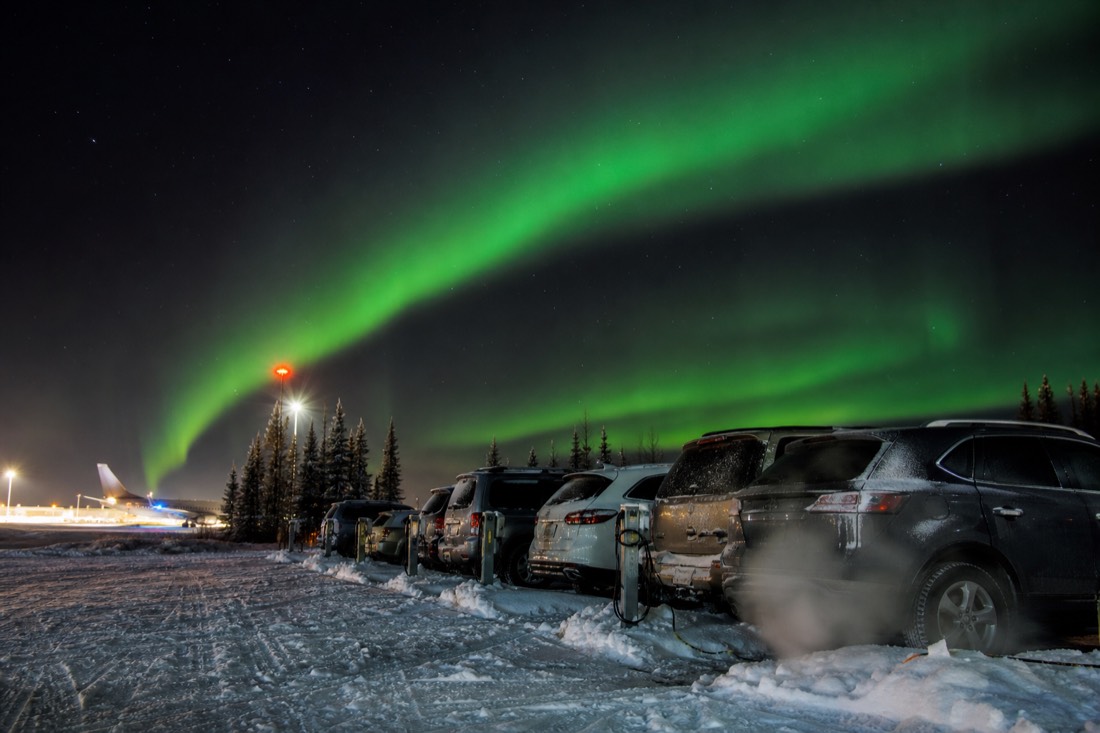
Nobody up here panics about winter flying. Crews do this for five months a year and the airport is built for it. What catches visitors is the small stuff: a rental that has sat unplugged through a cold night, a departure that shifts by an hour while you are still downtown. The plug-in stalls in Lot B, at $12 a day, exist exactly because leaving a car cold is a bad idea, not a brave one.
January highs average about minus 21.6C, the daily mean sits near minus 25.5C, and nights average around minus 29C, which is the context those habits come from. What the numbers feel like, and how quickly they stop being abstract, is covered in how cold does it get in Yellowknife.
My practical rule for departure day: be at the terminal early rather than clever. It is a small building, the coffee is decent, and the alternative is a taxi ride across town at the wrong moment.
What actually happens in your first hour on the ground?
Wheels down to hotel door runs closer to twenty minutes than an hour, and very little of that is travel. Bags come off fast, the exit sits steps from the carousel, and the ride downtown covers roughly 5 km in under 10 minutes. What catches people is the walk across the parking lot.
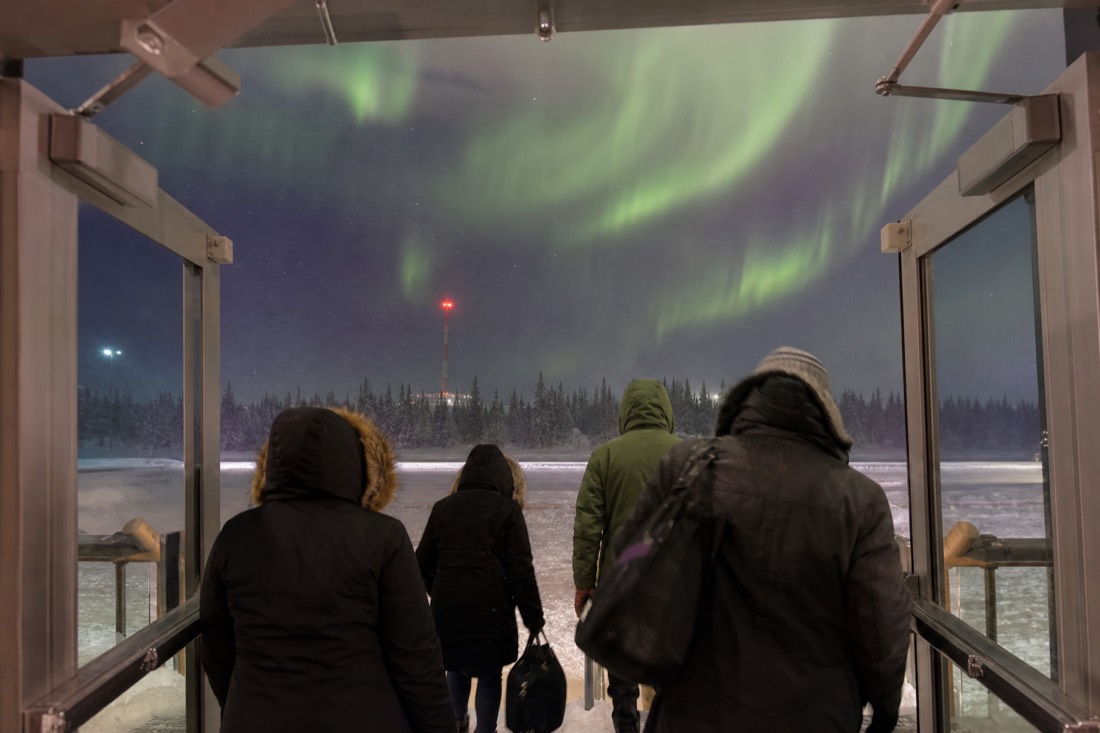
The building asks almost nothing of you. Off the aircraft, a short walk, and the carousel is right there. Where the time actually goes is everything either side of that: layering up in the vestibule, settling on a ride, and checking in at a front desk that may be very quiet at eleven at night.
Do not build your arrival around eating at the airport. Javaroma Gourmet Coffee & Tea, Quiznos and The Cabin all sit in the terminal, and I would still not stake a late arrival on any of them being open when your flight lands. Plan on food downtown, and treat a hot coffee at YZF as a bonus rather than the plan.
Two of the decisions in that first hour are better made weeks earlier. If your hotel runs a shuttle, and Capital Suites and Quality Inn & Suites are among the properties that do, you skip the taxi line completely, which is a genuine reason to weigh one hotel over another. If you need a lift-equipped vehicle, book the accessible taxi about 24 hours ahead from home, not from beside the carousel with a bag in your hand.
Then there is the cold, which does not care that you have only been outside for ninety seconds. January highs average about minus 21.6C, the daily mean sits near minus 25.5C, and nights run around minus 29C. That is the air waiting on the other side of the sliding doors, and what minus 30 actually feels like is worth reading before you decide which coat travels in the hold.
| Stage of the first hour | What it involves | Where it goes wrong |
|---|---|---|
| Off the aircraft | A short walk, no shuttle train, no second concourse | Nothing. This is the easy part |
| Baggage claim | Bags come quickly and the exit is steps from the belt | Warm layers packed in the hold instead of your carry-on |
| The vestibule | Hat, hood and gloves on before the outer doors | Walking straight through in whatever you wore at the hub |
| The curb | Taxi, hotel shuttle, rental desk or a booked transfer | Deciding here rather than before you flew |
| The ride in | About 5 km, under 10 minutes to a downtown hotel | Looking for an airport train or express bus. Neither exists |
| Hotel check-in | Fast, and the desk knows how tour pickups work | Not asking where your pickup point is until 9pm the next night |
Where do you park at YZF, and what should you sort out before renting?
Budget, Hertz and National keep desks in the terminal, and winter rentals come winterized with a block heater cord. Airport parking includes energized plug-in stalls in Lot B at $12 per day. Vehicles with hand controls are available on request, so ask at booking rather than at the counter.
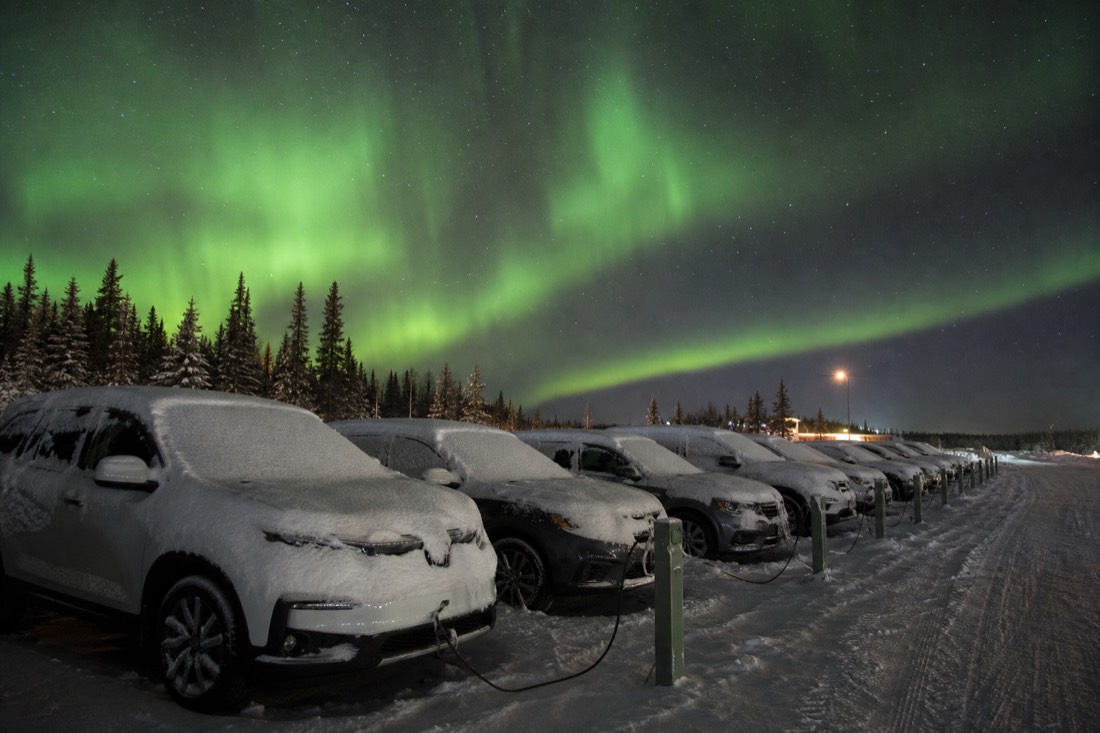
Most visitors never touch a car here, and on an aurora-only trip that is the correct answer. Tours collect from hotels, downtown is walkable, and a vehicle sitting in a lot for four nights is a cost with no job. The car question turns on what you want beyond the tours: the Ingraham Trail, the public Dettah ice road, and the run west on Highway 3 where wood bison turn up beside the pavement. Those three reasons hold up. Most others do not.
If you do rent in winter, the setup is standard and the etiquette is simple. Your car comes with a cord, you plug it into the post overnight, and you unplug before you pull away. Every northerner has seen someone drive off with a cord swinging from the grille, and nobody wants it to be them. The energized stalls in Lot B run at $12 a day and do the same job for a car you are leaving behind while you fly, which matters more than it sounds during a long cold snap.
Adapted controls are the one item that genuinely cannot wait. Hand controls exist in the rental fleet here, but they are a booking-time request, not something a counter agent produces on the spot. Ask when you reserve, then confirm a few days out. The wider argument about whether a rental earns its keep at all, insurance and cold-weather driving included, is laid out in renting a car in Yellowknife.
| Your situation | What to arrange, and when | Where it happens |
|---|---|---|
| Tours only, hotel pickup every night | Nothing at all | Your hotel lobby |
| Ingraham Trail, ice road or bison day | Rental booked ahead in winter season | Budget, Hertz or National desks in the terminal |
| Adapted driving controls needed | Request hand controls at booking, then reconfirm | With the rental company, weeks ahead |
| Wheelchair-accessible ride, no rental | Accessible taxi booked about 24 hours ahead | By phone, before you fly |
| Leaving a car while you fly out | Energized plug-in stall, $12 per day | Lot B at the airport |
| Rental parked overnight downtown | Plug in wherever your hotel has posts | Confirm with the hotel at check-in |
How much buffer should you leave on a winter departure day?
More than you would down south. Blowing snow, de-icing and a departure time that moves are ordinary winter events here, not emergencies. The terminal is small, so being early costs you almost nothing, while a rental return in deep cold adds unplugging the cord, scraping glass and refuelling to your morning.
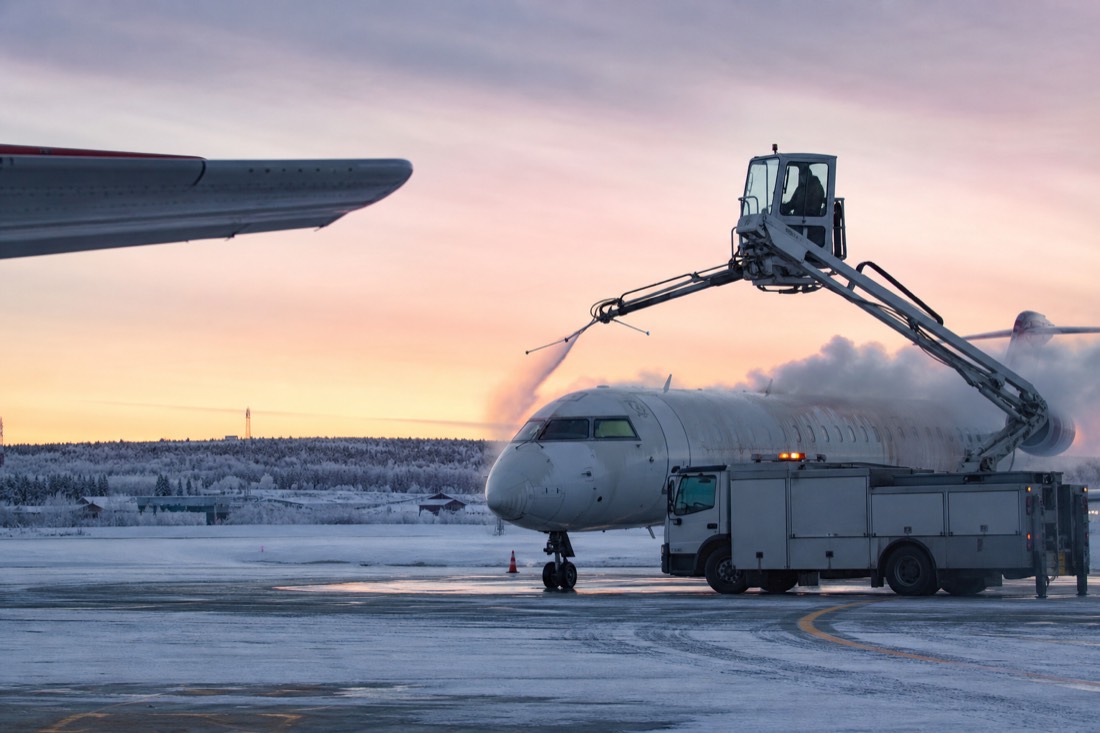
Since 2022 I have guided more than a thousand visitors through this town, and departure morning produces the same three mistakes on repeat. The first is the early flight booked the day after an aurora night, which reads fine on a screen in July and lands you at check-in a few hours after a 2am drop-off. The second is treating a rental return as a five-minute errand in a climate where clearing the windshield alone can eat that. The third is packing the warm coat, because the trip is over, right before a delay puts you back outside.
De-icing is the one that surprises people most, and it should not. When snow is falling, aircraft get sprayed before they go, everywhere in the country, and here it is simply a normal part of a winter schedule rather than a sign that something has gone wrong. Crews do this for months on end. Your job is not to worry about it, only to leave room for it, especially on a January departure when the whole system runs a little slower in the cold.
My honest rule after all those trips: work backwards from the flight the night before, not on the morning itself. Decide then whether tonight is an aurora night at all, since the vans return between 1:30 and 2:30am. Order the ride earlier than feels necessary. Then sit in a small terminal with a coffee, slightly bored, which is the best possible way to end a trip north.
| Working backwards from your flight | What to do | Why it bites in winter |
|---|---|---|
| The night before | Decide whether tonight is a tour night at all | Pickups run 9:30 to 10:30pm and returns 1:30 to 2:30am |
| Before you leave the hotel | Check the airport's operational notices | Weather can move a departure time while you are still downtown |
| If you have a rental | Unplug the cord, clear the glass, refuel | Frozen windows are slow work, not a quick wipe |
| The ride over | Book or confirm it sooner than feels needed | Only about 5 km, but a cold morning slows every step |
| At the terminal | Check bags, then coffee | The building is small, so early is comfortable rather than tedious |
| On the apron | Expect de-icing when it is snowing | Routine here, and it adds time to the block |
| Your layers | Keep the warm coat with you, not in the hold | A delay can put you back outside in minus 29 |
What is the first mistake people make walking out of the terminal?
Arriving in deep cold in the wrong coat. A city jacket is fine for the walk to a taxi and useless for a four-hour aurora night. You do not need to own arctic gear, because several operators in town rent full kits, parka, insulated pants, boots and mitts, so pack for the arrival and rent for the tours.
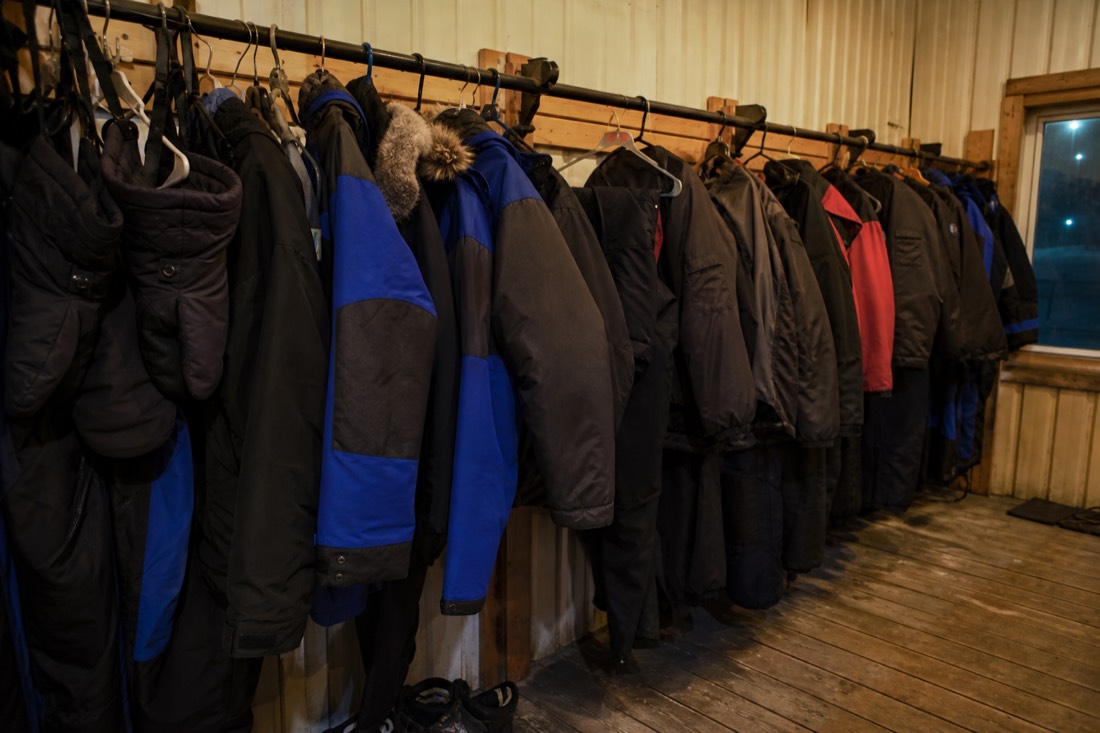
I meet this at pickup constantly. Someone lands in a good city parka, feels fine on the walk to the cab, and concludes they are set. Then night one arrives, they stand still on a frozen lake for three hours in minus 28, and the coat that was fine at the terminal turns into a problem. Movement hides cold. Aurora watching is standing still by definition.
Two things fix it before you leave home. Keep genuine warm layers in your carry-on, since checked bags occasionally arrive on a later flight than you do, and plan on renting the heavy kit rather than buying one for a week. The full layering system, rentals included, is set out in what to wear in a Yellowknife winter.
The airport asks almost nothing of you, which is rare and worth appreciating. Land, grab the bag, get in something warm, and be downtown before your phone has finished finding the network. Spend the planning energy where it pays instead: on which nights you hunt the sky, and on not booking a sunrise flight home the morning after.