Midnight Sun in Yellowknife: What the Summer Sky Really Does
The sun does set here, even on the longest day. It just never gets properly dark for most of the summer, and that one fact shapes both the light season and the aurora season.
 Written with Thomas Beaulieu, Yellowknife tour guide & northern lights specialist
Short answer
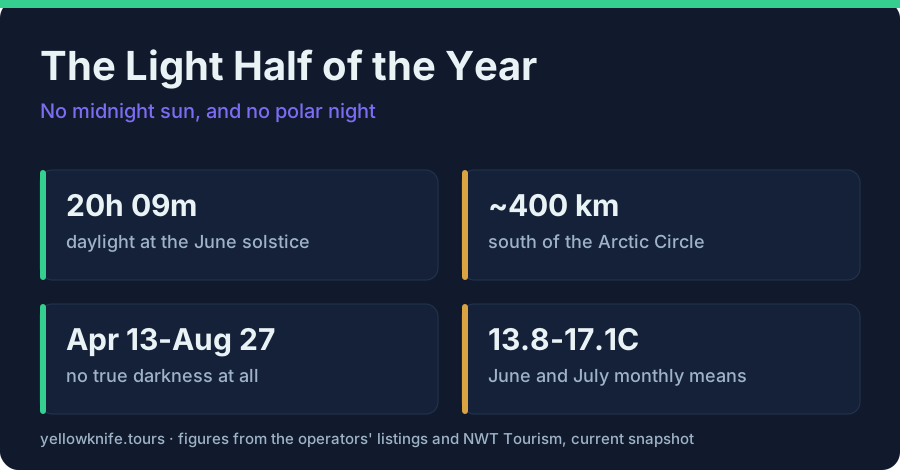
No, Yellowknife does not have true midnight sun. At 62.45N it sits roughly 400 km south of the Arctic Circle, so the sun sets every night of the year. Around the June solstice it drops below the horizon at about 11:44pm and comes back at about 3:34am, and the gap between is twilight rather than night.
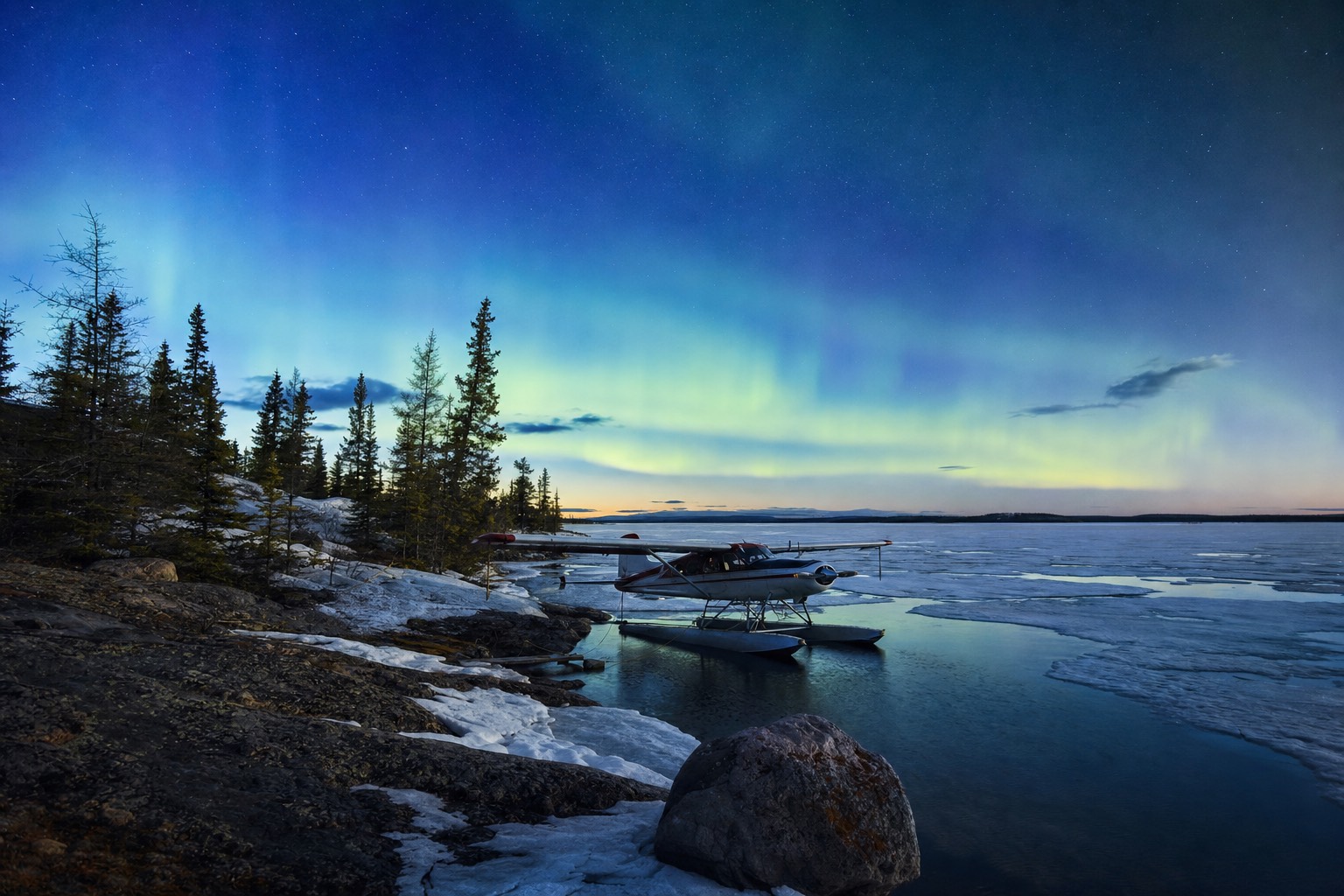
The moment that gives it away is always around 11pm in late June. Somebody checks their phone, sees the time, looks back at the bay still lit gold with a floatplane taxiing across it, and asks whether the clock is wrong. It is not. People fly up here expecting midnight sun and get something slightly different, and knowing which one you are actually getting changes how you plan the trip. This guide covers the bright half of the year: what the sky does, why the label is wrong, and what four months without darkness means for a visitor. The wider summer trip, with swimming, trails and boats, lives in Yellowknife in summer.
Does Yellowknife have a midnight sun?
No, not the true kind. Yellowknife sits at 62.45N, roughly 400 kilometres south of the Arctic Circle, so the sun sets every night of the year, including the June solstice. What you get instead is a night that never goes properly dark: sunset near 11:44pm, sunrise about 3:34am, and twilight filling the gap.
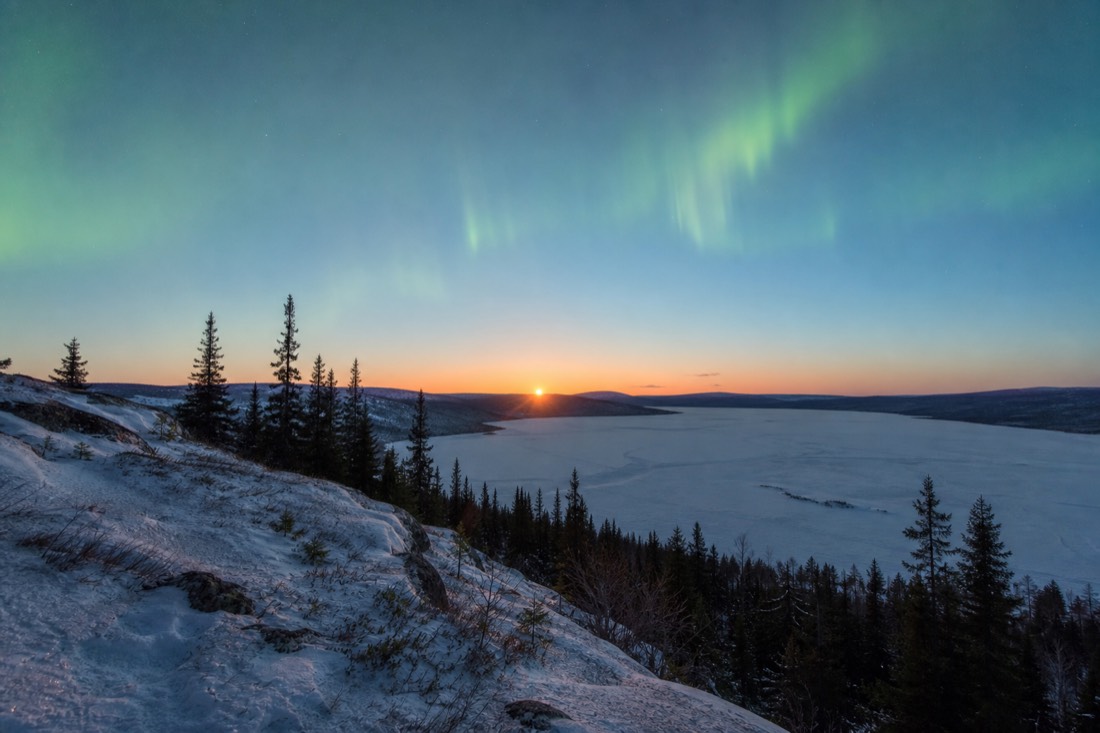
True midnight sun requires the Arctic Circle, the line where the sun genuinely stays above the horizon for a full 24 hours at the solstice. Yellowknife is about 400 kilometres short of it. Sit on the Pilot's Monument rock at 11:30pm in late June and you will watch the sun go down, properly, behind the northwest horizon. Then nothing much happens. It skims along just underneath, the sky holds a bright blue-grey, and a few hours later it climbs back out almost where it went in. Where the town actually sits, and why that latitude matters so much, is spelled out in where Yellowknife is.
The same geometry runs in reverse in December, which is the part most people never connect. No Arctic Circle means no midnight sun, and it also means no polar night: the sun clears the horizon on every single winter day, and the shortest one still holds a bit over five hours of daylight. That half of the story has its own page, does Yellowknife get 24-hour darkness. One latitude, two myths, both wrong in the same direction.
How much summer daylight does Yellowknife get?
A lot, and it climbs fast. From about 15 hours in mid-April the day stretches to 20 hours 09 minutes at the June solstice, then holds above 16 hours through mid-August. The more useful number is the last column below: hours of true astronomical darkness, which fall to zero for a third of the year.
Daylight tables usually stop at sunrise and sunset, which is exactly where they stop being useful up here. Twilight does most of the work in a Yellowknife summer. These figures are for the 15th of each month, except June, which shows the solstice.
| Month | Sunrise | Sunset | Daylight | True astronomical darkness |
|---|---|---|---|---|
| January | 9:42am | 3:52pm | 6h 10m | about 12h |
| February | 8:21am | 5:21pm | 9h 00m | about 10h |
| March | 7:51am | 7:41pm | 11h 50m | about 7h |
| April | 6:08am | 9:06pm | 14h 58m | none by mid-month |
| May | 4:34am | 10:32pm | 17h 58m | none |
| June (solstice) | 3:34am | 11:44pm | 20h 09m | none |
| July | 4:12am | 11:14pm | 19h 02m | none |
| August | 5:37am | 9:45pm | 16h 08m | none at mid-month |
| September | 7:01am | 8:03pm | 13h 02m | about 5h 20m |
| October | 8:21am | 6:24pm | 10h 02m | about 9h |
| November | 8:50am | 3:53pm | 7h 03m | about 11h 30m |
| December | 9:57am | 3:07pm | 5h 09m | about 12h 45m |
The solstice figures are easy to verify for your own dates on the June sun times for Yellowknife. Notice how steep the shoulder months are. April gains roughly six minutes of daylight a day, which is enough that a week-long trip in spring visibly changes shape between arrival and departure. The full temperature picture that goes with these numbers sits in the Yellowknife weather by month guide.
When does true darkness disappear, and when does it come back?
Around 12 to 14 April, astronomical darkness stops happening in Yellowknife entirely, and it does not return until the last days of August, roughly the 27th or 28th. For over four months the sky at 2am is a deep blue, never black. That single fact is the reason the aurora season has the shape it does.
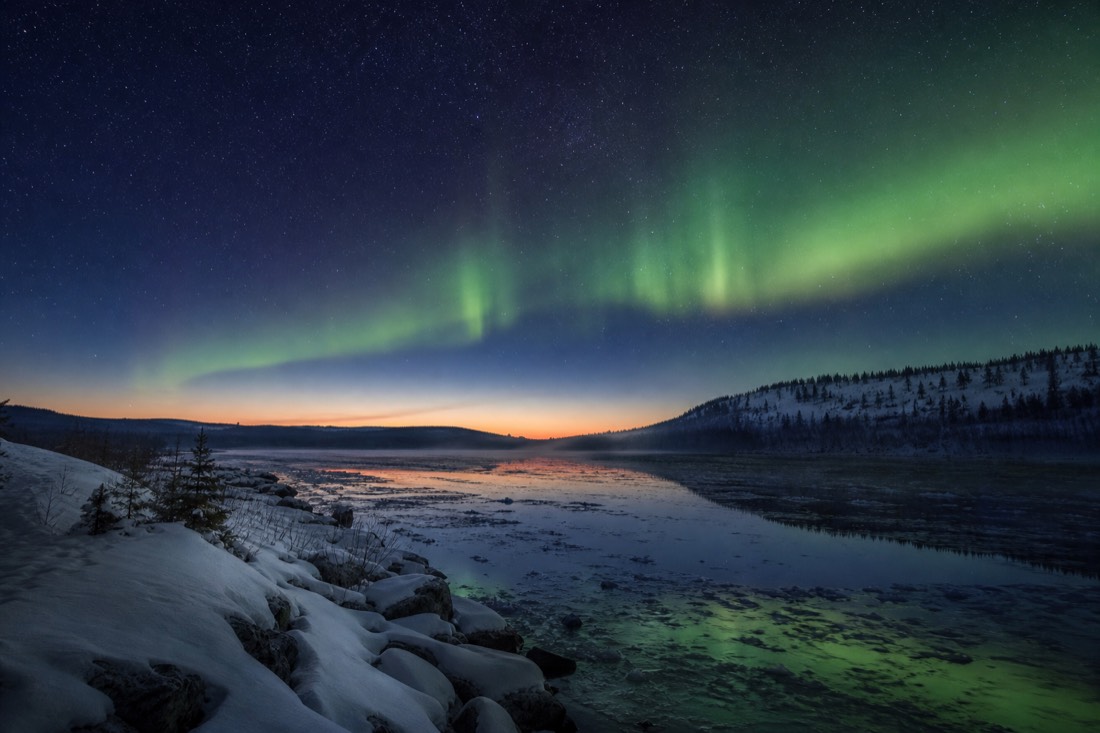
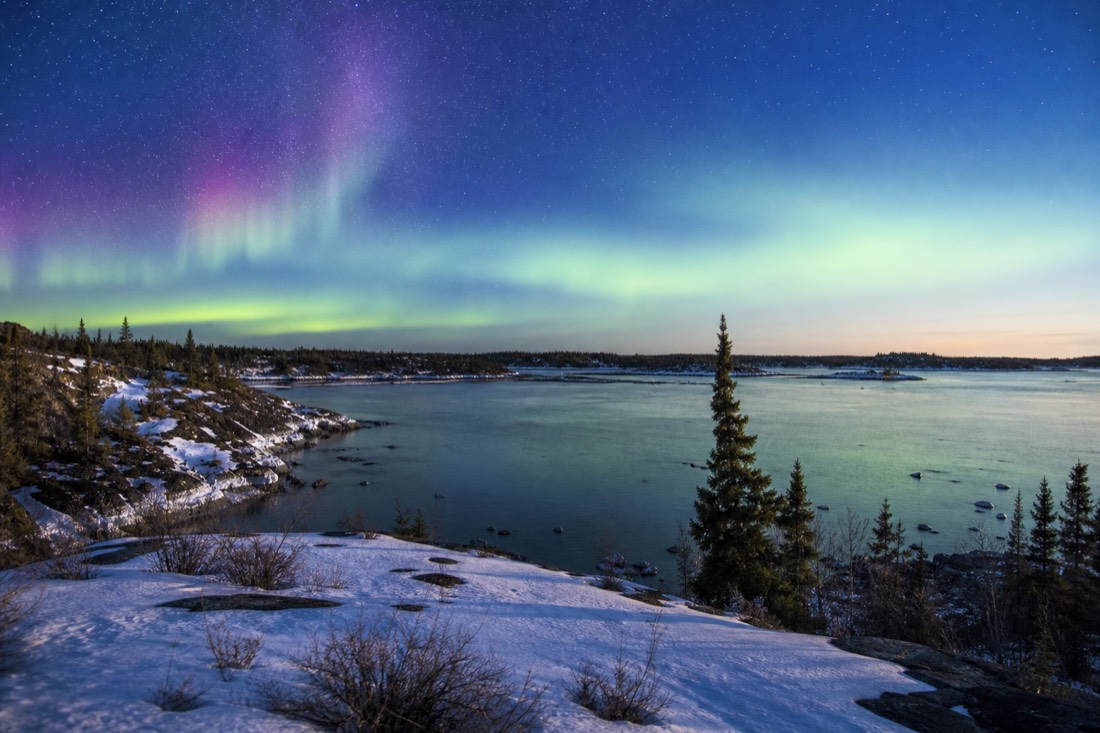
This is the number that almost no page about the midnight sun bothers to publish, and it explains more than any other. Aurora is not rare here in June. It is happening overhead, on plenty of nights, at the same rate it does in October. You simply cannot see it, because the sky behind it is brighter than the light the aurora makes. Nothing about the sun's activity changes between July and September; only the background does.
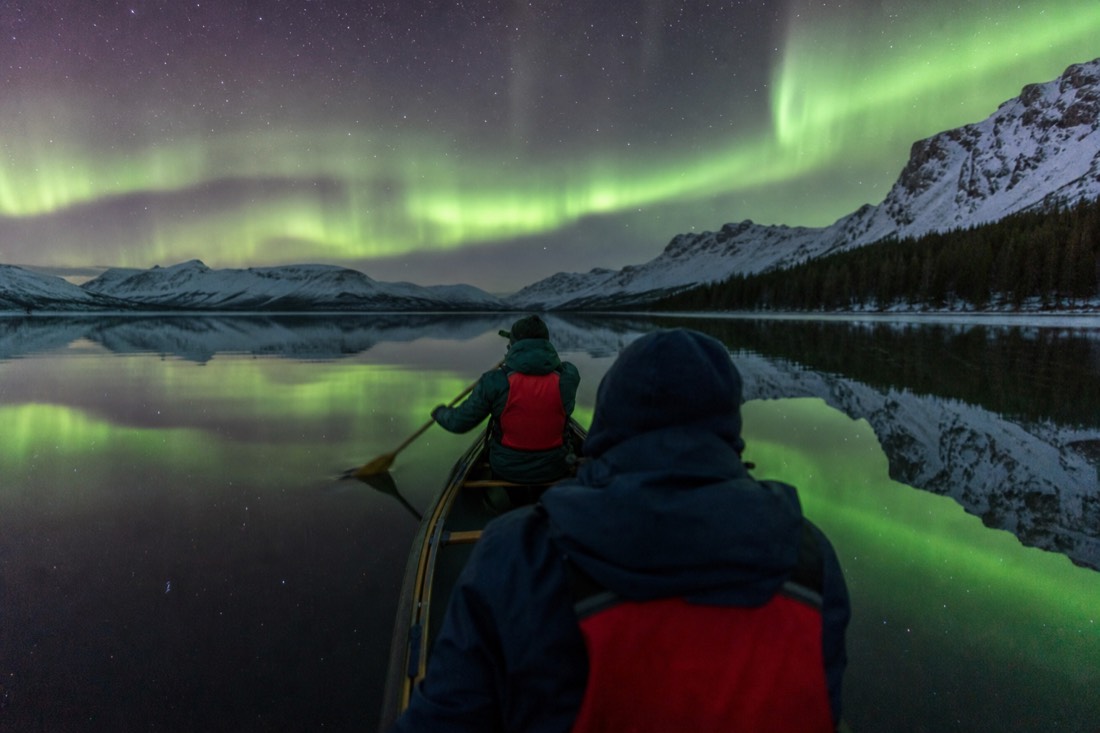
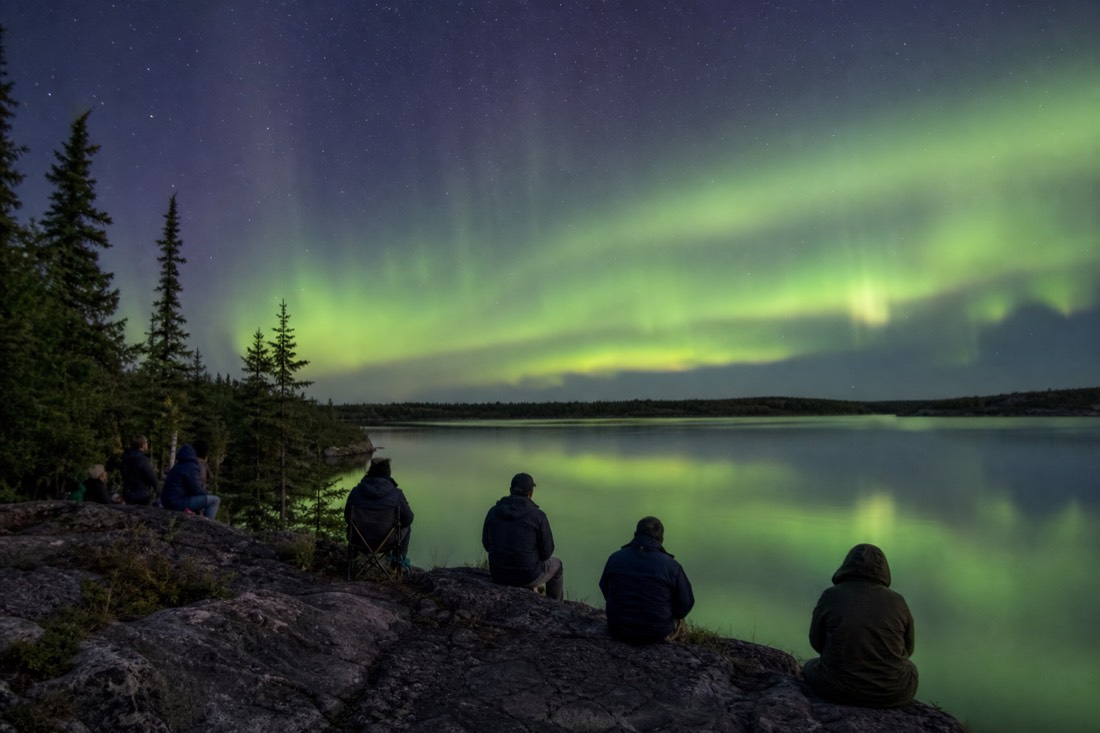
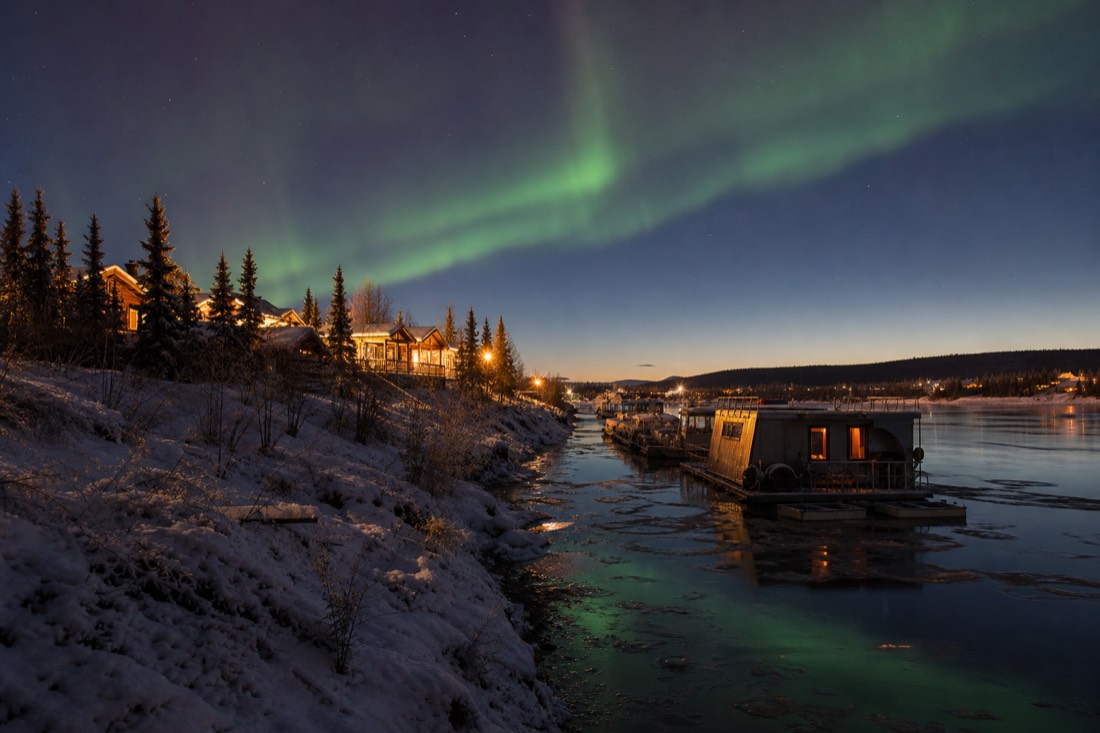
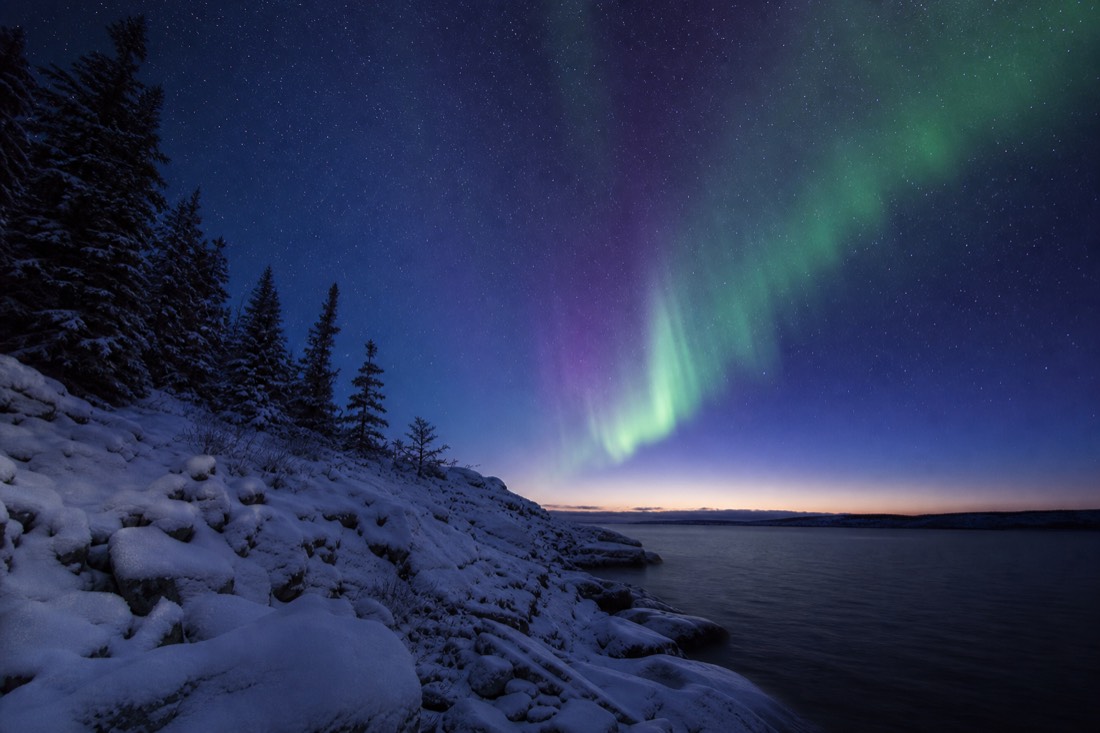
Which sets the calendar for everything. Darkness begins its return in the last days of August, only minutes at first, then piling on fast through September, which is why the autumn aurora season opens in mid-August as the nights deepen and comes fully into its own a few weeks later, running to early October before the winter season takes over from mid-November. Spectacular NWT sets out both seasons, and the practical version, including which weeks I would actually book, is in the best time to see the northern lights.
So the honest warning, stated once and plainly: do not come to Yellowknife in June or July hoping for northern lights. Not with a good tour, not with a good forecast, not with luck. The sky is the problem, and no operator can fix it.
What does a 20-hour day actually feel like?
Disorienting for about a day, then addictive. Nothing forces you indoors, so evenings stretch: people hike at 9pm, paddle at 10, and eat dinner whenever. The practical catch is sleep. Bring an eye mask, and check that your room has blackout curtains, because the light will find you at 4am.
The town runs on it. Yards get worked at 10pm, kids are out on bikes long past what any southern parent would allow, and the bay never really empties. After eight months of winter, nobody up here wastes a June evening indoors, and visitors pick up the rhythm within about 48 hours. My guests almost always report the same arc: one strange, over-tired first night, then a week of doing twice as much as they planned.
Two adjustments are worth making deliberately. First, decide your bedtime by the clock rather than the sky, or you will simply keep going until 2am and pay for it. Second, move the walking to the evening: the light after 8pm is soft and low, the heat has gone out of the day, and the hiking trails around town are at their best then. The same goes for the water, where surface temperatures make swimming in Great Slave Lake a genuine option rather than a dare.
Which summer month gives the best mix of light and weather?
July is the warmest and the busiest, with a daily mean of 17.1C and a music festival in the middle. June holds the maximum light but the worst bugs. August cools slightly, stays bright at 16 hours, and hands back the first real darkness at the very end of the month.
| Month | Daily mean | Average high | Average low | What is on |
|---|---|---|---|---|
| May | 5.3C | 10.4C | 0.1C | Lake ice still going out; darkness already gone after mid-April |
| June | 13.8C | 18.6C | 9.0C | The solstice; bug season starts in earnest |
| July | 17.1C | 21.5C | 12.6C | Folk on the Rocks, 17 to 19 July 2026; warmest water |
| August | 14.5C | 18.4C | 10.5C | Old Town Ramble & Ride on the long weekend; aurora season opens mid-month |
Bugs deserve their own sentence, because people underestimate them. June and July are mosquito months in the subarctic, seriously so away from open water and wind, and repellent is not optional gear on a trail. It is the single most common thing my summer guests wish they had packed more of.
The one event I would build dates around is Folk on the Rocks, which puts a music festival on a lakeshore under a sky that refuses to go dark. Watching a band play at 11pm in full daylight is the clearest demonstration of this latitude anyone has come up with.
What can you do with light that late?
Almost anything you would normally do at noon. The useful trick is to treat the day as having two afternoons: a hot one and a cool golden one that starts around 7pm and runs past midnight. Most visitors waste the second one out of habit.
| Time | What the light is doing | Best use of it |
|---|---|---|
| 5:00am | Sun already well up, air dead calm | Flat-water paddling, fishing, the quietest hours on the bay |
| 9:00am | Full daylight, warming | Drive out the Ingraham Trail before the day heats |
| 2:00pm | Peak warmth, hardest light | Long Lake beach, or indoors at the free Heritage Centre |
| 6:00pm | Heat easing, shadows lengthening | Dinner in Old Town, floatplanes still working |
| 9:00pm | Golden and low, bugs calmer near wind | Frame Lake loop or a shoreline walk |
| 11:00pm | Sunset colour, sky still bright | Pilot's Monument for the view over the bay |
| 1:00am | Deep blue twilight, never black | Last photos, then blackout curtains |
Guided time works well early in a trip, because it front-loads the context for everything you then do on your own. Compare the city tours, then check live availability and prices on Viator for the Old Town, Bush Pilots Monument, Legislative Assembly, Heritage Centre and wildlife gallery circuit, rated 5.0 across 27 reviews and running year-round with car seats available. One planning note: it is non-refundable, so pick a day you are certain of.
Should you come for the long light or for the aurora?
Pick one, because they barely overlap. June and July give you maximum daylight and zero chance of aurora. Mid-September to early October and mid-November to early April give you the lights. Late August is the only week that hands you both in usable amounts.
| If you want | Come in | Why |
|---|---|---|
| Maximum daylight, no darkness | June, early July | 20h 09m at the solstice, sky never dark |
| Warmest weather and the festival | Mid-July | 17.1C daily mean, Folk on the Rocks |
| Long days plus the first aurora | Late August | 16h daylight at mid-month, true darkness back around the 27th |
| Aurora over open water | Mid-September to early October | About 5h 20m of darkness by mid-September, lakes not yet frozen |
| Longest, darkest aurora nights | Mid-November to early April | 11 to 13 hours of true darkness, deep cold |
| Aurora at any cost | Never mid-April to late July | No astronomical darkness exists in that window |
Late August is the compromise I recommend most often, and it is a real one rather than a fudge: mid-month days still run past 16 hours, afternoons average 18.4C, and the nights have gone dark enough at the end of the month that the season is genuinely open. You give up the extreme light of the solstice and get the lights back in exchange.
The label people arrive with is wrong, and the reality is better than the label. A true midnight sun is a novelty you photograph once. Four months of sky that simply refuses to close is something you live inside, and by the third evening you stop checking the clock at all.