Planning a Canada Northern Lights Trip 2026-2027: Where to Go, When, and for How Long
Canada has several places that advertise the aurora and a smaller number that reliably deliver it. The choice comes down to five criteria, and none of them is the brochure photo.
 Written with Thomas Beaulieu, Yellowknife tour guide & northern lights specialist
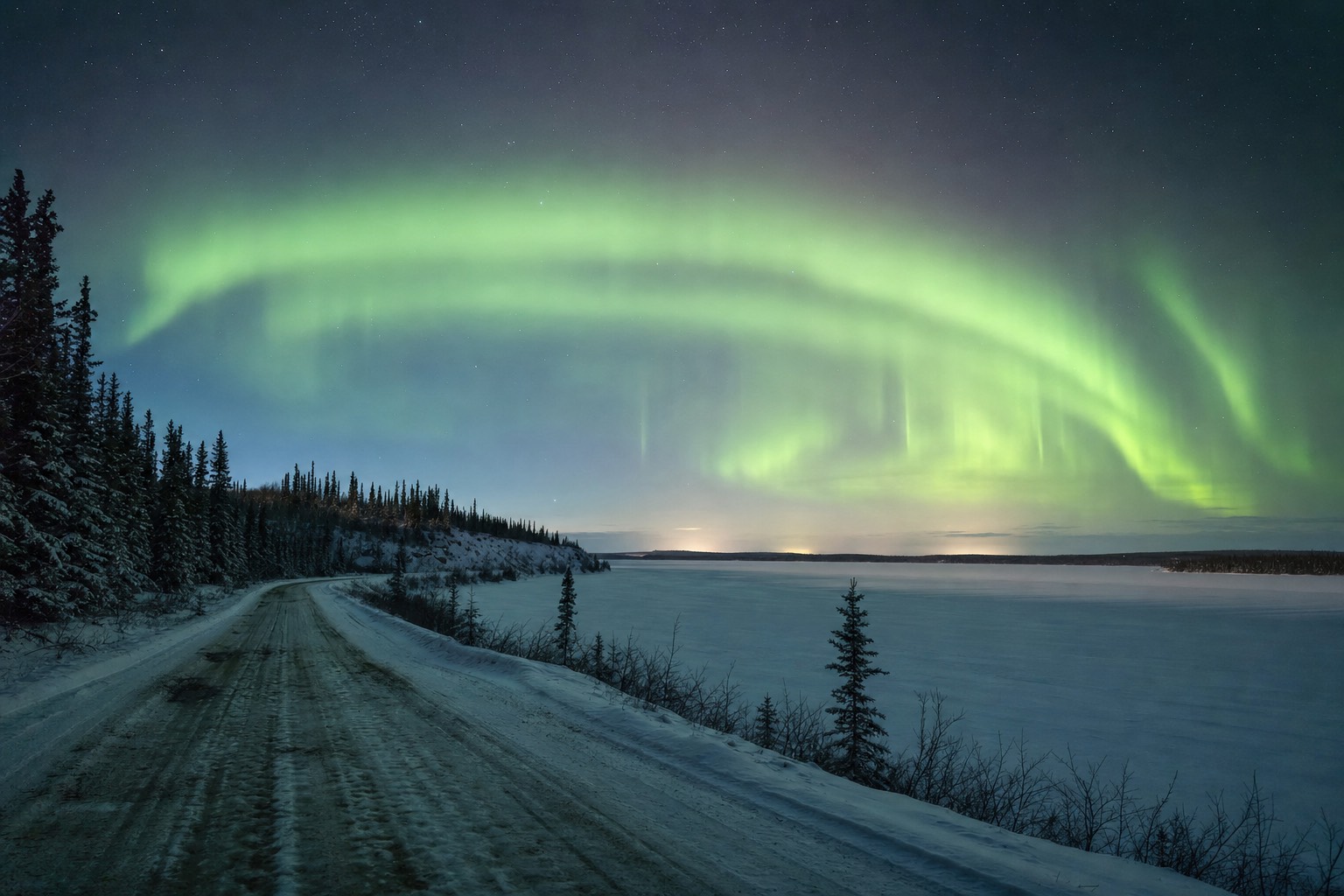
Short answer
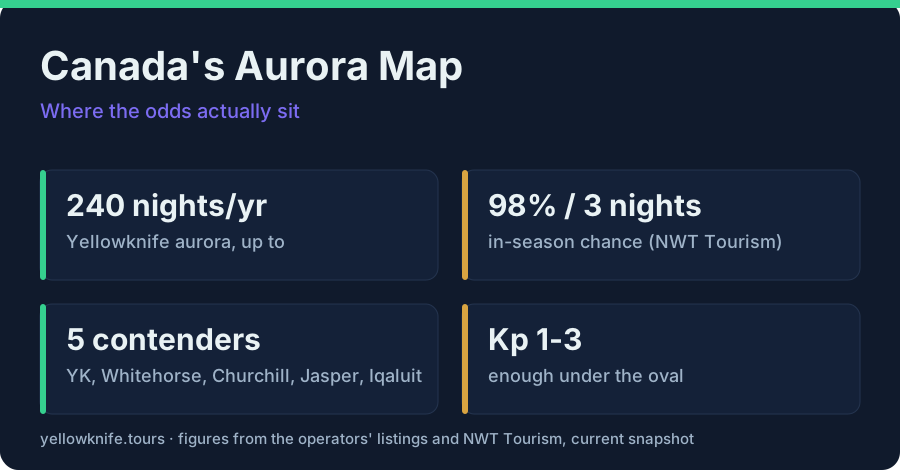
Choose a destination that sits under the auroral oval, travel inside the dark months, and book at least three nights. Yellowknife has the strongest published numbers in Canada, aurora up to 240 nights a year and a 98% chance over three nights in season, but Whitehorse, Churchill and Iqaluit are all real options depending on what else you want from the trip.
Every August my inbox fills with a version of the same message. We want to see the northern lights in Canada, we have five or six days, and we cannot work out where to point ourselves. Fair problem. The country is enormous, half a dozen places advertise the aurora, and the photos look identical no matter which one took them. I guide in Yellowknife, so my bias is obvious and I would rather name it than bury it inside a ranking. What follows is the shape of the decision, the things that actually move your odds, and where each Canadian contender earns its place.
How do you plan a northern lights trip in Canada?
Work in this order. Pick a place under the auroral oval, pick a month with real darkness, book three nights minimum, then choose tours and beds. Get those three right and the rest is comfort shopping. Get them wrong and no operator can rescue the trip.
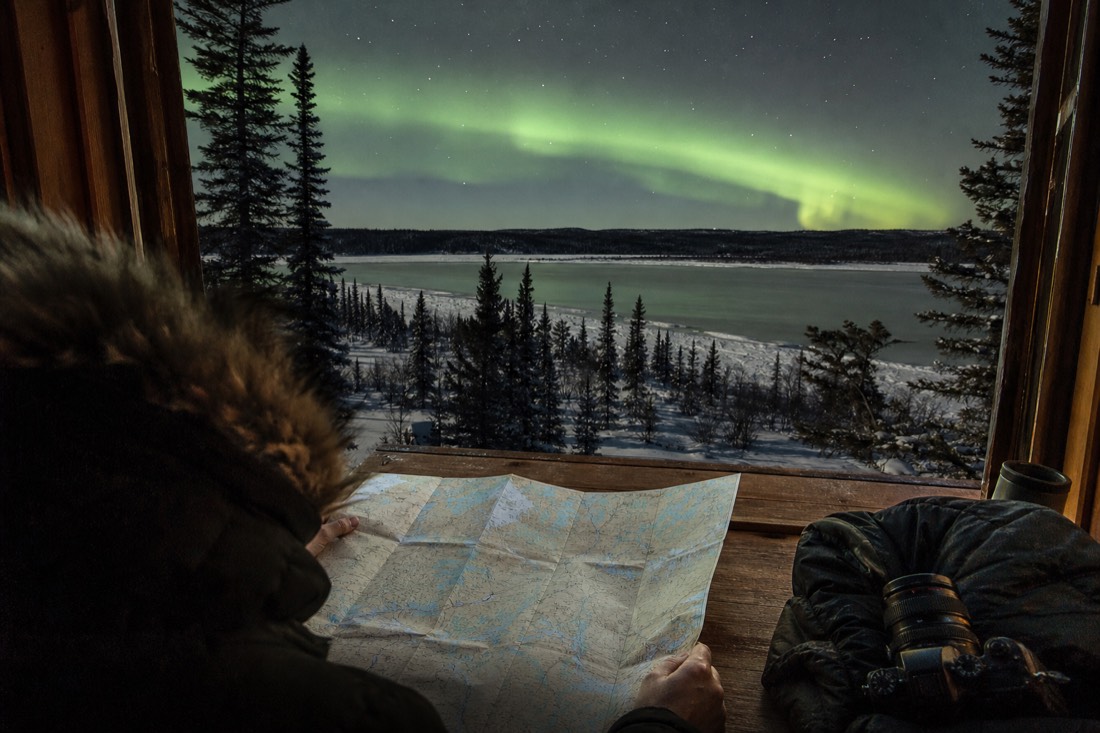
The auroral oval is the ring of activity circling the magnetic pole, and it is the whole game. Under it, quiet ordinary nights still produce a show, which is why a Kp of 1 to 3 is often enough here while southern Canada waits for Kp 5 and up. Nobody needs a storm at 62 degrees north. They need a gap in the cloud.
That gap is the second thing people underweight. Geomagnetic activity gets the forum attention, but cloud cover is what most often decides whether a visitor goes home with photos. A continental interior climate beats a coastal one for that reason alone, the argument behind my Yellowknife versus Iceland comparison: Iceland's weak point was never the aurora, it was the sky in front of it.
Third comes darkness, which is not the same as winter, and fourth comes duration. Both have tables below.
Which Canadian destinations actually deliver a northern lights trip?
Five carry real reputations: Yellowknife in the Northwest Territories, Whitehorse in the Yukon, Churchill in Manitoba, Alberta's dark-sky preserves, and Iqaluit in Nunavut. They are not interchangeable. Two sit under the oval, one is famous for something else entirely, and one relies on protected darkness rather than latitude.
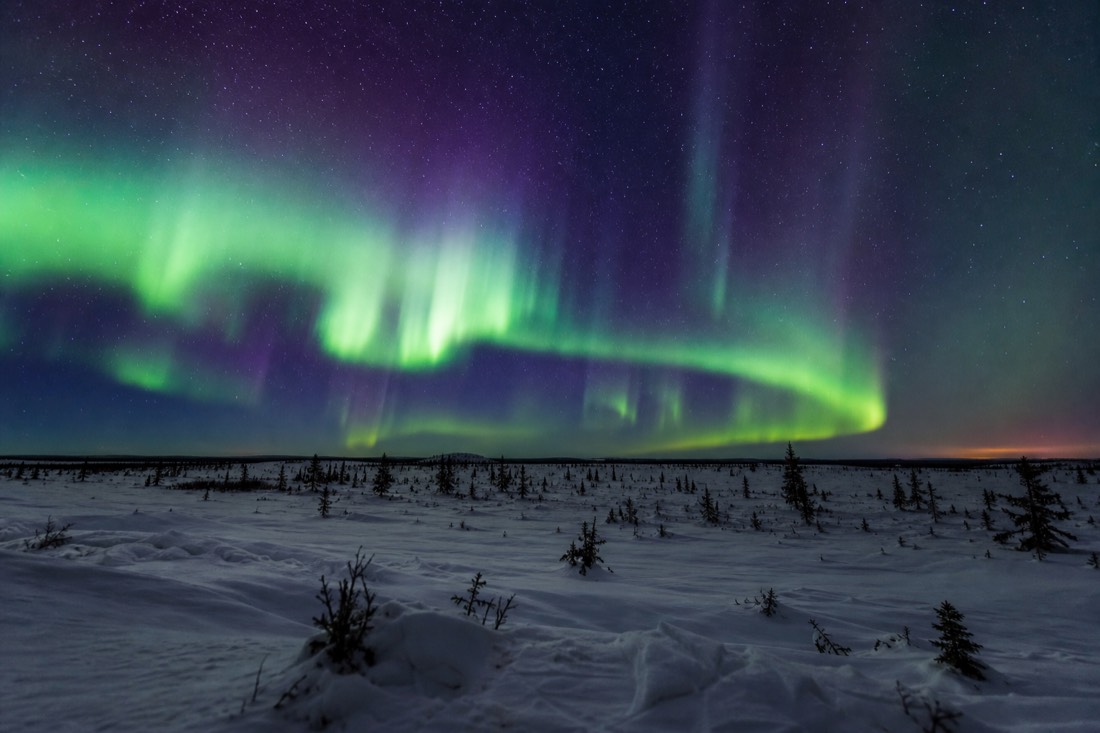
Hard figures appear below only where hard figures exist. Yellowknife publishes numbers, corroborated by Canadian Geographic and by NWT Tourism. The others publish nothing equivalent, and I will not invent rival statistics to fill a grid.
| Destination | Position | Season shape | Getting in | What else is there |
|---|---|---|---|---|
| Yellowknife, NWT | Directly under the oval, 62.45N | Mid-Aug to early Oct, mid-Nov to early Apr | Direct jets from Edmonton, Calgary, Vancouver; airport 5 km out | Dog sledding, ice fishing, snowmobiling, city tours |
| Whitehorse, Yukon | Within the auroral zone | In-season, mountain weather dependent | Scheduled flights via western hubs | Yukon adventure base, wide activity menu |
| Churchill, Manitoba | Directly below the oval | In-season, Hudson Bay coast | No road; fly or take the long train | Polar bears and beluga, the town's real fame |
| Jasper and Wood Buffalo, Alberta | Dark-sky preserves, not oval positions; Jasper sits far south of the ring | Needs stronger geomagnetic activity | Road and rail from Alberta cities | Mountain parks, bison country, stargazing |
| Iqaluit, Nunavut | Within the auroral zone, remote arctic | In-season viewing | Flights only, limited routes | Inuit culture, arctic landscape |
Further north is not automatically better. Push past the oval into the high arctic and the ring starts passing to the south of you, which is why those latitudes see aurora on the order of 50 nights a year against Yellowknife's 240. Position beats latitude.
Is there a single best place in North America for the aurora?
No, and any page that claims otherwise is selling something. Reputable sources genuinely disagree: Capture the Atlas and Canadian Geographic put Yellowknife at the top, Aurora Now backs Fairbanks, Frontiers North argues for Churchill. All three are defensible. The useful move is to stop hunting for a winner and start applying criteria.
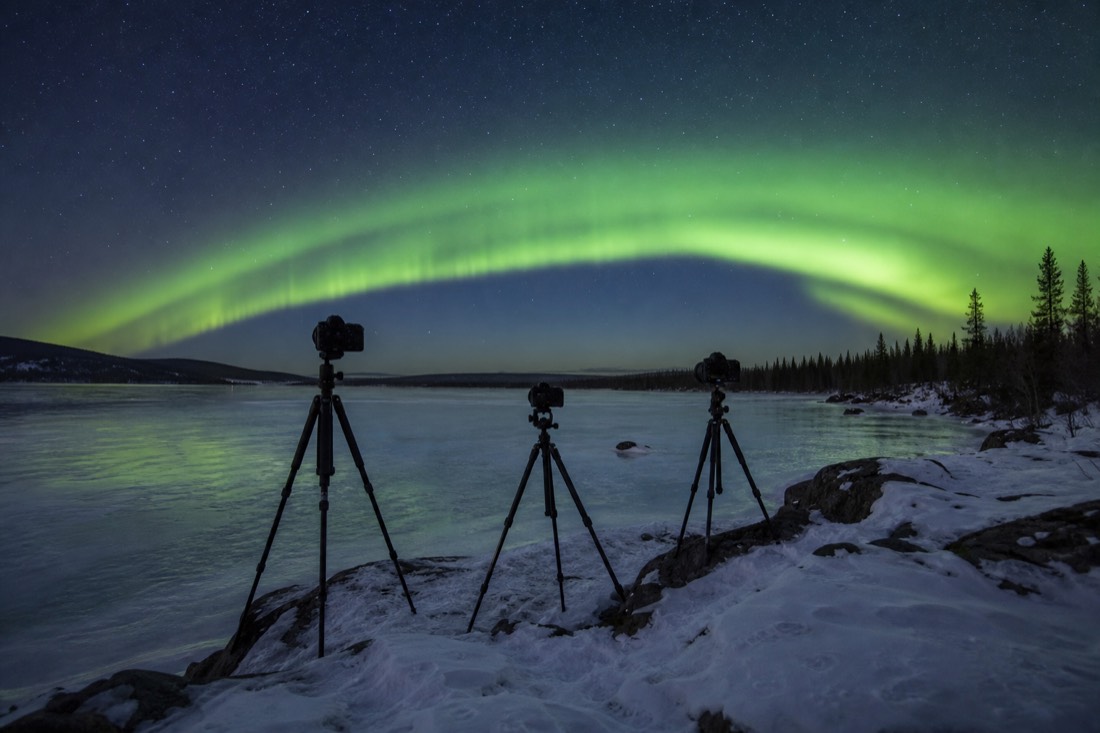
The disagreement is not a scandal. Each outlet weights something different. Frontiers North operates on Hudson Bay and values Churchill's oval position plus its wildlife pairing. Aurora Now leans on Fairbanks, a serious aurora city with easy domestic logistics for Americans, a case I lay out in Yellowknife versus Fairbanks. Capture the Atlas and Canadian Geographic read the published Yellowknife figures and land at my end of the table.
So here are the five criteria, in the order I apply them. Oval position first, because it sets the floor on a quiet night. Clear-sky odds second, because cloud beats geomagnetism as the trip killer. Season length third: two viewing windows beat one narrow winter. Access fourth, since a direct jet costs fewer holiday days than a long train. Last, what else there is to do, because the aurora fills four hours of a twenty-four hour day and the other twenty decide whether the trip was fun. The head-to-head for the Canadian field is what city in Canada has the best northern lights, and the closest rivalry has its own page in Yellowknife versus Whitehorse.
When should you go on a northern lights trip to Canada?
Inside the dark months. In Yellowknife that means mid-August to early October, when the lights double themselves in open water, or mid-November to early April, the classic long-night season. True astronomical darkness returns in the last days of August and vanishes around mid-April. No darkness, no aurora, whatever the sun is doing.
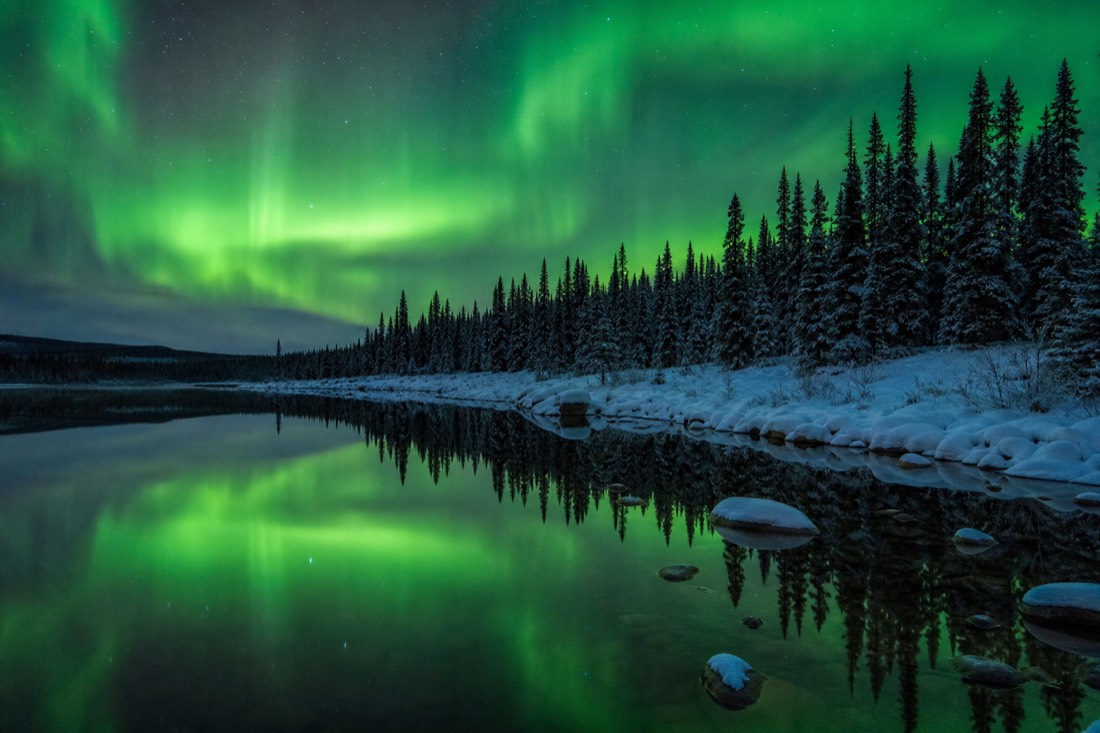
This is the part travelers most often get wrong, because advertising welded "northern lights" to "deep winter". What you need is hours of genuine darkness, and at 62 degrees north they arrive and leave on a schedule you can plan around.
| Month | Daylight | True darkness | Aurora verdict |
|---|---|---|---|
| January | 6h10m | About 12h | Peak darkness, deep cold |
| February | 9h00m | About 10h | Strong, cold easing |
| March | 11h50m | About 7h | Strong, mildest of the winter window |
| April | 14h58m | None by mid-month | Season closes around the 12th to 14th |
| May to July | 18h to 20h | None | No aurora at all |
| August | 16h08m | None at mid-month | Darkness returns in the last days |
| September | 13h02m | About 5h20m | Autumn season, aurora over open water |
| October | 10h02m | About 9h | Excellent, quieter than winter |
| November | 7h03m | About 11h30m | Winter window opens mid-month |
| December | 5h09m | About 12h45m | Longest darkness of the year |
One note on the sun: solar cycle 25 most likely peaked around October 2024, and the years right after a maximum still bring strong activity. That lifts every destination above equally, so treat it as a reason to travel now, not a reason to pick one town.
How many nights should you book for realistic odds?
Three, minimum. NWT Tourism puts the chance of at least one sighting over a three-night stay in season at 98% in Yellowknife, a figure Canadian Geographic repeats. One night is a coin toss on cloud. Two is better. Three is when the arithmetic starts working for you instead of against you.
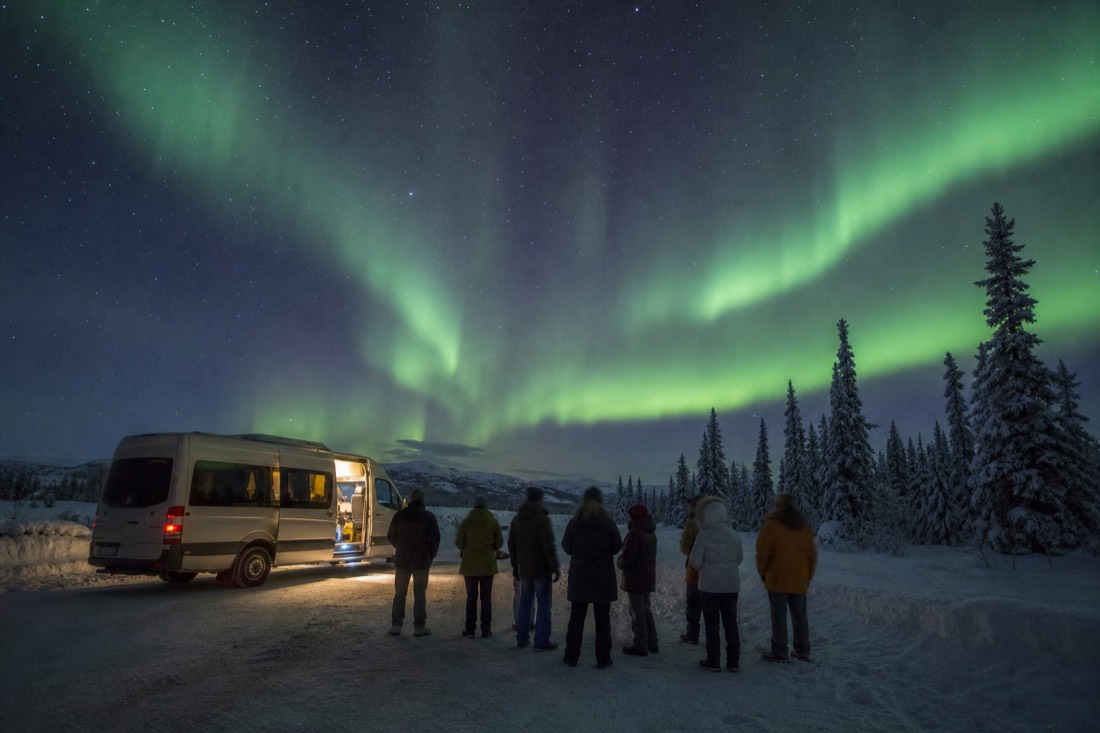
Only the three-night mark has a published figure, so I will not manufacture percentages for shorter stays. Here is how each length feels from the road.
| Nights booked | What the published data supports | How it looks from the van |
|---|---|---|
| 1 night | No published figure | One weather front decides the holiday |
| 2 nights | No published figure | A real chance, and a real chance of regret |
| 3 nights | 98% chance of a sighting, in season | The standard recommendation, for a reason |
| 4 or more | The same 98% base, with margin | Room to be picky about which night was best |
Aurora nights run late under the oval. Peak activity sits near local midnight, so hunts here collect guests between 9:30 and 10:30pm and return between 1:30 and 2:30am. Build a daytime plan that survives that, or borrow mine from the three-night Yellowknife itinerary.
What do northern lights vacation packages actually include?
Less than the word suggests. Northern lights vacation packages in Canada usually bundle several aurora nights and sometimes transfers. Flights are separate. Hotels usually are too. The alternative is stacking individual tours yourself, which takes twenty minutes and buys flexibility a fixed bundle cannot give back.
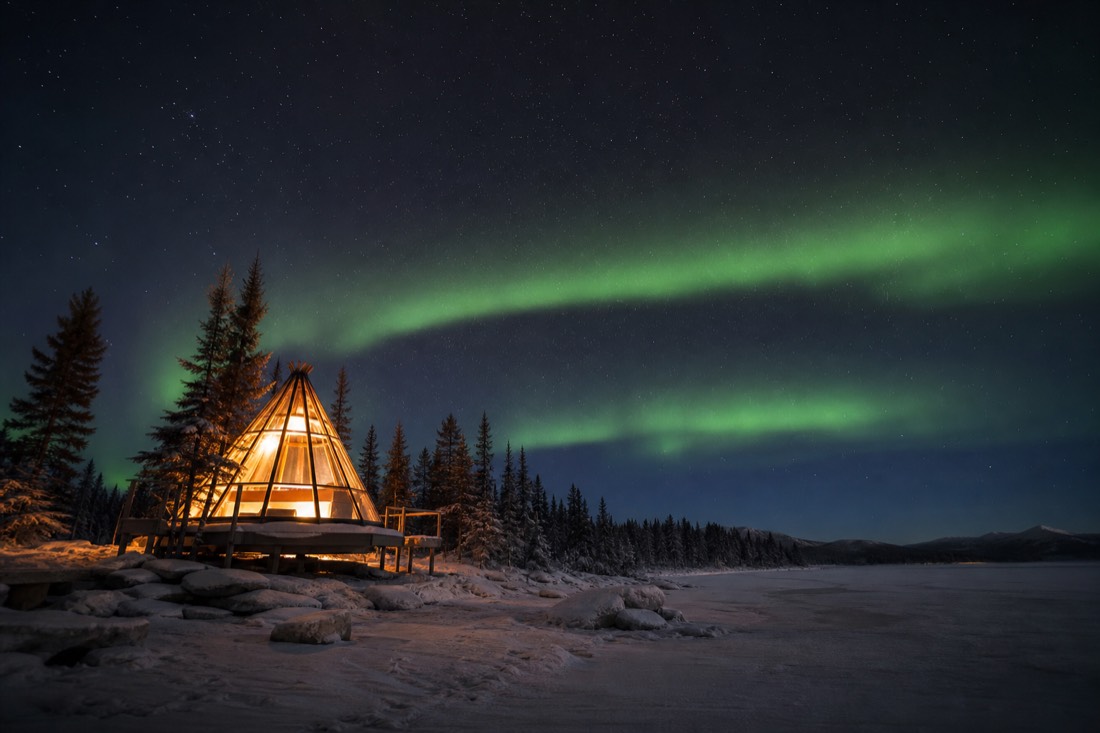
Yellowknife has one bundle that behaves the way the word implies: a two-night aurora cabin package from Arctic Tours Canada, based in a cabin or glass tipi, with airport and hotel transfers, soup on the ice, and two digital photos. It rates 4.6 across a young set of 7 reviews and cancels free up to 24 hours out. Your town hotel is still on you.
Everything else is assembled, and assembly has one real advantage. A fixed camp cannot move when cloud parks overhead, while a mobile hunt drives to the gap, which is the argument for keeping a chase night in any plan. Compare the formats on the northern lights tours page, then check live availability and prices on Viator for the flagship hunt, four hours, sixteen guests maximum, three viewpoints chosen on the night, a photographer aboard and the photos free. The bundle-versus-build comparison sits in the Yellowknife tour packages guide.
What decides the cost of a Canada northern lights trip?
Structure, not the headline package price. Nights booked, how far you fly, whether transfers are included, what you rent, and how many daytime tours you add. Published multi-day package prices bundle different destinations and trip lengths, so they cannot be compared honestly. Live listings are the only real price source.
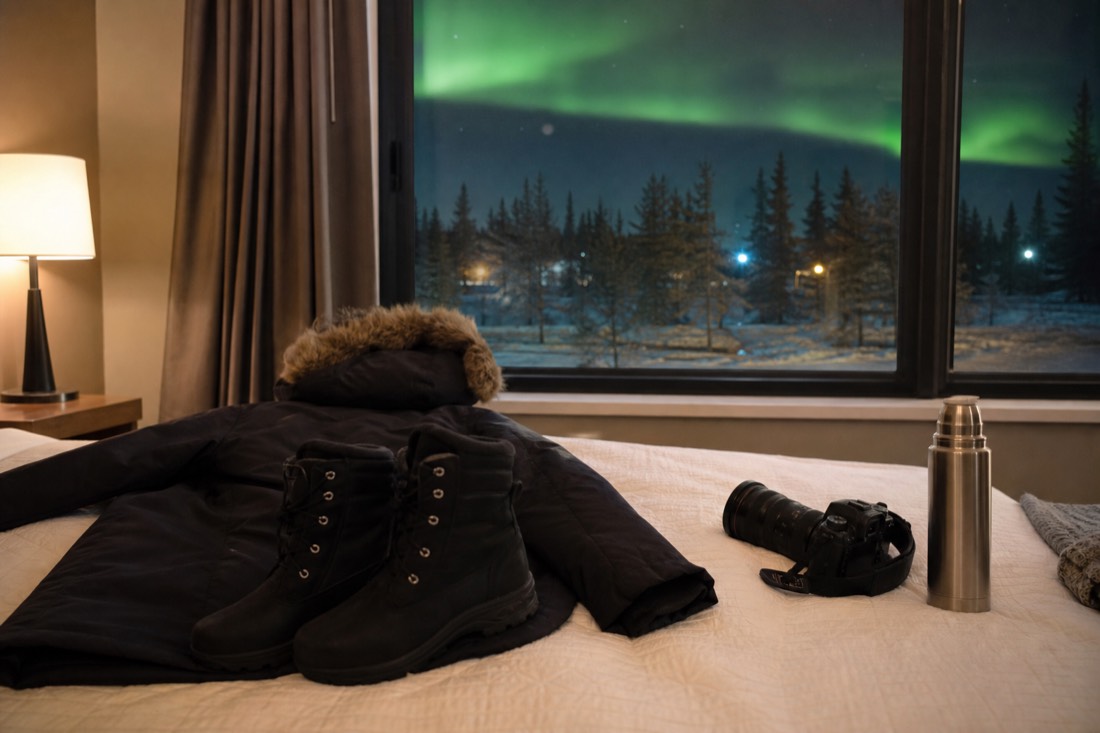
I get asked to rank Canadian aurora destinations by price and I keep declining. The figures floating around are eight-day multi-city bundles set against five-day single-city ones, which is a category error. What I can do is name the drivers and the real anchors I hold.
| Cost driver | How it behaves | Real anchors I can quote |
|---|---|---|
| Nights booked | The main lever; three is the sensible floor | Tour prices move with season and demand, live listings only |
| Flights | Direct routes save days as well as money | Direct jets from Edmonton, Calgary, Vancouver; fastest Vancouver nonstop about 1h35m |
| Aurora tours | Priced per night, per format | Live on the listings; free cancellation common at 24 hours |
| Daytime activities | Where budgets quietly grow | North Star's Indigenous-led fishing tour from CA$249; NWT licence extra, about CA$15 per the listing |
| Clothing | Rent or buy, a real winter line item | Parka, boot, pant and mitt rental available in town |
| Food | Northern prices, no way around them | Restaurant mains commonly CA$15 to CA$30 |
| Sightseeing | Cheaper than expected | Legislative Assembly, Heritage Centre and Pilot's Monument free |
Remote destinations carry their access cost in the flight, not the tour. Churchill with no road and Iqaluit with limited routes price differently from a town with daily jet service. The Yellowknife side goes line by line in how much a Yellowknife trip costs, and the routings in getting to Yellowknife.
Does where you fly from change how the trip is shaped?
More than most itineraries admit. Yellowknife takes direct jets from Edmonton, Calgary and Vancouver, with Whitehorse, Ottawa and Toronto appearing seasonally on Air Canada, WestJet, Canadian North and Air North. Your starting point decides which hub you clear, how much of arrival day survives, and whether night one is a real aurora night.
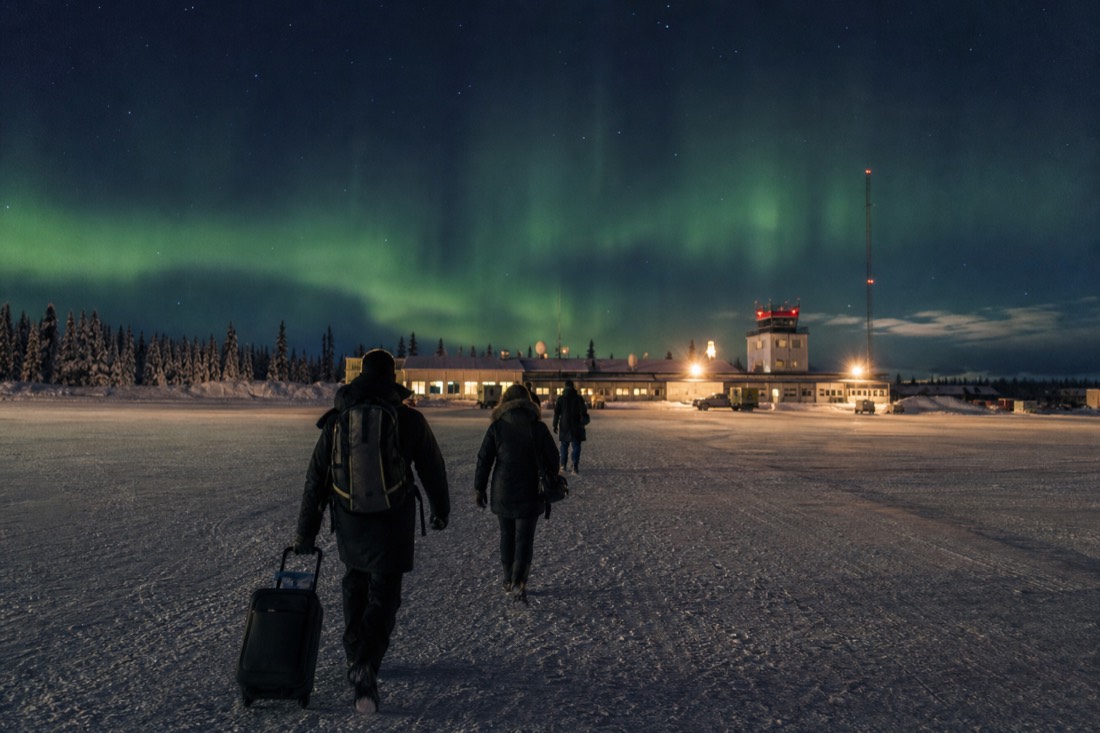
Start with the piece that helps everyone equally. The airport sits about 5 km from downtown, under a ten minute drive, with taxis waiting outside the terminal and hotel shuttles running from several properties. So a late landing does not automatically kill the evening. Guests have walked out of arrivals, dropped a bag at the hotel and made a 10pm pickup on the same day more often than you would guess, and the official airport page covers the practical detail I skip here. The longer version lives in the Yellowknife airport guide.
Canadians have it easiest. From Edmonton, Calgary or Vancouver it is one flight and no connection, and the fastest Vancouver nonstop runs about 1 hour 35 minutes. Driving up from Edmonton is roughly 1,500 km and 17 to 18 hours, which is a road trip in its own right rather than a way to save a day.
Americans usually clear one western Canadian hub, arrive with a small clock change and can generally use the first night. Europe and Asia are a different animal. Two flights, a large time shift, and a body that wants to shut down in the evening precisely when the hunt runs. That is the honest reason I tell long-haul guests to treat the arrival night as a bonus and to buy the extra night at the other end instead of gambling the first one.
| Where you start | Usual routing | Realistic arrival shape | What to do with night one |
|---|---|---|---|
| Western Canada | Direct jet, no connection | Vancouver's fastest nonstop about 1h35m | Book the hunt for the arrival night |
| Eastern Canada | Seasonal direct routes from Ottawa and Toronto, otherwise a western hub | Long travel day, small clock change | Usually workable, keep it flexible |
| Yukon | Seasonal direct route from Whitehorse | Short northern hop | Fine, subject to the seasonal schedule |
| United States | One connection through a western Canadian hub | Small clock change, late landings common | Workable if you land before evening |
| Europe | Two flights, large time shift westbound | Evening energy collapses for a night or two | Treat night one as a bonus, not the plan |
| Asia | Two flights via a Pacific gateway, large time shift | The same evening collapse | Same, and buy the extra night |
What should you book first, and what can wait?
Dates, then beds, then aurora nights, then daytime activities. The nights are the scarce thing on this trip, not the tours. Yellowknife is a city of about 20,340 people, so the room supply is finite in a way it never is in Vancouver, while most aurora tours cancel free up to 24 hours out.
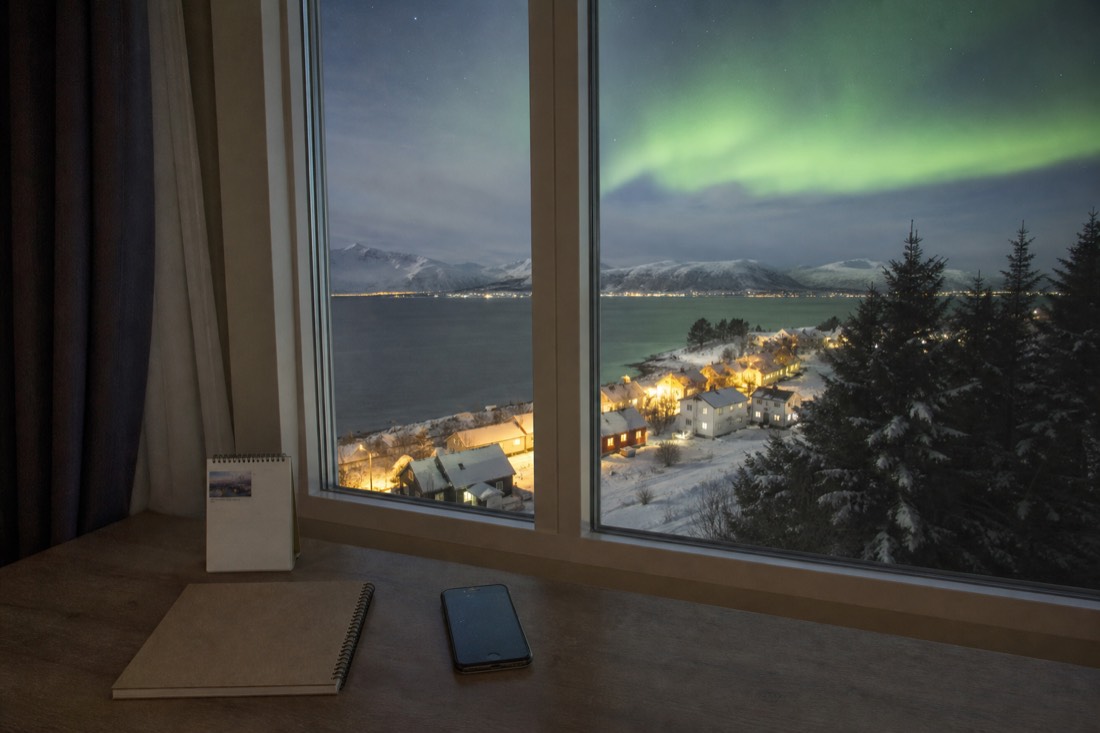
People book this backwards constantly. They find a tour they like, reserve it, then try to build flights and a hotel around a single evening. Reverse it. Lock the date block first, because that is what the whole trip hangs on, and give it three nights inside a month that actually has darkness. My best time to see the northern lights page sets the window; March is popular twice over because SnowKing runs all month on the frozen bay.
Beds come second for the reason above, and because a small northern capital has no overflow valve. Compare properties in where to stay in Yellowknife before you touch a tour page.
Aurora tours come third, and they are third for a good reason rather than an arbitrary one: free cancellation up to 24 hours is standard on most of them, so an early booking costs you nothing and holds a seat on a small vehicle. The exceptions matter. A couple of the daytime products are non-refundable, and North Star's Indigenous-led sport fishing tour runs a short season, January 15 to April 15, with 4 to 10 guests, from CA$249. Short season plus tiny group is the combination that runs out.
| Tour | Group cap | Cancellation | When I would book it |
|---|---|---|---|
| Aurora hunting tour, the flagship | 16 | Free to 24 hours | The moment the dates are fixed |
| Aurora chasing and lodge | 38 | Free to 24 hours | Same, though the cap gives you slack |
| Two-night aurora cabin package | Cabin or glass tipi, small group | Free to 24 hours | Early, since it shapes the whole trip |
| Snowmobile for beginners | 15 | Free to 24 hours | After the aurora nights are set |
| Husky sledding at Enodah kennel | 14 | Non-refundable | Only when the dates are certain |
| Traditional Dene dog sledding | 24 | Free to 24 hours | Any time before you travel |
| City tour and wildlife gallery | 23 | Non-refundable | Only when the dates are certain |
| Ice fishing with lunch | 16 | Free to 24 hours | After the nights are locked |
| North Star sport fishing | 4 to 10 | Jan 15 to Apr 15 season only | Early, the window is short |
Daytime activities go last because they are the flexible layer. If a hunt runs to 2:30am, an 8am start the next morning is a decision you will regret in person.
What would I change about most Canada aurora plans?
Five things, and they repeat every season. Too few nights, a booking pushed too late into April, a deep-winter-only assumption, a daytime schedule that ignores a 2:30am return, and a fixation on the Kp number instead of the cloud forecast. None of them are exotic mistakes. All of them are fixable before you pay.
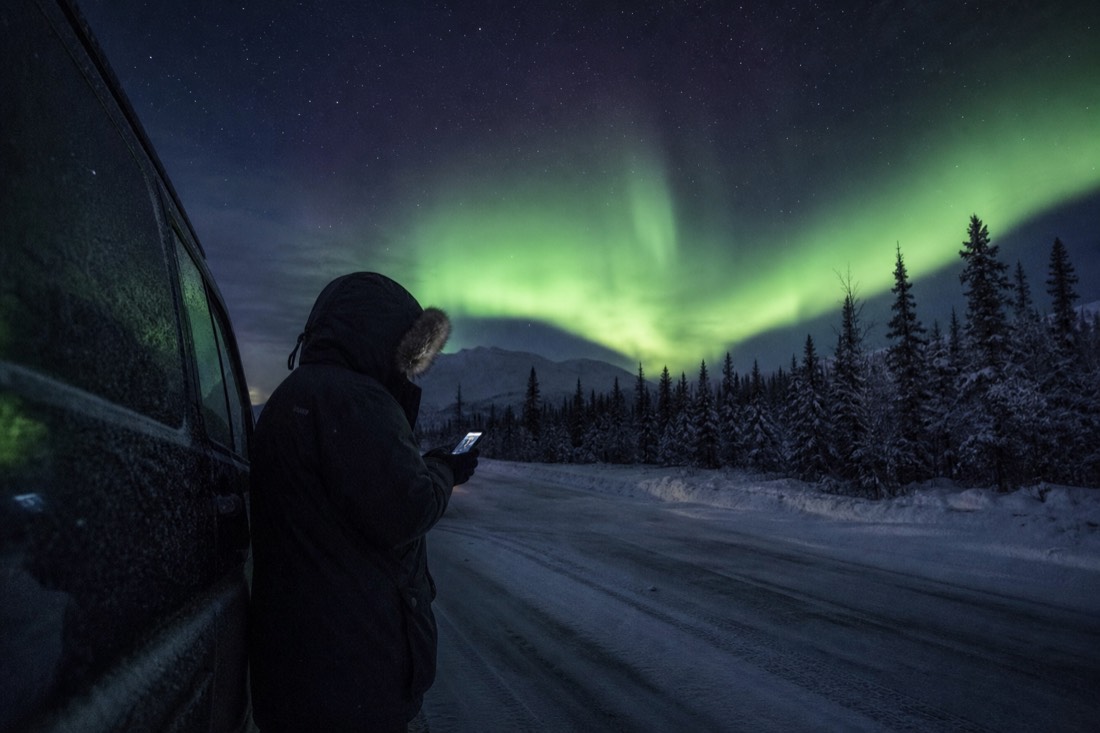
I have guided here since 2022 and taken more than a thousand visitors out under this sky, which is not a scientific sample but it is a large enough one to see the same plan flaws come round. The most expensive is always the two-night trip. It reads as thrift. It is a coin toss dressed as a budget decision, and the only published number on this, the 98% chance over three nights in season, belongs to the third night.
The second is April. Guests book late April because flights look kind, then discover that true astronomical darkness disappears around the 12th to 14th of the month. March holds up much better: typically -10C to -20C, roughly twelve hours of daylight at the equinox, strong aurora, and a snow castle on the bay.
The third is a reflex rather than a mistake. Winter gets all the marketing, so the autumn window from mid-August to early October goes unnoticed, and it is the one where the lights land twice, once in the sky and once in open water. What that feels like on the ground is in what an aurora hunt here is really like.
| The common plan | What actually happens | What I suggest instead |
|---|---|---|
| Two nights, to save money | One weather front can take both | Add the third night, it carries the published odds |
| Mid or late April | True darkness is gone by about April 12 to 14 | Move it to March, cold but dark and reliable |
| Deep winter only | The autumn window goes unused | Consider September, about 5h20m of darkness and rising |
| A morning activity after a hunt | Pickup 9:30 to 10:30pm, return 1:30 to 2:30am | Put daytime tours after noon |
| A rental car booked for the aurora | Every tour includes hotel pickup, downtown is walkable | Rent for the Ingraham Trail or the Dettah ice road instead |
| Waiting for a big Kp number | Kp 1 to 3 is plenty under the oval | Watch the cloud forecast, and use the 30 minute nowcast |
The last one is the habit I would most like to break. Under the oval, the aurora is usually already there. Whether you see it is a question about the sky in front of it, which is why the apps worth having are the ones that pair geomagnetic data with cloud and moon, sorted through in the aurora forecast apps guide.
So which Canadian aurora trip should you book?
Aurora first: go where the oval sits and the sky runs dry, and give it three nights. Wildlife first: Churchill, lights as a bonus. A wider northern holiday: Whitehorse. A short drive from Alberta: the dark-sky preserves, accepting that you are waiting on a storm.
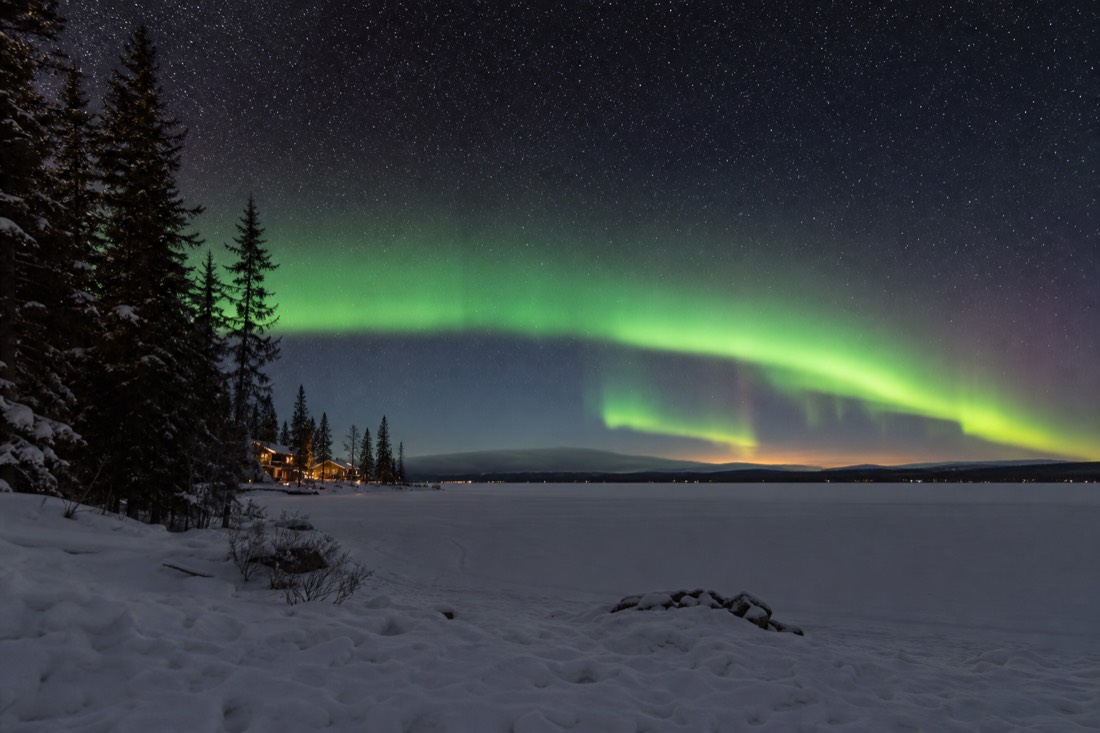
My closing position, bias declared: there is no single correct Canadian aurora destination, but there is a correct method. Put yourself under the ring, travel in a month with real darkness, book three nights, and pick a format that moves when the cloud does. Do that anywhere on the list above and you will probably come home with the photograph. One night in April under a mountain weather system, and no package glossiness saves it.