Yellowknife in January 2027: The Coldest Month, The Darkest Aurora
January is the coldest month of the Yellowknife year and the deepest part of the aurora season. Here is what it asks of you, and what it hands back.
 Written with Thomas Beaulieu, Yellowknife tour guide & northern lights specialist
Short answer
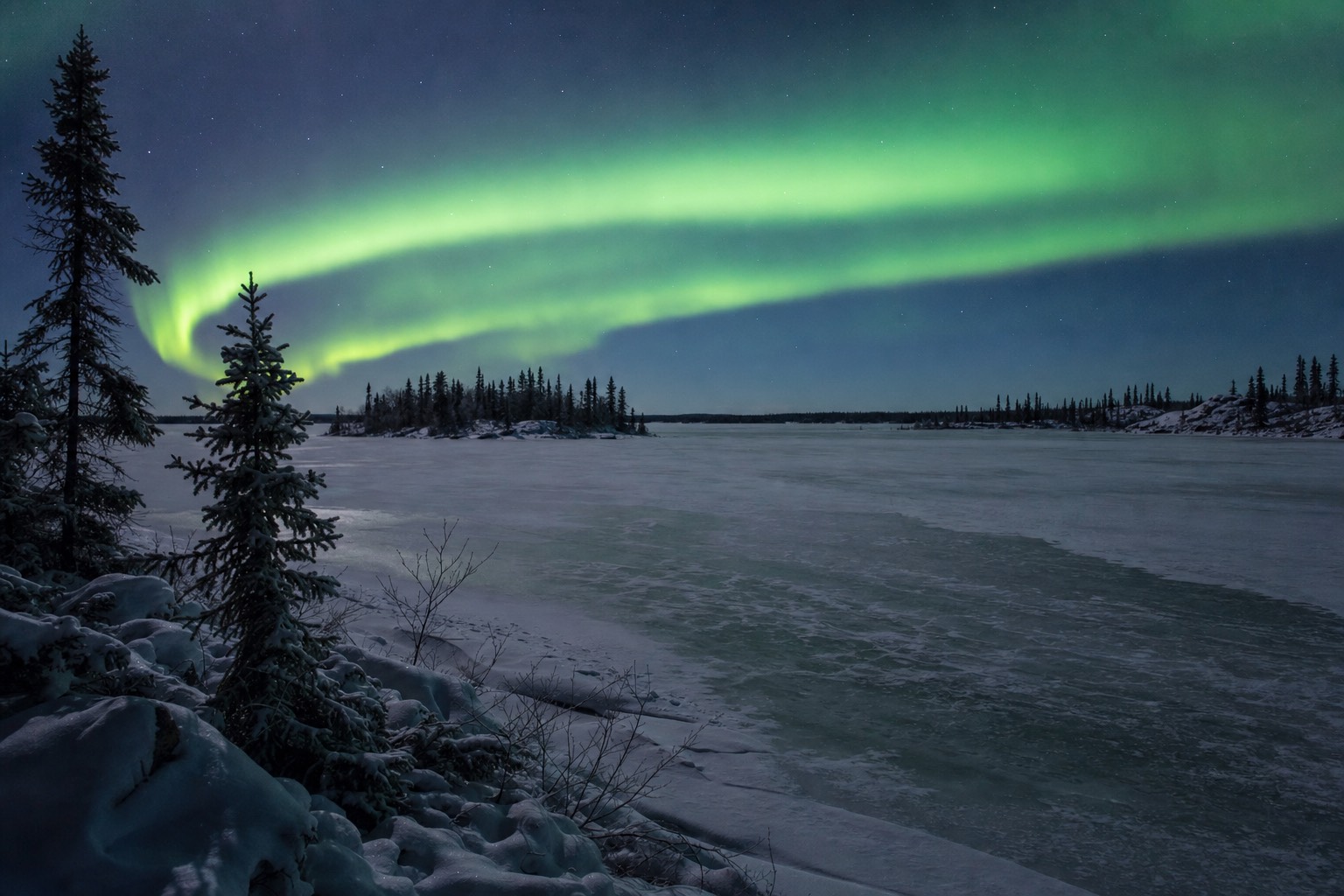
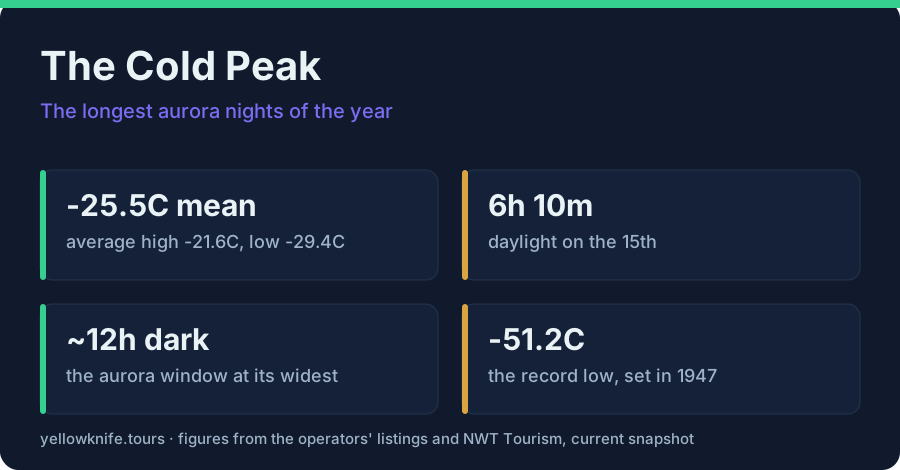
January is Yellowknife's coldest month, with a daily mean near -25.5C, average highs around -21.6C and nights near -29.4C. It is also the darkest stretch of the aurora season, with about 6 hours 10 minutes of daylight on the 15th and roughly 12 hours of true astronomical darkness. Every winter tour runs, and the Dettah ice road is open.
You hear January before you feel it. Snow under boots at -29 does not crunch so much as squeak, a dry high-pitched noise that southern visitors always comment on before they comment on the cold. Then the cold arrives, about ten seconds later, on the inside of your nose. I guide through this month every winter, and the honest framing is this: January asks more of a visitor than any other month on the calendar, and gives back the longest, darkest, most dependable aurora nights of the season. If you want the whole calendar side by side, the month-by-month weather guide does that comparison. This page plans January.
What is January in Yellowknife actually like?
It is the coldest month of the year here, with a daily mean near -25.5C, and the deepest part of the winter aurora season. On the 15th the sun is up for about 6 hours 10 minutes, from 09:42 to 15:52, and the sky delivers roughly 12 hours of true astronomical darkness. Every winter tour operates.
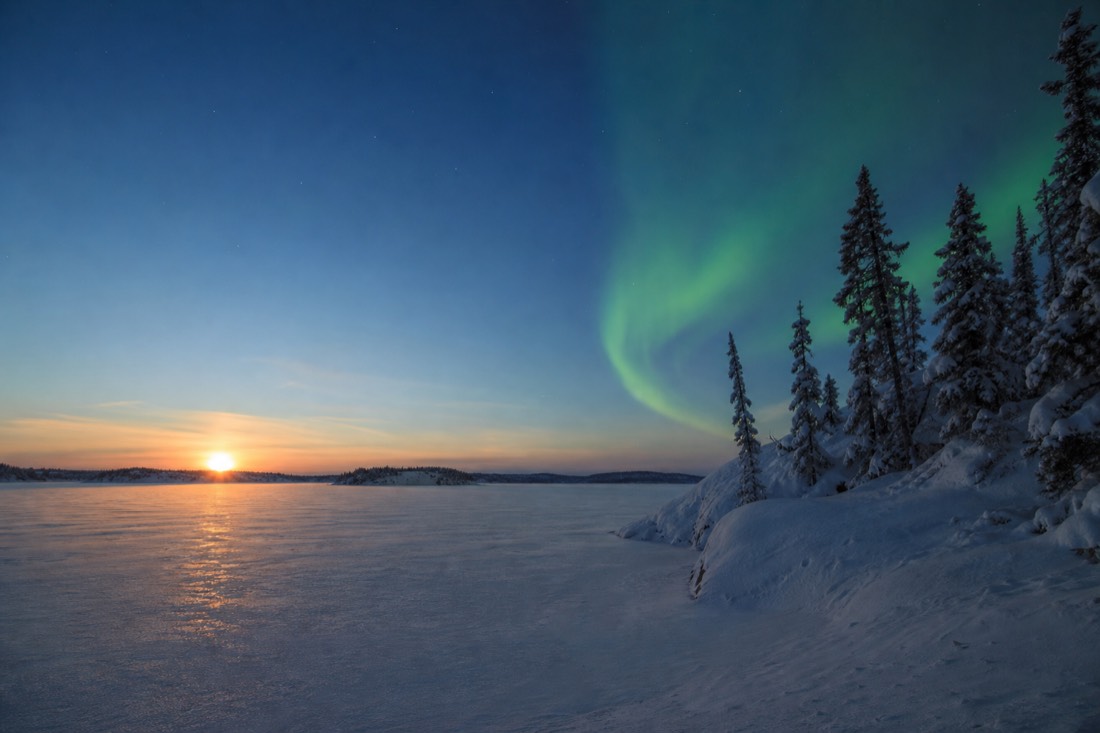
The month sits between two neighbours that both look easier on paper, and the numbers show exactly how much colder and darker it really is. December is close behind on cold. February hands daylight back fast.
| Measured on the 15th | December | January | February |
|---|---|---|---|
| Daily mean | -21.8C | -25.5C | -22.7C |
| Average high | -18.0C | -21.6C | -18.0C |
| Average low | -25.6C | -29.4C | -27.4C |
| Sunrise / sunset | 09:57 / 15:07 | 09:42 / 15:52 | 08:21 / 17:21 |
| Daylight | 5 h 09 m | 6 h 10 m | 9 h 00 m |
| True astronomical darkness | about 12 h 45 m | about 12 h | about 10 h |
Notice what January quietly does. It is colder than either neighbour by a clear margin, yet it is already gaining daylight on December, about an hour more by mid-month. You get more usable afternoon than the solstice weeks allow, without giving up the deep darkness that makes faint aurora visible. That trade is the whole argument for the month.
What is Yellowknife January weather really like day to day?
Cold that is dry, still and steady rather than violent. Afternoons average about -21.6C, the daily mean sits near -25.5C, and nights average around -29.4C. The all-time record without wind chill is -51.2C, set in 1947. Wind is usually light, which is the single reason the cold stays workable.
There is a common mistake in older weather write-ups that puts -21.6C down as the January daily average. It is not. That figure is the average daytime high, the warmest part of a typical January day. The true daily mean is -25.5C, and the nights you will actually be standing outside under the aurora average -29.4C. Planning against the high instead of the mean is how people arrive underdressed.
| Thermometer reading | How it fits January | What it feels like on the ground |
|---|---|---|
| About -21.6C | The average daytime high, so most afternoons | Manageable in full gear. Bare skin stings after a minute or two |
| About -25.5C | The month's daily mean | Cheeks and fingers set the clock. Phone screens start refusing to respond |
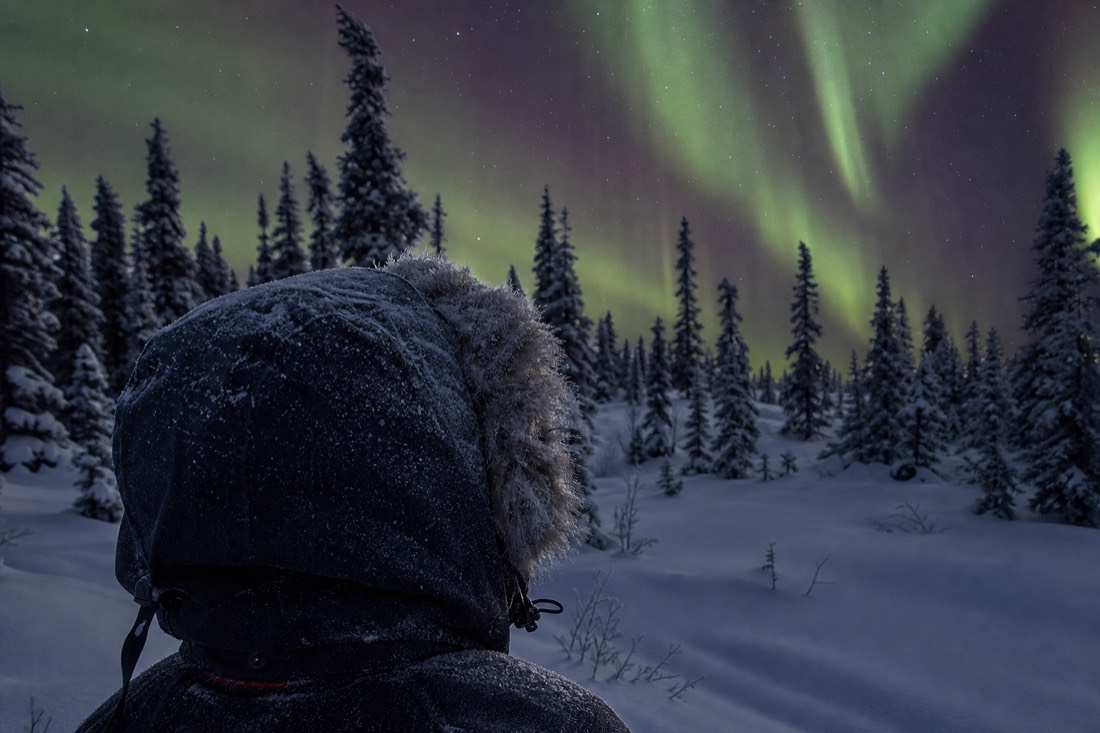
| About -29.4C | The average overnight low, so most tour nights | Breath freezes on your hood ruff. You work in bursts, warm van, cold sky, repeat |
| Below -30C | Happens in cold snaps, not rare | Cameras and phones drain fast. Nothing metal touches skin |
| -51.2C | The record, set in 1947 | Historic outlier, not a planning scenario |
That record is a real archival figure, not folklore, and Cabin Radio went back through the data to check how the city's cold has shifted since. For the general cold question, across every month rather than this one, the how cold does it get guide covers it properly, and the minus 30 field notes describe the sensation minute by minute.
Is January the best month for the northern lights in Yellowknife?
It is the darkest and among the most reliable. Yellowknife sits directly under the auroral oval, where the lights appear up to 240 nights a year, and January delivers about 12 hours of true astronomical darkness. Over a three-night stay in season, the odds of seeing them at least once run to 98%.
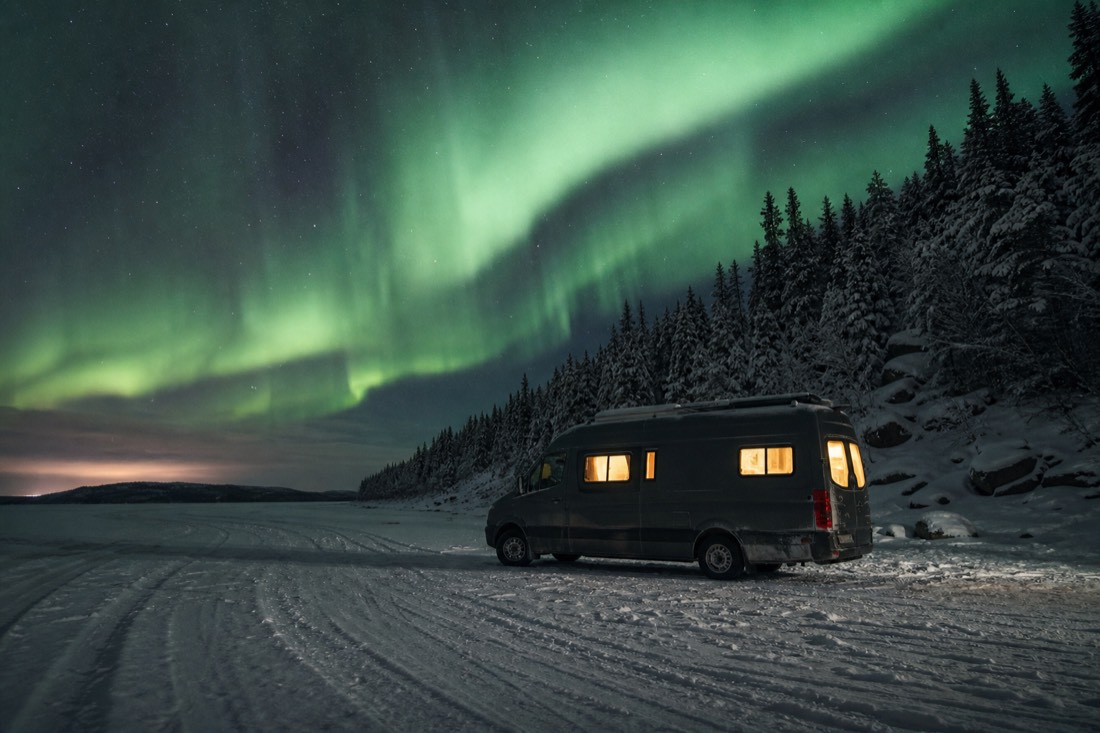
Those two headline figures come from NWT Tourism's aurora numbers, and January is where the darkness side of the equation peaks. Because the city sits under the oval rather than south of it, low geomagnetic activity is often enough here, roughly Kp 1 to 3 with clear skies. Southern Canada needs a storm. We do not. Cloud cover, not the Kp number, is the thing that decides most nights, which is why guides drive to find clear sky rather than waiting under it.
The nightly rhythm is the same all winter. Pickups run between 9:30 and 10:30pm, activity peaks near local midnight, and vans are back at hotels between 1:30 and 2:30am. That timing matters more in January than in any other month, because it means the cold is met in bursts. You are outside for the display, in a heated van or hut between displays, and asleep before the deepest hours of the night. Nobody stands in -29 for four unbroken hours.
Solar cycle 25 most likely peaked around October 2024, and activity stays high in the years just after a peak, so a January trip in 2027 lands inside the strong window rather than after it.
January hunts run every night the sky allows, so compare the northern lights tours and check live availability and prices on Viator once your flights are set. The flagship works three viewpoints a night, caps at sixteen guests, includes hotel pickup, and sends you the photographer's shots of you under the lights at no extra cost.
What is there to do in Yellowknife in January besides aurora?
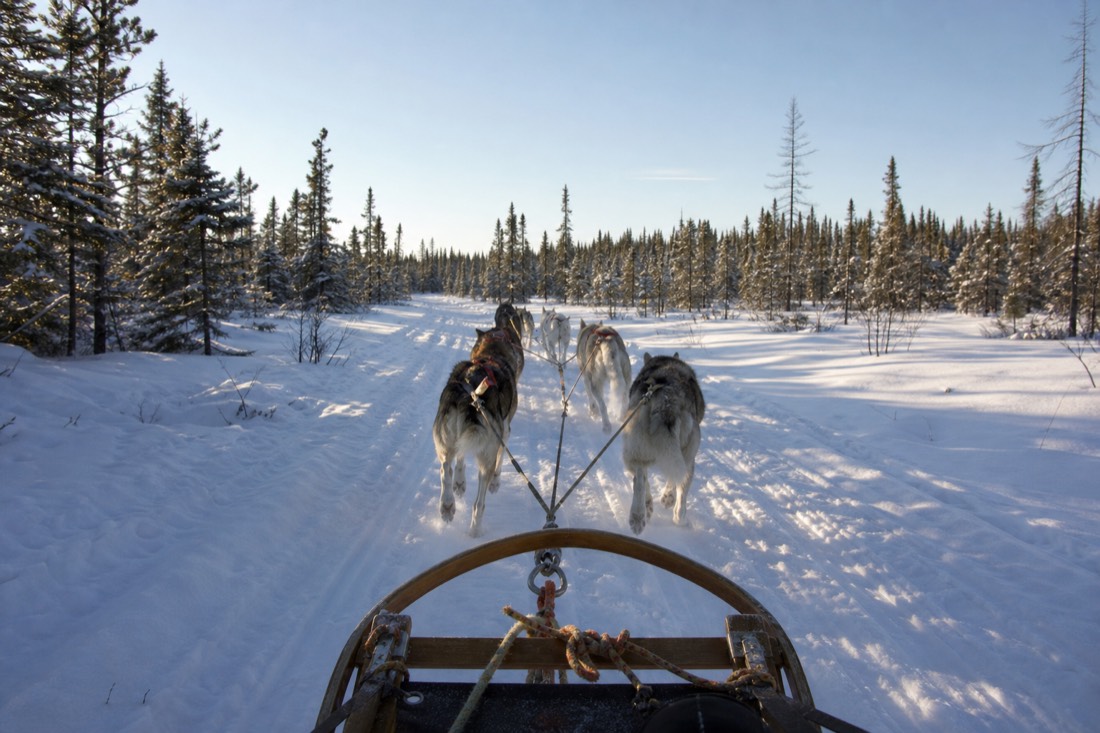
The full winter programme is running: dog sledding, ice fishing in heated huts, beginner snowmobiling, city and culture tours, and the Dettah ice road, which is open from late December to mid-April. What January does not have is SnowKing, the snow castle on the bay, which is a March event only.
| What is running | January status | The detail that matters |
|---|---|---|
| Aurora hunts | Nightly, sky permitting | 4 hours, pickup 9:30-10:30pm, heated vehicles between viewpoints |
| Dog sledding | Running | Kennel time plus a 20 to 25 minute ride, small groups |
| Ice fishing | Running | Heated huts on Great Slave Lake, 3.5 hours, catch cooked on the ice |
| Snowmobiling | Running | 2 hour beginner sessions, 50 to 60 minutes riding, heated handlebars |
| City and culture tours | Running | Old Town, Pilot's Monument, and the free Heritage Centre |
| Dettah ice road | Open | About 6.5 km of public road across the frozen bay |
| Indigenous sport fishing | Opens January 15 | North Star Adventures runs it 10:30 to 14:30 daily, from CA$249 |
| SnowKing snow castle | Closed | Built for March only |
Daytime hours are short, so pick one thing per day and let it be the whole afternoon. A morning at the dog sledding kennels or a session in an ice fishing hut fills the light you have without wrecking you for a late pickup. The ice roads guide explains which frozen roads visitors can actually drive, and the wider winter activity list has the rest. One scheduling note specific to this month: the North Star Indigenous fishing tour does not start until January 15, so early-January trips will not catch it.
What should you wear in Yellowknife in January?
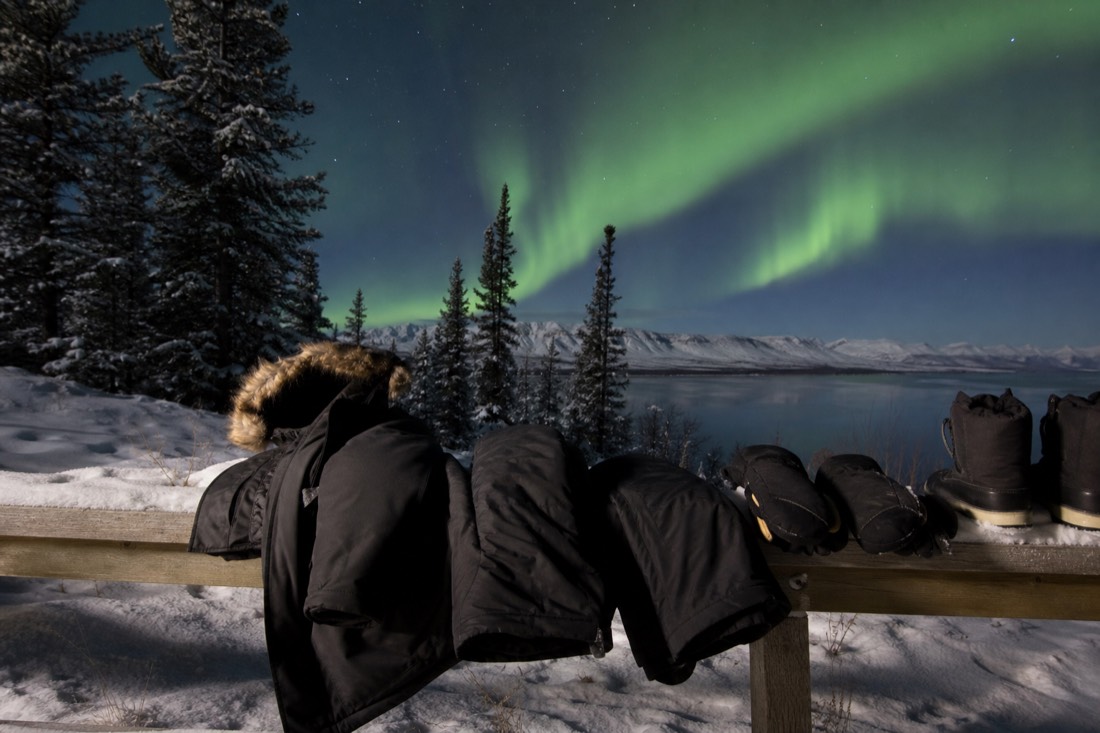
Three layers on the torso, two on the legs, and no cotton anywhere. Arctic clothing rental exists in town from several operators and typically covers the four bulky pieces: parka, insulated pants, rated boots and mitts. Everything next to your skin you bring yourself.
| Body part | What actually works at -29 | Does rental cover it? |
|---|---|---|
| Torso base | Merino or synthetic long sleeve, never cotton | No, bring your own |
| Torso mid | Fleece or light down, room to trap air | No, bring your own |
| Torso outer | Expedition parka, thigh length, insulated hood | Yes, the core rental piece |
| Legs | Thermal base plus insulated snow pants | Yes, pants included |
| Feet | One wool sock layer inside cold-rated boots | Yes, boots included |
| Hands | Thin liner gloves under overmitts | Mitts yes, liners usually your own |
| Head and face | Insulated hat plus neck gaiter or balaclava | Not in the standard set, pack it |
The liner gloves are the piece people skip and then regret. Camera dials, tripod screws and phone screens all need fingers, and at -29 a bare hand has under a minute of useful function before it stops cooperating. Liners buy you that minute back. The what to wear guide breaks the system down piece by piece with the reasoning behind each layer.
Electronics deserve their own paragraph, because January is where they fail. Batteries drain fast in deep cold, so carry spares in an inside pocket against your body and swap them rather than trying to nurse one battery through the night. Phones will shut down without warning even when the battery reads half full, and they recover once warmed. Bring a real camera if the photos matter to you, or lean on the tour photographer, which is exactly why the flagship includes one.
Who should book January, and who should pick a different month?
Book January if the aurora is the entire point of the trip and you are willing to dress for -29. Pick February or March if you want daylight for daytime activities, a milder thermometer, or you are travelling with young children or anyone who struggles with cold.
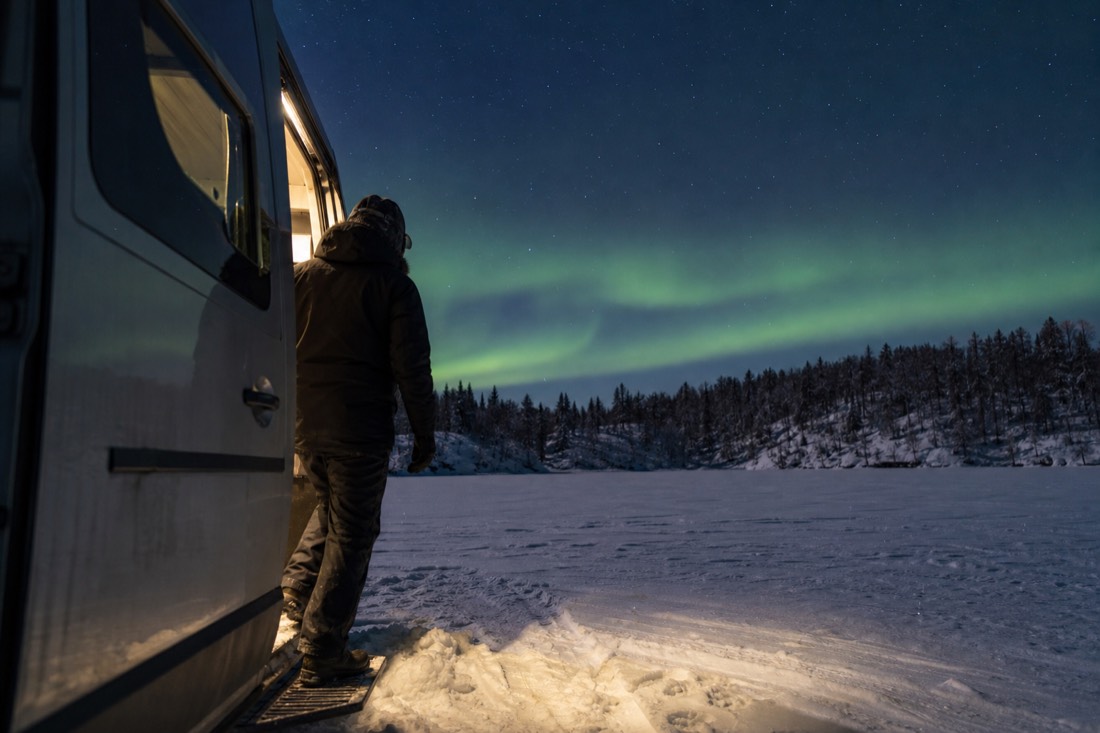
The people who love January here are the ones who came for one thing. They accept that afternoons are short, they do not mind that the daytime tour is the only outdoor commitment of the day, and they treat the cold as equipment rather than weather. Photographers in particular pick this month on purpose, because twelve hours of true darkness gives them shooting windows nobody gets in March.
The people who struggle are the ones who booked a full sightseeing itinerary and then discovered that the sun sets before four. That is not a flaw in the month, it is a mismatch. February keeps most of January's darkness while trimming the cold, and March gives back nearly twelve hours of daylight. Neither one delivers what a mid-January night delivers when the sky is clear and the moon is down.
The winter aurora season, as NWT Tourism sets it out, runs from mid-November to early April, and January sits dead centre. Bring the right layers, book a hunt for more than one night, and let the month be what it is: hard, quiet, dark, and worth it.